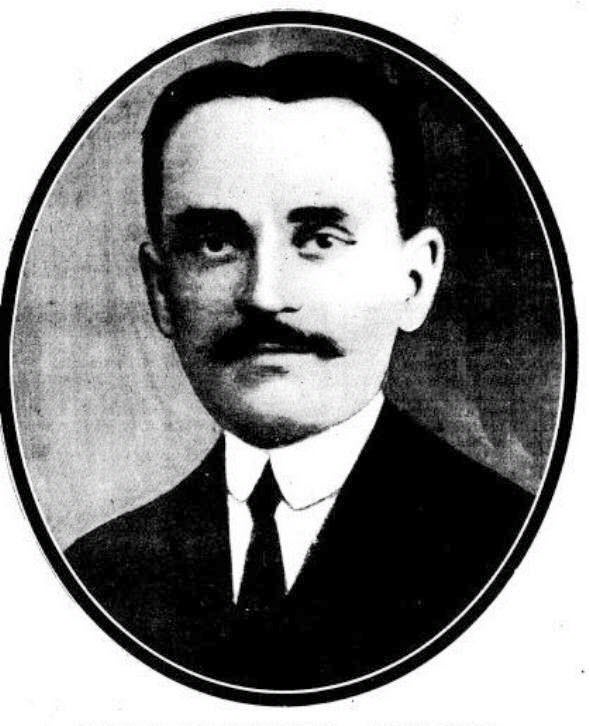
Two obituaries of Antoine Ker (Keim), a central figure of the early French Communist Party and its international representative who died on July 21, 1923 at 37. The first from his friend and comrade Boris Souvarine in ‘Communist International’ largely focused on his role in the PCF’s formation; the second from Karl Radek in Inprecor largely focused on Ker’s role at the Fourth World Congress.
‘Comrade Ker’ by Boris Souvarine from Communist International. Vol. 1 No. 28. August, 1923.
The death of Comrade Ker on July 21st was a severe loss for the French Communist Party. In him the party loses one of its most intelligent fighting members, a first rate worker, who had already rendered great services, and of whom still greater services were to be expected.
This loss will be felt not by the French Party alone, but by the whole International. Ker belonged to that small group of people, so rare in the French Labour movement, and even in our own Communist Party, whom the activities of the revolutionaries of other countries interested as much as those of their countrymen. He felt quite at home among our fraternal parties and at the centre of the International; at London as well as at Berlin and Moscow. This, is an unmistakable sign of superiority. He was above all a man of the international revolutionary movement, and he proved it at a critical moment in the life of his party.
His militant, revolutionary career, the sudden termination of which was so cruel a shock to his friends and relatives and to his many comrades, had been a full one. Before coming into prominence in politics he had already belonged to the Socialist Federation of the Loire. He was then a professor at one of the colleges in that department. During the war he was mobilised and became an officer. It was early in 1919, I believe, that his signature appeared for the first time in La Vie Ouvrière, next to that of Madeleine Ker. Some time afterwards I got acquainted with him at the Clarté, and we rapidly became associated in our revolutionary activities. He joined the Committee of the Third International and was one of the most intimate and most active collaborators of Loriot and of the writer of these lines.
For some time he was so retiring, and his work so secret, that his name was almost unknown in our Labour movement. This did not in ally way diminish the value of his unforgetable services. During the imprisonment of the two secretaries of the Committee of the Third International, he was one of our most precious helpers. To him I confided without hesitation the most difficult missions, which he carried out to his own great credit and to the best interest of our revolutionary cause. He became a worthy representative abroad of the Committee of the Third International. It was at that time that he became a contributor to the Bulletin Communiste, his articles bearing the signature of “Witness.”
Towards the close of 1920 he was chosen by the Committee of the Third International as one of its representatives on the first Executive Committee of the New Communist Party, formed at the Congress of Tours. His high intelligence and his capacity for work were noted so quickly, that almost on the day following the Congress he was appointed provisional secretary of the party. Shortly afterwards his name became known in the political life of the country, for in January 1921 he was arrested, almost at the same time as Zalewsky and somewhat earlier than Dunois.
He thus joined our little party at the Santé. His crime consisted of obtaining a cheque from Dunois, belonging to Zalewsky, and cashing it at a bank. What the bourgeoisie and its Socialist hirelings considered to be a crime was, of course, really an honourable testimony to our comrade. If he was entrusted with the keeping of valuables, it meant that people had confidence in his integrity and perfect honesty. The majority of those who then attacked him could not flatter themselves with being worthy of a similar confidence.
During our imprisonment we grew even more intimate in our friendship. His devotion to the party had cost him his material well-being (he had been employed by a large metallurgical concern). Poorer than before, but a freer man, he could now devote himself entirely to the work of our common cause. During his imprisonment he signed his articles: “Kero.”
I shall never forget the hours we spent together in the prison, our promenades in the little prison yard, or interminable conversations in my cell, where at times, joined by Dunois, we even managed to organise a little intimate repast. How can I forget them? In our feverish life of fighters for the social revolution we have few such moments of intimacy and quiet intercourse, in which we learn to know each other more closely, and to like each other more profoundly.
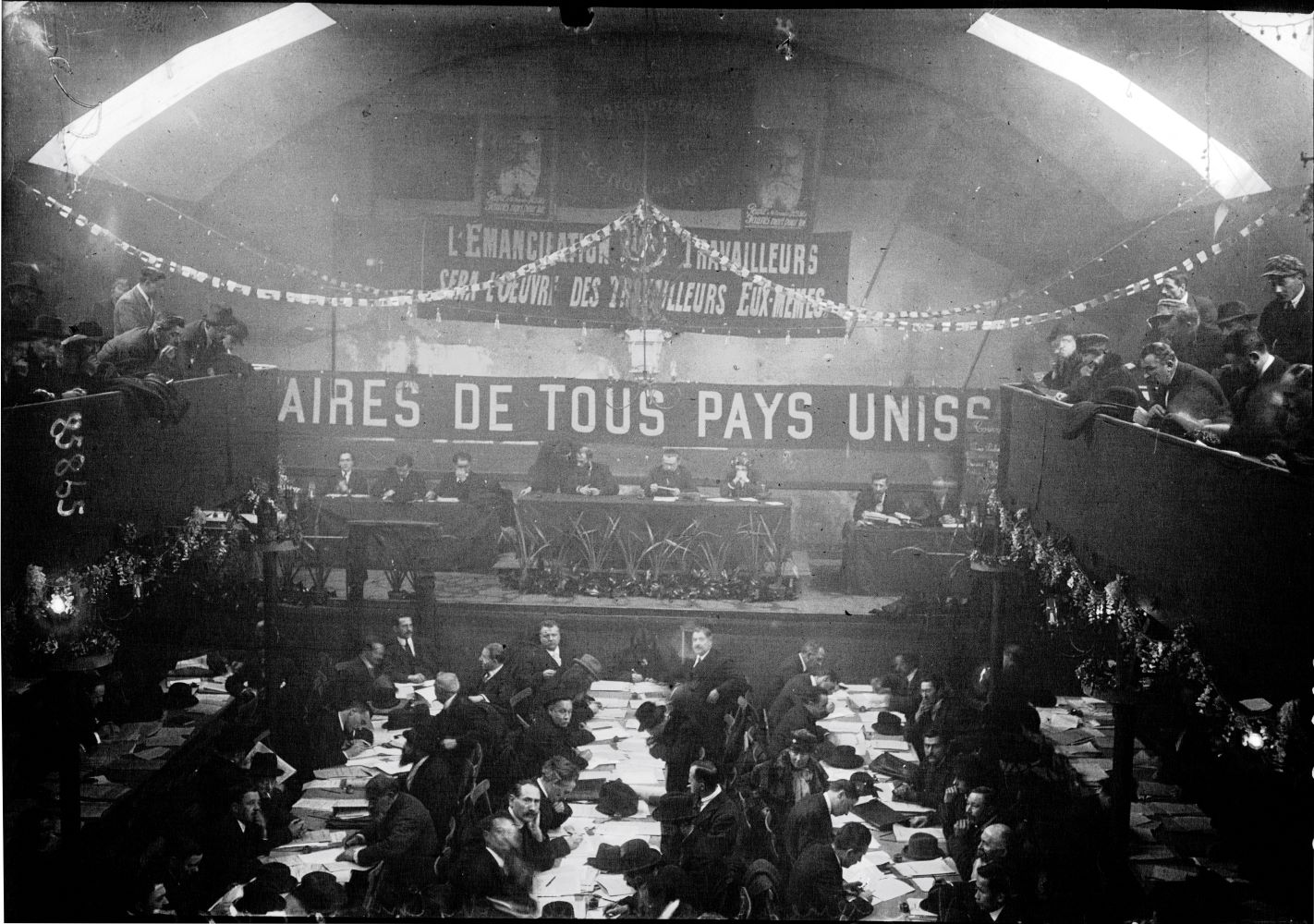
Next came the big trial, the acquittal and liberation of the ten plotters. Ker and Dunois were liberated shortly after us. Ker became the Editor of L’Humanité. To his last day he contributed many remarkable articles to our paper on economic subjects, which he knew how to present with great lucidity and with a gift for penetrating analysis.
During the year 1921 the party entered a period of grave crisis which found its clearest expression at the Congress of Marseilles. The reactionary elements, the unrepresented Social-Democrats whom we had retained in our ranks after the Congress of Tours, had recovered from their defeat of the preceding year and were now rallying their forces for an offensive. They had made up their minds to detach the French Party from the Communist International, because the latter insisted on imposing revolutionary obligations upon the French section as upon the other sections. A Communist Left wing was formed within the party, rather belatedly and after much groping and hesitation.
This uncertainty, this lack of self-confidence, these illusions with regard to the enemies of Communism, which were characteristic of the attitude of the Left as a whole, were also reflected in Ker’s attitude at the period. It was he who got carried unanimously at the Congress of Marseilles a resolution expressing the highest confidence in the writer of these lines that a Communist Party can give, viz. – appointing me as member of the Executive of the International. Yet at the same time, by a contradiction which was characteristic of the disturbed spirit of even the most loyal members of the International at that time, he consented to collaborate with the enemies of the International upon the Executive and became the International secretary of the party.
This was the first discord between us. It was painful to find himself separated from his intimate friends, who had resigned their positions. This is not the place to examine who was right and who was wrong. Our association in the past led us to believe that we ought to be right or wrong together. He had taken a step which separated him from us, the Left wing of the party. For a long time I hoped that it was due to a misunderstanding. After having worked together in many a difficult situation, how could one make up one’s own mind that our roads must now separate? I had faith in him and in our friendship. His letters were more than friendly, they were affectionate. In February 1922 I expected him in Moscow in a hopeful spirit.
The night when he arrived from Riga I spent several hours in the snow-covered station at Vindau. The train was very late. On that frosty night I waited for him until 3 o’clock in the morning. We were both greatly moved when we met. As he arrived late and everybody was asleep at the Luxe Hotel, he shared my room with me. We found our friendship unimpaired, and our ideas fell quickly into accord. It had been nothing but a misunderstanding after all!
Ker’s brief stay at Moscow will remain one of my most cherished reminiscences of him. He had arrived ahead of the French Delegation, and before the Enlarged Session of the Executive we had time to take a stroll together and admire the beauty of this extraordinary city. We had many tastes in common; he quickly fell under the spell of Russia, and as I was already familiar with the nooks and corners of Moscow, I conducted him to places where I was sure that he would share my admiration. Wading our course through a maze of streets and side streets I would point out to him now a gem-like chapel, now a delicately built belfry, now some tasteful ossobniak (private villa). I took him to the museums and to the theatre. He was particularly fond of Rimsky-Korsakov, and I shall never hear again the Tales of the Czar Sultan without a poignant and precise recollection of a certain evening I spent with him. We passed the night until the dawn in discussion around the samovar, in the company of Valetsky, a brilliant conversationalist, and of Comrade Trient. The memory of those nights at Moscow is as, beautiful as that of the nights spent in prison.
After we parted, our differences of opinion reappeared, never again to be effaced. Was it due to the dissimilarity of our natures or of our temperaments? Although we persisted in our disagreement, we still remained friends. On the eve of the Congress of Paris, where the conflict within the party was to manifest itself with exceptional acuteness and even extreme violence, our relations were still friendly. With Manuilsky we spent our last pleasant hours together. Yet at the congress he intervened in a manner which at one blow severed all the ties which united us. From that time we considered him an enemy and treated him as such.
Personally, I attacked him with all the vigour I am capable of. The very closeness of our friendship and the painfulness of our separation made the distance which now separated us the greater. I regret nothing, since it was the cause of the revolution which was at stake. Our political enmity was as pure as our friendship had been. There was nothing mean or shabby in our sentiments, and in our passions. One can recollect today the recent strife, which seems already so far removed into the past, without discovering anything reflecting morally upon any of those who have remained faithful to, their convictions. Ker himself was well aware of the nature of our conflict. He was too intimately associated with our work and with our life to doubt for a single instant the integrity of our intentions, of our purpose and motives. It is the destiny of our young generation to carry revolutionary logic to the extreme in our relations with men and ideas, to destroy every obstacle which blocks the forward march of the movement. There are no ties which we would not be ready to sever should they prove a hindrance to our revolutionary work. The development of Communist action has separated many friends who seemed inseparable, and it is to be presumed that these intimate dramas will recur until such time as we shall have formed a homogeneous and coherent party.
After the Congress of Paris, which split the party into two hostile camps, the time had come for the intervention of the International. We met at Moscow, Ker and myself, but this time as opponents. He was one of those whom the Fourth World Congress declared in the wrong and it was then, that rising above any unworthy considerations, he proved himself to be a true soldier of the revolution. At the decisive moment, when the fate of the French Communist movement was in the balance, he ranged himself on the side of the International, of discipline and for the acceptance of the sovereign decisions of the World Congress. He submitted, without any sense of humiliation, to the political sanctions demanded by the International for the re-formation of the French Party. He knew that this would not diminish his dignity, but rather the contrary. He left the secretariat of the party and the executive and went back to the ranks, remaining the editor of Humanité.
By personal example he thus assisted the happy solution of the crisis, from which the party emerged purified and strengthened. More even than by his contributions to our Press, more even than by the excellent pamphlets which he has left us, he rendered the best services to his party and to the International by his attitude on the morrow of the Fourth World Congress. The things which divided us will be forgotten – one already does not think of them – and the memory remaining will be that of a fighter who helped to build a Communist Party in France, who defended the Russian Revolution, and who rendered great services to the Communist International, which we prize above all else.
BORIS SOUVARINE
Moscow, July 28, 1923
‘Antoine Ker: The Road to Communism’ by Karl Radek from International Press Correspondence. Vol. 3 No. 57. August 23, 1923.
I knew Comrade Ker but little, and am therefore not in a position to compile his biography. And I do not possess sufficient personal recollections of him to justify me in writing about him. But that which I have had the opportunity of learning about him has given me an illustration of the general development of a communist who came to us from the ranks of the intelligenzia; and who had to fight obstinately against many prejudices hindering him from becoming a complete communist. And thus the thoughts which have passed through my mind when observing Comrade Ker may give me a right to speak a few words at his grave.
When Comrade Ker, at the end of the war – he served in the army and thus did not participate in the struggle of ideas during the war – had worked his way through to communism, he belonged to the left wing of the party. He was in favor of separation from the reformists, and for affiliation to the Comintern. He cooperated with the comrades of the Left until the outbreak of the sharp conflict between these comrades and Frossard and the Right. Our friends of the Left felt themselves bitterly disappointed in him at this time, and regarded him as a deserter.
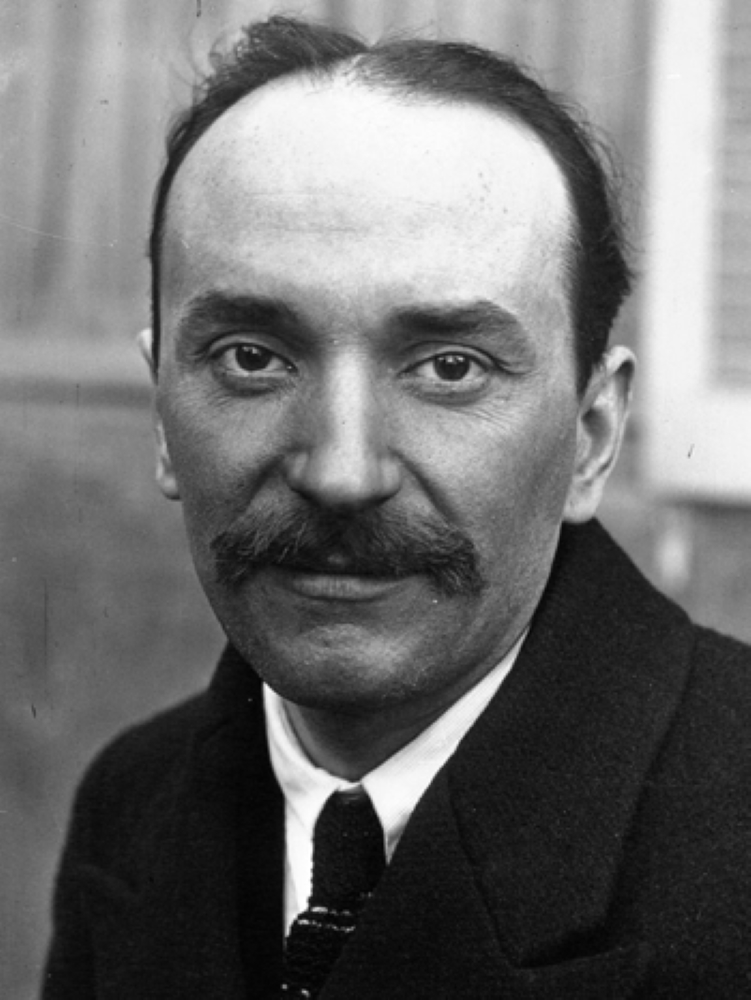
When Ker came to Moscow to the IV. Congress, I had a detailed conversation with him. I had made a deliberate effort to get into conversation with him, for I had read some of his works dealing with international politics, and these had aroused my attention by their knowledge of the subject treated. The Communist International is still a very young organization, and the majority of the leaders of the Communist Parties of the West are still but young people. The socialist parties of the past have had at then disposal but an extremely small number of members really familiar with any special sphere of social life. The majority of party organizers and journalists have been nourished by general ideas. People possessing special knowledge have generally belonged to the camp of the reformists, and we have had scarcely any in our camp. In the socialist party of France those who possessed special concrete knowledge were, besides Jaurès. Compare Morel (of the agrarian question), Albert Thomas (of the history of the labor movement and social legislation), and Rappoport (of the general history of socialism, and of French socialism in particular). Of these, Rappoport was the only one to join us. Thus Comrade Ker, who showed concrete interest for international politics, was, in my eyes, a person whose retention for our Party appeared to be of great importance.
In reply to my question whether he did not observe that Frossard was merely accepting the resolutions of the Comintern in order to sabotage them, Ker replied: “If I were convinced of that. I should not go with Frossard. But it seems to me that Frossard, who is a competent organizer, is sufficiently intimately associated with the labor movement in France to be the better judge of the difficulties to be encountered in pursuing the lines laid down by the Comintern in a petty bourgeois anarchist country. He is no traitor, but a cunctator.” I asked Ker if he held such “postponement’’ to be possible. “No”, replied Ker, “but I fear that without Frossard, without his intelligence and without his organizing ability, we shall not be able to realize our aims even gradually. We shall merely remain a closed circle of pure communists. This is the reason that induced me to leave the Left, in order to avert the danger of Frossard’s expulsion.”
On the evening of the same day upon which this conversation took place, an extraordinarily dramatic scene occurred in the French commission of the congress. Comrade Trotzky was speaking of the circumstance that the Party had not yet broken with the decadent past of the French Labor movement a past in which members given responsible posts by the Party still maintained connection with the bourgeoisie by contributing to bourgeois newspapers, and at times even by membership of freemasons’ lodges. “I am informed”, said Comrade Trotzky”, that some of the leading comrades are still members of freemasons’ lodges. When Serrati, at the II. Congress, made the demand that the 21 conditions be supplemented by another one breaking with freemasonry, it appeared to us as if he were joking, as if he were suggesting something similar to witlidrawal from some order of Jesuits.” “I do not know”, continued Trotzky, “if it is true that the secretary of the party, and leading members of the parliamentary fraction, are members of freemasons’ lodges, as we are informed.”
These words took effect like the lash of a whip. Trotzky stood erect amidst the French comrades. Ker turned pale and let his head sink. For a moment an oppressive silence reigned. Then Ker’s quiet voice was heard: “With regard to me, Comrade Trotzky, you are correctly informed”. Trotzky turned brusquely to the worker from Frossard’s fraction sealed at his left. He laid his hand on his shoulder and addressed him m sharp and cutting sentences: “Do you know what freemasons are? Do you know that they are an organization of bourgeois career hunters, who govern the economic and political life of France, and deceive the workers with the aid of democratic phrases, in the interests of plutocracy? And a proletarian like you permits it that the secretary of the party belongs to a freemasons’ lodge?” Ker rose to his feet: “Up to now there has been no resolution forbidding membership of a freemasons’ lodge. I have continued my membership out of laziness, but shall give it up if the Party demands it”. The session was closed.
The next day I called up Comrade Trotzky on the telephone, in order to consult him as to what course it would be best to take with regard to the address to be delivered by Ker on the Versailles Peace. After the incident of the day before, could he make the speech? Trotzky replied: “It is the first time in my life that I found myself impelled to fire at any one from such close quarters. If he is cured, he must not be given up for lost; but it seems to me that, for the moment, he must be crossed off the list of speakers.” We informed Comrade Cachin. Ker agreed without objection. On returning to France afterwards, and after withdrawing from the Party Secretariat and the Humanité, he did not, however, follow Frossard and desert us, but remained in the Party. We were now certain that Ker could be kept for the Party. He had recognized the justice of our standpoint, and grasped the fact that he who intends to be a communist must break off every link with the past, every bond with the bourgeois world. He bore with resignation his temporary isolation and removal from a leading position. His behavior proved him to be a true champion of communism. Eight days before his death I received from him a work on the “Comité des Forges”, the organization of the French heavy industry. This work appears in the next number of the Communist International, now being printed. I wrote him a letter requesting him to contribute regularly to this periodical. I do not know if the letter reached him.
The Communist International, and the Communist Party of France, lose in Ker a valuable and excellent worker. He was the more faithful and valuable fighter for having won his membership card after a severe internal struggle, and by a victory over inner doubts. Only that which has been won by struggle is durable. Ker’s powers are now lost to the Party. May his example be an encouragement to the many who have not yet been able to bring themselves to break with the past, to conquer all half-heartedness and join our ranks without reserve. Ker’s case forms but a brief episode in the story of the great difficulties of the young Communist movement. We do not hew our Communist Parties out of granite just taken from the earth, but we form them out of elements bequeathed to us by the labor movements of the past, and have to carry out the difficult task of remoulding old material. And we find remnants of the old ideas not only among the intellectuals who have joined the communists, but in the working class itself. These difficulties can only be overcome by obstinate and determined struggle, in which it must never be forgotten that there is still much valuable material which may be utilized for the construction of a new society, and that none of this must be thrown away.
The ECCI published the magazine ‘Communist International’ edited by Zinoviev and Karl Radek from 1919 until 1926 irregularly in German, French, Russian, and English. Restarting in 1927 until 1934. Unlike, Inprecorr, CI contained long-form articles by the leading figures of the International as well as proceedings, statements, and notices of the Comintern. No complete run of Communist International is available in English. Both were largely published outside of Soviet territory, with Communist International printed in London, to facilitate distribution and both were major contributors to the Communist press in the U.S. Communist International and Inprecorr are an invaluable English-language source on the history of the Communist International and its sections.
PDF of full issue: https://www.marxists.org/history/international/comintern/ci/old_series/v01-n28-1923-CI-grn-riaz.pdf
PDF of issue 2: https://www.marxists.org/history/international/comintern/inprecor/1923/v03n57[35]-aug-23-1923-Inprecor-loc.pdf
 Revolution's Newsstand