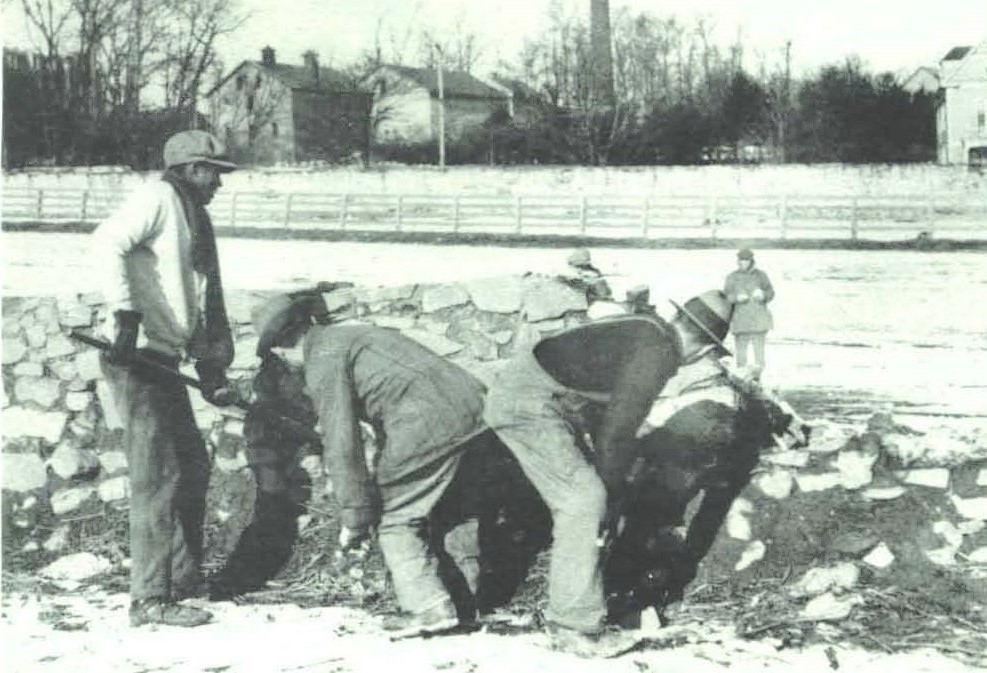
To get any relief during the Great Depression, unemployed in Providence, Rhode Island were made to work in gangs on infrastructure projects. To fight for their interests the workers built the ‘Right to Live Club’ with the help of C.P. activists. One of those reports on the campaign to the Party’s internal bulletin.
‘Organizing On Forced Labor Projects’ by A.B. from Party Organizer. Vol. 6 No. 3-4. March-April, 1933.
ANY comrades have written articles on the various forms of organization of the unemployed on the neighborhood, block and ward scale, but nothing has been written in our periodicals about forms of organization among the unemployed workers on the forced labor projects that are being established throughout the entire country.
While we generally speak of the necessity of organizing for struggle against forced labor, we are at a loss as to the exact form of the organization on these projects and what relation this organization would have to the unemployed movement in a given territory. In this article I wish to discuss the function of a model organization of the above type as it is practiced in Providence, R.I.
The unemployed situation in Providence is typical of any other large city in the United States. While the State statistics show some 35,000 unemployed in this city only some 6,000 are receiving relief from the Department of Public Aid. Those who receive aid must put in a certain amount of work on so-called Relief Projects. There are some 12 such major projects, each employing from 100 to 300 men at a time. There are also numerous small projects employing from 10 to 50 men.
About two months ago a group of workers from one of these Relief Projects, which the workers named “Hungry Hill,” took the initiative in organizing an unemployed club. They conferred with a couple of members of the Executive Board of the National Textile Workers Union, formed their organizing committee and began organizing right on their project. At the first meeting, they decided to name their club the “Right to Live Club” and to make it a city-wide and later state-wide organization. The Right to Live Club grew like wild fire all over the city, so that today it is the largest organization of its kind in New England. There are over 1,000 members in the city of Providence proper, with about 500 more in the outlying districts. The Club takes in any unemployed worker who needs relief, laying no barriers as to religion, race or political beliefs. The club as such carries on activities for cash relief and other issues on a city scale. It functions with regular weekly meetings and regular meetings of the Executive Board. It also attempts to establish functioning organizations on the job, with particular activity on the project itself; this activity to be independent of the regular activity of the club, and to center around issues arising on the job.
Let’s examine the function of the members of the Right to Live Club on the project, they call “Hungry Hill.” This is the project where the club originated and where the organization functions best at the present time. The project is a large park, and the men make paths, build stone walls and stairs, dig up stumps, bury large boulders, etc. The men pride themselves on being 100% organized on this particular project; and the organization is similar to a union organization in an organized shop. Some 300 men work here divided into working gangs of from 25 to 40 with a straw boss over each gang, and a head boss over the whole project.
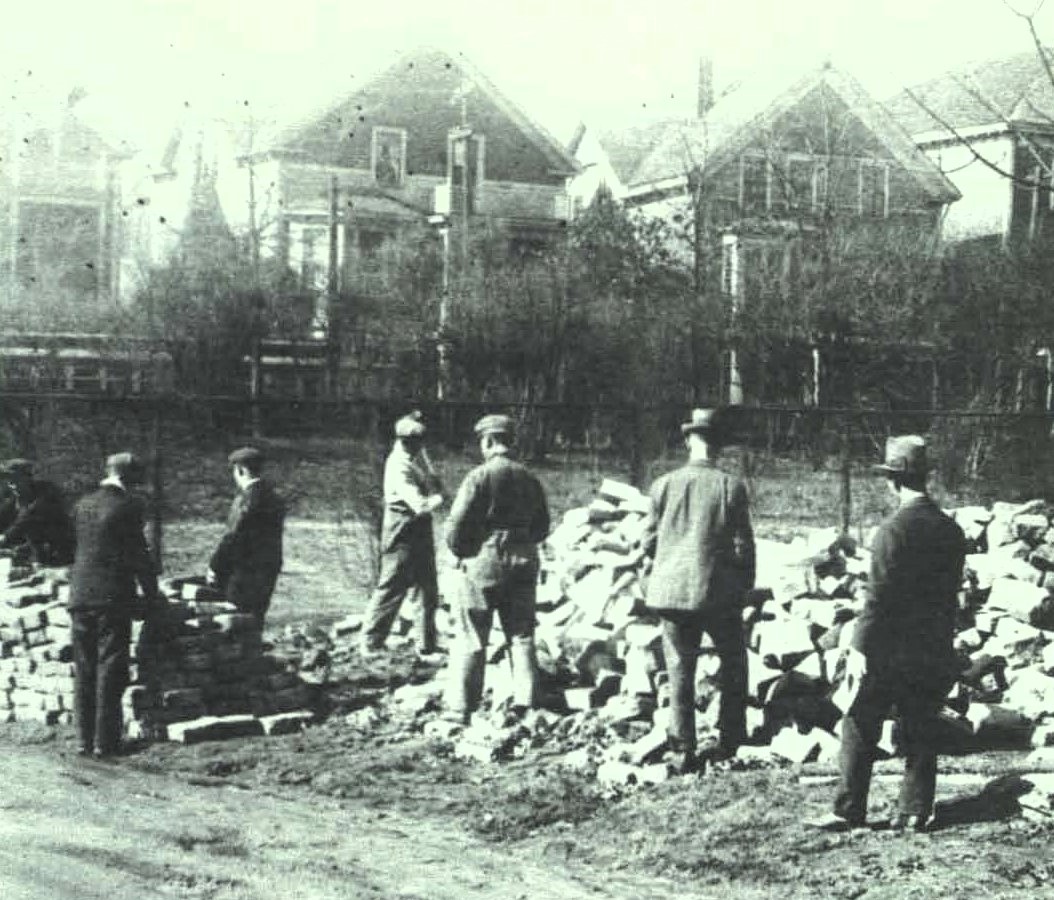
The workers use these gang divisions for their own organization. Each gang elects a captain who is in charge of collecting the dues from his gang. He is in charge of taking up any grievance of his gang, etc. The captain of all gangs on this job form a “Job Committee,” similar to a Shop Committee. This job committee meets daily on the job to check up on any grievances on the part of the men. If a grievance arises in a certain gang the captain tries to settle it with the straw boss of his gang, if this grievance happens to be a small one. If no satisfaction ensues, he reports to the Job Committee which acts for the entire body of men. For instance, the men report to work on a certain morning and it is very cold. The men do not want to work in freezing weather. The Job Committee gets together and decides to walk off the job that day. They take up the issue of being paid for that day with the project boss, or if he refuses to take the responsibility for the men not working, they take it up with the Director of Public Aid and force these officials to agree.
The Department of Public Aid followed a policy in the past of forcing the men to make up days they don’t work, but through the militancy of the workers on all projects under the leadership of the Right to Live Club, this practice was stopped. Now the Department of Public Aid has issued a formal statement that no days will have to be made up.
Numerous other concessions have been won through this strike action on the jobs and the Right to Live Club is gaining in popularity and importance among the unemployed workers of Providence. It would be well for comrades active in unemployed work in other cities to study the function and forms of this organization and apply it similarly elsewhere.
A. B.
The Party Organizer was the internal bulletin of the Communist Party published by its Central Committee beginning in 1927. First published irregularly, than bi-monthly, and then monthly, the Organizer was primarily meant for the Party’s unit, district, and shop organizers. The Organizer offers a much different view of the CP than the Daily Worker, including a much higher proportion of women writers than almost any other CP publication. Its pages are often full of the mundane problems of Party organizing, complaints about resources, debates over policy and personalities, as well as official numbers and information on Party campaigns, locals, organizations, and periodicals making the Party Organizer an important resource for the study and understanding of the Party in its most important years.
PDF of issue: https://archive.org/download/party-organizer_march-april-1933_6_3-4/party-organizer_march-april-1933_6_3-4.pdf
 Revolution's Newsstand