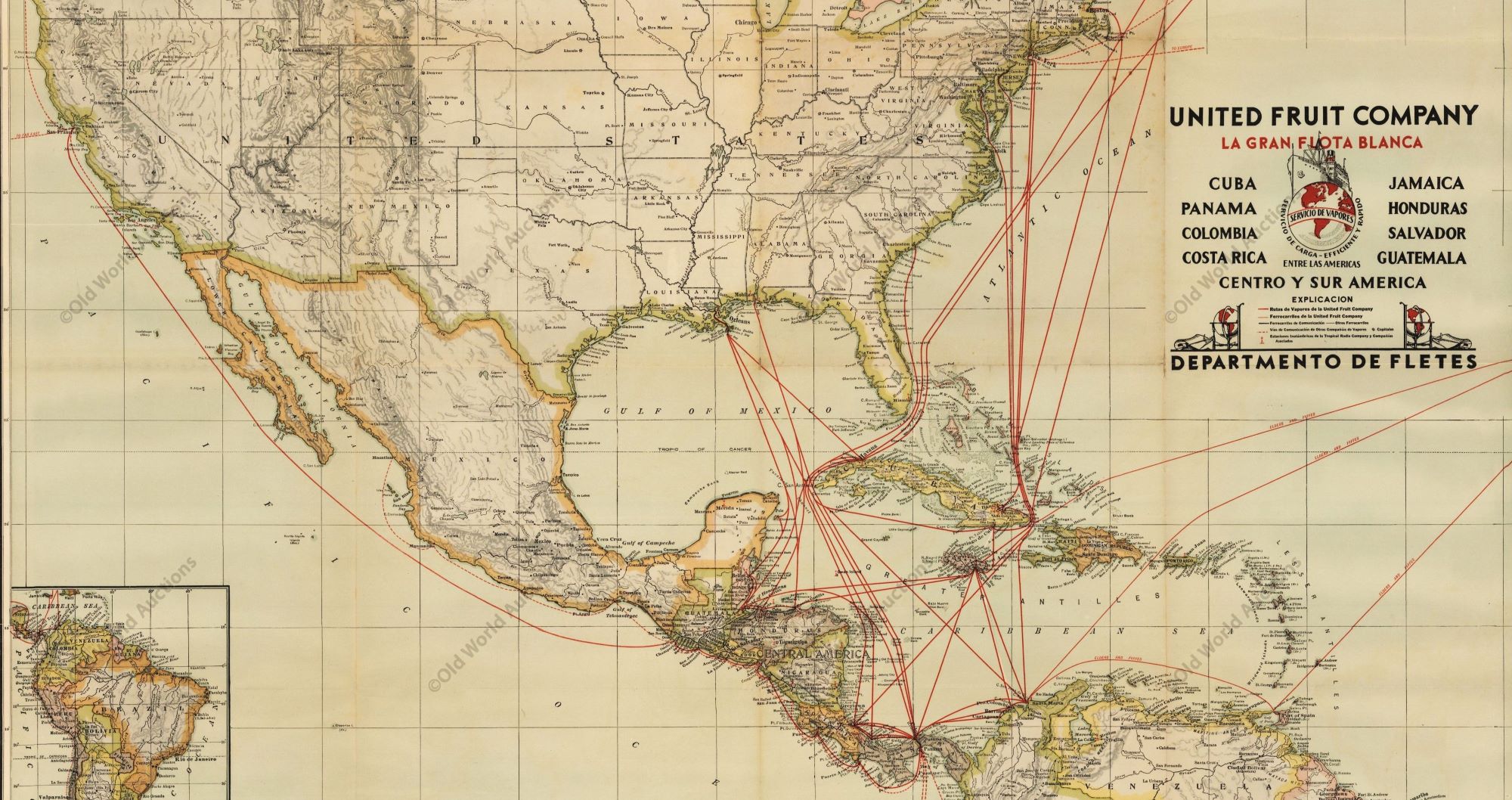
An investigation conducted by the Labor Research Department of the Red International of Labor Unions on the growth of U.S. imperialism and its consequences on the American working class ten years after the end of the First World War.
‘World Power of U.S. Capital and Its Effect on Workers’ from Labor Unity. Vol. 2 No. 11. December, 1928.
ONE of the most far-reaching changes that have taken place in the economic position of the United States during the last decade is the incredible growth in the exportation of capital. Although on the eve of the World War the United States was a debtor to Europe, this country has now become the greatest creditor in the world. One of the results of this change is the transfer of the world financial centre from the City of London to Wall Street and its neighborhood in New York. It is precisely with this powerful lever that American capitalism is changing the entire aspect of the economic and political relations of international capitalism.
In 1914 European investments in the United States reached approximately 5 billion dollars, while United States’ investments abroad comprised only 21⁄2 billions. By 1927, the total sum of European investments in the United States was only 3.7 billions, while United States private loans and investments abroad amounted to 14.5 billions. Together with the 12 billions of State (chiefly war) loans, this amounts to the colossal sum of 26.5 billion dollars of exported capital–exceeding the capital exported from Great Britain in the course of almost a century.
After the war, the American capital export exceeded the British, on the average by 2.5 times per year. Indeed, the export of capital is growing every. year and during the last few years has reached the tremendous figure of 2 billion dollars annually. A new record was made in 1927 with $82,000,193, 500, which exceeded the figure for 1926 by 13 per cent. (According to figures given by Max Winkler, which, although exceeding the official figures, are generally recognized as being the most correct). The beginning of 1928 shows still higher figures.
Usury Instead of Profits
In 1925, interest on foreign investments and payments on loans amounted to 680 million dollars, which exceeded for the first time the assets on the trade balance. Interest on private loans abroad during 1927 amounted already to 795 millions, interest and payments on war loans being 206 millions, whereas there were only 548 million dollars assets on the trade balance. This shows clearly the tremendous significance that export capital has acquired in the trade balance of the United States and how deep is its influence on the entire economic and social structure of the country.
The export of capital is rapidly liquidating the last remnants of the former peculiar isolated “provincialism” of American capitalism. The economy of the United States is being closely bound up with the fate of world capitalism as a whole. And here lies the reason why the American bourgeoisie is now playing a far more important role in the international arena than hitherto. The American bourgeoisie has become one of the decisive factors in international relations, and in its turn is becoming increasingly dependent on surplus value produced outside the borders of its own country.
All Fish For U.S. Nets
There is not a country in the world nor a branch of industry where American investments have not been made during the last few years. Full-page advertisements are to be seen practically daily in all the large newspapers of the United States advertising the floating of a new loan of a foreign government, municipality, trust or foreign concern. The floating of foreign loans, which is centralized in the hands of a few big banks (chiefly the Morgan concern), is truly reflected throughout the whole financial and economic system of American capitalism.
This connection received very clear expression in a report of Malvin Traylor, the former chairman of the Bankers’ Association, made at the end of 1927. This is what he said:
“Whether he liked it or not, every banker in the United States was becoming more and more interested in every foreign investment made, as foreign notes and bonds were penetrating every town and were being covered for the most part with bank deposits. They were being sold to every client and depositor. Governments, municipalities, churches, electric companies, tramway concerns, building corporations, water supply and cinematograph, steel and automobile plants, dye factories, textile mills and many other enterprises throughout the world are seeking money in America. We are purchasing shares in oil works in Mexico, Venezuela, Persia and Trinidad, in Norwegian aluminium enterprises, French silk factories and perfumeries, Finnish cooperatives, Belgian and Spanish telephone concerns, Brazil coffee plantations, African rubber and cane-sugar plantations, fruit plantations in Central America, in Caucasian Manganese enterprises and railroad shares in every country in the world, and so the list could go on without end.”……
“There are hundreds of thousands of American citizens, who, prompted by the instinct of self-preservation and the right of ownership are following very attentively everything that is happening in the rest of the world.
“We have already had cases in the past, when our private citizens have had their property menaced by the actions of foreign Governments. But should we judge from the reaction observed when similar attempts were made by our southern neighbor (i.e. Mexico) it is not difficult to predict that the day will come when no small section of our people will not only be keenly interested in everything that occurs abroad, but will insist, that our government also take a very active interest in these questions.”
It is hardly necessary to add, that the American government is carrying out in deed and action this modest, but very clear and unambiguous order of concentrated financial capital.
Whereas previously, during the period of British commercial-industrial monopolism, the “trade followed the flag,” today the “flag,” following exported capital, is leading to new imperialist adventures and the preparation of new wars. In 1917, capital investments made in supplies and loans to the Allies prompted the American capitalists to participate in the war and compelled thousands of Jimmy Higgins to “save Europe,” to “defend democracy and civilization” against the “Hun.” But since that time the amount of capital exported has increased more than fourfold. The field of its investment now covers the whole globe. Can there be any doubt whatever that dollars will be followed by cruisers and soldiers, to protect the dividends from the numerous dangers threatening them?
Throughout the world we observe today how American capital is pouring out funds and forces, scouting out the ground in all countries so as to prepare this defense and to extend further its field of exploitation.
Export of Business
Of special significance during the last few years is the tendency of American capital to establish its own. enterprises abroad. This matter deserves to be taken up in greater detail, as its development very clearly indicates the whole character of the export of American capital.
Evans Clark’s survey (printed in the New York Times, April, 1928.) shows distinctly the tempestuous and rapid development of foreign enterprises and branches of American trusts.
The oil trusts of the United States either directly or through auxiliary companies control 70 per cent of the oil output of Mexico, 40 per cent of the output in Venezuela, 81 per cent of Peru’s production, the whole output of Columbia, and owns considerable “holdings” in the oil enterprises of Trinidad, Mosul, Rumania, Poland and the Dutch Indies. The Standard Oil company of New York alone invested 375 million dollars abroad in oil-wells, oil refineries, warehouses, banks, etc. This company owns more than 3,000 pumping stations scattered all over the world, not counting those in America. A considerable part of their oil products never reaches the United States, for it is sold abroad.
The automobile trusts during the last few years. have flung out a tremendous network of foreign enterprises and branches. Their sales agencies are to be found in all parts of the world. Furthermore, the General Motors Company has founded assembling enterprises in 5 towns in Australia, as well as in London, Stockholm, Copenhagen, Antwerp, Berlin, Buenos Ayres, Montevideo (Uruguay), Port Elizabeth (South Africa), Wellington (New Zealand), Osaka (Japan), and Batavia (Java).
Ford owns enterprises in Alexandria (Egypt), Antwerp, Barcelona, Berlin, Buenos Ayres, Copenhagen, Cork (Ireland), Manchester, Mexico, Rotterdam, Santiago (Chile), Sao Paolo (Brazil) and in Yokohama. Furthermore, a Ford company in Canada, formally independent, has many enterprises in all the British Dominions. All these enterprises are increasingly concentrating on producing or purchasing various parts, especially automobile bodies, locally.
The agricultural machinery trusts have a large net work of foreign enterprises. The International Harvester Co., has large enterprises in Crox (France, Neusse (Germany) and Norrkoning (Sweden); it controls auxiliary industrial companies in Argentine, Brazil, Australia, New Zealand, Denmark, Italy, Great Britain and France, with auxiliary companies in Canada, England, France, Germany, Holland, Italy and Spain. The foreign turnover of this concern exceeds the turnover on the home market.
The well-known German printing machines factory, the Gergenthaler Setxmaschinen G.M.B.H., is in fact a subsidiary of the American trust which has its own companies in Canada, England, Germany, and South Africa, and which produces linotype-machines adapted for fifty languages. Another American concern (Hoe & Co.) has a large factory in England producing printing presses for several countries. The Worthington Machine Construction Trust likewise owns large factories in England and France.
Grabbing Metals
The metallurgical trusts of the United States own not only tremendous resources of raw materials, (especially in the sphere of light metals) in various parts of the world, but also foreign metallurgical and machining enterprises.
The Aluminium Trust controls more than half of the world’s production. It owns boxite mines in British Guinea, Italy, France and Jugoslavia, and smelting works in Quebec and Norway, and also manufacturing plants in Canada.
The Copper Trust likewise handles more than half the world’s production from the great mines in Mexico, Chile and Peru, while during the last few years several enterprises were closed in the United States and transferred to South America.
The Nickel Trust, known as the International Nickel Co., has a world monopoly on this metal, having got control of the Canadian mines where 90 per cent of the world’s known deposits lie. The National Lead Co. owns half the shares of the British Trust which controls the world’s greatest supplies of tin and has large holdings in the Bolivia deposits.
The two great electrical trusts of the United States. have a large network of branches abroad. The General Electric Co. has enterprises and branches in 33 countries; the Westinghouse Co. having branches in 42 countries with several foreign enterprises.
The Singer Sewing Machine Co., the National Cash Register Co., and the Remington and Underwood Typewriting Machines and Mechanical Office Equipment cater for customers the world over with their chain of factories and agencies.
The Goodyear Rubber Co. handling as it does one-seventh of the world’s rubber output, has branches and auxiliary concerns in more than a 100 states and colonies. Another company, the Goodrich concern, has plantations in Sumatra and on the Malay Peninsula, and factories in Canada, England, France and Germany. A third concern, the Firestone Co., is turning Liberia into its “own” vassal State.
Of much significance is the fact that during recent. years large American construction firms, like the Foundation Co. which has built many New York skyscrapers, are also entering the international arena. Office buildings and plants are being constructed in Montreal, Mexico, London and Paris. The Wellen, White and Stone Co. has also commenced to take large building orders in several countries in all the five continents. The International Cement Corporation owns cement plants in Cuba, Argentine and Uruguay and is building several new plants in various countries.
The International Telephone and Telegraph Co., controls the telephone systems of Spain, Mexico, Chile Brazil, Buenos Ayres, Montevideo, having factories in Paris, London, Madrid, Milan, Budapest, Tokio and Shanghai, with three great international concerns controlling telegraphic cable and radio connections. This company employs more than 50,000 workers and employees abroad.
The Packing Trusts of Chicago, known as the “Big Five” (although really only four large combines exist at the present time) supply a large portion of the world with their meat products and today are receiving large quantities of meat from South America. They control 50 per cent of the cattle trade of Argentina and the slaughter houses of Uruguay. The Armour Trust alone has approximately 100 auxiliary concerns in 12 countries and controls 46 per cent of Great Britain’s meat supply.
The two gramophone trusts of the United States cater for the whole world. One of them, the Victor Co., invested 9 million dollars in the factories of Argentina, Brazil and Cuba and owns the majority of the shares in the British gramophone company, with factories in France, Spain, Czecho-Slovakia, Germany, Italy, Australia and India.
The American cinematograph companies dominate the market in 70 countries, one-fourth of their income from abroad, while in many countries they have bought up all the large cinema theatres.
The broad retailing activities of large trading concerns in the United States in the European market should likewise be noted.
The well-known Woolworth Five and Ten Cent Stores have set up a chain of about 300 similar stores in England and 117 in Canada, while last year their organization was also commenced in Germany (for the most part inaugurated by mixed companies, the majority of the shares being held by the Americans).
The United Drug Company, which in the United States has 10,000 drug stores, is now extending its activities in Europe, owning at the present time 800 of these stores in England.
Practically every large scale trust in the United States is an international corporation with foreign branches, auxiliary concerns, whose industrial enterprises spring up like mushrooms overnight.
U.S. Money Domination
The connections of the big American banks with foreign countries are becoming increasingly wider in scope. They are organizing branches in all countries, which are rapidly overtaking the network of British banks, while simultaneously attempts are made persistently to utilize the connections, long experience and traditions of the latter. It is precisely through these connections and the bank loans provided that the large American trusts are able to exert their control (described above) over many similar enterprises in Europe, and organizing branches of American factories, are able to bring so much pressure to bear, that not infrequently they control governments and parliaments, municipalities and political parties.
All ways and means are used with a steady persistence and on a scale never witnessed before, to prepare the struggle for further control over the most important centres of world economy, to secure “the commanding heights” in industry, to control the trade routes, the sources of raw material and most important strategic points. No one in America doubts for one moment that this struggle will inevitably lead to new wars.
The illusion of the “last war” was perhaps nowhere so rapidly dispelled as in the consciousness of the broad masses of the United States and in the numerous agencies that “form” public opinion. The government, the churches, radio and cinema, schools and women’s clubs, press and science all are being used openly and impudently to prepare the masses for a new war, or rather, for new wars.
Our problem here is not to outline and analyze the imperialist contradictions arising between the United States and other imperialist states (first of all with Great Britain and Japan) brought about by the extended export of capital. We shall merely take up here the consequences that the export of capital will have for the industry of the United States itself, and especially its influence on the development of contradictions between the productive apparatus and the consumers’ purchasing power. On one hand, the export of capital helps to a certain degree the development of industrial exports and thus extends the foreign markets of the United States. In some cases (the frequency of which is certainly exaggerated) loans to foreign governments, municipalities or industrial enterprises, are directly linked up with orders for equipment to be placed with American firms. Sometimes these orders are an indirect result of the connections established through the investments made. But the significance of this influence for the growth of industrial exports should not be over-rated. Today it plays a far less important role than during the epoch of the British monopoly, when the export of British capital and the backward stages in the economic development of new countries automatically compelled the acquirement of British equipment and finished goods, or, as was observed during the war, when American loans to the Allies were for the most part made up of supplies of ammunition, food, oil, etc., on credit. At the present time the investment of American capital abroad is no longer so distinctly bound up with the supply of goods, and has become purely financial in character. These investments are made by the banks whose only consideration is a high and sufficiently reliable interest return. The question of influencing industrial exports is now pushed into the background, although the investing banks are the actual owners of corresponding branches of industry. And naturally, the broad strata of the bourgeoisie who purchase these foreign bonds are still less concerned with this question.
Cutting The Market
Of still greater importance is the fact that export capital, even if it does help to increase industrial exports, creates as it develops an opposite tendency, in the long run outweighing the former.
With the present limited state of the world markets and the desperate struggle that is made for every trading sphere that has not yet been finally divided up, the flow of investments, directed to the industrial countries of Europe or to the colonies and semi-colonies, there to accelerate the industrialization process, rapidly creates new competitors for American industries working for the export trade. No government “choice” of the direction of export-capital and no attempts on the part of capitalist “planning” itself can change this position. The more favorable are the industrial conditions in the given locality abroad, the cheaper the labor power, etc., the more dangerous becomes the new competitor and it is precisely these regions, that are sought out for investments by capital. Even when export capital appears in the organization of American enterprises, that is, when American capital retains in its own hands not only the distribution of a large part of the profits, but controls also the entire process of production, the situation is in no way changed for American industry.
Meanwhile, as we saw earlier, the basic tendency in this sphere is precisely, that the American firms begin by organizing abroad first their sales agencies, then assembling enterprises are established which increasingly take up the production of various parts. locally, which later turn the production of the whole product so as to cut down transport expenses and utilize the cheap labor power on the spot. The profits of American capital are by no means decreased by this practice. On the contrary, they are increased, but the foreign markets for American industries contract inevitably. We have observed time and again in the past, that American trusts completely closed down various enterprises in the United States and transferred their production abroad.
But possibly the export of capital, which supplies the United States with considerable super-profits, causes a compensating tendency (referred to above) through the widening of the home market. True, we note that a certain extension of the home market undoubtedly takes place as a result of the growing consumption of the bourgeoisie and the increased possibility of corrupting the labor aristocracy. But the growth of the personal consumption of the bourgeoisie, despite all the incredible luxury of the American millionaires, is, after all, limited, and besides the American bourgeoisie prefer to spend the profits with which they do not know what to do, in the restaurants and night-clubs of Paris, the Riviera and Italy. The sums spent by American tourists grow as every year goes by, and comprise a very large part of the liabilities of the American balance (in 1927 this sum was 770 million dollars). The bribing of the labor aristocracy with a few crumbs of the super-profits reaped in is not very widespread in scope, as the contingents of skilled workers that capitalism has to corrupt are continually decreasing as a result of rationalization, and as capitalism is by no means prone to make presents. Meanwhile, the exploitation and position of the broad masses, as a result of the development cf capital export, is becoming increasingly worse, and there is no sign of improvement. This was noted by Hobson who pointed out that while export capital was increasing the “national income,” it also changed the distribution of this income. The capitalists’ share was increasing while that of the working class was decreasing. Only the position of the workers in the luxury trades was improving, with an increased demand for the various forms of labor rendering personal services to the bourgeoisie.
Less Wages
This is precisely what we see today in the United States. The phenomenal growth in the export of capital, facilitating as it does, the corruption of the ever-contracting strata of the labor aristocracy, and increasing the parasitic elements of the population, at the same time worsens the position of the broad working masses and enhances unemployment. Even various representatives of the bourgeoisie, not completely subject to the rapidly growing process of amalgamation between industrial and financial capital, have had to turn their attention to these results of the export of capital. Even Davis, the Secretary of Labor, was forced to declare in one of his speeches dealing with the results of rationalization: “We must ask ourselves how much longer we shall be able to rejoice over our prosperity, if we fail to cover a far larger part of our needs with our own production, instead of lending American money to foreign industries that compete with us. America must have a customs tariff that will not permit the import of any goods that we are able to produce ourselves. Those, whose eyes look abroad, are still further complicating the labor problem in the United States”. (Taken from the “Berliner Tageblatt” of May 24, 1928.)
It is plain that Morgan and Co., will not heed these lamentations. But they are very characteristic indeed as they show clear enough the maturing contradictions resulting from the export of capital.
In general the analysis of the causes and consequences of the post-war export of capital from the United States completely bears out, and is a splendid illustration of the well-known statements that Lenin made about capital export:
“The export of goods-was typical of the former capitalism. But for the new capitalism. with its dominating monopolies, the export of capital has now become typical.”
A very clear example of this tendency is today the United States. Lenin showed how capital arises that seeks investment abroad despite industrial stagnation inside the country.
“It is plain, that if capitalism developed agriculture… it would raise the standard of the masses, which despite the great technical progress made, is everywhere below the subsistence level, then there could be no question of a “superfluous” capital…But then capitalism would not be capitalism, as the inequality of development and the half-starved position of the masses are inevitable, basic conditions and prerequisites for this method of production. While capitalism remains capitalism “superfluous capital will not be used to raise the standard of the masses, as this would decrease the profits of the capitalists. Consequently superfluous capital is used to enhance profits by exporting it abroad to the backward countries.”
Already these causes and sources of export capital demonstrate the “over-ripeness” of capitalism in the given country: The necessity of exporting capital is created by the fact that in a few countries capitalism has become “over-ripe” and that (through the backward condition of agriculture and the poverty of the masses) capitalism has no field of “profitable investment.” Meanwhile, the development of capital export still further increases this “over-ripeness,” these elements of disintegration and parasitism.
“The export of capital comprises one of the most vital economic basis of imperialism, it enhances still further the complete separation from production of the rentier class living by the exploitation of the labor of several overseas countries and colonies, and spreads an atmosphere of parasitism throughout the whole country.”
Lenin’s statements referred at that time chiefly to Great Britain, where, according to Schulze-Graevenitz, whom he quoted, we find that: “Despite an absolute increase of industrial exports, the relative significance in the national economy of income from interest, dividends, emissions and speculation, was increasing, while the industrial state was growing into a usurer state. But “a rentier state is a state of parasitic, disintegrating capitalism.” Even at that time Lenin called attention to the especially rapid growth of these very tendencies in the United States.
“In the United States” he wrote, “economic development during the last 10 years has been still more rapid than in Germany, and accordingly the parasitic features of this new type of American capitalism have become especially clear.”
Since then these tendencies and especially the export of capital from the United States have grown tremendously. Only the dazzling light of the “American economic miracle,” which unfortunately is influencing many alleged Marxian attempts to analyze the economy of the United States, may prevent these elements of parasitism, so dominant at the present time, from being noticed. United States capitalism, as we know it today, is no exception in the general picture of capitalist disintegration, but is in fact its greatest and clearest embodiment. The export of capital, far from being an outlet or valve for the foregoing contradictions is in reality leading to their further growth and intensification.
Labor Unity was the monthly journal of the Trade Union Educational League (TUEL), which sought to radically transform existing unions, and from 1929, the Trade Union Unity League which sought to challenge them with new “red unions.” The Leagues were industrial union organizations of the Communist Party of the United States (CPUSA) and the American affiliate to the Red International of Labor Unions. The TUUL was wound up with the Third Period and the beginning of the Popular Front era in 1935.
PDF of full issue: https://www.marxists.org/history/usa/pubs/labor-unity/v2n11-w30-dec-1928-TUUL-labor-unity.pdf
 Revolution's Newsstand