What work you do is very often determined by ‘race’ and by gender. In the United States that has meant a triple exploitation of Black women workers, forced into the narrowest job prospects with the lowest pay and worst conditions. Grace Hutchins, co-founder of the Labor Research Association, review the situation in 1930.
‘Negro Women Workers Fight Conditions of Slavery’ by Grace Hutchins from Working Woman. Vol. 1 No. 5. February, 1930.
Of all workers under capitalism, Negro women are the most exploited. Slaving longest hours at lowest pay, nearly 2,000,000 unorganized. Negro women workers call out to fellow-workers for help through organization. Where do these women work, and what do they do?
On Southern Farms.
The last census, taken 10 years ago, tells us that over 600,000 Negro women workers are farm laborers in the South. But this is an under-statement, because the census was taken in January when there is not so much work on farms as in the spring, summer and autumn months. The number is more nearly a million.
Picking cotton and tobacco in the hot sun all day, stooping over the long rows of plants, lifting heavy bags, and dragging them to be weighed, these agricultural wo men workers are still doing what chattel slaves did before the Civil War. Only now they are paid an average of 10 cents an hour for the job and are expected to provide a living out of it. “Living” is merely existing in little cabins without the means to buy proper food enough to get the strength to go to work.
Serving the Rich Class.
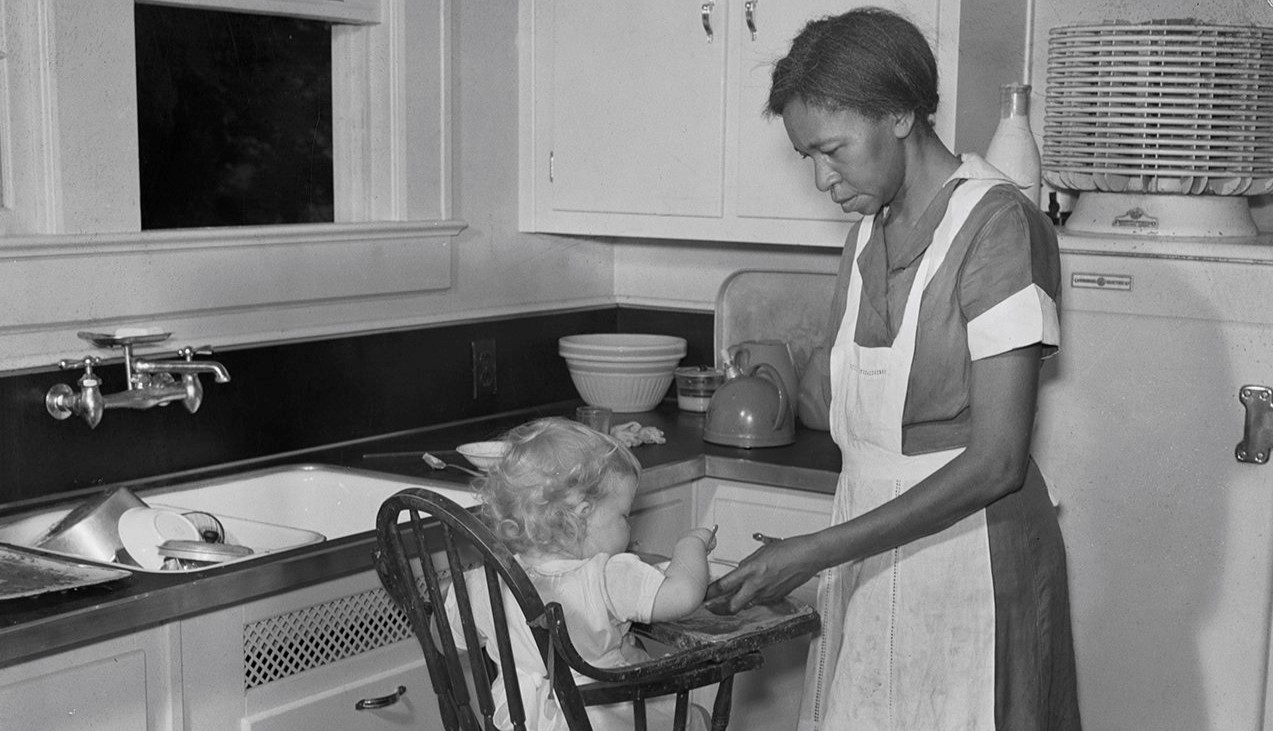
About 800,000 Negro women workers are in domestic and personal service. The leisure class like colored servants, because “they come cheaper” and because in the past they have been more humble and docile in accepting orders from a mistress.
But those days of submissiveness are nearing an end. Negro women, as well as men, are awaking to class-consciousness as self-respecting workers who will no longer tolerate the chains put upon them by the master class. An organization of household workers including all those who are in “domestic and personal service” will demand a 7-hour day, increase of wages, and freedom to live independently.
Negro Janitors.
Down in wet basements of tenement and apartment houses live the Negro janitors and their wives, working from 5 a.m. to 11 p.m. Landlords and tenants depend on the janitors to keep the furnace going, clean the whole house and the sidewalk and do all the odd chores, but pay is miserably small. Dark basements quarters and $10 a month make up the wages in return for a 16-18 hour day’s labor.
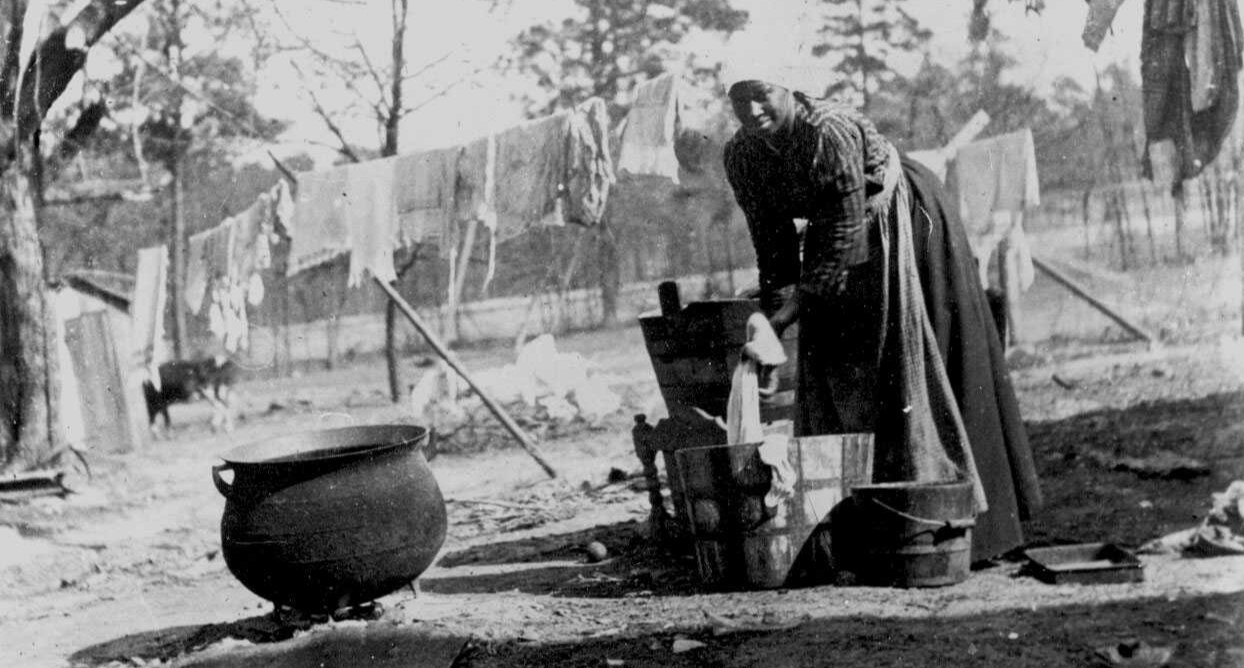
The janitor’s wife must help with all the work. Sometimes she is herself the janitor while the man goes out on other work, trying to make up a meager living with some other earnings. As one Negro janitor says: “It is necessary for janitors to organize into a fighting union to better their conditions, and I think all janitors, Negro and white, should be together in that union. And a union led by the Trade Union Unity League will take in all.”
In Factories.
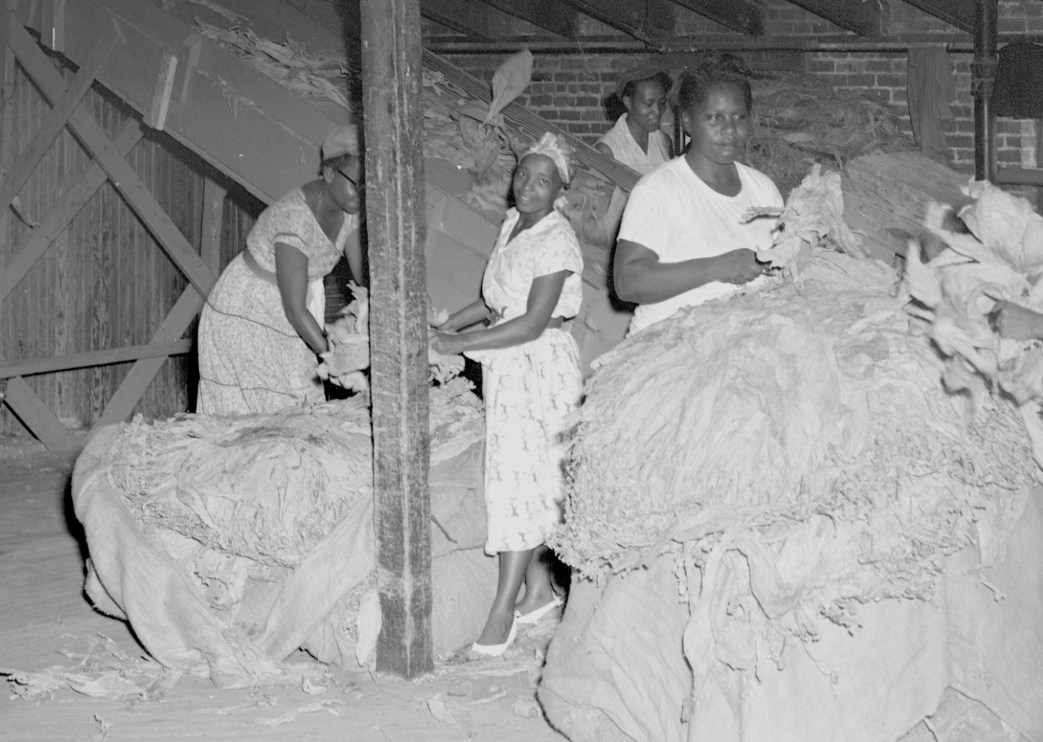
Tobacco factories employ a fifth of the 110,000 Negro women in manufacturing industries. Centering largely in North and South Carolina, Kentucky and Missouri, the tobacco industry employs colored women on the heaviest, dirtiest, and dustiest jobs. Cigarette plants have moved away from New York City, where wages were a little higher, and are now concentrated in the low-wage southern states. Smaller cigar plants center largely in New Jersey and in New York City, on the upper east side. Unpacking the tobacco from hogsheads raises irritating dust, and it is Negro women who do this job. In the steaming room colored women are the ones who must stand the high degree of humidity and the heavy odor of damp tobacco. Steaming or stripping the tobacco leaves is a semi-skilled job, and Negro women do it well, but higher skill brings no promotion to any other department in the factory.
For a 10-11 hour day in these tobacco plants, under such conditions, colored women may average $6-$8 a week. The great R.J. Reynolds Tobacco Co., making vast profits of over $32,000,000 in 1929, pays wages of $7-$11 a week to the 12,000 workers in its plants at Winston-Salem, N.C. More than half of these workers are Negroes.
Colored women in textile mills number about 7,000. They also are doing the heavy general labor or are helping machine operators by such work as filling frames. Many are picking waste matter from raw cotton, the dustiest job. Cotton shreds in the air get into the throat and lungs, and injure the health.
These Negro women textile workers, doing the worst jobs of all, are as welcome in the new left wing industrial union, the National Textile Workers Union, as are the most highly skilled weavers and warpers. Where the treacherous A.F. of L. unions have cared only to organize the small aristocratic group of more highly paid men, the Trade Union Unity League and its affiliated union, welcomes all who are workers regardless of race, color or occupation. Negro delegates at conventions of the National Textile Workers. Union, both in the South and in the North, have found themselves on a complete equality with white fellow-workers.
Laundry Workers.
In nearly every city in the United States Negro women work in the larger laundries under terrific conditions of speed-up and long hours for low wages. Most of the laundry workers in Harlem and the Bronx sections of New York City are Negro women who tell of pay so low that it is impossible to make a living. Overtime work is common, and hours per week sometimes run up to sixty.
Paid by the pound, the workers find the rates continually cut to keep down wages. A rate of 4c a pound was cut to 3e, then to 3c and finally to 2c. Women often faint on the job, while working for long hours in the steam and heat, or contract bronchitis and pneumonia.
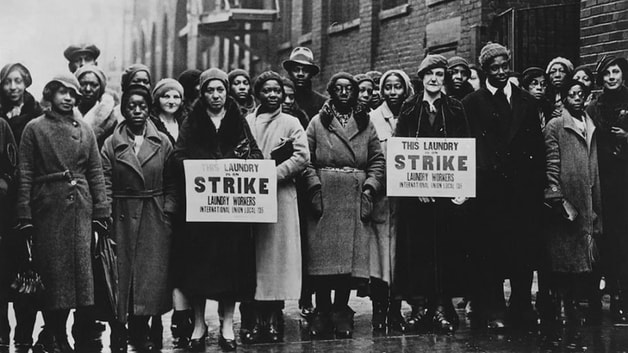
But Negro laundry workers are beginning to organize under the leadership of the Trade Union Unity League. Standing up for their rights in solidarity, they are no longer afraid of the boss. Leaflets and literature have been distributed at the laundry gates; open air meetings are held in spring and summer, and conferences give rank-and-file workers a chance to speak freely of conditions. The T.U.U.L. gives these workers full support.
In the Needle Trades.
In the needle trades, especially in dressmaking, Negro women are more exploited than any other workers. Four thousand Negro women are working in the dress industry in the Harlem district of New York City, many of them under shocking sweatshop conditions. Wages for these colored workers range from $8-$12 a week on the same work for which white union shops pay $26-$44 a week. This pay is less than a third what the white organized workers are getting for the same job.
The Needle Trades Workers Industrial Union welcomes Negro workers, whatever their occupation in the needle trades, on an entirely equal footing with white garment workers. Negro representatives sit on the central committee of the union. Negro members of the union have realized that only by organizing in this industrial union under the leadership of the TU.U.L. can they secure their rights.
Organize Under T.U.U.L. Banner! Negro women workers, Organize! Write into the Working Woman, or to the Trade Union Unity League at 96 Fifth Avenue, New York City. Tell of your conditions. Join the union affiliated with the T.U.U.L. Only by solidarity with other workers–white and colored–will you gain freedom. You have nothing to lose but your chains. You have a world to gain.
The Working Woman, ‘A Paper for Working Women, Farm Women, and Working-Class Housewives,’ was first published monthly by the Communist Party USA Central Committee Women’s Department from 1929 to 1935, continuing until 1937. It was the first official English-language paper of a Socialist or Communist Party specifically for women (there had been many independent such papers). At first a newspaper and very much an exponent of ‘Third Period’ politics, it played particular attention to Black women, long invisible in the left press. In addition, the magazine covered home-life, women’s health and women’s history, trade union and unemployment struggles, Party activities, as well poems and short stories. The newspaper became a magazine in 1933, and in late 1935 it was folded into The Woman Today which sought to compete with bourgeois women’s magazines in the Popular Front era. The Woman today published until 1937. During its run editors included Isobel Walker Soule, Elinor Curtis, and Margaret Cowl among others.
PDF of full issue: https://www.marxists.org/history/usa/pubs/wt/v1n05-feb-1930-WW-R7414.pdf
 Revolution's Newsstand