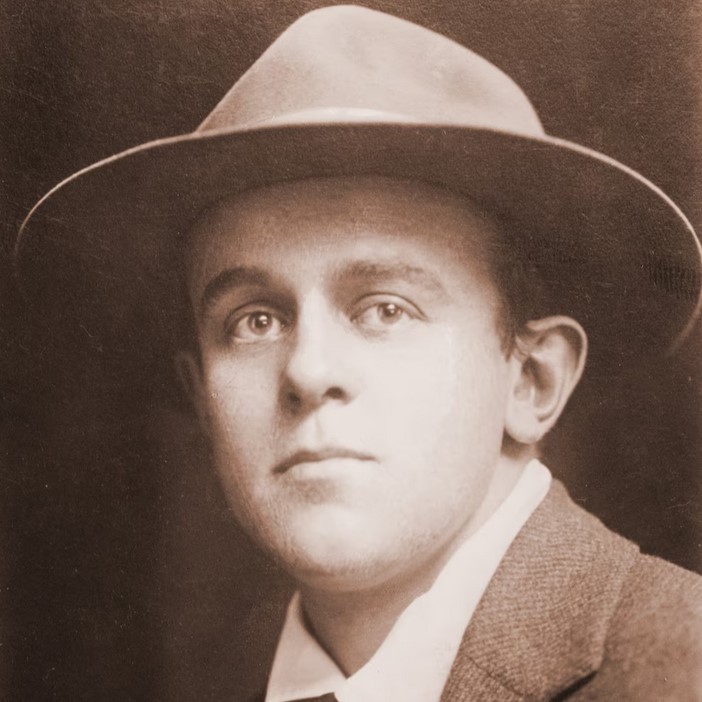
A classic of John Reed’s reporting from the Mexican Revolution. Here he describes a cock-fight, sort of, at a bar in Valle Allegre. But, of course, much more than that.
‘Happy Valley’ by John Reed from The Masses. Vol. 5 No. 10. July, 1914.
It happened to be the day of a fiesta, and, of course, nobody worked in Valle Allegre. The cock-fight was to take place at high noon in the open space back of Catarino Cabrera’s drinking shop—almost directly in front of Dionysio Aguirre’s, where the long burro pack-trains rest on their mountain journeys, and the muleteers swap tales over their tequila. At one, the sunny side of the dry arroyo that is called a street was lined with double rows of squatting peons—silent, dreamily sucking their corn-husk cigarettes as they waited. The bibulously inclined drifted in and out of Catarino’s, whence came a cloud of tobacco smoke and a strong reek of aguardiente. Small boys played leap-frog with a large yellow sow, and on opposite sides of the arroyo the competing roosters, tethered by the leg, crew defiantly. One of the owners, an ingratiating, business-like professional, wearing sandals and one cerise sock, stalked around with a handful of dirty bank-bills, shouting:
“Diez pesos, señores! Only ten dollars!”
It was strange; nobody seemed too poor to bet ten dollars. It came on toward two o’clock, and still no one moved, except to follow the sun a few feet as it swung the black edge of the shadow eastward. The shadow was very cold, and the sun white hot.
On the edge of the shadow lay Ignacio, the violinist, wrapped in a tattered serape, sleeping off a drunk. He can play one tune when intoxicated—Tosti’s “Good-Bye.” When very drunk he also remembers fragments of Mendelssohn’s “Spring Song.” In fact, he is the only high-brow musician in the whole State of Durango, and possesses a just celebrity. Ignacio used to be brilliant and industrious—his sons and daughters are innumerable—but the artistic temperament was too much for him.
The color of the street was red—deep, rich, red clay—and the open space where the burros stood, olive drab; there were brown crumbling adobe walls and squat houses, their roofs heaped high with yellow cornstalks or hung with strings of red peppers. A gigantic green mesquite tree, with roots like a chicken’s foot, thatched on every branch with dried hay and corn. Below, the town fell steeply down the arroyo, roofs tumbled together like blocks, with flowers and grass growing on them, blue feathers of smoke waving from the chimneys, and occasional palms sticking up between. They fell away to the yellow plain where the horse-races are run, and beyond that the barren mountains crouched, tawny as lions, then faintly blue, then purple and wrinkled, notched and jagged across the fierce, bright sky. Straight down and away through the arroyo one saw a great valley, like an elephant’s hide, where the heat-waves buck-jumped.
A lazy smoke of human noises floated up: roosters crowing, pigs grunting, burros giving great racking sobs, the rustling crackle of dried corn-stalks being shaken out of the mesquite tree, a woman singing as she mashed her corn on the stones, the wailing of a myriad of babies.
The sun fairly blistered. My friend Atanacio sat upon the sidewalk thinking of nothing. His dirty feet were bare except for sandals, his mighty sombrero was of a faded dull brick color embroidered with tarnished gold braid, and his serape was of the pottery blue one sees in Chinese rugs, and decorated with yellow suns. He rose when he saw me. We removed our hats and embraced after the Mexican fashion, patting each other on the back with one hand while we shook the other.
“Buenos tardes, amigo,” he murmured. “How do you seat yourself?”
“Very well, much thanks. And you? How have they treated you?”
“Delicious. Superlative thanks. I have longed to see you again.”
“And your family? How are they?” (It is considered more delicate in Mexico not to ask about one’s wife, because so few people are married.)
“Their health is of the best. Great, great thanks. And your family?”
“Bien, bien! I saw your son with the army at Jimenez. He gave me many, many remembrances of you. Would you desire a cigarette?”
“Thanks. Permit me, a light. You are in Valle Allegre many days?”
“For the fiesta only, señor.”
“I hope your visit is fortunate, señor. My house is at your orders.”
“Thanks. How is it that I did not see you at the baile last night, señor? You, who were always such a sympathetic dancer!”
“Unhappily Juanita is gone to visit her mother in El Oro, and now, therefore, I am a platonico. I grow too old for the señoritas.”
“Ah, no, señor. A caballero of your age is in the prime of life. But tell me. Is it true what I hear, that the Maderistas are now at Mapimi?”
“Si, señor. Soon Villa will take Torreon, they say, and then it is only a matter of a few months before the Revolution is accomplished.”
“I think that, yes. But tell me; I have great respect for your opinion. Which cock would you advise me to bet on?”
We approached the combatants and looked them over, while their owners clamored in our ears. They sat upon the curbing negligently herding their birds apart. It was getting toward three of the afternoon.
“But will there be a cock-fight?” I asked them.
“Quien sabe?” drawled one.
The other murmured that possibly it would be mañana. It developed that the steel spurs had been forgotten in El Oro, and that a small boy had gone after them on a burro. It was six miles over the mountains to El Oro.
However, no one was in any hurry, so we sat down also. Appeared then Catarino Cabrera, the saloon keeper, and also the Constitutionalist jefe politico of Valle Allegre, very drunk, walking arm in arm with Don Priciliano Saucedes, the former jefe under the Diaz government. Don Priciliano is a fine-looking, white-haired old Castilian who used to lend money to the peons at twenty per cent. Don Catarino is a former schoolmaster, an ardent Revolutionist—he lends money at a slightly less rate of usury to the same parties. Don Catarino wears no collar, but he sports a revolver and two cartridge-belts. Don Priciliano during the first Revolution was deprived of most of his property by the Maderistas of the town, and then strapped naked upon his horse and beaten upon his bare back with the flat of a sword.
“Aie!” he says to my question. “The Revolution! I have most of the Revolution upon my back!”
And the two pass on to Don Priciliano’s house, where Catarino is courting a beautiful daughter.
Then, with the thunder of hoofs, dashes up the gay and gallant young Jesus Triano, who was a Captain under Orozco. But Valle Allegre is a three days’ ride from the railroad, and politics are not a burning issue there; so Jesus rides his stolen horse with impunity around the streets. He is a large young man with shining teeth, a rifle and bandolier, and leather trousers fastened up the side with buttons as big as dollars—his spurs are twice as big. They say that his dashing ways and the fact that he shot Emetario Flores in the back have won him the hand of Dolores, youngest daughter of Manuel Paredes, the charcoal contractor. He plunges down the arroyo at a gallop, his horse tossing bloody froth from the cruel curb.
Captain Adolfo Melendez, of the Constitutionalist army, slouches around the corner in a new, bottle-green corduroy uniform. He wears a handsome gilded sword which once belonged to the Knights of Pythias. Adolfo came to Valle Allegre on a two weeks’ leave, which he prolonged indefinitely in order to take to himself a wife—the fourteen-year-old daughter of a village aristocrat. They say that his wedding was magnificent beyond belief, two priests officiating and the service lasting an hour more than necessary. But this may have been good economy on Adolfo’s part, since he already had one wife in Chihuahua, another in Farral, and a third in Monterey, and, of course, had to placate the parents of the bride. He had now been away from his regiment three months, and told me simply that he thought they had forgotten all about him by this time.
At half-past four a thunder of cheers announced the arrival of the small boy with the steel spurs. It seems that he had got into a card game at El Oro, and had temporarily forgotten his errand.
But, of course, nothing was said about it. He had arrived, which was the important thing. We formed a wide ring in the open space where the burros stood, and the two owners began to “throw” their birds. But at the first onslaught the fowl upon which we had all bet our money spread its wings, and, to the astonishment of the assembled company, soared screaming over the mesquite tree and disappeared toward the mountains. Ten minutes later the two owners unconcernedly divided the proceeds before our eyes, and we strolled home well content.
Fidencio and I dined at Charlie Chee’s hotel. Throughout Mexico, in every little town, you will find Chinamen monopolizing the hotel and restaurant business. Charlie, and his cousin Foo, were both married to the daughters of respectable Mexican villagers. No one seemed to think that strange. Mexicans appear to have no race prejudices whatever. Captain Adolfo, in a bright yellow khaki uniform and another sword, brought his bride, a faintly pretty brown girl with her hair in a bang, wearing chandelier lusters as earrings. Charlie banged down in front of each of us a quart bottle of aguardiente, and, sitting down at the table, flirted politely with Señora Melendez, while Foo served dinner, enlivened with gay social chatter in pidgin Mexican.
It seemed that there was to be a baile at Don Priciliano’s that evening, and Charlie politely offered to teach Adolfo’s wife a new step which he had learned in El Paso, called the Turkey Trot. This he did until Adolfo began to look sullen and announced that he didn’t think he would go to Don Priciliano’s, since he considered it a bad thing for young wives to be seen much in public. Charlie and Foo also tendered their regrets, because several of their countrymen were due in the village that evening from Parral, and said that they would, of course, want to raise a little Chinese hell together.
So Fidencio and I finally departed, after solemnly promising that we would return in time for the Chinese festivities after the dance.
Outside, strong moonlight flooded all the village. The jumbled roofs were so many tipped-up silvery planes, and the tree-tops glistened. Like a frozen cataract the arroyo fell away, and the great valley beyond lay drowned in rich, soft mist. The life-sounds quickened in the dark—excited laughter of young girls, a woman catching her breath at a window to the swift, hot torrent of a man’s speech as he leaned against the bars, a dozen guitars syncopating each other, a young buck hurrying to meet his novia, spurs ringing clear. It was cold. As we passed Cabrera’s door a hot, smoky, alcoholic breath smote us. Beyond that you crossed on stepping-stones the stream where the women wash their clothes. Climbing the other bank we saw the brilliant windows of Don Priciliano’s house, and heard the far strains of Valle Allegre’s orchestra.
Open doors and windows were choked with men—tall, dark, silent peons, wrapped to the eyes in their blankets, staring at the dance with eager and solemn eyes, a forest of sombreros.
Now Fidencio had just returned to Valle Allegre after a long absence, and as we stood on the outside of the group a tall young fellow caught sight of him, and, whirling his serape like a wing, he embraced my friend, crying:
“Happy return, Fidencio! We looked for you many months!”
The crowd swayed and rocked like a windy wheat field, blankets flapped dark against the night. They took up the cry:
“Fidencio! Fidencio is here! Your Carmencita is inside, Fidencio. You had better look out for your sweetheart! You can’t stay away as long as that and expect her to remain faithful to you!”
Those inside caught the cry and echoed it, and the dance, which had just begun, stopped suddenly. The peons formed a lane through which we passed, patting us on the back with little words of welcome and affection; and at the door a dozen friends crowded forward to hug us, faces alight with pleasure.
Carmencita, a dumpy, small Indian girl, dressed in a screaming blue ready-made dress that didn’t fit, stood over near the corner by the side of a certain Pablito, her partner, a half-breed youth about sixteen years old with a bad complexion. She affected to pay no attention to Fidencio’s arrival, but stood dumbly, with her eyes on the ground, as is proper for unmarried Mexican women.
Fidencio swaggered among his compadres in true manly fashion for a few minutes, interspersing his conversation with loud virile oaths. Then, in a lordly manner, he went straight across the room to Carmencita, placed her left hand within the hollow of his right arm, and cried: “Well, now; let’s dance!” and the grinning, perspiring musicians nodded and fell to.
There were five of them—two violins, a cornet, a flute and a harp. They swung into “Tres Piedras,” and the couples fell in line, marching solemnly round the room. After parading round twice they fell to dancing, hopping awkwardly over the rough, hard, packed-dirt floor with jingling spurs; when they had danced around the room two or three times they walked again, then danced, then walked, then danced, so that each number took about an hour.
It was a long, low room, with whitewashed walls and a beamed ceiling wattled with mud above, and at one end was the inevitable sewing-machine, closed now, and converted into a sort of an altar by a tiny embroidered cloth upon which burned a perpetual rush flame before a tawdry color print of the Virgin which hung on the wall. Don Priciliano and his wife, who was nursing a baby at her breast, beamed from chairs at the other end. Innumerable candles had been heated on one side and stuck against the wall all around, whence they trailed sooty snakes above them on the white. The men made a prodigious stamping and clinking as they danced, shouting boisterously to one another. The women kept their eyes on the floor and did not speak.
I caught sight of the pimply youth glowering with folded arms upon Fidencio from his corner; and as I stood by the door, fragments of the peons’ conversation floated in to me:
“Fidencio should not have stayed away so long.”
“Carramba! See the way Pablito scowls there. He thought surely Fidencio was dead and that Carmencita was his own!”
And then a hopeful voice:
“Perhaps there will be trouble!”
The dance finally ended and Fidencio led his betrothed correctly back to her seat against the wall. The music stopped. The men poured out into the night where, in the flare of a torch, the owner of the losing rooster sold bottles of strong drink. We toasted each other boisterously in the sharp dark. The mountains around stood dazzling in the moon. And then, for the intervals between dances were very short, we heard the music erupt again, volcanically and exuberantly, into a waltz. The center of twenty curious and enthusiastic youths—for he had traveled—Fidencio strutted back into the room. He went straight to Carmencita, but as he led her out upon the floor Pablito glided up behind, pulling out a large obsolete revolver. A dozen shouts rang:
“Cuidado, Fidencio! Look out!”
He whirled, to see the revolver pointed at his stomach. For a moment no one moved. Fidencio and his rival looked at each other with wrathful eyes. There was a subdued clicking of automatics everywhere as the gentlemen drew and cocked their weapons, for some of them were friends of Pablito’s. I heard low voices muttering:
“Porfirio! Go home and get my shotgun!”
“Victoriano! My new rifle! It lies on the bureau in mother’s room.”
A shoal of small boys like flying-fish scattered through the moonlight to get firearms. Meanwhile, the status quo was preserved. The peons had squatted out of the range of fire, so that just their eyes showed above the window-sills, where they watched proceedings with joyous interest. Most of the musicians were edging toward the nearest window; the harpist, however, had dropped down behind his instrument. Don Priciliano and his wife, still nursing the infant, rose and majestically made their way to some interior part of the house. It was none of their business; besides, they did not wish to interfere with the young folks’ pleasure.
With one arm Fidencio carefully pushed Carmencita away, holding his other hand poised like a claw. In the dead silence he said:
“You little goat! Don’t stand there pointing that thing at me if you’re afraid to shoot it! Pull the trigger while I am unarmed! I am not afraid to die, even at the hand of a weak little fool who doesn’t know when to use a gun!”
The boy’s face twisted hatefully, and I thought he was going to shoot.
“Ah!” murmured the peons. “Now! Now is the time!”
But he didn’t. After a few minutes his hand wavered, and with a curse he jammed the pistol back into his pocket. The peons straightened up again and crowded disappointedly around the doors and windows. The harpist got up and began to tune his harp. There was much thrusting back of revolvers into holsters, and the sprightly social conversation grew up again. By the time the small boys arrived with a perfect arsenal of rifles and shotguns, the dance had been resumed. So the guns were stacked in a corner.
As long as Carmencita claimed his amorous attention and there was a prospect of friction, Fidencio stayed. He swaggered among the men and basked in the admiration of the ladies, outdancing them all in speed, abandon and noise.
But he soon tired of that, and the excitement of meeting Carmencita palled upon him. So he went out into the moonlight again and up the arroyo, to take part in Charlie Chee’s celebration.
As we approached the hotel we were conscious of a curious low moaning sound which seemed akin to music. The dinner-table had been removed from the dining-room into the street, and around the room turkey-trotted Foo and another Celestial. A barrel of aguardiente had been set up on a trestle in one corner, and beneath it sprawled Charlie himself, in his mouth a glass tube which syphoned up into the barrel. A tremendous wooden box of Mexican cigarettes had been smashed open on one side, the packages tumbling out upon the floor. In other parts of the room two more Chinamen slept the profound sleep of the very drunk, wrapped in blankets. The two who danced sang meanwhile their own version of a once popular ragtime song called “Dreamy Eyes.” Against this marched magnificently “The Pilgrim’s Chorus” from Tannhäuser, rendered by a phonograph set up in the kitchen. Charlie removed the glass tube from his mouth, put a thumb over it, and welcomed us with a hymn which he sang as follows:
“Pooll for the shore, sailor,
Pooll for the shore!
Heed not the lowling lave
But pooll for the shore!”
He surveyed us with a bleary eye, and remarked: “Bledlau! Je’ Calist is wid us here toni’!”
After which he returned the syphon to his mouth.
We blended into these festivities. Fidencio offered to exhibit the steps of a new Spanish fandango, the way it was danced by the damned “grasshoppers” (as Mexicans call the Spaniards). He stamped bellowing around the room, colliding with the Chinamen, and roaring “La Paloma.” Finally, out of breath, he collapsed upon a nearby chair, and began to descant upon the many charms of Adolfo’s bride, whom he had seen for the first time that day. He declared that it was a shame for so young and blithe a spirit to be tied to a middle-aged man; he said that he himself represented youth, strength and gallantry, and was a much more fitting mate for her. He added that as the evening advanced he found that he desired her more and more. Charlie Chee, with the glass tube in his mouth, nodded intelligently at each of these statements. I had a happy thought. Why not send for Adolfo and his wife and invite them to join our festivities? The Chinamen asleep on the floor were kicked awake and their opinion asked. Since they could understand neither Spanish nor English, they answered fluently in Chinese. Fidencio translated.
“They say,” he said, “that Charlie ought to be sent with the invitation.”
We agreed to that. Charlie rose, while Foo took his place at the glass tube. He declared that he would invite them in the most irresistible terms, and, strapping on his revolver, disappeared.
Ten minutes later we heard five shots. We discussed the matter at length, not understanding why there should be any artillery at that time of night, except that probably two guests returning from the baile were murdering each other before going to bed. Charlie took a long time, in the meanwhile, and we were just considering the advisability of sending out an expedition to find him when he returned.
“Well, how about it, Charlie?” I asked. “Will they come?”
“I don’t think so,” he replied doubtfully, swaying in the doorway.
“Did you hear the shooting?” asked Fidencio.
“Yes, very close,” said Charlie. “Foo, if you will kindly get out from under that tube….”
“What was it?” we asked.
“Well,” said Charlie, “I knocked at Adolfo’s door and said we were having a party down here and wanted him to come. He shot at me three times and I shot at him twice.”
So saying, Charlie seized Foo by the leg and composedly lay down under the glass tube again.
We must have stayed there some hours after that. I remember that toward morning Ignacio came in and played us Tosti’s “Good-bye,” to which all the Chinamen danced solemnly around.
At about four o’clock Atanacio appeared. He burst open the door and stood there very white, with a gun in one hand.
“Friends,” he said, “a most disagreeable thing has happened. My wife, Juanita, returned from her mother’s about midnight on an ass. She was stopped on the road by a man muffled up in a poncho, who gave her an anonymous letter in which were detailed all my little amusements when I last went for recreation to Juarez. I have seen the letter. It is astonishingly accurate! It tells how I went to supper with Maria and then home with her. It tells how I took Ana to the bull-fight. It describes the hair, complexion and disposition of all those other ladies and how much money I spent upon them. Carramba! It is exact to a cent!
“When she got home I happened to be down at Catarino’s taking a cup with an old friend. This mysterious stranger appeared at the kitchen door with another letter in which he said I had three more wives in Chihuahua, which, God knows, is not true, since I only have one!
“It is not that I care, amigos, but these things have upset Juanita horribly. Of course, I denied these charges, but, valgame Dios! women are so unreasonable!
“I hired Dionysio to watch my house, but he has gone to the baile, and so, arousing and dressing my small son, that he may carry me word of any further outrages, I have come down to seek your help in preserving my home from this disgrace.”
We declared ourselves willing to do anything for Atanacio—anything, that is, that promised excitement. We said that it was horrible, that the evil stranger ought to be exterminated.
“Who could it be?”
Atanacio replied that it was probably Flores, who had had a baby by his wife before he married her, but who had never succeeded in quite capturing her affections. We forced aguardiente upon him and he drank moodily. Charlie Chee was pried loose from the glass tube, where Foo took his place, and sent for weapons. And in ten minutes he returned with seven loaded revolvers of different makes.
Almost immediately came a furious pounding on the door, and Atanacio’s young son flung himself in.
“Papa!” he cried, holding out a paper. “Here is another one! The man knocked at the back door, and when Mamma went to find out who it was she could only see a big red blanket covering him entirely up to the hair. He gave her a note and ran away, taking a loaf of bread off the window.”
With trembling hands Atanacio unfolded the paper and read aloud:
Your husband is the father of forty-five small children in the State of Coahuila.
(Signed) Some One Who Knows Him.
“Mother of God!” cried Atanacio, springing to his feet, in a transport of grief and rage. “It is a lie! I have always discriminated! Forward, my friends! Let us protect our homes!”
Seizing our revolvers we rushed out into the night. We staggered panting up the steep hill to Atanacio’s house—sticking close together so no one would be mistaken by the others for the Mysterious Stranger. Atanacio’s wife was lying on the bed weeping hysterically. We scattered into the brush and poked into the alleys around the house, but nothing stirred. In a corner of the corral lay Dionysio, the watchman, fast asleep, his rifle by his side. We passed on up the hill until we came to the edge of the town. Already dawn was coming. A never-ending chorus of roosters made the only sound, except the incredibly soft music from the baile at Don Priciliano’s, which would probably last all that day and the next night. Afar, the big valley was like a great map, quiet, distinct, immense. Every wall corner, tree branch and grass-blade on the roofs of the houses were pricked out in the wonderful clear light of before-dawn.
In the distance, over the shoulder of the red mountain, went a man covered up in a red serape.
“Aha!” cried Atanacio. “There he goes!”
And with one accord we opened up on the red blanket. There were five of us, and we had six shots apiece. They echoed fearfully among the houses and clapped from mountain to mountain, reproduced each one a hundred times. Of a sudden the village belched half-dressed men and women and children. They evidently thought that a new revolution was beginning. A very ancient crone came out of a small brown house on the edge of the village rubbing her eyes.
“Oiga!” she shouted. “What are you shooting at?”
“We are trying to kill that accursed man in the red blanket, who is poisoning our homes and making Valle Allegre a place unfit for a decent woman to live in!” shouted Atanacio, taking another shot.
The old woman bent her bleary eyes upon our target.
“But,” she said gently, “that is not a bad man. That’s only my son going after the goats.”
Meanwhile, the red-blanketed figure, never even looking back, continued his placid way over the top of the mountain and disappeared.
The Masses is among the most important, and best, radical journals of 20th century America. It was started in 1911 as an illustrated socialist monthly by Dutch immigrant Piet Vlag, who shortly left the magazine. It was then edited by Max Eastman who wrote in his first editorial: “A Free Magazine — This magazine is owned and published cooperatively by its editors. It has no dividends to pay, and nobody is trying to make money out of it. A revolutionary and not a reform magazine; a magazine with a sense of humour and no respect for the respectable; frank; arrogant; impertinent; searching for true causes; a magazine directed against rigidity and dogma wherever it is found; printing what is too naked or true for a money-making press; a magazine whose final policy is to do as it pleases and conciliate nobody, not even its readers — There is a field for this publication in America. Help us to find it.” The Masses successfully combined arts and politics and was the voice of urban, cosmopolitan, liberatory socialism. It became the leading anti-war voice in the run-up to World War One and helped to popularize industrial unions and support of workers strikes. It was sexually and culturally emancipatory, which placed it both politically and socially and odds the leadership of the Socialist Party, which also found support in its pages. The art, art criticism, and literature it featured was all imbued with its, increasing, radicalism. Floyd Dell was it literature editor and saw to the publication of important works and writers. Its radicalism and anti-war stance brought Federal charges against its editors for attempting to disrupt conscription during World War One which closed the paper in 1917. The editors returned in early 1918 with the adopted the name of William Lloyd Garrison’s The Liberator, which continued the interest in culture and the arts as well as the aesthetic of The Masses. Contributors to this essential publication of the US left included: Sherwood Anderson, Cornelia Barns, George Bellows, Louise Bryant, Arthur B. Davies, Dorothy Day, Floyd Dell, Max Eastman, Wanda Gag, Jack London, Amy Lowell, Mabel Dodge Luhan, Inez Milholland, Robert Minor, John Reed, Boardman Robinson, Carl Sandburg, John French Sloan, Upton Sinclair, Louis Untermeyer, Mary Heaton Vorse, and Art Young.
PDF of full issue: https://www.marxists.org/history/usa/pubs/masses/issues/tamiment/t40-v05n10-m38-jul-1914.pdf
 Revolution's Newsstand