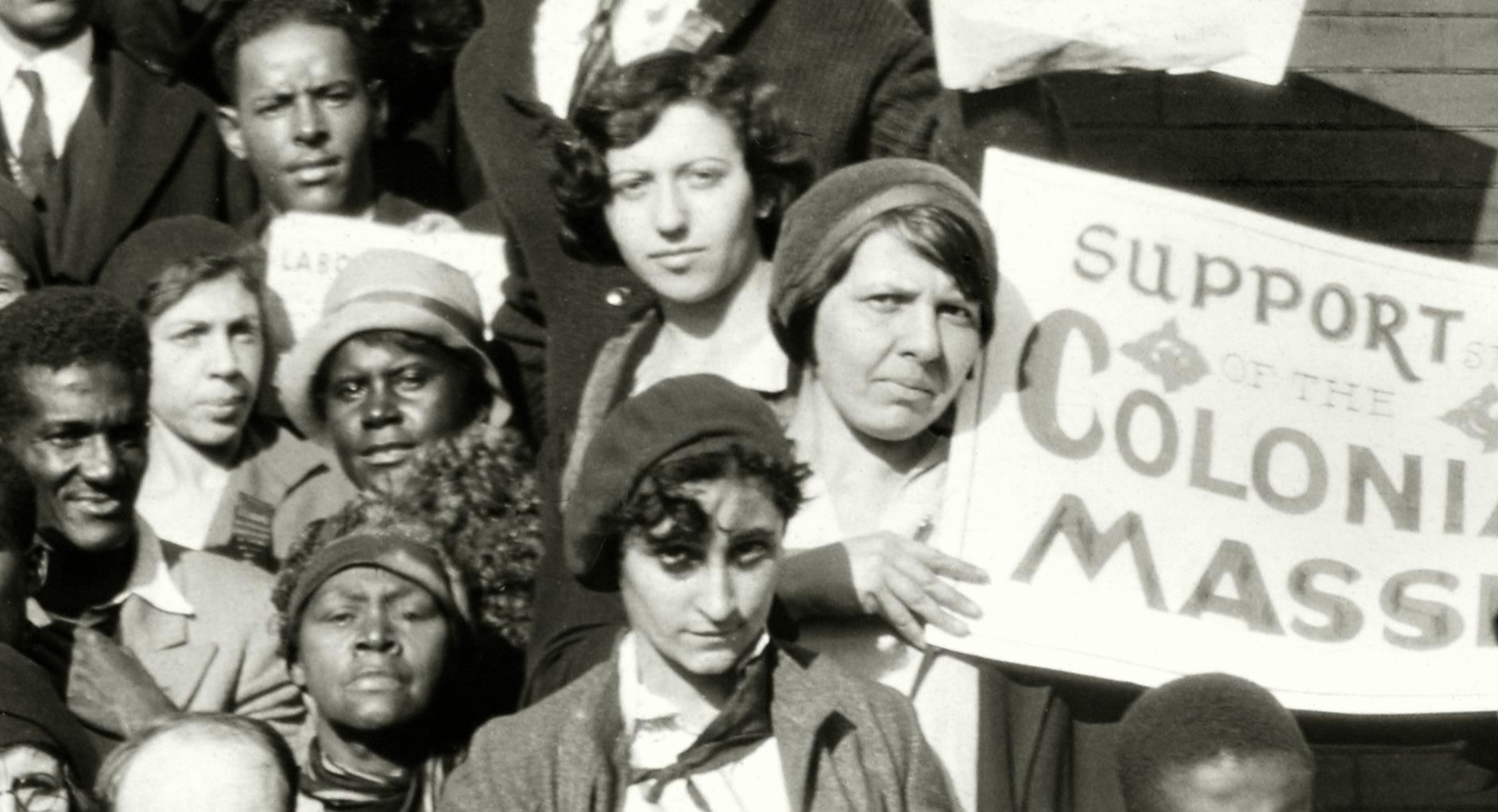
A report on women delegates at the Emergency National Convention Against Lynching in St. Louis during November, 1930.
‘Working Women Take Part in A.N.L.C. Convention’ by Gertrude Mann from Working Woman. Vol. 1 No. 15. December, 1930.
ST. LOUIS. Through all sorts of hardships and by every conceivable means the women delegates came to the national anti-lynching convention of the American Negro Labor Congress, now the League of Struggle for Negro Rights. Tired and worn out, they came to the convention to pledge their aid as working women to carry on the fight for the organization of all workers, Negro and white, and as their particular task, the organization of working women and youth, and to carry on an intense struggle against lynching, jim crowism and segregation.
Many were the stories they told of the difficulties they had en route jim crowed at the bus stations; no food would be served to them in the common eating places; they were not even permitted to use the toilets, no place to rest, but on they came From Georgia and Tennessee in a broken down old car, came the Negro women delegates–two days and nights continual traveling in the cold and rain, and to add to the misery, a delegate from Georgia lost her bag which contained all her clothes.
The American Negro Labor Congress opened Saturday November 15, with one hundred and twenty delegates present, of which number there were eighteen women, and I might add here, that what they lacked in numbers, was more than made up by the militant and fighting spirit which they displayed. There were eight Negro and ten white women delegates. They came from Indiana, Missouri, Tennessee, Iowa, Michigan, New York, Illinois and Georgia. They represented the following industries: Needle Trades, Office Workers, House Workers, Auto Workers, Waitresses, and Trade Union Unity League organizer.
Our women delegates spoke and told of conditions in their particular territory, and of their struggles in building up locals of the American Negro Labor Congress. Mary Dalton, one of the Atlanta defendants now awaiting. trial (which carries the death penalty if she is convicted) for her heroic struggles to organize the Negro and white workers in the South, made the opening speech at the afternoon session of the second day of the convention.
She said: “It is a victory for the American Negro Labor Congress that we have brought delegates from the principal lynching state of the union from Atlanta where six of our organizers are facing trial for life for daring to hold a meeting of Negro and the white workers. This vicious sentence of death must be smashed by the Negro and white workers of the north and south.”
She further stated that so bitter and hardpressed has become the lot of the poor farmers and the workers in the South, that in spite of the terror of lynch mobs, Ku Klux Klan, and other boss organizations, for the smashing of the working class organizations, that there have been heroic revolts and uprisings of the masses, many of them without leadership, and that the revolutionary movement is growing by leaps and bounds. She stressed the necessity for the building up of Defense Corps, and for determinedly and unceasingly demanding the death penalty for the lynchers.
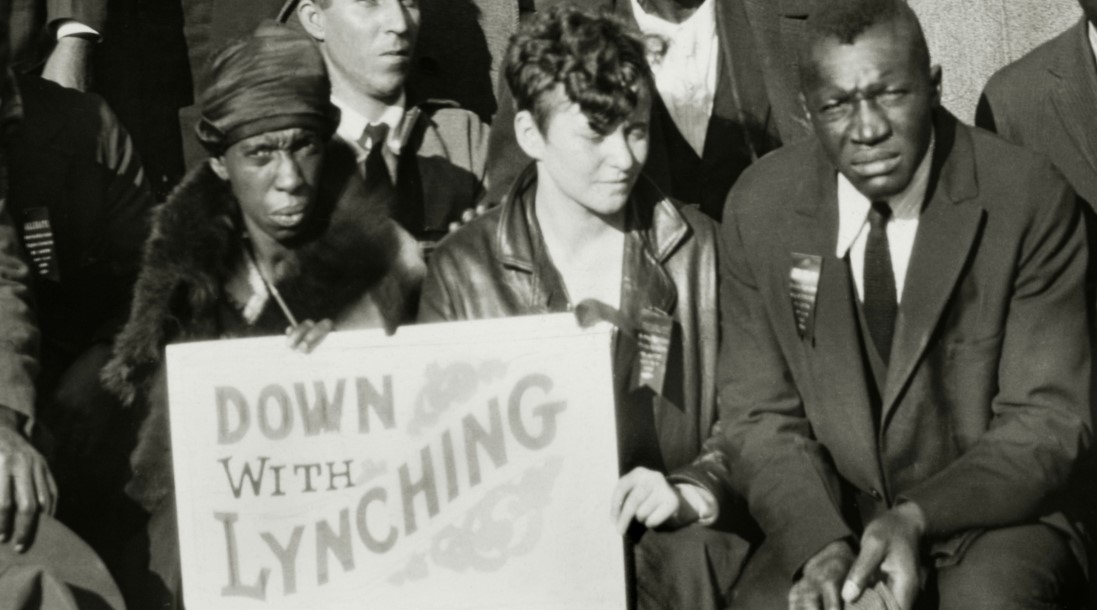
The most militant speech at the convention was made by Mary Peevy, a Negro delegate from Georgia. In her fiery attack on the capitalist class who drive the Negro and white workers, she said “that not only the Negroes are being oppressed but the workers everywhere are being brutally exploited and worked to death, and thrown on the streets to starve. This miserable lot does not only hit all races of people, but all the workers, and we say that if a man or woman can not get a living wage, they are not free; they are slaves. It is our duty to tell you that when you return home, the preachers will tell you to pray these conditions away, but I say that we can not pray these conditions away. We have got to organize white and Negro side by side against our common enemies; we must be willing to die if necessary for the cause we must lay our plans and so strengthen our organization that the bosses will shake with terror, because they will be unable to turn us away from this cause.
Yetta Becker of the Young Communist League of St. Louis, spoke of the importance of organizing the Negro and white children together to carry the fight against jim crowing and segregation into [end of paragraph missing].
The Working Woman, ‘A Paper for Working Women, Farm Women, and Working-Class Housewives,’ was first published monthly by the Communist Party USA Central Committee Women’s Department from 1929 to 1935, continuing until 1937. It was the first official English-language paper of a Socialist or Communist Party specifically for women (there had been many independent such papers). At first a newspaper and very much an exponent of ‘Third Period’ politics, it played particular attention to Black women, long invisible in the left press. In addition, the magazine covered home-life, women’s health and women’s history, trade union and unemployment struggles, Party activities, as well poems and short stories. The newspaper became a magazine in 1933, and in late 1935 it was folded into The Woman Today which sought to compete with bourgeois women’s magazines in the Popular Front era. The Woman today published until 1937. During its run editors included Isobel Walker Soule, Elinor Curtis, and Margaret Cowl among others.
PDF of full issue: https://www.marxists.org/history/usa/pubs/wt/v1n15-dec-1930-WW-R7414.pdf
 Revolution's Newsstand