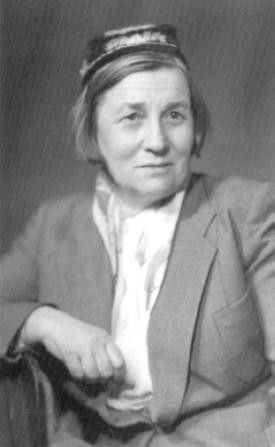
An early work by a young Koka Antonova, who as a student takes advantage of the Marx-Engels Institute archives to write this look at their changing views on Ireland’s revolutionary role. Antonova would become a major Soviet historian, specializing in Indian history. She lived until 2007.
‘Marx and Engels on Ireland’ by K. Antonova from Communist International. Vol. 10 No. 9. May 15, 1933.
THE rising tide of the national movement in Ireland against British imperialism has been growing stronger and stronger of late.
De Valera was able to make use of the revolutionary aspirations of the urban and rural toilers, after having come to power in February, 1932, through the votes of the broad masses, who believed in his promises to fight against the English bourgeoisie.
As we know, under pressure from the toiling masses, De Valera did put through certain half-measures in this direction–abolition of the oath of allegiance to the British king, the refusal to pay land annuities to the British treasury, tariffs against English goods, etc. But even these measures evoked the greatest indignation among all the bourgeois parties in England, from the Conservatives to the Labourites. The British Government hastened to introduce prohibitive tariffs on almost all articles exported by Ireland, thus virtually destroying all Irish trade with England. In Ireland itself the English bourgeoisie is doing its utmost to support and arm its agent, Cosgrave, the representative of the rich Irish bourgeoisie, leisured class, rich peasants and big cattle-breeders, who are closely linked up with English circles. The question of domination in Ireland is of the greatest importance for the English imperialists.
Ireland occupies an immeasurably bigger place, in the system of exploitation created by British imperialism, than one might imagine at first. glance when considering the relative importance of this comparatively small country. This is because Ireland is not only one of the numerous appendages, one of the semi-colonies, which supply England with agrarian products and raw materials, but because it also plays an especially important role on account of its strategic significance.
Ireland is the most vulnerable part of the British Empire, and a mass uprising in Ireland, supported by the working class of England and other European countries, could deal a devastating blow against English imperialism.
Nor should it be forgotten that the further development of the struggle for Irish independence will, without doubt, afford a fresh incentive to the development of the movement for national emancipation in India, in Egypt and in other British colonies and semi-colonies.
But the significance of the revolutionary movement in Ireland from the viewpoint of the class struggle of the proletariat in the capitalist countries of Europe does not end here. It should not be forgotten that the spread of revolutionary anti-imperialist struggles in Ireland, situated as it is in the centre of the capitalist world, will have a direct revolutionising influence upon the toiling masses of the European continent. It was just this that Lenin had in mind, when he wrote:
“The struggle of the oppressed nations in Europe, which is capable of leading up to revolts and street fighting, to breaking down the iron discipline of the troops, and to martial law–this struggle will do immeasurably more. to ‘sharpen the revolutionary crisis in Europe,’ than a much more widespread uprising in the distant colonies. A blow of equal force inflicted upon the government of the English imperialist bourgeoisie by an uprising in Ireland is a hundred times more significant, politically, than if it were in Asia or Africa.” (Lenin: Results of the Discussion on Self-Determination, Collected Works, Vol. XIX., p. 270. Third Russian Edition.)
The Irish question and the development of the revolutionary movement in Ireland therefore acquires a great importance. And from this point of view it seems politically important to make a study of all that the founders of Marxism wrote, in their time, about Ireland.
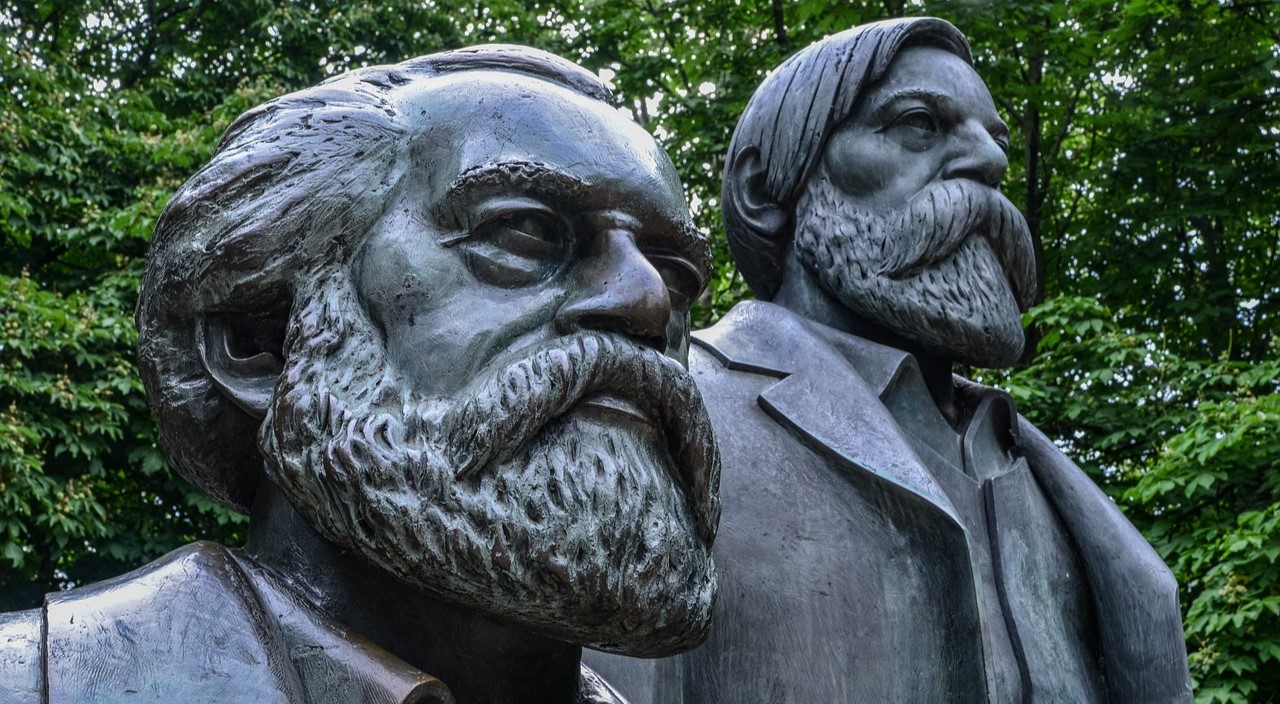
Marx and Engels considered the national question in Ireland to be of enormous importance. Not only did they follow the Irish national movement, but they rendered it practical assistance. On November 2, 1867, in a letter to Engels, Marx wrote that he had “tried by all possible means to call forth a demonstration of English workers in favour of the Fenians.1 (Fenianism: the revolutionary national movement of the Irish petty bourgeoisie in the second half of the nineteenth century, directed against British rule.) A month later Marx wrote again: “Yesterday I delivered a report for one hour and a half on Ireland in our German Labour League (but there were three other German workers’ associations represented there, too, altogether about persons).”2
The brutal manner in which the British government dealt with the imprisoned Irish republican Fenians roused Marx to great indignation. In the name of the international he sent a protest to the British Foreign Office, wrote an article in the L’International, the Belgian organ of the International, and gave his daughter, Jenny, material for articles on the Irish question, which were published in the French newspaper, La Marseillaise. These articles, written under the direct guidance of Marx and Engels, were re- printed throughout the entire continental press and even in English bourgeois newspapers. In England and Ireland a campaign was organised to get the imprisoned Fenians released from prison.
Marx considered it absolutely essential for the International Workingmen’s Association to demonstrate its approval and support to the national movement of the Fenians. He put two questions on the Agenda of one of the sessions of the International Council: “1. The conduct of the British Ministry in the question of Irish amnesties. 2. The position of the English working class with regard to the Irish question.”3
After delivering his report for almost one hour and a half on this question, Marx submitted his famous resolution:
“Resolved: That in Mr. Gladstone’s answer to the demands of the Irish for the release of the imprisoned Irish patriots, which answer is contained in his letter to Mr. O’Shea, etc., Mr. Gladstone has deliberately insulted the Irish people; that he associates political amnesty with conditions which are equally insulting, both to the victims of the arbitrary act and to the nation to which they belong; despite the responsible post he holds, he publicly and with enthusiasm welcomes the uprising of the American slaveowners, yet at the same time. in reference to the Irish people, he preaches the doctrine of passive submission; that his whole conduct on the question of Irish amnesty is really and truly the product of that same ‘Aggressive policy,’ the unmasking of which at one time made it possible for Mr. Gladstone to remove his Tory rivals from office; that the general council of the International Workingmen’s Association is filled with admiration for the courage, the resolution and the magnanimity with which the Irish people is carrying on its struggle for amnesty; that the present resolution be communicated to all sections of the International Workingmen’s Association and to all affiliated labour organisations in Europe and America.”4
The question of Ireland’s right to self-determination was one of the causes for the split between the First International and the English trade union bureaucrats (the Applegarth and Odgers group) and their newspaper, The Beehive. Marx’s resolution on the attitude to the Fenians’ struggle for amnesty was diametrically opposed to the policy of the English trade union bureaucrats. The latter had to decide as to whether they would break once and for all with their political patrons, the bourgeoisie, or whether they would break with the International Workingmen’s Association.
Both of these trade unionist “leaders” tried to avoid a straight answer.
“Applegarth sat next to me,” wrote Marx to Engels in a letter of November 26, 1869, ”and therefore did not dare to speak against the resolution; he said, true with a quaking heart, that he was more for than against. Odgers said that if the vote were put at once, then he would be compelled to vote for the resolution.”5
“The resolution was passed unanimously, despite Odgers’ continual verbal amendments.”6
We may mention, in passing, that the split itself occurred later, on the question of the attitude of the workers to the Paris Commune.
But the First International severed its connection with The Beehive somewhat earlier.
“Last Tuesday the Central Council unanimously accepted my proposal, seconded by Muddershead, to break off our connection with The Beehive and to publish this decision. I exposed the paper as one which had sold itself to the bourgeoisie (S. Morley, etc.), referring especially to its attitude on our Irish resolution, discussions, etc.”7 (The newspaper had remained silent on these points.)
The Irish question served as a touchstone also for the Bakuninists. The latter looked upon the Fenians as bourgeois nationalists and considered it an “act of stupidity” on the part of Marx to bring in a resolution in favour of the Fenians.
In the confidential report given by the International Workingmen’s Association to the Brunswick Committee, Marx gave a detailed exposition of his point of view on the Irish question:
“If England is the stronghold of European landlordism and capitalism, then Ireland is the only point from which it is possible to deal a blow at official England…The viewpoint of the International Workingmen’s Association on the Irish question is very clear. Its first task is to hurry on the social revolution in England. In order to do this, a decisive blow must be struck in Ireland.”8
Thus, Marx considered the role of Ireland for the proletarian revolution in Europe to be a very important one. What state was Ireland in, and what problems confronted it, during the lifetime of Marx and Engels?
Here is what the founders of Marxism wrote about the economic position of Ireland at the time:
“The more thoroughly I study the question, the clearer does it become for me that the English invasion deprived Ireland of any chance to develop and threw her back hundreds of years, and that, all at one stroke, at the beginning of the twelfth century…”9 “At present Ireland is merely an agricultural district of England, divided from the latter by a broad channel and providing her with bread, wool, cattle and recruits for her industry and her army.”10 English industry could not have developed so rapidly had England not found in the vast, impoverished population of Ireland a reserve always ready to serve its purpose.”11
Here, in a few vivid sentences we have quoted, Marx and Engels draw a picture of the consequences of the English conquest–poverty, backwardness, and the agrarian character of the country.
“The unheard-of poverty and torment of the Irish peasants is one of the most instructive examples of the lengths to which the landlords and liberal bourgeoisie of a ‘ruling’ nation will go. The ‘brilliant economic development’ and prosperity’ of trade and industry in England are to a large extent the result of exploits against the Irish peasantry which remind us of the Russian feudal lord, Saltychikh.
“England ‘prospered,’ Ireland faded away and remained an undeveloped, half-savage, purely agricultural country, a country of pauper peasant tenants.”12
Despite the radical changes of recent times (the era of pre-monopolist capital having given way to the era of imperialism, the era of proletarian, socialist revolutions, and the triumph of socialism. in the U.S.S.R.), Ireland today differs only a little from the Ireland of the time of Marx. As before, it is a backward country; as before, Ireland is oppressed by the English imperialists.
Just as before, the national movement is linked up with the agrarian movement. Nevertheless, certain changes have taken place in the agrarian conditions in Ireland.
Agrarian development in Ireland during the last century may be divided into three periods. The first (from 1801-1846) was a period of feudal relations, established between the English landlord and his Irish tenant. A system of small and “parcel” land holdings predominated. The second period (1846-1868) was marked by the forced development of bourgeois relations in Irish agriculture, this finding its expression in the concentration of land in the hands of the landlords, in enclosures, mass evictions of tenants, and in the conversion of their land into pasture for cattle-breeding. This was the period of famine and mass emigration overseas.
In other words, the same process was taking place in Ireland as had commenced in England in the sixteenth and at the beginning of the eighteenth century. The federal landlords either became capitalists, or lost their lands as a result of the law concerning mortgaged estates, which case their property fell into the hands of the large farmers, the middlemen, as they were called. The latter frequently rented big stretches of land and cleared the small tenants off even more radically than did the landlords. Here, as in England, a two-fold process was going on: on the one hand, the landlords themselves adopted capitalist methods of exploitation; and on the other hand, in place of the old feudal lords, there grew up a class of new capitalist farmer-tenants and landowners. Finally, there was the third period (its last stage has not reached its culmination yet), the period of bourgeois reforms evoked by constant revolutionary upheavals, the period of land-purchase, the period when the landlords’ estates were being parcelled out, when large, medium-sized and small farms grew up and developed, this process being accompanied by an increased differentiation among the peasantry and increased emigration of the poor peasants. Large landed property ceased to be “identical with England’s ownership of Ireland,”13 as it had been in Marx’s time.
However, the bourgeois revolution in agriculture, even in the third period, did not reach its final culmination, for exploitation of the Irish peasants by the English landlords, who were subsequently displaced by the rentiers and bourgeoisie, was not destroyed altogether. Up to quite recently the Irish peasants have had to pay annuities to the extent of three million pounds sterling to the English landlords and bourgeoisie, this payment being virtually the price at which they purchase their own land. Since 1932, De Valera has ceased to pay annuities to the British treasury, although he has agreed to international arbitration.
The tasks which the bourgeois-democratic revolution in Ireland has set itself to complete the agrarian revolution and to bring about the complete national emancipation and union of Ireland–are tasks which can only be accomplished by the coming proletarian revolution in Ireland.
Marx and Engels studied Ireland from the end of the first period to the beginning of the third. They were the first to observe the change in the policy of England on the Irish land question. In the third volume of Capital Marx gives the following description of the agrarian relations in Ireland during the first period of England’s policy on the agrarian question:
“We are not now speaking of conditions, in which ground rent, the form of landed property adapted to the capitalist mode of production, formally exists without the capitalist mode of production itself, so that the tenant is not an industrial capitalist, nor the mode of his management a capitalist one. Such is the case in Ireland. The tenant is here generally a small farmer. What he pays to the landlord in the shape of rent absorbs frequently not merely a part of his profit, that is, of his own surplus labour, to which he is entitled as the possessor of his own instruments of production, but also a part of his normal wages which he would receive under different conditions for the same amount of labour. Besides, the landlord, who does not do anything for the improvement of the soil, also expropriates him from his small capital, which he incorporates for the greater part in the soil by his own labour, just as a usurer would do under similar circumstances. Only the usurer would at least risk his own capital in the operation. This continual robbery is the centre of the disputes over the Irish Land Bill, which has for its principal aim to compel the landlord, when giving notice to his tenant to vacate, should pay him an indemnity for the improvements made by him in the soil, or for the capital incorporated by him in the land. Palmerston used to meet this demand with the cynical answer: The House of Commons is a house of landlords.”14
In his article, Irish Tenant Rights, Marx shows that the English bourgeoisie established such a state of things in Ireland as enabled a small caste of landlords to plunder the vast peasant population with impunity. The only means of radically solving the agrarian question in Ireland, argues Marx, is to expropriate the landlords and nationalise the land.
On the second period of the agrarian question in Ireland, Marx and Engels wrote:
“The ‘Irish quarter in Parliament and the Irish clergy, apparently, are equally unaware of the fact that the Anglo-Saxon revolution is bringing about a radical change in Irish society, behind their backs. This revolution consists in the fact that the Irish agricultural system is giving way to the English, that the system of small tenants is giving way to large–just as the old landowners are being dis- placed by the new capitalists.”16
“There is nothing more absurd than to confuse the barbarous acts of Elizabeth or Cromwell who wanted to crowd out the Irish with the help of English colonists (in the Roman sense of the word) with the present system that wants to crowd out the Irish with the help of sheep, pigs and bulls. The 1801-46 system (evictions took place during this period only in exceptional cases, especially in Leinster, where the land is particularly well-suited for cattle-breeding) with its rack-rents and middle-men, broke down in 1846. The repeal of the Corn Laws, partially brought about in consequence of the Irish famine, or at any rate brought in earlier as a result of it, deprived Ireland of the monopoly she had as England’s supplier of grain in normal times. Wool and meat became the slogans, i.e., the conversion of arable lands into pasture. Hence the tendency towards the systematical merging together of estates. The law concerning mortgaged estates, which converted a vast number of wealthy middlemen into landowners, hastened on this process (of clearing the estates of Ireland)—and here lies the whole meaning of English rule in Ireland. It seems that the stupid British government in London knows nothing about the enormous change that has taken place since 1846. But the Irish know. Beginning with the Meager proclamation in 1848, right up to the election address of Henessy (theorist and supporter of Urquhart -1866), the Irish have been expressing their opinion on this point in the clearest and most forceful manner.”17
However, although Engels noted that the same as in processes were taking place in Ireland England-the concentration of the lands of the large landowners and the ruination of the tenants–he nevertheless ridiculed the bourgeois economists who, like De Laverne, considered that this was the only path of development open to Ireland. “Providence has decreed that Ireland should be a country of pasture-land, and the prophet Leon De Laverne has demonstrated this ergo pereat (and consequently-let the Irish people be ruined!),” scoffed Engels in his letter to Marx on November 17, 1869.18
But there was another path of development open to Ireland at that time–that of farming. The Irish peasantry gradually began to take this path. The fight for land took on more embittered forms, affecting ever broader strata of the peasantry. However, the national and agrarian movement, led by the Irish nationalist bourgeoisie, was suppressed by the English bourgeoisie. The concessions granted by the English government were miserable and miserly; they were far from satisfying the demands of the peasantry and did nothing to solve the agrarian question.
The first reform of the British government in this direction was Gladstone’s Land Bill, which did very little to stabilise land tenancy (previously the landlord could throw the tenant off his land, when he wanted to), and did nothing at all to stop the rise in land rent. On February 17, 1870, Marx wrote to Engels as follows:
“So the Gladstone mountain has been prosperously delivered of its Irish mouse. I really do not know what the Tories can have against this law, which pays so much heed to the Irish landlords and which, in the last resort, transfers the care of their interests to the skilled hands. of the Irish lawyers. And yet even this feeble limitation of the right to evict tenants will lead to a curtailment of the excessive overpopulation and will stop the conversion of arable land into pasture. But it is a droll thing indeed if honest Gladstone thinks to finish once for all with the Irish question on the basis of these new prospects for a prolonged development of this process.”19
“The passage which follows is enough to make one recognise that all this long land bill drafted by the unctuous Gladstone is absolute rubbish.”20
“But it is a question of throwing dust in the eyes of the public; it must appear that something is being done for Ireland, and so the law for regulating the land question (the land bill) is proclaimed with great to-do. But this is all deceit, its ultimate aim being to inspire respect in Europe, to allure the Irish judges and lawyers with the prospect of innumerable cases in court between the land- lords and farmers, to win over the landlords by promising them financial subsidies from the state, and to attract the more wealthy farmers with certain half-concessions.”21
This is Marx’s opinion about Gladstone’s bourgeois agrarian reform, which opened up the way for several similar reforms, with which the English bourgeoisie tried to solve the Irish question. But even these miserable concessions were only wrung from the government at the cost of peasant uprisings, at the cost of many sacrifices on the part of those who dared to rise up against the landlords and the British government which backed them.
“This is the result of shooting!” wrote Engels about the next reform in 1882,22 explaining the new agrarian legislation and its “dock-tailed” character by the fact that “the Tories…want to save all that can still be saved.”
That Marx and Engels were right in considering the reforms quite worthless and incapable of solving the Irish question is proved by the fact that this reform remained in force for half a century, while the Irish question remains unsolved to this day. Lenin, half a century later, gave the same estimate of this reform:
“However much the ‘enlightened and liberal’ bourgeoisie of England may have wanted to perpetuate the enslavement of Ireland and its poverty, the reforms were nevertheless inevitably approaching, the more so since the revolutionary outbursts of the Irish people in their struggle for freedom and land became more and more menacing. In 1861 the Irish revolutionary organisation of the Fenians was formed. Those Irish who had settled in America did their utmost to help this organisation.
“From 1868, after the ministry of Gladstone, the hero of the liberal bourgeois and blockheaded philistines, there began an epoch of reforms in Ireland, an epoch which has successfully continued to the present time, i.e., for almost half a century. Oh, the wise statesmen of the liberal bourgeoisie know how to ‘hasten slowly’ with their reforms.”23
As we know, the result of the many reforms and prolonged struggle was that the estates of the English landlords were purchased at a high price. The big Irish bourgeoisie came to power, and the national and peasant struggle is now developing on a somewhat different basis.
Lenin characterised this change in the alignment of class forces in the following words:
“Now the Irish nationalists (i.e., the Irish bourgeoisie) have conquered: they are chasing their lands from the English landlords; they are being given national home rule (the famous home rule around which there was such a long, stubborn fight between Ireland and England); they will be free to rule ‘their own’ lands, together with ‘their own’ Irish priests.”24
The working elements in town and country in Ireland are now confronted with the task of struggling not only against the national oppression of capitalist England, but also against “their own” Irish priests, rich peasants and capitalists. However, and this should be especially emphasised, the national struggle in Ireland still directly affects questions of land annuities, and therefore, though the importance of the proletariat has greatly increased since Marx’s time, the driving force of the national struggle, together with the proletariat and under its leadership, is still represented by the peasantry.
Since “big landed property” in Ireland was “identical with English ownership of Ireland,” “the agrarian movement in Ireland has taken on a national character, and has become linked up with the struggle for national emancipation. Comrade Stalin has given an exhaustive characterisation of this state of affairs:
“The content of the national movement, of course, cannot be everywhere the same; it is entirely determined by the diverse requirements which the movement presents. In Ireland the movement has an agrarian character…The strength of the national movement is determined by the degree to which the broad strata of the nation, the proletariat and the peasantry, take part in it. As for the peasantry, its participation in the national movement depends primarily upon the nature of the repressions. If these repressions concern questions of ‘land,’ as was the case in Ireland, then the broad masses of the peasantry will immediately line up under the banner of the national movement.”25
In his letter to Bernstein in June, 1882,26 Engels gives a detail analysis of the connection between the peasant movement against the landlords and the movement of the petty bourgeoisie for freeing Ireland from the yoke of the English bourgeoisie. Here are a few excerpts:
“There are two tendencies in the Irish movement. The first is primordial, it is agrarian; from the brigandage, organised and supported by the peasants, by the chiefs of clans and big catholic landlords who had been expropriated by the English…it gradually developed and turned into a form of spontaneous resistance, organised in the various localities and provinces, on the part of the peasants against the English landowners who had come to their country…This form of resistance cannot be destroyed, the government can do nothing with it, it will disappear only with the causes that brought it forth. But by nature it is local, scattered, and can never take on the common form of political struggle.
Soon after the union (1800) there began some liberal national opposition on the part of the town population, which, as is usually the case in all peasant countries where there are only small towns (for example, in Denmark), found its natural leaders among the lawyers. These, in their turn, have need of the peasants. Therefore, they had to devise slogans which would be popular among the peasantry.” “Ireland is still a sacra insula (sacred isle), whose sufferings must on no account be confused with the vulgar class struggle of the rest of the sinful world. Undoubtedly this is often enough genuine monomania on the part of certain people, but just as undoubtedly it is often the conscious calculated tactic of leaders who wish to maintain their sway over the peasantry. Added to this is the fact that a peasant nation is always compelled to choose its literary representatives from among the urban bourgeoisie and its ideologists…For these gentry, all labour movements are pure heresy, and the Irish peasant must not know that the socialist workers are their only allies in Europe.”27
The whole difficulty in the Irish struggle for independence up to now has been the fact that it was not led by the working class, but by the bourgeoisie, who betray the national movement for small, partial concessions; this is why the struggle for independence met with defeat. Engels in his time wrote about the corrupt “leaders” of this movement: “It never does to praise an Irish politician or to make common cause with him before his death,”28 and he gave an example which clearly shows the degree of corruption which the leaders of the Irish national movement had reached:
“At the time of the union (with Ireland), which cost England 1,000,000 pounds sterling in bribes, one of those who had been bribed was reproached with the words: ‘You have sold your country.’ He replied: ‘Of course I did, and it’s damned glad I am that I had a country to sell.’”
Now, when De Valera has temporarily succeeded in deceiving a section of the Irish working class and peasantry and has gained control of the leadership of the national movement, when he is seeking a compromise with England and the most important task of the newly-formed Communist Party of Ireland is to unmask the treacherous policy of De Valera, these examples given by Marx and Engels and the estimate which they gave of the leaders of the movement attain an especial topical interest. Cannot we apply today to De Valera the words which Engels used in speaking of O’Connell in his time?
“He cannot even put through the miserable abolition of the union-of course, only because he is not serious about it, because he abuses the confidence of the exhausted and oppressed Irish people in order to put a spoke between the wheels of the Tory ministers and return his moderate friends to power.”29
While expressing their profound contempt for the leaders, Marx and Engels were filled with admiration for the heroism of the peasantry, who bore all the burden of the national struggle on their shoulders. Marx even wrote that “if the English workers fail to follow the example of the Tipperary peasants, then things will go ill with them.”30
Marx considered that the most important factor in the Irish movement was when the movement began to free itself from the influence of bourgeois leaders and when the class struggle began in the village. In a letter to Engels he wrote:
“As for the Irish movement of to-day, there are three important points:
“1. Opposition to lawyers and trading politicians and blarneys.
“2. Opposition to the leadership of the priests, these noble gentlemen who are traitors to-day just as they were in the time of O’Connell and in the period from 1789 to 1800.
“3. The fact that the agricultural labourer class has come out against the farmer class at recent meetings (cf. similar happenings from 1795 to 1800).”31
As regards the aims of the national struggle, Marx wrote that the struggle should be for self-government and independence from England and for an agrarian revolution.
To-day Ireland has self-government and part of it (the Irish Free State) even enjoys a certain amount of independence. This, however, does not by any means remove the fact of national oppression. In connection with this the most important point to be emphasised is that the agrarian revolution in Ireland has not been completed and the peasantry are still oppressed by the severe burden of annuity for the land they have purchased. The revolution in Ireland is also beginning to be confronted with the task of solving the agrarian question and bringing about the national emancipation of Ireland.
The proletariat, and not the national petty-bourgeoisie, is now the leader of the revolutionary movement. Lenin observed some time ago that “this country, oppressed by a double and treble national yoke, is becoming converted into a country with an organised army of proletarians.”32 The task which confronts the Irish proletariat is that of organising union under the leadership of the Communist Party, in order to head the national peasant movement and develop a struggle not only against the British imperialists but also against “its own” capitalists at home. The English proletariat should help the Irish workers and peasants to obtain complete emancipation, since the Irish question is of great significance for the proletarian revolution in Europe and above all in England itself.
Marx considered it essential that Ireland should be separated from England in the interests both of the Irish and of the English proletariat, and he always linked up the question of Irish independence with the question of proletarian revolution in England. “Reaction in England” always “relied upon the enslavement of Ireland.”
“It can be seen from the example of Irish history what a misfortune it is for one people to enslave another. All England’s shameful acts trace their origin to the Irish Pale (the name given to the English section of Ireland since 1170)…It seems to me to be beyond all doubt that affairs in England would take a different turn if there were no need for military rule and for the creation of a new aristocracy in Ireland.”33
In the General Council of the International, Marx defended the idea that “quite independent of ‘international’ ‘humanitarian’ phraseology about ‘justice for Ireland’–and because that must be taken for granted in the Council of the International– the direct absolute interests of the English working class demand the separation of Ireland. For a long time I thought it was possible that the Irish régime would be overthrown in consequence of the upsurge of the English working class. I always advocated this viewpoint in the New York Tribune. But a more profound study of the question convinced me of the contrary. The English working class will never achieve anything, until it has rid itself of Ireland. That is why the Irish question is of such great importance for the social movement in general.”34
In his letter to Kugelmann, Marx strongly advocated the same idea that the proletarian revolution in England is impossible, or at any rate will be delayed for a long time, if the English working class does not obtain emancipation for Ireland.
“I am becoming more and more convinced–and now it is only a question of imbuing the minds of the English working class with this conviction—that the working class will never be able to take a decisive step forward in England itself until it breaks once and for all with the policy of the ruling classes on the Irish question. The English working class must not only encourage the Irish, but itself take the initiative in the matter of abolishing the union of 1801 and replacing it by a free union on a federal basis. And the English proletariat should pursue this policy not out of sympathy towards the Irish, but because it is essential from the viewpoint of its own interests. If this is not done, then the English people will remain in leading strings to the ruling classes, because it will have to act in conjunction with them against Ireland.”35
Lenin in his article entitled The Utopian Karl Marx and the Practical Rosa Luxembourg drew attention to the importance and correctness of Marx’s attitude on the question of Ireland’s right to self-determination and of the responsibility of the English working class for the outcome of the struggle for independence. Taking Ireland as an example, Marx explained how the proletariat, not only that of the oppressed nation, but also, more especially, that of the oppressing nation, should raise the national question and find its solution.
“In the sixties of the last century, of course, the economic ties between Ireland and England were stronger than those which exist between Russia and Poland, the Ukraine, etc. The ‘impracticability’ and ‘unrealisability’ of Irish secession (if only because of geographical circumstances and the immense colonial might of England) was an obvious fact. Though in principle opposed to federalism, Marx approved the idea of federation in the given case, provided only that Irish emancipation take place not in the reformist way, but on revolutionary lines by force of the movement of the popular masses in Ireland, supported by the working class of England. There is not the slightest doubt that only a solution of this kind would be favourable to the interests of the proletariat and to rapid social development.
“Things turned out differently. Both the Irish people and the English proletariat turned out to be weak.
“…Well? Does it follow from this that Marx and Engels were ‘utopians,’ that they put forward ‘unrealisable’ national demands, that they fell a prey to the influence of the Irish nationalists–the petty-bourgeois (for the petty-bourgeois nature of the ‘Fenian’ movement is beyond question), and so on?
“No. Marx and Engels pursued a consistent proletarian policy on the Irish question, which really educated the masses in the spirit of ‘democratism and socialism’.”36
“For to imagine that the social revolution is conceivable without an uprising of small nations in the colonies and in Europe, without revolutionary outbursts on the part of sections of the petty bourgeoisie with all their prejudices, without a movement of non-class-conscious proletarian and semi-proletarian masses against landlord, clerical, monarchist and national oppression, etc.,–to imagine this means to repudiate the social revolution.”37
The Irish question is closely linked up with the question of the social revolution in Europe as a whole and the proletarian revolution in England in particular. It is closely connected with the task of overcoming opportunism in the ranks of the English Labour movement. The upper strata of the English proletariat, the so-called aristocracy of Labour, is the basis of this opportunism. The English Labour Party, whose function is to convey bourgeois ideology to the working masses, stands sentry over the interests of its master, the bourgeoisie; it justifies and supports all methods of imperialist exploitation. Whereas at the beginning of their political career the Labourites concealed their purely imperialist aims behind the slogan of “the right of complete self-determination for the colonies within the confines of the British Empire,” they have now given up even this show of demagogy. They justify their policy of brutal suppression of the national movement in the colonies by alleging that the link between England and her colonies is advantageous to both sides. England, they say, is the guardian of nations which are on a lower level of development; England civilised them.
Ireland is a graphic example of the “civilising” role of British imperialism in the colonies. The “guardianship” of the English bourgeoisie over Ireland threw back the development of the latter country a hundred years, ruined Irish industry and put a brake on its further development, and kept Ireland in the position of England’s agrarian appendage. And the English bourgeoisie were so successful in “civilising” Ireland that “Ireland was saved from out-and-out ruin–from being wiped out to the last man-by the fact that part of the population emigrated to America.
Thomas, the Colonial Minister in the present Government, is a typical leader of the English Labour Party. When De Valera came to power, Thomas immediately declared that there could be no question of Irish independence. He declared that he would defend the “inviolability of treaties” with all the power at his disposal. The “treaties” in question were the servile conditions to which Ireland was pinned down in 1921 under the threat of “an immediate and awful war” (the words once used by Lord Beaconsfield); they meant that Ireland was to be partitioned and that she was to pay three million pounds sterling in land annuities to the English treasury. De Valera, under pressure from the masses, put the law to abolish the oath of allegiance through parliament and stopped the payment of annuities to England; but Thomas had already rushed through a tariffs bill, which was absolutely ruinous for Irish trade. Moreover, he declared that there would be no concessions made on the part of the British Government.
“We have reached the limit…I consider collaboration of peoples under the slogan of justice and honest respect of other people’s rights.”
This speech of Thomas the Labourite, the arrant imperialist and Colonial Minister in the Conservative Government, contains the whole essence and kernel of the Labourist policy. The Labourites have shown that when in power they are not a whit behind any other bourgeois government in their ability to deal with the movement for emancipation in the colonies, while expatiating at the same time about “honest respect of other people’s rights” on the part of British imperialism.
Marx and Engels, taking Ireland as an example, showed how the national problem ought to be faced. They demanded that the English working class afford all possible support to the Irish national movement, that it make the victory of Ireland its own task, that it see this thing through in its own interests. The only party which has really pursued the policy bequeathed by Marx regarding the duty of the proletariat of the oppressing nation to do all in its power to fight for the emancipation of the oppressed nation, is the Communist Party.
In its struggle against national oppression in Ireland, the Communist Party takes as its starting point the fact that Ireland has always been, and still virtually remains, a semi-colony, despite the partial concessions of British imperialism. The so-called “independence” of part of Ireland (the “Irish Free State”) has satisfied no one but the big Irish bourgeoisie, which came into power as a result of it. It did not solve the agrarian question. Consequently the struggle for national emancipation is closely interwoven with the struggle for the land. The peasants are still forced to pay heavy annuities for the land which they purchased from the landlords.
“Only in the twentieth century did the Irish peasant begin to change from a tenant into a free owner of the land, but the liberal gentlemen pinned him down to purchasing at a ‘fair’ price. He pays millions and millions in tribute and will for many years continue to pay the English landlords in return for the fact that for several centuries they robbed him and brought about constant famines. The English liberal bourgeois forced the Irish peasants to repay the landlords for this in hard cash.”39
“We have reached the limit. that the prosperity of the Irish Free State is linked up with the prosperity of our own country, and it is in the best interests of both countries that they should be united within the confines of the British Empire. I consider that the British Empire will still play its part as a is a very acute one in the Irish village.
To this day these annuities are a heavy burden upon the Irish small and middle peasantry. De Valera has refused to pay them into the English treasury, but he continues to squeeze them out of the peasants. The question of land annuities is a very acute one. The working class and the peasantry in Ireland come under a double yoke. To the yoke of British imperialism is added the yoke of the capitalists, the yoke of finance capital. The big Irish bourgeoisie, the big cattle-breeders and rich farmers, are agents of British imperialism. The struggle against British imperialism comes up against the desperate resistance of all the large capitalist elements in the country, who are on the side of the imperialists, and consequently it becomes converted into a struggle against the capitalist system.
In England itself the working class, by supporting the struggle for national emancipation in the colonies, is thereby undermining the might of the English capitalists.
Marx and Engels emphasised this point again and again. They waged an irreconcilable struggle both against the right “deviationists” in the International who were infected with chauvinism, like Applegarth, Odgers and the paper, The Beehive, and against the “left” Bakuninists, who considered that the national struggle militates against the class struggle.
Later, Stalin had to explain these ideas of Marx to his comrades, who had not grasped Marx’s standpoint on the national question and who repeated the mistakes of the Bakuninists:
“There is a movement for independence in Ireland. On whose side are we, comrades? Either we are on Ireland’s side, or we are on the side of the British Empire. And I ask you -and life itself asks-are we for the people which is fighting against oppression, or are we with the classes that oppress them?…Comrades Pyatakov and Dzerzhinsky tell us that all national movements are reactionary movements. This is not true, comrades. Is the movement in Ireland against English imperialism not a democratic movement, which aims a blow at imperialism? And ought we not to support this movement?”40
But at the same time Marx and Engels also fought against the bourgeois and petty-bourgeois leaders, against their betrayal of the national movement. This task of fighting for the leadership of the proletariat in the national, as well as the class, struggle, is one which now confronts the newly-formed Irish Communist Party. The deceit of De Valera, the representative of small Irish industrialists and traders, must be unmasked; the masses of workers and peasants must be torn away from the influence of the Fianna Fail and the reformist leaders of the Irish Republican Army, who are the leaders of the movement to-day. We must follow the line of Marx, for his words are fully applicable to Ireland to-day.
Only the working class of Ireland, with the Communist Party at its head, leading it in conjunction with the leading sections of the Irish peasantry, can carry the agrarian revolution to its conclusion by abolishing the land annuities and confiscating the large estates of the capitalist landowners. The Communist Party, which is now being formed, must head the movement of the masses and lead them in the struggle for the workers’ and peasants’ government.
NOTES
1. Collected Works of Marx and Engels, Vol. XXIII., p. 484. Russian Edition.
2. Marx to Engels, December 17, 1867. Collected Works, Vol. XXIII., p. 488. Russian Edition.
3. Marx to Engels, November 12, 1869. Works, Vol. XXIV., p. 247. Russian Edition.
4. Marx to Engels, November 18, 1869. Works, Vol. XXIV., p. 251. Russian Edition.
5. Marx to Engels, Collected Works, Vol. XXIV., p. 261. Russian Edition.
6. Marx to Engels, December 4, 1869. Collected Works, Vol. XXIV., p. 264. Russian Edition.
7. Marx to Engels, April 28, 1870. Collected Works, Vol. XXIV., p. 326. Russian Edition.
8. Marx to Kugelmann, March 28, 1870. P. 221. Russian Edition.
9. Engels to Marx, January 19, 1870. Collected Works, Vol. XXIV., p. 280. Russian Edition.
10. Marx, Capital.
11. Engels: Conditions of the Working Class in England in 1844. Allen and Unwin, p. 90.
12 Lenin. English Liberals and Ireland, Collected Works, Vol. XVII., p. 244. Russian Edition.
13. Marx to Kugelmann, October 11, 1867.
14. Capital, Vol. III., page 734.
15. “Irish quarter”-Marx is referring to the Irish members of the English Parliament.
16. Ireland’s Revenge, Marx’ and Engels’ Collected Works, Vol. XI., p. 211. Russian Edition, 1924.
17. Marx’s letter to Engels, 30 November, 1867. Collected Works, Vol. XXIII., pages 279-280. Russian Edition.
18. Collected Works, Vol. XXIII., p. 249. Edition.
19. Collected Works, Vol. XXIV., p. 294. Edition.
20. Engels to Marx, March 13, 1870. Works Vol. XXIV., p. 304. Russian Edition.
21. Marx: The British Government and the Imprisoned Fenians. Manuscript.
22. Engels to Bernstein, May 3, 1882. Marx and Engels Archives, Vol. I., p. 315. Russian Edition.
23. Lenin: The English Liberals and Ireland. Works, Vol. XVIII., p. 244. Russian Edition.
24. Lenin: The Class War in Dublin. Vol XVI., p. 578. Russian Edition.
25. Stalin. Marxism and the National Question. Collected Works, Russian Edition.
26. Marx’ and Engels’ Archives, Vol. I., p. 315-6).
27. Engels to Marx, December 9, 1869. Collected Works, Vol. XXIV., p. 266. Russian Edition.
28. Engels to Bernstein, Marx-Engels Archives, Vol. I., P. 317. Russian Edition.
29. Engels. Letters from London. Collected Works, Vol. II., p. 292. Russian Edition.
30. Engels to Marx, November 20. 1869. Collected Works. Vol. XXIV., p. 263.
31. Marx to Engels, December 10, 1869. Collected Works, Vol. XXIV., p. 271. Russian Edition.
32. Lenin, Works Vol., XVI., p. 579. Russian Edition.
33. Marx’s letter to Engels, December 10, 1869. Collected Works, Vol. XXIV., p. 270. Russian Edition.
34. Marx to Engels, December 10, 1869.
35. Marx’s letter to Kugelmann, November 29, 1869.
36. Lenin. Collected Works. Vol. XVII., PP. 463-464.
37. Lenin. Collected Works. Vol. XIX., pp. 268-269.
38. Marx: Parliamentary Debates on India. Collected Works. Vol. IX., p. 718. Russian Edition.
39. Lenin, Collected Works. Vol. XVII., p. 245.
40 Stalin. Speech at the All-Russian Conference of the R.S.D.L.P., April, 1917. Russian Edition.
The ECCI published the magazine ‘Communist International’ edited by Zinoviev and Karl Radek from 1919 until 1926 irregularly in German, French, Russian, and English. Restarting in 1927 until 1934. Unlike, Inprecorr, CI contained long-form articles by the leading figures of the International as well as proceedings, statements, and notices of the Comintern. No complete run of Communist International is available in English. Both were largely published outside of Soviet territory, with Communist International printed in London, to facilitate distribution and both were major contributors to the Communist press in the U.S. Communist International and Inprecorr are an invaluable English-language source on the history of the Communist International and its sections.
PDF of full issue: https://www.marxists.org/history/international/comintern/ci/vol-10/v10-n09-may-15-1933-CI%20grn-riaz-OC.pdf
 Revolution's Newsstand