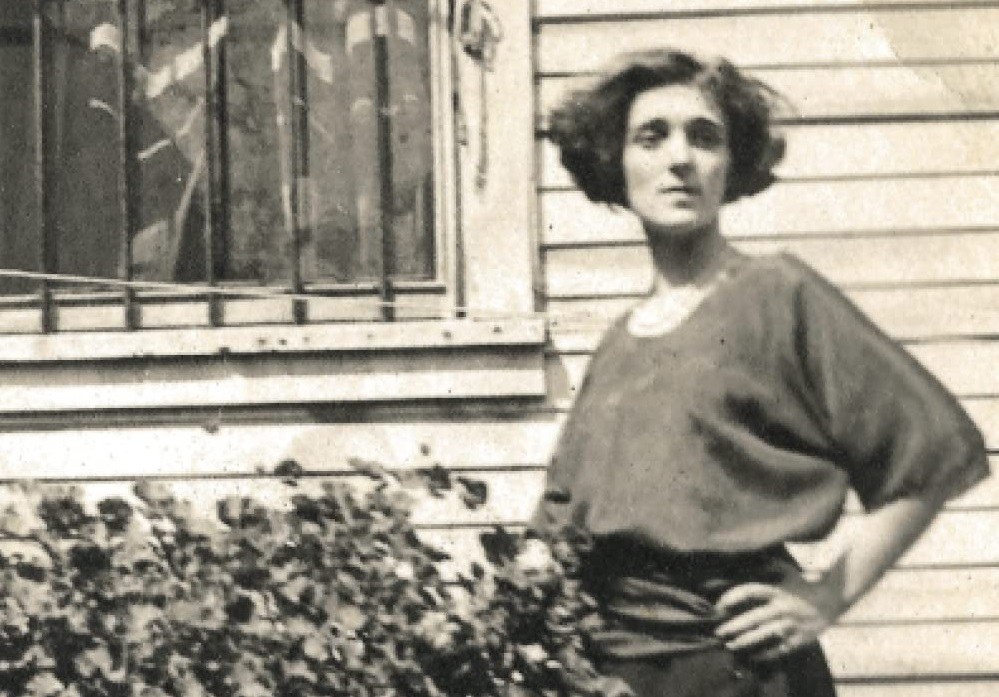
Meridel Le Sueur paints an extraordinary word-picture of the plight of working class women in the Great Depression, and under capitalism generally, as she observes the waiting room at Minneapolis’ unemployment bureau, herself also looking for a job. Le Sueur pioneer of proletarian and feminist literature.
‘Women on the Breadlines’ by Meridel Le Sueur from New Masses. Vol. 7 No. 8. January, 1932.
I am sitting in the city free employment bureau. It’s the woman’s section. We have been sitting here now for four hours. We sit here every day, waiting for a job. There are no jobs. Most of us have had no breakfast. Some have had scant rations for over a year. Hunger makes a human being lapse into a state of lethargy, especially city hunger. Is there any place else in the world where a human being is supposed to go hungry amidst plenty without an outcry, without protest, where only the boldest steal or kill for bread, and the timid crawl the streets, hunger like the beak of a terrible bird at the vitals?
We sit looking at the floor. No one dares think of the coming winter. There are only a few more days of summer. Everyone is anxious to get work to lay up something for that long siege of bitter cold. But there is no work. Sitting in the room we all know it. That is why we don’t talk much. We look at the floor dreading to see that knowledge in each other’s eyes. There is a kind of humiliation in it. We look away from each other. We look at the floor. It’s too terrible to see this animal terror in each other’s eyes.
So we sit hour after hour, day after day, waiting for a job to come in. There are many women for a single job. A thin sharp woman sits inside the wire cage looking at a book. For four hours we have watched her looking at that book. She has a hard little eye. In the small bare room there are half a dozen women sitting on the benches waiting. Many come and go. Our faces are all familiar to each other, for we wait here every day.
This is a domestic employment bureau. Most of the women who come here are middle aged, some have families, some have raised their families and are now alone, some have men who are out of work. Hard times and the man leaves to hunt for work. He doesn’t find it. He drifts on. The woman probably doesn’t hear from him for a long time. She expects it. She isn’t surprised. She struggles alone to feed the many mouths. Sometimes she gets help from the charities. If she’s clever she can get herself a good living from the charities, if she’s naturally a lick spittle, naturally a little docile and cunning. If she’s proud then she starves silently, leaving her children to find work, coming home after a day’s searching to wrestle with her house, her children. Some such story is written on the faces of all these women. There are young girls too, fresh from the country. Some are made brazen too soon by the city. There is a great exodus of girls from the farms into the city now. Thousands of farms have been vacated completely in Minnesota. The girls are trying to get work. The prettier ones can get jobs in the stores when there are any, or waiting on table but these jobs are only for the attractive and the adroit, the others, the real peasants have a more difficult time.
Bernice sits next to me. She is a large Polish woman of thirty-five. She has been working in peoples’ kitchens for fifteen years or more. She is large, her great body in mounds, her face brightly scrubbed. She has a peasant mind and finds it hard even yet to understand the maze of the city where trickery is worth more than brawn. Her blue eyes are not clever but slow and trusting. She suffers from loneliness and lack of talk. When you speak to her, her face lifts and brightens as if you had spoken through a great darkness and she talks magically of little things, as if the weather were magic or tells some crazy tale of her adventures on the city streets, embellishing them in bright colors until they hang heavy and thick like some peasant embroidery. She loves the city anyhow. It’s exciting to her, like a bazaar. She loves to go shopping and get a bargain, hunting out the places where stale bread and cakes can be had for a few cents. She likes walking the streets looking for men to take her to a picture show. Sometimes she goes to five picture shows in one day, or she sits through one the entire day until she knows all the dialogue by heart.
She came to the city a young girl from a Wisconsin farm. The first thing that happened to her a charlatan dentist took out all her good shining teeth and the fifty dollars she had saved working in a canning factory. After that she met men in the park who told her how to look out for herself, corrupting her peasant mind, teaching her to mistrust everyone. Sometimes now she forgets to mistrust everyone and gets taken in. They taught her to get what she could for nothing, to count her change, to go back if she found herself cheated, to demand her rights.
She lives alone in little rooms. She bought seven dollars’ worth of second hand furniture eight years ago. She rents a room for perhaps three dollars a month in an attic, sometimes in a cold house. Once the house where she stayed was condemned and everyone else moved out and she lived there all winter alone on the top floor. She spent only twenty five dollars all winter.
She wants to get married but she sees what happens to her married friends, being left with children to support, worn out before their time. So she stays single. She is virtuous. She is slightly deaf from hanging out clothes in winter. She has done peoples washings and cooking for fifteen years and in that time she saved thirty dollars. Now she hasn’t worked steady for a year and she has spent the thirty dollars. She dreamed of having a little house or a house boat perhaps with a spot of ground for a few chickens. This dream she will never realize.
She has lost all her furniture now along with the dream. A married friend whose husband is gone gives her a bed for which she pays by doing a great deal of work for the woman. She comes here every day now sitting bewildered, her pudgy hands folded in her lap. She is hungry. Her great flesh has begun to hang in folds. She has been living on crackers. Sometimes a box of crackers lasts a week. She has a friend who’s a baker and he sometimes steals the stale loaves and brings them to her.
A girl we have seen every day all summer went crazy yesterday at the Y.W. She went into hysterics, stamping her feet and screaming.
She hadn’t had work for eight months. “You’ve got to give me something,” she kept saying. The woman in charge flew into a rage that probably came from days and days of suffering on her part, because she is unable to give jobs, having none. She flew into a rage at the girl and there they were facing each other in a rage both helpless, helpless. This woman told me once that she could hardly bear the suffering she saw, hardly hear it, that she couldn’t eat sometimes and had nightmares at night.
So they stood there the two women in a rage, the girl weeping and the woman shouting at her. In the eight months of unemployment she had gotten ragged, and the woman was shouting that she would not send her out like that. “Why don’t you shine your shoes,” she kept scolding the girl, and the girl kept sobbing and sobbing because she was starving.
“We can’t recommend you like that,” the harassed Y.W.C.A. woman said, knowing she was starving, unable to do anything. And the girls and the women sat docilly their eyes on the ground, ashamed to look at each other, ashamed of something.
Sitting here waiting for a job, the women have been talking in low voices about the girl Ellen. They talk in low voices with not too much pity for her, unable to see through the mist of their own torment. “What happened to Ellen?” one of them asks. She knows the answer already. We all know it.
A young girl who went around with Ellen tells about seeing her last evening back of a cafe down town outside the kitchen door, kicking, showing her legs so that the cook came out and gave her some food and some men gathered in the alley and threw small coin on the ground for a look at her legs. And the girl says enviously that Ellen had a swell breakfast and treated her one too, that cost two dollars.
A scrub woman whose hips are bent forward from stooping with hands gnarled like water-soaked branches clicks her tongue. in disgust. No one saves their money, she says, a little money and these foolish young things buy a hat, a dollar for breakfast, a bright scarf. And they do. If you’ve ever been without money, or food, something very strange happens when you get a bit of money, a kind of madness. You don’t care. You can’t remember that you had no money before, that the money will be gone. You can remember nothing but that there is the money for which you have been suffering. Now here it is. A lust takes hold of you. You see food in the windows. In imagination you eat hugely; you taste a thousand meals. You look in windows. Colours are brighter; you buy something to dress up in. An excitement takes. hold of you. You know it is suicide but you can’t help it. You must have food, dainty, splendid food and a bright hat so once again you feel blithe, rid of that ratty gnawing shame.
“I guess she’ll go on the street now,” a thin woman says faintly and no one takes the trouble to comment further. Like every commodity now the body is difficult to sell and the girls say you’re lucky if you get fifty cents.
It’s very difficult and humiliating to sell one’s body. Perhaps it would make it clear if one were to imagine having to go out on the street to sell, say, one’s overcoat. Suppose you have to sell your coat so you can have breakfast and a place to sleep, say, for fifty cents. You decide to sell your only coat. You take it off and put it on your arm. The street, that has before been just a street, now becomes a mart, something entirely different. You must approach someone now and admit you are destitute and are now selling your clothes, your most intimate possessions. Everyone will watch you talking to the stranger showing him your overcoat, what a good coat it is. People will stop and watch curiously. You will be quite naked on the street. It is even harder to try and sell oneself, more humiliating. It is even humiliating to try and sell one’s labour. When there is no buyer.
The thin woman opens the wire cage. There’s a job for a nursemaid, she says. The old gnarled women, like old horses, know that no one will have them walk the streets with the young so they don’t move. Ellen’s friend gets up and goes to the window. She is unbelievably jaunty. I know she hasn’t had work since last January. But she has a flare of life in her that glows like a tiny red flame and some tenacious thing, perhaps only youth, keeps it burning bright. Her legs are thin but the runs in her old stockings are neatly mended clear down her flat shank. Two bright spots of rouge conceal her pallor. A narrow belt is drawn tightly around her thin waist, her long shoulders stoop and the blades show. She runs wild as a colt hunting pleasure, hunting sustenance.
It’s one of the great mysteries of the city where women go when they are out of work and hungry. There are not many women in the bread line. There are no flop houses for women as there are for men, where a bed can be had for a quarter or less. You don’t see women lying on the floor at the mission in the free flops. They obviously don’t sleep in the jungle or under newspapers in the park. There is no law I suppose against their being in these places but the fact is they rarely are.
Yet there must be as many women out of jobs in cities and suffering extreme poverty as there are men. What happens to them? Where do they go? Try to get into the Y.W. without any money or looking down at heel. Charities take care of very few and only those that are called “deserving.” The lone girl is under suspicion by the virgin women who dispense charity.
I’ve lived in cities for many months broke, without help, too timid to get in bread lines. I’ve known many women to live like this until they simply faint on the street from privations, without saying a word to anyone. A woman will shut herself up in a room until it is taken away from her, and eat a cracker a day and be as quiet as a mouse so there are no social statistics concerning her. I don’t know why it is, but a woman will do this unless she has dependents, will go for weeks verging on starvation, crawling in some hole, going through the streets ashamed, sitting in libraries, parks, going for days without speaking to a living soul like some exiled beast, keeping the runs mended in her stockings, shut up in terror in her own misery, until she becomes too super sensitive and timid to even ask for a job.
Bernice says even strange men she has met in the park have sometimes, that is in better days, given her a loan to pay her room rent. She has always paid them back.
In the afternoon the young girls, to forget the hunger and the deathly torture and fear of being jobless, try and pick up a man to take them to a ten-cent show. They never go to more expensive ones, but they can always find a man willing to spend a dime to have the company of a girl for the afternoon.
Sometimes a girl facing the night without shelter will approach a man for lodging. A woman always asks a man for help. Rarely another woman. I have known girls to sleep in men’s rooms for the night, on a pallet without molestation, and given breakfast in the morning.
It’s no wonder these young girls refuse to marry, refuse to rear children. They are like certain savage tribes, who, when they have been conquered refuse to breed.
Not one of them but looks forward to starvation, for the coming winter. We are in a jungle and know it. We are beaten, entrapped. There is no way out. Even if there were a job, even if that thin acrid woman came and gave everyone in the room a job for a few days, a few hours, at thirty cents an hour, this would all be repeated tomorrow, the next day and the next.
Not one of these women but knows, that despite years of labour there is only starvation, humiliation in front of them.
Mrs. Grey, sitting across from me is a living spokesman for the futility of labour. She is a warning. Her hands are scarred with labour. Her body is a great puckered scar. She has given birth to six children, buried three, supported them all alive and dead, bearing them, burying them, feeding them. Bred in hunger they have been spare, susceptible to disease. For seven years she tried to save her boy’s arm from amputation, diseased from tuberculosis of the bone. It is almost too suffocating to think of that long close horror of years of child bearing, child feeding, rearing, with the bare suffering of providing a meal and shelter.
Now she is fifty. Her children, economically insecure, are drifters. She never hears of them. She doesn’t know if they are alive. She doesn’t know if she is alive. Such subtleties of suffering are not for her. For her the brutality of hunger and cold, the bare bone of life. That is enough. These will occupy a life. Not until these are done away with can those subtle feelings that make a human being be indulged.
She is lucky to have five dollars ahead of her. That is her security. She has a tumour that she will die of. She is thin as a worn dime with her tumour sticking out of her side. She is brittle and bitter. Her face is not the face of a human being. She has born more than it is possible for a human being to bear. She is reduced to the least possible denominator of human feelings.
It is terrible to see her little blood-shot eyes like a beaten hound’s, fearful in terror.
We cannot meet her eyes. When she looks at any of us we look away. She is like a woman drowning and we turn away. We must ignore those eyes that are surely the eyes of a person drowning, doomed. She doesn’t cry out. She goes down decently. And we all look away.
The young ones know though. I don’t want to marry. I don’t want any children. So they all say. No children. No marriage. They arm themselves alone, keep up alone. The man is helpless now. He cannot provide. If he propagates he cannot take care of his young. The means are not in his hands. So they live alone. Get what fun they can. The life risk is too horrible now. Defeat is too clearly written on it.
So we sit in this room like cattle, waiting for a nonexistent job, willing to work to the farthest atom of energy, unable to work, unable to get food and lodging, unable to bear children; here we must sit in this shame looking at the floor, worse than beasts at a slaughter.
It is appalling to think that these women sitting so listless in the room may work as hard as it is possible for a human being to work, may labour night and day, like Mrs. Gray wash street cars from midnight to dawn and offices in the early evening, scrubbing for fourteen and fifteen hours a day, sleeping only five hours or so, doing this their whole lives, and never earn one day of security, having always before them the pit of the future. The endless labour, the bending back, the water soaked hands, earning never more than a week’s wages, never having in their hands more life than that.
It’s not the suffering, not birth, death, love that the young, reject, but the suffering of endless labour without dream, eating. the spare bread in bitterness, a slave without the security of a slave.
The New Masses was the continuation of Workers Monthly which began publishing in 1924 as a merger of the ‘Liberator’, the Trade Union Educational League magazine ‘Labor Herald’, and Friends of Soviet Russia’s monthly ‘Soviet Russia Pictorial’ as an explicitly Communist Party publication, but drawing in a wide range of contributors and sympathizers. In 1927 Workers Monthly ceased and The New Masses began. A major left cultural magazine of the late 1920s and early 1940s, the early editors of The New Masses included Hugo Gellert, John F. Sloan, Max Eastman, Mike Gold, and Joseph Freeman. Writers included William Carlos Williams, Theodore Dreiser, John Dos Passos, Upton Sinclair, Richard Wright, Ralph Ellison, Dorothy Parker, Dorothy Day, John Breecher, Langston Hughes, Eugene O’Neill, Rex Stout and Ernest Hemingway. Artists included Hugo Gellert, Stuart Davis, Boardman Robinson, Wanda Gag, William Gropper and Otto Soglow. Over time, the New Masses became narrower politically and the articles more commentary than comment. However, particularly in it first years, New Masses was the epitome of the era’s finest revolutionary cultural and artistic traditions.
PDF of full issue: https://www.marxists.org/history/usa/pubs/new-masses/1932/v07n08-jan-1932-New-Masses.pdf
 Revolution's Newsstand