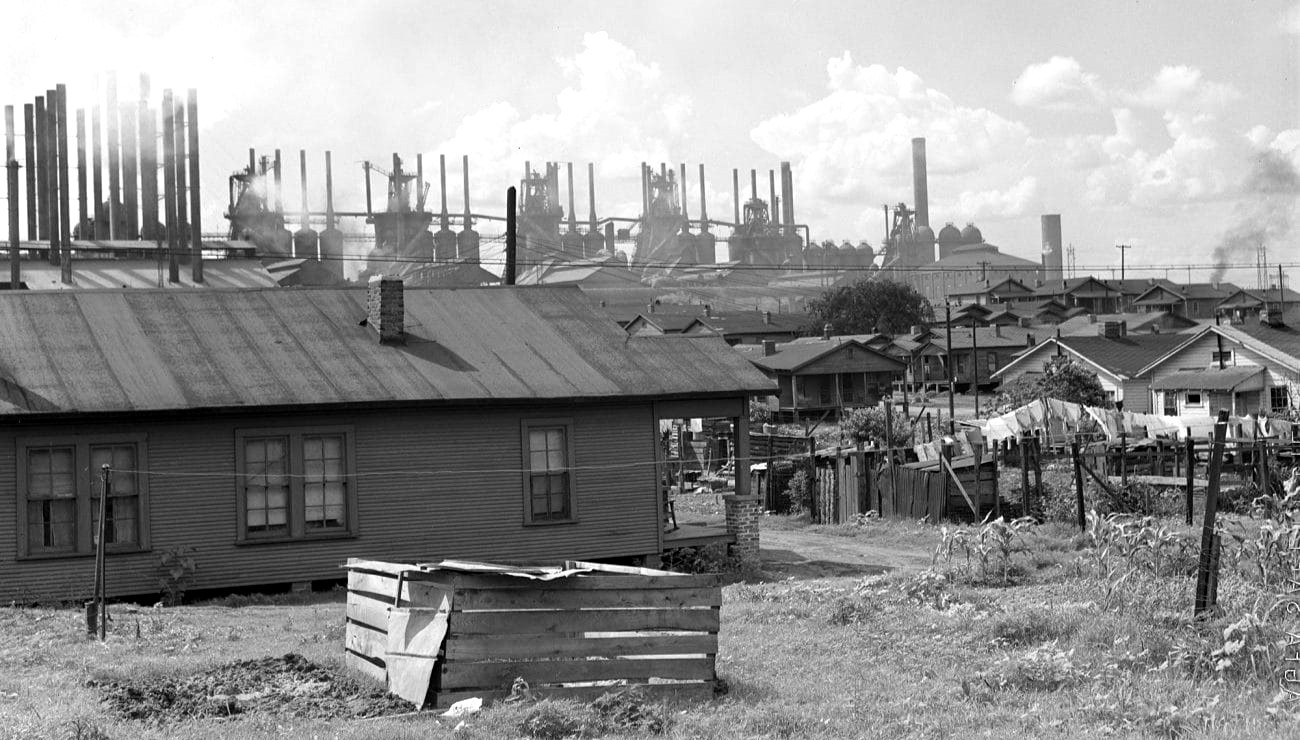
An internal report on how the Alabama Communist Party built a nucleus in a majority-Black Birmingham metal shop.
‘How We Built a Nucleus in a Birmingham Metal Shop’ by H.G. from Party Organizer. Vol. 4 No. 4. May, 1931.
The following manner of building a shop unit is just one of the many ways shop units can be built. The shop is a metal plant in the South, employing about 300 men, of whom 200 are Negroes. The white workers, like in other plants, are given the best jobs with best pay, such as foremen, mechanics and helpers. White workers also have a separate place to punch their time clocks, separate drinking fountains and places to eat. The Negroes are given the jobs as laborers and shovellers, etc. Their scale of pay runs $1.90 for ten hours’ work and they mingle with the white workers while at work only.
The above unit was started by a comrade who reported he had six Negro friends who were buying the Southern Worker, all of whom worked at this plant and wanted to join the Party. They showed their willingness to do Party work by contributing Workers’ Correspondence articles, distributing the Southern Worker and Party leaflets inside the plant. These workers were called to a meeting and organized into a unit and this comrade assigned as the organizer of the unit. In a period of only a few weeks’ activity they had recruited four more members. The Party has started a consistent distribution of leaflets inside the plant, calling on the white workers to unite with the Negroes in the Metal Workers League, against discrimination, for equal pay for equal work, for safety conditions, etc.
Because of the fact that this southern city has prisoners at work on the chain gang, digging slag (forced labor), the vicinity of this plant is patrolled by armed guards, who among their other duties must see that the Communists create no disturbance. This requires, of course, all inside distribution of leaflets and papers. Comrades of the unit are given the following instructions for inside distribution: (1) Distributions are never to be carried on the same day each week, but must be staggered. (2) Comrades distributing must have free access to department where they are to distribute their quota of leaflets so as not to excite suspicion by going from one department to another. (3) When distribution is once started it must be carried on quickly, no leaflets to be kept in one’s pockets, clothes, etc., in case of search. Names and addresses of white workers are turned over to white comrades who call discussion meetings of these contacts, explaining in detail the reasons why the boss constantly carries on propaganda in favor of race prejudice.
After Fish made his investigation this company is becoming peeved at the ability of the Party to reach over the fence and despite all their guards and spies to have its propaganda distributed in the shops. They have appealed to the Department of Justice for help.
In the following manner new members are brought into the Party: (1) No candidate to the Party is ever brought to a meeting of the unit without his membership being proposed at a previous meeting in which his voucher reports, (1) how long he has known him; (2), is he a member of the church or any other organization (this is necessary as the preachers are used by the steel trusts as spies); (3), was he ever a scab; (4), was he a member of a union or political Party; (5), what has been the nature of his Party activity before making known that he wanted to join the Party. The unit on this basis accepts or rejects the applicant.
As was pointed out, there are many ways to build shop nuclei, but usually we overlook the fact that by instructing members to consistently sell Party papers to shop workers and systematically talking with them we can come in contact with class conscious workers and draw them into the Party and its activities.
The Party Organizer was the internal bulletin of the Communist Party published by its Central Committee beginning in 1927. First published irregularly, than bi-monthly, and then monthly, the Organizer was primarily meant for the Party’s unit, district, and shop organizers. The Organizer offers a much different view of the CP than the Daily Worker, including a much higher proportion of women writers than almost any other CP publication. Its pages are often full of the mundane problems of Party organizing, complaints about resources, debates over policy and personalities, as well as official numbers and information on Party campaigns, locals, organizations, and periodicals making the Party Organizer an important resource for the study and understanding of the Party in its most important years.
PDF of issue: https://archive.org/download/party-organizer_1931-05_4_4/party-organizer_1931-05_4_4.pdf
 Revolution's Newsstand