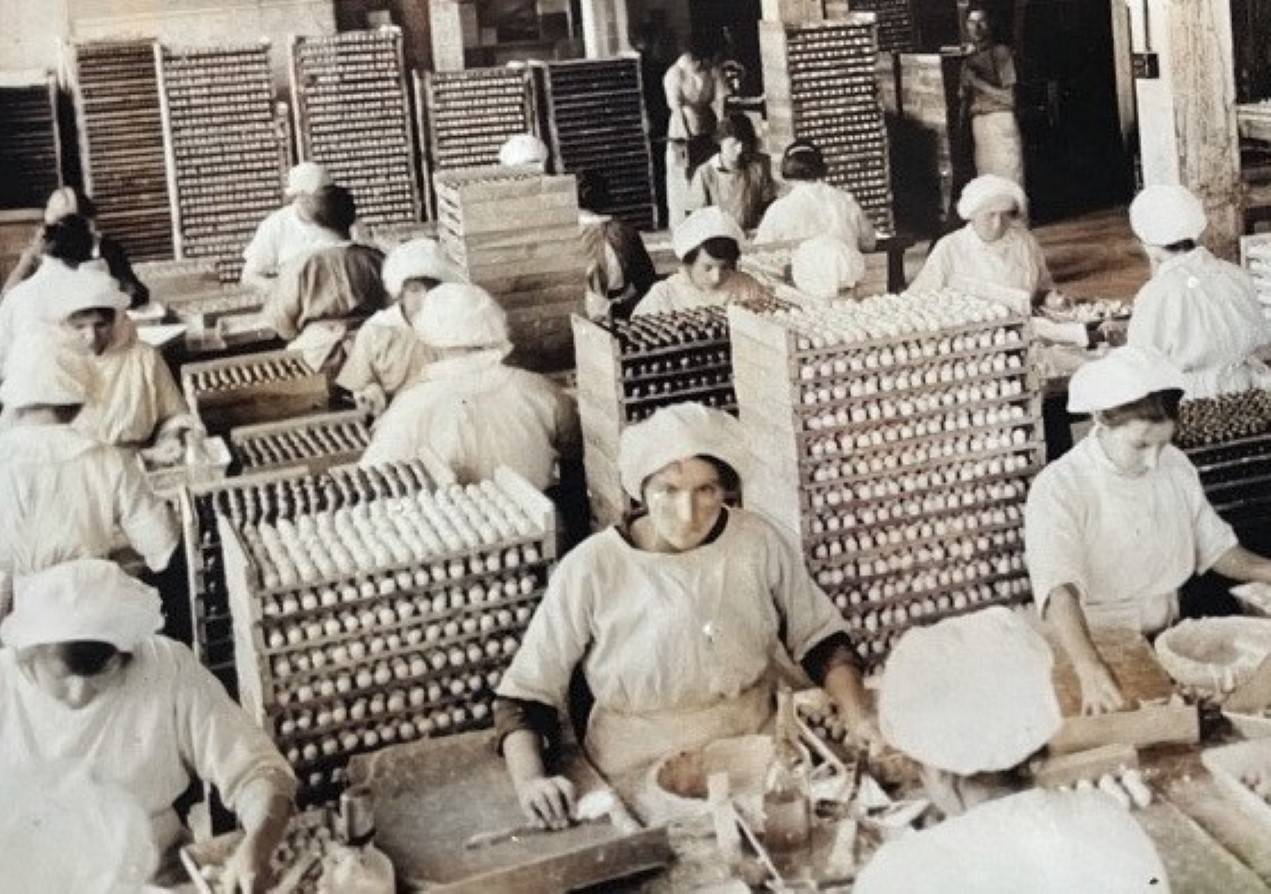
An appeal for wobblies to come to Chicago and salt the ‘unskilled,’ unorganized candy making industry with a concentration of activists.
‘A Call to Organize’ from Solidarity. Vol. 7 No. 356. November 4, 1916.
Conditions of the Workers in the National Candy Company of Chicago.
In the factory of the National Candy Co. in Chicago is practical exploitation of the worst type. At 6:30 in the morning the slaves can be seen flocking to the factory, and when the whistle blows at 7:30 the humming and buzzing of machinery can be heard. Men, and boys, girls and women, ranging from 14 to 40 years of age begin a long and arduous day. And although the law says that women shall work 10 hours per day in Illinois, the National Candy Co. says they shall work 12 to 14 hours whether they like it or not, and if they do not like it they are discharged if they say anything against it.
The law nor the worker has anything to say about the working hours.
And if the law conflicts with the profits of the company the law must take a back seat for the law which capitalism makes and breaks has nothing to do with the company’s reputation for getting out the goods. Most of the women and girls work piece work and make as high as 60 cents for a half day’s work. The experienced candy makers receive from 14 to 16 dollars per week, about two-thirds of which they receive at other places. The common laborer, such as truckers, packers, machine hands and pant cleaners receive from $9.00 to $12.00 per week, 60 hours in the week.
The work is not light by any means, if you have ever worked in one of these plants.
Most of the employes are foreign-speaking, Italians, Polish, Austrian and German. Discontent is rife, but not the kind that finds its way into organization, but with some coaching and agitation the writer feels sure the slaves can be made to see the good in organization.
Complaints are heard every day about the small pay, long hours and hard work.
Here is the chance of a lifetime.
There are about twelve candy factories in Chicago. Four of them within a radius of six blocks and a continual demand for common labor.
The idea is to get on the job in this one industry, which is any thing to do and concentrate your efforts in that one place.
You old members know that the organized Italian spirit speaks for itself. There are plenty of them here. Here is a chance to organize two or three thousand actual wage workers into an Industrial Union of the I.W.W.
Concentration of forces is a great thing and by concentrating our forces in this particular industry we can accomplish something worth while. I feel sure if our members get on one job, “as many as can,” that we can realize an Industrial Union of Confectionery Workers.
This is not a pipe dream or an impossibility. Chicago has been the stronghold of the American Federation of Labor but we can make it the stronghold of the I.W.W., if we so wish. We need more members who believe in, and will carry out the idea of Job organization.
There are a few here but not near enough, and you members who are roaming about the country seeking the ever elusive job, come to Chicago. You may as well winter here as anywhere else. Work will be as plentiful, or as scarce, here as any place else. One man on the job, as soon as he is found out will not last long and what efforts are made by him are lost when he leaves the job. Others must take his place.
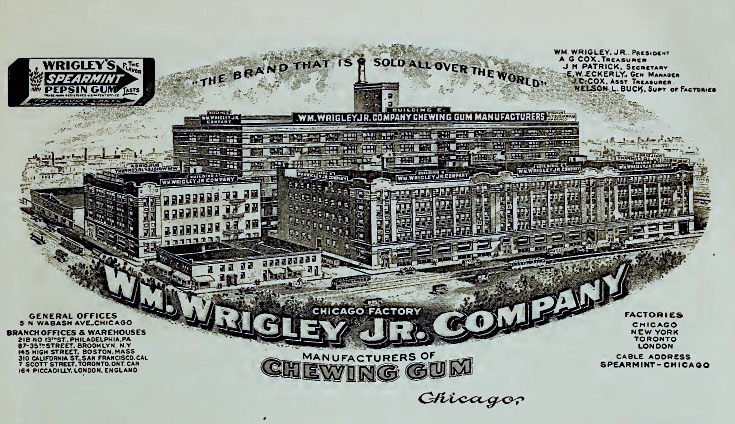
There is not a reason in the world why we cannot succeed in this one undertaking. The workers in these factories are ripe for organization and we can organize them by the delegate system, which is a very practical way.
Fellow workers, what do you think of this Does it look good to you?
You can get on the job in these factories now that the busy season is on, and the busy season will last till the first of March and the thing to do is to get in and make yourself solid.
Flood the job with members and the rest will work out easy enough.
Remember our departed fellow workers last words and wishes, Organize, don’t mourn!
If you are interested in this piece of work come to Chicago or write to V.R. Crangan, 808 West Van Buren street, cor. Halsted street, care of Iron Workers Hall, or Card No. 191595, Room 307-64 West Washington street, Chicago.
The most widely read of I.W.W. newspapers, Solidarity was published by the Industrial Workers of the World from 1909 until 1917. First produced in New Castle, Pennsylvania, and born during the McKees Rocks strike, Solidarity later moved to Cleveland, Ohio until 1917 then spent its last months in Chicago. With a circulation of around 12,000 and a readership many times that, Solidarity was instrumental in defining the Wobbly world-view at the height of their influence in the working class. It was edited over its life by A.M. Stirton, H.A. Goff, Ben H. Williams, Ralph Chaplin who also provided much of the paper’s color, and others. Like nearly all the left press it fell victim to federal repression in 1917.
PDF of full issue: https://www.marxists.org/history/usa/pubs/solidarity-iww/1916/v7-w356-nov-04-1916-solidarity.pdf
 Revolution's Newsstand