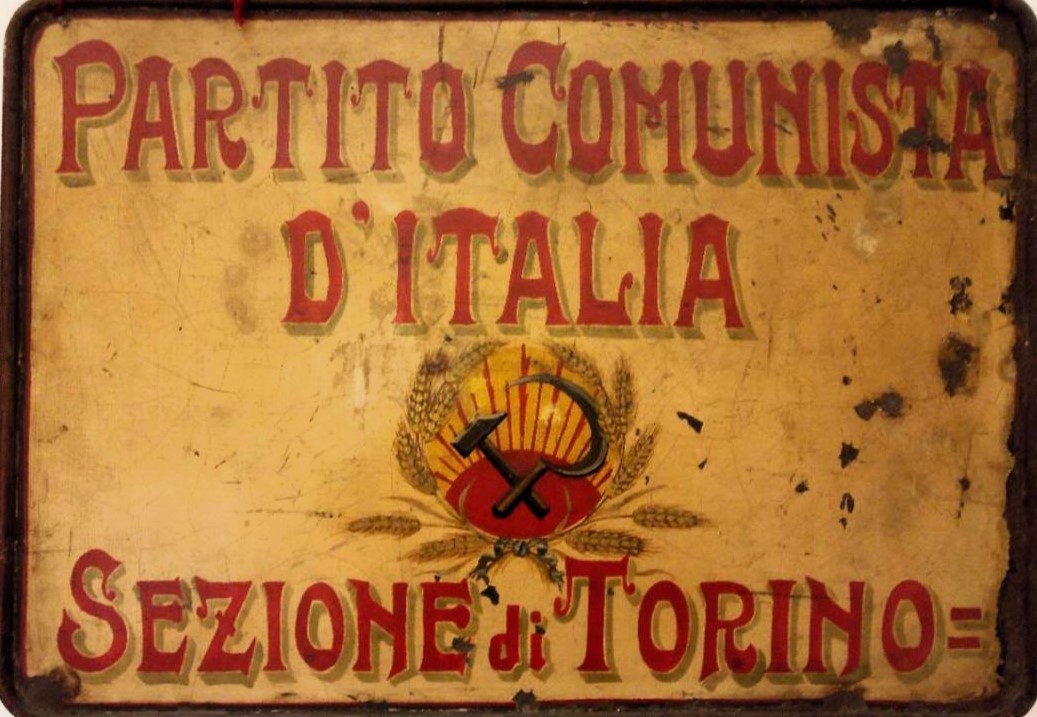
A valuable report on the Partito Comunista Italiano’s second national congress held in Rome during March, 1922 by leading German Communist Paul Böttcher.
‘The Convention of the Communist Party of Italy’ by Paul Böttcher from International Press Correspondence. Vol. 2 No. 30. April 26, 1922.
I. The Result of the Split in Livorno.
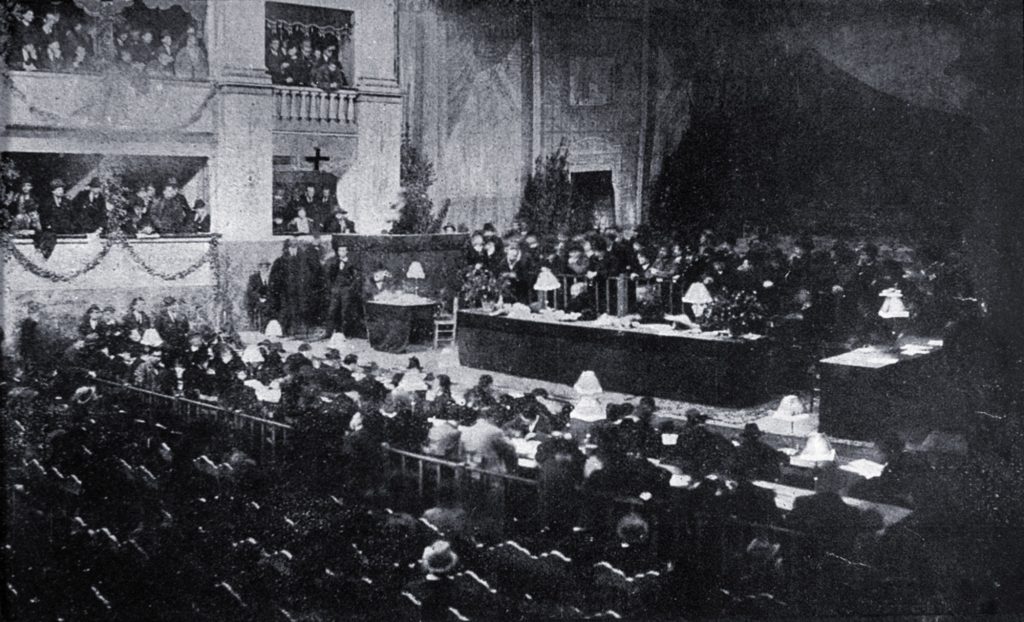
From March 20th to 25th the Second Convention of the Communist Party of Italy took place in Rome, In January 1921 occurred the split of the Socialist Party of Italy, which under the leadership of Serrati refused to exclude the reformists round Turati and thus decided in favor of Turati and against the Communist International. In Livorno the resolution of the Communist fraction received 58,593 votes while 98,000 members voted in favor of the Serrati group. Paul Levi, at that time chairman of the Communist Party of Germany, did not prophesy a good future for the Communist Party of Italy which after the split was formed in the Teatro San Marco in Livorno. For the present collaborator of Hilferding it was certain that the Communist Party of Italy, was a sect.
What was the development of the Italian Party in the first year of its existence? The organizational effects of the Livorno decisions were in most provinces more favorable for the Socialists that for the new Communist Party. In many cases personal reasons caused the members to remain in the Socialist Party. Number of groups remained in the Socialist Party though they had voted in favor of the Communist International. Those workers who were not touched by revolutionary propaganda, by the ideas of the Russian revolution and the Communist International were thus obliged to undergo their political experience under the reformist policy of the Social Democrats. The influence of Turati and of the Parliamentary group which nearly exclusively consisted of reformists, more than before dominated the Party. The policy of joint committees became more and more the policy of the Party. It supported the bourgeois government and entirely failed to struggle against the Fascisti. The policy of the Party in the trade-unions and municipal bodies was reformist. The present policy of the Party is without direction, without uniform leadership. The Party is weakened by its political incapacity and its organizational decomposition. Three fractions are fighting against each other within the Party (Turati-Serati-Lazzari). The revolutionary workers call this Party the Barnum and Bailey Circus. While the Socialists underwent a process of political decomposition, the Communists organised a solid centralized Party under a clear, uniform leadership. The Communist Party of Italy, inspired by a uniform ideology, by a militant spirit towards one aim, has become the organization where all revolutionary workers are gathering. It is comprehensible that in the beginning the Communist Party only hesitatingly admitted new members, because it feared permeation with reformist ideology. The influence of the Communists however, goes far over the limits of the Party. In the Parliamentary elections on May 15th 1921, the Party received more than 300,000 votes. In the trade-unions more than a third of all organised workers are under its influence. The workers within the Party are permeated with an active and militant spirit; they are inspired by a great enthusiasm for the Russian Revolution.
II. The Communist Party of Italy and the United Front.
The problem of the united front of the proletariat is now the centre of the tactics of the Communist International. It is natural that this problem was also the most important subject of the discussions of the Second Convention of the Communist Party of Italy. It is known that in the session of the Enlarged Executive Committee in Moscow, the Italian and French representatives voted against the theses of the Executive on the problem of the United Front. At the Party Convention, Comrades Bordiga and Terracini presented theses on tactics which in the problem of the united front advocate another point of view than that of the Executive Committee. Bordiga emphasized that his theses were meant for the entire Communist International and should be discussed at the Fourth World Congress. The Italian Party does not refuse the united front with the workers organized in other bodies. On the contrary, the Party is very eagerly and successfully carrying on activities in order to form a united front within the trade-unions. The difference between the Italian theses and those of the Executive Committee centres round the following problem: “May the Communist Party form a united political front with the Social Democratic parties, the aim of which is the labor government?” During the discussion on the tactics of the united front, three opinions were expressed at the Convention: The first (Bordiga, Terracini, Gennari) considers the theses of the Executive inapplicable in Italy. They affirm that the Party risks losing its independence by forming a united front with the Social Democrats Therefore these tactics should be employed only within the trade-unions. The second group (Tasca) in principle considers the theses realizable also in Italy, while the third group (Bombacci) is of the opinion that Bordiga’s theses are incorrect and those of the Executive Committee immediately realizable also in Italy. The united front should be formed within the trade-unions and also among the proletarian parties. The Convention had to decide between the theses of the Italian Party Executive and those of the International Executive. However, in the discussion one got the impression that neither Bordiga’s theses nor those of the Executive had been sufficiently discussed among the members of the Party. The Convention was mentally not prepared to decide the problem. The Communist Party of Italy is undergoing a process of clarification which was greatly promoted but not finished by the Convention. The situation resembles to that which prevailed in the German Party from the Jena Convention to the November session of the Central Committee, when the decisions of the Third World Congress had to be carried through in Germany. On the last day of the Convention, Bordiga’s theses were approved against eight votes. At the same time the Convention accepted a special resolution in which it approved the declaration of discipline of the Italian member of the Executive Committee.
Thus we can not speak of a “crisis” in the Italian Party. The less so, as in political practice the Party has already extended the tactics of the united front over the trade-unions to the proletarian parties. In Turin and Castellamara, for example, the Communists have formed joint committees with the Social Democrats and Anarchists in order to struggle for the release of the political prisoners. The new Party Executive must thoroughly discuss the problem with the International Executive and furthermore open the discussion on the matter within the Party. The important experiences of the German Party in practising the tactics of the united front should be utilized by the Italian Party. The same should be the case with the discussion on the problem of the labor government.
III. The Trade Union Problem.
The same seriousness with which the Convention treated the tactical problem dominated the discussions on the activities of the Communists within the trade-unions. The absolute necessity of these activities remained uncontested. The formation of the united front within the trade-unions was also considered necessary by all delegates. The trade-union theses of the Party fully corresponded with the theses of the Third World Congress on trade-union problems: Only on two problems of subordinate importance there arose differences of opinion. Firstly, on the problem, which trade-union federation should form the basis of the united front; and secondly whether the Communists should enter the trade-union executives even if they are but the minority.
On the first item the following may be said. In Italy the “free” trade-unions are not organised in one trade-union federation. There exist three trade-union federations. The largest are the Confederazione Generale del Lavoro, under the leadership of D’Aragona, and the Unione Syndicale. The latter was already affiliated to the Red Trade Union International but differences arose between the two and the Federation is now fighting the Red Trade Union International. There exists furthermore the Railwaymen’s Union as a great independent organisation which is affiliated to the federation. The minority of the Convention was of the opinion that the Unione Syndicale should be the basis of the united front because its members are more revolutionary than those of the Confederazione of D’Arragona. However, the majority of the Convention decided that the unity of all federations within the Confederazione Generale del Lavoro should be propagated. At last the Convention decided that the Communists should enter trade-union executives even if they had not the majority of the union.
In the discussion of the trade-union problems the Alleanza del Lavoro was also treated. The latter was formed on the initiative of the railwaymen. This joint committee of action of all trade-unions which has been formed by the workers in order to save the economic conquests of the proletariat should be given a more concrete political character. The Social Democrats want to make it a blunt sword.
The Communist Party of Italy is carrying on a very successful activity within the trade-unions. It is paying especial attention to the problems of the unemployed. In Italy there are now more than half a million adherents of the Red Trade-Union International while the Amsterdam International has approximately 1,500,000 adherents according to the latest reports.
IV. The Agricultural Problem.
The agricultural workers and small peasants form a very important part of the Italian proletariat, especially in Southern Italy. But also in Northern Italy, in the plain of the Po, these proletarian strata play an important part. The Convention therefore thoroughly considered the agricultural question. The difficulties of the problem in Italy are the following: how to win the mass of small peasants for the Social Revolution without, however, by distributing the great estates among the small peasants, causing the agricultural workers to oppose Communism. The theses of the Party Executive on the agricultural problem state that the nationalization of all the land must be the first measure of the revolution. The management of the great nationalized estates must be done according to Socialist principles. Where there are great numbers of small peasants, however, the State should give them the land for utilisation. There was some opposition against this conception at the Convention. They argued that a State which distributes the land among the small peasants would acquire a petty bourgeois character. In future the Party will still more eagerly carry on its activities among the agricultural proletariat. A rural secretariat will be joined to the Party Executive. In the districts special committees for propaganda among the rural proletariat will be formed.
V. The Outlook for the Future.
The Communist Party of Italy has now passed through a year of internal organization work and eager construction. The Party already now exercises a great influence on the masses. The time has come, however, when the Party must make one step forward. It must transform its influence into political power, which will be considered by the government as an immediate danger for its regime. For that purpose it is necessary that the Party transgress the limits of its activities up to now. Also outside of the trade-unions it must attempt to get into touch with Social Democratic, Catholic and unorganized workers. It must lead the working class in all political and economic problems, The influence of the Party must be strengthened among the masses. It must lose its fear of reformist influence within the Party. By its activity the Communist Parliamentary group must force the Government and its parties to prove whether they are willing to act in favor or against the vital interests of the workers. The activities of the Parliamentary group must be in lively connection with those of the masses by its proletarian character the Party must also in its exterior distinguish itself from the Social-Democratic Party of lawyers. This convention has proved to the Communist International that the Communist Party of Italy is a Party of excellent quality. The historic situation demands that the quality be transformed into quantity!
International Press Correspondence, widely known as”Inprecorr” was published by the Executive Committee of the Communist International (ECCI) regularly in German and English, occasionally in many other languages, beginning in 1921 and lasting in English until 1938. Inprecorr’s role was to supply translated articles to the English-speaking press of the International from the Comintern’s different sections, as well as news and statements from the ECCI. Many ‘Daily Worker’ and ‘Communist’ articles originated in Inprecorr, and it also published articles by American comrades for use in other countries. It was published at least weekly, and often thrice weekly.
PDF of full issue: https://www.marxists.org/history/international/comintern/inprecor/1922/v02n026-apr-12-1922.pdf
 Revolution's Newsstand