
Eugene Gordon with an essay on the history of Black novelists in the U.S., looking for those who reflected the Black proletarian experience.
‘Negro Novelists and the Negro Masses’ by Eugene Gordon from the New Masses. Vol. 8 No. 11. July, 1933.
AS A NATIONAL minority, the Negro people in the United States had their origin in the agricultural South. The institution of slavery in this country, being confined principally to the southern section as a matter of economic necessity, was the second stage in their development from a heterogeneous medley of tribal remnants into homogeneous people. They were heterogeneus to begin with because so-called Negroes came neither all from Africa nor (when they did come from Africa) from any one section of that continent. They were brought here not only from the West Coast, the Southeastern Coast, and the Upper Niger, but also from the Sahara Desert region, from Senegal, from the Lake Chad region, and from the Zambesi Delta. Captives included also men so alien to the African black as Moors from the southeastern Mediterranean coast, Malays from Madagascar, and natives of East India. This diversity in their origins accounted for the diversity in the “racial” characteristics of the plantation “blacks” even before inter-mixture between them and the whites had taken place. On the same plantations, moreover, there were often slaves who possessed not only different physical characteristics, but customs so different as to indicate sharp differences in social and economic development. There is no telling how long this physical and social disharmony would have persisted, if circumstances had not brought an end to the first stage of development of these aliens into a nation and begun their second stage.
The second stage marked off the end of their status as indentured servants; it indicated the beginning of their status as slaves. I must go somewhat into detail at this point. Negroes were not brought to the American colonies originally as slaves, but, as many of the poor whites who were coming in at that time, as indentured servants. The status of the blacks was identical with that of the white servants. This servitude to which both the poor whites and the stolen blacks were subjected was (according to the International Encyclopeadia) “a legalized status of Indian, white, and Negro servants preceding slavery,” and was common throughout the English colonies. The system originated in 17th century England, when, driven to desperation by debts, men indentured (or bound by contracts) themselves indefinitely into servitude to pay their passage to this promised land of America. “The transition from servitude to slavery was effected in the case of the black man,” explains the Negro Year Book , “when the custom established itself of holding Negroes ‘servants for life.’”

It was a natural sequence of the system that those who enjoyed its benefits should come in time to lengthen the terms of their servants from an indefinite period to life. It was a logical consequence of the system that the black servants rather than the white should be those whose status became that of private property. Being an alien race, and feared because they were an alien race, the Africans were forced deeper and deeper into the morass of servitude in perpetuity. The changed status was so gradual and occurred over so long a period of time as to be almost unnoticed. It was a change that grew naturally out of the objective conditions of society: increasing necessity for cheap labor; increase in the number of laws restricting movements of slaves (as fear of them deepened); change in the sentiment of the master class from regarding the blacks as servants to regarding them as slaves. In general terms, the reason for the change of status from servant to slave was that as slaves these black aliens, whom the master class did not understand (and made no effort to understand), were more readily controlled as slaves than as servants. Before the heterogeneus mass of blacks was conscious of what was happening, generations had passed. It was already taken as a matter of course that the child should inherit the status of the mother (a custom, incidentally, which was partly responsible for the beginning of the freed-Negro class, since children born of white servant women and black slave men were not slaves). Children born in slavery thus were slaves; the institution of slavery was thus firmly established.
The birth and death of generations of blacks, who passed from the status of indentured servants to the status of slaves, effected profound changes in the mass psychology of the blacks. The factors of slavery had already so welded together these diverse peoples that long before 1863 they had been forced into the category of an incipient nation. Differences in physical characteristics were less sharply apparent; a common tongue (English) had been developed; they all lived compactly together under the enveloping aegis of slavery. Here lay a condition fallow for the birth of a national psychology; here lay a promising of a peculiar national culture.
If the upper classes were unconscious of what they had created when they altered the Negro’s status from one of servitude to one of slavery in perpetuity, subsequent events made them aware of it. Certainly the 25 or more insurrections of slaves, — even before the revolution against England! — was irrefutable testimony that the black had suppressed all ethnic, tribal and cultural differences among themselves and had grown to recognize the slave-holder as their common enemy. It was directly a result of the common national understanding among the slaves that plantation owners, in gradually mounting waves of terror, began to restrict the free movement of the Negroes, that they abrogated the right of slaves to assemble even for Christian service, and that they decreed it a major crime for blacks to seek an education. In Maryland, for instance, the blacks were “forbidden to assemble or attend meetings for religious purposes which were not conducted by white licensed clergymen or by some “respectable white of the neighborhood authorized by the clergyman.” The slave-owners were learning already that the church was a sword that cut both ways: toward power through organization, in the hands of the slaves; toward suppressing the slaves by anesthetizing them, in the hands of the masters. Thus, real slavery heightened the second stage of the Negro’s development into a homogeneous people; gave this development an impetus that ordinary servitude could never have given.
This artificially created nation, of necessity, gave birth to an unhealthy culture. Of necessity, there arose from this culture an unhealthy psychology. Developing as a nation, the Negroes were, nevertheless, a suppressed nation, more, they were a slave nation. Natural vents to national aspirations were clogged up, so that a national psychosis resulted. National aspirations could find no outlet except in futile protests: prayers and hymns to the white “God” of the master class; uprising which, betrayed by the Christians among the slaves, were turned into abortive gestures; a fierce hatred which included all whites, but a hatred which in various slaves manifested itself in various forms, — hypocritically, as loyalty or love; as cunning or deceit; in actual physical violence against any white who crossed their path. The psychology of the slave nation was, therefore, as malodorous as the culture from which it grew. The gradual transition from indentured servant into slave-in-perpetuity, the status extending to unborn generations; the ruthlessness with which tendencies toward the most innocuous social organization were crushed; the savagery with which uprisings were put down; — these factors, bearing upon the developing national culture, created in most slaves a fatalist outlook on life, in spite of their white God. They would get what was decreed for them (having a suspicious feeling that God was a sort of puppet, anyway, manipulated by the master class). It was as inevitable that this unhealthy psychology should stamp the slaves with a sense of inferiority as it was that the psychology developed in the white servants should operate in the opposite direction. The black slave, on the one hand, had “learned” that he was an inferior being; the poor white, on the other hand, forced out of his position by the black slave, nevertheless felt a superiority over all blacks. The master class wrote “scientific” and religious treatises and books to prove that both the black slave and the poor white had the correct outlook on life.
The Civil War crystallized this geographic-economic-political situation into a peculiar national situation, and from this peculiar national situation there emerged an unhealthy national culture; an unhealthy national culture which was reflected in the national psychology in the form of a peculiar national psychosis. Cursed with this psychosis (which was a result of repressed desires for national and individual actions), the developing Negro fiction writers inevitably epitomized in their characters and situations the “virtues” that slavery had taught them most passionately to desire: in general, all those things which to the slave seemed to make life on earth worthy the struggle, — wealth, and all it signified, including especially leisure, education, a sophisticated culture, and a freedom of action comparable to that of the former master. Of course there were individual writers who approached the matter of interpreting their people according to their individual outlooks on life and their individual comprehensions of the Negro’s problem.

For instance, the preacher who turned novelist did not immediately abandon the churchly for a materialist approach to life. In the case of the Rev. Lorenzo D. Blackson, to cite a specific instance, religion was the force which eventually would free the blacks; he tried to prove it in The Rise and Progress of the Kingdoms of Light and Darkness; or The Reigns of Kings Alpha and Adabon, a fantasmagoria based upon an illiterate preacher’s understanding of Paradise Lost (published in 1867). Blackson’s “novel” is significant only in that it marks the beginning of imaginative expression in prose among the ex-slaves. Those who followed him, however, were of hardly more value to the masses of Negroes who were crying desperately for leadership. Blackson, the preacher, thought religion would open the way out. Charles W. Chestnut, the first Negro novelist to attract the attention of the white upper class, thought an Olympian detachment was essential to an interpretation of “primitive” Negro psychology; he wrote simple folk tales, after the fashion of Joel Chandler Harris and Thomas Nelson Page, maintaining his Olympian balance so well that, as a recent critic said of Chestnutt’s The Conjure Woman, “There is nothing…to indicate that the author was colored.” Chestnutt’s novels and short stories of the black masses of the South were such innocuous but sentimental portrayals as the whites of the North demanded. The fact that many of these works appeared in the Atlantic Monthly (from 1887 to 1905) is not only suggestive of their content but is also evidence of their author’s upper class alignment. Being as white in appearance as any “Nordic,” Mr. Chestnutt held himself physically aloof (as he had a right to do, of course), from the masses of blacks, and when he wrote of them in The Colonel’s Dream, The Conjure Woman, and The House Behind the Cedars, he wrote as a liberal who sympathized with their plight and wished them well in their struggles for “equality before the law,” but who felt no common bond between them and himself. Psychologically he reflected his class, which was the class of those who, reading the Atlantic, looked upon the ex-slaves as quaint “darkies” belonging to another world. Their only contact with these Negroes came through the sentimental “interpretations” of Harris, Page, and Chestnutt. Bostonians desired no other contact. Chestnutt was their contact man, bringing the flavors and the odors of the Old South vicariously to the quivering nostrils of the Beacon Hill bourgeoisie.
Early Negro fiction writers assumed varied attitudes in their approach to the black masses, these attitudes representing in each of them his own psychological reaction to the objective conditions of his life. There are two reasons why the Negro proletariat, during the decade following emancipation, produced no writers of fiction. One reason was their depressing ignorance, a natural heritage of slavery; another reason was that they had no leisure even to try to express themselves in imaginative prose. This was a period also of the rising Negro bourgeoisie, a class which chafed fretfully under the oppression of the white upper class; a Negro bourgeoisie which, stunted in its historical development, was forced by necessity to express its resentment through the best means at its command. This means was fiction, and those who employed it most successfully for their class were Charles W. Chestnutt and William E. Burghardt DuBois. Both these men belonged to the Negro upper class, and they both, therefore, dreamed of the day when the “racial” barriers separating the white bourgeoisie from the black would be demolished and destroyed. But Chestnutt’s approach to the Negro masses as a novelist was purely in the tradition of the Olympians, while that of DuBois was more the approach of a sociologist than a novelist. As a creator of “pure” art, Chestnutt did not share the pangs of those whom he made suffer; he was psychologically the aristocrat. DuBois, on the other hand, although by training and temperament an aristocrat, nevertheless suffered intensely with the characters whom he created. The reason for this difference in approach of two upper-class Negro novelists lay almost wholly in their environments. Chestnutt’s was a “normal” American environment; DuBois, while still very young, came face to face with what he describes as “the veil” of color. He himself describes the shock of realizing suddenly one day that he was “different” from his white playmates when a little girl called him “n***r.” Here was the beginning of a new and personal psychosis superimposed upon his national psychosis. This unhealthiness has shown itself in everything that he has written. His has resentment against white peoples in general, because, he feels, they are responsible for the ignominy of the colored bourgeoisie. His two novels, The Quest of the Silver Fleece and The Dark Princess, although purporting both to be concerned with the problems of the Negro masses, are actually concerned with the problems of the colored upper class. His interest in the Negro masses is obviously theoretical.
Paul Laurence Dunbar belonged to the Negro proletariat, but his aspirations, as he acquired friends among both the white and the Negro bourgeoisie, were toward the upper class. That is why his earlier poems expressed faithfully the aspirations of the Negro worker, while both his later poems and his novels reflect his desire to be with the class which had adopted him. Dunbar’s three novels, The Uncalled, The Love of Landry, and The Fanatics, deal in a most artificial manner with the trivialities of parasitic whites. In the first two there are no Negroes at all, and in the third book black workers are used only to create “atmosphere.”
There were two Negro novelists of this period whose propaganda works aimed to place the Negro masses favorably before the “reading public”; but there was no such public, because the stuff was unreadable. These men were Frank J. Webb and William Wells Brown. Up to 1920 the Negro workers had not produced a writer of fiction with a proletarian-revolutionary approach to the Negro’s problems.
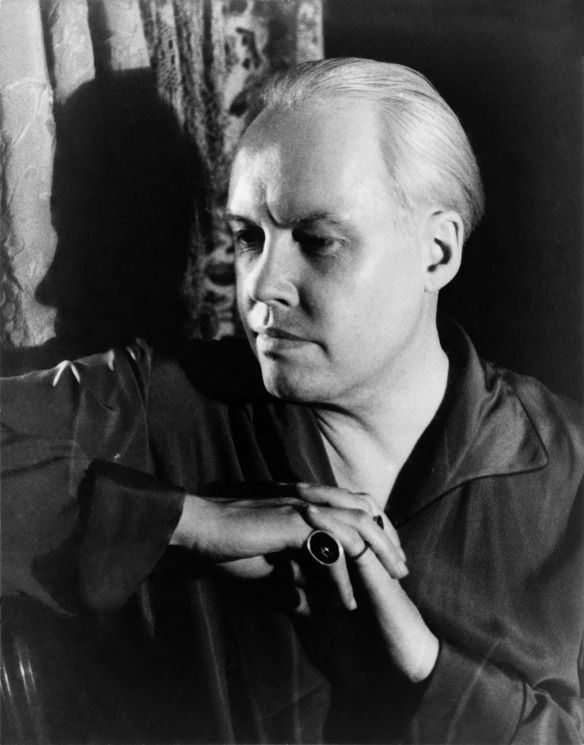
It is significant that the present group of Negro novelists, numbering fewer than twelve, appeared at the very moment when the bourgeoisie, having reached its apogee immediately following the World War and started upon its plunge into decay, demanded a new kind of amusement, a new kind of story, a new form of entertainment. The moment bourgeois culture in the United States began to crack and crumble, the moment the sated and blasé bourgeoisie began to realize that it need look no longer for new appetizers among the dregs of the old order, they turned to the Negro. Here lying at their very back door was a vast and unexplored dark continent, they thought, and began to investigate it at its edges. The first hardy pioneer to venture into this unknown black wilderness came later to be known as the white-haired boy of Harlem Colored society. Carl Van Vechten came to the colored bourgeoisie as the final fruition of its despairing hopes, as the answer, at last, to its fervent prayers: the white aristocracy was taking notice of the colored aristocracy. Mr. Van Vechten was treated with the deference and honor due an emissary from one great people to another great people. Nothing was too good for him, whether it was their kitchen-sink gin or their women. Van Vechten tarried, for this experience among an exotic people was exhilarating. He wrote. The offspring of this strange cohabitation was named N***r Heaven, and the bastard made its old man rich. Van Vechten tarried yet a little longer to thrill at the genuflections while the book was being extolled, but when the hosannas died down, he began to long for home, and he took the long journey back to Mt. Olympus, the long trek back to Greenwich Village. N***r Heaven was an “interpretation” of the colored upper class: a vicious distortion of the lives even of these fragile parasites. But it was what they loved, because it appealed to their childish class-vanity: they felt that now they had formed an unbreakable link with aristocracy, for, like members of the aristocracy, they had been immortalized in a novel. They did not know that instead of being immortalized they had really been embalmed. Van Vechten set the pace which Negro novelists of New York tried immediately to follow.
The reaction to N***r Heaven among the Negro bourgeoisie was ecstatic, because they had been belatedly discovered by a “white artist” and fittingly apostrophized; their reaction to Claude McKay’s Home to Harlem was one of general nausea and pains in sections of the anatomy other than the neck. For McKay, a retired radical sojourning in the Monttartre, wrote of the Negro worker. It did not matter to the colored aristocracy that McKay’s workers were entitled to that designation only by literary courtesy; it despised these blacks of the “low r er classes.” What McKay really did, however, was to write an autobiographical sketch of himself, dilating upon his love life. For Home to Harlem was not the story of workers who worked; it was about “workers” who swaggered through Harlem’s night life perfecting the art of love. It was not a novel of workers who live in hovels of tenements; who schemed to outwit the greedy landlord and his eviction agent. It was a novel of “workers” who lie concealed in the rat holes of Harlem by day, drinking until sodden, the women fighting like beasts for the possession of some man’s body, the men perpetually on the verge of committing murder to possess the body of some woman.
A novel by a radical which does not touch upon the workers’ struggle to survive in a capitalist society is so queer an anomaly as to be weird: that was Home to Harlem. But McKay was no longer active in the radical labor movement. He had served his apprenticeship under Max Eastman on the Masses, had written an indignant poem wholly lacking in working-class content, attacking lynching, had disappeared mysteriously to the Soviet Union, and had retired exhausted to the sidewalk cafes of Montmartre. His treatment of a small group of Negroes, a few of whom had returned fashionably “disillusioned” from the World War, cannot in any sense be extended as adequate treatment either of Negro workers as such or of Negro soldiers. The returning soldier, disillusioned concerning wars in general, was rather a popular hero in fiction at that time; for that very reason, a radical ought to have handled the theme differently. For disillusionment alone — simple disgust and cynicism expressing themselves in physical debaucheries— is unfit as a theme for a working-class novel. If novelist’s workers must have illusions, then these workers, to have any value for us, must have also disillusionment evolving into sanity of mind and clarity of vision. If there be no class-conscious action following this awakening into reality, there should be, at least, a forecast of it. Straying from this rule, fiction about workers has no validity for the working class. Certainly Home to Harlem has none. McKay’s second novel Banjo differed in only unimportant details from Home to Harlem. The retired “radical” had grown fat, and ill, and indifferent in Paris.
Since Van Vechten captured upper-class Harlem there has been a small troop of Negro novelists, all viewing this subject from approximately the same level and the same angle. We shall consider first George S. Schuyler, who used to be called a radical, but whose enemies, even, would blush at pinning such a tag on him today. Possessed of considerable talent as a newspaper man, Schuyler is nevertheless uninterested in the working class and its struggles. The masses of black toilers are, to him, a doltish lot, and he would, perhaps, like to do something about bringing them “up” to his own rarified status as a sophisticated “intellectual”; but for the present, he believes, imperialism is an excellent training course for nations like Haiti and Liberia, while, according to his pronouncement, “we cannot do away with the clergy in capitalist America or Communist Russia,” because, he explains learnedly, “under any form of society the masses of people must believe, and it makes little difference whether it is belief in the miracles of Jesus Christ or the wizardry of Karl Marx.” These quotations from Schuyler, who has never outgrown his adolescent cynicism, are typical of his writings, being designed to arouse a jeer from some Communist sympathizer (since the Communists themselves ignore him). To respond to such obvious bids for response would be out of place here, especially since they do not occur in his fiction but in a newspaper column; however, these quotations are indicative of Schuyler’s methods, whatever he writes. The proletarians in his novel Black No More are an inarticulate mass of fools with eyes set upon the con jury of pseudo-science, hoping thereby to cure their fundamental economic and political ills by changing themselves into white men. Like most other Negro writers of fiction, Schuyler believes the Negro masses to be oppressed under capitalism because of their superficial racial characteristics, and, logically, Schuyler makes his workers voice Schuyler’s profundities.

Four other Negro writers have dealt with the Negro worker in fiction, these being Wallace Thurman, Countee Cullen, Rudolph Fisher, and Langston Hughes, but none of them except Hughes has, evidently, heard of the class struggle. Thurman’s dilettantism, revealed in his absorption in the “problems” of white and colored degenerates and common parasites; Cullen’s snobbishness, betrayed in the speech and actions of his puppets, — their philosophical imbecilities; Fisher’s carefree happy-go-luckies with their repartee suggestive of cheap vaudeville; — these men are obviously not to be considered for any proletarian-revolutionary treatment of the Negro worker. They are writing for the upper classes who demand the stereotype which fits most neatly into their conception of what the Negro ought to be.
Thus far, Langston Hughes, in Not Without Laughter, has written the only novel in which the Negro worker is pictured as seeing the way out through the class struggle; it is the only novel by a Negro which is at the same time a critique of fiction Not Without Laughter is lacking in many important elements, the reason being, chiefly, that Hughes at that time was lacking almost wholly in political development; but his political development since the novel was written indicates a fulfillment of the promise it contained.
The unhealthy national culture of the Negro people, — reflected in the national psychology as a peculiar national psychosis, — is gradually evolving into a sound national culture, as works other than fiction prove. As working-class Negro novelists arise, however, and organize the experience of the Negro worker imaginatively and artistically, they will turn the black masses away from the poison of bourgeois propaganda toward ft healthy consideration of their own interests.
The New Masses was the continuation of Workers Monthly which began publishing in 1924 as a merger of the ‘Liberator’, the Trade Union Educational League magazine ‘Labor Herald’, and Friends of Soviet Russia’s monthly ‘Soviet Russia Pictorial’ as an explicitly Communist Party publication, but drawing in a wide range of contributors and sympathizers. In 1927 Workers Monthly ceased and The New Masses began. A major left cultural magazine of the late 1920s and early 1940s, the early editors of The New Masses included Hugo Gellert, John F. Sloan, Max Eastman, Mike Gold, and Joseph Freeman. Writers included William Carlos Williams, Theodore Dreiser, John Dos Passos, Upton Sinclair, Richard Wright, Ralph Ellison, Dorothy Parker, Dorothy Day, John Breecher, Langston Hughes, Eugene O’Neill, Rex Stout and Ernest Hemingway. Artists included Hugo Gellert, Stuart Davis, Boardman Robinson, Wanda Gag, William Gropper and Otto Soglow. Over time, the New Masses became narrower politically and the articles more commentary than comment. However, particularly in it first years, New Masses was the epitome of the era’s finest revolutionary cultural and artistic traditions.
PDF of full issue: https://www.marxists.org/history/usa/pubs/new-masses/1933/v08n11-jul-1933-New-Masses.pdf
 Revolution's Newsstand