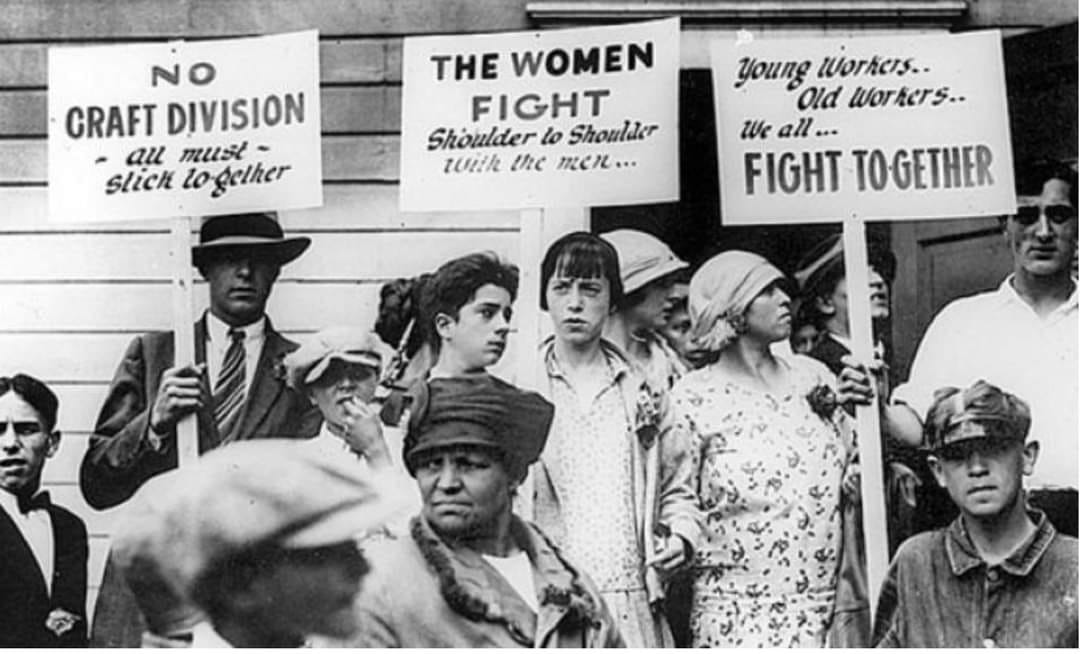
The 1929 conference that formally created the Trade Union Unity League out of the T.U.E.L. embarked on building new unions outside of the A.F.L. A report on women activists at the conference.
‘Women T.U.U.L. Delegates Open Campaign to Organize Unorganized Fellow-Workers’ from The Daily Worker. Vol. 6 No. 156. September 6, 1929.
8,500,000 SLAVE IN INDUSTRY; AFL IGNORING THEM
Negro Women Among 72 Delegates
CLEVELAND, Sept. 5. Women delegates to the Trade Union Unity League Convention enthusiastically adopted proposals for organization in connection with the new national union center to reach the great masses of unorganized women in industry throughout the country. Meeting in a special conference, 72 women workers representing 14 industries heard reports calling for organization in each industry and resolved upon a campaign of action.
The women’s conference recognized that one of the major tasks of the Trade Union Unity League will be to organize 8,500,000 women workers, still practically unorganized. Rose Wortis, of the Needle Trades Workers Industrial Union, in opening the session, pointed out that in spite of rapidly increasing numbers of women in industry, the American federation of Labor has entirely ignored the whole problem. Where formerly women were centered largely in the lighter industries, today they are exploited also in war industries and in heavy industry generally; numbers of women auto workers increased by 408 per cent and women steel workers by 145 per cent in ten years.
Negro Woman Delegate.
Delegate Voyce, Negro representative from a Ladies’ Auxiliary, National Miners’ Union, and chairman of the women’s conference, was one of seven representatives from miners’ auxiliaries. A steel worker, Katharine Mylan, of Wheeling, W. Va., described the need for organization among women steel workers and ended with a ringing call to all rank-and-file workers, “We are not going to wait for speakers to be sent to us. We are going to make speakers out of ourselves.”
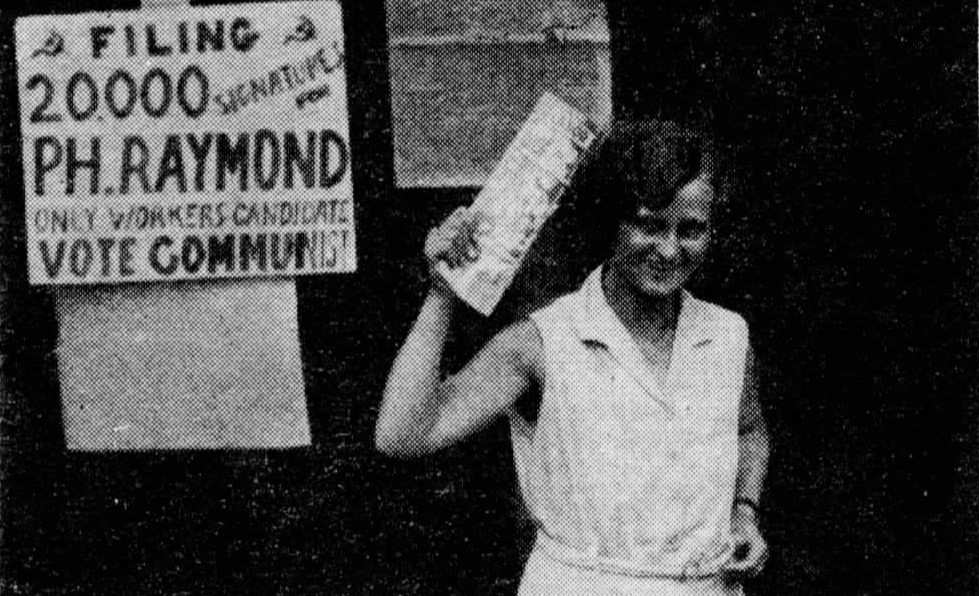
Textile workers, South and North, cotton and silk, were well represented by eight women delegates from Gastonia, New Bedford, Bethlehem, Pa., and other centers. Daisy MacDonald, one of the Gastonia strikers who showed such splendid fighting spirit on the picket line, appealed for more organizers in the southern textile field. Anna Burlak, young silk worker and one of the two women representatives elected to the National Committee of the T.U.U.L., spoke for the young workers who are outnumbering old women in the textile industries. Mary Correia of New Bedford brought enthusiastic applause by her appeal to married women “not to make excuses of their husbands.”
For the 16 women delegates from garment trades, Yaninskaya, who organized the Needle Trades Workers Industrial Union, described successful organization methods in the Boston field.
Expose A.F. of L.
Chicago waitresses were represented by Alma Polkoff who described the failure of the A.F. of L. Waitresses Union, which has done nothing to organize 50,000 waitresses in the city, among whom are 10,000 Negroes. Only in the Russian Workers Cooperative restaurant have the workers union conditions. Among other women who spoke on conditions in their industries were delegates Ross of the Chicago electrical workers, Getz and Morrison of the Detroit auto workers, a representative of laundry workers in Washington, D.C., and a delegate from the Shoe and Leather Workers Industrial Union who told of a woman’s department in the new union, giving women an opportunity never granted in any old A.F. of L. union.
Women workers’ demands include equal pay for equal work, the seven-hour day, five-day week, prohibition of night work, protection for mother and child, especially in the period before and after child birth and social insurance against unemployment, illness and old age. With a splendid spirit of determination women delegates went home from the Cleveland convention ready to fight for these demands in the unions already organized and to work for the organization of over 8,000,000 unorganized women workers.
The Daily Worker began in 1924 and was published in New York City by the Communist Party US and its predecessor organizations. Among the most long-lasting and important left publications in US history, it had a circulation of 35,000 at its peak. The Daily Worker came from The Ohio Socialist, published by the Left Wing-dominated Socialist Party of Ohio in Cleveland from 1917 to November 1919, when it became became The Toiler, paper of the Communist Labor Party. In December 1921 the above-ground Workers Party of America merged the Toiler with the paper Workers Council to found The Worker, which became The Daily Worker beginning January 13, 1924. National and City (New York and environs) editions exist.
PDF of full issue: https://www.marxists.org/history/usa/pubs/dailyworker/1929/1929-ny/v06-n156-NY-sep-06-1929-DW-LOC.pdf
 Revolution's Newsstand