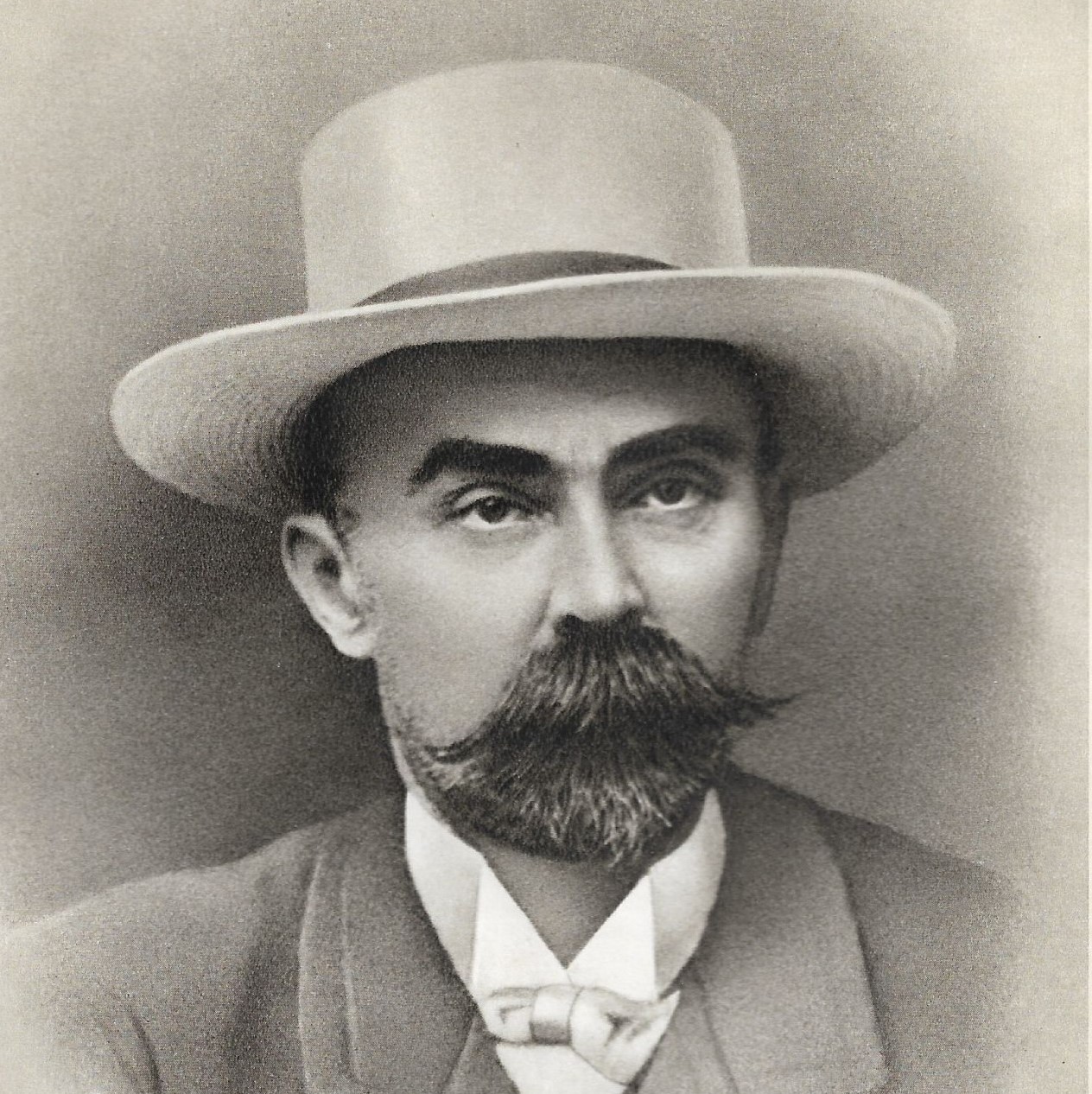
Marxism is an adventure. Plekhanov’s extraordinary literary-social critique of the rise of the French bourgeoisie from V.F. Calverton’s Modern Quarterly.
‘Sociology of Eighteenth Century French Drama’ (1905) Georgi Plekhanov from Modern Quarterly. Vol. 3 Nos. 3 & 4. May-December, 1926.
(Translated by Bessie Peretz)
THE study of the existence of primitive man confirms the fundamental statement of historical materialism, which declares that the consciousness of people is determined by their conditions. In support of this it is enough to refer to the deductions made by Bucher in his remarkable research Arbeit und Rhythmus. He says:
“I came to the conclusion that labor, music and poetry at the first step of development were blended together, but the fundamental element of this triad was labor, and the two others were of secondary importance.
According to Bucher, the origin of poetry is explained by labor (Der Ursprung der Poesie ist in der Arbeit zu suchen), and one who is acquainted with the literature of this subject will not accuse Bucher of exaggeration.1 Refutations launched by competent people are not concerned with the fundamental substance of Bucher’s theory, but only with certain secondary particulars. In essence, Bucher is undoubtedly right.
But his deduction primarily concerns itself with only the origin of poetry. However, what about its further development? How are poetry and art in general progressing in much higher steps of social evolution? Is it possible, and on what grounds, to note the existence of a causal relation between the state of being and the consciousness, between the technique and the economics on one side of society, and its art on the other?
We shall attempt to answer this question in this essay, and for this purpose shall treat of the history of the French drama during the eighteenth century.
It is necessary first of all to make a digression.
French society of the eighteenth century from the point of view of sociology is characterized primarily by the fact that it was a society divided into classes. This circumstance could not but reflect itself in the development of art. As a matter of fact, let us take even the theatre. On the stage of mediæval France, as in all Western Europe, the main place was occupied by the so-called farce. Farces were written for the people and were acted before the people. They always served as an expression of the people’s views, its aims, and— what is especially necessary to note here-its discontent with the high class of society. But beginning with the reign of Louis XIII, the farce begins to decline; it is considered as an amusement fitted only for lackeys and which is unworthy of people with a refined taste: “éprouvés des gens sages,” as one French writer expressed it in 1625. Tragedy replaces the farce. But the French tragedy has nothing in common with the views, aims, and discontents of the public mass. It represents a creation of the aristocracy and expresses the views, tastes, and aims of the higher class of society. We will see what a deep impression this origin of class-division had upon the character of the tragedy; but first of all we wish to direct the reader’s attention to the fact, that in the epoch of the birth of the tragedy the aristocracy in France did not occupy itself with productive work, and lived by using that which was produced by the economic activity of the Third Estate (tier état). It is not difficult to understand that this fact could not but affect those productions of art which were arising in the aristocratic society, and which expressed the tastes of that society.
It is known, for instance, that the inhabitants of New Zealand praise the cultivation of certain native plants in their songs. It is also known that their songs are followed by a type of dancing which illustrates the motions performed by the cultivators of those plants. Here it is obvious in what manner the productive activity of man affects his art, and it is not less clear that since the upper class of society is not occupied with productive activity, as a result their art— which arises in their society–can have no direct relation to the public process of production. But does it mean that the causal dependence of consciousness upon conditions is enfeebled when a society is divided into classes? Absolutely not,–for the division of society into classes is determined by the society’s economic development. If art created by the upper class has no direct relation to the productive process, this also is explained by economic causes. The materialistic interpretation of history, then, can be fully applied in this case, but it is understood that in this instance the undoubted causal connection between consciousness and conditions, between social relations—starting out on the ground of “work”—and art is not so easily disclosed. Here, between “work” on one side and art on the other, certain intermediate situations are formed which often attract the attention of scholars, and therefore make difficult the correct understanding of certain phenomena.
Having made this important digression, we shall return to our subject. First of all, we shall discuss tragedy. Taine states in his Lectures on Art:
“French tragedy appears at the time when the well-to-do and noble monarchy during the reign of Louis XIV organized the supremacy of manners, of fine aristocratic surroundings, a court life; and it disappears at the moment when the nobility—and morals-of court decline under the blow of the Revolution.”
This is entirely true. But the historical process of the origin and especially the fall of the French classical tragedy was a little more complex than is presented by this famous art-theoretician.
Let us examine these kinds of literary productions in their form and substance.
From the side of form in the classical tragedy, it should first of all be noted that the famous three unities were the cause of so many disputes in the memorable period of French literature which involved the struggle between the romanticists and classicists. The theory of these unities had been known in France from the time of the Renaissance; but it became a literary law, and an indisputable rule of “good taste” not until the seventeenth century. “When Corneille wrote his Medea in 1629,” Lanson remarks, “he knew nothing about the three unities.”2 As a propagandist of the theory of the three unities, Meré wrote during the 1630’s. In 1634 his tragedy Sophonisbe was enacted the first tragedy written in accordance with the “rules.” It was the cause of a polemic in which the opponents of the “rules” put forth arguments much resembling the arguments of the romanticists. In defense of the three unities, the learned adherents to ancient literature were armed, and they had an absolute and firm victory. But to whom were they indebted for their victory? In any case, not to the erudition in which the public was little concerned, but to the growing pretensions of the upper class for whom the naïve scenic absurdities of the preceding epoch were getting intolerable.
“Behind the unities was an idea which had to attract well-bred people,” continues Lanson, “the idea of exact imitation of reality, capable of conveying the necessary illusion. In its real sense the unities represent the minimum of conditionality Thus, the triumph of the unities was in the real sense a triumph of realism over imagination.”3
And thus the refinement of the aristocratic taste, increasing with the strengthening of “the noble and well-disposed monarchy,” conquered. Further progressions of theatrical technique made an exact imitation of reality fully possible without the observation of the unities; but the representation of them was associated in the minds of the spectators with a whole series of scenes important and dear to them; therefore, their theory seemed to acquire an independent value, though depending on the indisputable demands of good taste. In the course of time the prevalence of the three unities was supported, as we shall see later, by other social causes, and the theory, therefore, was defended even by those who despised the aristocracy. The struggle with the theory of the unities became very difficult; in order to overthrow them the romanticists required much ingenuity, persistence, and almost revolutionary energy.
Having touched upon theatrical technique, let us also note the following:
The aristocratic origin of French tragedy also affected the art of the actors. Everybody knows that the acting of French players to this day is characterized by a certain artificiality and even a stiltedness, which makes a rather unpleasant impression on a spectator unacquainted with this fact. Whoever saw Sarah Bernhardt will not dispute this with us. Such manner of playing is inherited by the French actors from the time when the classic tragedy reigned on the French stage. The aristocratic society of the seventeenth and eighteenth century would have revealed discontent had the actors of tragedy thought of acting with the naturalness and simplicity that enthralled the audiences of Eleanor Duse. Simple, natural acting absolutely contradicted all of the requirements of aristocratic esthetics. The Abbé Du Bos proudly stated:
“The French do not limit themselves only with a costume to add the required nobility and dignity to the actors and the tragedy. We also demand that the actors speak in a higher and slower tone than that employed in common speech. This is a more difficult manner, but it has more bearing. Gesticulation must correspond to the tone, for our actors must display greatness and ability in everything they do.”
But why did the actors have to display grandeur and nobility? Because tragedy was the child of court aristocracy and the leading characters were kings, heroes and, as a rule, such “highplace” persons, who, so to speak, the duty of service obliged to appear great and noble, if they really were not. A dramatist, in whose productions there was not the required conditional dose of court “nobility,’ even though possessed of great merit, would never have received applause from the spectators of that period. This is best seen from the French opinions expressed about Shakespeare at that time, and through the influence of France even in England.
Hume found that Shakespeare’s genius ought not to be exaggerated; unproportioned bodies often seem taller than their actual height; for his time Shakespeare was good, but he did not fit in with the refined audience. Pope expressed regret that Shakespeare wrote for the populace and not for the well-bred. “Shakespeare would have written better,” he said, “had he enjoyed the protection of the monarch and the support of the court people.” Voltaire himself, who in his literary activity was a harbinger of a new era, inimical to the old order, and who gave to many of his tragedies a philosophic content, paid an enormous tribute to the esthetic conceptions of aristocratic society. Shakespeare appeared to him a genial but rough barber. His opinion of Hamlet is noteworthy, indeed. He says:
“This piece is full of anachronisms and absurdities; in it Ophelia is buried on the stage, and this is such a monstrous spectacle that the famous Garrick got rid of the scene in the cemetery. This piece is rich with vulgarities. For instance, in the first scene the watchman says: ‘I did not even hear the stamping of mice.’ Must such absurdities be tolerated? Without doubt, a soldier speaks thus in the camp, but he must not express himself so on the stage before the selected persons of the nation-persons who talk in a noble tongue and in whose presence it is necessary to speak not less nobly. Imagine, gentlemen, Louis XIV in his glass gallery surrounded by his glistening court, and then imagine a jester covered with rags pushing the crowd of heroes aside the great nobles and beauties which constitute the court–and proposing that they throw up Corneille, Racine, and Moliere for Punch and Judy, who possess sparks of talent, or make grimaces. What do you think? How was such a jester met?”
These words of Voltaire not only indicate the origin of the French classic tragedy, but also the causes of its fall.4
Exquisiteness easily passes into affectation, and affectation excludes the serious and meditative refinement of the object.
The sphere of choice of objects must certainly have become narrow under the influence of the class prejudices of the aristocracy. Class conception of proprieties was clipping the wings of art. In this respect the demand which Marmontel put forth in the tragedy is extremely interesting and instructive:
“A both peaceful and well-bred nation, in which everyone thinks it necessary to adjust his ideas and feelings to the manners and customs of society, a nation where proprieties serve as laws such a nation can allow only those characters which are softened with respect to their associates, and only such vices which are mitigated by propriety.”
Class propriety becomes a criterion when valuing art productions. This is enough to bring forth the fall of classic tragedy. But this is not yet enough to explain the appearance on the French stage of a new kind of dramatic production. In the meantime, we see that in the 1830’s a new literary genre appears–the Comedie Larmoyante, the tearful comedy, which for a time had a fairly notable success. If consciousness is explained by conditions, if the so-called spiritual progress is in causal dependence to its economic progress, then the economics of the eighteenth century should also explain the appearance of the tearful comedy. The question is: can it do it?
It not only can do it, but it did in part, though without any serious method. In proof we’ll refer, for instance, to Gettner, who, in his history of French literature, views the tearful comedy as a result of the growth of the French bourgeoisie. But the growth of the bourgeoisie, like the growth of any other class, can be explained only by the economic development of society. Therefore, Gettner, unsuspectingly and against his own desire, he is a great enemy of materialism, about which, by the way, he has the most stupid conception–applies the materialist interpretation of history. And not only Gettner! Brunetière, far better than Gettner, showed this causal dependence in his book, Les epoques du theatre francais. He writes:
“Since the time of the failure of Lau’s bank–to stop at this point–the aristocracy loses ground every day. It seems to hasten to do everything that a given class can do in order to…but especially does it (the aristocracy) become impoverished, while the bourgeoisie, the third estate, multiplies its wealth, and, gaining more and more importance, acquires in addition the consciousness of its rights. As one poet afterwards expressed it, in their hearts a hatred was born simultaneously with the thirst for justice. Is it possible then that the bourgeoisie took no advantage of the theatre-such a means as it was of disposing propaganda and influence; that the bourgeoisie did not take their situation seriously; did not look with a tragic view at the inequalities which only amused the author of the comedies. Bourgeois gentilhomme and Georges Dandin? And, above all, was it possible that this triumphing bourgeoisie became reconciled with the constant performances concerning emperors and kings and that it did not take advantage of its increasing wealth to demand the portrayal of its own life?”
And so the tearful comedy was a portrait of the French bourgeoisie of the eighteenth century. Not incorrectly is it called the bourgeois drama. But Brunetière’s view, though correct, has a too general, and, therefore, abstract character. Let us develop it more fully.
Brunetière says that the bourgeoisie could not reconcile itself with the perpetual representations of emperors and kings. This is very probable after his explanations in the above citation, but so far it is only probable; it will become certain only when we investigate the psychology of at least a few persons who took an active part in the literary life of France at that time. To them the talented Beaumarchais–the author of several tearful comedies–belonged. What did Beaumarchais think, then, of the constant representation of only emperors and kings?
Decidedly and passionately he rebelled against it. He rarely laughed at the literary rule which caused tragedy to depict its heroes only as kings and others illustrious in this world, and which, on the other hand, forced comedy to whip in people of the lower estate.
“To depict the weal and woe of people of the Third Estate! Fi donc! One can only laugh at these! Ridiculous citizens and unfortunate kings–this is all that can be permitted on the stage. Very well, we shall remember that.”5
This sharp exclamation of one of the most outstanding ideologists of the Third Estate apparently proves, therefore, the psycho- logical attitude of Brunetière. But Beaumarchais not only desired to portray the people of the Third Estate in their unfortunate situations. He protested also against the custom of choosing actors from the heroes of the ancient world.
“What interest have I, a peaceful citizen of a monarchical empire of the eighteenth century, with the events of Rome or Athens? Can I be intensely interested in the death of some Peloponnesian tyrant or in the sacrificing of a young princess in Aulis? All this does not concern me in the least; from all this I derive no significance.”6
THE choice of heroes from the ancient world was one of the numerous manifestations of the passion for the old, which itself was an ideological reflection of the struggle of the newly blossoming social state with feudalism. From the time of the Renaissance this love for the old civilization passed over to the age of Louis XIV, which, as we know, has been compared to that of August. But when the bourgeoisie began to be imbued with an antithetical frame of mind, when in its heart “hatred together with a thirst for justice” began to grow, then the fascination of ancient heroes— fully shared by its educated representatives–appeared antedated, and the events of ancient history seemed to be insufficiently instructive. The hero of the bourgeois drama is “the man of the middle state,” more or less idealized by the ideology of the bourgeoisie. This characteristic case, of course, could not harm the portrayal.
Let us go further. A true creator of the bourgeois drama in France was La Chaussée. Now what do we see in his many pro- ductions? An opposition to this or other sides of aristocratic psychology, a struggle with these or other prejudices or, if you choose, vices of the nobility. The contemporaries valued, above all, the moral preaching these productions embodied.7 And from this point of view the tearful comedy was true to its origin.
It is known that the ideologists of the French bourgeoisie who aimed to give its portrayal in their dramatic productions, did not display much originality. The bourgeois drama was not created by them, but was carried over to France from England. In England this kind of dramatic production sprang up at the end of the seventeenth century as a reaction against the awful looseness which then predominated on the stage and which was a reflection of the moral fall of the English aristocracy. The bourgeoisie–struggling with the aristocracy–wanted the comedy to become “worthy of the Christians,” and began to preach in it the mores of its class. The French literary innovators of the eighteenth century, borrowing extensively from English literature everything which corresponded to the conditions and feelings of the French bourgeoisie, carried to France this characteristic of the English tearful comedy. The French bourgeois drama, no less than the English, preaches the virtues of the bourgeois family. This is one of the secrets of its success. At first glance, it seems entirely inconceivable that the French bourgeois drama, which around the middle of the eighteenth century, appeared to be an established literary production, fell to the background even before the classic tragedy, which, from all logic, should have receded before the bourgeois tragedy.
We shall shortly see how this strange circumstance is explained, but, before, let us say this:
Diderot, who, thanks to his passionate desire for innovation, could not but be attracted to the bourgeois drama, and who, as we know, participated in the new literary field (recall his Le fils naturelle in 1757, and his La pere de famille in 1758) demanded that the stage give a representation, not of a character but of a condition- particularly, a social condition. He was replied to in the following manner: Social conditions do not define a person. “What is,” he was asked, “a judge in himself (le jugen soi)? What is a merchant in himself (le negociant en soi)? But here was a wide misunderstanding. Diderot talked not about the merchant en soi, but about the merchant of that time, and especially about the judge of that period. And that judges gave much of instructive material for very realistic scenic representation is best seen in the famous comedy, Le marriage de Figaro. Diderot’s demand was only a literary reflection of the revolutionary aims of the French “middle state” of that era. A child of the aristocracy, the classic tragedy unlimitedly and indisputably reigned on the French stage while the aristocracy pre- dominated socially in the bounds assigned by the constitutional monarchy, which itself was a historic result of the lasting and embittered struggle of classes in France. When the supreme position of the aristocracy began to be a subject of dispute, when people of “the middle state” were possessed of a rebellious frame of mind, the extant literary conceptions began to appear to these people unsatisfactory, and the old theatre not instructive enough. And then simultaneous with the gradual fall of the classic tragedy, the bourgeois drama made itself evident. In the bourgeois drama the French “man of middle state” set his family virtues against the deeply-spoiled aristocracy. But that social contradiction, which France then had to solve, could not be decided by the aid of moral preaching. The subject was then not about the removal of aristocratic vices, but about the removal of the aristocracy itself. It is understood that this could not come to pass without embittered struggle, and it is not less clear that the father of the family, in all fervent esteem of his bourgeois morality, could not serve as the model of an untiring and intrepid martyr. The literary portrayal of the bourgeoisie did not inspire heroism. And yet the opponents of the old order felt the need of heroism, were conscious of the necessity of the development of civic virtues in the Third Estate. Where was it possible, then, to find models of such virtue? There where they searched before for standards of literary taste: in the ancient world.
So again the reversion to heroes of the old civilizations. Now the opponent of the aristocracy says no more-like Beaumarchais- “Of what concern to me, a citizen of a monarchical state of the eighteenth century, are the events of Athens and Rome?” Now the Athenian and Roman events reawakened in the public the liveliest interest. But this interest took on another character.
If the young ideologists of the bourgeoisie were interested now in sacrificing a young princess of Aulis, they were interested in it mainly as a source of material for revealing superstition; if their attention could be attracted by the “death of some Pelopennesian tyrant,” then this attraction was due, not so much to its psychologic as its political side. Nor were they attracted by the monarchical age of August, but by the republican heroes of Plutarch. Plutarch became the text book of the young bourgeois ideologists, as the memoirs of Mme. Rolland show. And this love for the republican heroes once more revived an interest in ancient life. Imitation of antiquity became the fashion, and it put a deep imprint upon all French art of the time. We shall note that, in addition, this same imitation weakened the interest in the bourgeois drama, because of the prosaicness of its substance, and for a long time delayed the death of the classic tragedy.
Historians of French literature frequently have asked themselves in surprise: what is the explanation of the fact that the plotters and workers of the great French Revolution remained conservatives in the domain of literature? And why did classicism fall only a long time after the fall of the old order? But in reality the literary conservatism of the innovators of that time was only external. If tragedy did not change as a form, then it suffered a necessary change in the matter of content.
Let us take Spartacus, the tragedy of Sorraine, which appeared in 1760. Its hero, Spartacus, is full of yearning for freedom. For the sake of his great idea he even refuses to marry the girl he loves, and all through the play he continues to talk about freedom and humanity. In order to write such tragedies and praise them, it was absolutely essential that one be not a literary conservative. An entirely new and revolutionary substance was poured into the old literary leather flasks.
Tragedies like those of Sorraine and Lemverre exemplify one of the most revolutionary demands of the literary innovator Diderot: they depict, not characters but social conditions, and especially the revolutionary social tendencies of the time. And if this new wine was poured into old leather flasks, then it is to be explained by the fact that these leather flasks were overshadowed by the same antiquity, the general love for which was one of the most significant, most characteristic, symptoms of the new social mood. Side by side with the diverse types of the classic tragedy, according to Beaumarchais, the bourgeois drama could not but seem too poor, too insipid too conservative in its content.
The bourgeois drama was brought to life by the opposite attitude of the French bourgeoisie, and no longer was suitable for the expression of its revolutionary inclination. The literary portrayal accurately defined the transition of the bourgeois; therefore, the characterizations ceased being interesting when the bourgeoisie lost these features and when these features ceased to seem pleasant.
The classic tragedy existed close to the time when the French bourgeoisie finally triumphed over the defenders of the new order, and when the love for the republican heroes of antiquity lost all social significance for the bourgeoisie.8 And when this time came, the bourgeois drama received new impetus, and suffered some necessary changes according to the peculiarities of the new social condition, but these changes were not important nor definite enough to prevent the drama’s asserting itself on the French stage.
Even those who refused to acknowledge any consanguineous relation between the romantic drama and the bourgeois drama of the eighteenth century would have to agree that the dramatic productions of, for instance, the son of Alexander Dumas, represent the bourgeois drama of the nineteenth century.
In the productions of art and literary tastes of a given time is expressed the social psychology; and in the psychology of a society which is divided into classes much will remain vague and paradoxical to us if we continue to ignore–as the historical idealists do, despite the best intentions of the bourgeois historical scientists—the mutual relation of classes and the class struggle.
NOTES
1. M. Herness remarks that the art of primitive decoration could develop only by depending upon industrial activity, and that those peoples who, like the Ceylon Vedas, as yet know nothing of industrial life, have no decoration. (Urgeschichte der billenden Kunst in Europa. Wien, 1898, Page 38.) This conclusion is similar to the one made above by Bucher.
2. Historie de la litterature francaise. Page 415.
3. Ibid.
4. We will remark at this point that it was mainly this side of Voltaire’s viewpoint that made him so repulsive to Lessing, the ideologist who adhered to German burgher-dom. This is well explained in F. Mering’s book, Die Lessings Legend.
5. Lettre sur la critique du Barbier de Séville.
6. Essai sur le genre dramatique sérieux. Oeuvre 1. Page 11.
7. D’Alembert remarks the following about La Chaussée: activities so in his private life he kept to the rule that that man is wise whose desires and aims are proportionate to his means.” This is a justification of bal- ance, moderateness, and accuracy.
8. “L’ordre de Lycurgue qui n’y pensait guére—says Petit de Julleville, protégea les trois unités (Le theatre en France, page 334.) It is impossible to express it better. But on the eve of the great Revolution the ideologists of the boirgeoisie did not see in this spirit anything conservative. But on the contrary they saw in it only a revolutionary civic virtue (vertu). This is important to remember.
Modern Quarterly began in 1923 by V. F. Calverton. Calverton, born George Goetz (1900–1940), a radical writer, literary critic and publisher. Based in Baltimore, Modern Quarterly was an unaligned socialist discussion magazine, and dominated by its editor. Calverton’s interest in and support for Black liberation opened the pages of MQ to a host of the most important Black writers and debates of the 1920s and 30s, enough to make it an important historic US left journal. In addition, MQ covered sexual topics rarely openly discussed as well as the arts and literature, and had considerable attention from left intellectuals in the 1920s and early 1930s. From 1933 until Calverton’s early death from alcoholism in 1940 Modern Quarterly continued as The Modern Monthly. Increasingly involved in bitter polemics with the Communist Party-aligned writers, Modern Monthly became more overtly ‘Anti-Stalinist’ in the mid-1930s Calverton, very much an iconoclast and often accused of dilettantism, also opposed entry into World War Two which put him and his journal at odds with much of left and progressive thinking of the later 1930s, further leading to the journal’s isolation.
PDF of full issue: https://hdl.handle.net/2027/iau.31858045478306
 Revolution's Newsstand