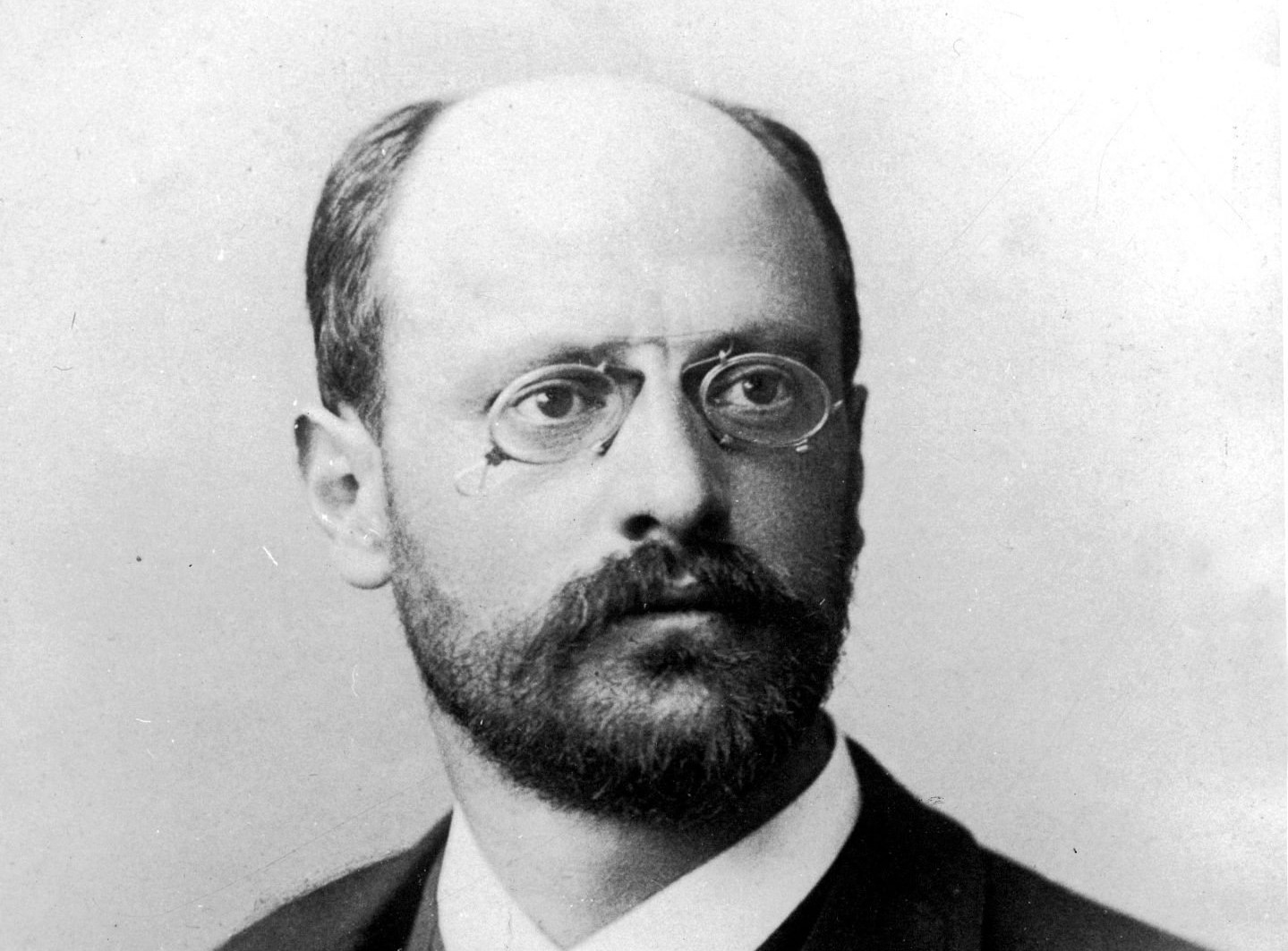
A chapter from one of Kautsky’s most widely-read and influential works published in English. Written in 1906 and translated by British Marxist John Askew, it was produced immediately by the Kerr Cooperative.
‘The Roots of the Materialist Conception of History’ by Karl Kautsky from Ethics and the Materialist Conception of History. Charles H. Kerr Publishers, Chicago. 1906.
The rapid progress of the natural sciences since the French Revolution is intimately connected with the expansion of capitalism from that time on. The capitalist big industry rests more and more on the application of science and consequently had every reason to supply it with men and means. The modern technic gives to science not only new objects of activity but also new tools and new methods. The international communication finally brought new material to it. Thus it acquired strength and means to carry the idea of evolution successfully through.
But even more than for natural science was the French Revolution an epoch of importance for the Science of society, the so-called mental sciences. Because in natural science the idea of evolution had already given a great stimulus to many thinkers. In mental science on the other hand it was only to be found in the most rudimentary attempts. Only after the French Revolution could it develop in them.
The mental sciences – Philosophy, Law, History, Political Economy – had been for the rising Bourgeoisie before the French Revolution in the first place a means of fighting the ruling powers, social and political, which opposed them and had their roots in the past. To discredit the past, and to paint the new and coming in contrast to it, as the only good and useful, that formed the principal occupation of these sciences.
That has altered since the Revolution. This gave the Bourgeoisie the essence of what they wanted. It revealed to them, however, social forces which wanted to go further than themselves. These new forces began to be more dangerous than the relies of the deposed old. To come to an agreement with the latter became only a requirement of political sagacity on the part of the Bourgeoisie. Therewith, however, their opinion on the past was bound also to grow milder.
On the other hand the Revolution had brought a great disillusionment to the Ideologues themselves. Great as were its achievements for the Bourgeoisie, they were not up to the expectations of a harmonious empire of “morality”, general well-being, and happiness, such as had been looked for from the overthrow of the old. No one dared to build hopes on the new; the more unsatisfactory the present, so much the more terrifying were the reminiscences of the most recent past which the present had brought to a head, so much the more bright did the farther past appear. That produced as is well known Romanticism in art. But it produced also similar movements in the mental sciences. Men began to study the past, not in order to condemn it, but to understand it; not to show up its absurdity, but to understand its reasonableness.
But the Revolution had done its work too thoroughly for men to dream of re-establishing what had been set aside. Had the past been rational, so it was necessary to see that it had become irrational. The socially necessary and reasonable ceased with that to appear as an unchangeable conception. Thus arose the view of a social evolution.
That applied first to the knowledge of German History. In Germany the above described process was most markedly to be seen. The revolutionary method of thought had never penetrated so deeply, had never struck such deep roots as in France, the Revolution had not worked so thoroughly, had shaken the forces and opinions of the past in a less degree, and finally had appeared on the scene more as a disturbing than an emancipating element.
But to the study of the German past there associated itself the investigation of similar periods. In America the young community of the United States was already so far advanced, that there a separate class of intellectuals had already developed a real American literature and science. What specially distinguished America from Europe, was, however, the close contact of the capitalist civilization of the white man with Indian barbarism. That was the object which especially attracted literature and sciences. Soon after the German romanticism there arose the American Indian romance and soon after the rise of the historical school of law, the revival of the old fairy tales and the world of legends, and the comparative philological research in Germany, the scientific theory of the social and linguistic conditions of the Indians in America.
At an earlier period, however, the settlement of the English in India had afforded the possibility, nay, the necessity, of a study of the languages, the customs, the laws of these territories. At the commencement of the nineteenth century the knowledge of Sanscrit had penetrated as far as Germany, which laid the foundation for the comparative study of languages, which in its turn afforded the most valuable insight into the life of the Indo-Germanic peoples in primitive times. All this rendered it possible to treat the accounts given by civilized observers on primitive peoples as well as the discoveries of weapons and tools of disappeared races differently from formerly when they had been simply looked on as curiosities. They now became material to prolong the already revealed parts of human development still further into the past and to close up many of the gaps.
In this entire historical work there was, however, lacking the object which had up to then ruled the entire writing of history – the distinguished human individual. In the written sources, from which formerly the knowledge of human history was exclusively culled, only the extraordinary had been related, because it was that only which seemed noteworthy to the chronicler of the events of his time. Who cared to describe what was everyday, what everybody knew! The extraordinary man, the extraordinary event, such as wars and revolutions, alone seemed worth relating. Thus it was that for the traditional historians, who never got beyond writing up from the sources handed down to them with more or less criticism, the big man was the motor power in history; in the feudal period the king, the military commander, the religious founder, and the priests. In the eighteenth century these very men were branded by the Bourgeois intellectuals as the authors of all the evil in the world, and the philosophers on the other hand as legislators and teachers, as the only real instruments of progress. But all progress appears to be only external, or simple change or clothes. That period in which the sources of historical writing began to flow more abundantly, the time of the victory of the Greeks over the Persian Invasion, was the culminating period of the social development. From that time on society in the lands round the Mediterranean began to decay, it went down and down till the Barbarian Immigration. Only slowly have the peoples of Europe since then developed themselves again to a higher level socially, and even in the 18th century they had not risen far above the lead of classical antiquity, so that in many points of politics, of philosophy, and especially of art the latter could rank as a pattern.
History, as a whole, appeared simply as a rise and descent, a repetition of the same circle; and just as the simple individual can set himself continually higher aims than he arrives at, because as a rule he fails, so did this circle appear as a horrible tragi-comedy in which all that was most elevated and strongest was doomed to play wretched parts.
Quite otherwise was it with primitive history. That with its individual departments. History of Law, Comparative Philology, Ethnology, found in the material which they worked up, not the extraordinary and the individual but the every day and commonplace described. But for that very reason can primitive history trace with certainty a line of continuous development. And the more her material grows, the more it is possible to compare like with like, the more it is discovered that this development is no chance, but according to law. The material which is at our disposal is on the one side facts of the technical arrangements of life, on the other of law, custom and religion. To them the law controlling this means nothing else than to bring technics into a causal connection with the legal, metal, and religious conceptions without the help of extraordinary individuals or events.
This connection was, however, discovered almost simultaneously from another side, namely statistics.
So long as the Parish was the most important economic institution, statistics were hardly required. In the Parish it was easy to get a view of the state of affairs. But even if statistics were made there, they could scarcely suggest scientific observations, as with such small figures the law had no chance of showing itself. That was bound to alter, as the capitalist method of production created the modern states, which were not, like the earlier, simple bundles of communes or parishes and provinces, but unitary bodies with important economic functions.
Besides that, however, the capitalist method of production developed the state not simply to the inner market, but beside that created the world market. That produced highly complicated connections which were not to be controlled without the means of statistics. Founded for the practical purpose of tax gathering and raising of recruits, for customs, and finally for the Insurance societies, it gradually embraced wider and wider spheres and produced a mass of observations on a large scale, which showed laws which must impress themselves on observant compilers of the material. In England this happened at the end of the 17th century, when Petty arrived at a political arithmetic, in which, however, “estimates” played a very big role. At the beginning of the nineteenth century the method of statistical enquires was so complete and its sphere so varied that it was possible to discover with the greatest certainty the laws governing the actions of great masses of men. The Belgian Quetelet made an attempt in the thirties, to describe in this manner the physiology of human society.
They saw that the determining element in the alterations of human action was always a material change, usually an economic one. Thus was the decrease and increase of crime, of suicide, marriages, shown to be dependent on the prices of corn.
Not as if economic motives were for instance the sole cause that marriages were made at all. Nobody would declare the sexual passion to be an economic motive. But the alteration in the annual number of marriages is called forth by changes in the economic situation.
Besides all these new sciences there is finally to be mentioned a change in the character of the modern writing of history. The French Revolution came to the fore so clearly as a class-struggle, that not only its historian must recognize that, but a number of the historians were inspired to investigate in other periods of history the role of the class wars, and to see in them the motive forces of human development. The classes are, however, again a product of the economic structure of society, and from this spring the antagonisms, therefore the struggles of the classes. What holds every class together, what divides them from other classes, determines their opposition to men, is the particular class interests, a new kind of interest, about which no moralist of the eighteenth century had had any idea whatever school he might belong to.
With all these advances and discoveries which certainly often enough were only piece-meal and by no means quite clear by the time of the forties in the nineteenth century all the essential elements of the materialist conception of history had been supplied. They only waited for the master who should bring them under control and unify them. That was done by Engels and Marx.
Only to deep thinkers such as they were was an achievement of that nature possible, in so far that was their personal work. But no Engels, no Marx could have achieved it in the 18th century, before all the new sciences had produced a sufficient mass of new results. On the other hand a man of the genius of a Kant or a Helvetius could also have discovered the materialist conception of history if at their time the requisite scientific conditions had been at hand. Finally, however, even Engels and Marx despite their genius and despite the preparatory work, which the new sciences had achieved, would not have been able even in the time of the forties in the 19th century, to discover it, if they had not stood on the standpoint of the proletariat, and were thus socialists. That also was absolutely necessary to the discovery of this conception of history. In this sense is it a proletariat philosophy and the opposing views are Bourgeois philosophies.
The rise of the idea of evolution took place during a period of reaction, when no immediate farther development of society was in question; the conception consequently only served for the explanation of the previous development, and thereby only in a certain sense, that of a justification, nay, at times more, a glorification of the past. Just as through Romanticism and the historical school of jurisprudence, there goes through the entire study of early times, even through Sanscrit study – I may point to the example of Schopenhauer’s Buddhism – in the first decades of the last century a reactionary trait. So was it with that philosophy which made the evolutionary idea of that period the centre of its system, the Hegelian. Even that was only intended to be a panegyric on the previous development, which had now found its close in the monarchs by the will of God. As a reactionary philosophy this philosophy of the development was bound to be an idealist philosophy, since the present, the reality, was in too great a contradiction with its reactionary tendencies.
As soon as reality, that is the capitalist society, had got so far as to be able to make itself felt in face of these tendencies, the idealist conception of evolution became impossible. It was superseded by a more or less open materialism. But only from the proletariat point of view was it possible to translate the social development into a materialistic one – in other words to recognize in the present an evolution of society proceeding according to natural laws.
The Bourgeoisie was obliged to close its eyes to all idea of a further social evolution, and repudiate every philosophy of evolution, which did not simply investigate the development of the part to understand this, but also in order to understand the tendencies of the new society of the future and to hammer out weapons for the struggle of the present, which is destined to bring about this form of society of the future.
So soon as this period of intellectual reaction after the great Revolution had been overcome, and the Bourgeoisie which had regained self-respect and power had made an end to all artistic and philosophic romanticism in order to proclaim materialism, they could not all the same get as far as the historic materialism. Deeply founded as this was in the circumstances of the time, so was it no less in the nature of the circumstances, that that could only be a philosophy of the proletariat, that it was repudiated by science so far as it lay in the influence of the Bourgeoisie, repudiated to such an extent that even the socialist author of the history of materialism, Albert Lange, only mentions Karl Marx in that work as an economist and not as a philosopher.
The idea of evolution, generally accepted for the natural sciences, even fruitful for certain special branches of mental science, has remained dead for the sciences as a whole as taught by Bourgeois science. The Bourgeoisie could not even get further than Hegel in their philosophy. They fell back into a materialism which stands considerably below that of the 18th century, because it is purely natural philosophy, and has no theory of society to show. And when this narrow materialism no longer suited them, they turned to the old Kantianism, purified from all the defects which had been superseded by science in the meantime, but not emancipated from its Ethic which was now the bulwark which was to be brought against the materialist theory of Social Evolution.
In the economic sciences the Bourgeoisie hovered between a historic conception which certainly acknowledges an evolution of society, but denies necessary laws of this development, and a view which recognizes necessary laws of Society but denies the social development and believes it possible to discover in the psychology of primitive man all the economic categories of modern society. To this conception there was added a naturalistic (or natural scientific) which tries to reduce the laws of society to laws of biology, that is, to the laws of animal and plant organisms, and really amounts to nothing short of a denial of social development.
Since the Bourgeoisie has grown conservative, only from the proletarian standpoint is a materialist view of social development possible.
It is true that the dialectical materialism is a materialism of its own kind, which is quite different from the materialism of natural science (naturalism). Many friends have wished accordingly in order to avoid misunderstandings, to substitute another word for the word materialism.
But if Marx and Engels held on to the word materialism that had the same ground as the refusal to rechristen their Manifesto of the Communists into a manifesto of the Socialists. The word socialism covers today such various wares, among them some really worthless, Christian and national socialisms of all kinds; the word communism on the other hand describes unmistakably and clearly the aims of a proletariat fighting a revolutionary fight for its emancipation.
So also by a designation of the dialectical materialism as dialectical “monism”, or “Criticism” or “Realism” were its significance as opposition to the Bourgeois world lost. The word “materialism” on the other hand has signified since the victory of Christianity a philosophy of the fight against the ruling powers. Therefore has it come into disrepute with the Bourgeoisie, but for that very reason have we followers of the proletarian philosophy every reason to hold fast to this very name, which also can be justified in fact. And a conception of Ethics, which rises from this philosophy can rank as a materialistic one.
Charles H Kerr publishing house was responsible for some of the earliest translations and editions of Marx, Engels, and other leaders of the socialist movement in the United States. Publisher of the Socialist Party aligned International Socialist Review, the Charles H Kerr Co. was an exponent of the Party’s left wing and the most important left publisher of the pre-Communist US workers movement. It remains a left wing publisher today.
PDF of full book: https://archive.org/download/ethicsmaterialis00kaut/ethicsmaterialis00kaut.pdf
 Revolution's Newsstand