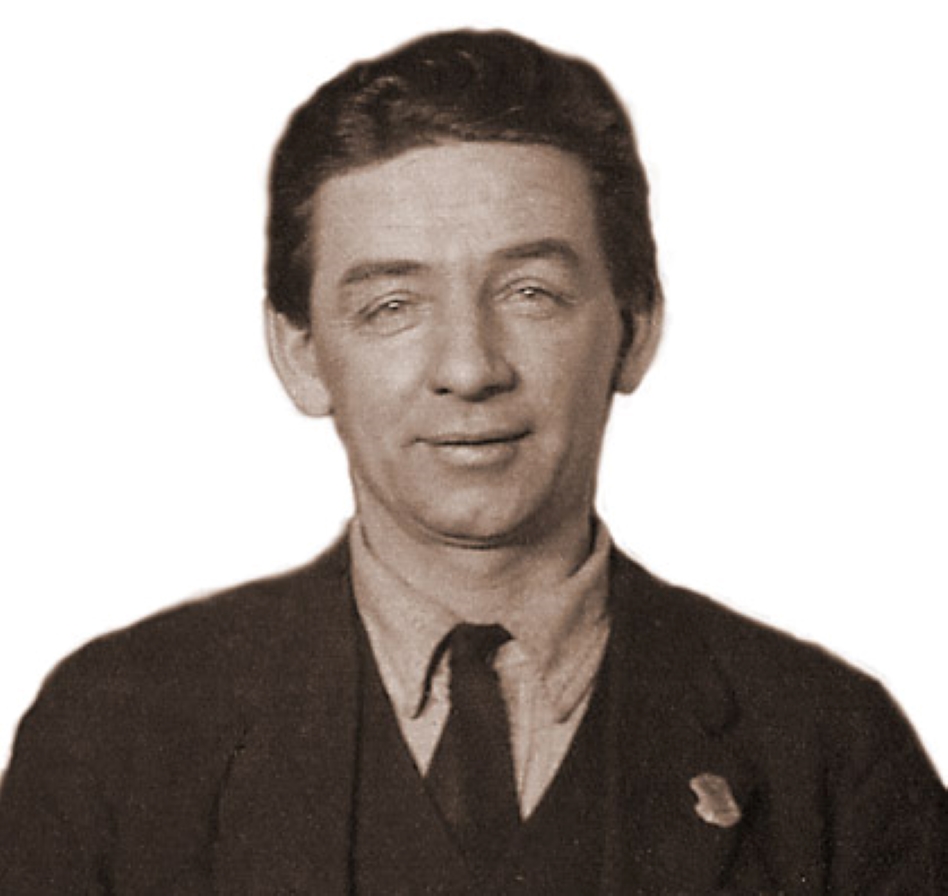
A review of the June, 1915 Socialist Party National Committee meeting by two left-wingers, and future founders of the Communist Labor Party. The meeting was seen by both as a reversal of the opportunist direction taken by the Party at the 1912 National Convention.
‘The 1915 National Committee Meeting’ by L.E. Katterfeld and James P. Reid from The International Socialist Review. Vol. 16 No. 1. July, 1915.
I. Report of L.E. Katterfeld
This convention means a complete reversal of the policies that have dominated the party for the past three years. All the important actions taken are diametrically opposed to the actions of the last National Convention and the National Committee meetings of 1913 and 1914. Those who were in the majority in the Convention of 1912 inaugurated a policy of centralization. They took the election of the party officials out of the hands of the membership and placed it in the hands of the National Committee. They deprived the membership of the power to initiate referendums and placed that power with State Executive Committees and the National Committee. Last year when a referendum of the membership had again restored this power to the rank and file, the National Committee violated the spirit, if not the letter, of the National Constitution and passed an amendment putting the percentage required to initiate referendums so high as to make it practically impossible for the membership to function. In the meantime, also, the National Committee had been deprived of the power to take affirmative action between sessions, so that the only body in our entire organization with power to function was the National Executive Committee of five members centralization run riot.
The National Committee at its meeting this year adopted constitutional changes, which, if approved by the membership, means an absolute reversal of this autocratic policy and a return to democracy in the party’s control. Provision was made for the election of national officials by referendum. The clause prohibiting affirmative actions on the part of the National Committee was stricken out, so that the membership in the states may have a voice through its Committeemen in directing the national affairs and the Executive Committee may no longer “reign” supreme. Another clause was inserted specifically prohibiting national officials from interfering in any state controversies. The power to initiate referendums was restored to the party membership.
So strong was the tendency against the old policy that even some of its leading exponents some of those primarily responsible for it changed front completely and hastened to climb upon the bandwagon with an alacrity that was amusing even if not edifying.
The sentiment of the Committee became apparent on the very first day, when those who have heretofore always been the minority in our national conventions elected a majority of the different subcommittees. It became so plain that even the blind could see it when the position of the national officials and of the National Executive Committee, in regard to the controversies in Texas and Michigan, was reversed and the radical delegates who had been opposed by the national administration were seated by a vote of over two to one.
The climax came during the report of the Committee on Constitution, which recommended that Section III, Article X, dealing with fusion and party treason, be made stronger and more binding. This recommendation was made as a “backfire” against the propaganda which has been conducted from Milwaukee for some time in favor of striking out the party treason clause and authorizing the party to endorse and vote for non-Socialist candidates. In spite of very eloquent appeals from ex-Mayor Lunn of Schenectady, ex-Mayor Wilson of Berkeley, ex-Mayor Duncan of Butte, and ex-Congressman Berger himself, the Constitution Committee won the day and its recommendations were endorsed on roll call by the overwhelming vote of 43 to 9.
There can be only one meaning to this. The pendulum has begun to swing back. Although thousands of the radicals have been forced out of the party during the last three years, the party today contains more clear-cut revolutionists than ever before. The names of the “mighty” are losing their power. Only in the election of officials did they still prevail. There is hope that “working-class supremacy in a speedy revolution” will soon become a fact. The party is sound at the core. “No compromise, no political trading” is still its slogan.
Spread the glad tidings among the thousands of comrades that have become disheartened and discouraged under the policy that the party adopted at the National Convention three years ago. Back to the firing line, everyone, and take up with renewed courage the struggle to make this party of ours in fact and truth as well as in name the political expression of a class-conscious working class, so that it may prove equal to the glorious opportunities of tomorrow and TODAY.
II. Report of James P. Reid
The National Committee meeting of 1915, just ended, can be counted as an important one in the history of the party. It marks the turning point back toward party control by the rank and file. The tendency of the past few years, toward government of the from the party top, has been held up. The severe case of political diabetes, which the party has suffered from in the past, while no doubt some well-meaning but office-hungry comrades with “get in anyway” as their guiding star seemed intent on aggravating to the chronic state, has met a decided check.
The Socialist Party is saved from falling into the morass of bourgeois reforms and will develop into the political expression of revolutionary Socialism in this country.
My observations at Chicago lead me to this opinion. At meetings of the party I will amplify my reasons for the above statements, but in this article will content myself by a review of a few of the incidents of the meetings.
The “Finnish controversy” took up much time in the meeting and bodes danger to the party. It will be with us for some time to come. The rank and file of the English-speaking comrades will have to become conversant with the element of danger to our movement which the structural connection of the foreign federation with our party means.
The cry of “Nationalist” will be hurled at the advocates of a policy which some think the only solution.
Be that as it may, with the present arrangement of connection of the foreign federations with the party it cannot be gainsaid that ambitious persons in those federations can keep the whole party busy trying to settle their rows, and all to the detriment and delay of the work of organizing the American wing of the International Socialist movement.
The roll call on the constitutional amendment to expel any member advocating the election of other than a Socialist portrays vividly the passing of an opportunism that some time ago afflicted our party. Only nine committeemen voted against this. It was noticeable that among those nine were nearly all our former Socialist mayors and congressmen.
The giving back to the rank and file the direct power to elect the Executive Secretary and Executive Committee was unanimous, which fact means much. Other changes in the Constitution, all of which will be submitted to a referendum of the party membership, also tend to lead us to the social democratic management of our party affairs as against the machine autocracy which it seemed for the past few years we were speeding.
The resolutions on war speak for themselves, and I am glad a verbatim report of the jingoistic utterances of some of our ex-Socialist office holders are not in the possession of the capitalist press.
All in all, however, the work of the committee spells onward to real Socialism.
The International Socialist Review (ISR) was published monthly in Chicago from 1900 until 1918 by Charles H. Kerr and critically loyal to the Socialist Party of America. It is one of the essential publications in U.S. left history. During the editorship of A.M. Simons it was largely theoretical and moderate. In 1908, Charles H. Kerr took over as editor with strong influence from Mary E Marcy. The magazine became the foremost proponent of the SP’s left wing growing to tens of thousands of subscribers. It remained revolutionary in outlook and anti-militarist during World War One. It liberally used photographs and images, with news, theory, arts and organizing in its pages. It articles, reports and essays are an invaluable record of the U.S. class struggle and the development of Marxism in the decades before the Soviet experience. It was closed down in government repression in 1918.
PDF of full issue: https://www.marxists.org/history/usa/pubs/isr/v16n01-jul-1915-ISR-riaz-ocr.pdf
 Revolution's Newsstand