‘Happiness Through Group Action’ by Prince Hopkins from Labor Age. Vol. 11 No. 11. December, 1922.
Workers Can Gain Goal by Joining Hands
Those who live among this so-called “upper class” know that they get less joy out of life than those who are poorer. They still have financial worries, because even the very rich feel that the only really nice automobiles, apartments, or yachts are those still just beyond their purse. The dwindling circle of persons with whom they think it dignified to be intimate is more and more comprised of rivals in the business and social lists. For the rest, they attract people who wish to court them out of sycophancy or for ulterior ends, and to steal or solicit from them. When a rich person has succeeded in joining incognito a group with whom he could work democratically for some cause, when some one let it out who he was, he often has seen the group turn and fawn on him.
So the souls of the rich become sick with cynicism. Though their lives bring them little satisfaction, they can no more renounce their wealth than an addict can forswear his drug.
According to the new psychology, reason is generally the servant of desire, either showing us how to get what we wish, or finding excuses for our actions. Therefore, those who crave luxury, believe that they are thus serving the poor by providing them employment. If their tastes ran to incendiarism, they’d feel they deserved praise for helping starving housebuilders and firemen.
Happiness Through Group Action
We have compared the pleasure-seeker to a man who thinks he can increase the flow of a river by sweeping its water downstream. A wiser man would go into the mountains and divert other natural sources into his river.
The latter corresponds to the worker who interests himself in questions of health and encourages his union to undertake health education among its members, such as described in a recent issue of LABOR AGE; who puts such knowledge into practice; who, moreover, demands wholesome conditions for himself and his mates in home, mine and shop.
Whoever is ambitious to climb out of his class, and be able to buy sensory delights, pursues an illusory happiness. A more profitable aim is to improve the environment under which we live and work.
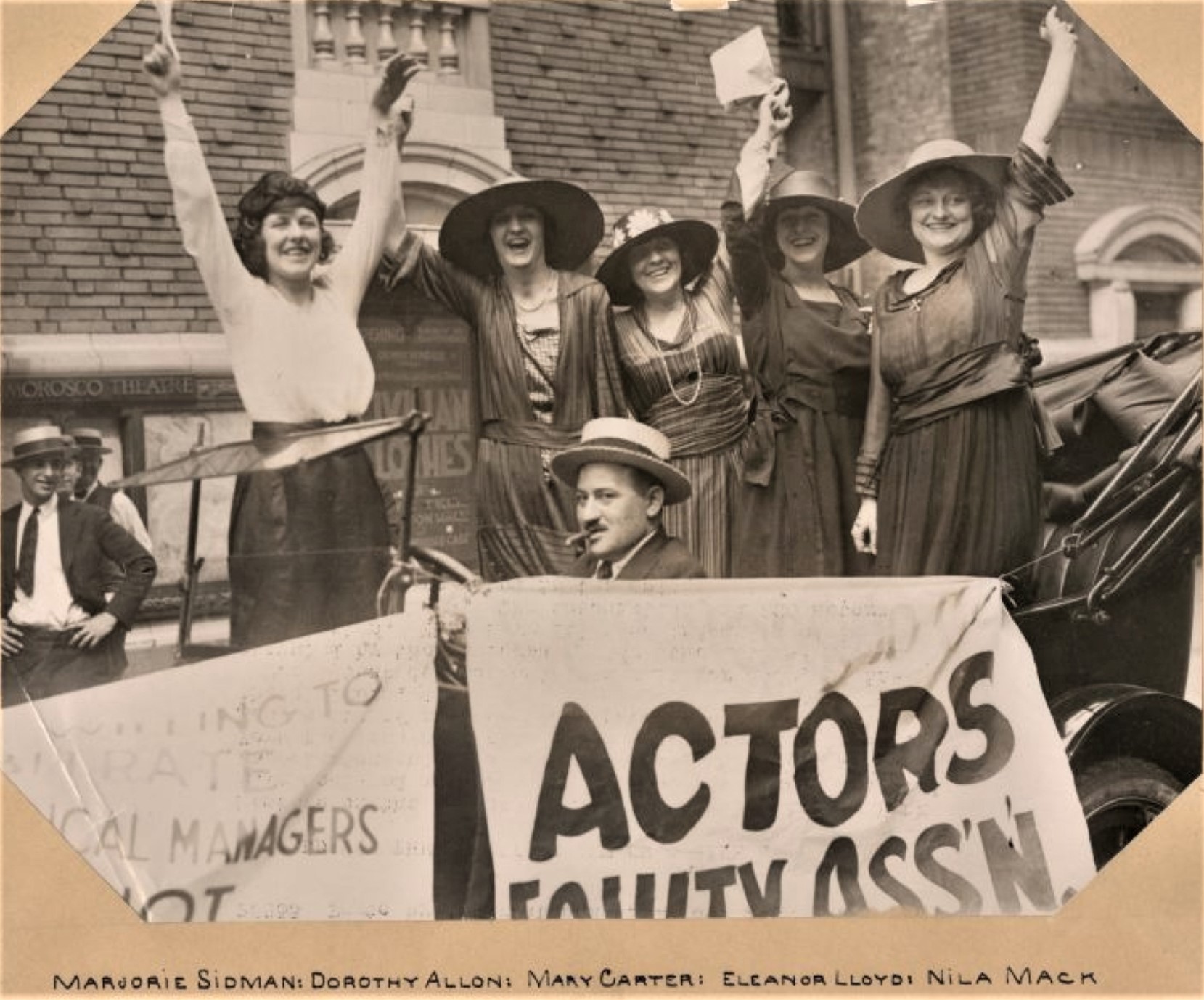
The members of the unions mentioned in this issue have learned the value of this lesson of group action. Would it be thought at all that such an individualistic profession as the Actors would prove to be one of the strongest members of organized labor? Yet, such is the case. It is also interesting to see—and worth while thinking over—that the higher class players, practically without exception, have joined their “‘weaker’’ brothers and sisters in the fight for better conditions. Their effort to establish a theatre of their own—which is now a reality— also speaks volumes for their ability to work together.
Had they, and other unions of their type, followed the rule of mimicking the rich, they would have let the members of the chorus continue to work under the bad conditions which existed before the big actors’ strike of 1919.
The same thing applies for the new spirit which is sweeping through the American labor movement. Instead of foolishly seeking to follow the idea of the present system that happiness can be found only through individual effort and through individual luxury, the members of organized labor are going into business on a group basis. They are furnishing the necessities of life to their members, without paying tribute to the profit maker. This is the whole idea which lies behind the labor banks, cooperative stores, shops, creameries, etc., which are now being built up by the movement, particularly in the West and Northwest.
It is certain that though we all wanted it, we cannot all “get to the top” through individual effort—even though the capitalists say we can. We cannot obtain happiness. for very many— even though happiness were to really result from luxury—on the luxury basis. The manufacture of luxuries means that the manufacture of necessities is cut down. The secret of the welfare of the individual members of the working class lies in group action and in providing the necessities of life for the members of the group through that action.
Labor Age was a left-labor monthly magazine with origins in Socialist Review, journal of the Intercollegiate Socialist Society. Published by the Labor Publication Society from 1921-1933 aligned with the League for Industrial Democracy of left-wing trade unionists across industries. During 1929-33 the magazine was affiliated with the Conference for Progressive Labor Action (CPLA) led by A. J. Muste. James Maurer, Harry W. Laidler, and Louis Budenz were also writers. The orientation of the magazine was industrial unionism, planning, nationalization, and was illustrated with photos and cartoons. With its stress on worker education, social unionism and rank and file activism, it is one of the essential journals of the radical US labor socialist movement of its time.
PDF of full issue: https://www.marxists.org/history/usa/pubs/laborage/v11n11-dec-1922-LA-.pdf
 Revolution's Newsstand