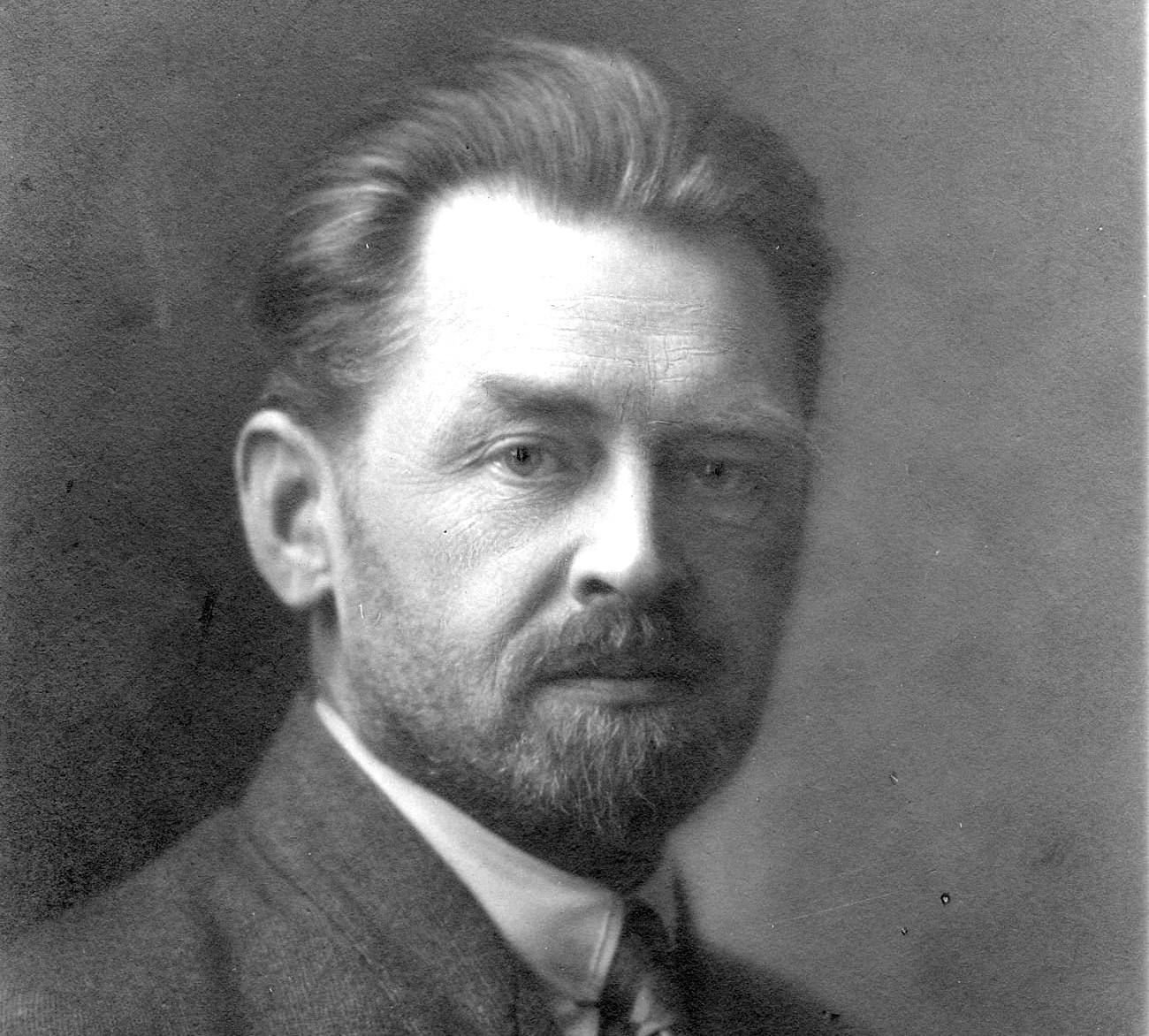
Holland had a vibrant left, anti-imperialist, and syndicalist vanguard in the World War One-era, with the little country producing many of the intellectual leaders of the anti-war movement and the Third International. The Dutch delegate to the founding congress of the Communist International in 1919 was S.J. Rutgers, his report there below.
‘Report on Holland’ by S.J. Rutgers from Communist International. Vol. 1 No. 4. August, 1919.
Speaking of Holland it is necessary first of all to establish the fact that if is ten years now since an official split has taken place between the Second International and the ideas of the III International.
The Dutch revolutionary movement is a child of the Russian revolution conceived in the bloody year of 1905; at that time we established the Tribune and we were excluded from the old social-democratic party for carrying on our agitation. This was called freedom of the press! At that period we were in close contact with our Russian comrades, we then entertained hopes that the Russian method of struggle will penetrate into Germany through Western Europe. The huge demonstrations that took place at Berlin supported these hopes. But the party bureaucrats led by Kautsky succeeded in discrediting the tactics of the popular movement and to transform it into a tactic of mere self defence. This led not to revolution but to the world war, with the victory of the German reaction reflecting itself, of course, upon Holland.
It is true that the young party–at that time Social Democratic–now communist, did not allow itself to be misled, but it was not in a position to develop a mass movement.
Theoretically and politically, however, the Dutch movement served to elucidate both the imperialist attitude as well as the future socialist tactics; the writings and speeches of Lenin, Zinoviev and Kameniev. were well known to the readers of the Tribune, whilst the Dutch comrades, such as Roland Holst. Horten, Pannekuk, van Ravestige, Vinkop and others were the old friends of many Russian communists.
In Holland itself the young revolutionary party were compelled to carry on a stubborn struggle against the opportunists led by Troelstra; on many occasions the president of the party Vinkop was forcibly removed from the conferences. The syndicalist transport workers took our part and formed guard for us consisting of 6 foot giants.
Spiritually we stood close to the syndicalist elements of the Dutch Labour Movement, and when the world war broke out our party with one anarchist group and in conjunction win the syndicalists formed a revolutionary committee, which demanded immediate demobilisition and protested against the rapacious Government food policy. Gradually having acquired influence over the masses, the party succeeded in directing the nationalist movement into a revolutionary channel.
It is a well known fact that a few such mass demonstrations have taken place in Holland, and in the resulting collisions between troops and the demonstrators there were a number of casualties. The women’s demonstration which took place on the occasion of the anniversary of the Russian revolution, was dispersed by the police; on that occasion comrade Roland Holst was wounded.
As soon as the German revolution broke out demonstrations took place in Holland; there were a number of killed and wounded. The bourgeoisie became panic stricken; all important buildings were protected with sand-bags and in the evenings the troops were held in readiness. At the first moment it looked as if the Trulstra party intended to join us, but the rapidly convened special congress’ of the social traitors decided that it is also possible to attain all the desired improvements in a peaceful manner. This led to the movement being temporarily stopped.
At the same time, however, it became known that certain parts of the army refused to fire at the workers, and that this has rendered the army unreliable to the capitalists. The Communist party established illegal soldiers’ councils in various army detachments.
At the present time, however, Holland finds herself in a difficult position; she is altogether enslaved by England. Formerly the Dutch bourgeoisie entirely depended upon Germany as far as their plans for the further exploitation of colonies were concerned. But since Germany no longer exists as, a capitalist country, only one hope remains to the Dutch capitalists: to subject themselves to England to such an extent as to compel John Bull to utilise for his colonies the services of the Dutch exploiters, repaying them, of course, with a certain part of the booty. And it is of course understood that the lion’s share of the output of the colonies is in the future to belong to England. As a result of this a period of the greatest reaction is facing Holland. Just as Finland and Poland were used in the struggle against the against the Russian proletariat, so will Holland be led against the Eastern proletariat. Under these circumstances her dependance upon England and upon the Entente will be so great that she will serve as an Instrument for the suppression of Revolutionary Germany.
The Dutch proletariat is faced with a difficult task and our party is well aware of the forthcoming complications. We are in need of international support and we welcome the first Communist conference. The best means of propaganda are represented by events in revolutionary countries and for this reason we take the greatest care to maintain international communication. It is most desirable that this conference come to a practical conclusion, with regard to the means of struggle, which we are going to carry on in conjunction with the colonial black and yellow proletariats.
We are faced with a very difficult task and we require great force. Only under conditions of straining all our forces may we hope for victory.
The ECCI published the magazine ‘Communist International’ edited by Zinoviev and Karl Radek from 1919 until 1926 irregularly in German, French, Russian, and English. Restarting in 1927 until 1934. Unlike, Inprecorr, CI contained long-form articles by the leading figures of the International as well as proceedings, statements, and notices of the Comintern. No complete run of Communist International is available in English. Both were largely published outside of Soviet territory, with Communist International printed in London, to facilitate distribution and both were major contributors to the Communist press in the U.S. Communist International and Inprecorr are an invaluable English-language source on the history of the Communist International and its sections.
PDF of full issue: https://www.marxists.org/history/international/comintern/ci/old_series/v01-n04-aug-1919-CI-grn-goog-r3.pdf
 Revolution's Newsstand