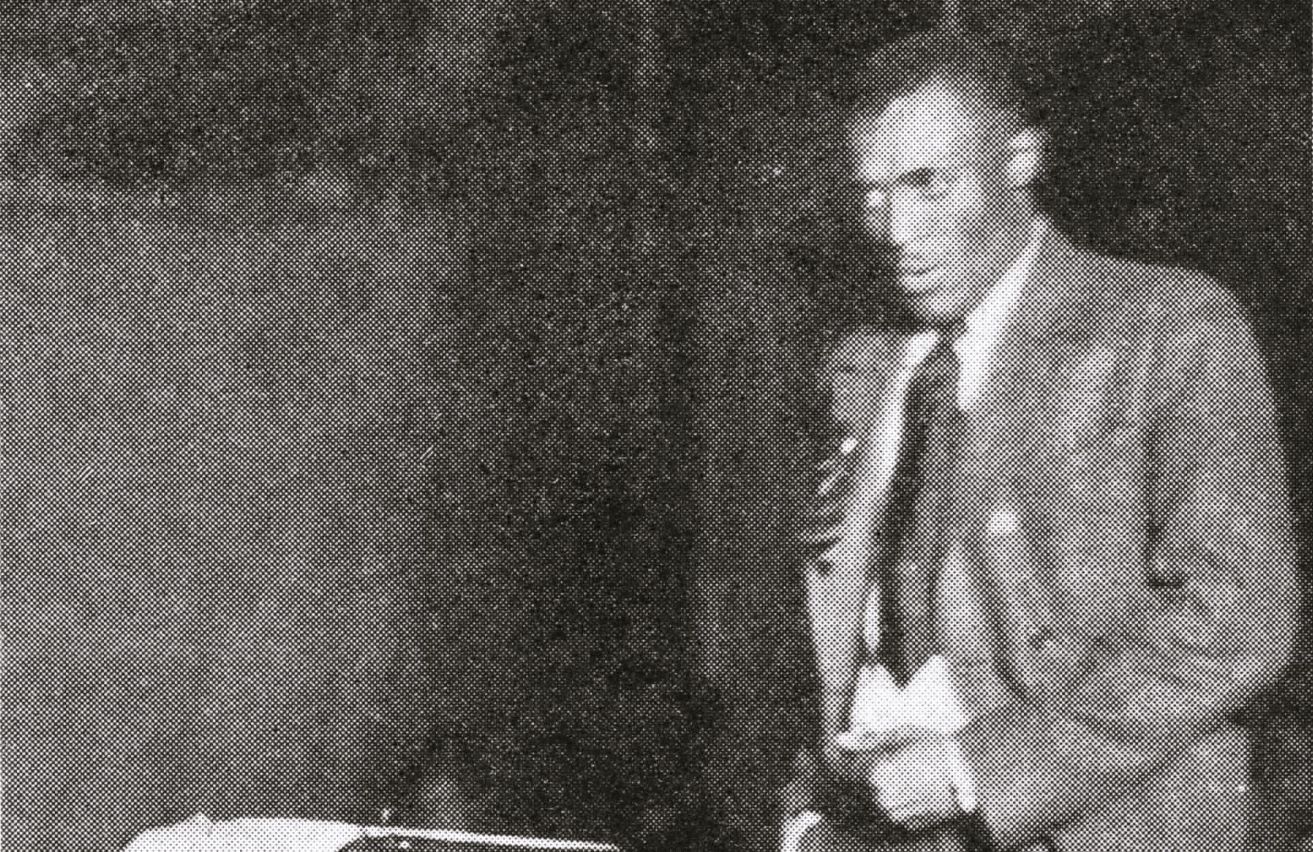
Fort-Whiteman was a leading, original Black Communist who joined the Party with Cyril Briggs and the African Blood Brotherhood. In 1924, he traveled to the Soviet Union spending eight months there, particularly interested in national and ethnic groups after the Revolution. Here, a gentle nudge to his U.S. comrades, followed by an editorial elbow, to place Black liberation at the center of their work.
‘The Negro in America’ by Lovett Fort-Whiteman (James Jackson) from Communist International. Vol. 2 No. 8. February, 1925.
TO-DAY there are more than twelve millions of negro people in the United States of North America. This does not include the negro people of the Virgin Islands, which islands were purchased from Denmark by the American Government during the war.
The population of these islands is several hundred thousand, and almost wholly negro. Prior to the world-war, there were not quite two million negroes in the North, but a small percentage of these engaged in the basic industries. The bulk of the race was in the South, as it is to-day. But with the outbreak of the War in 1914, and the expansion of Northern industries, a tremendous wave of negro migration set in from the Southern States to the cities of the North. This unprecedented wave of negro migration was inspired primarily by the attraction of higher wages which obtained in the Northern industries. But even following the close of the War, when the industries had contracted, the warmer seasons of the year have always brought an influx of negroes from the South into our Northern centres.
The coming of the negro into the Northern industries has been responsible for much friction between the white and black workers. The negro migrant being wholly unorganised and finding conditions much better than in his Southern home, though much inferior to those of the Northern white worker, at once becomes a tool in the hands of the employing class to beat back the resistance of organised white workers. The latter, clearly conscious of the tendency of a reduction of his standard of living because of the presence of the negro, evinces his resentment through physical attacks on the negro. The series of bloody race riots which have occurred during recent years are basically the result of this conflict of the white and black worker in the labour market. But, of course, this real and fundamental cause is seldom apparent, for the masses of American white workers are so permeated with the virus of race-hatred as a result of their bourgeois ideology, that often the most minor provocation of a race-riot is interpreted as the real cause. This race-hatred between blacks and whites in America has its origin and growth in the political forms and methods employed by the ruling class to safeguard and promote its economic class interest.
This race-hatred on the part of the white masses extends to all classes of the negro race. A member of the negro petty bourgeoisie could no more get accommodation in a first-class hotel, cafe, restaurant or purchase a first-class ticket in a theatre than the most ordinary negro worker. In the Southern States, there are separate schools for all negroes, separate and inferior accommodation for negroes on tramways and railways, and enforced by State laws.
The negro being of a pronouncedly different race and colour, his complexion becomes a sort of natural badge by which he is at once recognised as historically of the most oppressed and exploited group in American society. All negroes of whatever class are subject to lynching, Jim Crowism, mob violence, segregation, political disfranchisement in the Southern States, etc. And all negroes are interested and lend support to societies and associations endeavouring to affect the eradication of these particular social evils.
Any projected Communist work among American negroes must take as a concrete basis the general social grievances of the race. The slow growth of Marxism among negroes has been wholly due to the inability both of the social democrats and the Communists to approach the negro on his own mental grounds, and to interpret his peculiar social situation in terms of the class struggle. To-day the American negro has evolved his own bourgeoisie, even though as yet but petty. And more and more the lines sharpen in the conflict between the white and black bourgeoisies. The negro petty bourgeoisie rallies the negro masses to him in his struggle against the more powerful white bourgeoisie, and the negro masses are permeated with the belief that their social degradation flows from the mere fact that they are markedly of a different race, and are not white. It is a waste of time to circulate the same Communist literature among negroes that you would among white workers, or to make the same speech before an audience of the negro workers that you would before that of white workers. The negro evinces no militant opposition towards Communism, but he wants to know how it can improve his social status, what bearing does it have on the common practice of lynching, political disfranchisement, segregation, industrial discrimination, etc. The negro is revolutionary enough in a racial sense, and it devolves upon the American Communist Party to manipulate this racial revolutionary sentiment to the advantage of the class struggle.
In the Southern States, the great majority of negroes are engaged in agricultural pursuits, and at present it is encouraging to note, an agrarian movement is developing for both races. Here the American Communists can find a new field for action.
The overwhelming majority of the people of the Virgin Islands are negroes. The principal industries at the time of the purchase were the factories of bay-rum. Alcohol being an ingredient of bay-rum, when prohibition became established throughout the Republic of the United States, these industries were virtually destroyed. The latter being a great mainstay of the people, the standard of living has been much reduced, and among the masses there is wide-spread dissatisfaction with American rule. This coupled with the fact that the natives do not enjoy full rights of American citizenship.
In the negro republic of Haiti, with a population of two millions, since 1915 the iron heel of American imperialism has been relentless. The Haitian constitution has been torn to threads, and everything possible is being done to crush the natural aspirations of the people to the right of self-determination.
The negro has always regarded his social problem as a world problem in so far as he has believed that all negroes the world over have a common cause. The most successful organisations among the race at present with direct aims of improving the political and social status of the negro are international in their outlook and programme. No organisation in the history of the American negro has stirred the masses as has the Garvey Movement. This is a negro nationalist movement, with Africa as its objective. It has been phenomenal in growth, overwhelming in its savage steadfastness of purpose. It represents a perfect embodiment of all the pent-up hatred and rebellious discontent towards American institutions.
So far the Communist achievements among negroes are but slight, and this primarily because as above stated, the Communists have not recognised and accepted as a starting basis the peculiar social disabilities imposed upon the race. At present in the large cities of the North, the rapid influx of negroes from the South has given rise to a new and acute housing problem. Negroes in America are subjected to residential segregation. Such being the case, there are limited numbers of houses available for negroes in which to live. This condition has been taken advantage of by the landlords and their agents of both races and the negro tenant is compelled to pay exorbitant rents, quite out of proportion to his income. The negro housing problem to-day is a live issue, and should be seized upon as one of the factors by which to arouse the negro masses.
Everywhere there is increasing discontent within the race. And the Communist Movement cannot afford to over- look the negro in America, for he holds a large place in industrial life, and if left alone could constitute a tremendous weapon for reaction.
JAMES JACKSON.
Editorial Comment on “The Negro Question”
THE article written by James Jackson, an emigrant of the oppressed negro race, is a testimony that our American comrades of the ruling race have not yet been able to approach the negro question in a right and proper manner, either in their agitation among white workers, or in their work among the negroes. Negro persecution in America has assumed the form of a race struggle-a struggle of the whites against the blacks; on the one hand, we find among the persecutors in the white camp considerable sections of workers side by side with the bourgeoisie, who hate and despite negroes not only as strike breakers, but as people of a lower race. On the other hand, the persecuted in the black camp include negro merchants as well as negro workers.
In view of such a situation, race antagonism cannot be ignored as immaterial for a party carrying on the class struggle, and communist propaganda among negro workers cannot be conducted in the same way as among white workers. This would be merely adopting an ostrich policy, which would be doomed to remain fruitless. The attitude of our Party in America must not consist in evading the ticklish question of race antagonism in America, but in exposing its class basis.
Our Party in America must sound the alarm with respect to the growing race antagonism. It must make clear that it is a product of a society divided into classes, that it serves the selfish interests of the ruling classes, and that it will only disappear when the proletariat is victorious. Negroes were not born with saddles on their backs, neither were whites born with spurs to their feet. Racial persecution made its appearance at the dawn of a class society, it gained in strength during the capitalist development in connection with the development of the colonial policy of the bourgeoisie, and reached its culminating point during the imperialist epoch. It was not a chance occurrence that on the eve of the imperialist war the “racial theory” made its appearance in German bourgeois science, in accordance with which theory there are lower and higher races even among the whites “the German race” belonging to the latter.
The bourgeoisie is, of course, endeavouring to disguise by all manner of means the class nature of racial antagonism. But it is our task to expose this fraud and to smash to pieces the arguments of the followers of all kinds of “racial theories.” The fact that negro merchants are as hated and persecuted as negro workers is certainly not a proof that racial antagonism has nothing to do with class: although the imperialist bourgeois infringes to a certain extent the rights of the native bourgeoisie in pursuance of its colonial policy, the main motive of the latter is the acquisition of excess profit from the colonists. The champions of the racial theory cannot justify their actions by the fact that negroes frequently act as strike breakers, and that many of them are corrupt the bourgeoisie deliberately develops in the negro masses these slave instincts and traits, and keeps them purposely ignorant. Finally, it must be said that the contemptuous attitude of white workers to the negroes does not disprove the class character of the antagonism between the white and black races in America. For it merely proves that a considerable section of white American workers is still under the ideological influence of the bourgeoisie and has been contaminated by bourgeois prejudices against which we must fight with the utmost energy.
By ignoring the question of racial antagonism our Party has allowed the negro liberation movement in America to take a wrong path and to get into the hands of the negro petty bourgeoisie which has launched the nationalist slogan “Back to Africa.”
We Communists must energetically support not only African but all negroes settled in definite territories in their aspirations for self-determination, namely in their desire to establish independent States and to drive out the colonisers. We must, of course, urge American negroes to support this movement of their kinsmen. But the slogan Back to Africa,” in connection with the 12 million negroes scattered throughout the United States of North America, which is reminiscent of the Zionist slogan of the Jews–“Back to Palestine,” must be rejected by us as utopian and based on the illusion that there is in the world (beside the Soviet Republic) another such promised land where national and racial oppression does not exist. There can be no such land, since everywhere capitalism reigns supreme.
But we must, however, admit that these dreams and illusions of American negro workers, which weaken their interest in the class struggle of the white American proletariat, are stimulated by the fact that American white workers are still under the sway of racial bourgeois prejudices. Therefore, the main task of our American comrades as to this question must consist in fighting against these prejudices, and in energetic action for full equality of rights regardless of race as well as for the extirpation of all humiliating customs which draw a dividing line between whites and blacks. It is only under such conditions that it will be possible to draw the negro masses in America into the general fight for the dictatorship of the proletariat.
The ECCI published the magazine ‘Communist International’ edited by Zinoviev and Karl Radek from 1919 until 1926 irregularly in German, French, Russian, and English. Restarting in 1927 until 1934. Unlike, Inprecorr, CI contained long-form articles by the leading figures of the International as well as proceedings, statements, and notices of the Comintern. No complete run of Communist International is available in English. Both were largely published outside of Soviet territory, with Communist International printed in London, to facilitate distribution and both were major contributors to the Communist press in the U.S. Communist International and Inprecorr are an invaluable English-language source on the history of the Communist International and its sections.
PDF of full issue: https://www.marxists.org/history/international/comintern/ci/new_series/v02-n08-feb-1925-new-series-CI-grn-riaz.pdf
 Revolution's Newsstand