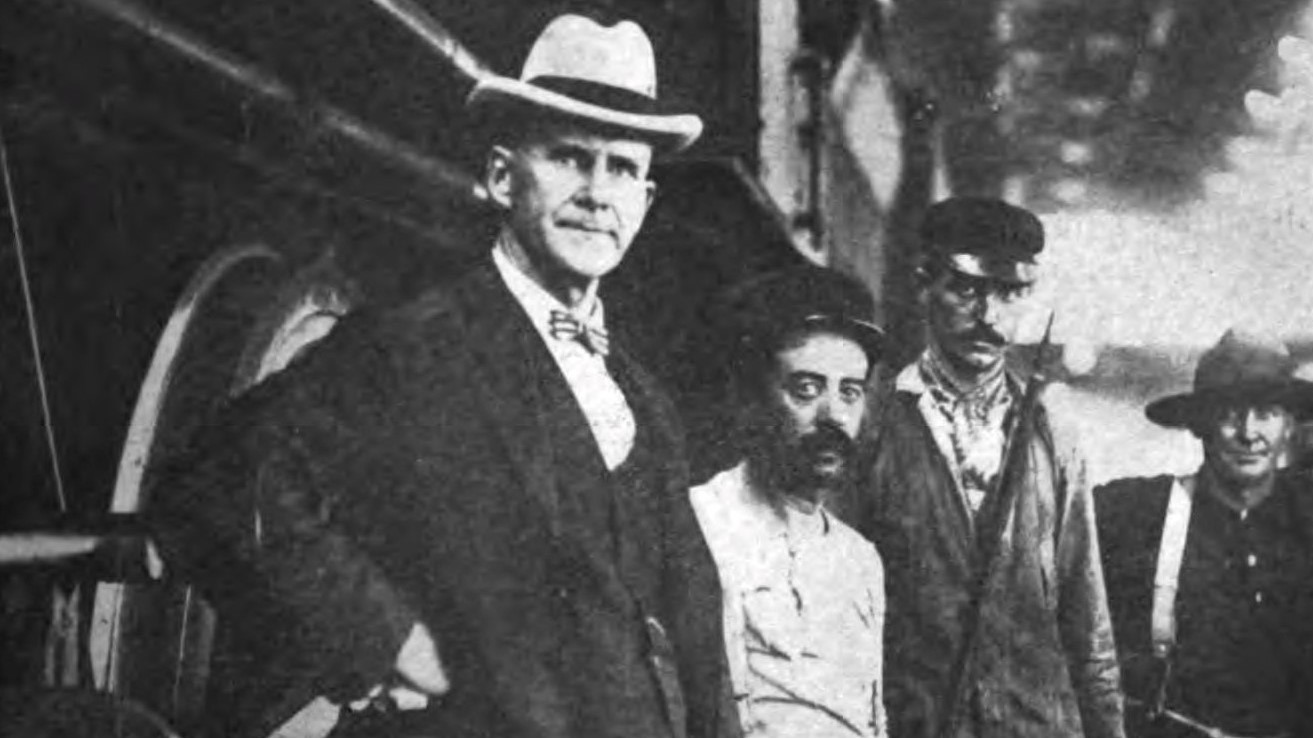
Debs held faith in the proletariat, no ‘aristocracy of labor’ for him.
‘The Common Laborer’ by Eugene V. Debs from The Ohio Socialist. No. 43. November 20, 1918.
Contempt has always been the portion of the “common laborer,” and this notwithstanding the fact that he is the chief prop in the social fabric and the main support of all civilization. Without the “common laborer” there would be universal collapse and chaos.
Yet even among workers themselves, where it might be expected that all honest labor might be held in respect, the “common laborer” is made to feel that he is tolerated rather than entitled to equal consideration with others of his class. Indeed, some of the most vulgar and offensive aristocracy I have known has been among the skilled and semi-skilled trades in the working class. They have shut themselves up in little two-by-four unions, adopted prohibitive admission fees and dues, and hedged themselves about with an exclusiveness as insolent and snobbish as ever provoked the disgust of sensible men.
To these shoddy aristocrats the common laborer appears, if possible, even lower and more servile and contemptible than he does in the eyes of the ruling class. But happily this is largely of the past. The machine has brought most of these would-be aristocratic unions and the individuals who compose them down to the common level and the rest will follow in due time.
The common laborer today is no longer ignored or treated with scant decency by the labor movement. He may still be ostracized in certain select craft union circles, but he is taking his rightful place in the great industrial movement that is spreading over the world.
The common laborer is the chief sufferer and the most aggrieved victim of the capitalist system. He it is who was denied the chance to learn a trade and perhaps never saw the inside of a school room. He it is who was seized in his childhood and flung headlong into the struggle of life with no chance to prepare or equip for it. From his earliest boyhood he has done the world’s dirtiest and most necessary and useful work and received only kicks and contempt for his pay.
The common laborer in the past has been the legitimate spoil of every element of society, including his own class. He has been the sport and prey of all. Lower than his level the lowest could not sink.
And yet the real heart of the working class has always been in common labor and here, among these who have been despised, we find the truest and noblest specimens of the class.
The common laborer is really the only one who feels the whole crushing burden of capitalist oppression and knows the full and awful meaning of capitalism to the working class. He is at the bottom and he bears the whole load and suffers the deprivations and misery as none others can.
The fate and destiny of not only the whole working class, but the whole of humanity, are irrevocably bound up in the common laborer and his emancipation is the condition of the emancipation of the race. Capitalism, in reducing the workers to a common level of wage slavery, is stripping them only of the qualities that interfere with their solidarity, and to compensate for these it is permeating the entire mass with the spirit of proletarian revolt.
Common labor is today the foundation upon which the labor movement is organizing and the revolution is marshalling its forces for the overthrow of wage slavery.
If the word king were not in such disrepute I should say that the common laborer is king among the workers. He is the unvanquishable host and nothing can be done without him.
All hail the common laborer, wherever he may be found! He is the stuff of which the revolution is made, the revolution which will lift common labor out of common slavery and make it the common glory of all mankind.
The Ohio Socialist, published by the Left Wing-dominated Socialist Party of Ohio in Cleveland from January, 1917 to November, 1919. It was edited by Alfred Wagenknecht Wagenknecht spent most of 1918 in jail for “violation of the Conscription Act.” The paper grew from a monthly to a semi-monthly and then to a weekly in July, 1918 and eventually a press run of over 20,000. The Ohio Socialist Party’s endorsement of the Left Wing Manifesto led to it suspension at the undemocratic, packed Socialist Party Convention in 1919. As a recognized voice of the Left Wing, the paper carried the odd geographical subheading, “Official Organ of the Socialist Parties of Ohio and Kentucky, Virginia, West Virginia and New Mexico” by 1919’s start. In November of that year the paper changed to the “labor organ” of the Communist Labor Party and its offices moved to New York City and its name changed to The Toiler, a precursor to the Daily Worker. There the paper was edited by James P. Cannon for a time.
PDF of full issue: https://www.marxists.org/history/usa/pubs/ohio-socialist/043-nov-20-1918-ohio-soc.pdf
 Revolution's Newsstand
I want you for all your hard work and to wish you a very happy Thanksgiving…..chuq
LikeLike
Greatly appreciated. And same to you comrade.
LikeLiked by 1 person