Marx sees the approach of the ‘Second War of Italian Independence’ and places Italian unification in European revolutionary context.
‘Italian Unity’ by Karl Marx from New-York Daily Tribune. No. 5541. January 24, 1859.
Like the boy and his wolf alarm, the Italians have so repeatedly affirmed that “Italy is rife with agitation, and on the eve of a revolution,” the crowned heads of Europe have so often prated about a “settlement of the Italian Question,” that it will not be surprising if the actual appearance of the wolf should be unheeded, and if a real revolution and a general European war should break out and take us unawares! The European aspect of 1859 is decidedly warlike, and, should the hostile bearing, the apparent preparations of France and Piedmont for war with Austria, end in smoke, it is not improbable that the burning hate of the Italians toward their oppressors, combined with their ever-increasing suffering, will find vent in a general revolution. We limit ourselves to a not improbable–for, if hope deferred maketh the heart sick, fulfillment of prophecy deferred maketh the mind skeptical. Still, if we are to credit the reports of English, Italian and French journals, the moral condition of Naples is a fac simile of her physical structure, and a torrent of revolutionary lava would occasion no more surprise than would a fresh eruption of old Vesuvius. Writers from the Papal States dwell in detail on the increasing abuses of clerical government, and the deep-rooted belief of the Roman population that reform or amelioration is impossible—that a total overthrow of said government is the sole remedy that this remedy would have been administered long since, but for the presence of Swiss, French and Austrian troops—and that, in spite of these material obstacles, such an attempt may be made at any day or at any hour.
From Venice and Lombardy, the tidings are more definite-and remind us forcibly of the symptoms that marked the close of 1847 and the commencement of 1848 in these provinces. Abstinence from the use of Austrian tobacco and manufactures is universal, also proclamations to the populace to refrain from places of public amusement–studied proofs of hate offered to the Archdukea and to all Austrian officials–are carried to such a point that Prince Alfonso Parcia, an Italian nobleman devoted to the House of Hapsburg, dared not, in the public streets, remove his hat as the Archduchess passed, the punishment for which misdemeanor, administered in the form of an order from the Archduke for the Prince’s immediate departure from Milan, acts as an incentive to his class to join the popular cry of fuori i Tedeschi. If we add to these mute demonstrations of popular feeling the daily quarrels between the people and the soldiery, invariably provoked by the former, the revolt of the students of Pavia, and the consequent closing of the Universities, we have before our eyes a reenactment of the prologue to the five days of Milan in 1848.
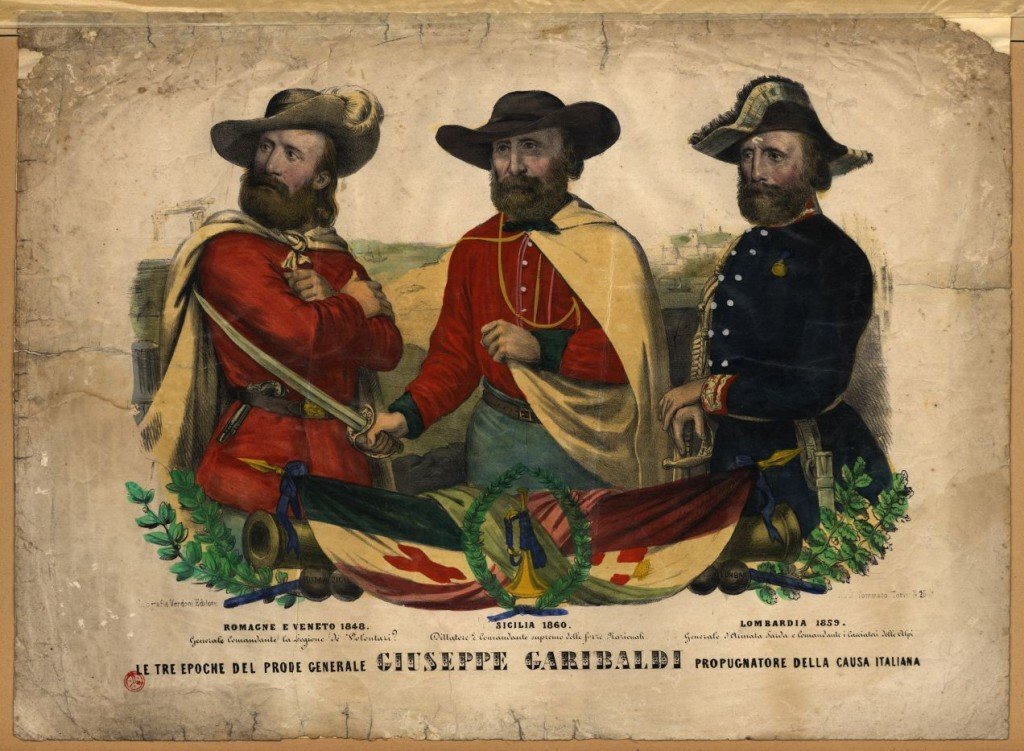
But while we believe that Italy cannot remain forever in her present condition, since the longest lane must have a turning— while we know that active organization is going on throughout the peninsula, we are not prepared to say whether these manifestations are entirely the spontaneous ebullitions of the popular will, or whether they are stimulated by the agents of Louis Napoleon and of his ally, Count Cavour. Judging from appearances, Piedmont, backed by France, and perhaps by Russia, meditates an attack on Austria in the Spring. From the Emperor’s reception of the Austrian ambassador at Paris, it would seem that he harbors no friendly designs toward the Government represented by M. Hübner; from the concentration of so powerful a force at Algiers, it is not unnatural to suppose that hostilities to Austria would commence with an attack on her Italian provinces; the warlike preparations of Piedmont, the all but declarations of war to Austria that emanate daily from the official and semi-official portion of the Piedmontese press, give color to the surmise that the King will avail himself of the first pretext to cross the Ticino. Moreover, the report that Garibaldi, the hero of Montevideo and of Rome, has been summoned to Turin, is confirmed from private and reliable sources. Cavour has had an interview with Garibaldi, informed him of the prospects of a speedy war, and has suggested to him the wisdom of collecting and organizing volunteers. Austria, one of the chief parties concerned, gives evident proof that she lends credence to the rumors. In addition to her 120,000 men, concentrated in her Italian provinces, she is augmenting her forces by every conceivable means; and has just pushed forward a reinforcement of 30,000. The defenses of Venice, Trieste, &c., are being increased and strengthened; and in all her other provinces land-owners and trainers are called on to bring forward their studs, as saddle-horses are required for the cavalry and pioneers. And while, on the one hand, she omits no preparations for resistance in a “prudent Austrian way,” she is also providing for a possible defeat. From Prussia, the Piedmont of Germany, whose interests are diametrically opposed to her own, she can, at best, hope but for neutrality. The mission of her ambassador, Baron Seebach, to St. Petersburg, seems to have failed utterly to win a prospect of success in the case of attack. The schemes of the Czar, in more ways than one, and not the least on the question of the Mediterranean, where he, too, has cast anchor, coincide too nearly with those of his ex-opponent, now fast ally, in Paris, to permit him to defend “the grateful” Austria. The well-known sympathy of the English people with the Italians in their hatred of the giogo tedesco renders it very doubtful whether any British Ministry would dare to support Austria, anxious as one and all would be to do so. Moreover, Austria, in common with many others, has shrewd suspicions that the would-be “avenger of Waterloo” has by no means lost sight of his anxiety for the humiliation of “perfidious Albion”–that, not choosing to beard the lion in his den, he will not shrink from hurling defiance at him in the East, attacking, in conjunction with Russia, the Turkish Empire (despite his oaths to maintain that empire inviolate), thus bringing half the British forces into action on the Eastern battle-field, while from Cherbourg he keeps the other half in forced inaction, guarding the British coasts. Therefore, in the case of actual war, Austria has the uncomfortable feeling that she must rely on herself alone; and one of her many expedients for suffering the least possible loss, in case of defeat, is worthy of notice for its impudent sagacity. The barracks, palaces, arsenals and other official buildings throughout Venetian Lombardy, the erection and maintenance of which have taxed the Italians exorbitantly, are, nevertheless, considered the property of the Empire. At this moment the Government is compelling the different municipalities to purchase all these buildings at a fabulous price, alleging as its motive that it intends to rent instead of owning them for the future. Whether the municipalities will ever see a farthing of the rent, even if Austria retains her sway, is doubtful at best; but, should she be driven from all, or from any part of her Italian territory, she will congratulate herself on her cunning scheme for converting a large portion of her forfeited treasure into portable cash. It is asserted, moreover, that she is using her utmost efforts to inspire the Pope, the King of Naples, the Dukes of Tuscany, Parma and Modena, with her own resolution to resist to the uttermost all attempts on the part of the people or the crowned heads to change the existing order of things in Italy. But none knows better than Austria herself how bad would be the best efforts of these poor tools to make head against the tide of popular insurrection or foreign interference. And, while war on Austria is the fervent aspiration of every true Italian heart, we cannot doubt that a large majority of Italians look upon the prospects of a war, begun by France and Piedmont, as doubtful, to say the least, in its results. While none conscientiously believe that the murderer of Rome can by any human process be transformed into the Savior of Lombardy, a small faction favor Louis Napoleon’s designs of placing Murat on the throne of Naples, profess to believe in his intention to remove the Pope from Italy or to confine him to the City and Campagna of Rome, and of assisting Piedmont to add the whole of Northern Italy to her dominions. Then there is a party, small but honest, who imagine that the idea of an Italian crown dazzles Victor Emmanuel, as it was supposed to dazzle his father; who believe that he anxiously awaits the first opportunity to unsheathe his sword for its attainment, and that it is with this sole end in view that the King will avail himself of help from France, or any other help, to achieve this coveted treasure. A much larger class, numbering adherents throughout the oppressed provinces of Italy, especially in Lombardy and among the Lombard emigration, having no particular faith in the Piedmontese King or Piedmontese monarchy, yet say: “Be their aims what they may, Piedmont has an army of 100,000 men, a navy, arsenals, and treasure; let her throw down the gauntlet to Austria; we will follow her to the battle-field: if she is faithful, she shall have her reward; if she falls short of her mission, the nation will be strong enough to continue the battle once begun and follow it up to victory.”
The Italian National party, on the contrary, denounce as a national calamity the inauguration of an Italian War of Independence under the auspices of France and Piedmont. The point at issue with them is not, as is often erroneously supposed, whether Italy, once free from the foreigners, shall be united under a republican or monarchical form of government, but that the means proposed must fail to win Italy for the Italians, and can at best only exchange one foreign yoke for another equally oppressive. They believe that the man of the 2d of December will never make war at all, unless compelled by the growing impatience of his army, or by the threatening aspect of the French people; that, thus compelled, his choice of Italy as the theater of war would have for its object the fulfillment of his uncle’s scheme–the making of the Mediterranean a “French lake”–which end would be accomplished by seating Murat on the throne of Naples; that, in dictating terms to Austria, he seeks the completion of his revenge, commenced in the Crimea, for the treaties of 1815, when Austria was one of the parties who dictated to France terms humiliating in the extreme for the Bonaparte family. They look upon Piedmont as the mere cat’s-paw of France–convinced that, his own ends achieved, not daring to assist Italy to attain that liberty which he denies to France, Napoleon III will conclude a peace with Austria and stifle all efforts of the Italians to carry on the war. If Austria shall have at all maintained her ground, Piedmont must content herself with the addition of the Duchies of Parma and Modena to her present territory; but, should Austria be worsted in the fight, that peace will be concluded on the Adige, which will leave the whole of Venice and part of Lombardy in the hands of the hated Austrians. This peace upon the Adige, they affirm, is already tacitly agreed on between Piedmont and France. Confident as this party feels of the triumph of the nation in the event of a national war against Austria, they maintain that, should that war be commenced with Napoleon for Inspirer, and the King of Sardinia for Dictator, the Italians will have put it out of their own power to move a step in opposition to their accepted heads, to impede in any manner the wiles of diplomacy, the capitulations, treaties and the reriveting of their chains which must result therefrom; and they point to the conduct of Piedmont toward Venice and Milan in 1848, and at Novara in 1849, and urge their countrymen to profit by that bitter experience of their fatal trust in princes. All their efforts are directed to complete the organization of the peninsula, to induce the people to unite in one supreme effort, and not to commence the struggle until they feel themselves capable of initiating the great national insurrection which, while deposing the Pope, Bomba & Co., would render the armies, navies and war material of the respective provinces available for the extermination of the foreign foe. Regarding the Piedmontese army and people as ardent champions of Italian liberty, they feel that the King of Piedmont will thus have ample scope for aiding the freedom and independence of Italy, if he chooses; should he prove reactionary, they know that the army and people will side with the nation. Should he justify the faith reposed in him by his partisans, the Italians will not be backward in testifying their gratitude in a tangible form. In any case, the nation will be in a situation to decide on its own destinies, and feeling, as they do, that a successful revolution in Italy will be the signal for a general struggle on the part of all the oppressed nationalities to rid themselves of their oppressors, they have no fear of interference on the part of France, since Napoleon III will have too much home business on his hands to meddle with the affairs of other nations, even for the furtherance of his own ambitious aims. A chi tocca-tocca as the Italians say. We will not venture to predict whether the revolutionists or the regular armies will appear first on the field. What seems pretty certain is, that a war begun in any part of Europe will not end where it commences; and if, indeed, that war is inevitable, our sincere and heartfelt desire is, that it may bring about a true and just settlement of the Italian question and of various other questions, which, until settled, will continue from time to time to disturb the peace of Europe, and consequently impede the progress and prosperity of the whole civilised world.
Karl Marx and Frederick Engels (for Marx) wrote hundreds of articles in English for the New York Daily Tribune which ran from 1841 and was closely associated with Horace Greeley and, until the founding of the Republican Party, progressive Whigs. Marx contributed from August 1851 to March 1862 as the Tribune’s London correspondent. One of the largest papers in the U.S., Marx’s work was read widely, including by Lincoln who was a subscriber. The Tribune was an important outlet for Marx’s political ideas in the years of European reaction between the failure of ’48 and the International. Marx would break with the paper in 1862 over its increasing conservatism and compromising attitude towards the abolition of slavery during the Civil War. The ten years of political writings for the Tribune in the 1850s, often covering European wars, empires and politics, show Marx’s evolving understanding of imperialism, particularly his work on India and China.
PDF of full issue: https://chroniclingamerica.loc.gov/lccn/sn83030213/1859-01-24/ed-1/seq-4/
 Revolution's Newsstand