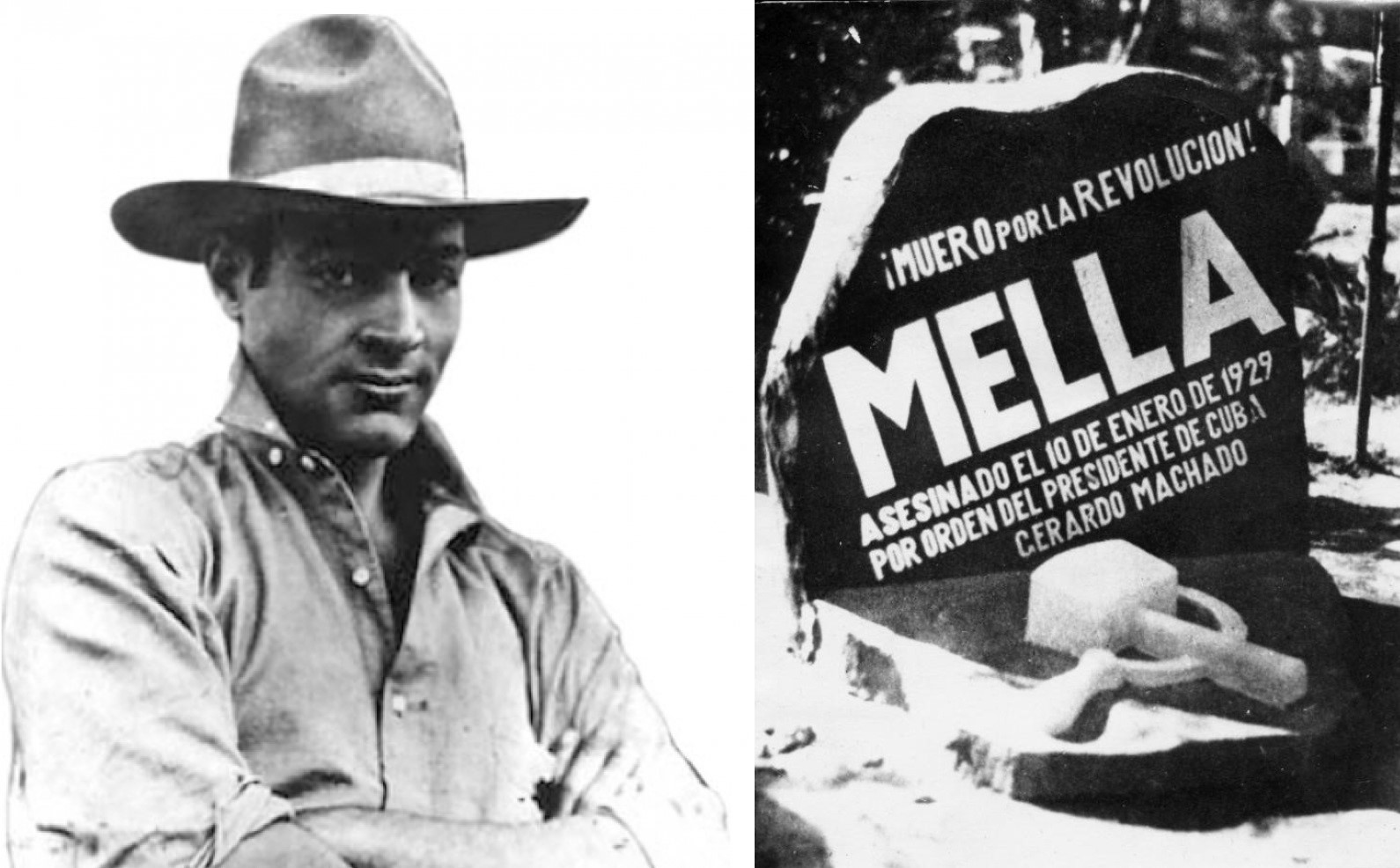
Founded in 1925, a report to the Comintern of the first years of activity of the Partido Comunista Cubano.
‘Report of Cuba’ from The Communist International Between the Fifth and the Sixth Congresses, 1924-28. Published by the Communist International, 1928.
The Political and Economic Situation.
The political and economic situation in Cuba, both as regards domestic and foreign relations, is determined by its absolute dependence on the United States. In the economic field the investment of American capital is so immense, being one-third of the total of American capital investments in Latin America—1,000,000,000 dollars—that Yankee capital has absolute control over the entire economic life of the country. The Platt Amendment ensures Cuba’s dependence on the United States in both home and foreign policy, and the prevailing political dictatorship also acts as a faithful advocate of American imperialism. American supremacy is further ensured by the tactics of the present President, whose reign of power has been prolonged by the help of the United States.
The Bourgeois Parties.
The bourgeois parties constitute the permanent ruling parties. The present government is composed of three such parties: the Conservative, the Liberal and the Cuban National Party, which in no way differ from one another. These parties have no permanent organisations and no labour programme, and are active only at election time when they use extremely demagogic methods. This explains the bloody encounters during election campaigns, which occur even amongst the bourgeois parties themselves. The actual programme of these parties is corruption.
The Nationalist Party, which was founded in 1926, is a real Mass party. It has the support not only of the small and middle peasantry and the urban petty bourgeoisie, but also of considerable sections of the urban workers. This party meets with the hostility of the entire bourgeoisie, and like the Communist Party of Cuba, must work illegally; it is the only party which leads the masses in the struggle against American imperialism. There is much to be desired in this struggle as the party is definitely petty bourgeois, but for the present it is the only mass party. At the time of the peasant strike the Nationalist Party succeeded in ranging the peasant masses against the government.
A Social Democratic Party was unable to gain any footing amongst the Cuban workers. Years ago there was a “Socialist Club” and a “Socialist Group,” and the attempt was made to found a Labour Party. But the attempt failed, which, of course, does not prove that no reformist-opportunist dangers exist amongst certain Trade Union leaders.
The Trade Union Movement.
The Trade Union movement has been in existence for years, but has never developed into a strong, organised movement because of the prevailing syndicalist-anarchist tendencies. One reason is the too frequent use of the General Strike, in the years immediately after the War, which served as an excuse for the intervention of the armies of American imperialism. Big strikes also took place in 1923-24, many of which were very successful. In 1926 there was the transport workers’ strike which involved 25,000 workers; it lasted 45 days, but was crushed by the extreme Government terror. In 1927 only smaller strikes occurred in spite of the fact that the economic position of the workers had not improved. The Government social legislation is merely on paper; it includes the eight hour day, minimum wage and accident insurance, and was only drawn up to undermine the fighting spirit of the masses. The laws are so formulated that the employers can never be compelled to respect them.
In the summer of 1925 the first national workers congress was held; it was convened on the initiative of the Havana Workers’ Federation. It was attended by 150,000 workers and Communist influence was apparent. Immediately Government terror was directed against this new centralised class organisation, the general secretary was assassinated, and other leading comrades in the movement were threatened with death. Although the Government did not succeed in destroying this organisation, still it was greatly weakened.
As a result of this general terror against any kind of real revolutionary labour movement, the anarcho-syndicalists, at the Havana T.U. Congress in November, 1927, were able to carry a decision that the Trade Unions should reject all collaboration with political parties. But we must not omit to point out that the yellow reformist American Federation of Labour, the instrument of imperialism, quite openly carries on active propaganda in the Cuban Trade Unions.
The swing to the Left of the workers in Cuba is marked by the prevalence of the fighting spirit of the workers and peasants, but especially by the organising methods in the Trade Union movement. This is proved by the foundation of the “Unity Trade Union Committee” and the election of Communists to the leading Trade Union bodies.
The Communist Party.
In 1925 the Communist Party was founded, based on the Communist groups which have existed for years. After a few weeks arrests were made, and the terror was directed both against the Trade Unions and the Communist Party, which was forced to work illegally. But in spite of this and the tendencies towards individualistic anarcho-syndicalism and intellectualism, the Party was able to fight the sectarian spirit and get into touch with the masses. The Party has also made quite considerable progress organisationally.
The Party is still weak, both in respect of numbers and ideology. This weakness is seen in the most marked degree in the appraisal of the role of the petty bourgeoisie in the struggle against imperialism and in the question of the Nationalist Party. Here the Communist Party did not stand on its own, but acted as an adjunct of the Nationalist Party. During the past year, or year and a half, the Party has met with success, because it has been developed into a mass party.
General Activity.
The Party took part in all the important economic struggles. American imperialism, which continues to seize more land and conducts the whole political life of the country has forced both the small and middle peasant into a blind alley. Various laws compel the middle peasant to sell his land to the big companies, and the small peasant cannot even pay the taxes and so his land is simply taken away from him. In 1924 the small peasants went on strike. During this strike the Communist Party issued manifestoes and carried on oral propaganda for Communist slogans amongst the peasants, whilst the urban workers were called upon to support the peasants. The peasants were organised into an “agricultural bloc” during the strike. Practically all economic struggles of the industrial workers are under the leadership of the Party, either through the Communist influence in the Trade Unions or through direct contact with the masses.
Through the influence of the Communist Party several legal political papers were issued, which supported the Party policy, but these have now been stopped by the Government. Now only the Trade Union papers represent and defend the workers’ interests.
In the field of international policy the Party propaganda was directed chiefly against Yankee imperialism, intervention in Nicaragua, the Pan-American Conference, etc. During this Conference 150 active workers were turned out for participation in manifestoes against imperialism and two members of the Communist Party were murdered in the military prison in Cabana.
In connection with the Trotsky Opposition the Party published in its illegal organ the most important document which it received from the International. Furthermore, the Party passed a resolution condemning the activity of the Opposition. This resolution was sent to the various nuclei.
The only Party organ is “El Communista,” which is published illegally. Its circulation varies from 1,000 to 1,500; it is published weekly.
The main work is Trade Union work and the Party has concentrated on this side of its activity. There are organised Trade Union fractions in the revolutionary organisations, but especially in the yellow unions such as the “Railroad-brotherhood,” where the fraction and Unity Committee are fairly strong. The position in the weavers’ union and the tobacco workers’ union is equally favourable. At the recent Trade Union Reorganisation Congresses in Sugua, Havana, Cienfuegos, Cardenas, etc., the Communist fractions dominated and carried all resolutions.
Work Amongst the Peasantry.
This is not adequate, considering the importance of the peasant question there. Besides the 400,000 agricultural labourers there are 150,000 small peasants, who are scandalously exploited by American imperialism. Those small peasants who have not enough land, and those who rent land must either pay very high rents or taxes, or else give up part of their products. The agricultural labourer works only six months in the year and not less than twelve hours a day. The annual wage of an agricultural labourer or small peasant is about 60 or 80 dollars, which is, of course, absolutely inadequate. For all these reasons the country side is much more anti-imperialist than the towns.
As already pointed out, the Communist Party has not organised the peasantry. A section—something like 5,000—is organised in the catholic Trade Unions, but the Nationalist Party has the greatest influence on both the small and middle peasants. The Communist International has recently been able to convince the Communist Party of Cuba that independent work amongst the peasantry must be carried out henceforth in a more organised manner and on a larger scale.
The National Question.
This is closely connected with the peasant question in Cuba. The majority of the peasantry is composed of Spaniards and the native negroes, who are for the most part agricultural labourers. Besides these there are immigrant Negroes who undercut the natives, with the result that there are often Negro revolts which end in bloody encounters.
Work Amongst Women.
This has been given a certain amount of attention by the Party; especially in the case of those Trade Unions where women are in the majority, such as the cigarette workers and the “Federacion de Desplatilladorias.” But much still remains to be done in this respect.
Non-Party Organisations.
The Non-Party Mass Organisations in which the Communist Party works and has influence, include the “Anti-Imperialist League,” sports clubs and Trade Unions, students’ organisations and the Youth Sports League. The Anti-Imperialist League has become illegal, co-operatives do not exist, and neither is there a section of the International Red Aid.
When the difficult position of the Party is taken into consideration, it must be admitted that the present activity of the Party promises well for the future.
The Communist International Between the Fifth and the Sixth Congresses, 1924-28. Published by the Communist International, 1928.
PDF of full book: https://archive.org/download/comintern_between_fifth_and_sixth_congress_ao2/comintern_between_fifth_and_sixth_congress_ao2.pdf
 Revolution's Newsstand