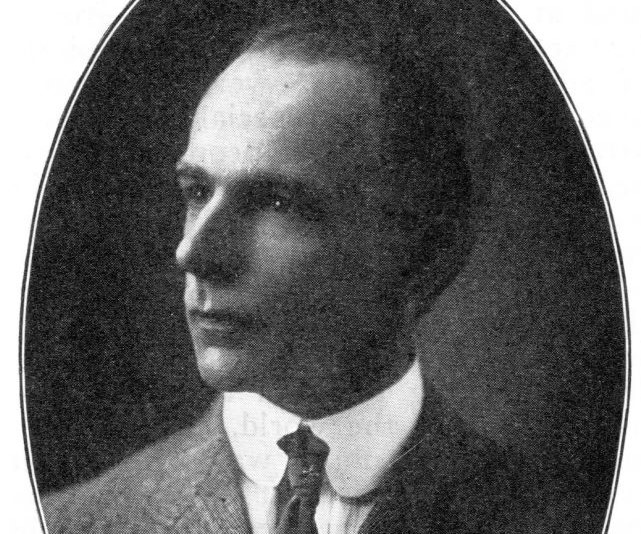
Poverty requires wealth; Ruthenberg wants no part of ‘capitalist prosperity.’ Written during his 1912 campaign for Ohio Governor.
‘Capitalist Prosperity’ by C.E. Ruthenberg from The Socialist (Columbus). Vol. 2 No. 82. July 13, 1912.
(Socialist Candidate for Governor.)
There seems to be at the present time a clearly defined effort on the part of capitalist interests to create the impression that the country is enjoying extraordinary prosperity. In traveling about the state I have come across newspaper articles and editorials in various places describing this general prosperity and dwelling on the scarcity of labor. In Cleveland, in Youngstown and other places the workers are being assured that there is work for all who wish employment.
These stories of general prosperity are no doubt being spread broadcast in order to allay the discontent which exists in this country today. We are on the eve of a presidential election, and the time has arrived when the workers’ eyes must be closed to the insecurity and general wretchedness of their existence, and, therefore, the cry is raised of prosperity and general good times.
But suppose we accept these stories of general good times at their face value. Suppose we acknowledge that at the present time our industries are more generally in operation and there is a little less unemployment than usually. What does this signify to the workers? How does this prosperity affect those who are dependent for their living upon the wages they receive for their labor?
The capitalist papers themselves answer these questions. The same newspaper which told of exceptional prosperity and labor conditions told in the same lane that in the market districts of the Metropolis of Ohio, children had been found eating the refuse which had been thrown in the garbage cans! The boasted prosperity now existing had not given the parents of these children wages enough to enable them to buy food for their children. Hunger drove these children to feed upon spoiled and rotting food condemned by market inspectors.
Another interesting commentary on the stories of good times, is in the fact, that while prosperity is so general, more than five thousand workers in the Cleveland garment making industry are preparing to strike for better wages and working conditions. Prosperity wages and working conditions are such for these workers that they have become unbearable, and they are preparing to appeal to the last resort of the working class to force concessions from their masters.
In the city of Youngstown I passed through the back alleys in which lived some of the workers of that city. There I found what prosperity means to these workers. Rickety, dilapidated old buildings, crowded closely together, without light, air or sunshine,–squalor, unsanitary surroundings and foul odors, with the smoke and deadly gases from the steel mills constantly blowing through the doors and windows, such were the homes of these workers in these days of prosperity.
In another part of the same city I found beautiful homes, surrounded by broad green lawns and great trees whose wide spreading branches of feted cool and comfortable retreats. The air was sweet with the fragrance of flowers, Here prosperity was writ large on everything. Here was the only prosperity which capitalism has to offer.
Prosperity under the capitalist system means prosperity for the capitalist class. It means that the workers are forced to work with more feverish haste after probably months of idleness, so that there may be more profits for their masters.
Capitalism produces only when it can make profits, and because it robs and exploits the workers it must periodically put the breaks on the work of production so that the surplus products which the workers cannot buy may be used up.
Consider, in the face of the present prosperity cry, the conditions which existed in every city of the nation during the last long, hard winter. At that time there was piled high on the shelves of factories, warehouses and storerooms all the things necessary to supply the wants of all. At the same time there was thousands, yes, tens of thousands of workers out of employment. They went from factory door to factory door, from shop to shop, from store to store, begging for the opportunity to work. They were ready and willing to use their brain, and muscle to carry on the work of production, but capitalism could not produce profitably and therefore capitalism denied these workers the right to work. And while they went from place to place seeking work, at home were wives and children, cold and hungry, who grew paler and more emaciated from day to day, as husbands and fathers pursued their fruitless search for employment.
On the one side were all the necessities of life, all the machinery of production; on the other, women and children suffering hunger and privations, and men eager and willing to work. But capitalism has erected a great wall between the two, a great wall, which prevented the workers from consuming what they had produced and from using the machinery of production which they had brought into existence. This great wall is the profit system and the private ownership of the means of production. It is this great wall which the workers must batter down through their organized industrial and political power before they can hope that prosperity will mean prosperity for the working class.
With dozens of periodicals named ‘The Socialist’ in U.S. history, it can be hard to distinguish. This ‘The Socialist was the party press of the Columbus, Ohio local between 1910-1914. Those years saw the city have an important streetcar strike and Socialist victories in elections. While the Ohio State Party leaned left, Columbus was more in the tradition of Milwaukee and Chicago in embracing a ‘sewer socialism.’
PDF of full issue: https://archive.org/download/socialist191012200soci/socialist191012200soci.pdf
 Revolution's Newsstand