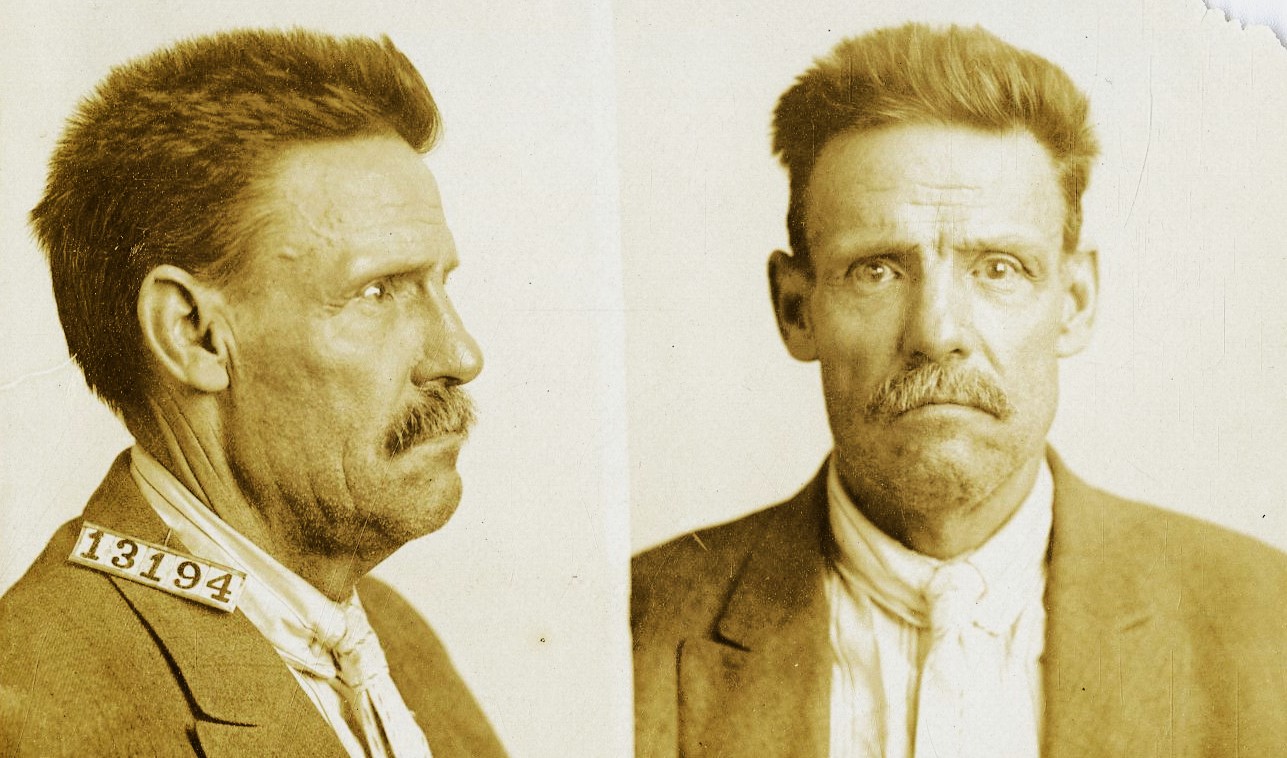
A report rich in detail on the work of an I.W.W. organizer from George Speed. It covers his work in the Ohio-Pennsylvania-New York area, with particular focus on strikes in Akron, Pittsburgh, Philadelphia, and Canton as well as internal I.W.W. practices.
‘Report of the General Organizer’ by George Speed from Report of the Eighth Annual Convention of the Industrial Workers of the World, Chicago. 1913.
TO OFFICERS AND DELEGATES OF THE EIGHTH ANNUAL CONVENTION, INDUSTRIAL WORKERS OF THE WORLD.
GREETING: At the close of the last convention I was instructed by the General Executive Board to proceed to Pittsburgh and assist in the work of organization in that district. My route was by way of Canton, Ohio, where the S.L.P. through Markley and Jurgens had deceived many into joining the bogus Detroit outfit; they had three locals with 600 members. The largest was that of Metal & Machinery Workers and were at the time on strike against the Diebold Safe & Lock Co. This strike involved some three hundred or more. Under the conditions I thought it advisable not to interfere. Learning that there was dissatisfaction and doubt in the minds of some as to their affiliation, I made arrangements to send them literature of our organization, they promising that they would look into the matter.
I left Canton for Pittsburgh. Stopping off a few hours at New Castle, with that untiring and faithful fellow worker, Ben Williams. Arriving in Pittsburgh it was not long before I realized what I must contend against, which bore out in full statements made in reports and brought out on the floor of the convention. My first introduction upon arrival was with twenty-odd department store tailors working for Frank and Segers Department Store. I was placed on the committee to represent the men to that firm. After several days of effort the demands were conceded and organization was then formed.
THE WOODS RUN PRESSED STEEL CAR CO.
The strike of the Pressed Steel Car Workers started by a walk-out of 38 men which in a week’s time involved the whole working force of 1,200 or 1,400. Trautman had this strike in charge and had addressed some five or six meetings of strikers. To my surprise he had allowed A.F. of L. speakers the use of the platform, so when I arrived from McKees Rocks, where efforts were made to pull them out, I was astonished to find the A.F. of L. in full possession of the hall and we were denied the floor. This was the result of his folly in allowing them to butt in, thus taking the strike completely out of our hands. Circumstances point to the fact that the A.F. of L. organizers were called in by the firm and the hall rent paid a week in advance. The effort was made by them to get the men to return to work and then make a settlement. This the men refused to do. The A.F. of L. being unable to deliver the goods and get the men to return the management called upon Klavier, who was a sympathizer of the I.W.W., and had the confidence of the strikers. He used his influence with the strikers toward a settlement, and through him the bosses met a committee and a settlement was reached. An increase in wages was obtained. All chances of organization were destroyed through the interference of the A.F. of L. organizers who are ever ready to block any attempt on our part to build an organization.
CANTON.
On October 16th, I returned to Canton, O., and got in touch with several of the English-speaking members of the Detroit outfit and the Italian local. I found that they were much discouraged. Upon questioning them as to how they became connected with the Detroit fake they informed me that they were led to believe that they were affiliated with the organization represented by Ettor and Giovannitti. When they desired to raise funds for the defense of Ettor and Giovannitti, they were told that it was not required. The local, upon finding the true status, threw up its charter in exchange for one in the I.W.W. The Diebold strike of the S.L.P. Detroit bunch conducted upon the civilized plane fizzled out in about 8 days. The balance of my time was used in noonday meetings at shops and distributing leaflets. I succeeded in getting some 12 together in a temporary organization with assurances on their part in filling out and applying for a charter. Left Canton for Pittsburgh to take up work where I left off.
PITTSBURGH DISTRICT.
While here, done all possible to work in harmony with Trautman. I suggested at times means of propaganda, such as hiring in various parts of the city, nickelodians which could be had for a nominal rent. None of said propositions were ever considered by him. I also advised against his efforts to get organization in beer joints as futile and barren of results. I illustrated the experiences of Fellow Worker Morris and myself. We had distributed circulars at noon calling for a meeting of packing house workers at six o’clock. Arriving at the place of meeting, a saloon, were eight of ten workers present. I looked into a back room to find a fellow that had eyed me with suspicion at noon. I asked one of the men to look in and tell me if he were a boss. answer he said no. Thought the coast clear and we had no sooner set down to talk over matters when the proprietor advanced toward me and wanted to know what in hell I was there for. I could hold no meeting in his place. In reply I asked him what in hell he was trying to get through him, that it was a public place and what in hell meeting was he referring to. This stumped him and he slunk away and took a seat with the fellow mentioned. Of course no meeting was held. All this had little or no effect on Trautman and his actions.
Oct. 29th a walk-out of girls occurred in Fink’s Distillery. Calling upon them I induced them to come to Headquarters where demands were formulated. These demands upon presentation were conceded by the firm. The girls went back satisfied and in a week’s time were locked out again. We picketed the plant and did all possible to advertise the treachery of the firm. Upon calling on firm for interview, was forced to retire after wordy dispute. Having exhausted our resources the strike melted away. During this time, with the aid of Fellow Worker Goff and Bradley, a local of Metal and Machinery Workers were organized in Braddock.
Nov. 13th received telegram from St. Marys, Pa., asking that I come and assist a strike of car repairers at that point. When I had arrived at the railroad shop I learned that company had conceded the demands of the men, I had a job finding a committee or the sender of the telegram. Found committee but not the sender. Having won without much effort I found it impossible to get them to realize the necessity of organizing. Left them a few leaflets and disposed of several books and then returned to Pittsburgh.
On Nov. 20th a strike broke out of Packers at Spears Furniture House. We got in touch and made appeals to all workers in the plants and were received with favor. The A.F. of L. called a mass meeting on Sunday the same hour that we called ours, and put their whole effort in getting the teamsters. Evidently, none of the others were considered worthy of organization as far as the A.F. of L. were concerned. As a result of the strikers being divided they were defeated under conditions most favorable for victory. No organization was obtained by either force as a result.
Nov. 23d received telephone message announcing strike meeting of Homestead Railroad Workers. I had instruction not to mention the party’s name and not knowing him had difficulty in getting the ear of anyone. I succeeded in getting the floor for five minutes after button-holing from 9:30 a.m. to 2 p.m. The following Sunday I had Trautman with me. We were both denied admission. Some six hundred were Involved in this strike. The men were very suspicious. I presume this was the result of former experiences and betrayals. Organizers Pearce and Flynn, of the A.F. of L., tried to reach them, but they were repudiated. This was the one hopeful sign. After two weeks of effort they sent for me. We at once got out circulars and held several large and successful meetings in hall and on street and parades. But it was too late. They were defeated before we had taken hold. All we could hope to do was to develop a few rebels out of this very conservative body. A local of R.R. workers was charted but the steel trust black list soon scattered them to the four winds.
The outside electrical workers sent me a request that I address them on industrial unionism. I was well received and sold every man present a pamphlet. Made two other talks to the same body, but at last one Harrison of the S.L.P. with his bunch present made a bitter tirade against the I.W.W. and possibly destroyed what little good I might have accomplished.
Jan. 2d at Tarentum I filled charter lists for metal and machinery local. Every indication was shown for a promising body.
Jan. 4th received call to Rankin. A strike of the American Wire Co. was on. The bulk of the strikers were Slavs and Poles with a sprinkling of natives. I soon learned that the A.F. of L. had been working this field, employing Slavish Socialist Party men to talk hybrid industrial unionism. My remarks were well taken, but toward the end a bunch came in and showed applications of the A.F. of L. for which they had already deposited their dollar. It was readily seen two organizations were out of the question while the strike was on. Numbers informed me that they preferred the I.W.W. but they felt it was folly to make the attempt as the A.F. of L. had the inside track then withdrew with the advice not to allow Pearce and Flynn to contract or settle for them. This advice they carried out. They made their own settlement. A week or ten days later the strike was renewed with the Braddock plant out. It being a losing fight, the A.F. L. pitted the Slav against the Italian and charged the latter with being I.W.W. men. In this struggle several were shot and stabbed as a result of the dirty work of the A.F. of L. The strike was lost and organization with it.
During the forepart of January the Department Store Workers who had neglected their organization were again forced out on strike in the Frank and Seger store. A rotation system of lay-offs had been adopted which they themselves had failed to live up to in their desire to hold their jobs, and which finally caused the strike. We at once placarded the store and picketed the plant. Several arrested and nominal fines imposed. Its effect caused the firm to call for a committee and the strike was settled in 24 hours’ time. This revived the organization. In this strike Trautman compromised by having inserted in the Pittsburgh Press a defence of the managers of Frank and Seger, one of the members of the firm, a former S.L.P. man, was a great crony of Trautman. He exonerated him from all blame, putting the strike down as a mistake. During this time I received several bogus telegrams to get me out of town. They failed in their purpose however. During this period the stogie workers had a number of strikes, most of which proved successful.
On Feb. 14th I received a telegram from General Office to proceed to Akron, Ohio. The strike of the rubber workers was on. It was, in a way, a relief to get away from conditions under which I had to bear to a large extent with one who refused to weigh, consider, or reason. I refrained from offering any pronounced resistance to a policy and line of action that I was not in full accord with. Feeling this was the attitude of the General Organization as per action of the seventh annual convention and from further fact that I was trying to get from Trautman information relative to the McKees Rock strike. I succeeded in so doing, but it was so mixed up that it was of no value. The lawyer was silent on the proposition.
AKRON STRIKE.
The Akron strike was largely an American strike. That is, the bulk of those engaged were natives. Possibly more so than any other strike in the I.W.W. Upon my arrival I found Fellow Worker Walter Glover and Swazey on the ground. The local had about 15 members in good standing. There was very little evidence of organization. Mrs. M. Prevey, of the S.P., was largely instrumental in swinging the strikers over to the I.W.W. The strike spread rapidly and involved. all factories with from 15,000 to 16,000 strikers. The local members were slow in making themselves known to me. It was brought to my attention by some slight show of dissatisfaction on their part that the strike and other committees were composed of men not formerly members of the local. They did not allow their feelings to run away with their judgment, and the matter was adjusted. The chairman of strike committee, one Pollock, also on the scale committee, exposed himself by being too anxious to confer with the State Board of Arbitration and other officials, and in an attempt to take power not conferred upon him. This led to his undoing. He was exposed as a detective and forced to resign and drop out. The amount of work required more help. I wired to Headquarters for assistance. Headquarters could furnish no help and suggested that I send for Trautman. I did so and will regret it as long as I live. He refused to work or confer with anyone supporting or representing the General Organization. He made an effort to line up the foreign workers in his desire to shape, control and poison the minds of the workers against some of our best workers. The work required more forces than we had at our disposal, so we employed Bessemer, Mrs. Bates and Frank Midney, of the S.L.P., who for the short time they were with us did some good service. of our own forces who did arrive in time were Matilda Rabonwitz, Spangler. Cannon and Jack Whyte. One of our most valuable men was Fellow Worker Leppert, who took charge of the relief end of the strike. It would be difficult to get one to handle that work more effectively than did Leppert.
Akron was considered at time of strike or revolt one of the most prosperous cities. The workers were all well dressed, both men and women. Their pay was some higher than in other kindred industries. The cause of revolt was obnoxious rules, the speeding-up system and the cutting of wages without notice. Many of the strikers looked upon the strike as a holiday or Fourth of July picnic. They could not realize the importance of the situation. Many decorated themselves in red from head to foot so that not a yard of red ribbon could be found in the city. The picketing was peaceful, orderly and effective. The strikers seemed to like the long parades. During this stage of the strike our work was educational pointing out class lines. As the strike developed, the masters grew desperate, resorted to violence and used the city government to back up their acts of violence. This being their only argument, we must prepare to meet the new situation which would surely confront us. Violence became the order of the day the first week in March. A Citizens’ Hellfare Committee was organized with a humble follower of Jesus at their head. Another of a like ilk took the editorship of the Akron Times. An automobile raid was made upon our picket line at all the plants; pick handles and sawed-off shotguns were loaded on every morning and evening at City Hall. All halls were closed to us; the parks denied. The A.F. of L., through Carl Wyatt, doing all in his power to aid the bosses to break the strike. The lesson taught during the forepart of the strike was now realized in its fullness and the workers were developing a spirit of resistance. Many arrests were made. Mr. and Mrs. Margaret Prevey, two influential members of the S.P., did all possible to aid the strikers to the injury of their business. Prevey was yanked into the City Hall and threatened with tar and feathers and a ride on the rail by officials of the city. Mrs. Prevey was ordered to have her property appraised and leave town. The boys had her house under guard for two weeks. One weakness was the probe which was inaugurated about Feb. 28. They put their whole faith in same. The Socialist Attorney Allan Cook, representing the strikers, was employed without the knowledge of the strike committee or myself. The ones responsible, in my judgment, were the Preveys and Trautman, who did not consult or confide with any of the organizers of the I.W.W., and who told the strikers that We, on the other Cook would get a greater reputation than Darrow. That it had no hand, realized the danger of the probe to the strike, and possible value as far as the strike itself was concerned. It proved one of the factors in breaking the strike ably assisted by Trautman. It had taken the time and energy of the men and inspired hope in those not acquainted with the art of the politicians. It caused a weakening of their effort along the line of active struggle and Trautman presented some six questions to the probe committee to be asked the employers, all of which they answered in the affirmative. This gave the men the idea that the houses would be willing to settle and many went back to the factory. We were compelled to have a resolution passed at strike committee meeting denouncing those questions, and same were published in Akron Press in an attempt to destroy the effect of Trautman’s work.
The breaking of the strike occurred March 13 when, after a mass meeting in Reindeer Hall, Organizer Jack Whyte urged a larger number in line for picket duty. Trautman came rushing over after an interview with the sheriff and excitedly urged the men to go back in the hall. He there advised them not to parade, as they would be slaughtered. This was the beginning of the end.
Meanwhile, we received a telegram requesting Trautman to go to Pittsburgh, as a strike was spreading in that section. He hemmed and hawed and finally went to the executive committee and tried to get them to discharge the organizers and keep him. He then made charges and refused to go to Pittsburgh. I wired to Headquarters, asking that St. John come to Akron. Upon receiving an affirmative reply, Trautman thought it wise to go to Pittsburgh. In the meantime I demanded of executive committee that minutes be not approved or that portion relative to Trautman’s charges and that he be compelled to bring his evidence and proof of same or stand convicted of being a slanderer of the lowest order. Up to date, he has never presented any evidence. During this time two strikes occurred at Barberton. One of match workers and the other of iron workers. They were partially successful. Organized a local of rubber workers at Cleveland. The Akron store was declared off on March 30th. Men and women went back. In some instances wages went back to the same standard as previous to the cut and few slight improvements.
They established the right to organize which was heretofore denied. All previous attempts had been throttled, even to the extent of blowing up the safe of a previous union and stealing the books and discharging all whose names were found on same. On April 4th I left for Pittsburgh, leaving Jack Whyte to look after affairs and get organization in shape until they should select their own organizer.
PITTSBURGH DISTRICT.
My call to Pittsburgh was to attempt to straighten out affairs and reorganize the District Council. Being somewhat in a different position than I was when I left I had more power to act. To my surprise, the District Council agreed to my views more readily than I expected. Trautman was communicated with and demands made upon him to act hereafter under the instructions of the District Council and report weekly in full. The District Council would hereafter contract for all bills, etc. Under these rulings, Trautman sent in his resignation as organizer, which was not accepted until books were audited. The District Council Secretary at this time disappeared. I worked with the Auditing Committee for 14 hours. Auditing Committee was disgusted with the way books were made up. They failed to appear again upon my request. Santos, one of the auditors, informed Trautman, who drafted a document exonerating himself, and asked that same be printed in the friendly press with an attempt to make this the report of the Auditing Committee. The District Council refused to accept same and elected another Auditing Committee to finish the work. At this time I received a telegram to go to a strike of sugar workers in Philadelphia, I left instructions in the hands of Jack Whyte and Nicholson to gather all data possible and get things in order.
PHILADELPHIA.
Arriving in Philadelphia on the evening of May 2d I called upon Jos. Schmidt, who had charge of the sugar workers’ strike. I addressed that body Saturday. Attended the meeting of the District Council Sunday and, to my surprise, found Ed Lewis sitting in that body. Believing it my duty, I took the floor and presented to council the status of Ed Lewis in the organization, holding that he was not entitled to membership, he not taking an appeal nor had he been vindicated by the local that expelled him. I was at once attacked by the Secretary of the District Council, Renshaw, in a personal way as being sent there by St. John to make trouble and drive Lewis out. All of which was practically concurred in by all present. Lewis was endorsed and sustained. From this day I was looked upon as an interloper who had no business in Philadelphia. The facts are, as the records of the General Office show, I came in answer to a telegram from Jos. Schmidt, without any knowledge of Lewis’ presence. I attended meetings of local and did what was possible notwithstanding hostile feeling. Renshaw, as Secretary of Council, showed better sense in conducting business of Council than any Council I have yet visited. While attending a meeting of sugar strikers, the longshoremen called upon me to speak for them. At this meeting a charter list was made up and applied for. On May 13th the strike was on and the water front was pretty well tied up. McKelvey, Lewis, Renshaw and I was filling our respective parts. Lewis, in keeping sober, was doing well in lining up men. Under these conditions and after consultation with several of the boys we concluded it would not be well to press the case against Lewis, as it might result in harm to the strikers.
In this action the General Office concurred. Upon Warwick’s arrival, he placed Lewis in full charge. I warned Warwick of his unreliable record but to no effect. Everything was done to discredit me by both Lewis and Renshaw, even to the extent of offering me violence at a meeting of longshoremen, which I felt satisfied was a put up job. They did not dare to carry it to its logical conclusion. The strike was partially successful and was settled on May 31st. A report of the handling of finances by Lewis was asked by Warwick, but I venture to say that not to this day has Lewis made a report as to his stewardship.
On May 26 a strike of restaurant workers employed by Horn and Hardart, involving some 400, broke out. They called upon us for assistance and we responded. Applications and funds were collected for charter and supplies. My understanding is that no charter was sent for. This strike was left in the hands of Renshaw and Knebel, as I left for New York June 1. The strike was lost and no organization resulted from our efforts.
While at New York took part and worked with G.E.B. Member Ettor in an attempt to line up the barbers and others, and in an effort to get Brooklyn barbers to repudiate contract foisted upon them by Frisina. Upon the refusal of the local Executive Board and Frisina to act in accord with the principles of organization we revoked the credentials of Frisina and the Charter of 374, and tied up the funds held by them. Will not at this time deal further with the situation in New York as Executive Board Member Ettor will I feel assured handle in full conditions in that section. Suffice to say they are taking more time in fighting imaginary grievances than instructing, educating and organizing their fellow workers. To that extent they hamper those who are making efforts to accomplish something. On June 29th I left New York to confer with General Executive Board, remaining until July 7. Left to again assist the work in New York and in reorganizing the barbers of Brooklyn. While there I received a call from General Office to at once proceed to Philadelphia, where I arrived at 1 o’clock, July 21st. I attended meeting of Reed and Rattan Workers, who had been on strike for some five weeks. The plant was completely tied up. The conducting of the strike showed order and good sense of management. In the evening I went to a meeting of the longshoremen. I found organization was increasing in members having organized the tug boat men and bargemen. They had a fairly good Headquarters. Warwick, their National Secretary, had been on the ground some two weeks. Lewis was away at Boston. I presume to escape charges then pending against him at the District Council. There was trouble on several of the docks controlled by Snell. Warwick and Renshaw were using their best efforts to get men to call a general strike. That afternoon some three hundred men had voted favorable. At night some six or seven hundred were present and the whole proposition came up again, but it was evident that there was a great deal of dissatisfaction. After the meeting I learned the whole proceedings were irregular; that the whole matter was to be left over to the general meeting of the local, which was to be held the next night. The Richmond branch had no knowledge of the attempt to call a strike. In the meantime, Lewis presented at the Tuesday evening meeting, where all three took active part in trying to declare for a general strike. At this meeting, which was regular, they were defeated by a three to one vote. Since the inception of this organization, no effort was made on the part of these men to enlighten or instruct in any way on the aims and objects of Industrial Organization. The whole method of action was carried on by bull dozing, brow-beating methods. No sense of organization was shown. Evidently all they looked for was just numbers.
At the Tuesday night meeting I attempted to enter when Lewis, with a gang at the door, refused to allow me, informing me that I could report some more to the Saint.
On Sunday at the District Council meeting there is few who attend that are capable of expressing themselves. The result is that the Lewis-Renshaw type dominates the District Council, although they are not delegates to said body, and suggest most all motions that ought or ought not be carried.
At one meeting the General Organization and those who have played a prominent part in the upbuilding of organization were abused without stint, not excepting those who are conducting the Paterson strike. I myself was threatened with being carried out in a box. Members of their own union are even denied admittance if they are not in accord with the program of the gang.
In order to get at the base of the whole matter, so that the membership can fully understand, I have made efforts to get men or those who are dissatisfied to write their views so that the convention can make proper deductions and place responsibility for this deplorable state of affairs in Philadelphia without fear or favor. I left for New York, hated possibly as well as any man could be. Their condemnation so far as I am individually concerned is to me the highest possible recommendation.
SUMMARY AND FINDINGS IN RESPECTIVE DISTRICTS–HAND SET PITTSBURGH DISTRICT.
First and foremost is the Pittsburgh District. This is possibly the greatest iron and steel center in the world. It is dominated by the United States Steel Corporation, that knows no law except its own will. The right of petition even is denied. To dare petition means discharge; yea, even the blacklist. Thousands of slaves are guarded and watched over as a cat watches over a mouse. With its perfected spy system and thug police, it makes it well night impossible to get even a nucleus let alone a perfected organization. Yet the district is seething with discontent. Glad would be the workers for some organization that would point out the way for deliverance from the oppressive conditions laid down upon them. Long hours, low wages, and an ever-increasing output.
The methods employed to allay discontent, introduced by the Steel and other Corporation, such as holding of stock by workers, pensions, etc., is only a play upon the credulity and ignorance of the workers. It is an insult to intelligent, thinking workers. It is nothing short of a hypocritical fraud. The progress made in this basic industry has eliminated, to a great extent, skill. The once proud and aristocratic laborer who looked with contempt and disdain upon the unskilled and with hatred toward the foreigner no longer has his skill. The foreigner was induced to come by the masters of steel who engendered and fostered this feeling of race hatred in order that the workers would be kept divided. This scheme will no longer work. The age of machinery is here. The unskilled is fast becoming the dominant factor if not already so. Organized labor, once a power in the Pittsburgh District where the old K. of L. fought many a hard-fought battle, was supplanted by the A.F. of L. by treachery, scabbing and betrayal so that today the masters practically have their own way. The District to all intents and purposes is without organization. The Labor Temple of Pittsburgh is virtually owned by the Oliver and like interests. The workers, seeing their struggle for existence growing keener and keener, are ever fearful, knowing the bitter experiences of the past. This makes them secretive and suspicious. The A.F. of L. had made strennous efforts to organize, but with little result. They are pretty fairly discredited not only by the foreign-speaking but by the natives as well. Apparently the only function the A.F. of L. has in the Pittsburgh District is to prevent organization where organization may be attained. When revolts break out in any one of the plants the call is for the I.W.W., and we are compelled in many of these small strikes, composed of 500 or 800, to put our time and energy at their disposal. Presuming that the strikes were successful, under the conditions where thousands are employed, it would be well nigh impossible to hold for any length of time organization. The spy system would get in its work. Discharges of active workers would follow. On the surface of this picture it would look somewhat dark and dismal and the prospect for organization far distant. Yet discontent is ever increasing. Agitation and education is ever going on. The fire is smouldering and it will be possible to build up a nucleus of men throughout the district, with knowledge and experience, who will be able to take hold of the situation when the upheaval does come in the great steel industry. It is all important that we have men in this field understanding that in order to build up it will require time, money and hard work. The district is ripe for the I.W.W., and by right belongs to it. It is up to us to develop the material in that section. The A.F. of L. has been tried and found wanting. It is now up to the I.W.W. to make good.
OHIO.
While my knowledge of the state is limited, my observations of that portion of the state I visited leads me to believe it one of the most promising fields for organization. It is fast becoming one of the leading industrial states. Its industries are many. Its factory towns range from 5,000 to 10,000 in population outside of its great industrial centers. It is possible to weld the workers together with less expenditure of time and energy than in over-populated cities.
Among its many industries is that of pottery, terra cotta, china and glass ware, which are organized to a very limited extent. In the manufacture of rubber goods it possibly has no equal in the country. Akron, the center of the industry, has one plant alone with facilities for the employment of 14,000, besides huge milling and plate mills within the immediate vicinity. The means of travel through the state from town to town are exceptionally good. The comparatively cheap and vast system of the electric railway makes this possible.
PHILADELPHIA.
Philadelphia is a city that spreads over an immense area. life of its workers is superior to any other city not being so congested. The home Its chief industries are metal and machinery, carpet and textile in all its branches. It is a great distributing center and one of the greatest seaports on the Atlantic Coast. It is considered a cheap town and poorly organized. The largest printing plant in the country is here located without any semblance or organization. It has been only within the last eight or ten months that the I.W.W. took a new lease of life and showed itself in this burg. This, possibly, is due to deflections in the S.P., where the disgruntled element fought until they fought themselves out. Joining the I.W.W. to demonstrate to those whom they fought that they were capable of doing something, but neglecting to leave their fight behind them. they brought with them into the I.W.W. The same old feelings, prejudice, etc., Gaining little or no knowledge of structure and methods of the I.W.W. in this sense, they helped to do the work that it was presumed they were opposed to, to-wit, discredit the work and effort of the I.W.W. They aided the pure and simple politicians who are over-anxious to put the I.W.W. out of their way while at the same time making pretentions of friendship. There is a good field for organization which has to some extent been demonstrated within the last few months. Assistance would be given in their efforts if they showed in their meetings a sense of order, tact and judgment.
What they have built up in organization is liable to be lost to them notwithstanding the hard work put in unless they learn to look at all questions from the standpoint of organization and principle involved instead of a narrow, personal viewpoint.
NEW YORK.
New York is an overcrowded sweat shop where millions toil and struggle without any adequate protection. While all industries are represented in New York City the clothing industry possibly employs No more men and women than any other one industry in the city. No body of workers are worse faked than those in this industry. The same methods are used to hold and keep in check and prevent development that are used by the bosses to beat the workers back to mill, factory or mine, only different in form. They employ their hired sluggers to prevent meetings of the dissatisfied. Who are back of this gang of labor parasites and by their silence allow the workers to be betrayed? So-called leading Socialists who dominate the Jewish Forward and New York Call! They evidently have no more use for an economic use it organization of workers than they have for a bad cold. They’re only for the purpose of a vote-getter and the funds they worm out of its treasury. Their pretensions of impartiality are pure bunk. They fear the growth of the I.W.W. just as the capitalists fear it, realizing that they cannot control it nor use it for the purposes for which they desire. New York has one important and vital industry–that of transportation. Upon this does life largely depend. That of car service, elevators and freight conductors. There is no semblance of organization among these people. Systematic effort should be made through leaflets and other channels to reach these men at the earliest possible opportunity and less time should be devoted to organize those callings which by the nature of things will be last to respond to the call for organization, namely, those who come more closely in contact with their boss and depend more or less for tips for maintenance.
Executive Board Member Koettgen will, I presume, report in full as to same. My word is, I regret, there was a Haledon.
One word relative to the Paterson strike.
In conclusion, I want to state that my firm conviction is that the I.W.W. is the highest intelligent expression of organized labor. should always be on the aggressive and can never afford to take a defensive position. We should be in position to put all others on the defensive. This can be done by strictly minding our own business, and Those who are whining and crying not catering to any outside force. like stuck pigs that we do not appreciate and support them in their efforts in our behalf, and who insinuate that we are under obligations to them being as they pose as the only defenders of the working class, teachers and instructors, the only way they can make good in such positions is to quit whining and assist the workers in all their struggles, regardless of affiliation and without expectation of reward. This position they will be compelled to take whether they want to or not or go out of business as representatives of the working class, or else throw off the mask and come out in the light as a petty bourgeois reform party. The aid given workers in their struggles is given regardless of the party affiliations of the donors and given because the workers instinctively did members of their own class who are engaged in struggles. No thanks are due to any political party for such aid that has come from the workers who have been members of that party. The thanks are due to the workers and as workers only who feel the same impulses that the workers who are in the struggle feel.
RECOMMENDATIONS TO THE CONVENTION.
1st. That credentials be given only to those who are actual members and have been in good standing for at least one year.
2nd. That voluntary credentials be not issued to any mixed local, and when voluntary credentials are issued by an INDUSTRIAL UNION they shall be good only within the jurisdiction of said union and shall be signed by Secretary and Chairman of Local issuing same.
3rd. District Councils shall be composed of Industrial Unions. Mixed locals not to be entitled to delegates in said bodies.
4th. No member shall be eligible to hold office in any local unless in good standing in said local for at least three months, or shall act as an official in any central body unless in good standing for a period of six months.
5th. Locals should avoid in case of strikes non-members of organization acting in capacity of organizers or speakers.
6th. I suggest that all organizers and speakers when billed to speak use every effort to be on time and not as is the case wait until the last moment.
7th. At settlement of strike an experienced member should be left in the field to instruct and look after interest of local for at least three months. Respectfully submitted,
GEO. SPEED, General Organizer.
Report of the Eighth Annual Convention of the Industrial Workers of the World, Chicago. 1913.
PDF of book (large file): https://archive.org/download/case_hd_8055_i4_r67_box_011/case_hd_8055_i4_r67_box_011.pdf
 Revolution's Newsstand