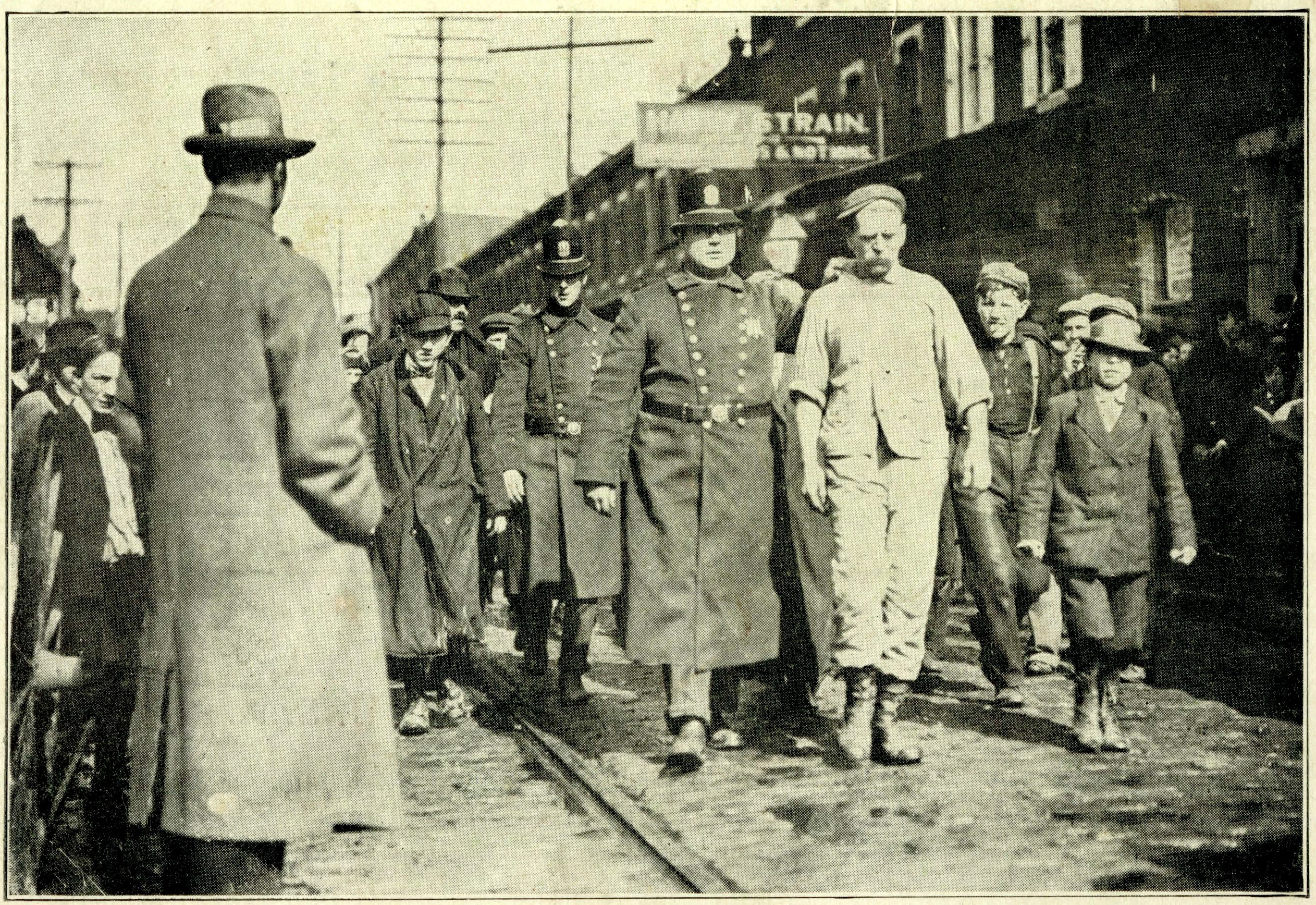
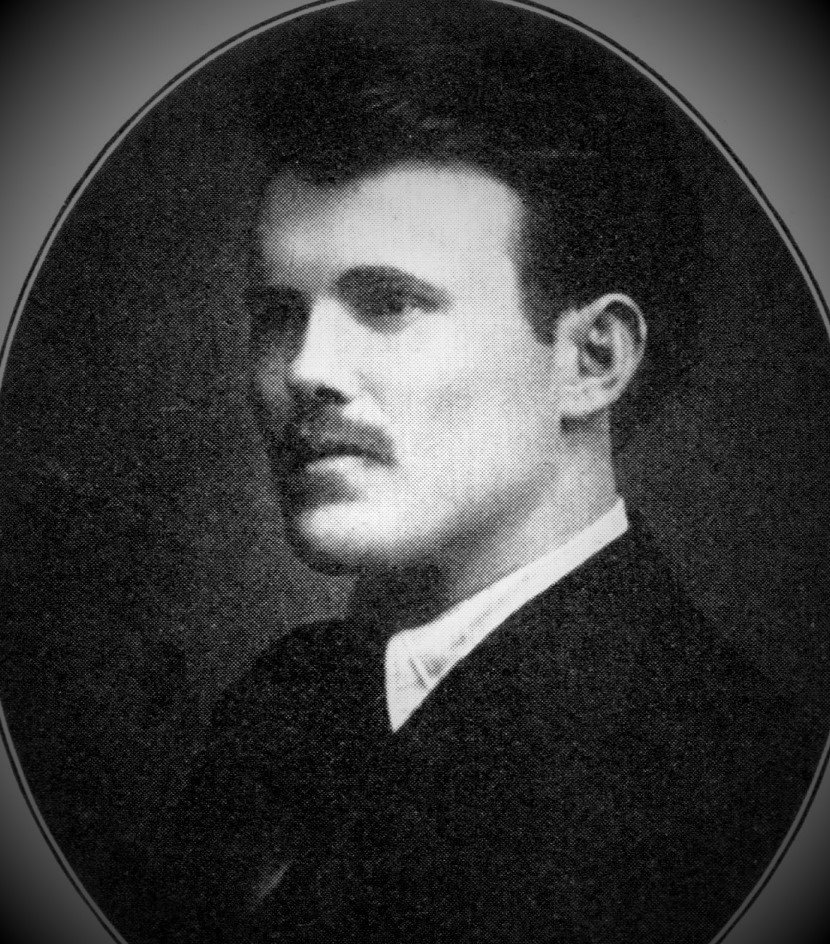
A leader of our class who died far too you, Louis Duchez, Socialist miner from the now infamous Ohio town of New Palestine, looks at the transformative power of struggle in the great Philadelphia street car strike of 1910.
‘Lessons from the Philadelphia Strike’ by Louis Duchez from Industrial Worker. Vol. 2 No. 1. March 26, 1910.
It would be an easy matter to point out the weaknesses of the Philadelphia strike from the industrial union point of view. We could go on to show how in the beginning the street car men waited and waited before coming out, knowing the attitude of the Transit Company and believing themselves that a struggle was Inevitable. We could show how they gave the company plenty of time to bring in scabs and thugs, and in every way possible prepare for the time when the men loft their cars. We could also go on to show craft union weaknesses of a similar character regarding the general strike in “sympathy” with the car men.
The tact of the matter is, there are about 150,000 wage slaves out on strike in Philadelphia. The spirit of solidarity manifested by the rank and file of the Philadelphia wage slaves has surprised the A.F. of L leaders beyond comprehension. They do not seem to understand it.
What I want to deal with in the Philadelphia strike is its revolutionary significance to the revolutionary union movement. First, these 150,000 workers in Philadelphia who came out in support of the car men have done more to teach themselves, and the whole State of Pennsylvania, class consciousness and solidarity than a whole trainload of literature. By breaking their agreements with their bosses the “sacredness of contracts” has received a good jolt; open hostility between them and their employers has been stimulated; the struggle between themselves and the bosses will be Mercer than it has ever been before The bosses will no longer be sure of them; militants will be “tabbed” and “chopped off” as occasion presents itself; in short, there will be a fight from now on.
The fight will demand the activity of the militants of the different organizations; revolutionary methods will be thought out and employed; slimy labor leaders with conservative minds and capitalist instincts will have to take a back seat, while the more progressive and younger blood will naturally push to the front. As long as the conservative leaders were able to deliver the goods to the masters there was comparative peace in the various unions; as long as they could impress the membership with the “sacredness of contracts”; as long as they could impress the workers that a reduction in wages is more profitable than to strike they were “marketable goods” for the capitalists.
But this latest act of the Philadelphia workere has conquered these labor leaders; they will never again be the power to the capitalists that they have been. For it must be remembered that the economic masters of today do not wine and dine in Civic Federation halls with the Gompers and Mitchells because they have a particular love for them as individuals. We read that even a large percentage of the unorganized of Philadelphia have come out in “sympathy,” too. And that they are being rapidly organized by the A.F. of L., which rushed in hundreds of organizers when the general strike broke out and began making hay at once.
Here is an important point in this strike: It is quite probable that the A.F. of L. in this instance is saddling a horse that it won’t be able to ride. These unorganized men, who are the so-called “unskilled” of Philadelphia, have been crushed to the starvation point; they gladly welcomed the burst of working-class solidarity; they joined the movement; they felt power, a oneness of interest, promise of support in their own battles. They will expect this from the A.F. of L.
When the general strike has been called off and these poorer classes of laborers are back at work, they will discover that the oppression of the employers has not been abated; it will be fiercer than ever. They will have to struggle in a body; the organization that the A.F. of L. built up among them: will have to “make good.” And here’s where the A.F. of L. will “come clean” or get out, and thereby show itself up in the minds of the rank and file. Judging from the attitude of this organization–or disorganization–in the past, we are inclined to believe that it will not “make good;” that it will simply attempt to parcel the various workers off in little groups, avoid a struggle at every point; simply horde them in such a way as to make them harmless to the capitalists and financially profitable as office sustainers. With the increasing oppression and the development of a militant spirit in the present struggle, it is more than probable that this will not be done; these workers will not stand for it. The A.F. of L., we believe, is, indeed, saddling a horse that it will not be able to ride. Then there is the psychological effect of the general strike upon the minds of the workers as a whole There is nothing like these mass movements to create in the minds of the proletariat opposition to all the institutions of capitalism. During them the swords of the workers and those of the capitalists are measured against each other; class struggle becomes a fierce economic struggle–what it really is–unveiled
From now on the master class will put on the screws; the capitalists will reason that the only man who is not dangerous is a dead one and the only union that is harmless is no union at all. The same tactics will be employed against all forms of unions, craft or otherwise, as the Steel Trust is employing against the Amalgamated Association.
It will be war to the knife; knife to the hilt. But organized labor will come out victorious; it will grow in revolutionary spirit and organization in the struggle. In the direct conflict –and continuous at that–reactionary leaders will have to take a back seat; they will be sloughed off with the unfit. The old craft unions, with their antiquated methods and deadening spirit, will simply be bursted to pieces. They will be pushed aside by the merciless forces of economic evolution, to make way for the new and revolutionary union of the workers. The I.W.W. will then come into its own. The structure of the new society will then be completed. A new era of mankind will dawn; “civilization” will then begin to be a reality. To the revolutionary unionist the outlook was never more hopeful; to the worker who is not afraid of a struggle, the fields are indeed, ripe for the harvest.
The Industrial Union Bulletin, and the Industrial Worker were newspapers published by the Industrial Workers of the World (IWW) from 1907 until 1913. First printed in Joliet, Illinois, IUB incorporated The Voice of Labor, the newspaper of the American Labor Union which had joined the IWW, and another IWW affiliate, International Metal Worker.The Trautmann-DeLeon faction issued its weekly from March 1907. Soon after, De Leon would be expelled and Trautmann would continue IUB until March 1909. It was edited by A. S. Edwards. 1909, production moved to Spokane, Washington and became The Industrial Worker, “the voice of revolutionary industrial unionism.”
PDF of full issue: https://www.marxists.org/history/usa/pubs/industrialworker/iw/v2n01-w53-mar-26-1910-IW.pdf
 Revolution's Newsstand