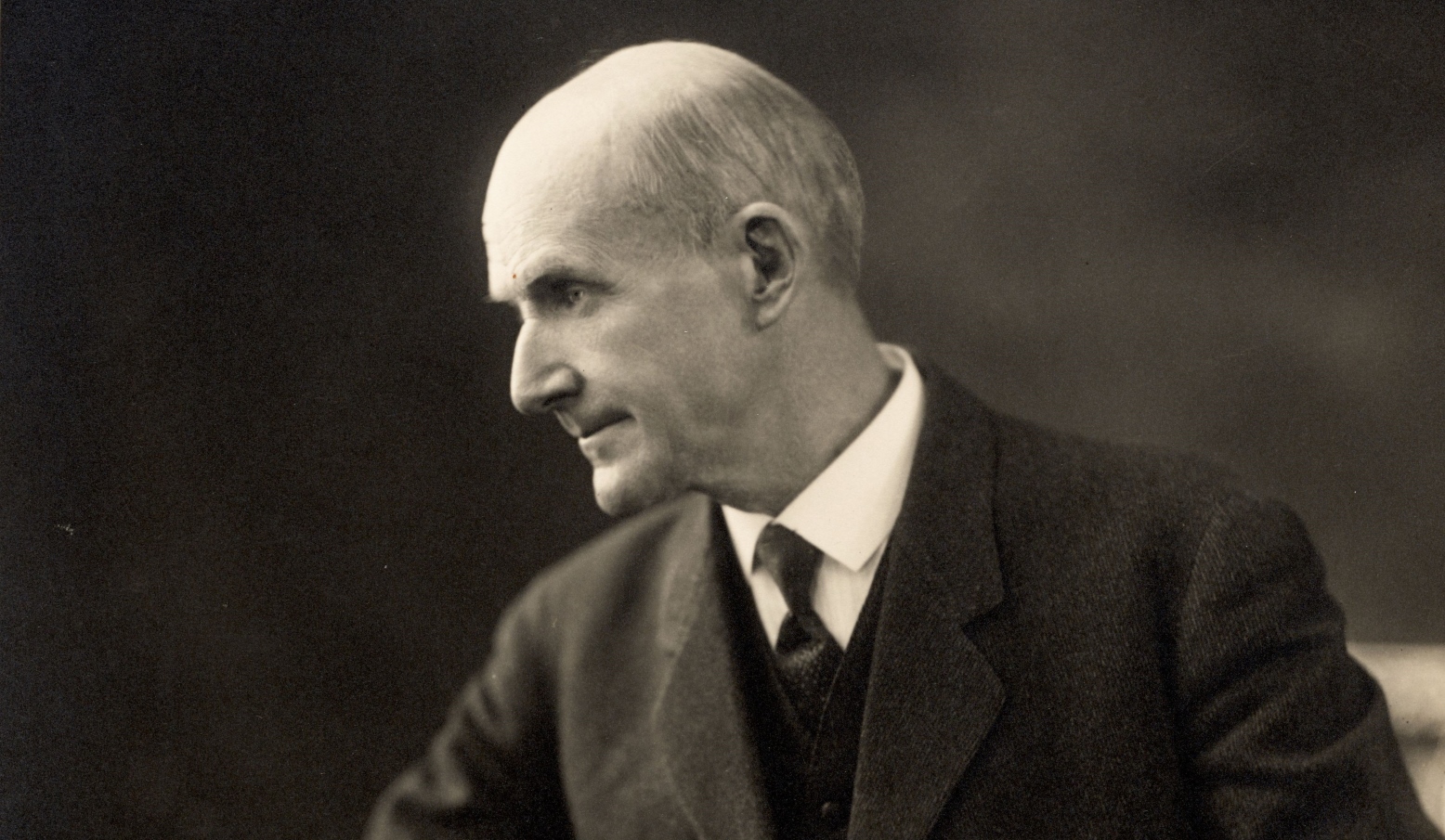
Debs on expropriating of the expropriators and production for use, not exchange.
‘Property and Public Welfare’ by Eugene V. Debs from The New York Call. Vol. 2 No. 134. June 5, 1909.
Socialists are the real conservators of true property rights. It is just because socialism insists that the individual is entitled to the fruits of his toil and shall be permitted free and unrestricted enjoyment thereof that it demands the collective ownership of capital together with the abolition of the economic categories of rent, interest, and profit.
Property is a conventional arrangement, pure and simple. Its laws are of human, not divine, origin, sanction, and regulation. Society has created those laws; society may destroy them. No man enjoys a right of property except by the consent of society. These are truisms that have only to be stated to be understood. The object of property is the social good. Society attaches a right of property to certain things with a view to promote the general welfare and insure the stability of government. This right is constantly changing in obedience to paramount social demands. Within the memory of thousands of men yet living society sanctioned the right of property in human beings. It does so no longer.
With regard to the vast wealth which Mr. Rockefeller has accumulated under existing property arrangements, socialists are indifferent. He may retain possession of his wealth if he so wills; he may leave it to his son when he dies. What socialists contend for is not a redistribution of present wealth, but the abolition of those conventional property arrangements which have enabled Mr. Rockefeller to accumulate a fortune of $500 million within the brief period of 40 years.
In what does the property of Mr. Rockefeller consist? Is it mines and factories, railroads, steamships, pipelines, stocks and bonds, houses and lands? No, it is none of these things. His right to property is the right which constitutes the essential nature of legally recognized ownership—the right to reap the fruits of the productive exploitation of natural opportunities, or material wealth of any description without exercising the functions of use and possession; the right, in short, which enables him to enjoy the fruit of the labor of others without in any manner contributing to the result of such labor. The proprietor merely receives tribute from those who labor for not exercising toward them his legally recognized right of exclusion.
His tribute—rent, interest, and profit—expresses his right of limitation on the production and consumption of wealth which the law has endowed him with, and is pure robbery. This right to enjoy without exercising the functions of use and possession constitutes the essential nature of property. It is really all there is to the right of property as now recognized. It is this right which socialism would abolish in the interest of the common good.
Under the existing system the primary motive leading to the production and exchange of all wealth is profit, not use. Clothing is not made because people want to wear it. Wheat is not grown and animals are not slaughtered because society needs bread and meat to preserve its members from starvation. All the things which are vitally necessary to the life of mankind, together with those which contribute merely to man’s comfort or convenience, are produced and distributed primarily for the reason that producers and trades are able to realize profit therefrom. The use function of these things is purely a secondary consideration.
When profit ceases, industry comes to a standstill, notwithstanding that numberless social units must suffer the pangs of cold and starvation because of such stoppage. Thus the profit of the individual is given precedence over the common social good. Socialism contends that the primary industrial motive should be use; that bread, meat, and clothing are profitable to a few of the individual members of society.
When Mr. Rockefeller was questioned recently about the actual details of the business of the Standard Oil Company he admitted his ignorance. He retired from active participation in the affairs of the company some years ago. Its operations are now conducted by other persons, yet Mr. Rockefeller still receives the lion’s share of the profits. Mr. Carnegie no longer has anything to do with the actual operations of the Steel Trust. He no more contributes his labor and talent to the production of steel than Mr. Rockefeller does to the production of oil, yet his profits from the steel business are still very considerable. Mr. Harriman knows very little about the actual operating details of his railroads. He is busy with financial schemes to make his railroads produce dividends. Their actual operation is conducted by other men.
As a matter of self-preservation, society must finally decree the collective ownership of all these great industries, must extinguish the individual right of property there in and so the individual’s right to receive tribute therefrom. In that event Mr. Rockefeller may be left with his $500 million.
Mr. Carnegie with his $300 million, and Mr. Harriman with his $100 million. They will no longer be able to reinvest their vast accumulations so as to exact tribute from industry, and their wealth will represent merely a power of consumption. The accumulations must constantly decrease, being no longer augmented by dividends and interest, to finally disappear altogether. Society can well afford to permit them and their children to remain idle, seeing that they will no longer have the power to decree idleness to thousands of helpless human beings at will.
Why must society abolish the right of private property in capital as a matter of self-preservation? Because it is an impossible right, founded upon a destructive principle, that of interest. Had one cent been loaned at 6 percent interest, compounded semiannually, AD 1 and been left to accumulate all the years until 1900, it would amount to a sum so vast that many millions of globes, each as large as our earth and all of solid gold, would be required to equal it. A solid chain of $20 gold pieces, reaching from the earth to the most distant planet in our solar system and back to earth again would scarcely be missed from the thoroughly unrealized accumulation that would result. The fact is that it is utterly impossible to so manipulate capital as to make it yield sufficient increase to satisfy the accumulated demands of interest after setting aside sufficient wealth to support the population (even though many of the people are always half-starved and a good percentage of them wholly so) and there must come periodic breakdowns in which the property titles of the smaller holders become extinguished.
Now, take a look at the obverse of this interest problem: If a man were able, by the labor of his hands or brain, to satisfy all his needs and lay aside one dollar every day in the year, he would be in an enviable position, would he not? Let us suppose, then, that a man had begun to working and saving on January 1, 1 AD, and that his life had been miraculously preserved through all these years until January 1, 1909, he continuing to add one dollar to his store at the end of every day, how much would he be worth, barring interest? He would be worth $596,420, but little more than half a million. Hardly enough to give him a single flyer on the stock exchange!
The New York Call was the first English-language Socialist daily paper in New York City and the second in the US after the Chicago Daily Socialist. The paper was the center of the Socialist Party and under the influence of Morris Hillquit, Charles Ervin, Julius Gerber, and William Butscher. The paper was opposed to World War One, and, unsurprising given the era’s fluidity, ambivalent on the Russian Revolution even after the expulsion of the SP’s Left Wing. The paper is an invaluable resource for information on the city’s workers movement and history and one of the most important papers in the history of US socialism. The paper ran from 1908 until 1923.
PDF of full issue:https://www.marxists.org/history/usa/pubs/the-new-york-call/1909/090605-newyorkcall-v02n134.pdf
 Revolution's Newsstand