
The wife of class war prisoner Richard Ford urges fellow-workers to remember her husband and fellow prisoner Herman Suhr, railroaded for ‘murder’ during the 1913 hop-pickers strike at the Durst Ranch.
‘For Life’ by Grace Ford from International Socialist Review. Vol. 15 No. 6. December, 1914.
WHEN this is printed legal proceedings in the cases of my husband, Richard Ford, and Herman D. Suhr will be ended. In all likelihood two families will be widowed by the condemnation of these two men to life imprisonment. Ford and Suhr will each leave a wife and two helpless children to battle with the world. Their crime is that they strove to organize ranch workers.
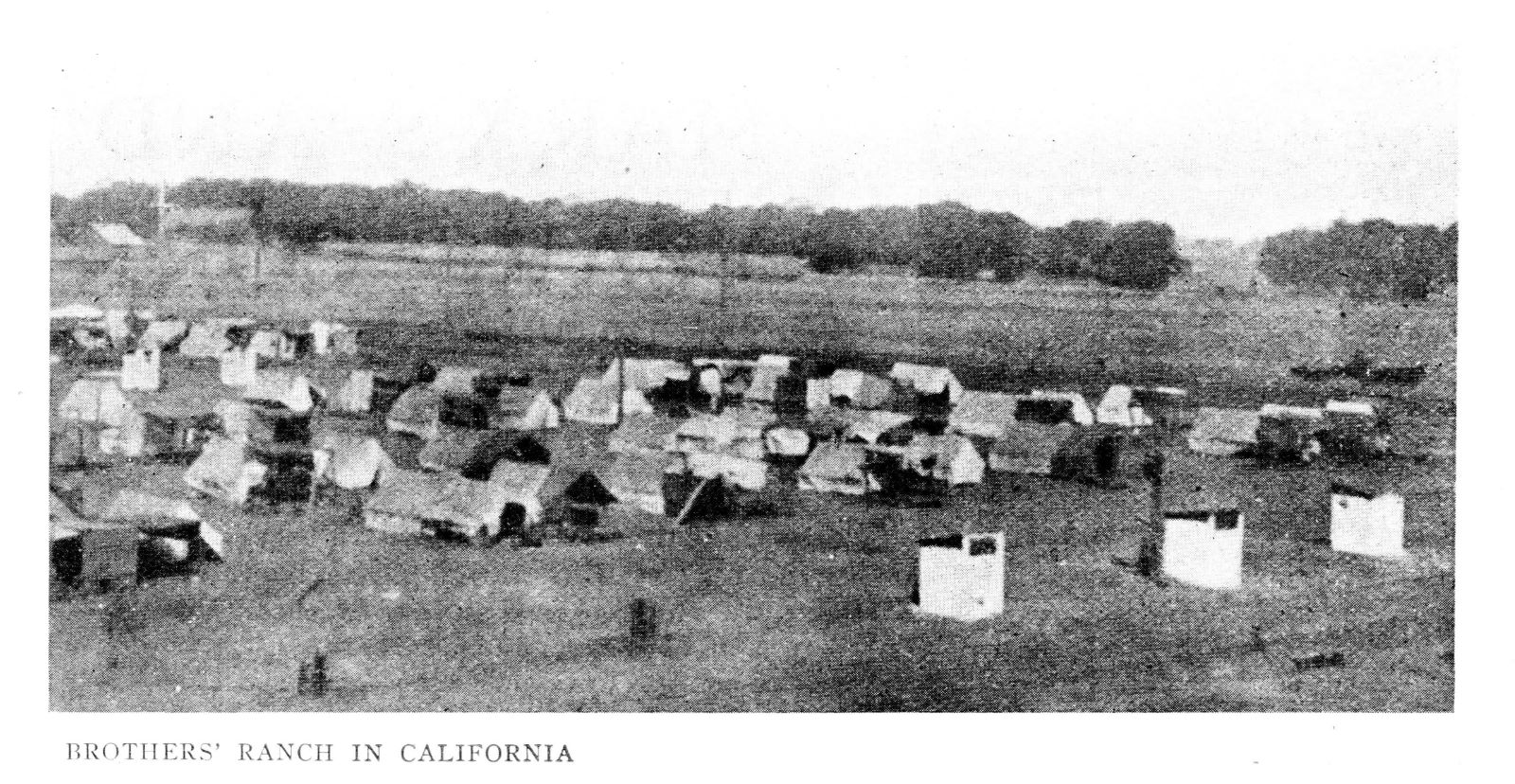
Look at the picture, first published in October, 1913, in the INTERNATIONAL SOCIALIST REVIEW of the hop-pickers’ camp and the camp shown now. Note the clean tents, the military precision, the cleanliness, the bath houses and other sanitary conveniences of 1914 and the higgle-piggle on the Durst ranch in 1913. For bringing about this improvement my husband and Fellow Worker Suhr must spend their lives in the penitentiary. Look at these pictures and contrast them. Consider with yourselves if the working class can afford to abandon these two men?
Neither my husband nor Herman D. Suhr was convicted of having a gun in his possession or of any act of violence in connection with the charge of drunken, armed deputies to break up a strike against the vile conditions which prevailed on all ranches of California in 1913. These two men, mainly, brought about the wonderful improvements on these ranches shown in these two pictures.

I might relate here that when I decided to write this article for the INTERNATIONAL SOCIALIST REVIEW application was made to the California Commission on Immigration and Housing for the use of the official pictures taken by that body. After long dallying this request was refused. Refused, I must assume, because this commission feared this contrast of the pictures, while Ford and Suhr remain in prison and the commission, through their friends and a friendly press, are taking the credit for work done by Richard Ford and Herman Suhr. Anyway, the application for the official pictures was refused. In like manner this same commission withheld their report upon, what they term, “the unspeakable conditions,” on the California ranches until after my husband and Herman Suhr were condemned.
At the trial of Ford and Suhr refusal was also made of the privilege of having their case heard before an unprejudiced jury. They were tried and convicted by the very ranchers against whom they and three thousand other unfortunates were compelled to strike. I sat in the court at Marysville and heard a sleek, fat, old judge compliment this jury on their evident fairness.
Fairness! It was proved my husband never had a gun. It was proved my husband stopped excited workers from rushing through the fields and slashing down the hop vines. Although this was proved, the fair court permitted this very evidence to be put to the jury as proof that my husband was bringing about a conspiracy to murder. He’ saved their property from the wrath of the workers. They made it a proof that he was conspiring to murder men he never heard of; to murder a drunken band who charged into what their own sheriff pronounced a peaceful meeting, clubbed right and left and two of these drunkards began shooting. I should be ashamed of Dick Ford if he did anything else than voice the protest of his class. Condemned as he is, I can teach his children to love him. Had he been a coward I could not.
My husband is convicted of the crime of organizing workers. Why did not the same ranchers, the same deputy sheriffs club and shoot and beat the pickets who came up to Wheatland in 1914, last August and September? By their sufferings established the right to organize.
In 1913, at the first unorganized strike, there was no damage done to the property of Durst Brothers or the hop barons.
On September 10, 1914, the Sacramento Bee published the fact that although 1914 had been the most fertile and abundant year for hop growing, the crop was 24,000 bales short. Hop bales. weigh 190 pounds. One pound of hops sells for from 15 to 20 cents. There was over three-quarters of a million dollars. damage. Why did not the authorities club and kill some of the men who opened a headquarters in the “Civic Club of Wheatland,” and picketed those ranches so that the owners, what with’ the cost of gun men, searchlights, detectives and other strike expenses, came out of the contest $1,000,000 short? Why? Because they feared that these men were prepared. Dick helped to make this organization possible. Dick is now condemned to the penitentiary for life. Will the workers let him stay there? They can only help him now by remembering him on the job.
To all mothers of the working class I appeal to keep their cause alive. You can write to the Governor of California if you wish, but my hope is that you will tell your husbands, sons and brothers, to remember Dick Ford and Herman Suhr on the job.
The International Socialist Review (ISR) was published monthly in Chicago from 1900 until 1918 by Charles H. Kerr and critically loyal to the Socialist Party of America. It is one of the essential publications in U.S. left history. During the editorship of A.M. Simons it was largely theoretical and moderate. In 1908, Charles H. Kerr took over as editor with strong influence from Mary E Marcy. The magazine became the foremost proponent of the SP’s left wing growing to tens of thousands of subscribers. It remained revolutionary in outlook and anti-militarist during World War One. It liberally used photographs and images, with news, theory, arts and organizing in its pages. It articles, reports and essays are an invaluable record of the U.S. class struggle and the development of Marxism in the decades before the Soviet experience. It was closed down in government repression in 1918.
PDF of full issue: https://www.marxists.org/history/usa/pubs/isr/v15n06-dec-1914-ISR-riaz-ocr.pdf
 Revolution's Newsstand