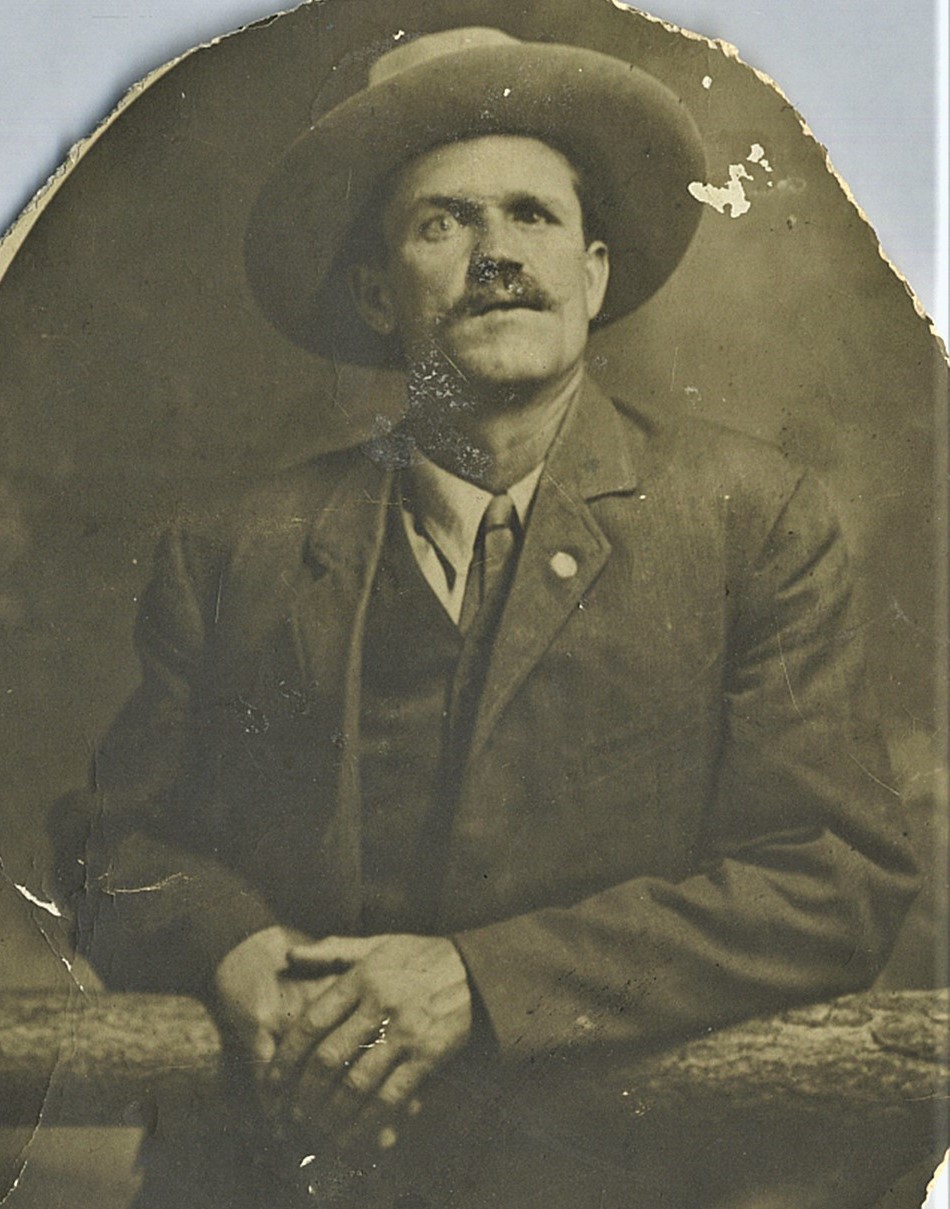
Little gives an accounting for his activity the past year as organizer for the I.W.W. to its Eighth Convention held in Chicago during September, 1913.
‘Report of Frank H. Little’ from Stenographic Report of the Eighth Annual Convention of the Industrial Workers of the World, Chicago. 1913.
To the Officers and Delegates of the Eighth Annual Convention, Industrial Workers of the World.
Greeting:
I will try and give you a statement of my work since the last Convention. Leaving Chicago I went to California, took up the work of organizing the construction workers and the oil field workers. I organized two locals in the oil fields. On account of the closing down of many of the wells and all development of new wells, the work did not accomplish what it should have.
On March 15th, receiving word of the brutish treatment of members of the I.W.W. who were lying in jail at Denver, Colo., and that the officials were trying to stop all efforts to organize, Fellow Worker Jack Law, myself, and a few other members, started to Denver. The trip from Sacramento to Denver, Colo., was made by an organized body of 117 men. They proved to the working class what a body of organized and determined men could do. In spite of all interference from police and gunmen, they took possession of a railroad train, went to Denver and forced the officials to release the men in jail.
STOCKTON STRIKE.
On April 7th, a strike of the Ground Men, working on the Western States and Ora Power Lines for an increase in wages and an eight-hour day, took place. I stopped to give them what assistance I could. The strike lasted about ten days. The linemen belonged to a craft union and the most of them being conservatives, the workers were forced to return to work. But the strike proved to many of the linemen the necessity of Industrial Organization and 45 of them joined the I.W.W.
I then started East, and put in my time agitating for the railroad workers. All over the West the workers on the road, in the shop, and the train crews, are strong for Industrial Unionism. With an effort on our part it is my opinion we can get some good organizations amongst them. I arrived in Chicago May 20th. The 21st, Headquarters received a message from Peoria, Ill., where a strike was on in the Avery Plant, and that all pickets and speakers were in jail. Jack Law and myself went to Peoria and were thrown into jail. About 20 men were sent to the work house; 21 of us were bound over to the Grand Jury on conspiracy charges. We were all released from jail by June 11th. I was released on June the 9th on $2,300 bail. Attorney Fred Moore met the officials and the following proposal was put to him:
“To release all men from jail and all those who did not live in Peoria were to leave town. All bonds were to be released, and then, if the outsiders came back and started trouble, they would be prosecuted. The city was not to interfere with the local organization. Street meetings were not to be interfered with.”
We went to the work house and the county jail and put the proposition to the men and they accepted. The city lived up to their agreement as to releasing the men. They claimed they could not release the bonds until the fall term of court. Thomas Moore is on a $300 appeal bond; J.P. Cannon, $2,600 bond; myself on a $2,300 bond. I do not think they will try to prosecute any of us, but we must be ready to return if wanted. The strike was a victory, the workers got an increase of 25 cents per day wages and some education. They realized that they must be organized before they can win. With a little effort on our part we can get a good fighting organization in Peoria, as it is the second largest industrial center in the state.
I then returned to Chicago to attend the Board meeting. On July 11th, I went to Minnesota, stopping first at Minneapolis. I found a strike of the girls working in the Eureka Restaurant. While they were not members of the I.W.W., neither were they on the picket line, but nine or ten members of Local 64 were doing the picket work. The strike lasted only a few hours, the girls winning their demands. The members of the I.W.W. who were picketing were arrested and sent to jail with sentences of ten to twenty days.
While I hold it is the duty of the members of the I.W.W. to aid anyone on strike, those who go on strike should first go on the picket line. I do not believe that our members should lie in jail while non-members reap the benefit. Fellow Worker Cannon and myself went to Duluth and Superior. Shortly after arriving there, there was a strike of the workers of the Allouez Ore Docks at Superior, Wis. They sent over to Duluth for speakers. While they were not organized, I went over to aid them. The strikers were all foreigners made up of four different nationalities, with a lawyer for chairman, who was working with the business men to get control of the strike. On my arrival I was put in his place. Strike committees were formed. We then made an attempt to call out the other ore docks. The Mesabe Dock of Duluth came out. The companies immediately brought in their gunmen and attempted to stop all agitation. Law and Cannon were slugged by the Mesabe gunmen while the uniformed police protected the sluggers. The strike was not a success, as no strike can be, without organization.
One of the contributing factors to the failure of the strike was reports that were spread that I had sold out and skipped. After I had been released from the kidnappers of the Great Northern by I.W.W. members, these tales were exploded, but many of the Polish and Belgians had returned to work. The Finnish workers are now building up an organization. It is my opinion that Duluth and Superior and the Iron Range is one of the important points to get organization in the steel trust, as there is a twenty-million dollar steel plant being built at Duluth. It is necessary that some good man should be kept in Duluth.
On August 24, I returned to Minneapolis, where we started to organize the flour mill workers. After we started our agitation, the company increased the wages, which prevented the chance for organizing at that time. Fellow Worker Doree and Berg are doing good agitation in Minneapolis.
September 3rd I returned to Chicago.
FREE SPEECH FIGHTS.
Since 1909 the I.W.W. has been forced to fight for free speech and the right to organize. These fights are just as important as any industrial strike. While it is true that some of the members wish to abandon all free speech fights, if we are not allowed to meet and discuss conditions of the working class, it will be impossible to organize. If the capitalists can drive us from the streets, they can also drive us from the halls.
So far these fights have been carried on along the lines of passive resistance members going on the street and speaking until arrested, then lying in jail until they forced the city to release them. This line of tactics has been successful up to a few months ago. The capitalists have changed their tactics. After we have forced them to allow us to speak on the streets and after the men who came in for the fight have left the town and only a few of the active members are left, they will again stop the meetings, as was done in Denver, Colo., and Peoria, Ill.
We should devise some tactics that will be more effective; if possible get our members to work in the industries, as soon as one speaker is arrested, try and paralyze the industries by stopping all light and power, putting the city in darkness.
We should center our energies on the cities that have the largest industries. We should not allow them to put us in too many fights at once. They will try to divide our forces and cause us to waste our energy, but the free speech fights must be carried on at all cost.
F.H. LITTLE, G.E.B. Member.
Report of the Eighth Annual Convention of the Industrial Workers of the World, Chicago. 1913.
PDF of book (large cumulative file): https://archive.org/download/case_hd_8055_i4_r67_box_011/case_hd_8055_i4_r67_box_011.pdf
 Revolution's Newsstand