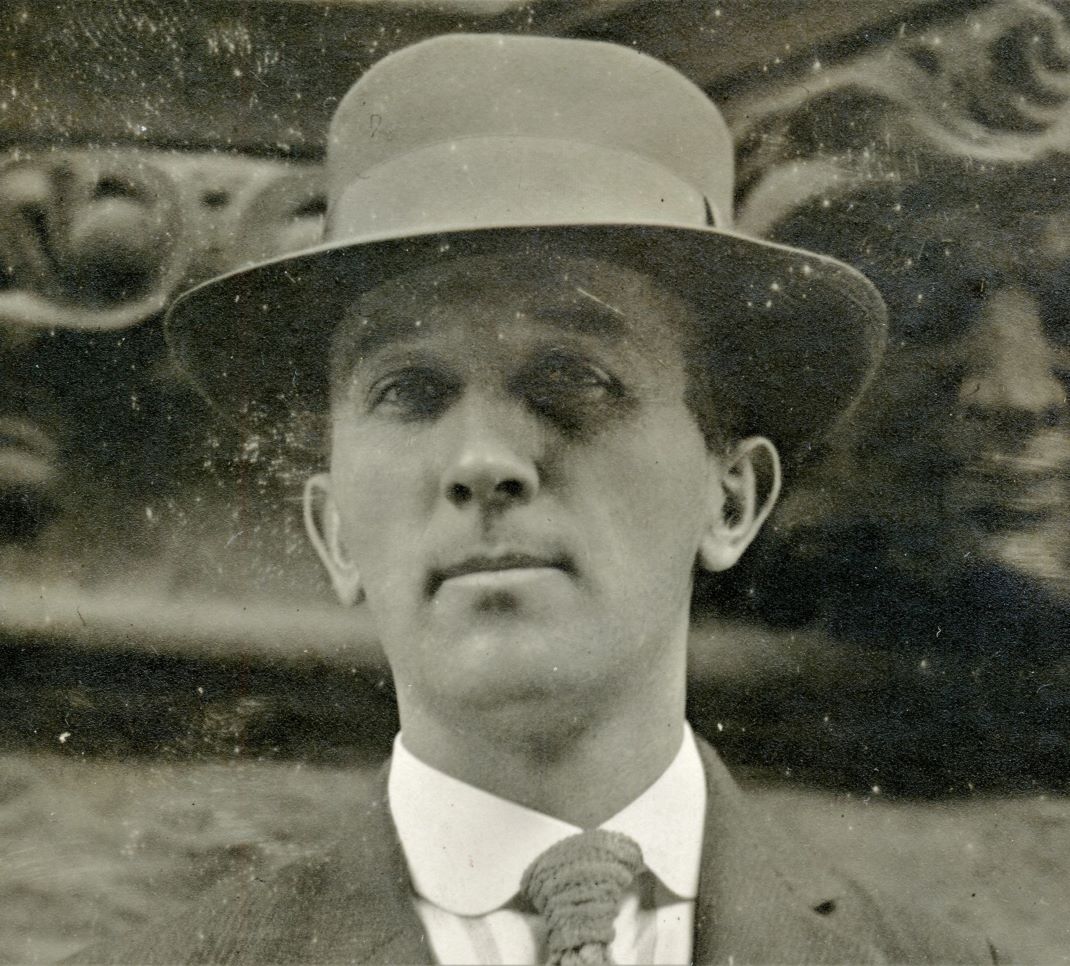
Foster on the mechanics of practice.
‘Three Principles of the Program of Action’ by William Z. Foster from the Daily Worker Saturday Supplement. Vol. 2 No. 150. September 13, 1924.
The development of the Workers Party into a mass Communist Party is a tremendous task, one that calls for the exercise of the utmost intelligence, militancy and courage of the whole membership. The work of party building must be carried on much more planfully, continuously, and determinedly than is now the case. There is far too much sluggishness, too many lackadaisical methods in existence at present. The sooner our party gets rid of these evidences of youthfulness the sooner it will lay the basis for a real organization.
In the program of action, recently adopted by the Central Executive Committee and then laid before the membership as a whole, there is offered the means to develop our party along the way it must go if it is to take on the ideology, structure, and functions of a real Communist mass party. The party units, high and low, should study this program carefully and put its provisions diligently into effect. Three principles of the program of action deserve especially to be called to the attention of the membership.
These are, (a) the concept of a balanced program of work; (b) the creation of the machinery necessary to get this work accomplished; (c) the means to make this machinery actually work. The first deals with the ideology, the second with the structure, and the third with the functioning of the party. Let us consider these principles one at a time:
A Balanced Program of Work.
Because of the complexities of modern social organization, the Communist Party perforce must carry on activities simultaneously in many spheres. This necessity is seen best expressed, of course, where the party is in power. Then it has to supervise and direct every living institution, including the government, the industries, agriculture, the army, the trade unions, the schools, the co-operatives, etc., etc. The party must have the breadth of vision not only to develop proper policies for all these institutions, but also to put them into effect simultaneously and continuously. Great injury, if not actual disaster, results if any of these urgent tasks are neglected.
Even under capitalism the need for a highly diversified activity exists, although naturally upon a minor scale than in a proletarian society. Our party is confronted with a multitude of tasks, all imperatively demanding attention. It must, of course, wage a militant struggle against capitalism at all points, including the carrying on of vigorous election campaigns, creation of united fronts around burning political issues, leading of strikes, warring against the reactionary union bureaucracy, organizing the unorganized, establishing shop committees, defending class war prisoners, etc., etc. But while the party is waging this struggle, which is its reason for being, it must riot forget the vital tasks of educating its membership, of utilizing every possible opportunity to attract sympathetic working class elements into the party, of re-organizing itself upon the basis of shop nuclei, of building the party press, etc., etc. In short, we must not only use the party continuously in the class war, but we must also carry on continuously the process of strengthening it numerically and ideologically.
Unfortunately our party membership has not yet reached the point where it realizes the necessity for such continuous work on all the fronts of party activity. A most decided tendency is for the members, to concentrate upon certain issues, whether these in given instances be the maintenance of some struggling paper, the organizing of labor parties, or the carrying on of trade union work, and to disregard everything else. Consequently, vitally necessary work is not done. The final effect is that as a whole the party has neglected many of its most urgent tasks, including the bringing in of new members and the education of the membership at large. The tendency to neglect the industrial work is also quite marked, only a very small percentage of the members taking any interest or part in it whatever. Naturally, the party suffers from this tendency to neglect necessary work; it fails to properly exploit the opportunity to develop itself into a well rounded mass organization.
A leading principle of the program of action aims to correct this evil by educating the party to the necessity for carrying on work systematically and continuously in all the fields open to it, and then to provide the necessary policies for such work. The seven policies of the program of action, including the election campaign, intensification of the trade union work, the membership drive, the DAILY WORKER drive, the reorganization of the party upon the basis of the shop nuclei, the organization of the unemployed, and the extension of the educational work, constitute a balanced program of work corresponding to the most necessary tasks now confronting our party. If the membership can be educated into applying these policies vigorously then the power and influence of the Workers Party will be enormously increased. Advancing on all fronts simultaneously, fighting the capitalists on the political and industrial fields, organizing and educating itself and the masses, it will begin to make real strides towards its goal of a mass Communist Party.
The Necessary Machinery.
It is not enough, however, that the membership be educated to the necessity for activity in all the fields above indicated and then equipped with the necessary policies. The party must also be organized to put these policies into effect. This the Program of Action proposes to accomplish thru a series of committees for its various policies.
For an organization, whether it is the W.P., a trade union, or whatnot, to legislate without creating the machinery necessary to carry out its decisions is futile. Nothing is accomplished. Everyone engaged in any kind of organized activity knows this well. To get results an individual or a committee must be charged with the responsibility. The mass cannot lead itself spontaneously. It must be organized. A case in point: Several years ago the Chicago Federation of Labor voted to hold a mass meeting for Tom Mooney. Ed Nockels went at the job in the usual unorganized way that prevailed in the federation He merely sent out a letter to the affiliated local unions inviting their members to attend the meeting. These letters met the customary fate of such communications, winding up mostly in the unions’ waste baskets. Consequently the meeting was a complete failure, not over 200 workers attending. Indignant at this typical failure, the rebel delegates in the federation determined to really organize a Mooney meeting. They had the federation adopt another motion for a meeting, over the protest of Nockels and Fitzpatrick. Then they created a big committee to build up the meeting. This committee, headed by J.W. Johnstone, hired the Coliseum, the biggest hall in Chicago, got a speaker of national repute, and advertised the meeting widely. Result, 20,000 people in attendance and one of the greatest labor meetings in the history of Chicago. Organization got results.
Many examples such as the foregoing could be cited to show the value of committee organization. But they are needless. Recognizing the principle involved, the Program of Action provides organization for each of its policies. In the C.E.C. some one member or committee will be held responsible for the enforcement of each policy. The same principle shall apply in the C.C.C.’s, D.E.C.’s, and local branches. All shall have their committees on the election campaign, industrial work, membership, DAILY WORKER, education, and unemployment. In the smaller branches of 25 or less, every member should be attached to some committee. Only in this manner can results be achieved with the Party policies. The Workers Party must not remain an amorphous mass; it must become an organized body which actually brings the membership directly into the Party work. The Program of Action provides the way. By now every unit of the Party should have the necessary committees organized to apply the several policies of the Program of Action.
Making the Machinery Work.
But the setting up of the essential committees is not enough in itself. Such machinery must be made to work. This is a very important consideration provided for in the Program of Action.
Every one with experience in organization work knows that often are created which do nothing. Such committees instead of being a help, hinder even the slight degree of action that would take place without them. They are a delusion and a snare. Hence, the units of our Party must not only establish the necessary committees, but they must see to it that they actually function and are the means of drawing the mass into the work.
For this purpose the Program of Action proposes that all committees and individuals who are instructed to direct the work of applying the policies shall be required to report regularly to the units commissioning them. In the C.E.C., the various committees must report from time to time relative to the progress that is being made in working out the policies which they are specializing in. The District Organizers shall also submit regular reports to the C.E.C. as to what is being done in their districts to enforce the Program of Action. Following out this principle, the D.E.C.’s, C.C.C.’s, and local branches must likewise insist upon periodical reports from the committees they have appointed on the Party policies. To simply appoint committees and then to let them vegetate is futile. The success of the Program of Action depends upon a constant check being kept upon its series of committees.
In addition to being a fighting movement, the Communist Party must be a working movement. Every member must be a militant, an eager toiler in the cause. Mere dues payers and card carriers are of little or no value to our Party. The time will come, with our growing power and prestige, when they will be weeded out as useless lumber. The Communist movement is a poor resting place for drones and sluggards. It wants doers, not observers.
At present the degree of activity of our membership is very low. Only a comparatively few members are really active. They carry on the life of the Party. This is an unhealthy condition. The mass must be brot into the Party work. The fate of our Party depends upon this. The Program of Action provides the way to do this. The membership must be educated to the necessity of working in all the fields of Party activity; they must be organized to carry on this work effectively; and finally, this committee machinery must be made to function. If these principles are borne in mind and applied faithfully, then our Party will rapidly advance in size, intelligence, discipline, and influence. It will soon become a real power in leading the workers to their eventual goal of the Communist Revolution.
The Daily Worker Saturday Supplement, later changed to a Sunday Supplement, of the Daily Worker was a place for longer articles with debate, international focus, literature, and documents presented. The Daily Worker began in 1924 and was published in New York City by the Communist Party US and its predecessor organizations. Among the most long-lasting and important left publications in US history, it had a circulation of 35,000 at its peak. The Daily Worker came from The Ohio Socialist, published by the Left Wing-dominated Socialist Party of Ohio in Cleveland from 1917 to November 1919, when it became became The Toiler, paper of the Communist Labor Party. In December 1921 the above-ground Workers Party of America merged the Toiler with the paper Workers Council to found The Worker, which became The Daily Worker beginning January 13, 1924.
PDF of full issue: https://www.marxists.org/history/usa/pubs/dailyworker/1924/v02a-n150-supplement-sep-13-1924-DW-LOC.pdf
 Revolution's Newsstand