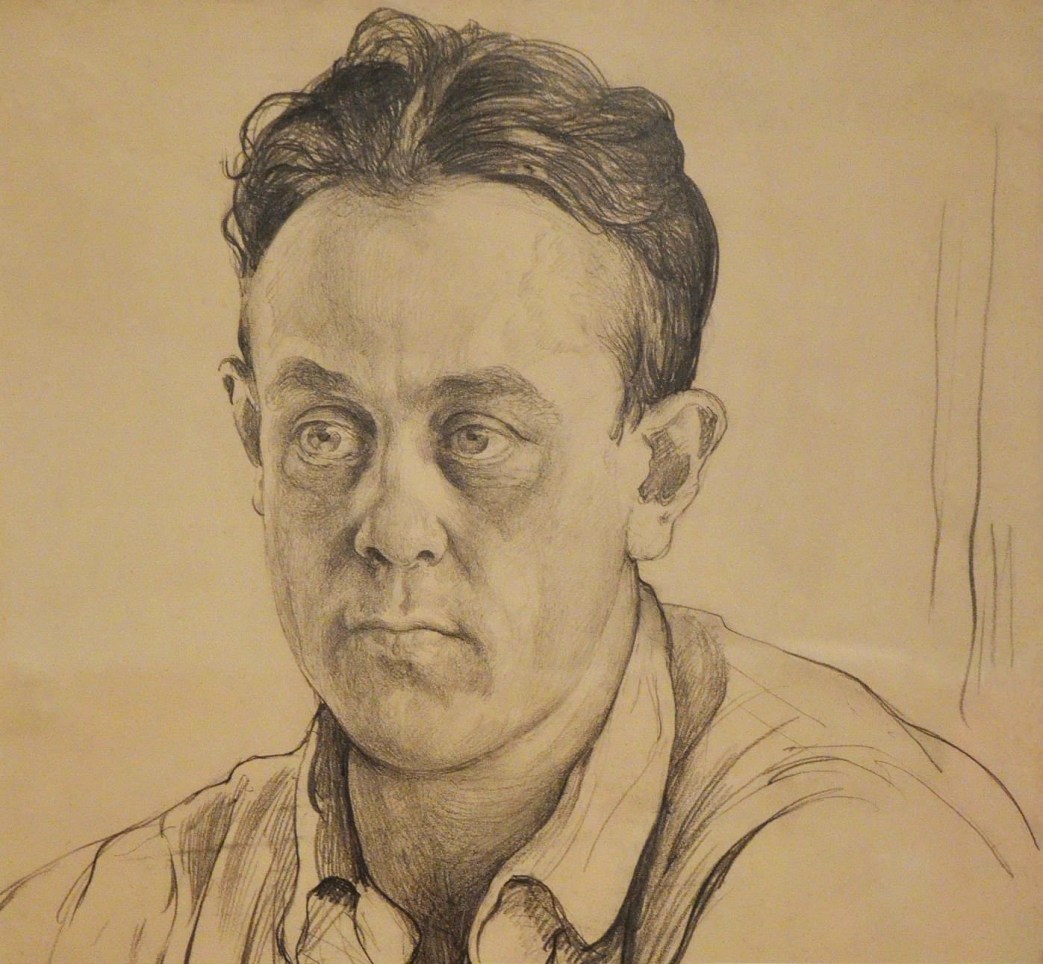
You may not read a finer piece all year. John Reed’s justly famous ‘Ten Days That Shook the World’ was not his only published reporting on the Russian Revolution. In this two-parter from Max Eastman’s ‘Liberator,’ Reed journeys to and with a Russian army in total revolt just weeks before the Soviets took power. Superb.
‘A Visit to the Army’ by John Reed from The Liberator. Vol. 1. Nos. 2 & 3. April & May, 1918.
“THE bearer of this, Johan Reed, known to the Cultural-Publicity office of the Political Department of the Ministry of War as a member of the American Socialist Party, is authorized to proceed to the active army to gather information for the North American Press…
“Observation: To the Commissar belongs the right to recall agitators and propagandists.”
Surely never stranger passport carried correspondent to the front, opened all doors, made the commandant of the Baltic station set aside a separate first-class compartment for the “American Mission,” as he called us. An Orthodox priest, hound on volunteer priestly duty to the trenches, humbly begged the honor of travelling in our company. He was a big, healthy man, with a wide, simple Russian face, a gentle smile, an enormous reddish beard, and an insatiable desire for conversation.
“Eta Vienna! It’s true!” he said, with the suspicion of a sigh. “The revolution has weakened the hold of the church on the masses of the people. Some say that we served the old regime – that we ‘blessed the gallows’ of the revolutionary martyrs. But I remember in 1905, when thirteen sappers were executed for mutiny, no priest would administer the last rites. How could we speak consoling words to a man about to be murdered?
“Some have lost all faith, but the great masses are still very religious – even though extreme revolutionaries. On the caps of the reserves used to be a cross and the words, ‘Zaverau, tsaria, i otechestvo’ – ‘For faith, tsar, and fatherland.’ Well, they scratched out the ‘faith’ along with the rest…” He shook his head. “In the old text of the church prayers God was referred to as ‘Tsar of Heaven,’ and the Virgin as ‘Tsarina.’ We’ve had to leave that out – the people wouldn’t have God insulted, they say…”
We went on to speak of his work in the armies, and his face grew infinitely tender.
“During regimental prayer the priest prays for peace to all nations. Whereupon the soldiers cry out, ‘Add “without annexations or indemnities!”’ Then we pray for all those who are travelling, for the sick and the suffering; and the soldiers cry, ‘Pray also for the deserters!’ Simple-minded children! They think that God must grant anything if it is included in a regular prayer by a regularly ordained priest. Woe to the priest who refuses to pray the soldiers’ prayer!” He mused for a moment.
“But the soldiers are not pious when they are not in danger. It is only before an attack that they come crowding to me to confess themselves, often weeping, who beg me to pray the good God for their souls. We Russians have a proverb – ‘The Russian man won’t cross himself until it thunders.’”
We talked of the great Church Congress at Moscow, the first since Peter the Great, with its convocation of the Patriarchs of Constantinople, Athens, Alexandria and Jerusalem, the Metropolitans of the Russian cities, the Arch-bishops from Japan, Persia, Roumania, Turkestan, all in a ferment of democratic revolt; and of the innumerable Russian sects –Doukhobors, Molochani Baptists, Diendicki or a “Holers,” who must have a hole in the roof of their tabernacle for the Holy Ghost to descend through. Williams, my American companion, told of a Volga peasant, who attributed the ills of Russia to the sinful practise of crossing oneself with three fingers – he being an Old Believer, and using only two…And the priest explained to us how the rites of the Orthodox Church were designed to symbolize different stages in the life and passion of Christ, and how no woman, even a girl-child being baptized, was permitted at the altar.
At every station the train made a long halt to allow the passengers time for many glasses of tea and a great gulping of food, in the cheerful, steamy clatter of crowded waiting rooms. In between times utter strangers, officers and civilians, drifted in, and our converse was of curious matters.
The evening papers announced that Martov and the Mensheviki-Internationalists had formally broken with the Tseretelli-Lieber-Dan group, because of their “hesitating policy of compromise.”
“Tseretelli, Dan, Lieber, Gotz, and Tcheidze are the Girondins of our time,” said one young captain who spoke French. “And they will share the fate of the Gironde. I am with them,” he added.
The priest lived in Tashkent, in the Trans-Caspia, where he had a wife and five children. He told about the singular institution of the Thieves’ Bureau, where persons who had been robbed could go and recover their property by paying its value, less 20 per cent. discount for cash. A thin little school-teacher described the Thieves’ Convention held in Rostov-on-Don this summer with delegates from all over Russia, which dispatched a formal protest to the Government against the rapacity and venality of the police. And a fat polkovnik spoke of the Convention of German and Austrian Prisoners of War, in Moscow, which demanded the eight-hour workday – and got it!
Rumor had it that the armies at the front would leave the trenches and go home for the feast of Pakrov, the first of October – then only four days off. Each one was concerned about this immense threat of dissolution….The priest had been present at two meetings of regimental Soviets, where bitter. resolutions had been passed. Some one had the official newspaper of the Eighth Army soldiers’ committees, with an obscure account of military riots at Gomel. The Lettish troops were also stirred up. What if the millions of Russian soldiers were simply to stop fighting and start for the cities, for the capital, for their villages? The old polkovnik muttered, “We are lost. Russia is defeated. And besides, life is so uncomfortable now that it is not worth living. Why not finish everything?” With whom the French-speaking officer, revolutionists by theory, debated hotly but courteously. The priest told a very simple Rabelaisian story about a soldier who seduced a peasant girl by promising that her child would be a general…
It grew late, the lights were dim and intermittent, and there was no heat in the car. The priest shivered. “Well,” he said finally, his teeth chattering, “it is too cold to stay awake!” And with that he lay down just as he was, without any covering but his long skirts, and immediately fell to snoring…
Very early in the morning we awoke, stiff and numb. The sun sparkled through the frosty windows. A small boy came through with tea – chocolate candy in place of sugar. The train was poking down across rich Estland, through white birch forests glorious with yellow autumn foliage like bright flame; sometimes clumps of sombre pines, with the birch leaves breaking through as if the whole woods were on fire; long, gently-rolling waves of opulent farmland, yellow wheat stubble, emerald green grass still, and the pale blue-green of miles of cabbages; and immense farm-houses set in the midst of barns, the whole covered with one great thatched roof, on which thick moss was growing. On the slow rises of country, huge gray-stone windmills, weathered and mossy, whirled their agitated sails. Along the track marched a new road-bed, with the ties in place at many points, and piles of rails.
Before the revolution no effort had been made to construct this badly-needed track – since March, however, the Russians had completed twenty-six versts of it; but the Germans, in the one month since the fall of Riga, had built more than thirty miles.
Soldiers began to thicken, at all stations, in barns and farm-houses far seen; gigantic bearded men in dun coats, boots, peaked caps or shaggy shapkis, almost always with a touch of red somewhere about them. Patrols of Cossacks rode along the roads deep in black mud. Military trains, all box-cars with masses of men on top and inside, clanked past with broken echoes of mass-singing. The Red Cross flag made its appearance. At Valk an excited sub-officer said we must go up into the town and get passes before proceeding further. The conductor announced that the train would leave in three minutes.
“You will be arrested! You will be arrested!” cried the sub-officer, shaking his finger at me. But we sat still, and no one ever again spoke of passes.
At Venden, beyond which no trains go, we disembarked in a swirling mob of soldiers going home. A sentry at the door was tired of examining passes and just motioned us wearily through. No one seemed to know where the Staff headquarters was; finally an officer, after some thought, said he thought the Staff had retired to Valk. “But you don’t want the Staff,” he added, “the Iskosol is in charge of things here.” And he pointed to the town’s chief building, formerly the Convention of Justices of the Peace, where sat the “Iskosol,” or Central Executive Committee of the Soldiers’ Deputies.
In a large bare room on the second floor, amid the clack of busy stenographers and the come-and-go of couriers, deputations, functioned the nerve-center of the Twelfth Army, the spontaneous democratic organization created by the soldiers at the outbreak of the Revolution. A handsome young lieutenant, with Jewish features, stood behind a table, running his hand through his gray-streaked hair worriedly, while a torrent of agitated complaint beat upon him. Four delegations from the regiments in the trenches, mostly soldiers, with a couple of officers mixed in, were appealing to the Iskosol all at once; one regiment was almost without boots – the Iskosol had promised six hundred pairs and had only delivered sixty; a very ragged private spokesman for another committee, complained that the artillery had been given their winter fur coats, but the cavalry was still in summer uniform…One sub-officer, a mere boy, kept shouting angrily that the Iskosol buzzed around a good deal, but nothing seemed to be accomplished…
“Da, da!” responded the officer vaguely, “Yes, yes. S chass, s chass. I will write immediately to the Commissariat…”
On a little table were piled heaps of pamphlets and newspapers, among which I noticed ‘Elisee Reclus’ “Anarchy and the Church.” A soldier sat in a broken chair nearby, reading aloud the Isvestia – official organ of the Petrograd Executive Committee of the All-Russian Soviets – about the formation of the new government; and as he declaimed the names of the Cadet ministers, the listeners gave vent to laughter and ironical “hoorah’s.” Near the window stood Voitinsky, assistant Commissar of the Twelfth Army, with his semi-military coat buttoned up to his chin – a little man whose blue eyes snapped behind thick glasses, with bristling red hair and beard; he who was a famous exile in Siberia, and the author of “Snsertsiiki,” a book more terrible than “Seven Who Were Hanged…”
These Commissars are civilians, suggested by the revolutionary Commissars of the French revolutionary government in 1793; chief representatives of the Provisional Government at the front, appointed by the Government with the approval of the Soviets.
In precise, short sentences Voitinsky explained that military operations were not his province, unless he was consulted; but he had just that day come to Venden at the request of a general to decide a question of tactics.
“My job,” he said, “is to build a military machine which will retake Riga. But conditions here are desperate. The army lacks everything – food, clothes, boots, munitions. The roads are awful, and it has been raining steadily for two weeks. The horses of the transport are underfed and worn out, and it is all they can do to haul enough bread to keep us from starving. But the most serious lack at the front, more serious than the lack of food and clothes, is the lack of boots, pamphlets and newspapers. You see, since the revolution the army has absorbed tons of literature, propaganda, and has a gnawing hunger; and now all that is cut off. We not only permit, but encourage the importation of all kinds of literature in the army – it is necessary in order to keep up the spirits of the troops. Since the Kornilov affair, and especially since the Democratic Congress, the soldiers have been very uneasy. Yes, many have simply laid down their arms and gone home. The Russian army is sick of war…”
Voitinsky had had no sleep for thirty-six hours. Yet he fairly radiated quick energy as he saluted and ran down the steps to his mud-covered automobile-bound on a forty-mile ride through the deep mud, in the shadow of the coming rainstorm, to judge a dispute between officers and soldiers…
Growling and grumbling the regimental delegations went their way, and the Jewish subaltern, whose name was Tumarkin, led us into another room and passed around cigarettes, while he recounted the history of the Iskosol.
It was the first revolutionary organization of soldiers in active service.
“You see,” said Tumarkin, “the row in Petrograd took us by surprise. Of course we knew that sooner or later…but it came all of a sudden, as such things do. There were a crowd of us revolutionists in the army – I myself was a political exile in France when the war broke out.
“Well, in the revolution of 1905 there was established a Soviet of Workmen in Petrograd, and we tried to make one in the army, at various places. But the masses of the soldiers were ignorant of Socialist ideas, and indifferent – so we failed then. Afterward we realized our mistake, and began to work on the army; but in February, 1917, when things broke loose in Peter, we were scared. We thought they might send us to suppress the revolution. So we hastily met, about a dozen of us, and started to win over the army…
“News from Petrograd was rare and contradictory. Our own staff officers were hostile. We didn’t know if the revolution was winning or not…For a week we hurried from place to place, holding soldiers’ meetings, explaining, arguing; and at every meeting we made the men pass a resolution swearing that they would face death for the revolution.
“On March 9, just eleven days after the outbreak in the capital, we got together a Soviet of the army in Riga – one delegate from each company, battery and squadron – three thousand in all. They elected an Executive Committee of sixty men, which began to establish communications with other revolutionary military organizations. Most of the time we didn’t know even if there were any other bodies like ours, but simply telegraphed to ‘Revolutionary Soldiers, Fourth Army’ – like that. And for signature we made a codeword of the first three syllables of our organization’s name – ‘Is-ko-sol.’ All the other Executive Committees call themselves ‘Armikom.’
“Three days after organizing we began to publish our paper, Russki Front. What a job it was, to educate, to organize! The officers didn’t understand the revolution – they had been trained to a caste apart; hut there was no killing of officers in this army. Only expulsions. . . . Before we left Riga the Russki Front had a circulation of 25,000 among the soldiers, and 5,000 in the city; to support it we proclaimed a Contribution Day for the Soldiers’ Press, and raised 58,000 roubles…”
The Iskosol is only one typical manifestation of the immense fertility of representative organization, a thousand times duplicated, which pervades Russian military and civil life now. It is primarily the organ by which the soldiers of the Twelfth Army take part in the furious new political life of the country; but in the chaos left by the breakdown of the old regime, it has been forced to assume extraordinary functions. For example: The Iskosol fulfills the duties of commissariat department ; it attempts to reconcile differences between officers and men; conducts primary and secondary schools among all bodies of troops in repose or reserve; and in certain cases, like the retreat from Riga, where the commanding staff was utterly demoralized, takes actual command of the troops. Its members are scattered throughout the army, sent from place to place during engagements, encouraging, inspiring, leading…
Beneath it is an intricate system of committees – in each company, regiment, brigade, division, corps – half political, half military, and all elected by the soldiers, with representatives in each higher committee – the whole finally culminating in the Little Soviet of Soldiers’ Deputies, one delegate from each regiment, which meets about once a month-and the Big Soviet, five from each regiment, whose sessions are less frequent, and whose Executive Committee, elected every three months, forms the Iskosol. The Iskosol has three delegates in the Central Committee of the All-Russian Soviets at Petrograd, and one man attached to the Army Staff.
But that is not all. The passion for democratic expression and the swiftness of revolutionary events has given birth to other organizations. Three months ago, when the Iskosol was elected, there was very little Bolshevik sentiment in the Twelfth Army; but since the Kornilov affair the masses of soldiers are largely Bolshevik. Now the Iskosol has no Bolshevik members, and the Iskosol is predominantly abaronetz – in favor of continuing the war to victory. So forty-three regiments have formed a new central body of Bolshevik delegates, called the Left Bloc, which also has representatives in Petrograd.
And then there are the Letts. There are nine Lettish regiments in the army, the most desperate fighters – since they are fighting for their own homes, and the great majority of these are revolutionary social democrats. Although represented in the Iskosol, they have their own central body also, the “Iskolostreel,” or Central Committee of the Lettish “Streelniki” – Sharp-shooters. Over the Iskolostreel is still a higher body, the “Iskolat” – Central Committee of the Lettish Soviet of Soldiers, Workers, and Landless Farm-workers. As all over Russia this district or province Soviet is fed by innumerable small Soviets in every village, town and city, and has its delegates in the All-Russian Central body at Petrograd. The landless farm-laborers, however, who are a real agricultural proletariat, in Estland replace the peasants of the other Russian provinces; and the Russian Soviet of the district is composed only of soldiers, as there are neither Russian workmen nor Russian peasants in Livonia.
There is still another organization, called the Nationalist Bloc, composed of Poles, Lithuanians, Ukrainians, Finns and various others of the fifty-seven peoples of Russia whose purpose is to agitate for separation of various degrees…
And it is a characteristic of this extraordinary complex, multiple system of elective organizations, working feverishly and often at cross-purposes, that it throws off among its other forms of expression a prodigious amount of literature. The Iskosol publishes Russki Front, the Soviet another paper called Bulletin of the Soldiers’ Delegates; from the Left Bloc comes Golos XII Armia; the Nationalist Bloc has its own organ; the Iskolostreel runs the daily Latwfu Strehlneeks; and before the fall of Riga there were besides three papers of as many Social Democrat factions, one of the Socialist Revolutionists, and a fifth of the Populist party-besides all the regular pre-revolutionary journals of Riga; and most of these have again sprung up in the little Lettish towns among the gun positions. Added to all these are the Petrograd papers, especially Gorky’s Novaia Zhizn and the Bolshevik Soldat and Rabotchi Root, and all the others whose endless names escape me, which are poured into the army zone by the hundreds of millions.
And all this terrible eagerness for self-government and for self-expression is working as much in all the Russian armies, everywhere along a thousand miles of front, among twelve million men suddenly free from tyranny...
Tumarkin was telling us how the Iskosol sent its own delegates to Baku for oil, to the Volga to buy or commandeer wheat, up into Archangelsk Government for timber, and how it ordered guns and ammunition from the big munitions works in Petrograd. Just then the door opened and a frowzled head peeked in, followed by a dirty, bearded face. “I am lost!” groaned Tumarkin. Immediately the room seemed full of sullen-looking soldiers; spokesmen of delegations began.
“I represent,” said he of the face, “the cooks of the 26th Division. We haven’t any more wood – the soldiers want us to tear down the farmhouses to make fires for cooking their meals.”
The next soldier elbowed his way to the front, spurs clinking. The horses of the cavalry were dying of hunger. No hay…Tears welled up in his eyes; he had seen his own horse fall down in the road.
“Here!” cried the unhappy Tumarkin, holding out a paper to us. “This is a proclamation we printed in the Soldiers’ Press the day Riga fell. The shells were bursting around the office while we set type. Volunteers pasted it up on the walls and posts all over the city–” And he was swallowed up.
The proclamation was in German.
“The Executive Committee of the Russian Soviet of Soldiers’ Deputies of the Twelfth Army to the German Soldiers.
“German Soldiers!
“The Russian soldiers of the Twelfth Army draw your attention to the fact that you are carrying on a war for autocracy against revolution, freedom and justice. The victory of Wilhelm will be death to democracy and freedom. We withdraw from Riga, but we know that the forces of the revolution will ultimately prove themselves more powerful than the force of cannons. We know that in the long run your conscience will overcome everything, and that the German soldiers, with the Russian revolutionary army, will march to the victory of freedom. You are at present stronger than we are, but yours is only the victory of the brute force. The moral force is on our side. History will tell that the German proletarians went against their revolutionary brothers, and they forgot the international working-class solidarity. This crime you can expiate only by one means. You must understand your own and at the same time the universal interests, and strain all your immense power against imperialism, and go hand in hand with us – toward life and freedom!”
Outside it was raining, and the mud of the streets had been tracked on the sidewalks by thousands of boots until it was difficult to walk. The city was darkened against hostile aeroplanes; only chinks of light gleamed from shutters, and blinds glowed dull red. The narrow street made unexpected turns. In the dark we hurtled incessant passing soldiers, spangled with cigarette-lights. Close by passed a series of great trucks, some army-transport, rushing down in the black gloom with a noise like thunder, and a fan-like spray of ooze. Right before me someone scratched a match, and I saw a soldier pasting a white paper on a wall. Our guide, one of the Iskosol, gave an exclamation and ran up, flashing an electric torch. We read:
“Comrade soldiers!
“The Venden Soviet of Workmen’s and Soldiers’ Deputies has arranged for Thursday, September 28, at 4 o’clock in the park, a MEETING. Tavaristch Peters, of the Central Committee of the Lettish Social Democratic party, will speak on:
“‘The Democratic Congress and the Crisis of Power.’”
The Iskosol man was sputtering. “That meeting is forbidden,” he cried. “The commandant has forbidden it!” The other man spat. “The commandant is a damn bourgeois,” he remarked. “This Peters is Bolshevik,” argued our friend. “Meetings are not allowed in the zone of war. That is the rule. The Iskosol has forbidden this meeting.” But the soldier only grinned maliciously. “The Iskosol too is bourgeois,” he answered, and turned away. “We want to hear about this democratic Congress.”
At the little hotel the proprietor, half hostile, half greedy-frightened, said that there were no rooms.
“How about that room?” asked our friend, pointing.
“That is the commandants room,” he replied, gruffly.
“The Iskosol takes it,” said the other. We got it.
It was an old Lettish peasant woman who brought us tea, and peered at us out of her bleary eyes, rubbing her hand and babbling German. “You are foreigners,” she said, “glory to God. These Russians are dirty folk, and they do not pay.” She leaned down and hoarsely whispered: “Oh, if the Germans would only hurry. We respectable folk all want the Germans to come here!”
And through the shut wooden blinds, as we settled down to sleep, we could hear the far-off thud-booming of the German cannon hammering on the thin, ill-clad, underfed-Russian lines, torn by doubts, fears, distrust, dying and rotting out there in the rain because they were told that the Revolution would be saved thereby. . . .
[NOTE. – The second part of this article, which will appear next month, carries on the story of this eager and spontaneous self-government, showing it at work in the rank-and-file of the army. We see those “thin, ill-clad, underfed Russian lines,” striving to understand their situation, and trying, in the face of many impossibilities, to save the Revolution.]
II.
[In his article last month John Reed described the new democratic organizations which sprang up to take charge of the Russian army under the Revolution. In this article he tells of the workings of democracy in the rank and file.]
IN the Iskosol automobile, painted war-gray, we slipped down the hill out of Venden, through its German-looking medieval streets, thronged with masses of soldiers, past a long train of bullock-carts coming back empty from the direction of the front. At the edge of the village a regiment was swinging up, headed by its band playing the Russian “Marseillaise,” and a great flag all red, with gold letters, “Peace and Liberty.” The soldiers were coming out of the bloody trenches. They had marched thirty miles through mud. To the great sweep of the revolutionary music they tramped stiffly, arms swinging with the peculiar motion of the Russian infantry, heads thrown up and back, grey, gaunt faces strained and stern. A forest of tall bayonets swayed above them, and they choked the narrow street – a torrent of mud-colored humanity. The coats of several were in rags – some were walking in bare feet. The window in a house wall high-up swung open, and a yellow-haired girl leaned out, laughed and waved. . . .
It rained, as it had rained steadily, monotonously, for days ; as it would probably go on raining for weeks…The Jewish lieutenant who went with us was pouring out scraps, odds and ends of interesting information. He told how the Jews had always been forced to serve in the ranks, but that since the Revolution thousands had become officers although many preferred to stay in the ranks because shoulder-straps are distrusted by the soldiers. Before the Revolution the soldiers only received 65 kopeks (now about thirteen cents), per month – but now they got seven and a half roubles (a dollar and a half), every thirty days; and out of that they often had to buy food…Then there was the question of decorations, the various degrees of the Orders of St. Ann, St. Vladimir, and St. George, the last of which carry with them certain small money payments. Before the Revolution these crosses were bestowed by a council of superior officers, as emanating from the Emperor; now they were given by acclamation by an assembly of the soldiers. These were only slight details indicating the profound change that had taken place in all the relations of military life.
He also spoke of the retreat from Riga, adding to the sinister story the events he himself had witnessed. “In the rout,” he said, “the army hadn’t the least idea what to do. The staff completely lost its head, as it did at Tarnopol. For three days it disappeared, leaving only general orders to retreat, and scattered along the roads, each officer for himself. It was the Iskosol which decided to defend our main positions, and we set up headquarters here in Venden and organized the military resistance on our own responsibility. It was bad enough before,” he went on, “but since Riga the soldiers refuse to obey any general staff orders unless counter-signed by us…But it works not badly.”
Now we were bumping along the wide, bleak Pskov chaussee, originally paved with cobbles, but pitted and torn by the passage of armies, and deep in mud. Straight and powerful it plunged directly southwest, to the lines – and beyond to Riga – over the rolling country. Peasants, mostly kerchiefed women who grinned cheerfully as we passed, were carelessly dumping stones and dirt on the broken places. An endless succession of trucks and wagon-trains went by, cavalry with long lances and rifles slung cross-wise on their hacks, squads of infantry straggling along, single soldiers. One drove a cow, on which he had hung his rifle and a sack of carrots. There were wounded men, with arms tied in bloody rags. Many were barefoot in the cold ooze. Almost all bore upon their uniforms somewhere a spot of red; and everyone seemed to have a newspaper in his pocket or his hand.
We turned south off the main highway for a few miles over a road built of tree-trunks laid side by side, corduroy, through deep pine forests to the little village where the Stab Corpue has its headquarters. In the datchia of some long-vanished land-owner the officers of the staff welcomed us, but after glancing at our Socialist credentials, they cooled perceptibly, and did not even offer a glass of tea – which is about as near an insult as a Russian can get. However, the twenty-two year old captain who went with us soon began to talk with Russian expansiveness, telling many things he doubtless should not have told.
“Between ourselves,” he said,” “we all think that there was treason in the fall of Riga. Of course we were terribly overweighted by the German heavy artillery and the army was torn by all sorts of bad feeling between men and officers. But even then. . . . You remember at the Moscow Conference when General Kornilov said: ‘Must we lose Riga to awaken the country to a sense of its peril?’ Well, the retreat from Riga began at the same time as the Kornilov attempt.
“After the first withdrawal of the 186th Division beyond the Dvina, all the army received general orders to retreat – not to any particular point, but simply to retreat. Then the staff disappeared for days. There was a panic. The Iskosol was trying to stop the flight. On the Pskov chausee just north of here I came upon disorganized fragments of the Seventh Division in disorder. An officer showed me the written orders from the staff – simply this – ‘Go north and turn to the left!’”
In the deep woods muddy soldiers were digging pits and building log huts half-underground, covering the roofs with dirt and branches – for winter quarters. All through this back country soldiers swarmed. Each patch of forest was full of artillery-limbers and horses, squadrons of cavalry bivouacked under the trees, and in the sullen downpour thin curls of blue smoke mounted straight up into the cold, quiet air. Again we were speeding along the great Pskov road, through the rich, fertile country of the Estland barons – those powerful German landowners, the most reactionary in all Russia. Great estates extended on both sides of the road, solid miles of fields lately plowed or yellow-green with abandoned crops; forests, deep green pines or flaming birches; lakes, pools, rivers; and the ample farmhouses of rich peasants, or chateaux of the local lords. Occasionally soldiers would be working in the fields. The Association of Zemstovs had plowed and planted all the Baltic provinces so that this year’s harvest would feed the army and leave a million poods over – now almost fallen into German hands.
Whole acres of cabbages were rotting yellow, untouched, and fields of beets and carrots were washed out by the rain. The ostentatious country houses stood roofless, burnt; the peasant homesteads had their windows smashed, and trails of loot led in all directions. And over the silent country, waste and empty, only immense flocks of rooks wheeled screaming in the rain, the throbbing mutter of far-off battle sounded, and the only human life was the hysterical life of an army in battle. . . .
Off to the right a quarter-mile across the plain, the village of Ziegewald was being bombarded. Unseen, unheralded except by the muffled boom of cannons miles away, the shells came whining down out of the gray sky, and house after house heaved up and burst apart in splinters and black smoke. Our automobile turned in and entered the village. Only a block away some unseen thing roared suddenly and tore a building apart – the air was full of bricks. Down the street some peasants stood at the door of their hut, a bearded man and a woman with a baby in her arms, quietly watching. A few soldiers went nonchalantly across the fields, hands in pockets, more interested in us than the shelling. Almost into it we drove, and then turned off to the left. The captain was laughing. Right behind us, where we had passed, a jagged pit opened in the road. Shrapnel began to burst…
Along a deserted road, only used at night – for it was in sight of the enemy – we crept beside a cedar hedge, while over our heads the hurtling shells went whistling, high up. Half a mile behind, over to the right, a Russian six-inch battery fired methodically at some unseen target, so far away that the explosions were barely audible. Through a farm we went, between a big house and a stone barn, both roofless and peopled with soldiers and field-kitchens; and along an open field to the wooded heights above the river Aa, where lay the Russian first-line trenches.
Like grotesque, mud-colored monsters the Russian soldiers crawled from their bomb-proofs to look us over – gaunt, drab-faced creatures, dressed in outlandish combinations of odds and ends of military and civilian clothes, their feet wrapped in rags. Since we were with officers they were sullenly suspicious, and demanded papers. Through the trees we could see the opposite bluffs, where the Germans lay hidden – but it was still raining steadily, drearily, and there seemed to be a tacit agreement between both sides not to shoot.
A bearded soldier came up, wearing the red arm-band of the soldiers’ committee.
“Any news from Petrograd?” he asked the captain, without saluting. All the others crowded around. The captain answered that he himself had not seen the papers. “Huh!” grunted the other, and turned slowly to us. “If these are Americans,” he went on, “ask them why their country refused to endorse the Russian peace terms. Tell them that this is prolonging the war; that thousands of Russian men are dying because of it.”
Half a mile further along we stood in front of the company commander’s dug-out while he spoke to the captain in low tones of the desperate situation. The soldiers had been saying that soon they would go home; regiments of four thousand men had been reduced to one thousand; there was not enough food, clothes, boots; they had been in the trenches for months, without relief; they did not trust their officers.
“Tell them in America,” cried a soldier, “that we are not cowards! We did not run away from Riga without fighting. Three-quarters of us are dead. . . .”
“True! True!” muttered others, crowding around. A voice shouted, “Riga was betrayed!” There was silence.
Now the rain had at last ceased, in the western sky the towering clouds moved and broke through to blue gold. The rich green land steamed. Birds sang. A group of soldiers stood looking up to heaven with haggard and apprehensive faces; for with good weather the firing begins. Indeed, almost immediately came the faint high drone of an aeroplane, like a wasp, and we saw it slowly circling up above the trees. All around us the soldiers began scattering to their trenches. Rifles cracked. Behind us the Russian batteries gave tongue, and on the pale sunny sky flowered shrapnel.
“Useless!” The captain shrugged. “We have no anti-aircraft guns, no aeroplanes. The Twelfth Army is blind.”
Overhead the thing soared low, running along the lines, and on its painted armor the sun glanced dully. Guns roared now all over the country; shells burst before and behind it, but it glided on lightly, contemptuously. From the woods they shouted hoarse insults and fired.
“Come on,” said the captain. “Let’s get out of here. They are going to shell this place….”
We had got up the hill behind the gutted farmhouse when it began – the far thud-thud-thud of German three-inch guns, followed by sharp explosions in groups of three, over the place where we had stood. Rifle fire began pricking along the nervous miles. Batteries far and near, concealed in copses, behind old walls, spoke to each other and replied. Invisible missiles wove in the sky a tapestry of deadly sound. The aeroplane swooped and circled alone, humming.
Behind us as we went, all the west turned swiftly golden-red, pouring sunset up the sky, and the clouds piled up in ruins like a city on fire. In the clear yellow-green between a star began to burn, and below it a sausage-shaped German observation balloon crawled slowly up and hung there, sinister, like an eye…Night fell. The fire freshened, pricking and crashing everywhere. Birds sang sleepy songs. A flock of rooks wheeled around a windmill wrecked by artillery. From far-off came the feverish stutter of a machine-gun.
Back through Ziegewald, in the quiet dusk filled again with vague human shapes which moved among the ruins, and along the Pskov road through the blasted country, so empty and yet so full of unnatural life. The stars were out. It was cold. Behind us the battle fell away. Fires twinkled over the plain, in the woods-fires of soldiers, fires of refugees who camped there, many of them without blankets, because the towns were crowded. Echoes of great choruses floated to us, of songs about home, and love, and peace, and harvest –and Revolution. Our headlights picked out details of the miserable interminable procession – the homeless, the wounded, the weary, those with naked feet, patrols, reliefs….
The captain was giving concise details about the state of things. Every regiment had lost at least 6o per cent of its strength. Companies normally of 250 men had now less than too. Battalion commanders now were at the head of regiments; regimental commanders of divisions; he himself, nominally the captain of a company, now commanded a battalion. He had been gravely wounded four times.
As for politics, the captain laughingly protested that he had none. He was just an amused onlooker, he said. “What will come will come. To me, a philosopher, life is always the same. Nitchevo. After all, external events do not matter…”
****
Back in Venden…The day before we had seen a notice of a Bolshevik meeting. Tavaristch Peters was to speak. The commandant had forbidden it. But we learned that it had taken place after all. The Iskosol sent word that it must not be held, but the Iskosol was disregarded. The commandant of the town sent dragoons – but the dragoons stayed to the meeting.
The open market-place was thronged with soldiers, and with the few peasants who still remained in the surrounding country. The peasants had cabbages, apples, cheese and some rare belts of homemade cloth to sell; and the soldiers had loot-chiefly worn silver watches such as the peasants carry, with here and there a ring. The wide cobbled place was thick with moving masses of dun-colored soldiers, often in rags, sometimes without boots. Bits of leather capable of being made into a shoe-sole brought fifty roubles; aluminum shaving dishes were highly prized, and accordions. I saw a broken suspender hid in for ten roubles.
The “Death March”
A squadron of Cossacks, rifles on backs, rode up the street with their peaked caps over one ear, and their ‘love-locks’ very prominent. The leader was playing an accordion; every few minutes all the voices crashed together in a chorus. Then a Lettish regiment came marching along down, swinging their arms and singing the slow Lettish Death March, so solemn and courageous. As they went along comrades ran out from the sidewalk to kiss them farewell. They were bound for the line of fire.
In the town-hall sat the Refugee Committee, almost swamped by the thousands of people who had fled before the advance of the Germans or the retreat of the Russians – homeless, helpless. The committee had originally been created by the Imperial government, but since the revolution all members are elected by the refugees themselves. The secretary took us down into the foul, flooded cellar where every day were fed seven hundred women, children and old men.
Loot
“Why did the Russian soldiers loot ?” he repeated, thoughtfully. He himself was a Lett. “Well, there were the criminal elements that every army has, and then there were hungry men. Considering the general disorganization it is remarkable they looted so little. Then you must understand that the Russian soldiers have always been taught that on a retreat it is a patriotic duty to drive out the civilian population and destroy everything to prevent it falling into the enemy’s hands. But the most important reason is that the Russians were suspicious of the Lettish population, which they thought were Germanophile, and the reactionary officers encouraged this resentment. Hideous things have been done by counter-revolutionary provocateurs.”
War As Class Issue
The Russian soldiers really consider the Baltic provinces alien territory and do not see why they should defend it. And they have looted, robbed. But in spite of all, it is only the German overlords who want the Germans to come in, and the bourgeoisie which depends upon them; the rest of the population has had a belly-full of German civilization, and the workers, soldiers and landless laborers have long been Social-Democrats, thoroughly in sympathy with the Revolution. That is why the war against Germany was so universally popular in Livonia – it was a class issue.
A Working Class Army
This was corroborated at the office of the Iskolostreel – the Executive Committee of the Lettish Sharp-shooters, of which nine regiments, some 15000 men, belonged to the Twelfth Army. The Letts are almost all Bolsheviks and relied almost altogether upon their own organization, a really revolutionary crowd of fine young fighters. Originally a volunteer corps of the bourgeoisie, the sharp-shooters had finally been reorganized to include all the Letts drafted into the Russian Army, until it was overwhelmingly a working-class body.
Visitors
Word had gone about that Americans were in town – the first within the memory of local mankind – and we had visitors. First was a school-teacher, who spoke French, a little man with a carefully-trimmed beard and gold-rimmed glasses, who declared he was a member of the Intelligentsia and approved of revolutions, but not of the class struggle. He averred the he had been deputed by the peasants of his village to come and ask us how to end the war . . . Then there was a fat German-American baker by the name of Witt, who had an American passport and had lived in Cincinnati. He professed himself to be a great admirer of President Wilson, had a very hazy idea of the Russian revolution, and came for advice as to where to emigrate ; was the bakery business very profitable in Siberia? Finally a sleek, oily prosperous-looking peasant, who represented the Lettish Independence Movement, and deluged us with bad history and shady statistics to prove the yearning desire of every Lett that Livonia should be an independent country – a desire which we already knew was almost non-existent.
The Iskolostreel Investigates
Bright and early next morning thundered at our door Dodparouchik Peterson, secretary of the Iskolostreel. The soldiers’ committee of the Second Lettish Brigade had sent in a complaint about the inefficiency of sixteen officers; a delegate of the Iskosol and the Iskolostreel was going down to the lines to see about it; did we want to come along?
This time it was an ambulance which carried us, together with Dr. Nahumsen, the delegate army surgeon, holder of several German university degrees, veteran revolutionist and prominent member of the Bolshevik faction. We had aboard also about half a ton of Bolshevik papers – Soldat and Rabotchie Poot – to distribute along the front. No passes were necessary, for nobody dared stop such a powerful personage.
“The condition of the army?” the doctor shrugged his shoulders and smiled unpleasantly. “What do you want? Our French, English and American comrades do not send us the supplies they promised. Is it possible that they are trying to starve the Revolution ?”
The Death Penalty
We asked about the death penalty in the army, over which such a bitter controversy was raging between the radicals and reactionaries.
“Consider,” he replied, “what the death penalty in this army signified. Today I will show you regiments, entirely Bolshevik, who have been reduced from four thousand men to seven – this last month’s fighting. In all the Twelfth Army there have only been sixty men officially proclaimed deserters since the fall of Riga. No, my friend, Mr. Kerensky’s death penalty has not been applied to cowards, deserters and mutineers. The death penalty in the Russian Army is for Bolsheviks, for ‘agitators’, who can be shot down without trial by the revolver of an officer. Luckily they have not tried it here – they do not dare…”
Whenever we passed a group of soldiers, Peterson threw out a bundle of papers; he held a pile on his lap, and doled them out one by one to passersby. Thousands of papers with the reactionary program of the new coalition government – suppression of the Soviets, iron discipline in the army, war to the uttermost . . .
Reactionary Officers
Brigade staff headquarters were in a brick farm-house, on a little hill amid wooded meadows. In the living room the officers sat at a long table, a polkovnik, his lieutenant-colonel and a group of smart youths wearing the cords of staff duty, eating stchi, mountains of meat, and drinking interminable tea in a cloud of cigarette smoke. They welcomed us with great cordiality and a torrent of Moscow French – which is very like that of Stratford; and in fifteen minutes Dr. Nahumsen and the Colonel were bitterly disputing politics.
The Colonel was a frank reactionary – out to crush Germany, still loyal to Nicholas the Second, convinced that the country was ruined by the Revolution, and utterly opposed to the soldiers’ committees.
“The trouble with the army,” he said, “is that it is concerned about politics. Soldiers have no business to think.”
All the rest followed their superior’s lead. The podpolkovnik, a round, merry person with twinkling eyes, informed me confidentially that “no officer of any character or dignity would have any dealings with the soldiers’ committees.”
“Are there no officers who work with the committees?” I asked.
He shrugged disdainfully. “A few. But we call them the ‘demagogue’ officers, and naturally don’t associate with them.”
Pity the Officer!
The others volunteered further interesting information. In the first place, according to them, there were no Bolsheviks in the army – except the committees. The Lettish troops are ignorant and illiterate. The committees interfere seriously with military operations. And the masses of soldiers are bitterly jealous of the workmen in the towns, who get phenomenal wages and only work eight hours, while “we are on duty here twenty-four hours a day.”
By this time we had sat at the table two long hours, drinking tea and smoking, during which time the entire staff did absolutely nothing but talk. One tall boy, with a smell of brilliantine floating around his shining hair, went over to the piano and began idly fingering waltzes. Occasionally two bent and aged peasants, man and woman, she with bare feet, crept through the room to the tiny closet they had been allowed to keep for themselves. . . . An hour later, when we left to go to the soldiers’ committee, the staff of the Second Lettish Brigade was still “working twenty-four hours a day,” and expressing its honest resentment against the factory workers of Moscow and Petrograd…
Fraternization
The way to the Committee led down across a little brook, up a winding path through a wood all blazoned yellow and red, and out upon lush meadows where the view plunged westward forever across the rich, rolling country. A gaunt, silent youth on horseback led the way, and as we got further and further away from the staff he began to smile, and offered his horse to ride. And he talked, telling of the May days when the Russian troops fraternized with the Germans all along this front.
“The Germans sent spies,” he said, “but then, so did our officers. There is always somebody around to betray the people, no matter what nation you belong to. Many times they tried to make us attack our German comrades, but we refused. And they also refused; I know of one regiment, where I had many friends, which was condemned for mutiny, reorganized, and twelve men were shot. And still they would not fight the Russians. So they were sent to the Western front. As it was, they finally had to tell us lies to make us advance.”
A Soviet Committee
It was about half a mile to where the low, wide, thatch-covered farm house and its great barn stood baldly on a little rise of ground. Artillery limbers stood parked there, horses were being led to water, there were little cook-fires, and many soldiers. A huge brick stove divided the interior of the house. On one side lived the peasant and his wife and children, all their belongings heaped in the corners; the other half was bare except for two homemade benches and a rough table, heaped high with papers, reports, pamphlets – among which I noticed Lenine’s “Imperialism As a New Stage in Capitalism.” Around this sat six men, one of them a non-commissioned officer, the rest privates – the presidium of the Soviet of the Second Lettish Brigade. Without any place to sleep except the hay-loft, without winter clothes or enough to eat, the committee sat permanently, and had been sitting for a month, doing the work the staff should have done.
This is no unsupported assertion on my part. One had only to ask any soldier where he got his food, his clothing – what he did get – who found and assigned his quarters, represented him politically, defended his interests; he would always say, “The Committee.” If the Commander-in-Chief of the Russian Armies gave an order for the Second Lettish Brigade to attack, or to retreat, not a single man would move without the endorsement of the Committee. This resulted from two fears; one that they would be sent to Petrograd to suppress the Revolution, the other that they would be tricked into an offensive as they were tricked in June.
They welcomed us with great friendliness, wiping off the bench where we were to sit, fetching cigarettes, taking our coats; other soldiers crowded in and stood about the door, silently watching.
“Good Training”
A youth with a bright, happy face and towsled hair was the chairman. He told us how the Lettish regiments had been in the front ranks for six months without rest, and they had sent word to the Ministry of War in Petrograd that if they were not relieved by October first, they would simply leave the trenches. One regiment had been reduced from four thousand men to seven, and all were without adequate food or clothing.
“How can the men stand it?” I asked.
“The officers say it is good training,” he answered, and everybody laughed. A soldier near the door cried, “You don’t see many officers going barefoot!” And again they laughed.
The Committee seemed highly amused at the officers’ accusations.
“They say we are jealous of the workmen in the cities. But we are ourselves workmen, and we will share the short hours and high wages they have won for us, when we return to the cities after the war. Most of us are union men . . . There are no Bolsheviks in the army? Well, this committee was only elected last month, and every member of every committee in this brigade is Bolshevik . . . We are not illiterate; on the contrary, less than two per cent. cannot read and write. The Letts all go to school. As for interfering with military matters, we have nothing to do with them whatever, except in the case of mass movement of troops, which are always arranged beforehand.”
Revolutionary Tribunals
There had been no killing of reactionary officers in this Brigade, even in the Kornilov days – although Colonel Kruskin went around at that time openly praying for the success of the counter-revolution. Several brutal officers had, however, been forced to retire, and one was brought before a revolutionary tribunal for beating a soldier; but he died in battle before the judgment.
Courts martial in the Twelfth Army had been replaced by revolutionary military courts. Each company had a petty court of five elected members – soldiers or officers; above that was the full regimental court, composed of 28 soldiers and 14 officers, elected by the full regiment; and a presidium of six chosen by this assembly sat permanently for the trial of minor offenses – such as stealing. If the soldiers were dissatisfied with their officers, they appealed first to the Commissar of the Army, and if he did nothing, to the Central Executive Army Committee.
“We know,” said the chairman, “which officers are for us and which are against us. We know that Riga was betrayed. On the first of August we had aeroplanes, heavy artillery; but when the Germans attacked, all those things had been sent away.” He shrugged. “But what can we do? We must defend the Revolution, and Petrograd. We must watch them, and make them fight…”
They showed us copies of all orders of the staff, kept carefully on file here; the chart of location of all troops of the brigade, which had been quartered by the committee; requisitions and purchases of food, clothing, shells, guns ; and the record of the political transactions of the soldier party – groups with the Soviets and with the Government. “We’re the Ministry of War!” said one member, jocularly.
“The Ministry of War? We’re the whole government!…”
“Nobody Left in Siberia”
In the loft of the barn outside were quartered several batteries of light artillery, part of a Siberian regiment which had just arrived from Irkutsk. With their enormous grey wool shapkis, boots made from wild beast hides with the fur outside, new blouses and ruddy faces, they looked like another race. They complained bitterly about their food. My companion picked out a boy who looked about thirteen.
“Aren’t you too young to be a soldier? Why, you’re only just big enough to have a girl.”
“If I’m old enough to be in love, I’m old enough to fight,” answered the boy. “When the war broke out, I was only fifteen, but now I’m a man.”
“Aren’t you afraid somebody will steal your girl while you are away?”
The boy shrugged. “There’s nobody left in Siberia to steal her,” he said simply.
Russia’s losses in the war are already more than seven millions at the front – twice that in the rear. Four years. Children have grown up to manhood, put on uniform, gone to the trenches….“There is nobody left in Siberia…
****
A Market for Loot
Sunday in Venden. A gusty heaven overhead, thin clouds opening in a washed blue sky, with a watery sun riding there. Underfoot, black mud, trampled by thousands of boots, townspeople and peasants, who had driven in for miles around, thronging the Lutheran church, with mingled Russian soldiers, very curious but respectful. In the open market place the bartering of odds and ends of loot was going full blast. Immensely high above the town an aeroplane drifted southwest, and all about it the firmament was splotched with white and black smoke-bursts. The sound of explosions and the hum of the motor came faintly. People looked up carelessly and said, “Niemessy!” (German.)
Along about midday tables appeared in two corners of the square. Then the banners – the revolutionary banners, in every shade of red, with gold, silver and white letters on them, moving bright and splendid through the great crowd. Speakers mounted the tables. It was a double mass-meeting, Russian in one corner, Lettish in another, forbidden by the Commandant and frowned upon by the Iskosol. All the town had turned out for it, and most of the fifteen thousand troops. And there was no doubt of the sentiments of that audience – from the great flags behind the tables, one inscribed, “Power to the People! Long live Peace!” and the other, “Bread, Peace and Freedom!” to the thunderous roars that met the hot words of the speakers, denouncing the government for not forcing the peace conference, daring it to suppress the Soviets, and dwelling much upon the Imperialistic designs of the Allies in the war.
A Peace Meeting
Surely never since history began has a fighting army held such a peace meeting in the midst of battle. The Russian soldiers have won freedom from the tsar, they do not believe that there is any reason for continuing a war which they consider to have been imperialistic from the first, they are strongly impregnated with international Socialism –and yet they fight on…
Under the wintry sun the banners moved in a little wind, alive and glittering, and in thousands the dun-colored soldier-masses stood listening, motionless, to any man who wanted to speak. The chairman of the Iskolostreel managed the meeting with a tiny white flag. Overhead always the aeroplanes passed and passed, sometimes circling nearby. From far rumbled the thunder of heavy artillery – it was good weather for battle. A flock of rooks wheeled in hoarse agitation around the church spire. And past the end of the square went unceasingly long trains of trucks and wagons.
There was too much noise. The speakers could not be heard. And every time a German aeroplane came near, here was an uneasy craning of necks – for the village had been bombed three times, and many people killed. The chairman of the two meetings signaled with their little flags, the speakers leaped down, tables rose upon shoulders, the great red banners dipped and moved…First went the Letts, headed by a band of women singing the mournful, stark revolutionary songs of the country; then the banners with Lettish inscriptions; then the Russian banners, and after them all the thousands and thousands, pouring like a muddy river in flood along the narrow street. In at a great gate we went, and past the baronial manor of the Sievers family, liege-lords of Venden. Here on a spur of rock rose the tremendous ruins of the medieval castle of the Teutonic Knights, and below the ground fell steeply down, through ancient trees all yellow and crimson with autumn leaves, to a pond with lilies. From the window of the high keep one could see miles across the fertile, smiling country, woods, lakes, chateaux, fields all chocolate brown or vivid green, foliage all shades from gold to blood-red, gorgeous.
Rushing down torrent-like through the trees the Lettish banners moved with wailing song to the hill under the castle, while the Russians paused midway down a steep slope and set their table under a great oak tree. Around the two tribunes the people packed themselves, hung in the trees, heaped on the roofs of some old sheds. ..Speaker followed speaker, all through the long afternoon. Five hours the immense crowd stood there, intent, listening with all its ears, with all its soul. Like a glacier, patient, slow-moving, a mass of dun caps and brown faces carpeting the steep hill-side. Spontaneous roars of applause, scattered angry cries burst from it. Almost all the speakers were Bolsheviks, and their unbroken refrain was, “All the power to the Soviets, land for the peasants, an immediate democratic peace.”…
Toward the last, someone undertook to deliver an old-fashioned “patriotic” oration – but the fierce blasts of disapproval quickly drove him from the platform. Then a little professor with gold-rimmed spectacles tried to deliver on the Lettish national movement; but no one paid the least attention to him. . . .
A Relic of the Dead Past
On a knoll over the water was a black marble tomb, lettered as follows:
“Dedicated to the memory of the creator of this park, Count Carl Sievers, by his tenderly-loving and high-regarding son, Oberhofmeister Senator Count Emanuel Sievers, this memorial is erected on this little hill, which was named Carlsberg after his own name Carl. On this spot he, at that time the last-surviving lord of Castle-Wenden, together with the Duckernschen Peasants’ Council and their wives, ate lunch, while the peasants’ children danced on the nearby flat place.
“Thereby had he, with his own artistic sense, with his own creative talents, an idea to dig a large pit in the midst of a stream from the rich springs of Duckernschen, and to place here a great pool, by himself beautifully imagined, in which the noble ruins of the old Ordens-Schloss could reflect themselves”…
A couple of soldiers came lounging up. One slowly spelled out the first words.
“Graf! Count!” he exclaimed, and spat. “Well, he’s dead, like so many comrades. He was probably a good guy.”…
Around the monument, the “great pool,” across the rustic bridges and in and out of the artificial grottoes of the aristocratic old park, roamed hundreds of gaunt men in filthy uniforms. The ancient turf was torn to mud. Rags, papers, cigarette stubs littered the ground. Up the hillsides were banked the masses of the proletariat, under red banners of the social revolution. Surely in all its stirring history the Ordens-Schloss never looked down on any scene as strange as this!
Beyond the park music was going down the road toward the little Lutheran cemetery. They were burying three Lettish sharp-shooters, killed in action yesterday. First came two carts, each with a soldier who strewed the road with evergreen boughs. At the gate of the cemetery one of the soldiers brushed off his hands, heaved a sigh, took out a cigarette and lighted it, and began to weep. The whole town was now streaming down along the road, peasant women in their Sunday kerchiefs, old men in rusty black, soldiers. In their midst moved the military band, slowly playing that extraordinary Lettish death-march, which has such a triumphant, happy note. Then the white coffins, with aluminum plaques saying: “Eternal Peace.”
Peace, peace – how many times you hear that word at the front. The Revolution means peace, popular government means peace, and last of all, bitterly, death means peace. No funeral has the poignant solemnity of a funeral at the front. Almost all these men and women have lost some men in the war; they know what it means, death. And these hundreds of soldiers, with stiff, drawn faces; they knew these three dead – perhaps some of them even spoke with them, heard them laugh, joke, before the unseen whining shell fell out of the sky and tore them to bloody pieces. They realize well that perhaps next time it will be their turn.
To the quiet deepness of the pastor’s voice and muffled sobbing everywhere, the coffins are lowered down, and thud, thud, drops the heavy wet earth, with a sound like cannon far away. The chairman of the Iskolostreel is making a revolutionary speech over the graves. The band plays, and a quavering hymn goes up. Nine times the rifles of the firing squad crash on the still air. . . .
Overhead is the venomous buzz of an aeroplane. From the woods comes a faint roar of applause. Here death – there life. And as we slowly disperse comes a committee to get the band, excited and eager…In the park they are still speaking, and the temporary chairman asks, “Is there anyone here who wants to say anything against the Bolsheviks?” Silence. There appears to be no one. The hand will be here in a minute” – a great shout – “and then we’ll make a demonstration through the town!”’
One People – For a Moment
And now the hand is coming down through the trees, still playing the death march. On the flat place near the pool it forms, strikes up suddenly the Marseillaise. All the dun-colored thousands are singing now, a thunderous great chorus that shakes the trees. The banners are coming together in front. The chairman waves his white flag. We start – at first slowly, feet rustling over the fallen leaves, then gathering volume, pouring swifter and swifter up through the trees, a wild flood roaring up, unstoppable…The band tries to play – there are snatches and rags of music, confused singing. Everybody is exalted; faces are alight – arm and arm we go…It is like what the first days of the Revolution must have been. It is the Revolution horn again, as it is without ceasing born again, braver, wiser after much suffering….Through all the streets and alleys of the town we rush impetuous, and the town is people again for the moment, as Russia will again be people–for a moment…
But only for the moment. It is Monday, and the Little Soviet is in closed session. When the doors are closed, lights are thrown into the faces of the crowds and outsiders expelled, protesting. One by one the delegates add to the gloomy picture of disaster. The scouts are in open revolt because their bread allowance has been cut; in another regiment the officers insist on carrying the full amount of their baggage, and had to leave the field telephones behind; in another part of the front the men refuse to build winter quarters, saying it is easier to seize the peasants’ houses; the Soviet of the Fifth Division has passed a resolution favoring peace at any cost; here the soldiers have become apathetic, and even indifferent to politics; there they say, “Why should we defend the country? The country has forgotten us!”
****
As we sat on the platform waiting for the Petrograd train, it occurred to Williams that we might as well give away our superfluous cigarettes. Accordingly he sat down on a trunk and held out a big box, making generous sounds. There must have been several hundred soldiers around. A few came hesitantly and helped themselves, but the rest held aloof, and soon Williams sat alone in the midst of an ever-widening circle. The soldiers were gathered in groups, talking in low tones.
Suddenly he saw coming toward him a committee of three privates, carrying rifles with fixed bayonets, and looking dangerous. “Who are you?” the leader asked. “Why are you giving away cigarettes? Are you a German spy, trying to bribe the Russian revolutionary army?”
All over the platform the crowd followed, slowly packing itself around Williams and the committee, muttering angrily – ready to tear him to pieces.
****
We were packed into the train too tight to move. In compartments meant for six people twelve were jammed, and there was such a crowd in the aisles that no one could pass. On the roof of the car a hundred soldiers stamped their feet and sang shrill songs in the freezing night air. Inside all the windows were shut, everybody smoked, there was universal conversation.
Meanwhile Life Goes on As Usual
At Valk some gay Red Cross nurses and young officers climbed in at the windows, with candy, bottles of vodka, cheese, sausages, and all the materials for a feast. By some miracle they wedged themselves among us and began to make merry. They grew amorous, kissing and fondling each other. In our compartment two couples fell to embracing, half lying upon the seats. Somebody pulled the black shade over the lights; another shut the door. It was a debauch, with the rest of us looking on…
In the upper birth lay a young captain, coughing incessantly and terribly. Every little while he lifted his wasted face and spat blood into a handkerchief. And over and over he cried: “The Russians are animals!”
Above the roaring of the train, coughing, bacchic cries, quarrels, all through the night one could hear the feet of ragged soldiers pounding on the roof, rhythmically, and their nasal singing…
The Liberator was published monthly from 1918, first established by Max Eastman and his sister Crystal Eastman continuing The Masses, was shut down by the US Government during World War One. Like The Masses, The Liberator contained some of the best radical journalism of its, or any, day. It combined political coverage with the arts, culture, and a commitment to revolutionary politics. Increasingly, The Liberator oriented to the Communist movement and by late 1922 was a de facto publication of the Party. In 1924, The Liberator merged with Labor Herald and Soviet Russia Pictorial into Workers Monthly. An essential magazine of the US left.
PDF of full issue: https://www.marxists.org/history/usa/culture/pubs/liberator/1918/02/v1n02-apr-1918-liberator-hr.pdf
PDF of full issue 2: https://www.marxists.org/history/usa/culture/pubs/liberator/1918/02/v1n02-apr-1918-liberator-hr.pdf
 Revolution's Newsstand
I hope you had a good holiday….keep up the good work chuq
LikeLike
Thanks so much, you as well.
LikeLiked by 1 person