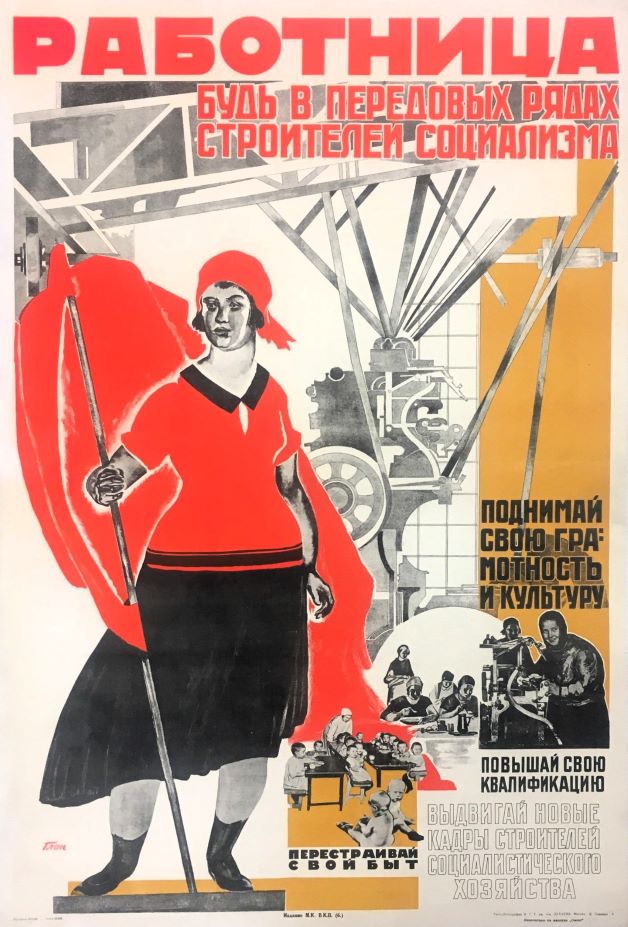
A complete set of documents from July, 1924’s Conference of Women Communists held in Moscow around the Fifth Comintern Congress. Includes: The Work of the Communist Parties among Working Women; Communist Work among the Working Women of the Capitalist Countries of the West and the Activity of the I.W.S.; Forms and Methods for the Work of Communist Parties among Working Women; Forms and Methods of Work of RCP. of among Women Workers and Women Peasants; The Work of the CP. among the Women Workers in the Trade Unions; The Social Education of Women; To the CP. of Jugoslavia!
‘Theses and Decisions of the Third International Conference of Women Communists’ from International Press Correspondence. Vol. 4 No. 71. October 6, 1924.
The Work of the Communist Parties among Working Women.
I. Introduction.
The international economic and political situation opens up before the international proletariat the prospect of class struggles of enormous extent, long duration, and growing acuteness. The aim of these struggles is the conquest of state power by the proletariat, and the establishment of the proletarian dictatorship. The proletariat must throw itself into these struggles armed with the highest degree of energy, determination, and will to self-sacrifice. The guarantee for the victory of the international proletariat is the formation of the united front from below, and the alliance with the broad masses of the impoverished and proletarianised working people in town and country.
Proletarian united front and extension of the fighting line are only possible when the women the proletarian women, the women of the working peasantry and petty bourgeoisie take part with equal activity, determination, and devotedness, in all he struggles of the proletariat. The counter-revolutionists have long since recognised the great importance of gaining the co-operation of the women for these struggles. Social democrats and other reformists, Fascisti and bourgeois parties of every description, are all exerting their utmost endeavors to exploit women for their own political purpose. In view of this fact, it urgently incumbent on the Communist Parties to save the women of the masses from contact with these counter-revolutionary influences, and to win them over for the fight for communism. The international situation lends special importance to the awakening of the women of the Near and Far East to the necessity of participating in the international class war. In the East the oppressed and plundered peoples are beginning to rise against their tormentors, and to fight for their national independence and against domination and exploitation of every kind. It the same time the women of the East are emerging from the darkness of their thousands of years of enslavement, and are aiming equal rights as recognition of the fact that they are equal human beings. The participation of the women of the East in the struggles against imperialism is bringing over to the side of revolution a fresh influx of the millions who have hitherto been fettered by the conditions of social life, traditions, customs, and religious prejudices.
After the proletariat has conquered and secured state power in the form of Soviets, it is still confronted by a mighty task. It has to transform the whole social structure into a communist structure, not only the economic foundation, but the whole ideological superstructure as well. There is no sphere of social life in which this can be done without the understanding and self-sacrificing co-operation of the broadest masses of women. In the Soviet republics it is an imperative necessity that the mass millions of working women should be brought to take part in the constructive work of the proletariat, and that their capability and efficiency for this work should be increased.
The international situation imposes upon the whole International the necessity of carrying on work much more energetically and systematically among the women of the proletariat, the poorer peasantry, and the petty bourgeoisie. The Communist Parties must convert the women into conscious and active co-workers in every fighting action undertaken by the revolutionary proletariat. Historical experience has demonstrated that women, though backward in general, know very well how to fight both courageously and devotedly, when once they have grasped the greatness of the revolutionary idea. The revolution in Russia, the struggles in Bulgaria and Germany, have confirmed this.
The V. World Congress therefore reminds all national sections of the Communist International of the decisions of previous Congresses regarding communist work among women. It especially emphasises the import of these decisions: the acceleration of the proletarian world revolution by the awakening, organisation, and schooling of the broad masses of women. The Congress lays special stress upon impressing on all communists that communist work among women is by no means a task of secondary importance, but forms on the contrary a most important and even decisive part of the main tasks of the Communist Parties, one of the leading factors towards the organisation and success of the struggle and victory of the revolutionary proletariat. The V. World Congress reminds the Communist Parties of Lenin’s words: “The proletarian revolution can only be victorious when millions and millions of working women take part in the struggle.”
II. Tasks.
This task set the Communist Parties of all countries, of winning over the working women, may be divided into three sections:
1. Work amongst the women of the capitalist countries; 2. in the colonial and semi-colonial countries; 3. in the Soviet republics.
1. In view of the necessity of adapting the whole organisation of the Communist Parties to the factory nucleus system, the V. World Congress expressly emphasises that communist work among the masses of women in the industrial centres is to be chiefly centered upon gaining the working women in the shops and factories. The Communist activity must be directed to dispelling all traces of the delusion that the working women may hope to be freed from their wretched situation with the help of democracy, or in the midst of a bourgeois society. The fundamental political education to class consciousness among the working women must be carried on hand in hand with a practical training and organisation for active participation in all the economic and political struggles of the proletariat. Our work must also include the women who have no profession, and bring them into close connection with those working in shops and factories.
The Work of enlightening women politically, and of inducing them to join the ranks of the economic and political fighting front of their class, must also be carried on in the trade unions, among industrial and agricultural workers alike. The trade union organisation and political mobilisation of domestic servants and employees, and of home workers, is another point which must by no means be neglected.
Work amongst the working women of the peasantry is to be taken up immediately and energetically, especially in agrarian countries. Starting point and fulcrum for agitation among working peasant women, and for their organisation, may be mainly found among women agricultural labourers, peasant women without property, war widows, domestic servants, working women from the country, etc. Here work must be carried on in closest collaboration with the co-operative movement. This last is also to be fully utilised for the furtherance of communist aims among the proletarian and petty bourgeois house-wives.
The Communist Parties must endeavor to destroy the bourgeois bias among female employees in factories, offices, and administration departments, among women teachers, among female clerks in post-offices, telephone and telegraph offices, etc., and to open the eyes of these bondswomen of big capital to their true position as exploited.
In view of the violence and duration of the post-war struggle, it is of the utmost importance to win over and organise the working women for active participation in the revolutionary struggles of the working class. The enlightenment and mobilisation of the working women must attain the object of uniting them firmly with the workers in the shops and factories in which their husbands and brothers are employed.
The task thus imposed on the Communist Parties also demands a greater representation of communists in the tenants’ associations and similar organisations, as great masses of proletariat and petty bourgeois women are members of these.
The revolutionary utilisation of parliamentarism should be extended in every sphere by the insight, watchfulness, and activity of the broad masses of women. These must support the action of the Communist fraction by laying demands before the parliaments, by controlling the parliaments, and by demonstrating against them. They must aid in the exposure of the counter-revolutionary character of all parliaments, and of all bourgeois and reformist parties. Special attention must be devoted to the activity of the municipal councils, for here the danger of running off the political rails is especially great, and the questions here dealt with touch the immediate interests of women.
The given situation renders it imperative for the Communist Parties to undertake the training of the women communists, now, during the period of legality, so that these may be prepared and trained for active co-operation during a period of illegality. It is also further imperative that they are allowed to participate fully in the work being done towards the destruction of armed formations of every description, towards the political defeat of Fascism, and towards the crushing of Fascism by armed workers.
2. Work in the Near and Far East involves special tasks given by the stage of historical development of these countries. Here the main struggle is directed against traditions, customs, and religious rules. These countries require special methods of work and organisation, if the communist teachings are to be propagated among the working women, and women fighters won for the revolution.
3. In the Soviet republics the highest importance is to be attached to mobilising the millions of working women support of the proletarian state power, for the establishment of social economics, for comprehending co-operation in every sphere and in all organs of state and social life, and for the social education of the coming generation.
III. Organisation.
The V. World Congress expressly emphasises that communist work among the masses of working women is a task incumbent on the whole of the party. In the future it should be bound up more closely with general Party work. Every action and campaign undertaken by Party workers should take into consideration, from the very beginning, the special measures to be taken for mobilising the working women. In order to extend the political aspect of communist work amongst women, the women comrades should invariably be called upon to take part in the general political work of the Party. The formation of special organs has for object the united, systematic, and energetic action of the Party among working women, and the constant reminding of the collective organisation of its duties in this regard.
The V. World Congress lays on every communist Party the obligation of immediately carrying out the following measures: organisation.
1. Where the Partying is being altered to the factory nucleus system, a man or woman comrade is to be immediately appointed in every factory nucleus, and commissioned with the mobilisation and organisation of the working women; the same applies to every trade union fraction.
In all the organisations in which the Communist Parties carry on work among the masses of the women: Labour Party, co-operative societies, parents’ councils, tenants’ associations, war widows’ associations, etc., a man or woman comrade is to be made responsible for the work.
2. The leaders of every Communist Party must provide for women’s pages or women’s supplements in the general press or place a definite space regularly at the disposal of discussions on questions dealing with women’s interests. If in any way possible, a special organ should be published for work amongst women. Endeavours should be made to organise and further the publication of special periodicals for working women All Party organs serving the theoretical and practical training of members should devote the necessary consideration to the revolutionary training of the women comrades.
The Party centres have to provide for the necessary expenditure entailed by the provision of good agitation and propaganda literature, pamphlets, leaflets, posters, etc., for the furtherance of the development, organisation, and schooling of the broad masses of women.
3. Every leading Party corporation, from the local group centre to the Party centre, is to appoint a member entrusted with the responsibility of conducting communist work among the working women.
4. This member is to be aided in his or her work by a special committee.
Every national Party centre should have its women’s secretariat. This secretariat must employ at least one worker (man or woman comrade) with a fixed appointment to work for the secretariat.
5. A special working department must be established for the Eastern countries, forming an integral political and organisatory constituent of the secretariat for the Orient and the colonial countries, and having a leader belonging to the International Women’s Secretariat.
At the present time the carrying out of the above measure is of the greatest importance, for the Communist Parties are now faced with the task of reconstructing the Party organisation on the factory nucleus system, of allotting trade union work its suitable sphere of activity in Party work, and of transforming millions of working women, employées, and women earners, from patient slaves of capital into determined fighters against capitalist economics and the bourgeois class state.
The Communist International calls upon all its Sections to perform their whole duty in this regard, for the Comintern fully recognises that the conscious and active participation of working women is a necessary pre-requisite for the establishment of the proletarian dictatorship and the communist state of society.
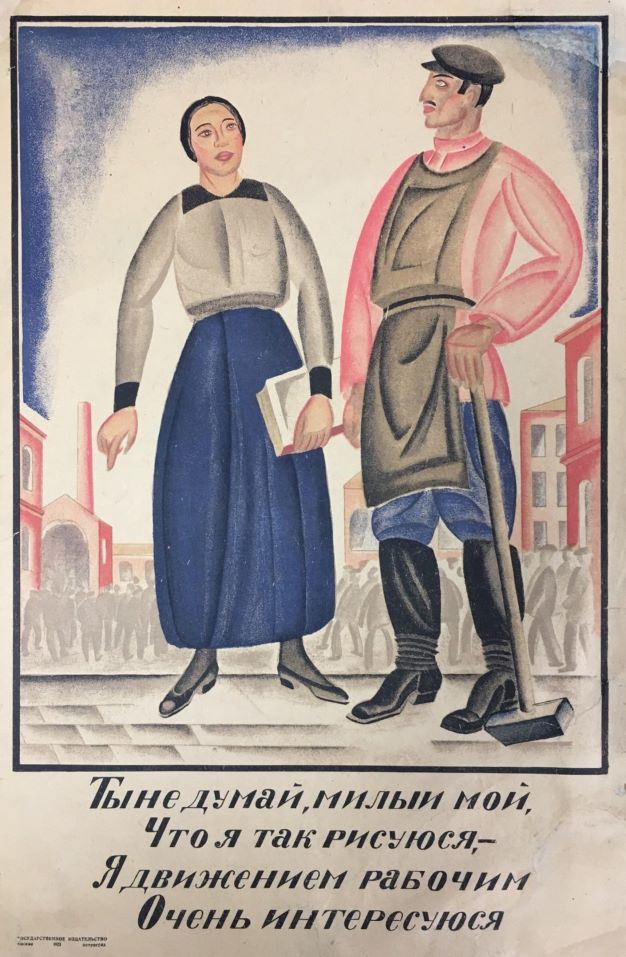
Communist Work among the Working Women of the Capitalist Countries of the West and the Activity of the I.W.S.
1. Work in the Sections.
1. The III. International Conference of women communists recognises the progress made by numerous parties in their own countries since the II. Conference, which consists in the following:
a) Organisation: in Holland and Norway the remaining separate organisations of communist women were successfully liquidated; in almost every section in Europe, except in Canada and Argentine, organs were established for work among working women; national secretariats were formed in four large and important parties: France, Poland, England, and Norway; in Czecho-Slovakia a German section was formed in the women’s secretariat; communist women’s newspapers have been brought out in France, Italy, Austria, Switzerland and Poland, and in other countries women’s pages are published regularly in the daily press.
b) Politics: successful attempts have been made, in several countries, to induce broader masses of the working women to take their place in the ranks of working class action, and to devote their powers systematically to helping forward the struggle, special instances of this have been the control committee movement in Germany, the October struggles, the strikes and lock-outs in the Ruhr basin, Ludwigshafen, and Upper Silesia in the year 1924;
c) Internal party organisation; a body of women functionaries has been formed which, though small, is performing valuable work for the Party, and has above all done excellent service in illegal work.
2. The Conference must however state plainly that work is still very defective everywhere, as is evident in particular by the following phenomena:
a) Ideology; many uncommunist (bourgeois, reformist, opportunist) views and tendencies hold sway in the question of “double existence”, of the participation by working women in the proletarian defence units, their co-operation in illegal work (Germany), feminist currents from France in particular, neo-Malthusian currents in the question of birth control and artificial abortion in Scandinavia, opportunist side-tracking in the question of the united front (Switzerland, Czecho-Slovakia).
b) Organisation: the Party has not been successful anywhere in gaining an adequate proportion of women members. The proportion seldom amounts to 20% of the total number of members; in Germany it is 12% to 13%, in France 2%. Even the few women members actually in the Party seldom take an active part. Besides this, in many cases there has been an unhealthy separation of the work done by the women comrades, who have specialised on winning over the masses of the women, from the general work of the Party.
c) Politics: here work among the women has not always been sufficiently clearly orientated, that is, it has not been adequately adapted to the general situation, or accommodated to the actual tasks of the Party and the proletariat. Besides this, the main work of the Party has been devoted (with a few exceptions: Poland, Bulgaria, Baltic border states) to the housewives, and not to the decisive strata of the female proletariat, the Women working in the shops and factories, and in the trade unions.
3. The Conference therefore sets the Communist Parties of the West and East the following tasks:
a) Ideological enlightenment on the importance of work among women for the cause of the revolution is to be furthered Women’s interests, whether questions within the parties by the placing of all questions relating to of principles, politics tactics, or organisation, on the agenda of the general Party meetings and in the general Party press.
b) In order to establish close contact between work amongst women and general Party work, all women comrades should the first place be called upon to participate fully in general Party work, and at the same time the men comrades and Party organs should be called upon to lend practical aid in the task of working among the masses of the women.
c) The re-organisation of the Parties on the factory cell system must be energetically utilised by the Parties, with the co-operation of the women comrades, for the purpose of laying the foundation and organising the forces required for winning over the women in the shops and factories.
II. The Work of the IWS.
The Conference approves the work of the IWS, which has successfully aided the Sections in their constructive work, under most unfavourable circumstances, by means of information, exchange of material, consultation, stimulation, criticism, and practical action. The IWS is to be especially congratulated upon having conducted the International Women’s Day, in the years 1922, 1923 and 1924, on a larger scale, on a politically uniformed basis and in more numerous sections, than has ever before been the case.
2. The Conference emphasises, however, that the work hitherto done must be regarded as preparation only for the greater tasks to be performed in the near future. It is of special importance that the IWS should support and lead the action of the sections much more systematically and energetically than it has hitherto done, and should strive for international alliance for the actions and struggles participated in by the working women of the West and the East.
For this purpose the IWS must:
a) organise a comprehensive, thorough, and regular system of reporting from the sections to the IWS;
b) collect and sift systematically the whole of the material coming in from the various sections with reference to important questions, and render this material accessible to the sections for their information and stimulation;
c) insure personal communication with the Parties in their country, through the agency of representatives, on all important occasions (campaigns, conferences), in order to be able to participate actively in the work;
d) arrange for regular half yearly conferences of the international women correspondents (or of the women leaders of the national secretariats or committees);
e) create a regularly published international press organ, dealing not only with theoretical questions, but also with the practical problems of communist work among women.
3. The Conference welcomes the return of the IWS to Moscow, the headquarters of the Executive of the Comintern. It expects from this a furtherance of close co-operation among the masses of the women, nationally and internationally, in general Party work. It commissions the IWS to discuss and organise its future work in still closer co-operation with the Executive of the Comintern, its members from the various sections, the Profintern, the co-operative Section, the International Peasants’ Council, and the Communist Youth.
Work among the Women of the U.S.S.R.
1. The Conference is able to state that the RCP. bas undoubtedly been eminently successful in awakening the broad masses of working women, peasants, and women earners of every kind, in the Union of Soviet Republics. It has also much success to record in the effort to bring women into the CPR, o induce them to take active part in the trade unions, in the work of economic construction, and in the activity of the various Soviet organs and Soviet organisations.
2. The Conference emphasises that the cultural and political level of the working class has been undoubtedly raised by the establishment and development of economics under the Union of SSR. This found special expression in the Lenin summons, when 200,000 working men and women, straight from the shops and factories, entered the ranks of the RCP.
3. The general improvement in the economic situation, in town and country alike, opens out to the RCP. wide possibilities of furtherance of social organisations for the common benefit (crêches, common dining halls, etc.). This possibility is being systematically utilised by the organs of the state, trade unions, and co-operatives.
4. The conference is able to state that the RCP. devotes great attention to the communist education of the women of the working class and peasantry. It systematically organises delegates’ meetings, and sends speakers to these. It meets the needs of the present moment by establishing schools for political education, where the working women can study the principles of Leninism; it provides for the participation of women workers and peasants in practical work as well.
5. The Conference is able to state that the women workers and peasants co-operate in the execution of all measures put into practice by the RCP. and the Soviet power for the firmer establishment of the alliance between the working class and the peasantry.
6. The Soviet power stands decisively for all measures tending to the furtherance of social relations in respect to economics, right, and ethics, and offering emancipation in truth and in deed to the backward peoples and the masses of working women of the East.
7. In view of the fact that the forms and methods employed by the RCP. for work among the masses have proved so eminently successful, not only among the working women, but also among the peasant women and among the working people of the East, the Conference emphasises its satisfaction at the fruitfulness and adaptability of these methods.
8. The Conference especially emphasises the fact that the proletariat and the peasantry are following Lenin’s teachings with unshakeable steadfastness, and are continuing on the path leading to the firmer establishment of the Union of Socialist Soviet Republics.
Work among the Woman of the East.
The peoples of the Far, Near, and Central East, oppressed and exploited by the imperialist states, have begun the struggle for their national independence.
The national revolutionary movement goes hand in hand with insurrection against every description of slavery and exploitation. The effects of the Russian revolution have penetrated to all these countries, and the advance of capitalism has called forth a powerful women’s movement, which seeks to combat the enslavement and oppression of the female sex prevalent there for centuries, and to gain for women full equal rights in economics, in the state, and in the family, and full legislative recognition as equal human being .As a rule this women’s movement is closely bound up with the general national emancipation movement. The awakening and revolutionising of the women of the Orient bear witness of a mighty store of reserved energy, which will now be further intensified by the approaching wave of world revolution. We, as communists, must utilise this movement for the formation of an antiimperialist united front.
In many countries, in Turkey for instance, the bourgeois revolution has already made great progress. Here a firmly established national governmental power has been formed, and the national bourgeoisie does not make common cause with the broad working masses, fearing that these may threaten their rule. Under such circumstances our work in the East must be carried on on fundamentally different lines. Neither the national emancipation movement nor the women’s emancipation movement is a fetish for us.
Still, the Communist Party must support movements of this kind so long as revolutionary elements are taking part in them. But we must make the Bourgeois class character of these movements clear to the working masses, show plainly how narrow are their limitations. We must demonstrate to the masses that the moment is inevitably bound to come when a national or women’s movement shows its revolutionary character.
The following rules may be laid down for the work of the Communist parties among the women of the East:
1. Any support given by communists to local, national, or women’s rights movements, or other petty bourgeois movements, demands the exercise of the utmost precaution and elasticity.
2. The communist women’s movement must gradually separate from the purely “women’s” movements.
3. The next demands in favour of women, and the methods of work adopted to enable these demands to be met. must be adapted to the historically given conditions, and must fully harmonise with the programme and tactics of the Communist Party of each separate country.

Forms and Methods for the Work of Communist Parties among Working Women.
(Resolution on the Addresses held by Comrades Kanatschikov and Mojrova.)
1. Organisation is the tool with whose aid the working class will emancipate itself.
2. The ruling classes are fully able to estimate the force and power of organisation. It is precisely for this reason that they secure their class organisations, which afford them the possibility, despite their being in the minority numerically, of retaining the state machinery in their hands, and ruling over the great masses of the workers.
3. The experience gained in all former revolutions in Western Europe, and especially in Russia, has taught the working class that organisation is the instrument of their emancipation, enabling them to set up a dictatorship over their exploiters
4. The experience of the revolutionary struggle of the working class shows the mightiest form of organisation to be the centralised organisation, closely bound up with the broad working masses, and having its basis in production, that is, in the workshops and factories.
“Every workshop must be our fortress” said comrade Lenin, as he began to build up the structure of the Communist Party.
5. A properly systemised centralised organisation is an irresistible instrument in the hands of the proletariat. If the leading centre is to work well, the whole of the organisations must be developed as specialised working organs, each attaining the highest degree of perfection in its own department. In order that the centre may be enabled to really direct the many-sided activity of the various organisations, it must be accurately informed as to who is taking part in the work, what work is being done, and how it is being done, so that any disagreements or dissensions may be settled.
6. The factory nuclei, the communist fractions, the district organisations, etc., must become revolutionary fighting organs, must be closely round up with one another, and must gain the leadership over the great masses of non-party workers; they must head the elementary movements arising in the working classes and lead these movements, always with one goal before them: The conquest of power by means of armed insurrection
7. Work amongst women, though not differing in principle to general work amongst the proletariat, takes a somewhat different form, and is carried on on somewhat special lines for the reason that in the first place women are even more acutely exploited than men in the shops and factories, and in the second place are more fettered by family life. The fundamental task of the Communist Parties is to win over the masses of working women by inducing them to take active part in the struggle for the dictatorship of the proletariat.
8. The experience gained by the RCP after the October revolution demonstrated that extraordinary importance must be attached to the organisation of “delegates’ meetings” as instrument for the establishment of permanent relations between the Party and the broad strata of working women and for the extension and deepening of the influence of the Party upon these strata. These “delegates’ meetings” consist of women representative elected for a certain period by women factory hands, workmen wives, domestic servants, women clerks in commercial and state offices in the towns, and by women agricultural workers, women peasants of different social classes: small holders and medium farmers, and the wives or widows of mobilised soldiers, in villages.
9. The growing acuteness of the revolutionary situation all over the world, the adaptation of the Party to the factory cell system, its development from propaganda circles to mass organisations faced by the struggle for power in the immediate future–all this renders it imperatively necessary that work among women should be given a radically different trend, and devoted to the workshops and factories. The third International Communist Women’s Conference considers it necessary to lay down the following rules for work among the masses of women workers in the shops and factories.
10. The whole of the work carried an among the female workers in a factory, etc., is under the leadership of the communist nucleus. One special woman comrade–should none be available, a man comrade–is to be made responsible for the systematic carrying out of this work.
Work of really useful and lasting effect can only be done from within, from the workers in the factories, etc. themselves.
In large undertakings every department or shop should have its own communist woman functionary if possible, working under the control of the nucleus.
11. It is the task of the communist party nucleus, and especially of the women comrades, so to inculcate the women workers with idea of revolution that the female employées in the shops and factories may be made to form fighting units ready for action, and so to employ suitable methods of working that broad masses of sympathising working women may be gathered around the Communist Party, ready to follow the Party slogans in every movement and action.
For this purpose the cell must endeavour to group the sympathising women workers around it in the form of women workers’ committees in the factories, etc. and to bring the whole of the female employees under the influence of the cell by the aid of these committees.
III. In the case of factories and workshops where no nuclei have yet been formed, the Party organisation comes into touch with the women workers by the following means:
a) With the aid of the membership register of the Party and the trade union fractions.
b) With the aid of sympathising shop stewards, trade union functionaries etc.
c) By attendance at factory council meetings.
d) By convening meetings of women workers.
e) By the distribution of propaganda material, and by spoken propaganda before the entrance into the factory or shop.
f) By the delegation of experienced women comrades as workers in large or important factories, etc.
There is no large undertaking in which it is not possible to gain a foothold by one of the above means, that is, at least one sympathising woman worker can always be found. With her help it is possible to approach the other women workers and to proceed to training a woman functionary and to forming a cell.
IV. For the carrying on of this work the women’s agitation committees have to collaborate with the nucleus in appointing local, district, and national women factory organisers. Besides this, experienced women Party workers must be allotted to the most important works and factories, and these will collaborate with the nucleus in organising and controlling the work.
V. The acute aggravation of class antagonisms, and the constant failure of the reformist trade unions to fulfil their task as leaders of labour struggles, compels the communists in the works and factories to take up this leadership themselves in an ever increasing degree.
VI. This means the introduction of fundamental changes in the methods hitherto employed for agitation among working women and workmen’s wives. Apart from the spoken propaganda furnished by addresses at meetings and apart from the written propaganda provided by the distribution of leaflets and other literature, another task becomes more and more urgent the organisatory task of forming a steadfast communist shock in every large factory or works, and the further task of the practical leadership of labour struggles. During the present period of increasing acuteness in class warfare, we need women strike leaders more than women speakers at meetings. Our women Communist agitators must become officers in the war of the classes, and must learn how to lead armies of striking women workers, to provide for their material wants and to maintain their fighting courage. (They must be capable of undertaking everything involved in such action: the struggle against black-legging, demonstrations, detachments commissioned to provide enlightenment and food, for soup kitchens for accommodation or for the children of the strikers, for collections, for negotiations with employers and authorities, etc.)
VII. The work of education and training to this end must be accorded a place of leading importance. Special courses of instruction are to be arranged for the factory functionaries and for the wider circles of sympathising working women. These courses must not only impart schooling in strike technics and practical factory work by the subjects dealt with: (“How can I lead a strike?” “Why should working women be against piece work?”) and give training in public speaking by their practical (seminarist) methods, but they must also contribute to communist education by a study of the principles of Leninism, by dealing with the tactics of the III. International, with the role played by the national communist parties, etc.
VIII. Pure propaganda must be replaced more and more by action. Action means that every women worker is to take more personal part in the work.
The woman worker must learn to act, first by undertaking some office in the nucleus, then in the shop or factory. The nucleus or where there is no nucleus–the woman district organiser, should allot some particular task to every separate woman communist in the factory: reporting, keeping protocols, conducting negotiations, distribution of literature, work on the factory paper, representation in other revolutionary organs, etc. Every communist woman worker must become a factory councillor or trade union functionary.
She must learn to speak by the practice gained in addressing every meeting of the nucleus, every factory council and shop steward meeting.
She must learn to write by publishing her own newspaper.
IX. The women workers must be called upon everywhere to collaborate in the work of the Party press, in the factory papers, women’s supplements, etc., and to publish their own women workers’ papers, written and financed by themselves. Every nucleus should appoint a women correspondent if possible. The women workers’ press must be utilised not only for propaganda and information, but for the organisation of the masses.
X. Our principle as opposed to the sectional and schismatic tactics of the reformists is the widest possible extension of every struggle, and the greatest possible unity of action.
This is doubly and trebly necessary for the women workers, who form the weakest part of the labour front. Nothing but the most energetic concentration of powers in every direction can balance their actually weak powers of resistance.
The communist factory nuclei must ally themselves closely with the communist trade union fractions for this purpose. The trade union fractions help the Party in every way possible in its efforts to organise the women workers in and around the nuclei. The local trade union fractions must found a women workers’ committee for their industrial group, the members of this committee being as far as possible representatives of all the large undertakings carrying on the industry concerned in the district; membership should also be extended to non-partisans, and to members of other parties in sympathy with the CP.
The task of these women workers’ committees is to utilise every possible means at their disposal, under the leadership of the Communist Fraction, for the extension and unification of work and wages struggles within the industry, for the organisation of revolutionary propaganda and educational work, for the carrying on of electoral campaigns in the elections to the factory councils and other bodies, and assistance in word and deed, in every possible way, of revolutionary women workers. (Consultation, hours, technical aid in publishing newspapers, etc.)
XI. In large towns the women workers’ committees can join together, under the leadership of the local communist organisation, to form local committees of the revolutionary women workers of all industries. These fulfil the pre-revolutionary task performed, in another form, by the “delegates meetings” in Russia the task of forming a bridge between the Party and the unorganised women workers. They convert these masses into active bearers of the revolution.
XII. Connection must be established between working women and housewives. Wherever a strike breaks out, the communist housewives must come systematically to the help of the strikers They must demonstrate their solidarity, collect food and money, take in the children of the strikers, take up action against strike breakers, etc. Where organisations of workmen’s wives already exist (control committees, etc.) these must work hand in hand with the women workers’ committees, and must always be represented in these last.
XIII. The women workers in the shops and factories must also co-operate with the unemployed.
The women worker who loses her situation remains in the nucleus as before, and continues her activity in the fraction and women workers’ committee. She carries on her agitation correspondingly at her labour exchange or dole office. Representatives of the unemployed should take part in every action and meeting of the women workers.
XIV. The attempt should be made everywhere to establish direct communication between the women workers in shops and factories with women workers in like position in other countries, especially in Russia. Such direct connections are not only excellent for the daily propaganda work in the factories, but are at the same time pioneer work for the coming revolutionary international industrial unions.
The Conference commissions the International Women’s Secretariat to work and carry out a plan for the establishment of such connections between the large industrial undertakings in the various countries employing a preponderance of women.
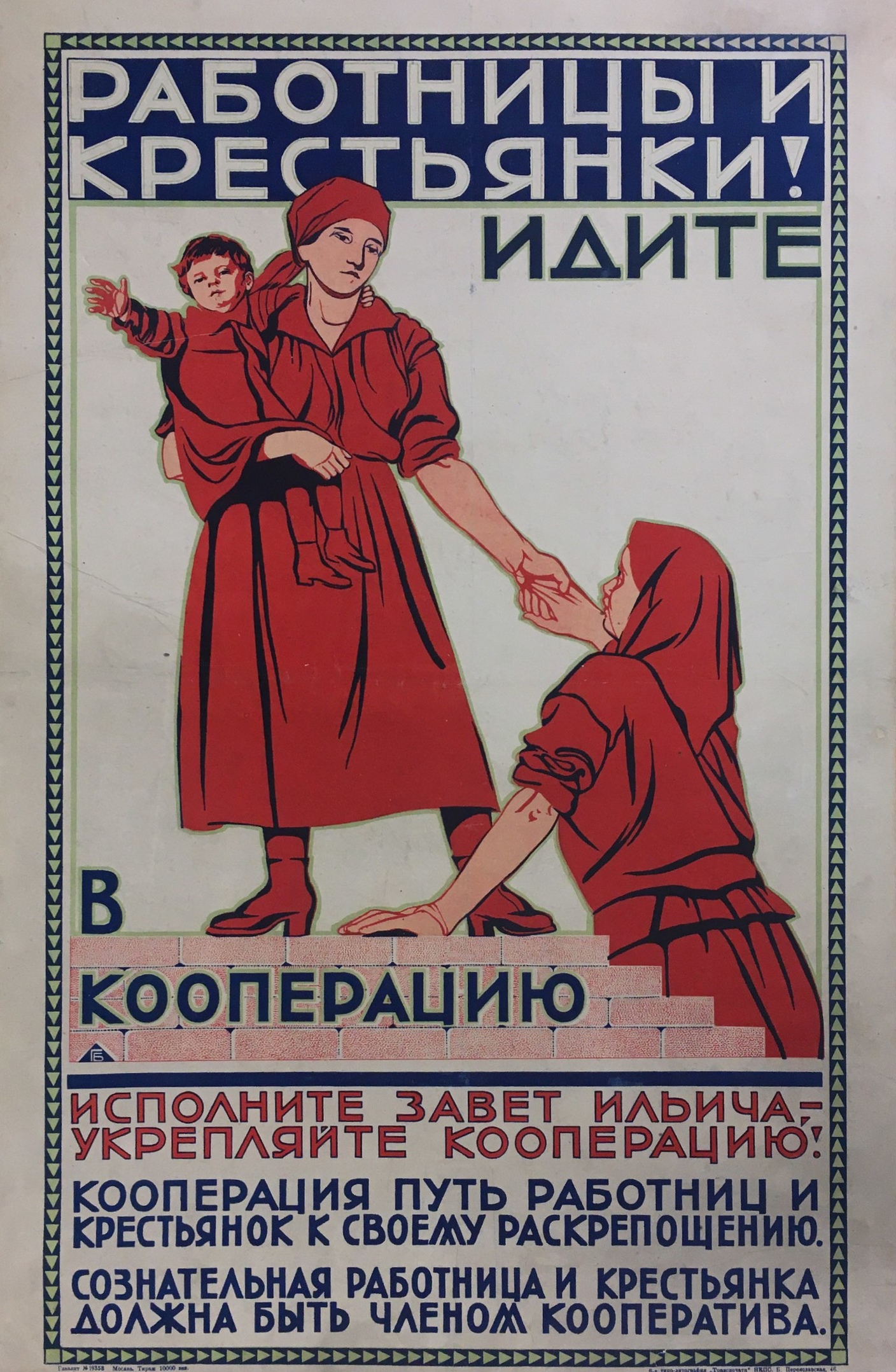
Forms and Methods of Work of RCP. of among Women Workers and Women Peasants.
I. The character of the work carried out by the RCP. (Bolsheviki) among women workers in the pre-revolutionary period.
During the pre-revolutionary period, RCP. work among women workers and peasants was chiefly directed to awakening and establishing class consciousness in the female proletariat, to arousing the women to readiness for revolutionary struggle, and for self-sacrifice in the cause of the whole working class.
The general conditions, which had favored the rise and development of Bolshevism in Russia, also contributed to the development of class consciousness and revolutionary mentality in the women of the Russian proletariat.
The labour movement, which was illegal under Czarism, was not able to assume “peaceful” trade unionist or parliamentary democratic forms, but was forced to work on purely revolutionary lines, with the aid of conspirative forms of organisation, for the seizure of power by the proletariat. From the very beginning the working women’s movement formed a part of the general labour movement. The mass strikes of the working class in the eighties and nineties, and in the years 1902/03, the armed insurrections of the year 1905 all these forms taken by the labour movement and class warfare in the Russian working class were also participated in by the working women’s movement.
It need not be said that czarism sought to crush with the utmost cruelty every expression of class consciousness, whether emanating from working men or working women. The illegal existence of the political parties, the semi-legal existence of the trade unions, sick insurance, and other labour organisations, forced these organisations to place a very high value on their members, and furthered their close alliance without distinction of sex. Thus originated an atmosphere of actual complete equality among the men and women workers of the toiling population.
The women’s emancipation movement, in the form in which it seeks to remove sex disability only, never attained such a development or influence in Russia as it did in the West. In Russia the women’s movement was a fresh impetus towards the revision of the norms to be assumed by the Russian women workers’ movement in its capacity as constituent of the general labour movement.
The women workers’ movement developed within the general labour movement, and was not led astray by opportunism. The Mensheviki attempted to fix the attention of the working women exclusively to questions of motherhood, of equal rights for women, and of cultural matters; after the first revolution they rejected the slogans of the second revolution, and agitated for a struggle for partial demands within the limits of the law, a mere reformism which met with no support from the working women.
The working women organised themselves on the principles of the revolutionary slogans issued by the Bolsheviki, and took active part in all the conflicts fought at that time. In July 1914, on the eve of the war, they fought together with the workmen, weapon in hand, at the barricades of St. Petersburg.
At that time the chief slogan of the Bolsheviki was: “Go to the masses”. The Party availed itself of every possible opportunity, in the course of its subterranean work, of being heard and understood by the women workers in the factories. Despite the rarity of these opportunities (meetings, congresses, Duma platform and Duma committees, women’s clubs in the years 1905 till 1908, the illegal women workers’ circle in the year 1914, the publication of the periodical “The Women Worker”, and the organisation of demonstrations on “Women’s Day” in 1913, etc.). the Russian Bolsheviki were successful, after ten or twelve years.
of illegal work, in creating a class-conscious vanguard of Russian proletarian women ready for the revolutionary period; this vanguard possessed all the characteristics necessary for facilitating the fight for socialist organisation later on.
When the revolution broke out, it found a large class of working women already far advanced; with the help of the Communist Party these women had already developed strong revolutionary conviction, clear class consciousness, and tenacity and perseverance in allegiance to the RCP.
II. The Principles and Apparatus of the RCP in its Work among the Women Workers and Peasants during the Revolutionary Period.
In spite of the tremendous enthusiasm and extraordinary heroism shown by the working women during the revolution. still the RCP. could not but differentiate between the political, cultural, and social development of working men and working women, between the peasant who had fought at the red front and the peasant woman who had remained at home in the village. Thus arose the necessity of enlightening the backward strata, of developing them, and this meant the undertaking of special work among them.
The principles laid down by the RCP. for its special work among the masses of working women during the revolutionary period were chiefly as follows:
1. The formula “Unity of aim and tasks for the whole working class, without difference of sex” is to be observed in all forms and methods of special work; it must form the foundation of all propaganda among the broad masses of the workers, and must be the ruling precept for work among women
2. The special conditions of work and life among the female proletariat and the peasantry (that is, the double slavery), which hinder the intellectual development of this section of the working masses, and create among them their own ideology, confronted the Communist Party with the task of first adopting measures for abolishing the differences between the working and living conditions of working men and working women, and of having measures taken by the state, trade union, and co-operative organisations, for the emancipation of these masses; secondly, of finding suitable means, adapted to the comprehension of these masses, for combatting their backwardness, passivity, and ignorance, and for awakening in them a thirst for knowledge, that their political knowledge may be widened, and they themselves aroused to revolutionary activity.
3. The methods and forms of this special work must not under any circumstances be permitted to become in themselves the ultimate end of work among the masses of working women but must invariably find their justification in tactics aiming a bringing the broad masses of women proletarians and peasant under the influence of the RCP., and thus winning them for the struggle for socialism and its realisation.
4. The special working methods are to be applied exclusively to the non-partisan masses. The trend of these methods should tend to approach the general forms and methods of work pursued in Party work, until the special methods finally supplement the general forms of Party work, and amalgamate with these.
The Apparatus.
5. The mainspring of activity consists of a powerful and resistant apparatus of Party committees and women’s departments. This is an entirely recent development. The peculiarity this department, as also of the whole of the other departments of the Party committees of the RCP., consists of the fact that no task involving principles can be allotted to or executed by a Subordinate department on the instructions of a higher organ without the matter first passing through the hands of the Party committee. On the contrary, the tasks set by the Party for work among the women are sent as entirety from the higher Party committees to the subordinate committees, with the signature of the secretary of the organisation. The department actually represents an internal working apparatus of the Party organisations, and is directly controlled, conducted, and financed by these. In order to insure unhindered management, the comrades appointed as heads of these departments are at the same time members of the committees. Every committee possesses such departments, and these extend their influence into the factory and village nuclei by means of members who organise the women workers and peasants, and who are chosen from among the members of the nuclei offices, and form an entirety of their own under the immediate leadership of the nucleus office. The construction of the apparatus is not completely described without mention of those comrades who have the special task allotted them, in a large number of organisations, of furthering that section of work aiming at improving the position of women. These constitute a kind of representative of Party organisations, and they devote themselves, within the institution to which they are sent, to all questions touching upon the life and work of working women and peasants. Should they take any new measures with regard to this their special mission, it must be with the knowledge and consent of the Party organisations. There are such representatives in the trade unions, in the co-operative organisations, and in the various people’s commissariats and their local sections. These workers are in communication with the women’s departments, and form with the department leaders collegium or committee for work among the women.
The Party follows systematically the work done by the apparatus working among the women, and exerts every endeavour gain greater masses for this work, by means of periodically renewing the personnel of the departments, and by the preparation and training of special workers for this branch of activity.
At the present time the Party has set itself the task of creasing the number of working women in the departments that is, to proletarianise the apparatus), and to bring native women belonging to the national republics into the apparatus (this is called the “nationalising” of the apparatus).
III. The Delegates’ Meetings.
The chief method of Party work among the broad masses women workers and peasants is formed by the delegates’ meetings of women workers and peasants. These do not represent any way special branches of the state system (as appears to have been indicated at the elections), but are exclusively auxiliary organisations, functioning in a sense as a “driving belt” between Party and mass.
1. Social Representation. The delegates’ meetings comprise, in certain definite city districts, the representatives of a number of factories, shops, Soviet institutions, hospital employées, domestic servants, and workmen’s wives, and in the country, the representatives of the female section of the poor peasantry, the poor women farmers, the widows, the wives of red army soldiers, the poor, and the middle class women peasants; in the Eastern republics, the working women, preference being given to the native population.
2. From revolutionary groups to delegates’ meetings. The delegates’ meetings, which assumed expressly revolutionary forms the eighth year of revolution, have taken their origin solely in groups of revolutionary women workers or women peasants. The first of these were formed on the principle of selection, by the Party, or by the women’s section of the Party committee. The development of revolutionary groups to delegates’ meetings has yet ceased in a number of districts, as may be seen from the repeated formation of delegates’ meetings.
Import of the work. The delegates’ meetings carry on work along three lines: One part of the work is based on a number of measures for raising the cultural and political level of the women workers and peasants. (Absolute liquidation of illiteracy, attendance at a course of instruction for political enlightenment, this course being not only for the plenary meeting, but also for the separate groups of delegates in the factories and workshops), attendance at lectures on social questions, political trials law-suits, removal of bad influences from light literature and les lettres, arrangement of various kinds of evening entertainments, etc.) Another line of activity of the delegates is directed to the practical acquirement of knowledge of the work in number of social, state, and co-operative institutions, and has for object the participation of the delegates in this work in the Soviet sections, the organisation of independent sections in the delegates’ meetings, the participation in the interests of the institutions, and the taking part in extraordinary work, as campaigns, special weeks and days, etc. The third line of work demanded from the delegates’ meetings, one to which special attention has to be accorded, is their pedagogic role.
Connection with the Masses.
3. The Party is not content with training the women workers chosen for the delegates’ meetings, but endeavours with their help to draw broad masses of women into the sphere of influence of the Party. The elections to the delegations further this. The Party further adopts a number of measures for the establishment of an organic connection between the delegates and the masses. For this object it is of first importance that the delegates give periodical reports on their work to their electors, and, secondly, that it is made the duty of the delegates to aid the organiser in the organisation of the masses of women workers, and in the execution of measures for the protection of workers, the protection of mothers and infants, social welfare, liquidation of illiteracy, etc.
4. The delegates’ meetings are re-elected annually, and include fresh cadres of women workers and peasants every year; they work on lines laid down in a special programme, and thus train the women workers to logical and connected thought; the highest consummation of their activity lies in their success in bringing the most enlightened elements into the Party, and in putting up the most advanced women workers and peasants as candidates for Soviet organs, trade unions, co-operative societies, etc.
The Results of the Delegates’ Meetings.
The results gained by the delegates’ meetings in the course of four years have been extraordinarily many and various. It suffices if we point out that hundreds of proletarian and peasant women, now members of the Soviets or executive committees, or members of the trade union administrations, factory councils, and other committees, as also those women of the proletariat now belonging to the Party that 95% of these women have passed through the communist school of the delegates’ meetings, and are tenacious fighters for the Soviet government. The delegates’ meetings play the part of reservoirs, suppling the greater number of the women workers’ and peasants’ representatives with whose help the Party and the Soviet government carry out many measures of a general state and general Party character. The propagation of the state loans, the collection of the agricultural taxes, the execution of the most various decrees and regulations, the carrying out of state control, all these measures pass through the hands of the delegates, and find in them their best representatives.
IV. Forms of Mass Work.
The work in the delegates’ meetings, in which every single delegate is accorded special attention, runs parallel with the mass work carried on by the Party among the women workers, workmen’s wives, and women peasants.
1. The starting point for mass work among women workers is formed by the factory and workshop. This is the main laboratory for the mass work of the Party in general, and of the women’s departments in particular.
The methods of agitative and propaganda work among the women workers in shops and factories consist mainly of inducing the women workers to take part in all Party and enlightenment work carried on in the undertaking in question. Besides this, the working plans and programmes of the Party must be made to include factors calculated on the one hand to arouse the interest of the working woman, and on the other hand to render the general audience familiar with questions vital to the woman worker.
For this purpose exhaustive use must be made of the general workers meetings in the workshop or factory, of club work, work in the various circles, schools for political enlightenment, excursions, etc.
2. The Party has also the intention of inducing the less enlightened masses into social life, and with this object in view it employs special methods of work among the women of the proletariat. Circles for women workers are formed, special women’s meetings arranged, and the questions most nearly touching the interests of the masses of proletarian women are dealt with in a manner comprehensible to the most elementary understanding.
The workmen’s wives are also to be chiefly grouped and organised around the factory or shop.
In order to facilitate the attendance of the women workers and workmen’s wives at the clubs, special nurseries are provided in the clubs themselves.
3. Not only the workshops and factories, but also the commune premises are the subject of attention. Here Red Clubs are organised for the women workers, posters hung on the walls, special meetings organised for women workers and workmen’s wives, groups formed for the liquidation of illiteracy, and the like.
4. The Party does not, however, limit its work to the factory and the home, but carries on its mass work in the towns, and even in the provinces, on a wider scale. It convenes comprehensive conferences, not only factory group conferences, but also, in conjunction with the trade unions, trade union conferences; besides this, it arranges general meetings, enlarged delegates’ meetings, and utilises suitable occasions or interesting law court trials, inviting working women to attend such trials, in order that they may hear the proceedings and use their knowledge as propaganda.
5. This last method–the utilisation of trials as means for making their rights and duties clear to the citizens of the Soviet state, forms one of the leading Party methods of work among women peasants.
Besides the concrete protection of the law afforded to the of tremendous peasant woman as housewife and mother importance in the Russian and national village, where the law followed is generally the “traditional law” the Soviet people’s court and the juridical land commissions form, the most important mediums of bringing about a fundamental change in the views held on the rights of working women. Many peasant women designate the law courts as their “trade unions”.
6. In the country the reading rooms form a fruitful source of sympathy for the Soviet government and the Communist Party, and with their help the village nuclei carry on their work of propaganda among the country population. The organisers of the peasant women arrange discussions with the women peasants in these reading rooms, organise a “peasant woman’s corner” here, where the special literature is concentrated, organise “peasant women’ days, upon which the resident intellectuals reply to economic questions, or to questions relating to the interests of women as such, “reading evenings” are arranged for the peasant women, groups organised for the liquidation of illiteracy, and so forth.
7. Besides the systematic work for the raising of the cultural and political level of the woman peasant, thus carried on within the limits of the delegates’ meetings and reading rooms, non-periodic district and regional conferences of women peasants are convened, as also provincial congresses of women workers and peasants, one of the best methods of establishing the “alliance”, the attainment of friendly relations between the proletarian women of the cities and the proletarian women of the plough. The agenda of these congresses is carefully worked out, and give the women peasants an insight into the life of the women workers in the towns; various kinds of institutions are visited, legal aid given, individual connections made, etc.
8. For this same purpose of establishing an alliance between workman and peasant for the greater security of the Soviet government the Party employs among the peasantry a method of work consisting of the organisation of a “protectorate” held by city Party nuclei, or by factory or trade union organisations, over country districts, villages, or Soviet farming enterprises. All such methods of Party work, “protectorate”, etc. are of course equally applied to work among the women peasants.
9. The cessation of war, and the general economic uplift, have naturally increased the social demands of working class and peasantry alike, and the Party is exerting its utmost endeavours to lead these social demands into directions and expressions calculated to improve the standard of living among the working masses, to raise their cultural level, to enable them to combat religious and other prejudices, etc., and further, to promote international solidarity among the working class (International Re Aid, International Workers’ Relief, League for the Relief of German children, etc.) and power and science in the Soviet republics (Society of the Friends of the Air Fleet, scientific work organisations, and the like.) The Party calls upon women workers and peasants to take part in this work, and the method employed for inducing the backward strata to take part in this social work are frequently the most successful.
10. An absolutely developed method of exercising communist influence on the masses of women workers and peasants, a method which compels attention, is the periodic and sporadic publication of newspapers especially adapted to the interests to working women. Besides the central popular periodicals “The woman worker” and the “Woman peasant”, other newspaper are published periodically by a number of local Party organisations (in Moscow, Petersburg, the Ukraine, and Siberia).
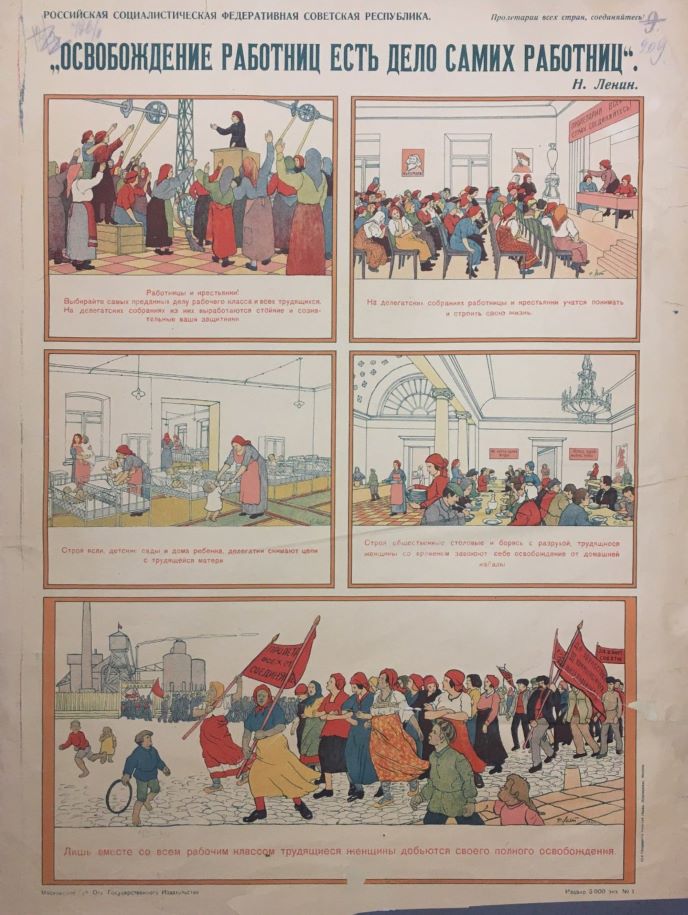
The Work of the CP. among the Women Workers in the Trade Unions.
I. Introduction.
The general offensive of capital, the reduction of wages, the lengthened working hours, the partial and in some countries complete cancelment of protection for the workers, have been felt most acutely by the women workers.
This is to be explained by the circumstance that though women workers are so many in number, and of leading importance for production, they are but weakly organised, and take little active part in the trade unions, except in the Union of Soviet Socialist Republics.
The capitalists make use of this fact, and of the lack of developed class consciousness among working women, for their own ends, and they not alone endeavour to aggravate the competition between men and women workers, but try to find support for their counter-revolutionary aims in the working class itself. In this manner they hope to undermine the unity of the proletariat in its defensive and offensive struggles.
Should the capitalists succeed in these endeavours, the reformist trade unions are responsible. For their representation of women workers’ interests is only a seeming one, and in reality, their class collaboration policy and criminal inactivity further the exploitation of their members. They do nothing to prepare the working women for struggles; on the contrary, they endeavour to suppress any will to fight among the women workers, and even frequently oppose themselves brutally to brutally to fighting women workers.
By this line of action they contribute to the mass flight of women from the trade unions.
It is the urgent duty of the revolutionary trade unions to frustrate these machinations of the capitalists and reformists. It is their duty to educate the women workers into class conscious fighters.
The constant worsening of the position of working women in the capitalist countries creates favorable preliminary conditions for this work among industrial and agricultural women workers, organised and unorganised, and among those who have left the trade unions.
II. Tasks of the Red Unions, and of the Revolutionary Minorities affiliated to the RILU.
Whilst the reformists endeavour to awaken illusions among the women workers by advertising insignificant reforms, thus concealing actual class antagonisms, the women communis must seek to unite the working women in economic and political struggles for demands immediately connected with the needs of the whole working class.
Fighting slogans in the capitalist countries.
1. Equal wages for equal work in every branch of industry and in agriculture, and for the employees in the municipal co-operative undertakings and the state industrial and commercial enterprises.
2. Abolition of piece work.
3. Abolition of the different methods of calculating wages, intended to veil the lesser payment of women workers.
4. Employment of women in all branches of industry, with the exception of professions detrimental to their health.
5. Improved qualification of working women by their attendance at existing technical schools and courses of instruction.
6. Abolition of night work and overtime.
7. Protection for women workers, mothers, and infants; obligatory leave for eight weeks before and eight weeks after confinement, working wages being paid in full during absence. Provision of rooms for nursing mothers and granting of adequate time for nursing,
8. Measures against dismissal during pregnancy and nursing.
9. Measures against the dismissal of married women.
10. Claims for equal unemployment doles for men and women.
III. Methods of Work.
The organisation and control of trade union work must carried out by the Communist Party, and taken in hand by the communist trade union fractions. This is best done by entrusting this task to certain men or women comrades in the leading organs of the communist fractions and factory nuclei. These must work in closest collaboration with the Women’s Propaganda Committees of the Party.
1. Activity in shops and factories. This is our main field of work. Here we can most easily each and revolutionise the women workers. Women workers’ committees must be formed in every workshop and factory.
Where the majority of the factory council members consists revolutionary elements, these committees should however be affiliated to the factory council as integral constituent, and work der its immediate leadership. Where revolutionary shop stewards are lacking, the committees are immediately subordinate the leadership of the revolutionary minority in the industrial union concerned.
The tasks of these committees are: The revolutionising of the women workers, support of every action taken by the revolutionary minorities, election of active women workers in the factory councils and their commissions, and in the subordinate and ruling union corporations.
These committees must not by any means lead to the formation of special women’s groups within and without the trade unions. Their task is rather to induce the women workers join the revolutionary fractions. They arrange discussions and conferences among the women workers, distribute political and trade union literature, and induce the women workers to contribute directly to this literature as correspondents.
2. Work in the Red trade unions and revolutionary minorities. All independent red trade unions and revolutionary minorities entrust a comrade belonging to the committee with the execution of practical work among the women. In places where the majority of workers employed are women, this work is undertaken by women wherever possible.
Where women workers’ commissions exist in the revolutionary trade unions, the revolutionary minorities must do the their most to win these over.
The Co-operative Question.
The conference is able to state that the Russian Section has maintained a consistent political line, and has attained considerable success, in inducing women to participate in co-operative work. The Conference draws the attention of the other Sections the political significance of this work, and emphasises the necessity of developing it further. It expresses the conviction that work will develop widely in every country in the future on the lines laid down by the resolutions now passed by the conference.
Working Women and the Co-operatives.
The work done by organised women in the co-operatives is possible as a part of the proletarian class struggle, and for struggle.
The main tasks of the co-operatives in the capitalist countries sist of the following:
I. The co-operatives are a means of protecting the interests of the worker as consumer.
II. The co-operative is an organisation capable of comprising those broad masses of the working people who are not yet organised in trade unions or politically (housewives).
III. The co-operatives serve as school for the preparation of these politically backward masses for joining the proletarian class struggle. The organised will of the revolutionary elements in the labour movement transforms the co-operatives into school of revolutionary consciousness and revolutionary activity for the masses of their members.
IV. The elements organised in the co-operatives, even if not yet conscious of their class position, are gradually taught by their social activity in the co-operative movement to overcome the individual methods of production and distribution, and to become active champions of a socialist policy, economics, and culture.
V. The co-operatives, if they place themselves at the service of the proletarian class struggle, are auxiliary organs for the betterment of the conditions of living in the working class. But they themselves are entirely under the influence of the political and economic situation of the proletariat. Fascist reaction, which destroys the co-operatives root and branch (Bulgaria and Italy); the lowering of the standard of living in the proletariat; the reduction of wages; these are a constant danger to the material existence of the co-operative organisations. By participating in the political and economic struggles of the proletariat, the co- operatives thus defend their own existence and their further possibilities of development.
These tasks in themselves lay down the main lines for work among women:
1. The co-operatives must concentrate the whole of their attention upon bringing the working women, the women workers in shops and factories and the housewives, into the co-operative organisation. Millions of women, who take no part in the political and trade union movements in the labour struggle, are to be transformed into active champions of the revolutionary co- operative movement.
2. The broad circles of proletarian housewives must be induced to take an interest in the co-operative movement by really being able to obtain better and cheaper goods in the co-operative stores.
3. The participation of the co-operatives in the revolutionary struggle of the proletariat thus draws the proletarian women into the whirlpool of political and economic activity in which the working class is struggling, and turns “every cook” into an active co-worker for the realisation of the socialist system.
The women of the proletariat, on the other hand, must make it their endeavour to make the co-operatives into a weapon of defence for the interests of the proletariat in general, and of the proletarian women in particular.
Therefore the proletarian women stand for:
1. A determined struggle against political neutrality in the co-operatives, this being a bourgeois principle concealing the anti-labour policy of co-operative bureaucracy.
2. For active and passive suffrage for the wives of members.
3. For the active collaboration, with equal rights and equal duties, of women in the leading organs of the co-operative movement.
4.For For carrying out every initiative proceeding from the women organised in co-operatives, and aiming at a communisation of daily life, as for instance the establishment of dining halls, laundries, kindergartens, crêches, sewing and mending workshops, etc., and for the actualisation of an active participation of the co-operatives in class warfare by means of the formation of strike funds, by the organisation of money collections, opening of dining halls for strikers, locked out workers, and unemployed, provision for their wives and children, etc.
5. The proletarian women combat the formation of separate co-operative women’s guilds, seeing in these a detrimental splitting of the forces of the working class, as result of which many proletarian women are kept away from revolutionary class warfare, and come under the influence of reformism and bourgeois “women’s rights” movements.
Methods towards the realisation of these aims are the following:
1. Utilisation of women’s work in every department of co-operative administrative and control activity.
The formation of consumers councils, in which the representatives of factory councils or trade unions and of the proletarian housewives are equally represented. These consumers’ councils are set the task of fighting against rising prices and speculation, of preventing the exercise of the anti-labour policy of co-operative bureaucracy, of carrying on the struggle against the taxation policy of the bourgeois government, etc.
3. The mass participation of women in the co-operative com- missions controlling the activity of every separate co-operative distributing centre.
4. The agenda of every co-operative general meeting must contain questions of special interest to women; further, special women’s meetings, and meetings of the women delegates in the co-operatives, etc., must be convened.
5. Where agitative and propaganda work is carried on, it is of absolute importance that the practical questions of the Co-operative movement be dealt with in their relation to the (general political situation. Thus for instance the taxation question in its relation to the taxation policy pursued by the government, the opening of soup Kitchens for unemployed in relation to the general question of unemployment, etc.
The accomplishment of these tasks is only possible when the parties work energetically among the ranks of the women organised in co-operatives. To this end:
1. Every woman comrade of the Party must be at the same time a member of a co-operative, must belong to the communist nucleus of this co-operative, or, if no such nucleus exists, must take steps towards the formation of one.
2. All Party organisations must commission special women or men comrades, members of the Party women’s committees, to carry out the work in the co-operatives.
3. Co-operative work in general, and among women in particular, must run conjointly with general work for the revolutionary class struggle. The question of women’s work in the co-operatives must form the subject of discussion at all conferences and Party meetings held by women, and must be dealt with in the general Party press, and in the press especially devoted to work amongst women.
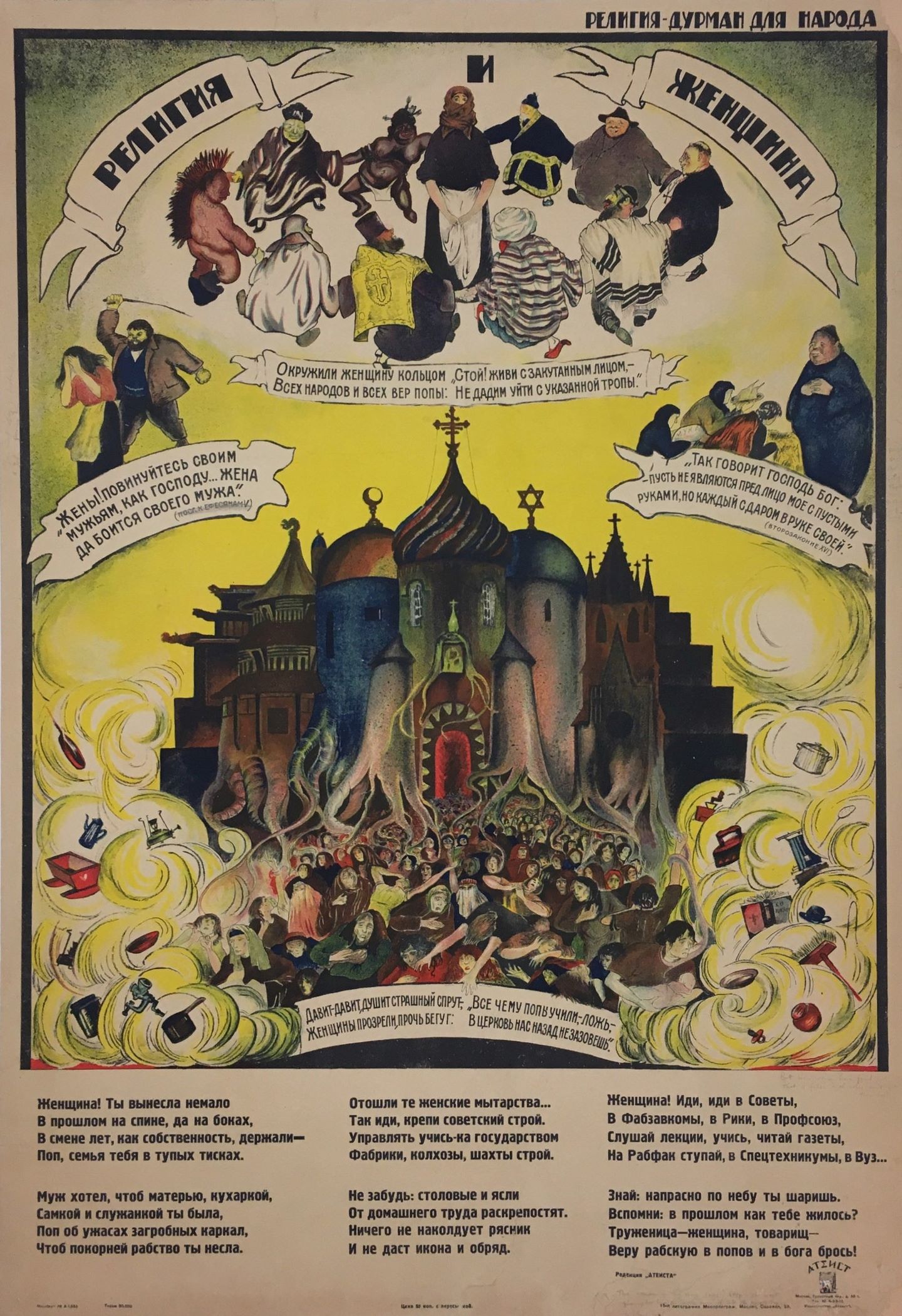
The Social Education of Women.
1. Many of the old revolutionists had a very vague idea of a communist state of society. The formula of “nationalisation of the means of production” was clear enough to them, but they were by no means clear as to the actual transformation to be brought about in social life by the realisation of this formula.
2. During the last decade we have undoubtedly approached considerably nearer to communism, and the contours of the communist system are beginning to become recognisable.
3. We know that the communist society will be built up on the foundation of a mighty self-dependence, of a mighty creative activity of the masse in every sphere of life. We know that this activity has for ultimate goal the organisation of collective work, common control, and mutual comrade-like support, and that the actualisation of this collective work means that all workers must develop their capacity for it, that is, that the whole population, without exception, must be organised in the multifarious forms and branches of the work. We know that unless the masses are accustomed to collective work, unless their capacity for it is developed, communism cannot be realised.
4. It goes without saying that the communists of all countries in which there is as yet no Soviet power must apply the whole of their forces to destroying the old system. But at the same time they must not neglect the duty of preparing the consciousness of the masses for future constructive activity, and must school the masses for this object during and by the revolutionary struggles.
5. After power has been seized, the communists must proceed to constructive work at once; but preparations for this must have been made before the revolution. All communists, the whole working class, and especially the women, must prepare themselves for this.
6. Under capitalism woman is fettered to the family. The care of husband and children confines her within the narrow limits of family life. She is not accustomed to public life, although the greater part of the working masses is composed of women.
7. Working women must take active part in public life from now onwards. Under capitalism the sphere of action open to women workers is of course artificially limited, but they ca already work in the trade unions, parents’ councils, co-operatives etc. This is very important work. Women are thus enabled to set their seal upon both the trade unions and the people’s educational institutions. But the most important point is that this work gives them the necessary habitude, special knowledge and skill, enabling them to take up their duties competently d the very first day after the revolution.
8. The women workers must combine their public activity with economic theory, must approach every question from the standpoint of working-class ideology, and hold the laws of social evolution constantly in view.
9. The women worker will only be able to fulfil her duty as member of the international army of workers when she has developed a comprehensive social activity, when she has learned to permeate this activity with the spirit of communism, and when she has learnt from books and from life, to take up work with the utmost thoroughness.
10. This is the sole way in which she can lay the foundation of the new family, in which the whole of the members a united by their common striving towards a great goal; this is the sole way in which she can create conditions under which family ties do not distract human beings from social activity but help them to develop all their forces and capabilities, enabling them to devote themselves to building up the new social system.
11. Participation in general public activity, intellectual efforts and practical work for the organisation of public life, are the sole means of making the woman worker into a really steadfast and active member of the Party, ready to fight for her convictions, and able to apply these for the transformation of the existing capitalist system into a communist system.
To the CP. of Jugoslavia!
The III. International Conference expresses its deepest sympathy and sorrow to the women comrades of the Jugoslavian Communist Party for the brutal murder of comrade Lubitsch (a woman weaver) in a prison in Jugoslavia in April of this year. The Conference declares, in the name of millions of working women of the West and of the East, that every drop of the blood of the best of the working class which has been shed will be revenged in the hour when the workers’ army every country has won the victory.
Down with the executioners of the working class! Eternal glory to the fighters for the emancipation of working class!
Long live the victorious communist revolution!
International Press Correspondence, widely known as”Inprecorr” was published by the Executive Committee of the Communist International (ECCI) regularly in German and English, occasionally in many other languages, beginning in 1921 and lasting in English until 1938. Inprecorr’s role was to supply translated articles to the English-speaking press of the International from the Comintern’s different sections, as well as news and statements from the ECCI. Many ‘Daily Worker’ and ‘Communist’ articles originated in Inprecorr, and it also published articles by American comrades for use in other countries. It was published at least weekly, and often thrice weekly.
PDF of full issue: https://www.marxists.org/history/international/comintern/inprecor/1924/v04n71-oct-06-1924-Inprecor-cbgb.pdf
 Revolution's Newsstand