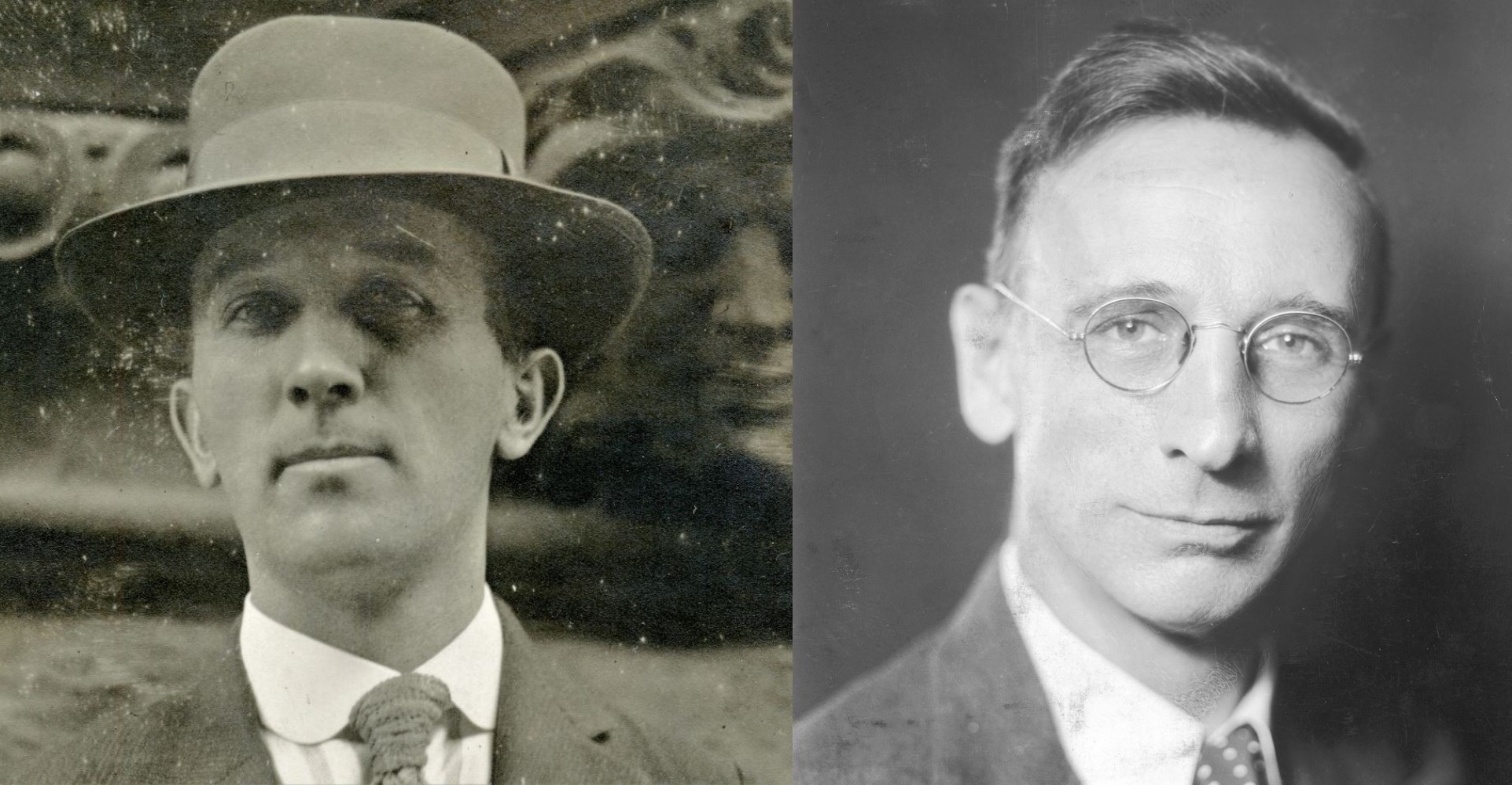
Foster, in the ‘Third Period’-era of building independent revolutionary unions, attacks A.J. Muste’s positions and urges a struggle against his Conference for Progressive Labor Action in the labor movement.
‘Musteism—“Left” Demagogy a la Mode’ by William Z. Foster from The Communist. Vol. 10 No. 6. June, 1931.
AS capitalism plunges deeper and deeper into crisis, and as the workers under press of increasingly intolerable conditions rapidly become radicalized and begin to get into motion, the employers in all capitalist countries develop a wide use of the most blatant “left” demagogy to hold them in check. The efficacy of this method is due to the fact that undeveloped sections of the workers, eager for action against the capitalists, tend to accept this demagogy at its face value as indicating a developing struggle, whereas, in reality, it aims at the paralysis and betrayal of the workers’ struggle.
Thus the various brands of defenders of capitalism—not only social fascists, but also fascists and other openly capitalist elements—are making liberal use of “left” phrase-mongering to cover up their reactionary programs and to confuse and demoralize the workers. Rightly, the Comintern singles out this tendency as a serious danger and calls upon its Parties ruthlessly to expose and combat it.
This “left” demagogy is as widespread as the capitalist crisis. It is to be found in all capitalist countries. Its most insidious forms are those developed among the social fascists, such as the Maxton-Cook group in Great Britain, and the “left” social democrats in Germany.
Of course, American capitalist society, subject to the general laws of capitalist development, exhibits a characteristic growth of “left” phrase-mongering. Even outspoken capitalist politicians of the Mayor Murphy of Detroit stripe cover up with pretenses of radicalism their program of starving the unemployed. Likewise, fascist labor leaders such as Green and Woll present Hoover’s stagger plan in the guise of the six-hour day, and make hypocritical gestures about fighting wage cuts. But the most typical and dangerous of the present luxuriant crop of “radical” demagogy is that of the so-called Muste group, or Conference for Progressive Labor Action. In the C.P.L.A. “left” phrase-mongering is to be found in its most extreme and insidious forms which fit in easily with the phrase-mongering of Green and Co.
THE C.P.L.A.
The C.P.L.A., headed by the former Reverend A.J. Muste, originated out of the Brookwood School-Labor Age group. It was definitely organized in May, 1929. The C.P.L.A. is the Socialist Party force in the trade union field. Its leading group is overwhelmingly dominated by Socialist Party members. It includes such right-wing Socialist Party leaders as Thomas, O’Neal, and Maurer. But its controlling forces lean more to the so-called “left” Stanley group of the S.P.
Besides these definite S.P. elements, there are affiliated to the top leadership a heterogeneous collection of lesser trade union bureaucrats, remnants of Farmer-Labor Party leaders, Brookwood intellectuals, “radical” Liberals, dilettante churchmen, social workers, and the like. And, working closer and closer with Muste, are the renegade groups from Communism of Lore, Lovestone, Cannon, and Weisbord.
The Muste group has already developed a considerable following in the trade unions. The C.P.L.A. has the general support of the needle unions controlled by the S.P. It practically controls the American Federation of Full Fashioned Hosiery Workers, and exerts a big influence in the United Textile Workers generally. It is the sponsor of the Howatt new miners’ union, and it has considerable backing among the machinists, printing trades, and in various local central bodies.
C.P.L.A. PROGRAM
During the period of the high Coolidge “prosperity,” the Brookwood group under Muste’s leadership, like the “progressives” generally in the labor movement, were typical advocates of the B. & O. Plan, labor banking, and the whole rationalization program of the employers and the trade union leaders, with characteristic “progressive” phrases. They looked with indifference or hostility upon the bitter struggle of the old T.U.E.L. in the various unions against these class collaboration policies, with their accompanying terrorism in the unions and flagrant betrayal of the workers.
But now these Muste elements, without changing their basic line of class collaboration, find it necessary to obscure their reactionary position by a bright red dress of radical phrases. Seeing the mass drift of the radicalized workers toward the leadership of the Communist Party and the Trade Union Unity League, they characteristically attempt to stop this tendency by the use of “left” phrase-mongering. They “swipe” from the old T.U.E.L. program a whole series of slogans. Their stated program includes amalgamation, labor party, trade union democracy, release of political prisoners, industrial unionism, defense of the Soviet Union. They even openly try to steal the T.U.E.L. tradition as the opposition in the A.F. of L.
The Musteites also begin to talk of dual unionism. They declare that where the old unions are non-existent or incapable of leading the struggle, new industrial unions must be founded. Moreover, Muste also begins to speak of the “probable” necessity of violence in the class struggle, and vaguely suggests the “possibility” of an eventual dictatorship of the proletariat. Muste also questions the advisability of the labor party slogan, hints at a split in the S.P., and says that if there were an “intelligent Communist Party” in the United States it would fill the workers’ present needs for a political Party.
C.P.L.A. PRACTICE
But the experience of the C.P.L.A. in actual life shows that all this “radicalism” is only so much talk, designed to confuse the workers and to draw them into the control of the A.F. of L. and S.P. reactionaries. The life and activities of the C.P.L.A. demonstrate that the Musteites are only specialized sections of the A.F. of L.-S.P. bureaucracies.
Beneath Muste’s thin veneer of “left” phrases is his real policy of solving the capitalist crisis by organizing capitalist production, of union-management cooperation, of a united front with A.F. of L. reactionaries, of underhanded knifing of the Soviet Union, of support of A.F. of L. Jim Crowism, of advocating militant pacifism, of sabotage of the fight against wage cuts and unemployment.
In the South Muste and his organizers worked hand in glove with Green and MacMahon to betray the textile workers, Muste’s special tasks there being to organize the workers with his radical talk and then to help Green and Company callously sell them out by the notorious gentlemen’s agreements in Elizabethton, Marion, and Danville. In the needle trades Muste applauded the whole strike-breaking, company-unionizing policies of the S.P. leaders. In the Illinois mine fields he made a united front with the labor crooks, Farrington, Fishwick, and Walker against the National Miners Union. Everywhere in the class struggle that the C.P.L.A. plays a role, it shows itself to be a conscious aid to the A.F. of L. bureaucracy and an aggressive enemy of the T.U.U.L. unions.
DANGER OF MUSTEISM
The Musteites are attempting to do again what has been done by similar fake “left” movements in past crises. The damage wrought by the treasons of the Second-and-a-Half International elements in the post-war revolutionary upheavals in Germany; the sabotage of the British general strike by the Purcell-Hicks-Cook “lefts”; the betrayals by the Fitzpatricks, Hillmans, and other “progressives” in this country, are too fresh in our minds for us to mistake the character or to ignore the menace of such “left” phrase-mongering tendencies in the present crisis.
The Muste movement presents a real danger to the T.U.U.L. unions. It is a menace both within the old unions and among the unorganized. As the masses of workers, both A.F. of L. and unorganized workers, awaken and begin to struggle, there is a grave danger that many of them will fall victims to Muste’s phrases. There is already a strong tendency to develop so-called “middle” movements between the T.U.U.L. and the A.F. of L. proper—such as outlaw strikes, independent unions, which the T.U.U.L. does not control. Such movements are the happy hunting grounds of Musteism, which tends inevitably to destroy their militancy and to direct them under A.F. of L. control.
The Muste movement also constitutes a direct danger to the Communist Party itself. It is not simply a trade union group; it has its immediate political phases. The C.P.L.A. offers a convenient program for rallying, not only the so-called “left” Stanleyites in the S.P., but also the various renegade groups from Communism of Lovestoneites, Cannonites, Loreites. Already they have a pretty definite united front on the trade union question. Whether or not hese elements will actually form a new S.P. (Second-and-a-Half International brand) as they hint, or simply conduct their activities inside of and upon the fringe of the S.P., is not decisively important. What is important is that their “left” phrase-mongery—which affects also more advanced workers—directly hampers the work of our Party.
MUSTEISM MUST BE FOUGHT
The fight of the Party and the T.U.U.L. against Musteism must be intensified. There has been somewhat of a tendency to underestimate the danger of this insidious development. This has played into Muste’s hands. And especially the neglect of this work in the A.F. of L. has facilitated the growth of his movement—it has enabled the C.P.L.A. to pose, with a show of justification, as the opposition movement within the A.F. of L. The attitude of the Party and the T.U.U.L. toward Musteism must be one of open and militant struggle. But there must be a differentiation between the C.P.L.A. leaders, and the rank and file elements who want to fight capitalism but who are misled by Musteism’s fake radicalism. Towards the Musteite leaders the policy must be one of constant pressure and struggle. Towards honest workers under the C.P.L.A. influence, the policy must be the united front from below, against the common enemy.
To fight Musteism, a persistent exposure of it as a “left” maneuver of the A.F. of L. is basically necessary. But this, in itself, is not enough. The whole program of the T.U.U.L. must be pushed aggressively. In first line, the fight against Musteism develops on the trade union field. Opposition groups must be built in the old unions; the basic work of organizing the unorganized must be prosecuted vigorously. The whole movement must be built on a militant fight for the partial demands of the workers, with the maximum broadening and deepening of the struggle. As this is done the reactionary character of Musteism will be exposed and its leaders clearly shown to be part of the A.F. of L. bureaucracy and strike-breaking machinery of the bosses.
There are a number of journals with this name in the history of the movement. This ‘Communist’ was the main theoretical journal of the Communist Party from 1927 until 1944. Its origins lie with the folding of The Liberator, Soviet Russia Pictorial, and Labor Herald together into Workers Monthly as the new unified Communist Party’s official cultural and discussion magazine in November, 1924. Workers Monthly became The Communist in March, 1927 and was also published monthly. The Communist contains the most thorough archive of the Communist Party’s positions and thinking during its run. The New Masses became the main cultural vehicle for the CP and the Communist, though it began with with more vibrancy and discussion, became increasingly an organ of Comintern and CP program. Over its run the tagline went from “A Theoretical Magazine for the Discussion of Revolutionary Problems” to “A Magazine of the Theory and Practice of Marxism-Leninism” to “A Marxist Magazine Devoted to Advancement of Democratic Thought and Action.” The aesthetic of the journal also changed dramatically over its years. Editors included Earl Browder, Alex Bittelman, Max Bedacht, and Bertram D. Wolfe.
PDF of full issue: https://www.marxists.org/history/usa/pubs/communist/v10n06-jun-1931-communist.pdf
 Revolution's Newsstand