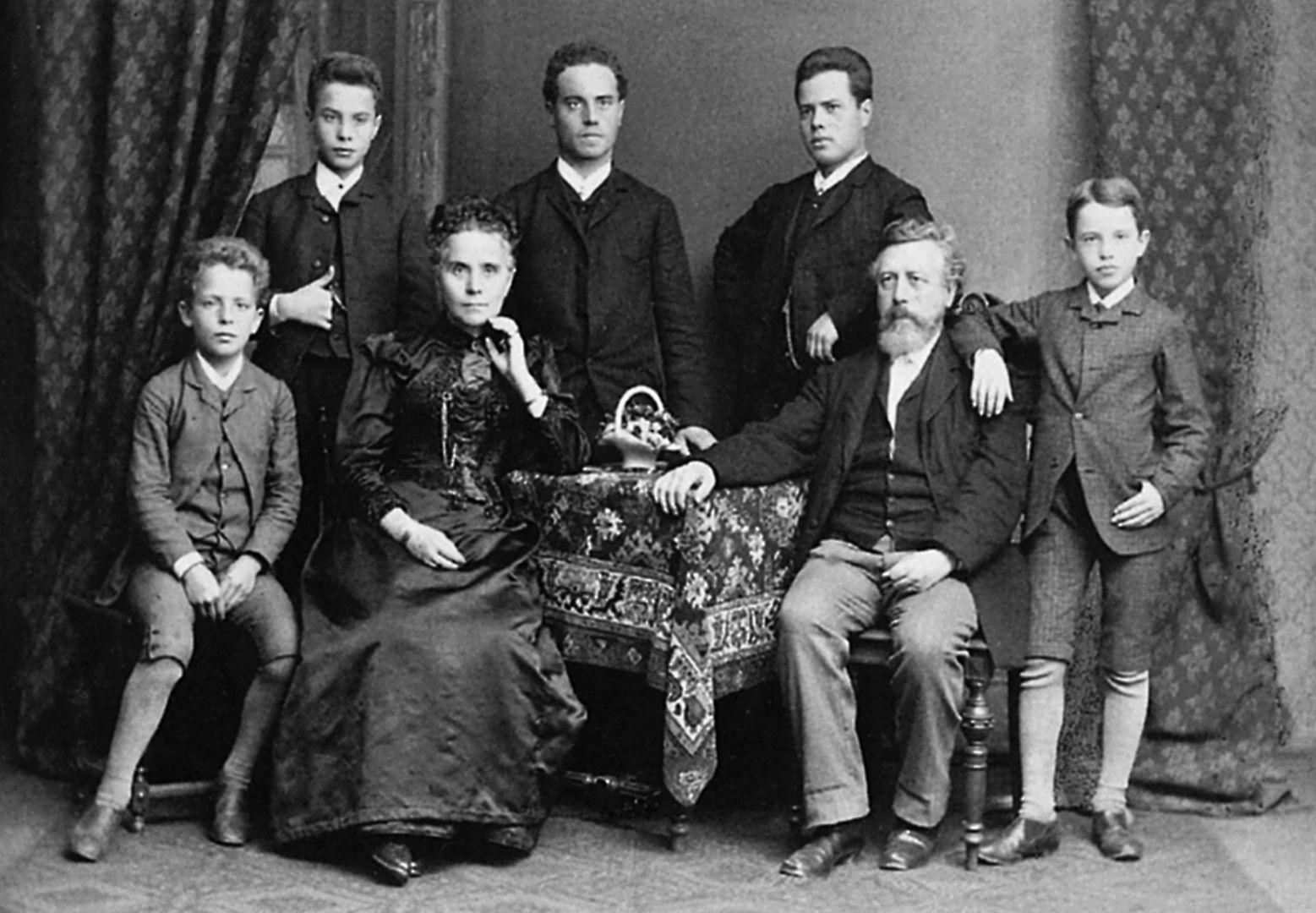
A wonderful speech by Liebknecht given in the Prussian Diet during the First World War on March 26, 1916.
‘The Class Character of the School in the Capitalist State’ (1916) by Karl Liebknecht from Voices of Revolt No. 4. International Publishers, New York. 1927.
GENTLEMEN! The class character of the capitalist order of society expresses itself in the system of education, in the inequality of instruction, and the specific character of the Prussian state and its three-class electoral system finds its expression in the three-class educational system, which lies at the basis of the Prussian system of education, in the holy trinity of public schools, higher schools, and universities.
Gentlemen, there is no doubt that the educational system cannot be separated from the entire social system, for each mode of training not only presupposes that something is to be learned, but that a certain time is available within which it must be learned, and within which the student is economically free; it presupposes the economic conditions that are necessary to enable the student to hold out until he has reached the goal of his education. Furthermore, and least of all in the capitalist order of society, education does not exist for its own sake. Rather, it is a means to an end. Our educational system is dominated by an undisguised militarism and opportunism; we are trained to perform a specific function in the present-day state, and the higher schools–in accordance with a truly Prussian tradition–serve as a training in preparation for the career of higher officials.
Gentlemen, the higher schools are the intermediary link between the sanctum sanctorum of science, the universities, and the public schools, in which only a necessary modicum of information is communicated, in order to train suitable tools for the capitalist order of society. The higher schools are the steps leading up to the temple of the sanctum, to the most glorious thoughts conceived by the human spirit.
Gentlemen, the more crassly the contrasts within society express themselves to-day, in an economic sense, and also in regard to political rights, the more crassly these contradictions have made themselves felt precisely in the war, so the people’s school also presents the fact of the inequality of education more nakedly in its present situation than ever before. The social defects in the system of popular education are now more apparent than ever. The things which even bourgeois authorities had always considered serious defects in the system of popular education, such as the over-crowding of classes, inadequate premises, a too frequent turnover of teachers, under-nourishment of pupils, child labor, and the excessive fatigue of the children, which prevent them from absorbing even the little that is offered in the people’s schools of the present day, have become far worse during the war, and make the fact of the inequality of education far more serious.
Gentlemen, if you will recall that the tendency is to-day far more apparent than ever before to use the people’s school as a means of strengthening the position of the ruling classes, of ensnaring the souls of the youthful proletarians with every device of demagogy, in favor of the ruling classes, in favor of capitalism, in favor of militarism; if one witnesses the hyenas of the battlefield, who now venture to come out on the arena of public instruction more outspokenly than ever before; if one witnesses the piracy that is being practiced against the souls of the proletarians in the public school system on a large scale, in fact, in the whole school system, you will understand how sharp is the feeling, among the proletariat, of the necessity of a revolutionary reform of the entire educational system.
Gentlemen, there is not rain enough in the gentle skies to wash away the sins of the neglect of youth on the part of the bourgeois order of society, and all the attempts to whitewash this society, all the attempts to depict–by emphasizing the favorable aspects–the neglect of youth as being not quite so bad–all these attempts which we are now witnessing, can only signify that you are inclined to keep alive these evils, now that you have once seen how irritating is the revelation of these facts to the public.
As a matter of fact, instead of the fine words that have been pronounced by the bourgeois parties in connection with these motions, which are calculated to give but poor solace to the proletariat, these gentlemen should say frankly: “Are we not keeping the soup-kitchens going?” And are you not capable of understanding what it means to make the approach to higher education dependent on conditions of the type of those set by you, when you make it seem a special favor, while this approach to higher education is a fundamental human right that is cut off from the great mass of the population, by the capitalistic order of society only, by the capitalistic order of society which here displays in the clearest way its whole noxious character? Do you believe that the mass of the people has not–in this act of the ruling classes–the feeling that it wishes to quote from Faust the words: Es ist so elend betteln zu mussen? (It is so wretched to be obliged to beg alms.) Instead of their right, you give them alms, which can have only the result of breaking the backbones of those who are to receive these alms. No proletarians, except those who have been broken in their inmost spirit, who have been made dependent, who have been deprived of their class consciousness, can thus be best trained by you to be the tools of the capitalist order of society. And the most repulsive phase of the whole matter is the self-complacency with which such worthless proposals-they may not even be called proposals–such pretenses of a new orientation of education are offered to the public. This mess of pottage, which in addition serves as a prop to the prevailing three-class educational system, and is intended to serve as such a prop, will surely not arouse among the masses of the people the impression that the ruling classes mean even to apply such a modicum of social-mindedness as would be compatible with the capitalist order of society in the nature of the case. Nothing is more outrageous in a class system than the brutal and careless wastage of human mental energy, of latent and awakened mental powers, than this waste of valuable human talent in the treadmill of mechanical labor; this very opposite of human economy, which is the characteristic of the present order of society. Perhaps the profoundest tragedy in the lot of the proletariat is the iron-clad law that children of the proletariat must be chained to ignorance of mind, to hold out their hands like souls in despair, though these souls had been born to the highest heritage, to hold out their hands from the darkness into the light of the mountains.
Ack, aus dieses Tales Grunden,
die der kalte Nebel druckt,
konnt ich doch den Ausweg finden,
ach, wie fuhlt ich mich begluckt!
(Could I but find the way out of the bottom of this valley, oppressed, with the cold mist, how happy I should then be!)
But these proposals do not offer an escape. It is in truth a forest of closely packed spirits, like the forest through which Virgil walked with Dante, a forest of the spirits of those who have not sinned and yet have remained unredeemed.
Thus the school, in its total character, is a political means of propaganda in favor of war, an auxiliary for the war economy, a tool for the finances of war.
It is a specific means for the education for war! The militarization of the school, gentlemen, even of the higher school, is regarded even by many bourgeois persons with suspicion. Our present education aims to begin even in the school with training men into war machines, with making the school a training-ground for war, physically and mentally. The object of the physical hardening of youth–which in itself is very praiseworthy–why is it now being pursued so energetically? Simply for the reason that these invigorated youthful bodies will be needed for the moloch of militarism. Therefore even “physical fitness” is being pursued from the war angle; an improvement in public health is proposed in order that human lives may be destroyed!
The official apparatus of propaganda in which the church, art and science, the public school, the university, and, of course, also the higher school, are cooperating side by side with the police and the courts, the censorship and the entire administrative apparatus of the condition of siege, has never been so clear and plain as to-day when it stands in the service of war. And since the censorship forbids speaking of these things to the general public, it is our duty to speak of them here.
No doubt there is a great difference between the instruction in the elementary schools and that in the higher schools. For, while it is the task of the public school to make the younger generation of proletarians useful as a tool of the capitalist order of society, the task of the higher schools, in the eyes of the ruling classes, is, in the first place, that of training the youth of the ruling classes for the duty of mastery which they must carry out in the present order of society. But this results in a very peculiar synthesis composed of the phraseology of the–as it were–officially approved morality and the capitalist reality, which is its precise opposite. The educational ideal of capitalism is not humanity and idealism, but its very opposite.
I tell you that even the mental liberation of the working class, its liberation from the fetters of mental oppression, can only be the work of the working class itself. And it is our task to shout to the working class of all countries, on this occasion also, the words: “To the work!” Those in the trenches as well as those at home–let them drop their arms and tum against the common enemy who is taking away their light and their air.
The fourth in the Voices of Revolt series begun by the Communist Party’s International Publishers under the direction of Alexander Trachtenberg in 1927.
PDF of original book: https://www.marxists.org/history/usa/parties/cpusa/voices-of-revolt/04-Karl-Liebknecht-VOR-ocr.pdf
 Revolution's Newsstand