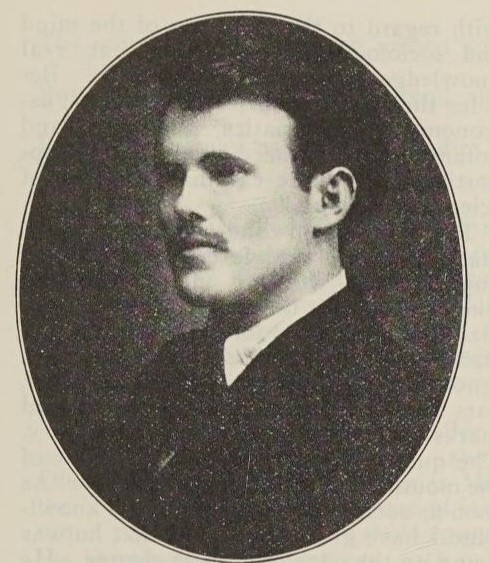
Socialist coal miner Louis Duchez says that if only the working class can free itself, than it also must produce its own intellectual leaders and not rely on the educated middle class then so prominent in the Socialist Party.
‘The Proletarian Attitude’ by Louis Duchez from International Socialist Review. Vol. 9 No. 10. April, 1909.
I DOUBT if ever there was a clearer case where one writer misunderstood the other (both of them claiming to be members of the same class and political party) than that of Comrade Thompson in his reply to Tom Sladden’s article, “The Revolutionist,” which appeared in the December issue of the Review. Thompson spreads himself over ten pages to upset Sladden, yet at the close of the conflict leaving his opponent untouched and smiling.
To Comrade Thompson, Sladden’s article is “a most astonishing utterance,” “ridiculous” and “absurd.” Indeed, it is—to his type of mind. The case before us is interesting as a study in socialist psychology, at least. But there is more than that to it! Right here is involved two attitudes of mind, which, from now on, are going to battle for supremacy in the Socialist movement. I refer, on the one hand, to the attitude of the bourgeois intellectual (?) who is in the movement by adoption, and on the other to the proletarian who has no other place to go.
As Sladden intimates, there is at present in the socialist movement “a spirit, which in all sections of the country seems to be manifest, to conceal, somewhere in the background, what should be the foundation of any socialist movement, the class struggle.” Like the Theosophist’s heaven the class struggle is becoming more an attitude of mind than a fact of life. With very few exceptions the socialist press and platform is dominated by this spirit. A few years ago the capitalist newspapers and magazines vied with each other in exposing the rottenness of our industrial and social life. Today they are mum. They have closed like a clam. Of course, they realized they were on dangerous ground. But the socialist press—urged by the popular clamor for reform and the encouragement of the increasing inflow of middle class “respectables” into the movement— has taken up the howl. Our press, in order to secure circulation and popularity, is concealing, unconsciously, I believe, that and that alone which will impel us to steer clear of the rocks of reaction—the class struggle.
The Socialist Party, its press and platform, is today dominated by so-called intellectuals who have cast their lot with us by adoption, and they have brought with them soured bourgeois ideals which they hope that the revolutionary proletariat will realize for them. We like to say that the Socialist Party is not a one man party, that it is run by the workers themselves, etc. But the facts upset that belief. The socialist press and platform today do not represent the interests of the revolutionary proletariat, strictly speaking. They represent the ideals of a radical bourgeois element, out of harmony with the established order of things. They are heading for the rocks of reaction.
I am a coal miner. My entire life has been a hard, cruel struggle, not for autos, steam yachts, vacation trips and the luxuries of life, but for a mere animal existence. I am engaged in a hard fight for food, clothing and shelter for myself and mine. What do I care if Lincoln was a revolutionist and said that labor was superior to capital? What to me are the sacrifices that have been made in the past for human freedom? A.M. Lewis says in his book, “Vital Problems in Social Evolution”: “A Socialist may well pause and as, which is the greater part: to be born in a cooperative commonwealth, where human liberty is an accomplished fact, or to be alive today when true men and women join hand with hand and brain with brain, and fight unflinchingly the cause of generations yet unborn?” This kind of talk is all right to perpetrate upon certain strata of the socialist movement, that are assured of next week’s meal, but to me, slave, worse than a chattel slave, it is an insult and a taunt. And the great mass of my fellow toilers like myself as yet are interested in but one thing, the struggle for the absolute necessities of life. We have no religion, we have no patriotism, and the love of humanity extends only to those of our kin whose burdens we must help to bear. What do we care for “The Spiritual Significance of Socialism,” “the deadening influence of capitalism upon education and intellectual development,” “the burdens of tradition upon art and literature,” or “the contributions of Ibsen, Shaw and Whitman to sexual freedom’? Our proletarian minds do not live and move in those higher (?) realms of thought. Our wives and daughters are not dreaming of social and sexual freedom. They, like ourselves, in this period of the world’s history, are concerned only in the struggle for bread and calico and a shelter from the storms. We have learned what some of the intellectuals have yet to learn, and that is that when our stomachs were full, our backs covered and our fires burning, our domestic grievances faded away and we felt happy.
O yes, there are moments when my mind climbs above these “sordid” things of life. If on Saturday night after a hard week’s work I am able to buy Willie a pair of shoes and Nellie a new gingham dress and a piece of roast for the family and a cigar for myself and can see the wife and children smile as we gather around the fireside in the little shack we call “our home,” then I often think of “higher things.” Then the words of the great Marx appeal to me and I get a vision of the society of the “generations yet unborn.” During those rare moments a panorama of a new civilization passes before my mind’s eye. Then I can see a society free from want, free from the ignorant traditions of the past, and a universe of brothers and comrades where the welfare of all is the welfare of each. But Monday morning comes. The vision has vanished. Like a wild animal I must crawl down into a hole in the earth, away from the sunshine and fresh air, and sweat and struggle in semi-darkness that I and mine may be able to answer the landlord and the grocer at the end of the week. And this all in a world where storehouses are bursting and wealth everywhere—wealth that I and my comrades have produced. No, the class struggle is a real thing. Too long has it been concealed and covered up. It cannot be emphasized too forcibly if the great proletarian mass is expected to act. Deplorable as it may seem to some of our ‘intellectual” comrades, the burden of the social revolution must rest on the shoulders of “the men who think through their stomachs.” The “other factors” could very profitably be left sleeping in this period of the world’s history.
It is true that the leading socialists up to the present time have had “the advantages” (?) of an education in capitalist schools. It is true also that this same type is editing our papers and are our “leading speakers.” And here lies the danger. They have played a noble part in the past. With all the disadvantages of the “educational advantages” of capitalist schools they wrote us books on economics while we slaved and supported them. We thank them for all this. But we cannot any longer trust them as our guides. Their ideals are not “stomach ideals’”—ours are. They can steal over into the capitalist camp at any time—we can’t. They can retire from the firing line—we can’t. As Sladden says, they can back up, but we can’t, for we have no place to back to. As an example look up some of our comrades (?) who are prominent as writers and speakers. Around election time they talk to the workingmen every night, and get paid for it, too, then they leave the work of the locals to those who are distinctly proletarians. The truth is that with the years of education in capitalist schools and the bourgeois environment that goes with it, they cannot grasp the distinctly proletarian attitude toward life. The socialist movement to them is a luxury. Through it they see a chance for the realization of some of their “radical” ideals; through it we see the assurance of a job and more of what we produce. We do not blame them—we rather thank them for what they have done—yet we cannot trust them. We realize that there are psychological forces outside of our own working for our emancipation—and their place is with them—but the one all absorbing thing that must occupy our minds is the overthrow of capitalism. In this tremendous period of the world’s history we cannot allow “other factors” or “other ideals” in control of the proletarian army other than the “stomach ideal,” and the registered impressions in the brain cells of one who has spent years in capitalist schools and in that environment produces a different attitude toward life than that of a proletarian whose life from childhood has been a struggle for an animal existence.
But where is the intellect for this proletarian movement to come from if these intellectuals from the bourgeois class are not to lead? We answer, from the proletarians themselves. Comrade Thompson thinks it won’t. He thinks it will come from the aristocrat mechanics, the farmers, the professional classes and the college man. We should appeal, he says, to all classes who may be susceptible. Above all things he holds that the “unskilled, unrecognized wageworker, who, as yet, has no labor organization and no political expression,” as Sladden puts it, will lie in his misery and die there if not pulled out of it by those higher up in social life.
In the first place, 90 per cent. of all this talk about “the degenerating influence of capitalism upon the proletarian mind” is rot. It is true that in the worst parts of our large cities the workers are crushed physically and mentally until they are incapable or realizing their misery or thinking intelligently, but the great mass do think and feel and are sound in their conceptions of life, so far as they have gone. Compare the average proletarian, physically or mentally, with the average bourgeois that you meet, and you will find the former stronger physically and clearer mentally. He may not be able to talk glibly of patriotism and “Christian civilization,” and “eternal justice” and of “our great country,” yet his knowledge of life so far as he has gone is in line with fact. He is not in the clouds. His life experience has given him a ground work for a ready acceptance of modern science. For instance, he—the industrial proletarian at least—is not troubled with religious or metaphysical speculation. His contact with machinery, made by man and operated by man day after day before his eyes, teaches him unconsciously cause and effect. If he or his fellow workers are injured by this machinery he learns it was not punishment sent by some outside supreme power but due to some failing within himself or the machine. In economics, too, he is on solid ground. Economic Determinism is taught him week in and week out. He knows that his feeling toward himself, to his family and to society is determined, generally, by his economic condition, whether he realizes it or not. He is not puzzled over the theory of surplus value as college professors and “intellectuals” are. It is impressed upon him every time he sees his employer buy a new auto or take a trip to Europe while he is turning out the dividends at home, or when he inquires for a job and finds he is not needed because he has produced too much. And the class struggle, none know it better than he does. Every day of his life it is impressed upon him. He doesn’t doubt it. He knows that he is being robbed by those higher up and he knows they are his enemies.
Of course he is not familiar (the great mass of proletarians I mean) with the theories of Karl Marx regarding his condition and the way out but he is becoming so with remarkable rapidity. The thousands of volumes issued by Charles H. Kerr and Company upon “dry” economic subjects are not going to the intellectuals but to proletarians in practice as well as in party membership. Among the more vigorous of these proletarians, who have nothing to lose but their chains, there is developing a group of men whose grip upon the facts of life is more fundamental, more sound, more scientific than that of any group of men in all history. The hard, cruel experience of their every day lives has compelled them to keep their feet upon the ground and stick to the world right here and now. For this reason they do not flounder around in the bourgeois bog of scholasticism, but leap over it all, grasping the situation as it is. As yet this new type in the socialist movement has not exerted his power extensively. He has attended no schools of rhetoric and oratory as his intellectual comrades have. He has not yet invaded our press and platform. He is handicapped by the eloquence and flowery editorials of his intellectual comrades. He is now waiting, ready to spring to the lead of the proletarian army. When he does this we will march straight to our goal and the enemy will tremble.
Today two-thirds of the space in our socialist papers and the talk on our platforms is given to exposing corruptions of our industrial and social life and to answering bourgeois objections to socialism. Now all this gush does not interest the proletarian. He’s not wondering whether socialism will kill incentive, break up the family, destroy religion, etc. Now why is all this rot thrown out from the movement? Simply this. Our writers and principal speakers today are for the most part made up of intellectuals (?) from the bourgeois class, and they are appealing to the type of mind from which they sprung, and answering the objections which they themselves raised before coming into the movement.
There is no wonder that the great mass of proletarians are dead to our socialist propaganda. When proletarian thinkers get the reins of the socialist movement, its press and platform (and they will before long), the great army will move straight forward. It will not waste its energy in answering bourgeois objections to socialism, exposing capitalist grafters or fighting for social and sexual freedom for women. It will then be absorbed in but one thing: the education of the workers to class-consciousness and solidarity.
Until a strictly proletarian attitude guides the movement we will continue to waste our energy. Moreover, until that time comes we will be in danger—in the hands of reaction. The proletarian must emancipate himself if he is ever to be emancipated, and the leadership must come from proletarian brains. The proletarian attitude is the social or world attitude in embryo—but that does not concern us just now.
Saginaw, Mich.
The International Socialist Review (ISR) was published monthly in Chicago from 1900 until 1918 by Charles H. Kerr and critically loyal to the Socialist Party of America. It is one of the essential publications in U.S. left history. During the editorship of A.M. Simons it was largely theoretical and moderate. In 1908, Charles H. Kerr took over as editor with strong influence from Mary E Marcy. The magazine became the foremost proponent of the SP’s left wing growing to tens of thousands of subscribers. It remained revolutionary in outlook and anti-militarist during World War One. It liberally used photographs and images, with news, theory, arts and organizing in its pages. It articles, reports and essays are an invaluable record of the U.S. class struggle and the development of Marxism in the decades before the Soviet experience. It was closed down in government repression in 1918.
PDF of full issue: https://www.marxists.org/history/usa/pubs/isr/v09n10-apr-1909-ISR-riaz-go-C.pdf
 Revolution's Newsstand