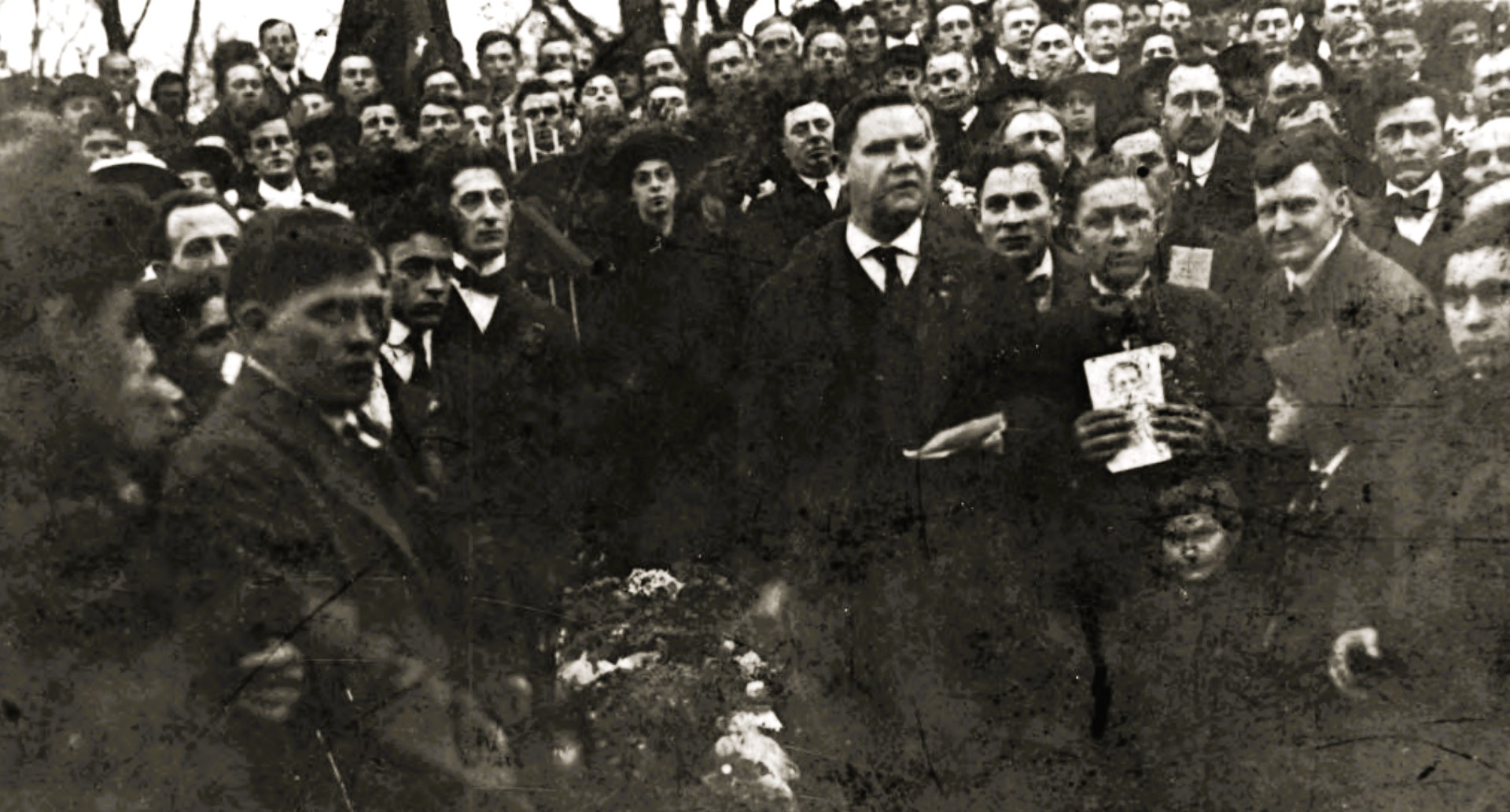
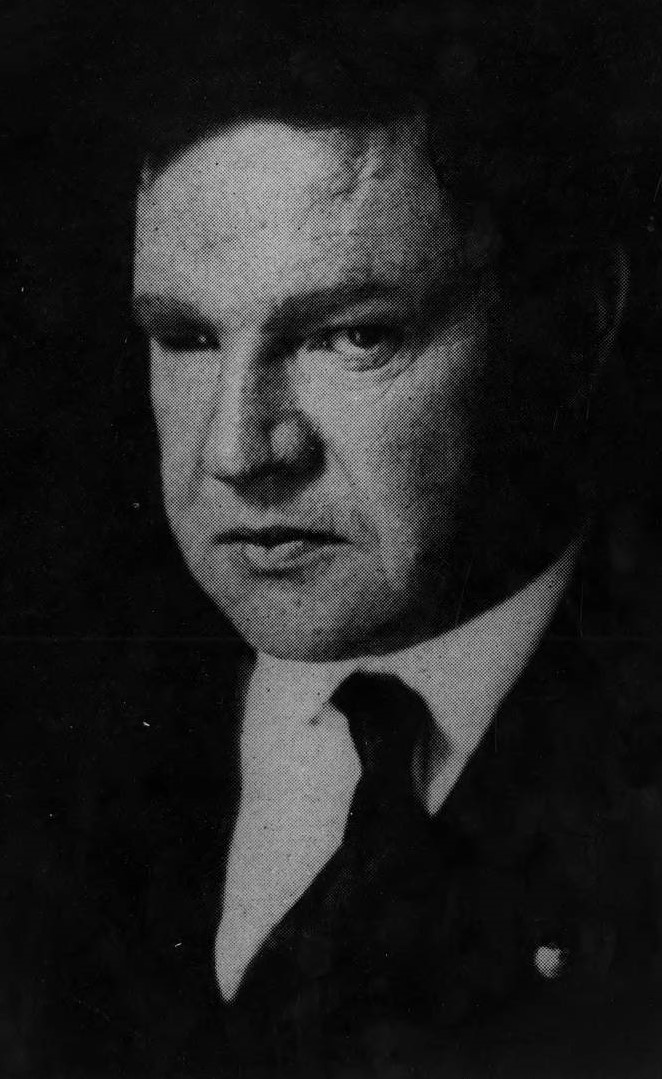
Indicative of a growing left-wing, Haywood’s resounding 1911 election to the Socialist Party’s seven-person leading National Executive Committee seriously rattled the right-wing. Immediately they began a campaign against the left culminating in changing the S.P. constitution at the 1912 National Conference. “Article 2, Section 6” demanding the expulsion of any member who “advocates crime, sabotage or other methods of violence” was added. Charged with its violation by the State Committee of New York, Haywood, though not expelled, was removed from the N.E.C. in February, 1913. Below is a defense of Haywood signed by dozens of prominent New York party members with some, like Hubert H. Harrison and Louis B. Boudin no surprise, while others are.
‘Resolution of Protest Against the Recall of William D. Haywood’ from International Socialist Review. Vol. 13 No. 8. February, 1913.
Whereas, The State Committee of Local New York, seconded by the State Committee of New Jersey and the Committee of the District of Columbia, has initiated a referendum for the recall of Comrade William D. Haywood from the National Executive Committee of the Socialist Party, and
Whereas, Local New York, through its Executive Committee and its Central Committee, has further passed resolutions demanding that steps be taken to expel Comrade Haywood from the Socialist Party, and
Whereas, Both the attempt to recall Comrade Haywood and to expel him are based upon alleged statements made by Comrade Haywood at public meetings, at which no authorized stenographic reports were taken and which are therefore founded upon unauthorized, individual verbal reports which are, from the nature of the case, necessarily inaccurate and conflicting, and
Whereas, The said resolutions were adopted without granting Haywood any hearing or even attempting to procure a statement from him as to his position upon the disputed questions, and
Whereas, The so-called Section 6, Article II of the Constitution of the Socialist Party, relied upon in part by the opponents of Comrade Haywood in their attempts to expel him, is not only too indefinite to be capable of enforcement, but also has, we believe, never been actually carried and should never have been officially printed in the Constitution; for the adoption by national referendum of both the proposed section and the substitute section, according to parliamentary law, really disposes of the original section by carrying the substitute, and brings about a result which, according to any interpretation, is so ambiguous and contradictory as to be without effect.
Therefore Be It Resolved, That we, the undersigned members of the Socialist Party, believe the action of the New York State Socialist Party in attempting to recall Comrade Haywood from the National Executive Committee and to expel him from the Socialist Party to be unwise and unwarranted, and to tend to create dissent and ill-will within the ranks of the Socialist Party. That furthermore, we believe no such action should be taken against any member unless he definitely repudiates political action or some other principle of the Socialist Party.
Be It Further Resolved, That we know Comrade Haywood to believe in political action, and to have been of great service to our party in helping it to solve the difficult problems that confront the working class upon the industrial field. We also believe that instead of exaggerating inevitable differences of opinion, instead of reviving DeLeonistc tactics of personal incrimination, heresy-hunting and disruption, we should make use of the special talents of every member within our ranks, and in this way secure loyal service and co-operation. We believe in a united working class.
Be It Further Resolved, That we protest against the attempt to recall Comrade Haywood from the National Executive Committee and to expel him from the Party. We call upon all Party members throughout the United States who are in sympathy with these resolutions to join us in this protest, and we urge them to immediately bring this matter before their branches and locals.
Be It Further Resolved, That copies of these resolutions be sent to the Socialist press.
James P. Wahbasse, Osmond K. Fraenkel, Robert M. Lackey, Margaret K. Sanger, Stephen G. Rich, Anna Sloan, John Sloan, Mary S. Oppenheimer, Moses Oppenheimer, Gertrude M. Light, Marion B. Cothren, Ida Rauh, Max Eastman, Arthur Livingston, George. S. Gelder, Alexander Fraser, Herman Simpson, Grace Potter, Frank Bohn, Sol Bromberg, Helen Marot, Walter Lippman, Anna Strunsky Walling, Wm. English Walling, Jessie Ashley, Karl Heideman, Rose Pastor Stokes, J.G. Phelps Stokes, Courtenay Lemon, Rose Strunsky, Paul Kennaday, Mitchel Loeb, Timothy Walsh, Bertha W. Howe, Louis B. Boudin, Joseph Michael, Hubert Harrison.
The International Socialist Review (ISR) was published monthly in Chicago from 1900 until 1918 by Charles H. Kerr and critically loyal to the Socialist Party of America. It is one of the essential publications in U.S. left history. During the editorship of A.M. Simons it was largely theoretical and moderate. In 1908, Charles H. Kerr took over as editor with strong influence from Mary E Marcy. The magazine became the foremost proponent of the SP’s left wing growing to tens of thousands of subscribers. It remained revolutionary in outlook and anti-militarist during World War One. It liberally used photographs and images, with news, theory, arts and organizing in its pages. It articles, reports and essays are an invaluable record of the U.S. class struggle and the development of Marxism in the decades before the Soviet experience. It was closed down in government repression in 1918.
PDF of full issue: https://www.marxists.org/history/usa/pubs/isr/v13n08-feb-1913-ISR-gog-ocr.pdf
 Revolution's Newsstand