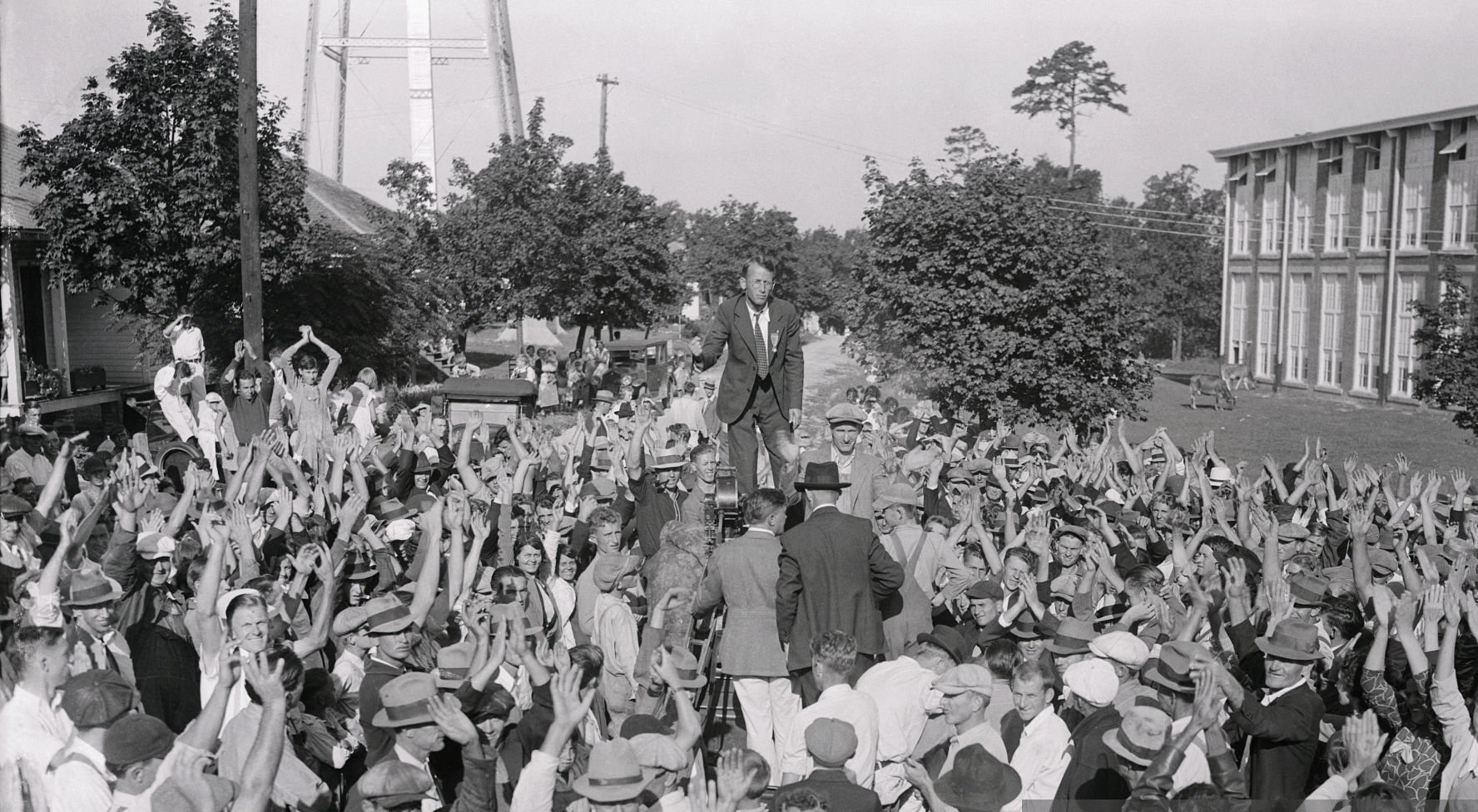
1934 was a year which transformed the U.S. labor movement. Four of our most consequential strikes occurred; the San Francisco General Strikes, the Toledo Auto-Lite Strikes, the Minneapolis Teamsters Strike, and the largest and most profound–also the biggest defeat–the massive General Textile Strike. One of the biggest strikes in all U.S. history, its defeat it still felt in the South’s lack of unions and lower standards of living. Karl Reeve gives the Communist analysis of the epic fight and its betrayal.
‘Lessons of the Great National Textile Strike’ by Carl Reeve from The Communist. Vol. 13 No. 11. November, 1934.
THE General Textile Strike of over half a million workers was the largest strike in the history of the class struggle in the United States. It demonstrated a new high level of militancy, and the great fighting capacity of the workers. The workers are ready to re-strike now, in spite of the severe terror, the blacklist, and the betrayal which they experienced.
The strike, which was for these half million workers a battle against worsening conditions under the N.R.A., showed that the toilers can expect nothing but bullets and the denial of their demands from the New Deal. The strikers faced the severest terror from the Roosevelt government. Twenty were killed and hundreds shot; but they fought back and, with militant methods, closed down the mills and paralyzed the textile industry.
After three weeks they were betrayed by the Gorman-Green A. F. of L. leadership in the most brazen sell-out in the history of the labor movement. The strike and its betrayal showed the necessity for a fighting, class-struggle program and rank-and-file leadership if the workers’ demands are to be won.
Once more the strike brings forward as the main lesson for our Party the necessity of intensifying our work inside the A. F. of L. unions.
The strike, occurring in the period of the great strike wave which began early in 1934, came on the heels of the historic San Francisco General Strike. The Textile Strike confirms in all particulars the thesis of the Central Committee of the Communist Party adopted at its meeting on September 5-6. This resolution declared:
“The strike movement not only grew in the numbers of strikers, in the militancy and duration of the strikes, but also qualitatively entered a higher stage with the emergence on a nation-wide scale of a general strike movement.”
The General Textile Strike was preceded and made possible by the lessons the workers learned from the great class battles of Toledo, Milwaukee and Minneapolis, and, most important, from the West Coast marine strike which culminated in the San Francisco General Strike.
The General Strike in the textile industry demonstrated the correctness of the theses of the Communist Party Convention and Central Committee meeting regarding the sharpening of the class struggle. It was the answer of the workers to the intensified and long continued attack on the living standards of the textile workers and on their unions. It was directed against the arbitration boards of the N.R.A.—against the Roosevelt government. It was the workers’ answer to the attempts of the employers, the Roosevelt government, and the labor bureaucrats to force them to bear the burdens of the crisis by means of the N.R.A.’s wage-cutting, speedup, company-union, and union-smashing drive. The struggle reached fierce intensity during the three weeks of its existence, demonstrating the increased fascist tendencies, the increased terror of the Government against the workers, which cost the lives of 20 strikers and the wounding of hundreds.
THE SAN FRANCISCO AND TEXTILE STRIKES
The General Textile Strike once more confirmed the line of the Party that in the present period of prolonged and sharp crisis, economic struggles quickly become political struggles and small partial strikes rapidly turn into general strikes:
“In the present period of capitalist decline, a stubborn struggle for even the smallest immediate demands of the workers, inevitably develops into general class battles. Beginning in a typical economic struggle over wages and working conditions” there takes place, “a concentration of class forces in support of one and the other side which soon aligned practically the entire population into two hostile camps…The economic struggle was transformed into a political struggle of the first magnitude.”
The above was written regarding the San Francisco General Strike, but it applies as well to the General Textile Strike. The Textile Strike became a struggle against the government boards themselves, against the fascist terror of the Federal and State Government and against the armed guards and police. This was true of both general strikes, the one including in its scope an entire city and the marine workers of the whole West Coast; the other, a great strike in one industry covering many States and sections of the country. These two great general strikes were alike also in the militancy displayed by the workers which defeated the government’s fascist terror (Woonsocket and Saylesville).
In both was revealed the betrayal role of the bureaucrats of the A. F. of L. who acted as agents of the employers and the Government in attempting to sell out the strikes.
The decisive difference in these struggles lay in the strength of the rank-and-file opposition movement.
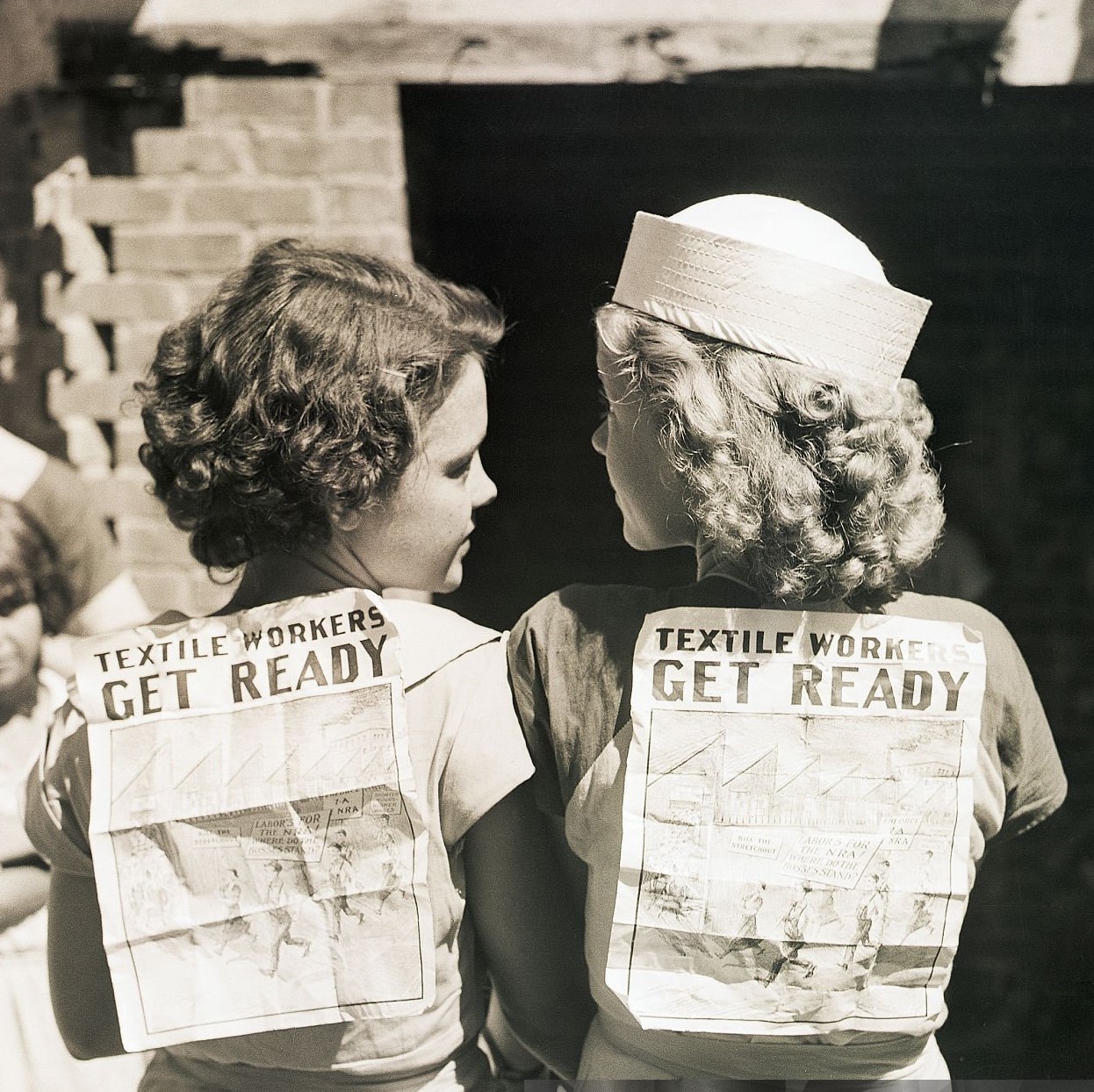
The combined forces of the employers, the Government and the A. F. of L. bureaucrats, were able to sell out and defeat the General Textile Strike because the Left Wing and the Party did not have an organized rank-and-file opposition inside the United Textile Workers Union. This was the basic reason for the defeat of the textile workers. In those mills where Left-Wing sentiment was strongest, there was an orderly retreat. The Gorman betrayal left in its wake the blacklist of thousands and heavy prison sentences for many. The union-smashing drive continued. That this defeat was not final is evidenced in the fact that almost immediately the textile workers’ re-strike movement began.
In the San Francisco General Strike, where the Party and the Marine Workers Industrial Union were able to build the rank-and-file United Front, the solid unity of the longshoremen and seamen, and rank-and-file control of the marine strike, the betrayal of the A. F. of L. bureaucrats was not completely successful; the retreat was orderly; the open-shop drive was checked; and concessions were forced in the marine settlement. In the General Textile Strike the betrayal was more successful and no concessions were won because of the lack of an organized rank-and-file opposition. Except in Hazelton, Pa., the A. F. of L. bureaucrats were able to check the spread of the Textile Strike into local general strikes.
A STRIKE AGAINST N.R.A.
To the 500,000 workers involved, the General Strike was a walk-out against conditions brought about by the N.R.A. This was shown in the statements of even the local and State officials of the United Textile Workers’ Union before the strike.
The report of the North Carolina Textile Conference before the strike is typical. The Salsbury Post of July 22, in covering the State Textile Conference, reported: “L.E. Brokshire, President of the South Carolina Federation of Labor, said that labor was not getting a square deal from the S.C. Industrial Relations Board and censored that group.”
The minutes of the Georgia Textile Conference held in Macon, June 30, contain the following: “Delegate Henry, Local 1899, La Grange, Ga., said, “We have never had a decision from the Cotton Textile Relations Board fair to the workers”. Hundreds of local officials made similar public statements. In every textile center the workers were determined that conditions existing under the N.R.A. must be changed.
It was the overwhelming demand of the masses of textile workers which forced the leadership of the United Textile Workers Union, the Gorman-MacMahon machine, to call the strike. The National Convention of the U.T.W., held in New York City, the week of August 13, made the strike decision. The Gorman-MacMahon machine did not want the strike and, at the last minute pleaded with the delegates to allow the Executive Council to set the date. But the delegates voted for a strike on or before September 1.

The Cotton Textile Code was the first adopted. Under it the minimum wage was set at $13 for the North and $12 for the South. During the past year and a half, the textile employers pushed wages below this minimum. The stretch-out was intensified greatly. Workers were told that new piece-work rates were set, and if they could not make the minimum wage by faster work under the new rates, they could get out. The minimum wage was set for the 40-hour week, but no minimum was set for a week under 40 hours. Pay envelopes of $4, $5 and $6 for 30 hours is not uncommon, and are collected by the hundreds by textile organizers. For skilled and semi-skilled workers the minimum wage became the maximum. Experienced workers were forced to take “learners” wages. In Alabama, before the strike, the average wage was $7.30 week (including skilled workers) for a 30-hour week. Government figures showed an average wage in April, 1934, of only $13.31, including all categories. The Union grew to 300,000 members under these conditions. Discrimination also grew. Thousands of union members were fired.
CAUSES OF THE STRIKE
On top of these rapidly worsening conditions, the Roosevelt government in the spring ordered a 25 per cent “curtailment” in hours in the cotton textile industry, without any increase in pay. This meant a 25 per cent wage-cut. The cotton textile workers answered by voting for strike. The strike date was set for the first week in June. At the last moment, the MacMahon-Gorman leadership called the strike off without consulting the workers, and on June 2 signed an agreement with Johnson and the N.R.A. whereby the curtailment was accepted and the strike called off. They promised an “investigation” by the N.R.A. Division of Planning and Research to determine whether or not wages should be increased, whether the stretch-out should be limited, and whether hours should be reduced.
The report of the N.R.A. on wages which was handed down a few weeks later, concluded as follows: “Under existing conditions, there is no factual or statistical basis for any general increase in Cotton Textile Code wage rates.” This report entirely ignored the question of the exorbitant profits made by the textile employers in 1933-1934.
The report on hours concluded that in order to supply “per capita” demand, hours should be increased to 90 a week for two shifts. It said: “It will require 90 hours per week of productive machine operation, or ten hours more than the 80-hour maximum, in two 40-hour shifts, permitted under the Cotton Textile Code, when normal annual consumption of cotton in the United States is obtained”.
The report on the stretch-out was held up.
Thus the N.R.A., after calling off the June strike with the approval of the Gorman-MacMahon leadership, ruled that wages could not be increased, hours could not be shortened, and stretchout could not be decreased. The N.R.A. then proceeded to put over the curtailment—a 25 per cent reduction in wages. “Curtailments” (always accompanied by increased speed-up) followed in silk and wool.
A similar course was taken in the woolen industry. The woolen and worsted workers voted to strike on July 2. The Gorman-MacMahon leadership called off the strike at the last moment and accepted a government “wool board” which, just as in the cotton industry, ignored the demands of the woolen and worsted workers.
THE GORMAN-MACMAHON LEADERSHIP
The Gorman-MacMahon leadership was well known as one opposed to strikes. After the re-election of this leadership in the National Convention of last August, the Worsted Labor News (A. F. of L.) declared on August 17: “Mr. Gorman is quoted as saying that ‘Mr. MacMahon’s re-election will have a strong influence in avoiding the calling of a general strike”—meaning that the result of the election and the vote taken yesterday calling for a general strike, demonstrates confidence that will prove a most important factor in avoidance of a strike.” Even at this late date, the Gorman-MacMahon leadership had hopes of heading off the strike.
The Journal of Commerce expressed similar confidence in the no-strike leadership of Gorman-MacMahon, declaring on August 18, “At the annual convention of the United Textile Workers here yesterday, the mistake was not made of changing leaders to make concessions to new elements in the body. The matter has special market interest for the reason that it is reasonably safe to count upon the continuation of old policies of union administration”.
The Gorman-MacMahon no-strike leadership secured reelection because of the treachery of the Socialist leader Emil Rieve, who withdrew his opposition and candidacy for president at the last moment, confusing the rank and file, and because the real Left-Wing forces were too weak and too loosely organized to run a real opposition slate. The Lovestoneites at the Convention did not put up a candidate of their own. They put up a rank-and-file candidate who “declined.” These maneuvers secured the unopposed candidacy of MacMahon for President and Gorman for Vice President. The militant rank-and-file delegates, who forced the decision for general strike, the masses of new union members who made up nine-tenths of the total membership, were not made aware of the major error in electing a no-strike leadership due to the lack of an organized rank-and-file opposition inside the Convention.
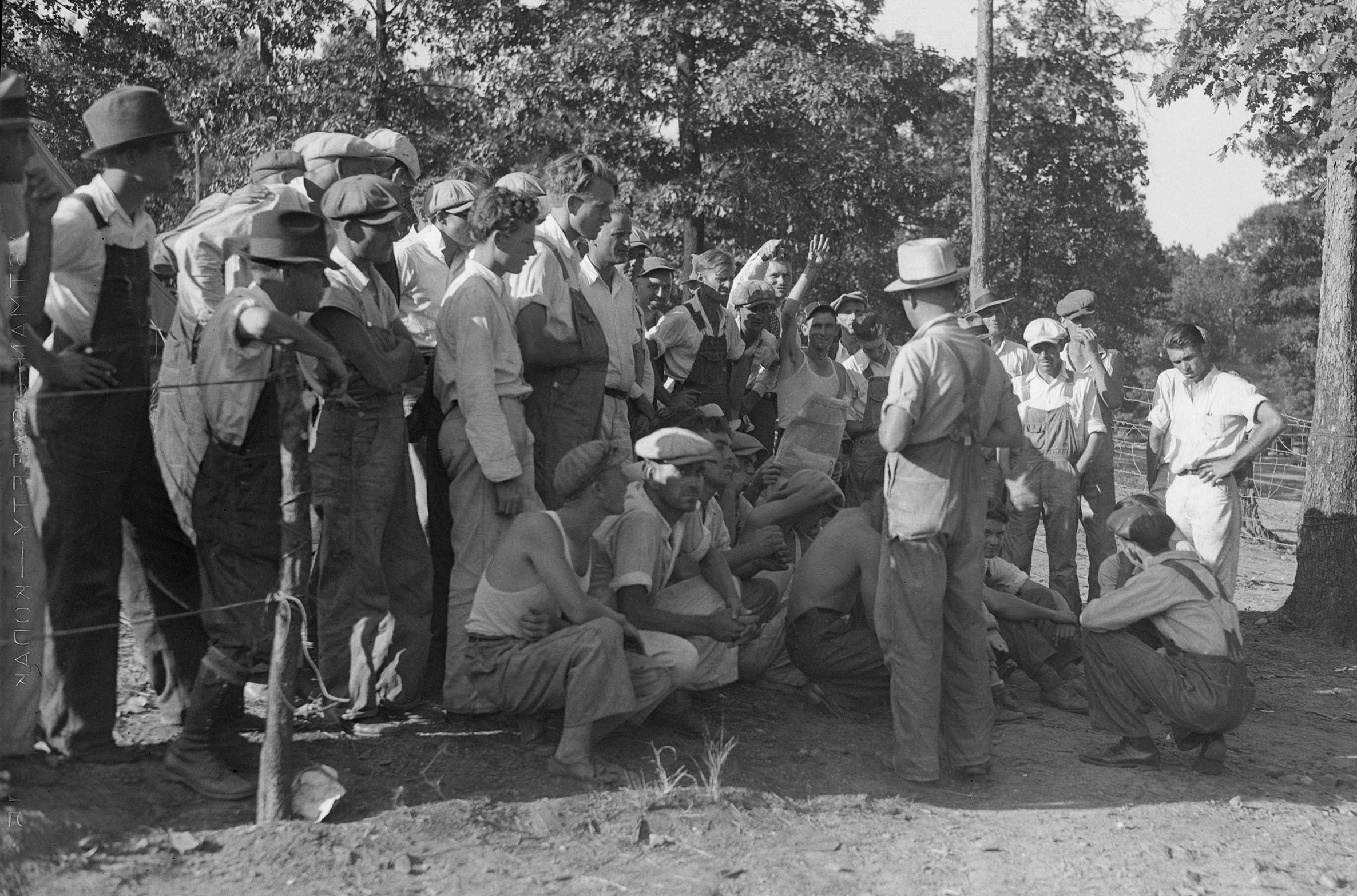
But the workers would not be put off any longer. Scores of resolutions demanding strike poured into the Convention. The following resolution is typical of a hundred or more:
“Whereas, the conditions in the textile industry are deplorable and the workers are being treated like slaves. And the International United Textile Workers of America are fighting and struggling to better our conditions; Therefore be it resolved by the Georgia Federation of Textile Workers in convention in Macon, Ga., June 30 and July 1, 1934, to go on record as supporting the International Union in its struggle and endorsing a general strike for better conditions.”
After the convention, hundreds of telegrams poured in on Gorman at Washington from the locals, demanding that the strike take place as instructed by the Convention. ‘The response to the strike completely surprised the manufacturers.
GORMAN AND THE N.R.A.
The strategy of the Gorman leadership during the strike was a continuation of the strategy during the Convention. The leaders were forced by the militancy of the workers to criticize severely the N.R.A. decisions in order to keep leadership. But the Gorman leadership throughout the strike attempted to maintain the faith of the textile workers in President Roosevelt. It attempted to differentiate between General Johnson, the code authorities, and the old Cotton Textile Relations Board on the one hand, and President Roosevelt and any new “impartial” board he might set up on the other.
The Gorman machine cried: “Build your organization, so that you can fight better.” But these “leaders” made it clear that the “fight” they referred to was a fight inside the Roosevelt boards. Thus, at the Convention, the Gorman-MacMahon machine said nothing about strike preparations, but spent hours on the subject of more representation on the N.R.A. boards and new “impartial” boards.
MacMahon’s report was a eulogy of the N.R.A. Gorman, after his “criticisms” of the N.R.A., concluded: “I desire to express our sincere appreciation to the research department of the American Federation of Labor and the Labor Advisory Board of the N.R.A. for the splendid assistance they have rendered to the United Textile Workers of America and their willingness at all times to co-operate in our endeavors”.
Gorman’s entire report dealt with the maneuvers of himself and his colleagues with the N.R.A. boards and his strongest recommendations were along the following lines:
“I think we have reason to hope that it [the new Labor Relations Board] will be better than any agency of its sort which we have had before…I urge that the matter of the Cotton Textile Relations Board be left in the hands of the incoming Executive Council. I am sure that some satisfactory arrangements can be worked out with the administration at Washington…” (My emphasis, C.R.)
Throughout the entire course of the strike, the Gorman officials referred to Roosevelt as “that great humanitarian at the White House,” and tried to build up, in speeches and press statements issued daily, the waning faith of the workers in Roosevelt and the N.R.A. They said the N.R.A. was all right, the trouble lay with the chiseling employers who were “violating” the N.R.A. They spoke of “arbitration” and the hope that Roosevelt would appoint an “impartial” board. They sang the song of co-operation with the employers and did not prepare the struggle.
GORMAN’S STRIKE LEADERSHIP
To win the strike it was obviously necessary to spread the strike as broadly and as rapidly as possible. The Gorman Strike Committee of five, which was appointed by the Executive Council, did just the opposite. Gorman made every effort to confine the strike to the cotton textile industry. He refused to call out the Paterson dye workers, which would have tied up the entire silk finishing industry. The workers were confused at first as to whether or not the rayon mills had been called on strike. Gorman ordered the hosiery workers to remain at work. The U.T.W. strike leadership attempted to confine the strike to as few branches of the industry as possible.
But through the sweeping militancy of the workers themselves the strike was continually being broadened during the entire three weeks it lasted. Mass picketing and flying squadrons, initiated by the strikers swept the field. In New England the mass picket lines closed down mills regardless of the branch of industry, including the tire fabric mills, hosiery, woolen, silk, rayon and even garment shops. However, Gorman succeeded in keeping the bulk of the hosiery and dye workers on the job throughout the strike.
Not only did Gorman fail to try to spread the strike, but he attempted to stop mass picketing, the greatest weapon in making a strike effective. He counselled “peaceful picketing” and ordered his lieutenants to make agreements limiting picketing. Thus, in New England, the U.T.W. leaders, acting under Gorman’s orders, made agreements with the mayors, the police chiefs, etc., limiting pickets to six or ten men at a gate. The thousands of textile workers ignored these agreements, organizing flying squadrons, and establishing mass picket lines with as many as ten and fifteen thousand workers. Similarly in the South, the U.T.W. leaders attempted to stop mass picketing.
Gorman prevented the spread of the strike to Lawrence by calling off the flying squadrons and instructing the strikers not to picket the Lawrence mills. U.T.W. organizer Kelly made an agreement with the Commissioner of Public Safety in Lawrence that no picketing would be carried on there.
The U.T.W. leadership, in the face of murderous terror, agreed to the calling out of troops and publicly attacked mass pickets who were being shot down as “hoodlums and Communists.” Thus we had the spectacle of Joseph Sylvia, New England organizer of the U.T.W., inside the Sayles Finishing Company mills at Saylesville, R.I., conferring with Adjutant General Dean, head of the National Guard, while outside the gates, troops were shooting down mass pickets. Sylvia came out and urged the pickets to disband and go home. The strikers chased him away with rocks. Sylvia, Riviere and other U.T.W. leaders made statements to the press washing their hands of the mass picket lines at Woonsocket, Saylesville, and in the South, where workers were killed, and declared the fighting was caused, not by police, deputies, and troops, but by “outside agitators’ and Communists. Governor Green of Rhode Island told a delegation protesting the use of troops against strikers of which the author was a member: “In this very room MacMahon, Sylvia and other U.T.W. officials conferred with me before I called out the National Guard and agreed to it. Labor does not oppose my measures. The strikers have agreed to limit picketing.”
The Gorman Strike Committee made no strike preparations before or during the strike. They moved to Washington, left the workers unprepared and spent all their time with N.R.A. boards. At the beginning of the strike Gorman made one statement regarding the organization of picket squads of ten, each with a picket captain. But this was never put into effect, and no organizational steps were taken by U.T.W. leaders to strengthen picket lines.
Almost no union meetings were called by the U.T.W. strike leadership during the strike. Members were signed up on application cards and not called to meetings. Even mass meetings were held regularly only in a few places. The Gorman leadership was afraid to give the rank and file a chance to make its voice felt in the strike. The rank and file was given no consideration, the appointed Strike Committee giving all orders from Washington and Gorman’s district agents carrying them out without consulting the workers. Discussion was not allowed at mass meetings.
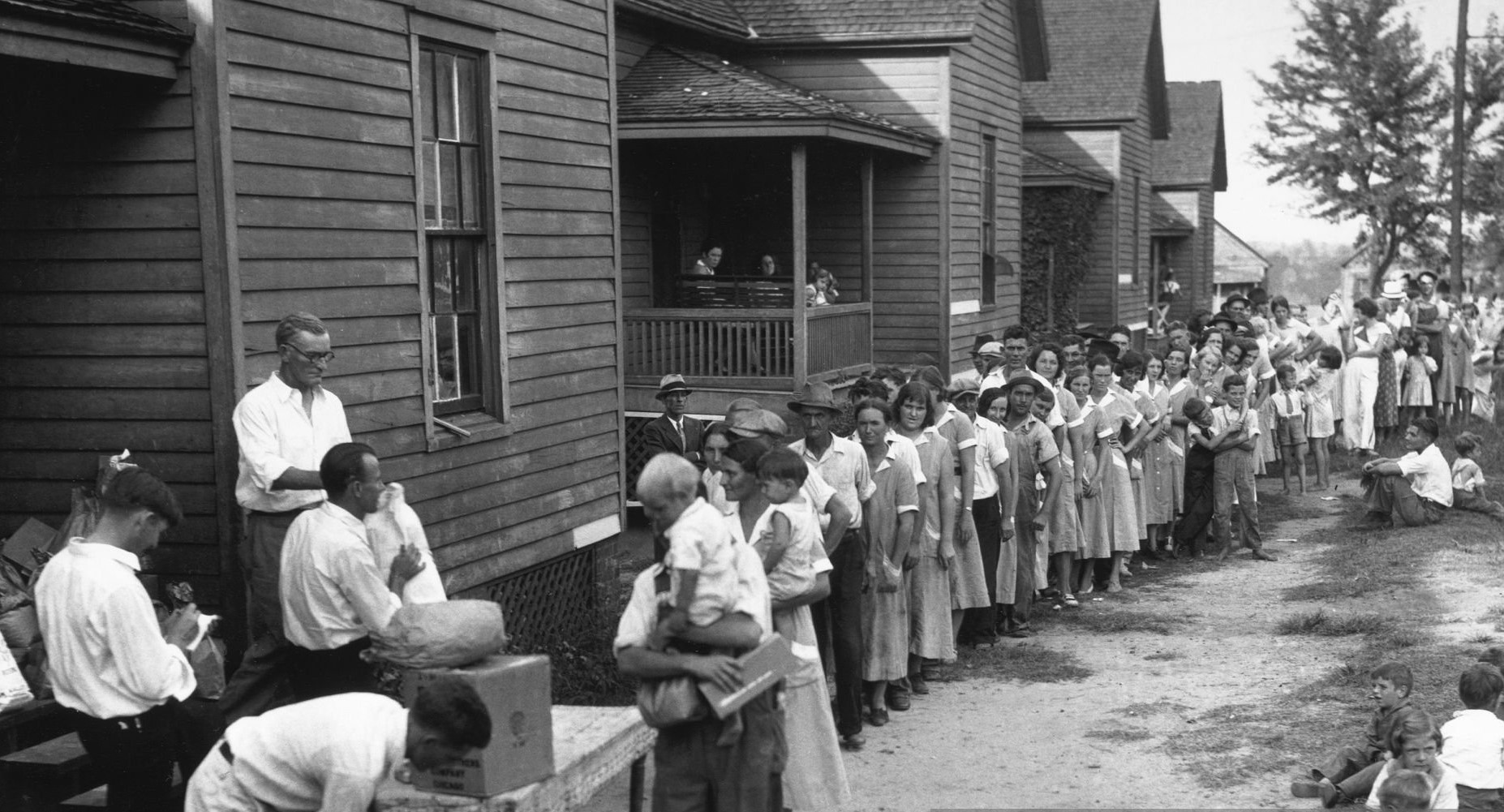
Gorman took the lead in the Red scare campaign. The Red scare began in the Hearst press of New England even before the strike, the “secret open letter” of the Communist Party being put forward as a “plot” to get control of the textile strike. Gorman and his district aides made daily statements to the press against the Communists, in this way trying to stifle all militancy and split off militant rank-and-file workers from the strike activity. “Dynamite plots”, based on anonymous telephone calls, were laid by the Hearst press to Communists.
A score were killed and hundreds wounded by National Guard and deputies’ bullets. Governor Green of Rhode Island ordered the arrest of every known Communist. Assemblages were forbidden in Rhode Island where Green applied the Riot Act to the entire State. The Guard was now out in four States in New England and in almost every southern textile State. Concentration camps, patterned after those of Hitler, were set up in Georgia.
Through all this Gorman and Company continued to attack the militant mass pickets and the “Reds,” to praise Roosevelt, and to limit picketing. He was the most potent strike-breaking force the employers had.
In spite of these strike-breaking moves of the employers, the Government and the Gorman leadership, the strike was strong and effective at the time Gorman put over the betrayal.
The mass picket lines of the textile workers, in such battles as those of Woonsocket and Saylesville, charged the National Guard after their comrades had been shot down, and forced the closing down of the mills.
One of the chief characteristics of the present strike period pointed out by the Central Committee resolution is that “the national and local governments resorted to increasing use of violence against the workers on strike; in practically every strike the National Guard was called out; in general, growing fascist and semi-fascist methods of suppressing strikes were used by the Government, supplemented by fascist organizations and armed thugs, resulting, in most of the strikes, in the killing and wounding of strikers, intimidation of foreign-born workers, etc.”
In the Textile Strike, Roosevelt went to the extent of publicly assuring Governor Green that Federal troops would be called out in Rhode Island as soon as requested. Roosevelt’s Secretary of War ordered the entire U.S. Army mobilized on a war footing in New England, and the Army was made completely ready to move against the strikers at a moment’s notice. Agents of the U.S. Department of Labor began to make house-to-house visits of foreign-born workers threatening foreign-born strikers with deportation.
The fascist tendencies which were most severe in the South, were marked by a closer inter-relation of the A. F. of L. leaders with the Roosevelt Government. Not only did these A. F. of L. leaders conduct the Red scare together with the employers, but they also acted as a part of the Roosevelt Government. Thomas MacMahon, President of the U.T.W. was made a member of the N.R.A. Labor Board just before the strike began in order to put him in a better position to carry through the betrayal. Gorman and other U.T.W. leaders were members of the cotton, wool and other N.R.A. arbitration boards during the summer. The strike marked the trend toward merger, on a common program, of the A. F. of L. leaders with the Roosevelt Government.
After the strike, in its monthly statement issued at the completion of the A. F. of L. Convention, the Green Executive Committee brought forward a perfect fascist program, calling for government control of the unions: “Acceptance of the principles on which the Recovery Act is predicated—industry organized in trade association and employees organized in self-governing unions, under chairmanship of the Government”. (My emphasis, C.R.) In the same statement Green advocated less taxes on “wealth” and cuts in unemployment relief. He put forward the program of the employers, of the Roosevelt Government, emphasizing its fascist tendencies.
It was this program, now crystallized in an intensified wage-cut, union-smashing drive under the slogan of “industrial truce” which Green and Gorman put into practice in the General Textile Strike.
Just as Green, at the very moment when terror was raging against the San Francisco General Strike, made a statement attacking the strikers, so Gorman, at the moment when terror raged against the mass picket lines of the textile strikers, issued daily statements attacking these mass pickets as “hoodlums and Communists”.
The fascist attacks on the general textile strikers and the mass fight against this fascist terror, which raised the struggle to a political struggle, show the necessity of combining the fight against fascism with the strike struggle. In the General Textile Strike, as in all important strikes in this period, the struggle became a fight for the elementary rights of the workers, a fight for the very right to strike itself, a fight for the right to organize, a fight for the legality of the working class organizations (Rhode Island).
The Red scare, the fascist terror, were answered by tremendous mass picket lines of thousands of workers, by the outpouring of whole populations of cities such as Woonsocket, on the picket lines. The workers were stirred to indignation against these fascist attacks. Larger and larger masses were brought into the fight on the side of the strikers. In many towns there was strong sentiment for general city-wide strikes which the A. F. of L. leaders tried hard to suppress.
The Red scare was used as a strike-breaking weapon in the textile areas just as in the San Francisco General Strike. Governor Green, in issuing the Riot Act for the whole State, declared that Rhode Island faced “insurrection.”
The Central Committee resolution regarding the Red scare in San Francisco applies with equal force to the General Textile Strike:
“It was the capitalist class, which in panic before the rising giant of class action of the workers, hysterically cried out that this strike, which they could have settled very quickly at any time by the simple expedient of granting the workers’ demands, was actually a revolutionary uprising organized by the Communist Party to overthrow the whole capitalist system. Of course, this strike did not have revolution as its objective, but only the immediate demands of the workers. The unity of the workers, however, raised before the employers the spectre of working class power, of the potentiality of revolution. On the side of the workers, their experience was leading them step by step to more serious challenge of the capitalist class, teaching them the necessity of extending the struggle for power, bringing them face to face with the State power as the guardian of capitalist profits and the force driving down the workers’ standards; at the same time it was giving them a new understanding of their own power, of their ability to shake the very basis of capitalist rule. In this sense the strike was truly the greatest revolutionary event in American labor history.”
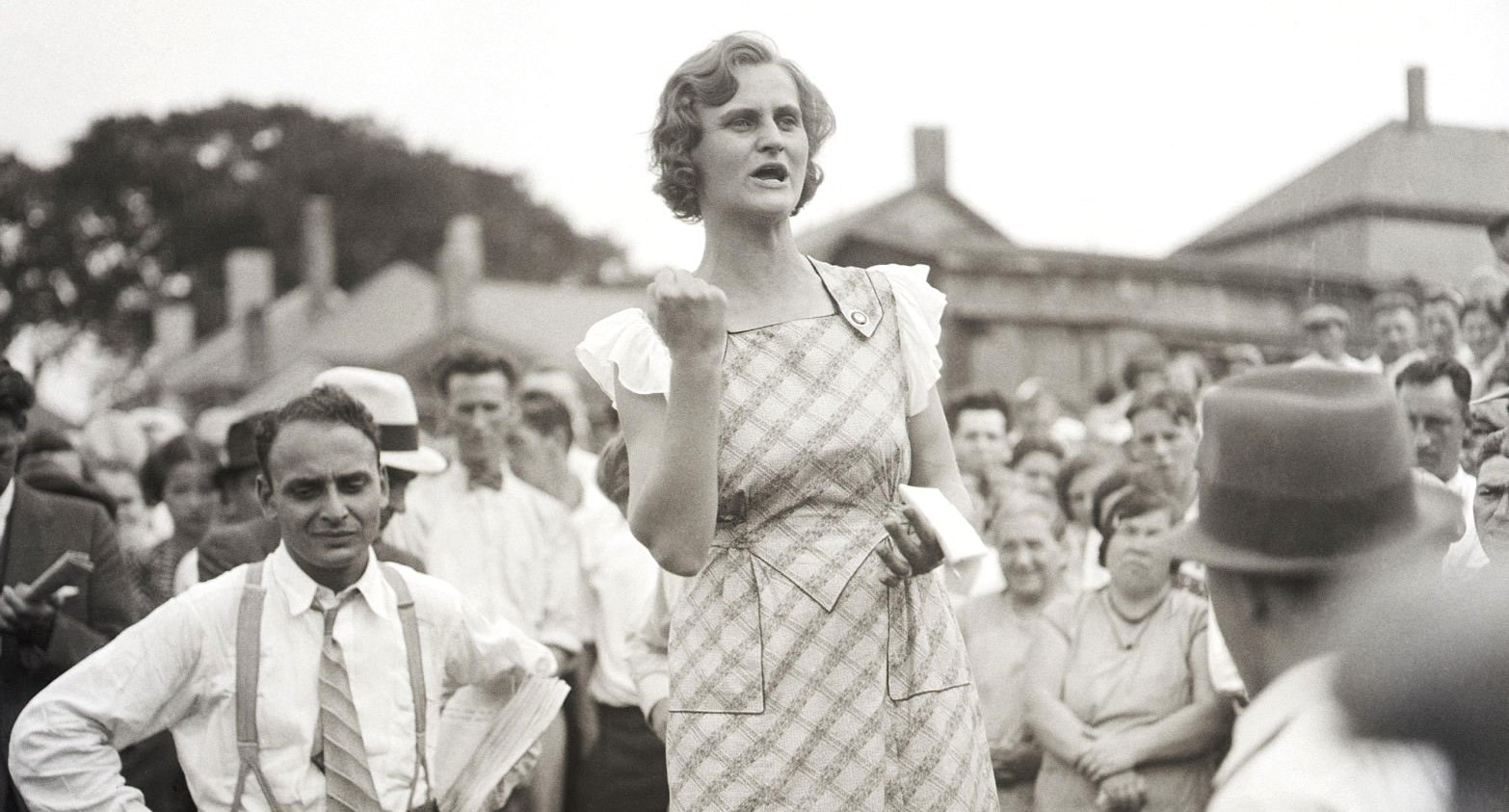
This understanding of their power was felt, for example, by the thousands of workers who slowly walked the streets of Woonsocket, following an all night battle with the National Guard after two of their number were killed. ‘These workers felt their power in having closed down the Woonsocket Rayon Mills. They were under martial law, but they knew they had done a good job, put up a good fight, and had not been defeated. ‘They understood, after this struggle, which raged through the whole working class section of the city, their mass power, as they had never understood it before.
THE BETRAYAL
After three weeks, Gorman ordered the strikers back to work without a single one of their demands having been granted. Gorman was so anxious to end the strike that he did not even insist on guarantees against discrimination of strikers. Eighty thousand were locked out of the mills, chiefly in the South. The strikers were ordered back to work on the basis of the report of the Winant Board, which had been set up by President Roosevelt to try to end the strike.
The Winant Report, which was accepted by Gorman as a “sweeping victory,” gave the workers absolutely nothing. The national strike demands were for the 30-hour week; minimum wages for skilled and semi-skilled as well as unskilled, and higher wages; abolition of the stretch-out, and recognition. Not a single demand was won.
The Winant Report proposed: “Until February 1, 1935, no employer shall extend the work load of any employee except in special circumstances with the approval of the stretch-out committee”. The Board recommended the setting up of this stretch-out committee to propose a plan to “regulate” the stretch-out.
Thus, the same grievances exist under the Winant decision as before. The workers must “prove” to a government board that the stretch-out is excessive. In the meanwhile, the stretch-out is continually being increased. No provision or proposal whatever was made for increased wages or recognition. An “impartial board” to “investigate,” these points was recommended. The textile workers are given the same dose they got last summer of “investigation,” while thousands are blacklisted, hundreds are in jail, wages are being reduced, and stretch-out increases.
President Roosevelt, “the great humanitarian,” issued a statement appealing to the strikers to return to work on these terms.
The head of the cotton textile authority, George Sloan, cynically announced that all the strikers got out of the strike was a “three weeks’ vacation without pay”.
ROLE OF SOCIALIST LEADERS
Gorman told the A. F. of L. Convention that this betrayal was “an amazing victory” for the strikers. The Socialist Party leaders sprang to Gorman’s defense and attempted to justify the betrayal. According to Norman Thomas: “Gorman and the Strike Committee did a good job with the resources at their disposal, but those resources were woefully inadequate.” (New Leader, September 29). The New Leader, in issue after issue, defended Gorman. The October 6 issue contained a full page anonymous article defending Gorman and attacking the Communists and others for branding as a betrayal his action in sending the workers back without any gains.
During the course of the strike, the Socialist leaders acted as part and parcel of the Gorman leadership. No criticism was made of Gorman during or after the strike. Emil Rieve, Socialist Party leader and member of the U.T.W. Executive Board and the Strike Committee, signed with Gorman the order which ended and betrayed the strike.
During the strike and when the terror was raging, Norman Thomas refused to enter into a united front in North Carolina, “because the Communists were criticizing the leadership at the height of the strike”.
These Socialist leaders, by refusing to criticize Gorman, by being in fact a part of his machine, are equally responsible for the betrayal, for the fact that the workers were unprepared for the sudden sell-out, and were disarmed and unable to continue the struggle after Gorman’s return-to-work order.
The principle argument raised by the New Leader in justification of Gorman, is that he had to call the strike off, that the workers faced defeat. This is untrue. The strike was effective and still spreading, in spite of Gorman, when it was called off. The dyers had voted to come out. The workers of Maine were pouring out of the mills. But Gorman, through his tactics of narrowing down the strike, preventing mass picketing, and failing to organize the strikers properly, was rapidly putting the strike into a position where it would soon have faced defeat. Gorman’s whole policy was one of deliberately leading the strike into a position where it would be possible to put over the final sell-out.
As the Daily Worker editorials pointed out day after day, one of the biggest crimes of the Gorman leadership was its refusal to mobilize the rest of the working class in support of the Textile Strike. No attempt was made to build a broad united front against the terror. Instead, the U.T.W. leaders attacked the strikers who were being shot down by the troops. Not only the entire A. F. of L. could have been mobilized against the terror, but the broadest masses of the entire working class. No move was made by Gorman for the collection of financial aid for the strike or for a relief campaign.
Most important, there was great sentiment among the workers, especially in the textile towns, for local general strikes in support of the textile strikers and for their own economic demands. For example, in Salem, Mass., where there was difficulty in getting the Pequot mill on strike, the workers were speaking favorably of a general strike, and the matter was discussed in the Salem A. F. of L. council and in the local press. But no initiative was taken by the U.T.W. leaders to broaden the strike horizontally. The 48-hour General Strike in Hazelton, Pa., was a clear indication that local, general strikes could be called in many cities and towns to strengthen the Textile Strike and to end the terror. The locals of the United Shoe and Leather Workers Union in New England passed resolutions of support. No attempt to gain support from the workers in other industries was made. The entire strike was carried on by Gorman and Company with the objective of getting the strikers back into the mills as quickly as possible. The defeat was planned in advance by the Green-Gorman leadership.
The Lovestoneite renegades also functioned as part of the Gorman strike-breaking machine. In Paterson, the Lovestoneite Eli Keller, who is manager of the Silk Workers Federation (U.T.W.), carried cut the daily instructions of Gorman. He forced the silk workers back to work, even postponing their membership meeting where they were to vote on the back-to-work order of Gorman. He carried out Gorman’s orders and kept the dyers from striking. He launched an expulsion policy against the Communists. While he worked as Gorman’s agent, he launched bitter attacks on the Communist Party in public statements.
After the strike was over, the Lovestoneite Workers Age claimed that Keller was opposed to the betrayal all the time. This was cheap camouflage in order to keep Keller in office. The membership is demanding his removal as a result of his strike-breaking acts.
ROLE OF THE LEFT WING
The National Textile Workers Union did everything possible to achieve the unity of the workers and to win the strike. The masses of the workers were in the United Textile Workers Union or, if unorganized, under its leadership. The N.T.W.U. proposed united front steps for one united union and one Strike Committee. The U.T.W. national leadership rejected these proposals and attacked the Communists. However, in Paterson, the united front proposals were accepted by the silk workers’ union (U.T.W.) and the merger of the N.T.W.U. membership including the organizers, into the U.T.W. was carried through. In New Bedford the N.T.W.U. members joined the U.T.W. individually after the U.T.W. leaders refused to take them in in a body without any form of discrimination. In New Bedford, Burke, the N.T.W.U. organizer was refused the right to enter the U.T.W. In Easton, Pa., the U.T.W. and N.T.W.U. organized a united front strike committee.
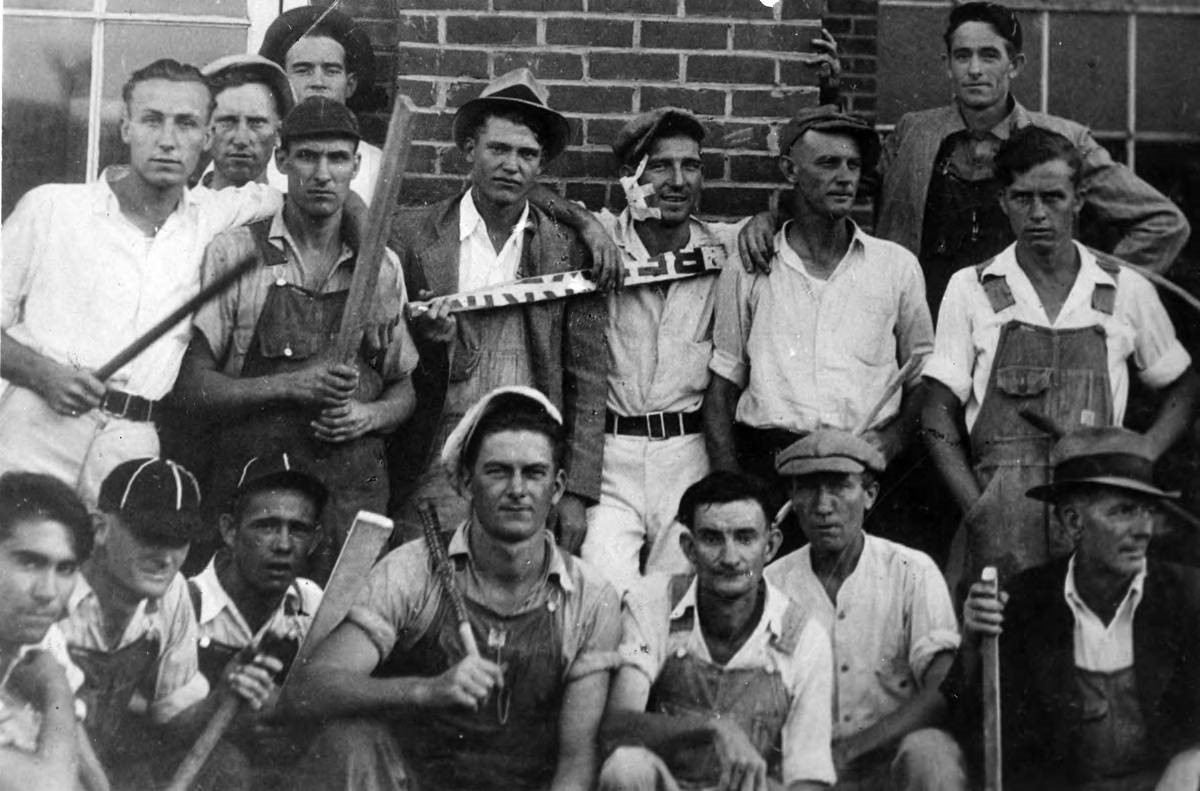
The united front on the picket line was achieved in such places as Lowell, where members of the Protective Union (Independent) of the U.T.W. and the N.T.W.U. picketed together on mass picket lines of ten thousand workers and closed down every mill in the city. But the next steps in the united front were blocked by the misleaders of the U.T.W. and the Protective Union.
In those places where the Communist Party was strongest, such as Lowell and New Bedford in the North, and the Gastonia area in the South, the strike was most militant and most effective. The chief methods whereby the mills were closed, the marches, flying squadrons and mass picket lines were learned by the workers from the N.T.W.U. and were carried out over the heads of the U.T.W. misleaders. The 1929 Gastonia strike, the 1933 silk strike, the New Bedford strike, the Passaic strike had trained the textile workers in the use of these militant methods. The “red scare” was met and defeated in Lowell and elsewhere.
The Daily Worker played a bigger role in the present strike than it has ever played in previous strikes. More than ten thousand copies of the Daily Worker went to the strikers every day. The strikers bought and read the Daily Worker eagerly. The fact that the correct class struggle line appeared every day in the editorials, and was transmitted to other strikers by readers, affected the conduct of the strike. The leaflets issued by the Daily Worker, and the pamphlet containing Comrade Hathaway’s editorials in the Daily Worker, were widely distributed throughout the strike area.
Organizers were sent into the field by the T.U.U.L. and the Party to aid in the winning of the strike. The Left-Wing forces warned, from the beginning, of the coming betrayal of Gorman and Green, called for the election of rank-and-file strike committees, and organized and led mass picket lines.
The chief weakness of the Party in the strike was that its forces inside the U.T.W. were very weak when the strike began, that there were very few functioning opposition groups inside the U.T.W. at the beginning of the strike.
The isolation of the Party members from the life of the U.T.W. locals before the strike, and the lack of an organized rank-and-file opposition, were glaringly shown at the U.T.W. National Convention in August. The lack of a rank-and-file opposition compelled the Left Wing forces to bring the correct strike policy to the workers too much from the outside—that is, through leaflets and mass meetings, and not enough from inside the U.T.W. local unions.
In the course of the strike, Party members were recruited in the Carolinas, in New Bedford, Lowell, and other strike centers.
The end of the strike again showed that where the Left Wing was most strongly organized, the workers returned to the mills with the least losses. The Textile Trimmers Union in New York (Independent), by remaining out solidly for a few days longer, secured an agreement for the 35-hour week, wage increases, and several holidays a year, including May 1st. In Easton the workers did not go back to work Monday, and when they did, they returned in an organized manner, after holding shop meetings. They won recognition of shop committees and prevented discrimination.
The Party, weak inside the U.T.W., was unable to force the spreading of the strike to all branches of the textile industry (dye, hosiery, etc.).
The rank-and-file opposition was unable to develop city-wide supporting strikes, such as took place in Hazelton, mass united front actions, or conferences of the workers in other industries and the petty bourgeoisie against the fascist terror and in support of the strikers.
In the textile areas, the Unemployment Councils did not play a decisive enough role. This, in spite of the fact that the greatest solidarity was shown on the picket lines by the unemployed and non-striking workers.
Our forces were too weak to build rank-and-file controlled strike committees in mills where the workers belonged to the U.T. W. During the course of the strike, recruiting into the Party was weak.
The Jim Crow position of the U.T.W. leaders and their discrimination against Negroes were not sufficiently exposed.
Work inside the National Guard was insufficiently carried out.
Much greater gains could have been won if concentration inside the U.T.W. had been seriously undertaken earlier. In some districts there was a marked slowness in mobilizing for the strike, and tendencies to state that “the strike will not take place.” These tendencies grew out of the isolation from the life of the A. F. of L. and an underestimation of the sweeping movement of the workers to organize into the U.T.W.
The Communist Party daily exposed the Jim-Crow policy of the Gorman-MacMahon machine, fought for equal rights for Negroes and demanded that all such discrimination cease.
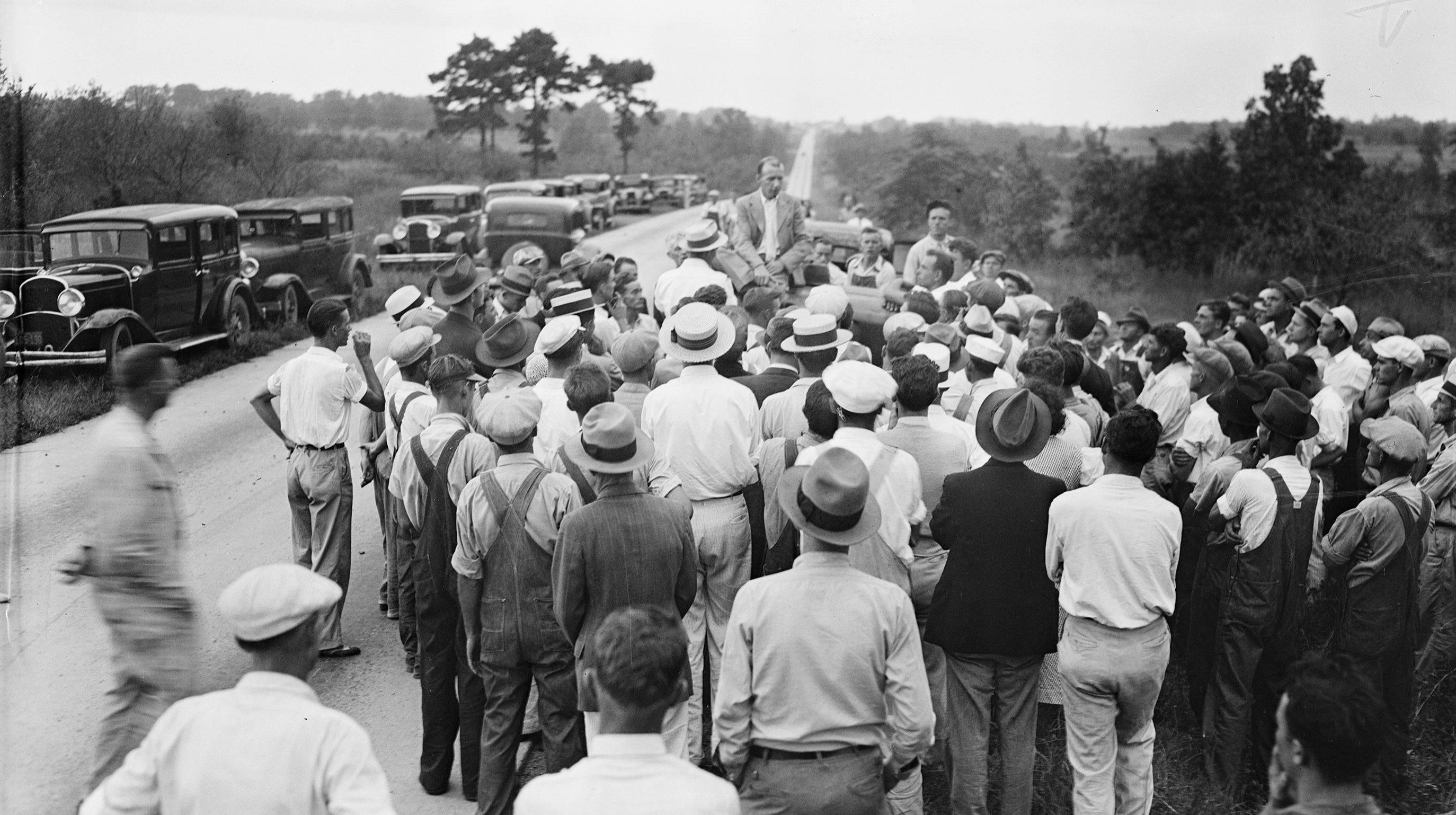
The perspective of the Communist Party that the workers would enter a re-strike movement has already been fully borne out. The 30,000 Paterson silk and dye workers have struck. In Pennsylvania, New England and in the South individual mills are striking.
The movement for re-strike is the answer of the workers to Gorman’s newest move for betrayal—his immediate acceptance of Roosevelt’s “no-strike truce.” At a time when thousands are blacklisted, and when the employers are launching a drive for new wage cuts, Gorman has told President Roosevelt that the U.T.W. will agree in advance not to strike for a period of six months. Thus, Gorman is trying to make his betrayal permanent and to tie the hands of the textile workers while fresh attacks of the employers are being launched.
In the American Federation of Labor Convention at San Francisco, Gorman championed Lewis’ fake “industrial union” campaign. His actions show that he does not advocate real industrial unionism. Gorman went to San Francisco fresh from the most crass betrayal ever perpetrated by an A. F. of L. leader. His own union, the U.T.W., is an “industrial union” in the sense that the crafts are bound together in the international.
But this did not prevent Gorman from at least partially succeeding in splitting up the textile workers by crafts, keeping some branches of the industry, some departments of the union, at work and putting over the whole betrayal policy of class co-operation.
The resolution finally passed by the A. F. of L. Convention, which Gorman, Lewis and Green alike supported, while representing a concession to rank-and-file pressure, was not real industrial unionism. Instead, it declared that all craft unions will be protected and aided, and upheld the “principle” of the craft form of organization. Only in three “mass production” industries did the resolution call for “‘vertical” unions. But these unions, auto, aluminum and cement, are to be directly controlled by the A. F. of L. Executive Council.
Real industrial unionism, which binds together all crafts in an industry for more effective struggle for their demands, is not a question of mere structure. The real industrial union couples with the industrial form of organization a program of fight for the workers’ demands, a program of class struggle, and of rank-and-file control of the union.
The brand of “industrial unionism” advocated by the Gormans and Lewises is the brand which is of a piece with their betrayals. Gorman, the betrayer of the textile workers, friend of Roosevelt, who advocates a no-strike policy, is an enemy of genuine industrial unionism. He is trying to prevent the textile workers from restriking.
But the conditions under which the one million textile workers have been rebelling for the year and a half of the N.R.A. remain and are getting worse. Wages are being lowered (Paterson). The stretch-out is still further increased under Roosevelt’s sanction. Jail sentences are doled out to active strikers. Unemployment grows. Discrimination against Negro workers continues. Great struggles are bound to continue in the textile industry.
Reports from all textile sections show that the workers have not given way to despair. Many, as a first reaction to the sell-out, tore up their union cards in disgust. But this was not the reaction of the majority. The workers who had completely paralyzed the textile industry, and who had fought so effectively against the national guards, felt the power of the strike. They felt they had the mill owners almost licked at the time of the betrayal.
The Party has called on the textile workers to stay inside the U.T.W., to fight for rank-and-file control, to build the rank-and-file opposition inside the U.T.W. local unions, to fight to kick out the reactionary leaders. The Party has called for a vigorous struggle against the blacklist and for the organization of rank-and-file complaint committees. The workers are urged to flood the new Textile Board with complaints, to show the Roosevelt Government that it must deal not only with the Gormans, but with the masses of the textile workers. The Party has called for a united front struggle, for the unity of employed and unemployed in the fight for the strike demands, for a vigorous fight for the demands of the Negro workers. In order to achieve a united fight, the Party proposes steps for the merger of the N.T.W.U. membership into the U.T.W. in places where the masses adhere to the U.T.W. union.
The national textile fraction meeting of the Party held recently was valuable in exchange of experiences and lessons gained in the different sections of the country during the Textile Strike. In the light of the decisions of this national fraction meeting, the textile districts and sections should re-examine their control tasks and the results of work in their concentration points.
As a result of the lessons of the Textile Strike and the betrayal of Gorman, the opportunities for the work of the Party have increased. The textile workers, who have proved their militancy and fighting capacity, are now more than ever receptive to the fact that they can win their demands only through a class-struggle policy, throwing overboard the policy of co-operation with the employers and “impartial” government boards supported by the Gorman machine. Only by relying on the organized strength of the rank and file can the workers win better conditions. Building the Party in the textile areas and increasing the circulation of the Daily Worker as part of the Party’s present recruiting drive are important tasks.
Linking of the lessons of the strike with the election campaign, exposing all the strike-breaking phases of the Roosevelt-Gorman sell-out and the strike-breaking acts of the Government, should be a central task of the election campaign in the textile districts.
Every contact which our Party has made during the strike and every contact which we can make through our mass work and our struggle for the demands of the textile workers should be made acquainted with the whole program of our Party. Raising the political level of and revolutionizing these militant textile workers will increase their fighting capacity and strengthen their coming struggles so that they cannot again be betrayed
There are a number of journals with this name in the history of the movement. This ‘Communist’ was the main theoretical journal of the Communist Party from 1927 until 1944. Its origins lie with the folding of The Liberator, Soviet Russia Pictorial, and Labor Herald together into Workers Monthly as the new unified Communist Party’s official cultural and discussion magazine in November, 1924. Workers Monthly became The Communist in March, 1927 and was also published monthly. The Communist contains the most thorough archive of the Communist Party’s positions and thinking during its run. The New Masses became the main cultural vehicle for the CP and the Communist, though it began with with more vibrancy and discussion, became increasingly an organ of Comintern and CP program. Over its run the tagline went from “A Theoretical Magazine for the Discussion of Revolutionary Problems” to “A Magazine of the Theory and Practice of Marxism-Leninism” to “A Marxist Magazine Devoted to Advancement of Democratic Thought and Action.” The aesthetic of the journal also changed dramatically over its years. Editors included Earl Browder, Alex Bittelman, Max Bedacht, and Bertram D. Wolfe.
PDF of full issue: https://www.marxists.org/history/usa/pubs/communist/v13n11-nov-1934-communist.pdf
 Revolution's Newsstand