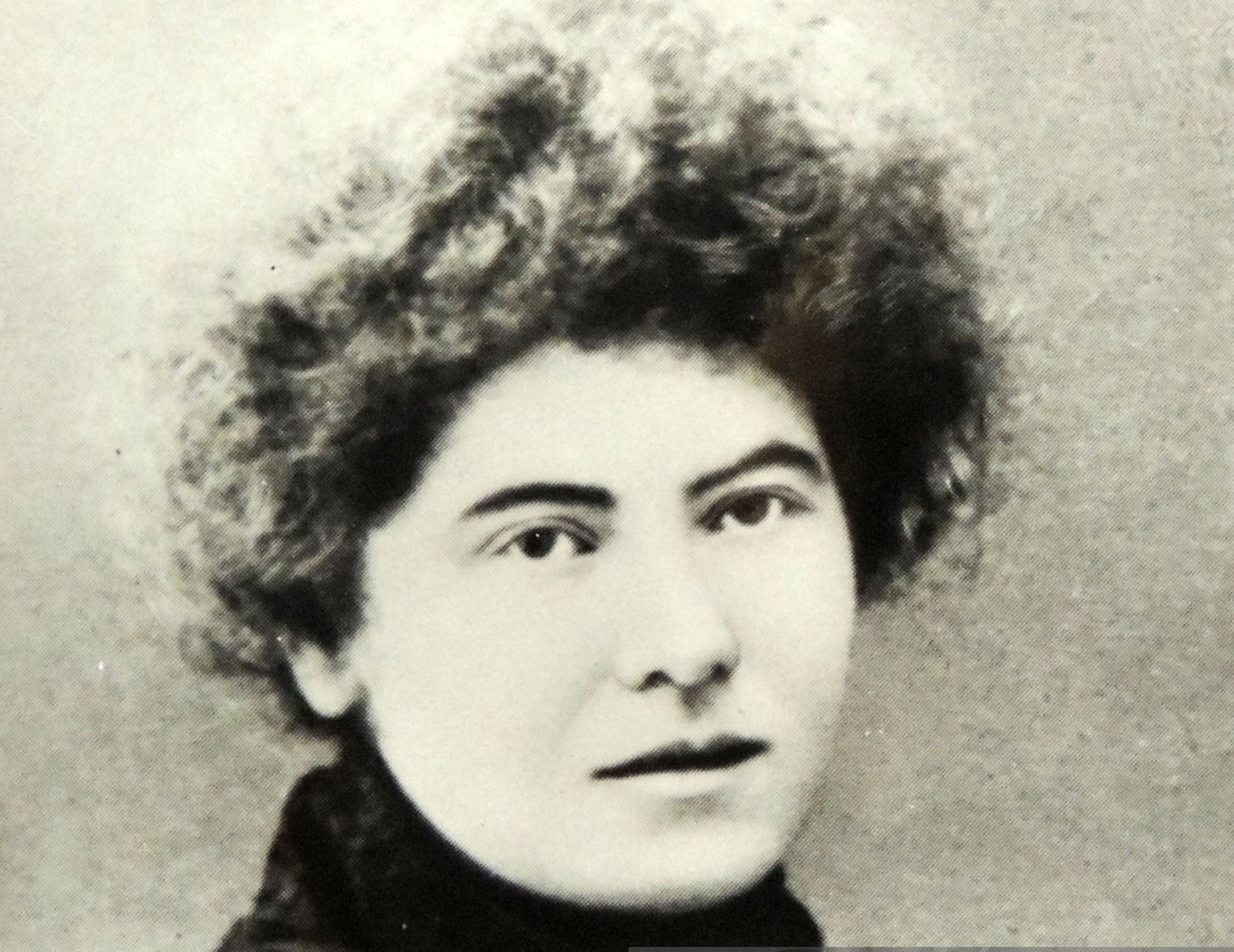
Luella Twining was a leader of the U.S. Socialist women’s movement who spent several weeks with Laura Marx and Paul Lafargue the year of their deaths. Here, she talks to Laura about her father while traveling together to Monte Carlo.
‘Marx’s Daughter Speaks’ by Luella Twining from Appeal to Reason. No. 793. February 11, 1911.
“I can sympathize with Fred Warren and his family for my father was a victim of the government all his life.” Laura Marx.
Nice, France, Jan. 12. The past two weeks have been very precious, for I have been able to spend much time with Paul Lafargue and Laura Marx Lafargue, the gifted daughter of Karl Marx.
Laura Marx, as most every one calls her, is a poet and writer. She is one of the most charming and versatile persons I have ever known. She seems to have been made to order. She is remarkably beautiful and a scholar such as one would expect Karl Marx’s daughter to be. It is said she resembles him in character. She is kind and true, very agreeable and unassuming. Though considerate and appreciative, she says frankly what she thinks. She is her father’s own daughter.
Paul Lafargue is as unique personally as are his books. He is witty and engaging. I need not tell you he is profound, for you know him. But he is more than that. You can judge what he is when I tell you he stands with the rank and file always. Every Socialist loves Paul Lafargue. That is a broad statement I know, but I believe it is justified. I have heard Socialists of all shades of thought, followers of Jean Jaures, Jules Guesde and Gustave Herve, express great admiration for him. Indeed, he is like Eugene V. Debs, so genial and kind every one must love him. Of course, he speaks out plainly. Some say he “out-Guesdes Guesde.”
Yesterday while we were out walking I saw him steal back and give a beggar boy a piece of money. That was a Debs trick.
While riding to Monte Carlo today together and Laura Marx and I sat she talked to me of her father, Karl Marx. On other occasions friends have made a long talk impossible, but today conditions were just right. I listened, drinking in eagerly every word about that wonderful man whom we admire so much.
She told me how simple in his tastes and how active in the routine work of the party he was, attending personally to details that most leaders leave to others. “Often,” she said, “he worked all day arranging meetings, circulating literature and talking to those who sought his advice. It was then necessary for him to sit up all night writing. He was naturally robust but certainly no one can stand such a strain, he quite ruined his health.”
“He was an exile.” she continued, “nearly all his life. His writings were interdicted and almost everything he wrote was published with great difficulty unsigned. It was hard and tragical too,” and tears came into her eyes.
“I can sympathize with Fred Warren and his family, for my father was a victim of government all his life. Of course, they wish to suppress the APPEAL TO REASON. It must have a wonderful influence, we read so much about it. No doubt Fred Warren’s imprisonment will increase it greatly.”
“Your father was an indefatigable worker we know,” I said. “Oh, yes,” she hastened to reply, “and he was more painstaking when he addressed a crowd of workingmen than on other occasions. ‘Value, Price and Profit’ was written for a few workingmen, but he did not slight it for that reason.” “The Socialists in America read eagerly every word of your father’s,” I said, “and we want to know more about him.”
“I am now looking over his letters,” she said, “those that were written to Frederick Engels. They will probably be published soon. They date from his twenty-fifth year to shortly before his death, and as he always wrote to Frederick Engels in a most open way, expressing his inmost thoughts, and feelings, the letters will be of historical value.”
The Appeal to Reason was among the most important and widely read left papers in the United States. With a weekly run of over 550,000 copies by 1910, it remains the largest socialist paper in US history. Founded by utopian socialist and Ruskin Colony leader Julius Wayland it was published privately in Girard, Kansas from 1895 until 1922. The paper came from the Midwestern populist tradition to become the leading national voice in support of the Socialist Party of America in 1901. A ‘popular’ paper, the Appeal was Eugene Debs main literary outlet and saw writings by Upton Sinclair, Jack London, Mary “Mother” Jones, Helen Keller and many others.
PDF of full issue: https://www.marxists.org/history/usa/pubs/appeal-to-reason/110211-appealtoreason-w793.pdf
 Revolution's Newsstand