
A process whereby traditional Black political allegiance to the Republican Party fell dramatically that began with the Great Migration greatly accelerated in the early 1930s as both northern urban Democrats and, most importantly for this story, the Communist Party became new venues of Black politics.
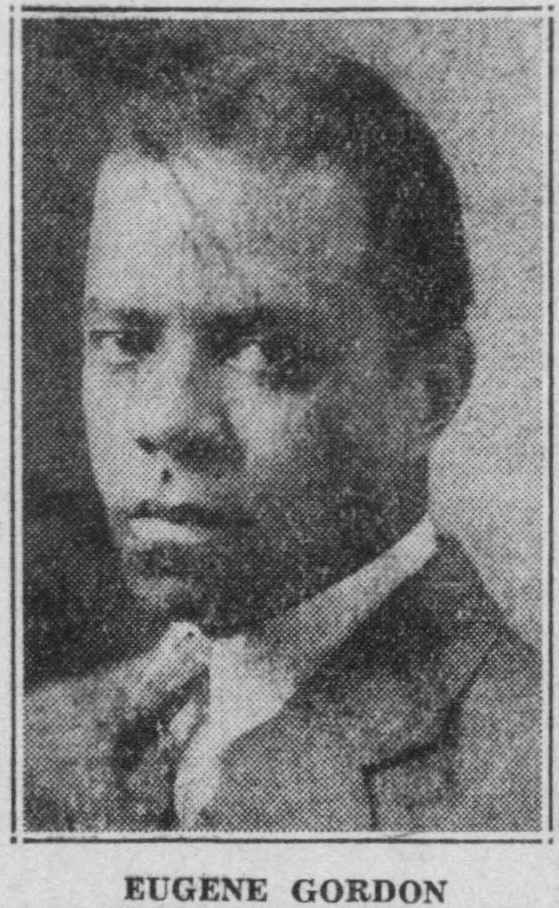
‘The Negro’s New Leadership’ by Eugene Gordon from New Masses. Vol. 7 No. 2. July, 1931.
Until today it has been axiomatic with the Aframerican since his so-called emancipation that no white man lives whom black men may trust as one trusts a comrade. “You can’t trust no white man no time,” the Negro worker said. They taught their children to say it. “It don’t make no difference how much of a friend a white man makes out he is,” they said; “soon’s he gets what he’s after he’s all through with you.” Thus white man in the United States, boss or worker, has been looked upon by the black worker as a double-crosser, a hypocrite, and a liar. The Negro’s own duplicity when dealing with whites was excused on the grounds of justifiable retaliation. “Never give a white man no quarter,” they said, “because he won’t give you none—’ceptin’ to get a stronger hold on your throat.”
This doctrine of justifiable retaliation has been widely disseminated and closely adhered to. It has been bolstered up by the ruling class both of the North and of the South. The ruling class’s ideology of Nordic supremacy has engendered in the white workers distrust of the Negro; in the Negro worker it has built up complexes of inferiority and defeatism. Shut out of unions affiliated with the American Federation of Labor, the black workers have been driven back upon themselves. You who have seen cattle herded into a small corral know how they swirl concentrically upon themselves until the center is a maelstrom of locked horns and legs. There seems to be no way out; there seems to be no way of disentangling themselves. The state of the Negro worker was similar to that of the cattle. There was leadership for them neither within among the blacks nor without among the whites. Even if the whites had proffered them a leadership the blacks would doubtless have scorned it.
Negro leadership immediately following the civil war was almost completely in the hands of illiterate and ignorant gospel shouters. Black ministers who dominate that field today are fully as ignorant, if somewhat more literate. Previously to his “emancipation” the black man had had a leadership of equally illiterate and ignorant white preachers. Perched in the lofts of the white master’s church, the black slave listened to sermons concocted as a virus to deaden his desire for freedom, to give him delusions of grandeur concerning the white masters, and to stupefy him with complacency and self-satisfaction. “Obey your masters,” they were told, “and great will be your reward in heaven.” They learned that as black slaves they were destined forever to create wealth not for themselves but for men and women who held work to be a special device of the gods to degrade the blacks and keep them in their place.
In those days of white-preacher leadership there were “conservative” Negroes who, like their descendants today, yelped madly when the “radicals” among them grumbled about their degradation and hailed the day when the black worker would get the benefit of his toil. These “conservatives” damned the irresponsible young radicals as a menace to the peaceful relations and the fine sense of understanding that existed between master and slave. They threatened to expose the soreheads who did not know when they were well off. There was no lynching in those days, and for the reason that a black man was property. To kill a black worker who belonged to a neighbor was to destroy private property, and to destroy private property was then as now a crime. Thus the black worker was safe from the lyncher. It was not until he became a free man that the black worker’s life was endangered by the rope and torch of the plantation owners. Perhaps the Robert Russa Motons and the Kelly Millers of the slavery era were shrewd enough to vision the problems emancipation would create. So they exhorted the slaves to be content and loyal. Just as Robert Russa Moton and Kelly Miller are content with the status quo today. But “freedom” came, in spite of them, and with it a new leadership arose. It came from the churches and its purpose was to show the direction, to furnish guidance, to encourage.
It did all three. Most Negro preachers of that day were like most of them now—cunning, shrewd, and crooked. Their cunningness, shrewdness, and crookedness seemed to increase in direct ratio to their literacy. Among them were conscious and unconscious, willing and unwilling, tools of the masters, and they executed the orders their masters issued. It was a venal leadership. The direction it pointed was lost in a maze of “spiritual” superstition and capitalistic ideology; the guidance it afforded was a check upon and a preventive of revolutionary thinking and acting; the encouragement was all to the effect that the black man would continue to be an inferior until he could become a parasite like his master.
When the leadership was not immediately dictated by the white ruling class, it nevertheless reflected the ideology of that class. To work with the hands was the degradation god almighty stamped upon the slave. The well born—the gentlemen and their ladies—did not work. Therefore every “po’ white” and every ambitious black who hoped some day to attain the class of the well born, to be a gentleman or a lady, shied away from working with the hands and studied like hell to “better” themselves: they became doctors, lawyers, school teachers, preachers, politicians, editors, and small business men. Their ideal was wealth and idleness, with illiterate blacks to wait on them. “Better your condition,” the leadership advised; which implied: “Rise above these common blacks so you can have someone to look down on. The Negro can’t have a higher class if there isn’t a lower class.” The leadership encouraged individualism of a roughshod and ruthless kind: scheme, connive, double-cross, crush. Climb to the top on the thick skulls of these stupid blacks who worship you because they see in you a reflection of their white masters.
This ideology was not confined to the “spiritual” leadership. It pervaded the atmosphere breathed by the professional man, business man, and politician. It stimulated the growth of the petty bourgeoisie which today is as close to the working class that supports them, in aims and in sympathy, as Seventh avenue is to Lenox. A chasm lies between the two classes, and those at the top are frenziedly digging to make the chasm wider. They have come to boast of the purity of their society, dilating upon the necessity of cleansing it of all traces of actual workers. One New York Negro newspaper may be cited as typical of the black capitalist attitude toward the common man and woman. The New York Amsterdam News carries this box at the head of its society column:
“The more exclusive the society, the more possessed its members should be of good character and integrity—worthwhile endeavor and achievement.
The careful host or hostess excludes from social functions persons of disreputable character, menials, and those possessed of ill-gotten gains.”
Anyone who knows anything about Negro “society” is aware that if all those who possess “ill gotten gains,”—i.e., numbers kings, gamblers, small stock market manipulators, lawyers, politicians, preachers, to suggest just a few,—were kicked out, there would be no “society.” There would be so few left that it would die of its own inertia.
The leadership to which the masses of black workers has had to look has been weak, vacillating, hypocritical, ignorant, venal, and self-seeking. It is all these things in its very nature. It could not be anything else and exist as a part of the capitalist system and a defender of that system. Take Harlem again. The Negro physicians, lawyers, politicians, hair-straightners, newspaper editors, and feature-story writers don’t give a damn for the groping black hundreds of thousands who live from five to ten in a single room, who walk the streets in search of work, whose garbage is left to decay in the hallways and the dumbwaiter shafts, whose children are underfed and ill, and who squirm under the heel of the rapacious landlord. If they cared would they run from them as if from pestilence, seeking always to “better” themselves while leaving these others to make out as best they can—or not make out at all? Would they have grabbed possession of the Dunbar apartments, which were said originally to be intended for workers? Would they be today the prostitutes who sell all they have—the Harlem which they protest so much to love!—to every degenerate parasite who comes seeking a thrill? This leadership is the kind that the Negro has been afflicted with. But he is beginning at last to open his eyes. He is beginning to see that these “big” Negroes are not concerned about him and his future. He is beginning to see that some white men may honestly wish to help him. He is discovering, to his dazed bewilderment, that a new leadership is beckoning to him.
When the National Association for the Advancement of Colored People was founded and it announced its program of fighting for the rights of the under-privileged, the black masses of the country thought they had at last discovered a leadership they could follow with absolute trust. But, although these workers did not know it, the NAACP was, after all, a ditch-straddling body which depended for sustenance on the whims of rich and doty liberals. The organization was no freer, therefore, to condemn the system upon which its capitalist supporters battered than the Negro preacher out of slavery was to fly in the face of conditions which kept the “freedmen” peons. The system which in both cases brutalized the workers also fed, pampered, petted, and flattered the men it picked to mislead the workers. In its early days the NAACP frequently did things which were almost daring; but its most daring performance was simply a compromise. However, a compromise, Negro leaders in the South tell us, is better than a surrender, and the NAACP has finally admitted surrendering completely. It is no longer the National Association for the Advancement of Colored People, but the Nicest Association for the Advantage of Certain Persons. It has as much to do with the black masses of workers and share-croppers as any similar group of scented, spatted, caned, and belly-filled white parasites have to do with the white masses. It is ultra-nice, ultra-respectable, and ultra-fastidious. It has a reputation to preserve, so it cannot afford to be seen in company with dirty reds or other radicals, no matter what the common end is supposed to be.
This dainty withdrawing from an organization because it is composed of common workers has done more than any other one tendency of the NAACP to reveal its true character to the Negro masses. Observing its aloof and grudging “help,” the Negro worker recalls suddenly that there has never before been a body of men who, white and black, actually fought for the most degraded black man in the country. The Negro masses have of late been stirred to enthusiasms by the action of the International Labor Defense, the League of Struggle for Negro Rights, and the Communist Party of America in going to the very stench-hole of American capitalist class hatred and challenging the thugs and lynchers on their own ground. Seeing all this, the black workers remember the incident of the NAACP secretary in Texas, some years ago who, caught pussyfooting by thugs hired by Texas bosses to get him out of the state, was beaten and chased to the railroad station. They remember the letter of resignation this NAACP official wrote, in which he asserted that he saw no hope of securing the Negro’s rights through the means his organizations was pursuing. They remember their feeling of despair when they read his wail of defeat; a wail which implied that if others wished to risk their hides for the sake of “common n***rs,” let them; he certainly didn’t intend to do so any more.
Then Negro workers think of the countless times Communists have been beaten insensible for defending the Negro workers, yet have gone from the hospital right into the fight again. They remember the white men who were tried and convicted in the USSR, and remember the trial in New York of a white worker who was tried and humiliated for his jim crow attitude toward black workers, and humiliated for his jim crow attitude toward black workers. They look at the most daring experiment in American journalism, the actual printing of a Communist newspaper in Chattanooga, the heart of the lynching desert, and they are thrilled! They hear of members of the LSNR, white and black, going to eat in an “exclusive” Washington restaurant and wrecking the place when the Negroes in the party are refused service. They see the ILD and the LSNR, supported by the Communist Party, rushing defense to the nine Negro youths at Scottsboro long before any other organization in the country has condescended to glance superciliously in their direction, and they see the loyalty and the staunchness of the men and women who are giving their time and energy and money and talent — everything they have — to save these boys. Seeing and hearing all these things, the Negro worker in the United States would be a fool not to recognize the leadership that he has been waiting for since his “freedom.” And the masses of blacks being no fools, they have recognized it and they have begun to accept it. The Negro workers are beginning to understand that such leadership is the only leadership for the man who works, whether he be white or black.
The New Masses was the continuation of Workers Monthly which began publishing in 1924 as a merger of the ‘Liberator’, the Trade Union Educational League magazine ‘Labor Herald’, and Friends of Soviet Russia’s monthly ‘Soviet Russia Pictorial’ as an explicitly Communist Party publication, but drawing in a wide range of contributors and sympathizers. In 1927 Workers Monthly ceased and The New Masses began. A major left cultural magazine of the late 1920s and early 1940s, the early editors of The New Masses included Hugo Gellert, John F. Sloan, Max Eastman, Mike Gold, and Joseph Freeman. Writers included William Carlos Williams, Theodore Dreiser, John Dos Passos, Upton Sinclair, Richard Wright, Ralph Ellison, Dorothy Parker, Dorothy Day, John Breecher, Langston Hughes, Eugene O’Neill, Rex Stout and Ernest Hemingway. Artists included Hugo Gellert, Stuart Davis, Boardman Robinson, Wanda Gag, William Gropper and Otto Soglow. Over time, the New Masses became narrower politically and the articles more commentary than comment. However, particularly in it first years, New Masses was the epitome of the era’s finest revolutionary cultural and artistic traditions.
PDF of full issue: https://www.marxists.org/history/usa/pubs/new-masses/1931/v07n02-jul-1931-New-Masses.pdf
 Revolution's Newsstand