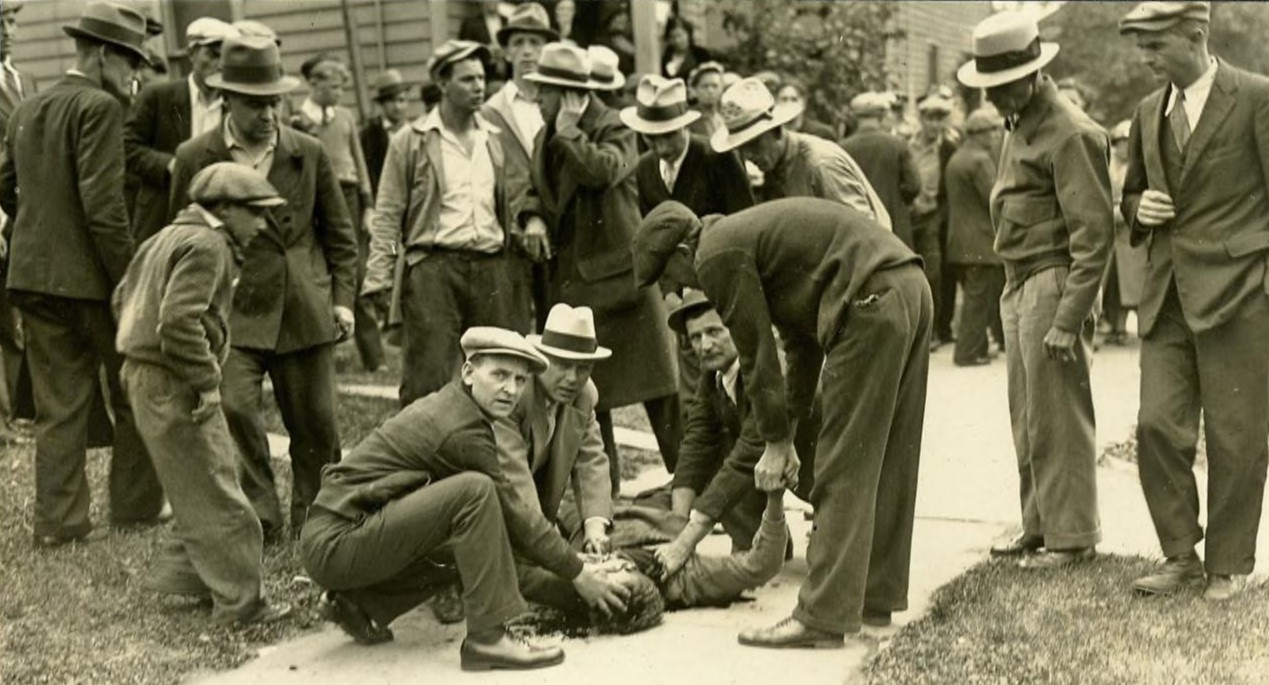
Toledo, Ohio is a small city with a big labor history. One of the key strikes of 1934 was the struggle at the the Auto-Lite and Chevrolet plants led by the American Workers Party of A.J. Muste that helped pave the way for the C.I.O. and the U.A.W. A turning point in that strike was the murder of two workers, Frank Hubay and Steve Cyigon by the National Guard on May 23.
‘Terror in Toledo’ from Labor Action (A.W.P.). Vol. 2 No. 10. June 1, 1934.
Troops Kill Workers; 5,000 Face Gunfire In Fight For Union–General Strike Impending–Louis Budenz, of American Workers Party, Jailed as Leader
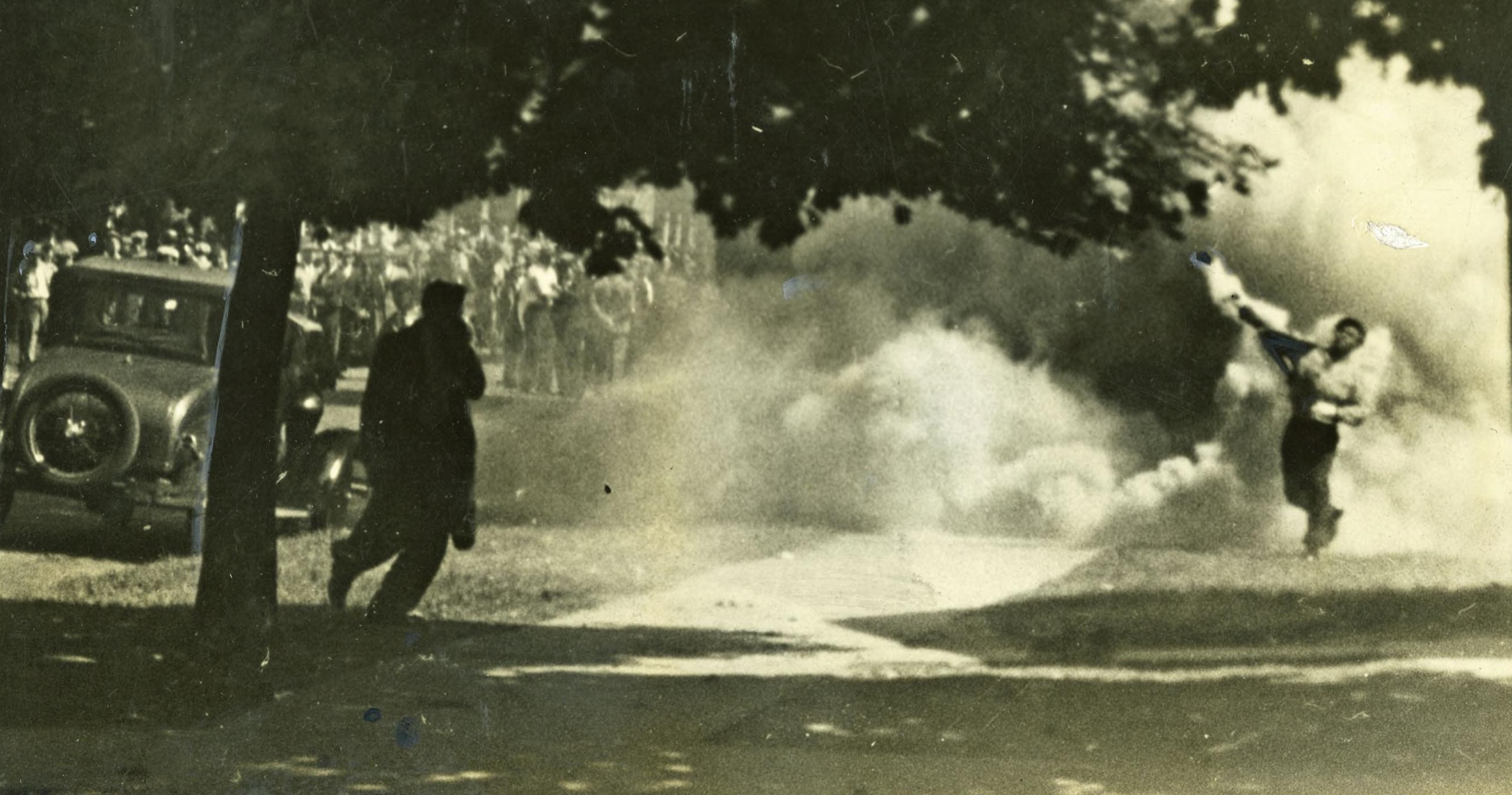
TOLEDO, Ohio. There will be no action against the soldiers who killed two workers and wounded scores of others, says Brigadier General L.F. Connolly in charge of the troops. “They were being attacked,” explained the General, but he does not explain whether he thought shooting tear gas bombs at workers fighting for their jobs is an attack or a peaceful action.
Frank Hubay, 27, and Steve Cygon, 20, were killed and hundreds injured by bullets and flying bricks as troops continued firing on 5,000 strikers and unemployed workers. The workers refuse to retreat.
Strikers and unemployed fight side by side. The jobless are members of the Ohio Unemployed League.
Louis F. Budenz, organizer for the American Workers Party, is held in jail as leader of the strike.
Authorities fear to call out local national guardsmen. They might have friends among the workers, it is explained, and would not like to kill them.
Fifty one Toledo unions, comprising more than half the strength of the C.L.U. have voted for a general strike.
TOLEDO, Ohio. Rifles, machine guns and deadly gas bombs, manned by a thousand National Guardsmen, have failed to defeat the heroic struggle of the Toledo workers for decent wages and against company gunmen and company controlled courts.
Starting as an injunction fight in connection with the seven weeks old strike at the Electric Auto-Lite plant and the Bingham Tool and Die plant the struggle has spread throughout the city, drawing in thousands of other workers, and plans are being speeded for a general strike of all crafts in Toledo. The injunction, prohibiting mass picketing and enjoining members of the Lucas County Unemployed League from sympathetic strike action, was smashed by the militant defiance of the strikers and of thousands of sympathizers, lead by Ted Selander and Sam Pollack. It was then that C.O. Mininger, Pres. of the Electric Auto-Lite Co. called for state troops.
Thus by the brutal and arbitrary action of a boss and his bought and paid for public officials, a strike for union recognition and a 10 percent wage increase has been turned into one of the greatest labor struggles in the history of the country. The clubbed and exploited workers of the United States are learning who are their enemies and, if Toledo is an indication, they can and they will fight.
SEQUENCE OF EVENTS IN TOLEDO BATTLE
Auto Lite and Bingham strikes dying out. Injunction killing them. Disgusted with the inaction of their leaders, strikers call on Lucas County Unemployed League for help. Ted Selander and Sam Pollack of the UL write court that they intend to defy injunction.
Monday, May 7, Selander and Pollock defy injunction. They are arrested. Two members, Norman Meyers and Carl Lech of the Federal Union, are arrested with them. Released on bail.
Each day thereafter Selander and Pollack with increasing numbers of pickets went on picket line. On Friday, May 11, Selander and Pollock the court room packed with workers, turn their trial into an indictment of capitalism and capitalist courts. Judge Stuart dismisses them on ground of “misconception.”
Tuesday, May 15, 107 pickets are arrested. They are released, however, as too many for the county to feed.
Wednesday, 46 more are arrested. Workers storm jail.
Monday, May 21, a banner inscribed with, “American Workers Party Calls for Mass Picketing”, and on the other, with historic dates, “1776, 1861, 1934,” was marched to picket line. Louis F. Budenz, executive secretary of the American Workers Party, before plant gates, makes speech denouncing President Miniger of Auto-Lite Co. as Toledo’s Public Enemy No. 1. More than 2,000 workers cheer him.
Tuesday, May 22, a large banner was carried on picket line inscribed, “Why Look For Dillinger, We Have Our Miniger.” Picket line grows in size and militancy. No arrests. Injunction apparently smashed. In front page editorial, “News Bee”, Scripps-Howard paper, attacks Budenz.
Wednesday, May 23, Budenz jailed. Company attacks pickets with tear gas. Pickets respond by smashing plant. Miniger asks for troops.
Thursday, May 24, 15 companies militia arrive. Authorities fear to call on local troops. They may be sympathetic. Workers repulse deadly gas attack by troops and company gunmen. Troops fire on workers killing three, wounding scores. Workers build barricades, resisting troops with bricks, stones, etc.
There are a number of periodicals with the name Labor Action in our history. This Labor Action was a bi-weekly newspaper published in 1933-34 by AJ Muste’s American Workers Party. The AWP grew from the Conference for Progressive Labor Action, founded in 1929, and Labor Action replaced the long-running CPLA magazine, Labor Age. Along with Muste, the AWP had activists and writers James Burnham and Art Preis. When the AWP fused with the Trotskyist Communist League of America in late 1934, their joint paper became The New Militant.
PDF of full issue: https://www.marxists.org/history/etol/newspape/laboraction-cpla/v2n10-jun-01-1934-LA-Muste.pdf
 Revolution's Newsstand