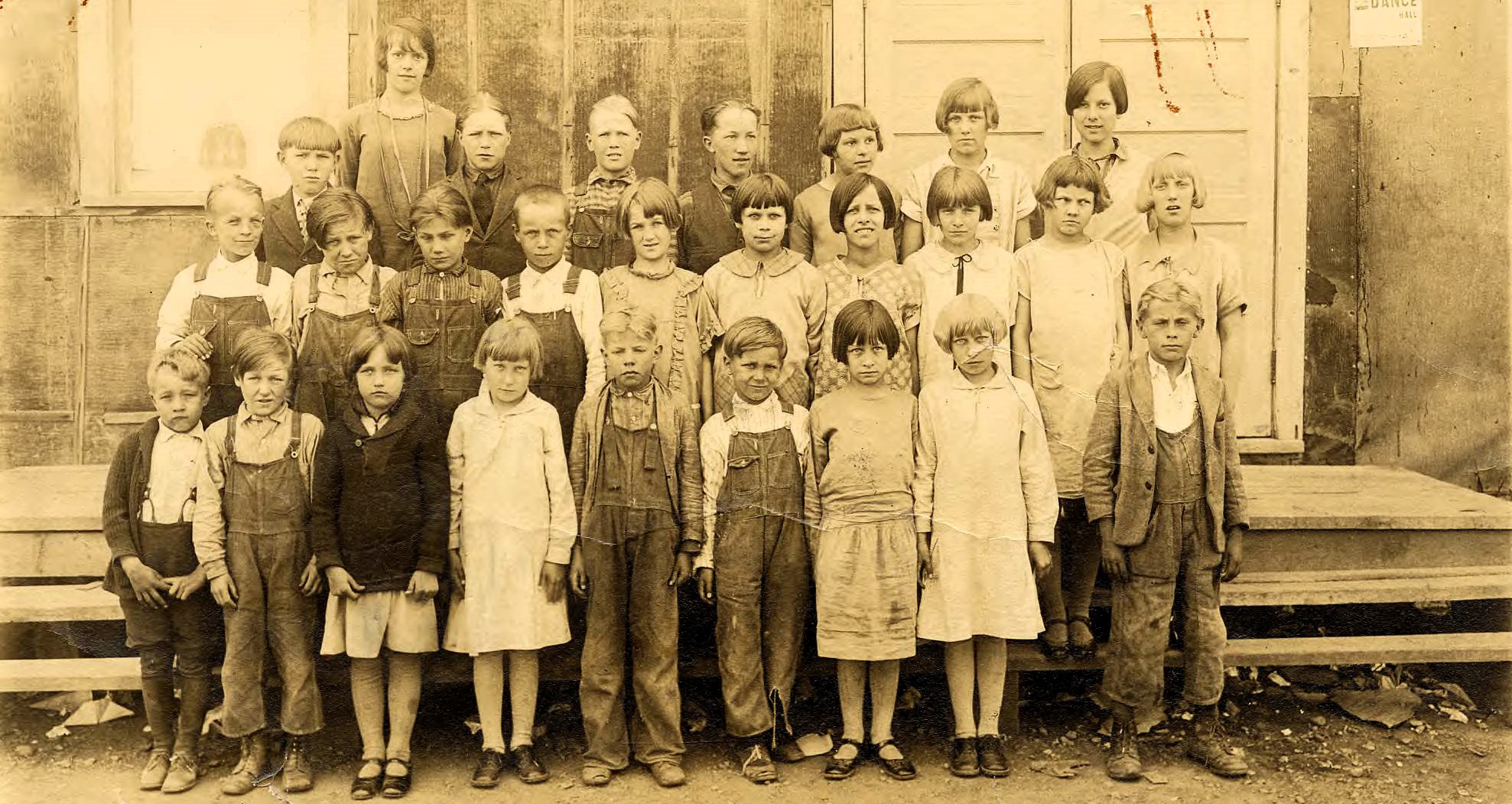
A former teacher with thoughts on what might be done in the public schools to foster class consciousness among working class students.
‘The Duty of Socialist Educators’ by M.B. Butler from International Socialist Review. Vol. 16. No. 3. September, 1915.
HAVING once been a school teacher, the writer was greatly interested in Frank Bohn’s timely article in the April Review on the Relation of Socialism to the public schools. That is a field that has been greatly neglected, nor is there a field more fertile for the inculcation of revolutionary principles and ideals than the public schools.
While in school, it is of vital importance that the children should be educated along working class lines, so that they will be prepared to enter intelligently into the class war and fight for their class, instead of becoming conceited and falsely educated lickspittles of the capitalist class.
In this humble attempt, I only hope to suggest a few ways that Socialist educators can introduce into the schools now, under present conditions, courses of study that deal with the fundamental principles of scientific Socialism.
In school districts where the trustees and most of the patrons are Socialists, the trustees should, by all means, if possible, employ Socialist teachers, and only such teachers as are well grounded in Marxian economics. Then they should demand of the teacher that he give a systematic course of instruction on the class struggle; the materialistic conception of history; wages, labor and capital; value, price and profit; industrial solidarity, etc.
With his psychological and pedagogical training, the teacher will, of course, endeavor to simplify the more abstruse subjects to bring them within the grasp of his pupils and present them in a manner both attractive and instructive.
But when a Socialist is teaching in hostile community, he should, nevertheless, not fail to do his duty by his pupils and his class. He can find many ways to present working class ideas. If he has good reason to think he would be ousted if he taught revolutionary ideas and called them Socialism, or any other radical name, he can teach the substance, to a greater or less degree, and omit names. I personally know one teacher who openly teaches Socialist economics in his schools. The enemies of Socialism tried .to remove him, but his reputation as an efficient educator stood him in hand and they failed.
Unless the Socialist teacher is a high school professor, I think the country districts and small schools are the best places for his work in this line, for then he has no high and mighty principal with capitalistic instincts to lord it over him.
Now, for example, in teaching United States history, the teacher can supplement an accompanying course in industrial history, using, for the purpose, such works as “Coman’s Industrial History of the United States” and Simon’s “Class Struggles in America,” and he should emphasize the overwhelming importance of industrial development as the means that builds and destroys nations, shapes history and makes society what it is. He should take special pains to counteract the influence of histories that glorify wars, generals, kings and the great man idea.
He can likewise teach other branches of study in a similar manner, giving the true working class interpretation to every detail. In ancient history, Engels’ “Origin of the Family,” Morgan’s “Ancient Society” and Ward’s “Ancient Lowly” should be used for reference and for diligent supplemental study.
In geography, it should be explained that political divisions and boundary lines are capitalist divisions and boundary lines, together with their causes and purposes.
In mathematics, it should be shown that interest, profit and loss, stocks and bonds, banking, etc., are a gigantic swindle to get something for nothing. That labor produces all values and that labor should have all that it produces.
There is hardly a branch of science taught in the schools that is not grossly perverted to bolster up capitalist society, and the teacher should be awake to all the frauds every minute of the day, and counteract them with the truth at every opportunity as far as he can or dares. In the primer grades, where the teacher delivers nature talks to prepare the child for higher grades, such as geography, history, language, the study of plants, animals, etc., etc., he has almost unlimited latitude, and he can have no excuse if he fails to impress upon the child minds the fundamental principles of the class struggle, the cause and purpose of strikes, the meaning of tramps, etc. For a small sum, he can furnish the pupils with valuable pamphlets, such as Mary E. Marcy’s “Shop Talks on Economics,” Trautman’s “One Big Union,” “The Communist Manifesto,” and many others. Pupils should be required to write compositions on the subjects treated, and debates should be arranged between students on various revolutionary subjects.
Where a teacher cannot come out in the open like this, he can, at least, have literature sent to his pupils, and he can find a thousand ways to inculcate vital truths where ignorant and prejudiced patrons will never suspect.
It goes without saying that patriotism and the military ideal should at least be totally ignored if they cannot be openly condemned. In schools where all the children are of the working class, the teacher can and should teach the children to honor and idealize the useful workers, and to look with disrespect and contempt upon parasites and parasitic occupations. There is no teacher that is so hampered that he cannot do some of these things for his class, and to some extent in the public schools.
Will anyone say that these methods are underhanded and should not be used? If so, I reply that the end justifies the means, and the real Socialist teacher would be a self-detested hypocrite to teach the capitalist lies as formulated in the usual text books.
I think it would be time well spent if some clear and able writer, like Mary E. Marcy or J.E. Sinclair, would write school primers and pamphlets supplementing our school text books, to bring out the truth and nail the lies taught in our public schools. The names Socialism, Industrial Unionism, etc., could be omitted, so that the position of the teacher will not be embarrassed or endangered by their use.
The International Socialist Review (ISR) was published monthly in Chicago from 1900 until 1918 by Charles H. Kerr and critically loyal to the Socialist Party of America. It is one of the essential publications in U.S. left history. During the editorship of A.M. Simons it was largely theoretical and moderate. In 1908, Charles H. Kerr took over as editor with strong influence from Mary E Marcy. The magazine became the foremost proponent of the SP’s left wing growing to tens of thousands of subscribers. It remained revolutionary in outlook and anti-militarist during World War One. It liberally used photographs and images, with news, theory, arts and organizing in its pages. It articles, reports and essays are an invaluable record of the U.S. class struggle and the development of Marxism in the decades before the Soviet experience. It was closed down in government repression in 1918.
PDF of full issue: https://www.marxists.org/history/usa/pubs/isr/v16n03-sep-1915-ISR-riaz-ocr.pdf
 Revolution's Newsstand