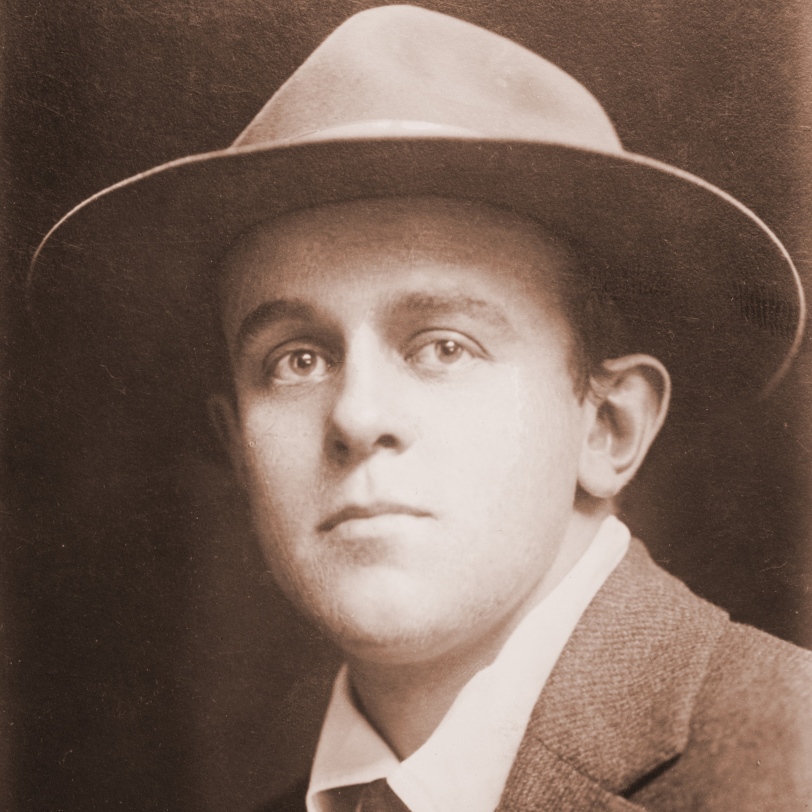
A too-often dismissed work by John Reed is this lengthy serial reevaluating the U.S. Socialist movement and its tactics written in the spring and summer of 1919, ‘Why Political Democracy Must Go.’ Eager for the emerging Left Wing to have a national voice (Revolutionary Age then the organ of the Boston local), Reed began The New York Communist in April, 1919 in order to engage in the factional war then raging as the right-wing began mass expulsions. As part of that project Reed wrote this extensive re-analysis of a fatally-flawed U.S. ‘democracy’ hollowed out by imperialism, whose institutions, rather than being vehicles of social transformation to be protected by the working class as posited by the Party’s right, needed to be destroyed by the working class. Reed discusses the change in tactics required by this changed strategy as the basis on which the Left Wing be built. Reed’s political transformation in the two years since his 1917 experience was extraordinary; an immense amount of study is evident in this essay, which is also, in part, Reed reassessing his own past liberal ideas about the U.S. and its democracy. The first three of eight sections below, rest to follow shortly.
‘Why Political Democracy Must Go, Parts I-III’ by John Reed from The New York Communist. Vol. 1 Nos. 4 & 5. May 8 & 15, 1919.
I.
“Socialism”–Menshevism—Right Wingism is based largely on the theory that the class struggle will be won by capturing the political power through the ballot-box–that through a process of gradual, orderly progress, the election of candidates to office and the passage of social reform legislation, capitalism will grow weaker and weaker, and the Constitution will be amended into a charter of the Cooperative Commonwealth, or be peaceably abolished.
The modern capitalist state, in the words of Marx, is “nothing less than a machine for the oppression of one class by another, and that not less so in a democratic republic than under a monarchy.”
This proposition was the rock upon which the second International split at the beginning of the European war. The dominant Moderate “Socialists” of all countries sooner or later embraced the formula that “political democracy is better than autocracy.” In Germany the Majority Social Democratic leaders told their followers, “Russia threatens ‘free’ Germany. We must mobilize against Tsarism.” In France England and Italy, they said “Defend Democracy’ against autocracy. German militarism threatens us. This is the war that will end war.”
The class-conscious proletariat of all lands was ripe for mass opposition to the War. The workers knew instinctively that this War had nothing whatever to do with “democracy” or “autocracy”–but was merely an intense form of competition between two groups of world-grasping imperialistic Powers, struggling for control of markets which had been made necessary through the gigantic development of Finance-Imperialism.
Especially in America was this fact clear. Not by the remotest stretch of the Rooseveltian imagination could the people be convinced that we were threatened by any “autocracy”–except industrial autocracy, which had already captured the country. The United States declared war after three years of European conflict had brought home to the understanding of the class-conscious workers of neutral countries, with sickening clearness, the falsity of the Wilsonian formula, “To make the world safe for democracy.”
In entering the War, the ruling class of the United States played the part of a banker who has heavily financed one of the two huge competing trusts, and who, to defend his investment, must throw in all his resources to get rid of the competitor.
Hence the St. Louis Resolution of the American Socialist Party–the mandate of the rank and file of the Party to the Party leaders, which was disregarded by them again and again as they surrendered, little by little, their opposition to the War.
The formation of the Left Wing, and its sharp call to the Socialist movement to abolish the social-reform planks in Party platforms, has posed with cutting distinctness the question of whether or not we shall try to win Socialism by means of political democracy, making use of the capitalist State machinery.
II.
Let us for the moment examine the character of American political democracy.
In this country, as in all modern “democratic ” countries, there are two sides to government-political and economic. The policies of modern “democratic” countries are dictated by the capitalist “interests.” As Woodrow Wilson has pointed out in his New Freedom, the government of this country is in the hands of the great aggregations of capital.
This process of concentration of wealth into the hands of the few began during the Civil War, when the manufacturers of munitions of war, the purveyors of provisions, and the speculators piled up colossal fortunes. This was the period when J.P. Morgan laid the foundations of his riches by selling defective rifles to the Government, and John Wanamaker by providing shoddy uniforms for the Union troops. The floating of Government War Loans, also, brought into the hands of a few bankers an immense financial power. Immediately after the War, the looting of the South, the expansion of industry, the girdling of the continent with railroads, the spoliation of natural resources, and the speculation in land, assumed vast proportions, and became glaringly apparent to the petit bourgeoisie–the small property holders.
This class then consisted largely of farmers. The rest of the population, when hard-pressed, could always leave the cities and go out on the measureless free lands of the West. So the first revolt was of the small property holders against land-looting, and culminated with partial success in the Homestead Law.
But the farmer was at the mercy of all the great interests. They controlled the railroads, the markets, the banks, the price of tools. In spite of the high prices paid for produce during the War, the farmer was badly in debt. He had not been able to purchase Government securities, but he had been forced to pay ruinous taxes, whose imposition was supported by the manufacturers in the towns, because they actually stimulated business.
The new money-kings were manipulating the currency so that the Government would redeem the depreciated securities held by them, and throw the burden on the backs of the workers and the small property holders. This led to the beginnings of revolt against the great interests, in which the foundation was Cheap Money–Greenbackism, Populism, and later, Bryan’s Free Silver campaigns of twenty-five years ago.
This is the real American ancestry of American Socialism, upon which were grafted the theories of Marxian and–predominantly–Lasallean Socialism brought from Europe by the Germans who emigrated after 1848; and the Fourierism introduced by Albert Brisbane and Horace Greeley.
The next revolt of the petit bourgeoisie in America was the Progressive Movement. This also occurred after a war–in this case, a frankly Imperialistic war which marked the formal entrance of American capitalism into the period of Capitalist Imperialism. The whole period was summed up in the emergence of the great trusts during the administration of McKinley and Mark Hanna, the open advocacy of high tariffs, no longer to “protect infant industries,” or to increase wages, but as a basis for the great monopolies of the means of production and distribution in the United States, and a weapon in the international war of Capitalist Imperialism–“Dollar Diplomacy.”
The Progressive Movement properly so-called, was a reform movement to reshape the Republican Party so that it would not be smashed by the growing hostility of the small property-holders, made desperate by the ruthlessness of Big Business. It advocated all sorts of checks upon the power of Big Business–reform of the electoral laws, so as to give the small property-holders a voice in the government (initiative and referendum, recall, direct election of Senators, Woman Suffrage); low tariff (a sort of modified Free Trade); and many other measures of relief, which were expressed with all their significance and all their short-sightedness in the various Anti-Trust Acts, Interstate Commerce Commissions, etc.
La Follette was the strongest and most uncompromising leader of the Progressive Movement; he awakened, first, the small property-holders of his State, and then of the entire country. The great capitalists who at first fought Progressivism, finally realized the futility of open battle, and resorted to their time-honored tactics of capturing the movement. Men like George Perkins, of the United States Steel Corporation–one of the most powerful of the trusts–financed the Progressive Party and became one of its leaders. To speak plainly, he bought it. Roosevelt, when in the White House, at first fought the Progressives. Being a shrewd politician, however, he soon saw that Progressivism was going to win, and took over most of the weapons in the Progressive armory, flourishing them aloft in the sight of all men, and emitting loud cries. The fight of Progressivism against the trusts assumed such proportions that consolidating the steel industry of the country in it blocked the Morgan interests in their plans for one huge, profitable and invincible trust. Whereupon, the Morgan interests unleashed the panic of 1907, and the Government gave in.
This was not the end, however. The Movement under La Follette assumed great proportions. More and more openly, with an ever greater and greater following, La Follette attacked Big Business. The plutocracy was frightened. Its agents, Perkins and others, attempted in vain to check the growth of petit bourgeois revolt. Roosevelt, returning from Africa, was making a triumphal tour of Europe, among other things reviewing the Prussian Guard at the side of the Kaiser. Emissaries of Perkins went to meet him, and secret plans were laid by which La Follette was to be displaced.
The opportunity arrived. La Follette, Progressivism’s Presidential candidate, was invited to the Publishers’ Dinner in Philadelphia. There, with characteristic frankness, he told the editors and publishers of America that the press was controlled by Big Business which used it to exterminate the petit bourgeoisie. (Although the press, especially the monthly magazines, had for years carried on the battle of Progressivism–the period of “mucking-raking”–by this time (1912), it had been pretty generally taken over by the great financial interests, and had ceased its attacks on vested interests. I shall treat this question in a later installment. J.R.)
This was the signal for Big Business to attack. The artillery of the great press, which had been conciliating its subscribers the majority of whom were small property holders–by commenting favorably upon Progressivism, now turned upon La Follette and blasted him with contempt and ridicule. And at the same time Perkins and the other leaders came out for Roosevelt as Progressive candidate.
The Republican Party, willing to lose rather than to adopt the La Follettism with which the insolently suppressed the small property-holders in rank and file of the petit bourgeoisie was infected, the Chicago Convention in 1912. The Progressives made a fight, but it was a losing fight, and they knew it, and so did the small property-holders all over the country, who, despairing of the Republican Party, threw most of their support to the Democrats.
Big Business knew that the small property-holders would probably elect the President and Congress, but they also realized that the great trusts were so firmly intrenched in power that they could not be dislodged. Also, the “interests” would be in the position of Opposition Party, where they could safely sabotage the Democratic administrtion and at the same time criticize it for being inefficient.
Woodrow Wilson, author of the “New Freedom,” was elected to the Presidency by the small property-holders–the Progressive elements. The achievements of his first administration reflect the constituency which elected him.
First, defeat of the open Imperialist scheme to annex Mexico. The small property-holder is not a partner in Imperialism, any more than he is a partner in the great trusts. Capitalist Imperialism does away with the small property-holder. Therefore he is opposed to annexations, and can afford to give his humanitarian sentiments full play.
Second, the Federal Reserve Act. The small property-holder has a desperate fear of financial panics, which eliminate him at one blow. He wants to guard against them, and stabilize finance so that the plutocrats cannot destroy him at will
Third, Taxation of Great Wealth. The Income and Inheritance taxes are for the purpose of relieving the overwhelming burden of taxation which lies upon the small property-holder.
Fourth, The Industrial Relations Commission, Child Labor Law, etc. Social legislation is the small property-holder’s method of reforming capitalism so that he can exist in it. He is at the mercy of both organized Labor and organized Capital, and is more affected by labor troubles than the great capitalist. He must conciliate both Labor and Capital. At the same time, he is not interested in wholesale cheap labor, and he himself is too close to the proletariat, and too liable to be pushed into its ranks, to relish the idea of mass starvation and debauchery of the workers.
In 1912 and 1913 the abuses of savage industrial tyranny provoked a series of gigantic labor troubles–Lawrence, Paterson, Michigan, Colorado, etc. The small property-holder became alarmed, and demanded that these abuses be remedied.
So much for the most important political victories of what were, without contradiction, the great majority of the voters in the United States the small property-holders and those dominated by their psychology. (The Eight-hour Law belongs to a category which I shall treat later. J.R.) If political “democracy” worked, this majority, which elected the President, and swept Congress and the Legislatures, should have been able to enforce its will.
But what has actually happened? The Imperialist scheme to annex Mexico was temporarily defeated–but last month the American State Department warned the Mexican Government not to dare carry out its plan of heavily taxing the oil-wells owned by American capitalists and passports were give to American oil-kings to go to Paris and present their private-property claims to the Peace Conference. And even as I write, a counter-revolution financed by American and foreign oil-interests, with a bureau of information in New York’s financial district, is attempting to overthrow the Carranza Government, and promising in case of success to leave the property of foreigners alone.
During the War, the United States Government, with armed force, has overthrown the Governments of two Carribean countries, Haiti and Santo Domingo, and set up a military dictatorship there.
The Federal Reserve Act, designed to avoid panics, was framed by the Big Interests. It does not provide against panics–but on the contrary, it places the Treasury of the United States at the mercy of the great financial interests.
Great wealth has been taxed to run the Government, and the War-but the Government has become more and more an instrument designed to protect and foster private property; that is to say, create ever more and more great wealth.
The Industrial Relations Commission discovered such hideous industrial conditions in America, conditions which pointed so definitely to the fact that only the Social Revolution could cure them, that the small property-holders became frightened. The Commission was discredited by both plutocratic and Progressive press (such papers as The New Republic being particularly exasperated by the “intemperateness” of its report). Nothing ever came of it, except such schemes as John D. Rockefeller’s, which pretended to cure conditions by making Labor even more helpless.
The Child Labor Law was declared “unconstitutional” by the Supreme Court, in spite of the widely-heralded appointment of Louis D. Brandeis, a Liberal, as Supreme Court Justice.
Thus we can see the failure of political democracy even among the ruling class–the property-holders, where Marx says one of its most important functions is to act as arbitrator.
The grand bourgeoisie makes use of the State to conserve and extend great capitalist interests at the expense of all other classes.
III.
DURING the War the American Labor Unions were attacked under the pretense of “military necessity,” their union regulations broken down, and results of years of organization wiped out. Pleading “patriotism,” the employers’ associations represented in the Council of National Defense and other bodies secured the suspension of labor legislation in some states. Men who were persistently active in labor organization, or who failed to buy Liberty bonds or contribute to the Red Cross, were thrown out of work, and rendered liable to the Army draft. Whole striking factories were threatened with instant conscription into the Army. In some parts of the country such workers, not only for opposing the war, but even for opposing the ruthless profiteering of employers, were blacklisted by the Councils of National Defense. At the same time private police and detective organizations, composed of business men and manufacturers, and authorized by the Department of Justice, used their power to crush labor organization wherever possible.
The Government created a joint body of workers’ and employers’ representatives called the War Labor Board, to settle industrial disputes. In many cases the awards, presumably binding upon the employers, were either accepted and not applied, or else partially disregarded. The most powerful corporations, such as the United States Steel Corporation, which has always resisted with terrorism and brute force all attempts of its employees at organization, the War Labor Board did not dare openly to affront.
Protests of the workers against unfair awards of arbitrators during the War were met by defiance and threats from Government officials–such as the flat refusal of Charles Piez, Director of the Emergency Fleet Corporation, to reconsider the Macy award to the Shipyard Workers of Seattle, and his ferocious denunciations of the men.
These measures proceeded from an Administration which Organized Labor had united almost solidly to elect, and whose leader–President Wilson–had flattered the vanity of the workers by reviewing the Labor Day parade with Samuel Gompers in 1916; and during a War which Organized Labor in America had voted overwhelmingly to support in the name of democracy.
A typical sufferer during the War was the Machinists’ Union. The employers discovered that a skilled, highly-paid machinist was a useless luxury. Four unskilled workers could be taught each one part of a machinist’s job, in a very short time. These four comparatively unskilled workers could do the work of four machinists, and do it much cheaper thus destroying the union wage-scale, and throwing the skilled workers on the street.
It is interesting in this connection to quote from an article in Fincher’s Trades’ Review, written by William H. Sylvis, the first great American labor leader, in 1863, describing the same process applied to the Stove-Moulders:
“Simultaneous with this was introduced the ‘helper system’…the stoves were cut up, that is, each man made one piece…Thus this system went on until it became necessary for each man to have from one to five boys; and…prices became so low that men were obliged to increase the hours of labor, and work much harder; and then could scarcely obtain the plainest necessities of life…”
It was directly from these conditions that the first powerful national labor union sprang–the Molders’ International Union. Likewise, it was the replacing of skilled men with young apprentice boys, at starvation wages, which was the chief grievance resulting in the second great union–the National Union of Machinists and Blacksmiths, under the leadership of another of the famous early American labor leaders, Jonathan C. Fincher.
The beginning of the Civil War, (Mass meetings of workingmen to protest against the Civil War were held in Philadelphia, Reading, Norfolk, Peterborough and Richmond, Va., Cincinnati, St. Louis and Louisville, Ky., at which latter place a resolution was adopted declaring that “workingmen had no real or vital issue in the mere abstract questions used to divide the masses.” A national convention of workers met in Philadelphia in 1861 to oppose the War. J.R.) with its industrial paralysis and widespread unemployment, wiped out whatever tentative labor organization had begun, except for the two great national unions above mentioned. But in 1862 the Government began its issuance of hundreds of millions of dollars in “greenbacks,” which, accompanied by the high war tariff and the tremendous demand for army supplies, caused a hectic revival of industry, and laid the foundations for a class of capitalist employers. As in the European War just concluded, all classes profited except the wage-earners; for while wages in 1864 had risen 30%, the average of retail prices had risen 70%.
The frightful pressure on the working-class at this time led to an era of labor union organization, most of the unions being local, and affiliated in trades assemblies, which supported one another in strikes and boycotts. The local and scattered character of these small unions corresponded exactly to the conditions of production at the time. But by the end of the war the manufacture of standardized products, and the establishment, though the new railroads, of national markets, created rapidly, one after another, the great national unions. This was the real birth of the American Labor Movement.
Before the Civil War the Government was controlled by the Southern slave-holding class. This control was challenged by the small capitalists of the North, opposing the interests of wage labor to those of chattel-slavery. It was as a representative of this small property-holding class that Abraham Lincoln was elected to the Presidency, and as a representative of this class that he conducted the war. He feared the growing ruthless power of Wall Street, and warned against it again and again. And when the war was ended, with the slave-power destroyed, he wished to see Reconstruction in the South proceed rapidly and generously, so that the rising class of small property-holders there could unite with the same class in the North to keep control of the Government. But Lincoln was assassinated, and there is no small evidence to prove that the bullet which killed him was fired from the direction of Wall Street…And the capitalists, seizing control of the Federal Government, proceeded to loot the South, and to create there such bitter sectional and racial antagonism, that it made co-operation between the small property holders of the North and South impossible and enabled a small group of capitalists to settle themselves firmly in the saddle. Finally, abandoning the ruined South, the ruling class turned its attention to looting the public domain, natural resources, and the Government-State and National. Great political machines were built up throughout the country, resting on political patronage and Governmental graft, whose power to this day has never been shaken off. Before the Civil War there were no great capitalists. Industry was largely localized, the products being consumed where they were manufactured. There was plenty of free land in the West to which the exploited could go, and the workman could always become a small manufacturer and merchant on his own account. Literally speaking, there was no wage-earning working-class as such in the United States. But the free workingmen of America who enlisted or were drafted into the Union armies, leaving a society in which the manufacturer came to them, returned after the war to find gigantic new centralized industries, to which they must travel and beg for work. With the development of power, transportation and great factories, industry after industry left the country and moved to the city; and the worker was forced to follow. This concentration in the cities was intensified by the waves of immigration from Europe. Free land was gone; not even the Homestead Law, breaking up the great land-holdings and creating millions of small land-owners, could prevent the growing concentration of labor power and capital. In fact, the new free-holders were at the mercy of the railroads, marketing facilities and banks, which were already in the hands of the great capitalists.
From before the Civil War to this day, the psychology of the American worker has been the psychology not of a class-conscious laborer, but of a small property holder. The evolution of industrial society in America has been so swift, that the American worker still has in his mind the idea that he may climb into the capitalist class. Why?
Not the least of the reasons is, that two or three generations before Labor in other countries had received the first privilege for which it fought, the American worker had been given the political vote. The first manifestations of his class consciousness were political manifestations. In spite of unending disappointments, in spite of the hollowness of all his legislative victories, the American worker continues to believe the promises of the capitalist political parties, and vote, vote, vote.
It is to be noticed that the beginnings of American economic labor organization were dictated by the necessity for defense of his class interests–never offense. The Knights of Labor was founded to defend standards of living; the American Federation of Labor was formed to defend Labor’s interests. Except comparatively lately, as partially in the I.W.W., American Labor has never supported any economic organization with political object–that is to say, with the object of gaining control of the State. Its efforts at political conquest of government have been in the form of political action–and this political action has never been a class-conscious proletarian movement, but always the joining of forces with the small property holders, in their efforts to conquer power. Such was the Union Labor Party, the Greenback Labor Party, the Populists, the Bryan Free-Silverites, the Progressives, and finally the Wilson Democrats. And, as we have noted in a preceding installment, these movements, which in essence were nothing more than revolts of debtors against the strangling greed of the great capitalists, failed utterly. The control of Government by the great capitalists was too strong to break.
In all these debtor-revolts, the farmer, who feels the pressure the most severely, was the most prominent element. Union labor followed the farmer–not as the propertyless industrial worker, but as the owner, or prospective owner, of a little property. The latest of these revolutionary movements of small property holders is the Non-Partisan League, with its program of State banks, State-controlled elevators and transportation lines, and its combination of the farmer with Union Labor in the cities to wrest control of the State from the great financial interests. It, too, will fail…
For more than half a century American Labor has turned its attention alternately from politics to economic organization. Says John R. Commons, in his “History of American Labor”:
“The repeating cycle of politics and trade unionism, political struggle and economic struggle, political organization and economic organization, marks out the course of this history of labor.”
In the last two decades before the European War, Union Labor, disenchanted with the failure of political action, adopted the course of adjuring politics, and developing the economic organization alone.
In the last decade before the European War, Houses of Congress, and was using the Courts to the Employers Association had captured both Houses of Congress, and was using the Courts to revive “conspiracy” charges against labor organizations, and to defeat them by means of the in junction, turned its attention to politics in order to protect its economic action. Political pressure was brought to bear upon legislatures; lobbies were maintained at Washington, and in the State legislatures; the policy of “voting for our friends and defeating our enemies” was largely practised; Mr. Samuel Gompers and other labor leaders were familiar figures in Congressional Committee rooms, arguing for or against such and such a bill.
The legislative achievements of Union Labor are impressive. A Department of Labor in Washington, and State bureaus in almost every State; eight-hour laws in Government work, on the railways, and in many States; Federal Boards of Arbitration and Conciliation; Workmen’s Compensation laws in most States; restriction of foreign immigration, and exclusion of Oriental laborers; Factory laws of all sorts, legislative safeguards, and legalization which declares that Labor is not a commodity, of strikes and picketing; and the Clayton Act, industrial disputes–a law which Mr. Gompers and professes to abolish the use of injunctions in hailed at “the new Magna Charta.”
But in the last analysis, what does all this come down to? The Department of Labor in Washing–upper strata of skilled workers; it is headed by a ton represents nothing but the interests of the former workingman, William B. Wilson, who acquiesces in the persecutions of striking miners by the copper barons of Arizona, and defends the deportation from the country of foreigners active in labor organization, on the ground that they are “Bolsheviki”; in other words, it faithfully serves the capitalist Government. Long before the Eight-Hour laws were enacted, it was recognized by the more intelligent capitalist-employers that they would increase the efficiency of workmen; and even now they are not obeyed by corporations whose interests they do not serve. Boards of Arbitration either “arbitrate” in favor of the employers, who will not relinquish an atom of their power, or fail. Most Workmen’s Compensation laws are subject to decisions of Industrial Commissions, or similar Government bodies, and to appeal in the capitalist courts. Factory laws are generally disregarded, and strikes and picketing, though legalized, are still practically outlawed by the police. The Clayton Act is not worth the paper it is printed on.
In spite of the phenomenal growth of the American Federation of Labor, and its increase of power, nevertheless industry has grown faster yet. Even before the war, that great achievement of the American Federation of Labor, the “trade agreement,” a sort of partnership between organized labor and capital–in which contracts were signed between bargaining groups to cover a period of time–had been abolished in the largest companies, such as the United States Steel Corporation. Little by little the “basic” industries are lost to Organized Labor. And the great mass of the unskilled workers, deliberately excluded from the ranks of the privileged skill workers of the Federation, had been recruited by the I.W.W., which abjured political action of any sort, and whose object was the conquest of the State by economic action.
The end of the European War leaves the great capitalists in command of the industrial world, and determined, if they can, to destroy labor organization for good and all.
This is the result of the votes of the workers who put the Democratic Administration in power.
To meet this menace a powerful movement has sprung up in the ranks of Union Labor, to form a Labor Party–a political organization which, by means of legislative reforms, will conquer power for the workers. Its program bears the marks of its historical genealogy–the psychology of the small property holder, and not of the proletarian.
The method of its organization shows once more American Labor’s invincible trust in the vote, and in the possibility of “partnership” with the capitalist class.
Only after painful experience will Labor realize that the capitalist State is “nothing less than a machine for the oppression of one class by another, and that no less so in a democratic republic than under a monarchy.”
Labor cannot enter into “partnership” within the capitalist State. Labor can only win the product of its toil by the overthrow of the entire capitalist system—nothing less.
The New York Communist began in April, 1919 as John Reed’s pioneering Communist paper published weekly by the city’s Left Wing Sections of the Socialist Party as different tendencies fought for position in the attempt to create a new, unified Communist Party. The paper began in a split in the Louis Fraina published Revolutionary Age. Edited by John Reed, with Eadmomn MacAlpine, Bertram Wolfe, Maximilian Cohen, until Reed resigned and left for Russia when Ben Gitlow took over. In June, 1921 it merged with Louis Fraina’s The Revolutionary Age after the expulsion of the Left Wing from the Socialist Party to form The Communist (one of many papers of the time with that name).
PDF of full issue: https://www.marxists.org/history/usa/pubs/thecommunist/thecommunist1/v1n04-may-08-1919-NY-communist.pdf
PDF of issue 2: https://www.marxists.org/history/usa/pubs/thecommunist/thecommunist1/v1n05-may-15-1919-NY-communist.pdf
 Revolution's Newsstand