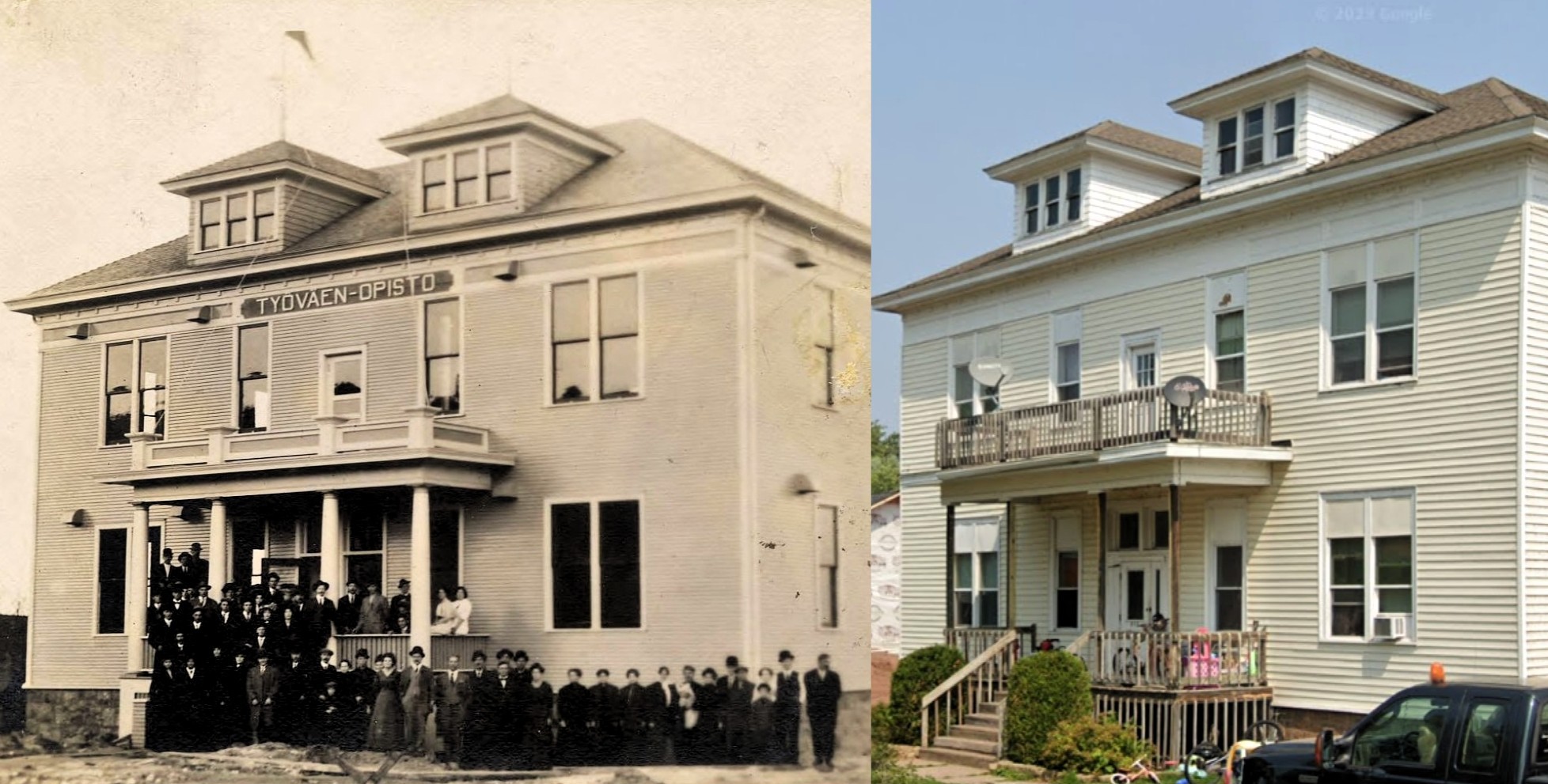
George Sirola, leading Finnish-American Socialist, gives the history of the Finnish Working People’s College of Duluth founded in 1907. The direct ancestor of the I.W.W.’s Work People’s College which took over the building in 1921, operating it until it closed 1941. Hundreds and hundreds of working class activists were educated through its efforts.
‘The Finnish Working People’s College’ by George Sirola from International Socialist Review. Vol. 14 No. 2. August, 1913.
THE influences of international capitalism, through American commodities and machines, on the European social and industrial conditions, have driven into America a great many Finnish people, the number of which is 211,026, according to the census of 1910. These immigrants were led and “educated” by ignorant preachers, who were paid well for their petty services and supported by the middle class, the petit bourgeoisie, who are seeking the favor of the trust magnates by teaching the workers religious obedience and national competition among the workers. These people soon found it necessary to establish a school where it could prepare preachers and “educators” to promote the spirit of nationality among the Finns. For this purpose a school called “People’s College” was established in Minneapolis, Minn., 1913, and very soon moved to Smithville, which is a suburb of the city of Duluth.
This attempt, however, was a failure. The students, recruited as they were particularly from the working class, could not be satisfied with the conservative doctrines. They demanded knowledge of real things and modern sciences and compelled the board of directors to provide them with such teachers and lecturers as could instruct them in these particular subjects.
At the same time the Finnish comrades outside the college were beginning to be interested in the college. The socialist locals and individual comrades were purchasing shares of the stock, $1.00 per share, and they soon, 1907-8, acquired possession of majority of the shares. As soon as the socialists came into control of the college the program was entirely changed and the college since has been known as the “Working Peoples’ College.”
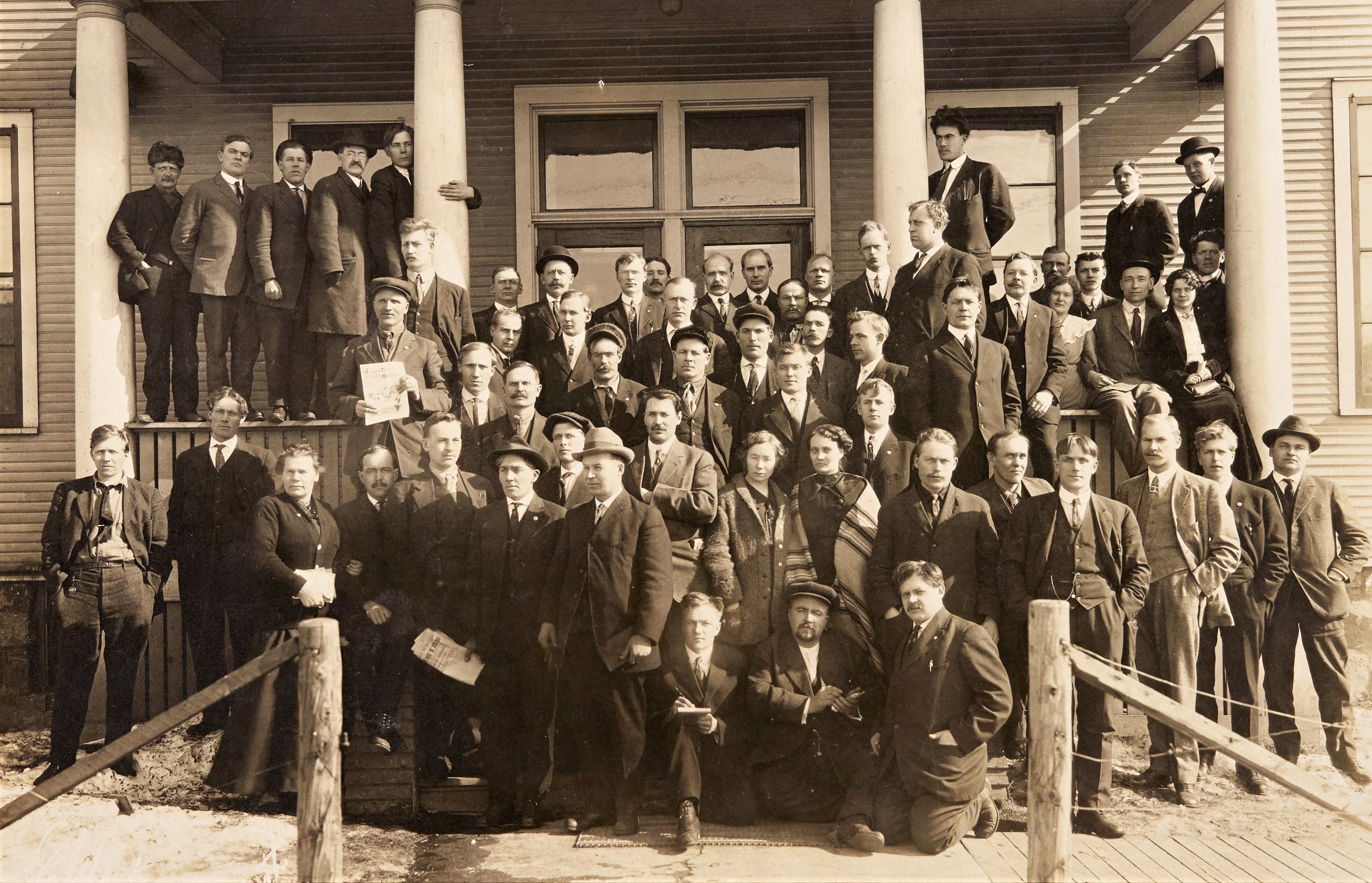
This meant a new and brighter life for the institution. The students were coming in such numbers that the old building became insufficient and the neighboring houses were also occupied. Courageously a new building was erected in 1910 with a large lecture hall, two class rooms, a gymnasium, office rooms and study rooms for about sixty students. But in a short time this, too, was insufficient, especially when the old building was destroyed by fire in the spring of 1911. The following summer a dining room and kitchen was built and now plans are being made to build a dormitory with library and reception room that will accommodate about ninety students. This having been completed this summer, the value of the institution will be more than fifty thousand dollars.
At the convention of 1908 the Finnish Socialist Organization accepted the college as its own and for the following two years the Finnish comrades were paying dues, $1.00 a year for the maintenance of the college. The convention of 1912, held at the college, decided that these dues should be only 50 cents a year and it also emphasized the fact that as an institution owned by the working class its service to the workers should be principally the teaching of subject important in the class struggle.
The study of socialism was divided into three courses—the preparatory scientific course, and the scientific courses I and II. The preparatory course, including economics, history, politics and socialist program and tactics, is compulsory even for those students who wish to attend the college for the purpose of studying bookkeeping, arithmetic and the English or Finnish languages. Each student is also required to take an active part in exercises for practical party work. The scientific courses I and II are for the students whose principal aim is to specialize in the study of the class struggle and in organization work. The works of Marx, Engels, Kautsky and others of the best authors on socialism are being studied and the text books used are both in English and Finnish.
Through frequent and strict recitations and examinations the advancement of the students are tested. The more advanced students prepare original lectures, essays and articles on socialist topics. The college has already sent out several editors for the party press, speakers, lecturers and organizers in the rank and file. The faculty, with the aid of the students, has each year issued a publication called “Revolution,” this year’s issue being the sixth.
The teaching of the English language and preparing the students for participating in the work of the English locals and unions are, of course, the principal aims of this institution at the present time. Besides the regular study periods, the students are requested to attend the English Debating Club, where, occasionally, comrades from Duluth or other places in the vicinity give talks in English. Last winter the students subscribed for the Lyceum Lecture Course and. for next year the plans have been made to have one English lecturer and socialist teacher as a member of the faculty.
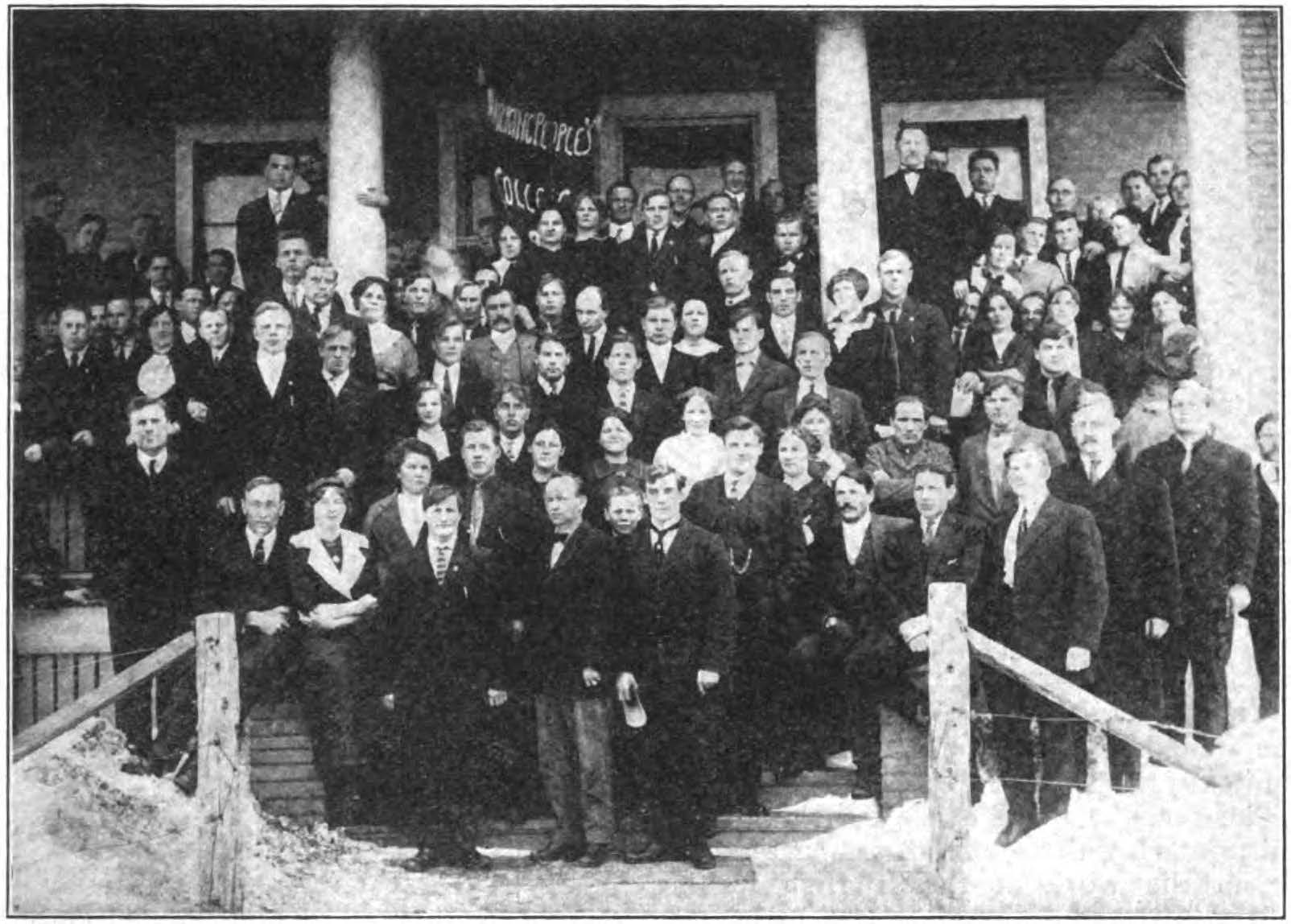
Previous to this time the school has been in session only six months of the year, which was one continuous term, but now two months have been added to the time and this is divided into two terms of four months each.
Last winter there were in attendance 136 students, of which 33 were women. The students were from all parts of the United States and Canada where Finnish people live. The next winter a still larger attendance is expected, although the board and tuition, which has been $20 per month is raised to $22.
For the benefit of those comrades who are unable to attend college, a correspondence department was organized in connection with the college. The students of this department receive instructions in the English and Finnish languages, arithmetic and political economy.
The readers of the Review might take pleasure in knowing that there prevails a radical spirit among the faculty and the students in the college.
The International Socialist Review (ISR) was published monthly in Chicago from 1900 until 1918 by Charles H. Kerr and critically loyal to the Socialist Party of America. It is one of the essential publications in U.S. left history. During the editorship of A.M. Simons it was largely theoretical and moderate. In 1908, Charles H. Kerr took over as editor with strong influence from Mary E Marcy. The magazine became the foremost proponent of the SP’s left wing growing to tens of thousands of subscribers. It remained revolutionary in outlook and anti-militarist during World War One. It liberally used photographs and images, with news, theory, arts and organizing in its pages. It articles, reports and essays are an invaluable record of the U.S. class struggle and the development of Marxism in the decades before the Soviet experience. It was closed down in government repression in 1918.
PDF of full issue: https://www.marxists.org/history/usa/pubs/isr/v14n02-aug-1913-ISR-gog-ocr.pdf
 Revolution's Newsstand