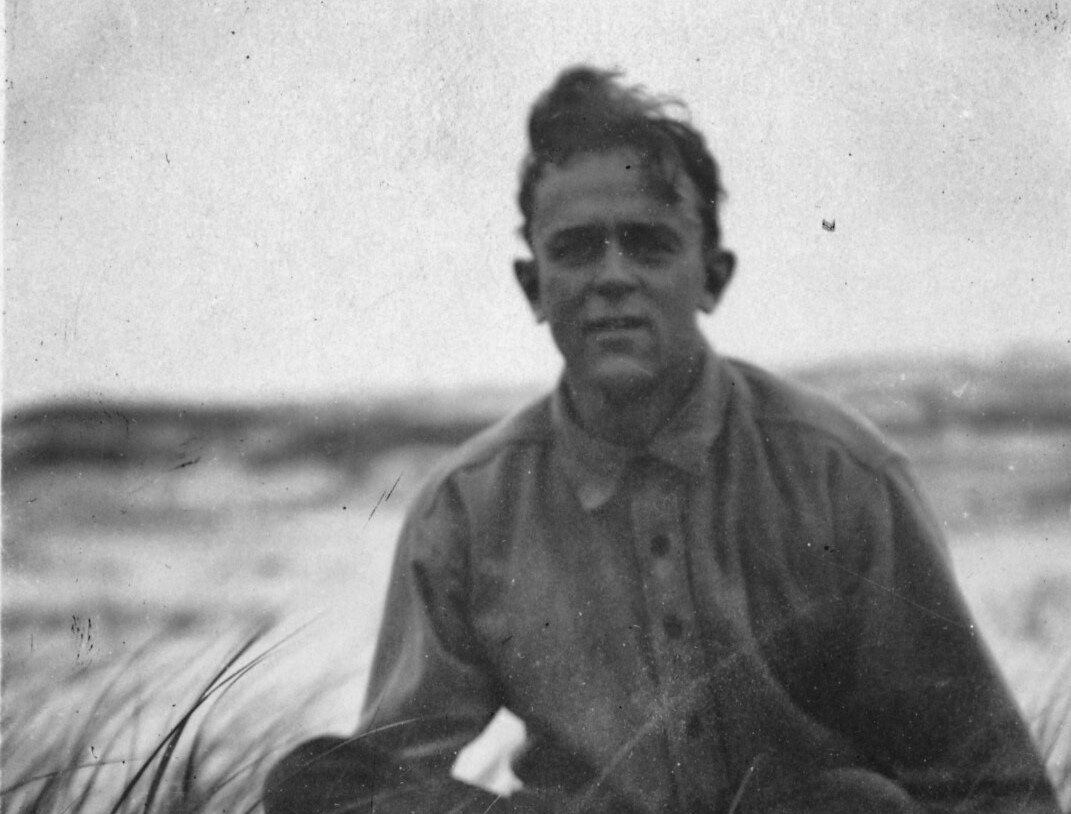
John Reed continues his revised history of the U.S. Socialist movement in the fourth and fifth of eight sections. First parts here.
‘Why Political Democracy Must Go, Parts IV-V’ by John Reed from The New York Communist. Vol. 1 Nos. 6 & 7. May 24 & 31, 1919.
IV.
THE history of Socialism in America is of the most absorbing interest. Every new theory of cohorts for a descent upon the 3d, 5th nings [sic] of the factory system, had its immediate repercussion in the New World. The present Left Wing movement in the Socialist Party, with its reflex of the new tendencies of European Socialism, is, in that characteristic, not exceptional.
For example, in 1826 the Englishman, Robert Owen, moved to America and started his New Harmony colony. About the same time Albert Bris bane (father of Arthur Brisbane, Mr. Hearst’s right-hand man), introduced into America the philosophy of Fourier, to which he converted Hor ace Greeley; this resulted in a series of communistic experiments in co-operative industry and agriculture. Greeley abandoned pure Fourierism, and tinkered with “profit-sharing” and other varieties of cooperation, that led to the great movement for producers’ and consumers’ cooperatives in New England, which culminated and then died down in the eighties.
The characteristic of native American social ideas was their intense individualism. The economic reason for this was, the historical condition of American social development, which identified the concentration of labor, and capital in cities with the loss of individual liberty characteristic of a population largely agricultural and scattered thinly over a great area.
One of the earliest native social philosophies was transcendentalism, which took various forms, including the esthetic individualism of Thoreau; the intellectual individualism of Emerson–whose ideas, however, were considered so dangerous to society that he was not permitted to lecture at Harvard University; the “associationist” cooperative activity of Channing, grafted onto Fourierism; and finally, the revolutionary ideas of Orestes Brownson.
Brownson, of the above, was the only real member of the working-class. It is interesting here to quote from his article, “The Laboring Classes,” published in 1840, an account of the factories of New England, where the workers were mostly women:
“The great mass wear out their health, spirits and morals without becoming one whit better off than when they commenced labor. The bills of mortality in these villages are not striking we admit, for the poor girls when they can toil no longer go home to die…. We know no sadder sight on earth than one of our factory villages presents, when the bell at break of day, or at the hour of breakfast or dinner, calls out its hundreds or thousands of operators.”
Read this, and then go to Lawrence, or Providence, or Fall River today. The only difference is that now the workers are foreign women, while then they were Americans.
Brownson had had never seen the Communist Manifesto. Yet in 1810 he advocated the overthrow of the capitalist state, and declared any means justifiable. It is startling at this time to read what he says:
“And is this measure to be easily carried? Not at all. It will cost infinitely more than it cost to abolish either hereditary monarchy or hereditary nobility. It is a great measure and a startling. The rich, the business community, will never voluntarily consent to it, and we think we know too much of human nature to believe that it will ever be effected peaceably. It will be effected only by the strong arm of physical force. It will come, if it ever comes at all, only at the conclusion of a war, the like of which the world has yet never witnessed, and from which, however inevitable it may seem to the eye of philosophy, the heart of humanity recoils with horror.
“We are not ready for this measure yet. There is much previous work to be done, and we should be the last to bring it before the legislature. The time, however, has come for its free and full discussion. It must be canvassed in the public mind, and society prepared for acting on it.”
Another direction taken by native American social theories was reform of the systems of exchange and banking.
Josiah Warren, the “first American anarchist,” opened a series of stores where goods were sold at cost, and the labor of the salesmen was paid for by an equal amount of labor by the purchaser. He founded several colonies, which were based on the principle that price should be determined by labor-cost. He was followed by William Beck, with his “ticket-system” of doing away with banks, and the substitution of purchasing power for currency. Then came William Weitling, the German immigrant, with his plan for a “bank of exchange,” in which price would be fixed by “labor-time.” This was a compromise with the ideas which he had first brought from Europe in 1847–common ownership of all property and centralized management of production and exchange. The reason for this change is very significant. Both in Europe and America the merchant-capitalist was the dominant enemy of the working class. But in Europe it was realized that a social and political revolution was necessary to get rid of him (indicated by the Revolutions of 1848), while in America the workers demanded economic reforms which would not destroy existing political institutions.
The first appearance in this country of Marxian Socialism was in 1852-3, when Joseph Weydemeyer, a friend and disciple of Marx and Engels, came to New York and organized a short-lived revolutionary society known as the Proletarierbund. Then he at tempted to spread his ideas in the ranks of the trade-unions forming at the time, and organized an association among the German workers called the General Workingmen’s Alliance, which began the publication of a Communist paper called Die Reform. The movement spread. A similar organization was started among the English-speaking workers. But the growing wave of trade unionism finally overwhelmed it, and Marxian Socialism, with its conception of the class struggle, its recognition of trades-unionism and political action, disappeared until after the Civil War.
The First International, founded in London in 1864, for which Karl Marx wrote the inaugural address, began with an organization of British trade-union leaders to prevent the importation of strike-breakers into England from the continent. It developed into a sort of general Workers’ Union, in whose ranks two theories battled; that of Mazzini, advocating the harmony of the interests of capital and labor (from which the philosophy of the A.F. of L. is directly descended), and that of Marx, who emphasized the class solidarity of labor in all lands. Not until the Bakuninites almost captured the movement in the early seventies did the actual program of Socialism become the leading issue, The early philosophy of the International was based on the economic organization of the workers into trade unions and cooperatives, to precede the seizure of the political state. It took ten years for this idea to become firmly established in America. On the other hand, the Lasallean agitation of 1863 in Germany was immediately reproduced here. Lasalle emphasized political action, the political capture of the State first–this capture to be followed by the organization of the working class into co-operatives assisted by State credit.
In 1865 there was formed in New York the General Germen Workingmen’s Union, which subsequently became Section 1 of the International. Its original declared:
“Under the name of the General German Workingmen’s Union are united all Social-Republicans, particularly those who regard Ferdinand Lasalle as the most eminent champion of the working class, for the purpose of reaching a true point of view on all social questions…While in Europe only a general revolution can form the means of uplifting the working people, in America the education of the masses will instill them with the degree of self-confidence that is indispensable for the effective and intelligent use of the ballot, and will eventually lead to the emancipation of the working people from the yoke of capital.”
Seven years before this, however, there had been established a Marxian organization, the Communist Club, based on the Communist Manifesto, among whom were many members afterward prominent in the American International, and who conducted a voluminous correspondence with Marx, Engels and Becker.
In 1868, the Communist Club and the Working men’s Union united to form a political party, the Social Party of New York and vicinity. It is interesting to note here that this party was, out of deference to the English-speaking workers, a distinctly social reform party, advocating progressive income taxes, abolition of national banks, right of issue of paper money reserved to the Government, an eight-hour law, etc. The campaign of 1868 proved it a failure. In December of 1809, it joined the International, and began work of Socialist study and general Socialist propaganda, on the basis of Marx’s Capital.
In the next two years a number of new sections of the International were organized, consisting mostly of foreign immigrants. There was a French section, a Bohemian section, and several Irish sections. But besides the foreign immigrants, there was another group, Americans, who joined the International. This was made up of intellectuals, inheritors of the traditions of transcendentalism and Fourierism in the forties and fifties. They had formed an organization called the New Democracy, whose platform advocated electoral reforms, such as the referendum, and State Socialism.
In 1870 the New Democracy disbanded, and its members joined the International as sections 9 and 12, of New York. Section 12, under the leadership of two sisters, Victoria Woodhull and Tennessee Claflin, well-known advocates of “social freedom,” quickly became famous. It turned its attention to all sorts of extraneous matters, such as a “universal language,” woman suffrage, “freedom of sexual relations.” This imperiled the very successful propaganda of the Central Committee among labor organizations. Section 12 pursued its activities in the name of the International, refusing to recognize the authority of the Central Committee, and appealing to the General Council in London to become the leading Section in America–which was rejected. Finally the foreign sections decided to put a stop to the activities of Section 12. The delegates of fourteen sections met and dissolved the Central Committee, reorganizing under the name of the Federal Council, and excluding Section 12 and a few sympathizing sections, which they offered admittance on the basis of the following propositions:
“1. Only the labor question to be treated in the organization.
“2. Only new sections to be admitted two thirds of whose members are wage laborers.
“3. Section 12 to be excluded, as strangers to the labor movement.”
Section 12, being entirely composed of intellectuals, refused. The German sections called a national convention to legalize their coup d’etat. The General Council in London made an investigation, and in 1872 Section 12 was expelled from the International. But Section 12 and its followers refused to accept the decision, and called a national convention of its own, in which were represented thirteen Sections, mostly English-speaking. This convention denounced the interference of the General Council in American affairs, and declared its intention to appeal to the General Congress of the International, at the Hague, in 1872.
Although Section 12 and its adhering Sections opposed the Marxians, they did not ally themselves with Bakunin and his faction–although at the Hague Congress Bakunin supported the delegates of Section 12, who were expelled with him from the International. The new organization dominated by Section 12 turned its attention to politics. At the same time, the convention of the regular International in America proclaimed as its intention “to rescue the working classes from the influence and power of all political parties, and show that the existence of all these parties is a crime and a threat against the working classes.” It did not recognize that the time was yet ripe for political action.
In the Hague Congress, Sorge, representing the orthodox Marxian organization in America, gave as his reason why the native American Sections were not entitled to representation, that the native Americans were practically all speculators, while the immigrants alone constituted the wage-earning class in America.
The headquarters of the International was transferred to New York in 1873. From then strife developed within its ranks, until the convention of 1874, when the two opposing conceptions of political action pure and simple, as against the organization of trade-unions as a basis for political action, again split the American International, and the political actionists permanently withdrew, and started the Social Democratic Party of North America. At the same time, the Labor Party of Chicago was formed.
In Europe, too, the workingmen were building up political parties in place of federations of the International. And this had its effect upon the American labor movement. But the chief reasons for the tendency toward political organization were the disastrous effects of the panic of 1873, which practically destroyed the American trade union movement, and a desire to make Socialism more attractive to the American workers–that is, to the small property holders.
But at the same time the American workingmen were perfecting the first of their powerful economic organizations, the two even then beginning their struggle for mastery on the industrial field–the Knights of Labor and the craft union movement. Politically, the rank and file of both these organizations were entirely impregnated with petit-bourgeois psychology. The Pittsburgh General Labor Convention of 1876 was captured by the Knights of Labor, who endorsed Greenbackism, from cheap money to the protective tariff, and thus cut adrift from the Socialists, who withdrew from the convention.
The result was to unite the Socialist factions, which came together and adopted a declaration of principles taken from the General Statutes of the International, and organized the Workingmen’s Party of the United States, which immediately plunged into politics.
My purpose in thus reviewing the early history of the American Socialist movement in detail, is to call attention to the nature of its action in the American political structure. Of course it is obvious that the influence of Socialism upon the American state up
to 1880 was necessarily small, because the movement itself was overshadowed by other political Still, at a time when movements in Europe very similar in size and importance were having an important effect upon the policies of various governments, the effect in America was absolutely nil.
Why? I have tried to point out in this series of articles the disastrous effect of political democratic ideology upon the growth of class-consciousness. Even after the capitalist class in America had learned that government is not carried on in legislatures, but in banks and Chambers of Commerce, the workers still believed that political democracy could solve the problems of the wage-earners. This belief affected and modified the revolutionary theories imported from Europe. And when it did not, the class-conscious workingmen’s organizations soon found that the capitalist political parties, with their appeal to small property holders, were easily able to capture the labor vote from the Socialists.
And finally, although, as Sorge stated at the Hague Congress, “the foreign immigrants alone constituted the wage-earning class in America,” they found themselves unable in any way to bring influence upon the government or the ruling classes–because they were foreigners.
This is as true today as it was in 1876–if not more so, on account of the war. The foreign workers in this country are virtually excluded from all participation in the government, although they constitute the majority of the American working class. Although naturalized citizens, the latest immigration laws nullify this advantage, because under them citizenship can be revoked upon conviction of having revolutionary ideas. Their organizations are powerless; their press is muzzled; the courts convict them of political offenses upon the slightest evidence, and Organized Labor–as typified in the A.F. of L–bars them from the advantages of even the inadequate labor organizations formed to defend the workers’ economic interests.
The present outlawing of Socialists in politics, because they are Socialists, indicates the answer of the democratic State to the political action of the class-conscious workers.
V.
THE formation of the Workingmen’s Party marked beginning of a political force in the United States. The old distinctions of Internationalism and Lasalleanism gave way to the native American conflict between Trade Unionism and Politics–which continued to sway the movement from one side to another until the last generation.
So far I have described the background of the movement in this country. With the Union Congress of 1876, Socialism entered upon the political arena in the struggle for power against the capitalist class.
A few sections locally entered political campaigns, and the resulting vote was so encouraging that others prepared to follow. Then came the nation-wide strikes of 1877, the activity of the sections the strikes, the violence of the police, especially in Chicago, where a meeting of striking cabinet-makers was fired on. The National Executive Committee saw its opportunity, and ordered the sections to hold mass-meetings endorsing labor demands. The autumn elections in many parts of the country showed a large Socialist vote. Immediately a special convention of the Party was called to define its attitude toward politics.
This convention met in December 1877 and remodeled its Declaration of Principles to the effect that “political action is the natural function of the Party.” However, owing to the influence of the Trade Unionists, it declared also that the Party “should maintain friendly relations with the trade unions and should promote their formation upon socialistic principles.” The name was changed to Socialistic Labor Party and a few years later, to Socialist Labor Party.
In the spring elections a curious paradox was observable. In localities where the Trade-Unionists were supreme, the candidates, who had been forced into politics by the Party policy, polled large votes because the unions supported them and worked for them; while in the districts where the pure Political Actionists predominated, the Labor vote went to the Greenbackers or the Republicans. In the next national and state elections, the same phenomenon prevailed. The Chicago section, the most powerful in the country, elected four members to the legislature, who were influential enough to compel the appointment of an Industrial Commission, and the following year, secured four aldermen. In St. Louis, three Socialist candidates were elected to the legislature. But the draw-backs of the situation were made clear by the effects of the boom of 1879; prosperity drew the attention of labor away from politics, and the membership and vote of the Socialist Labor Party rapidly declined.
In 1880 the Political Actionists, in view of the diminishing Party vote, forced through a referendum to send delegates to the Greenback Convention in Chicago, and support the candidates of the Greenback Party. This compromise was passionately opposed by the Trade Unionists of Chicago, as well as by a group of revolutionary Socialists in New York, whose center was a handful of refugees from the German anti-Socialists laws.
Since the first campaign of the Workingmen’s Party, the Trade Unionists had never abandoned their instinctive distrust of political action. In 1877-78, it is true, the election of candidates to municipal and state legislatures was of considerable agitational value. The state was not yet clearly defined as a direct instrument of capitalist exploitation; the Socialist legislators took it by surprise. But from then on gangs of armed thugs invaded the polling places on election day; Socialist speakers were attacked; Socialist votes were torn up; and in Chicago, in 1879, the only Socialist alderman elected was deliberately refused his seat by the corrupt Democratic Council.
In 1879-80, as today, the lawless brutalities of the ruling class in nullifying the Socialist vote created a widespread disgust with political action. Already many workingmen’s military organizations had sprung up to protect the Socialists from attack. The Political Actionists in control of the National Executive Committee repudiated these armed societies. The “deal” with the Greenback Party was the last straw for the Trade Union faction, which, with its growing system of labor organizations armed for defense, broke away from the Political Actionists, and in 1881 issued a call to “all revolutionists and armed workingmen’s organizations in the country,” pointing out the necessity of “getting ready to offer an armed resistance to the invasions by the capitalist class and capitalist legislatures.”
In October of the same year a convention of revolutionists met at Chicago and formed the Revolutionary Socialist Party, which rejected all political action and endorsed the so-called Black International, the anarchist International Working Peoples Association, declaring that is stood ready to “render armed resistance to encroachments upon the rights of workingmen.” Before the referendum was completed, however, the Chicago section took part in one more municipal campaign, whose effect upon the Socialists was so disastrous that it destroyed the last vestige of faith in even the agitational value of political campaigns.
The Convention of 1883, at Pittsburgh, defined the two currents in the new organization; that led by Spies of Chicago, recognizing revolutionary trade unionism–and that led by Johann Most of New York, advocating pure revolutionary anarchism. A compromise between the two was reached, resulting in a philosophy of organization and action almost analogous to modern Syndicalism.
It was under the influence of this organization that the great labor upheaval of 1885-86 took place, of 1886, centering around the Eight-hour strikes, and culminating in the Haymarket Bombs of the summer, which broke the Black International.
The provocation of the ruling class which resulted in the explosions (analogous to the San Francisco bomb cases and the recent Post Office bombs), demonstrate to what lengths the capitalists will go in order to wreck all efforts of the workers to free themselves. It is impossible to capture the capitalist state for the workers by means of the ballot; this has been demonstrated again and again; and yet when Labor repudiates political action, it is met with fearful violence…
During this time the Socialist Labor Party had almost disappeared, not emerging until the Henry George Campaign of 1886 in New York, when the Socialists saw their opportunity to arouse the worker-masses to political action once more, the result of which, they thought, would be to win the new movement to Socialism. But the Henry George movement concentrated on Single Tax, and finally repudiated Socialism; so the Socialists threw their strength into the Progressive Labor Party, in New York. All over the country independent Labor Parties sprang up, and for a time the political results were astonishing. These Labor Parties elected no less than ten Congressmen, many legislators, judges, etc. Even in New York State, where the vote was small, the effect upon the legislature was such that a great quantity of labor legislation was enacted.
An attempt was made, in 1887, to combine these scattered parties into one national organization, which was accomplished by the Cincinnati Convention, wherein were included the Knights of Labor, the Farmers’ Alliance, Greenbackers, etc. Here was launched the National Union Labor Party; but this turned out to be merely another “deal” with Greenbackism–the farmers (the small property-holders) captured the organization, and the Socialists did not support it, nor did the industrial workers vote for it.
In 1888 began anew within the ranks of the Socialist Labor Party the old bitter fight between the Political Actionists and the Trade Unionists. In 1889 the Political Actionists on the National Executive Committee were replaced by Trade Unionists, and the Party placed itself behind the Eight-hour Movement, and promised support to the Unions. A minority of the sections revolted, organized their own machinery and declared for pure political action. This was known as the “Cincinnati Socialist Labor Party”; in 1897 it amalgamated with the Debs-Berger Social-Democracy of America, which was a combination of the political expression of the old American Railway Union, and the Populism of Berger. The new Party immediately plunged into politics.
In the meanwhile the Socialist Labor Party was passing through a rapid evolution in its relations to organized labor. The gradual consolidation of craft-union, wage-conscious philosophy of the American Federation of Labor finally led to a battle in the old Central Labor Union of New York. The Socialist Labor Party set up an opposition body, the Central Labor Federation, which was refused a charter by the A. F. of L., and finally definitely expelled. Then, under the leadership of Daniel DeLeon, the Socialist Labor Party attempted to capture the Knights of Labor. Using the United Hebrew Trades as his instrument, DeLeon got control of District Assembly 49, and then ousted Powderly as President of the Knights, and elected Sovereign. But Sovereign played him false. Beaten in both of the great labor organizations, DeLeon started his own Socialist Labor Party organization, to compete with the two–the Socialist Trade and Labor Alliance.
Indirectly this was the chief cause of the formation of the Socialist Party. A group in the Socialist Labor Party–called the “kangaroos”–were against the policy of combatting the labor organization from without. They favored the policy of “boring from within.” This meant to capture the A.F. of L.–at the time supreme–by working within the Unions to elect officials, and through them to dominate the membership.
In 1889 the “kangaroos” seceded from the Socialist Labor Party, and in 1900 they joined the Social Democracy–the new Party took the name of Socialist Party of America. In the campaign of 1900 the Socialist Party, rolled up a vote of almost 90,000, while the Socialist Labor Party’s vote dwindled.
With the foundation of the Socialist Party, the history of the Socialist Labor Party, as a movement of the workers at grips with the capitalists on the political field, comes to an end. Henceforth the Socialist Labor Party is identified with the development of a great Socialist theoretician, Daniel De Leon. The last attempt of the Socialist Labor Party to annex the labor movement occurred in 1905-07, in connection with the I.W.W., and resulted once more in the secession of the S.L.P. and the formation of a rival organization.
In the light of recent history, when the relatively enormous Socialist vote has failed to influence seriously the make-up of capitalist legislatures, it will be a surprise to many persons to read of the legislative victories of the small and strife-torn Socialist movements of early days–small as they were in comparison with the huge spread and power of the capitalist system. But capitalism had not yet consolidated its hold on the State; the independent ballot was still a power–although even forty years ago could be discerned the answer of the ruling class to any challenge of its hegemony on the political or industrial field–violence.
The political power of the working class increased slowly; the bourgeois dictatorship of society grew by leaps and bounds; today the citadel of great capitalism is impregnable to all assaults except the mass assault of the united working class.
The New York Communist began in April, 1919 as John Reed’s pioneering Communist paper published weekly by the city’s Left Wing Sections of the Socialist Party as different tendencies fought for position in the attempt to create a new, unified Communist Party. The paper began in a split in the Louis Fraina published Revolutionary Age. Edited by John Reed, with Eadmomn MacAlpine, Bertram Wolfe, Maximilian Cohen, until Reed resigned and left for Russia when Ben Gitlow took over. In June, 1921 it merged with Louis Fraina’s The Revolutionary Age after the expulsion of the Left Wing from the Socialist Party to form The Communist (one of many papers of the time with that name).
PDF of full issue: https://www.marxists.org/history/usa/pubs/thecommunist/thecommunist1/v1n06-may-24-1919-NY-communist.pdf
PDF of full issue 2: https://www.marxists.org/history/usa/pubs/thecommunist/thecommunist1/v1n07-may-31-1919-NY-communist.pdf
 Revolution's Newsstand