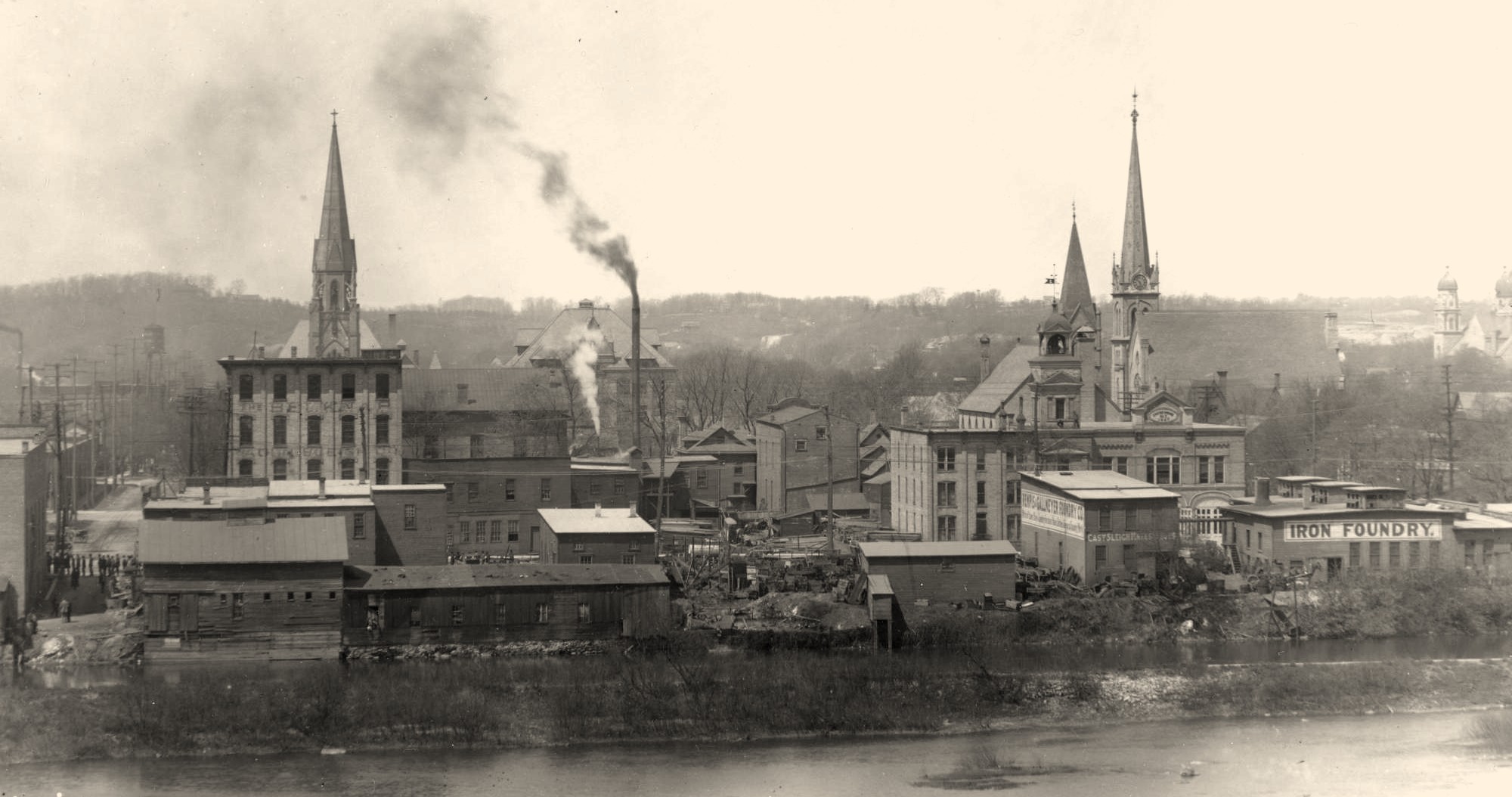
Being a revolutionary activist in a conservative burg the likes of Grand Rapids is a lesson in frustration. Despite strikes and industry, a group of dedicated I.W.W. activists just can’t make headway in the church-going, home-owning Dutch Calvinist community. ‘O.L. Wakeup’ dissects the make-up of its people and the character of its politics in this excellent, familiar, look at life in a small city.
‘What is the Matter with Grand Rapids?’ by O.L. Wakeup from Solidarity. Vol. 4 No. 39. October 4, 1913.
What is the matter with Grand Rapids, Mich.? Why does not the I.W.W. grow here?
Coming amid the reports from enthusiastic and determined industrial revolutionists chronicling the many battles and wonderful growth of the I.W.W. in all parts of the country, the two questions above may serve as a jolt, a reminder that there is at least one industrial center that, up to date, apparently pays little heed to the message of revolutionary industrial unionism. If this is so, it is better that it be known and the reasons therefor, discussed so that means of bringing about a change in the attitude of the workers may be discovered and applied. We must know the weak spots as well as the strong; it will not do to deceive ourselves or others concerning our growth and strength, that is, so far as the workers are concerned. Disclosing and examining an obstacle seemingly hard to overcome, should not dampen our ardor or discourage us in the least; we’ll meet with a lot of these in the course of our development. They should, and will, serve to make us mere determined than ever to overcome every obstacle that hinders us in our sure and onward march to industrial freedom.
Local No. 202, I.W.W., was organized in July, 1910, and was chartered as a furniture workers’ local, though out of the thirty or more charter members only a half dozen or 80 worked in the furniture industry. The others were engaged in various industries and several were members of craft union who had the courage of their convictions in sufficient quantity to join and help in a concrete manner the upbuilding of revolutionary industrial unionism.
The membership has fluctuated up and down, and some excellent material has been developed, only to hit the road and become agitators for the one big union; many have joined and dropped out. If, at the present time, Local 202 had all who were once members, together with all those who say they “believe” in the I.W.W. and think it is all right and the only thing–if we had all these as members, Local 202 would certainly be a big local; in fact, we’d have two or three locals here.
But while 202 lacks the membership, it possesses the revolutionary spirit. Ever since organization, no call from the firing line has gone unheeded, and the little bunch that has stood together through the ups and downs of the local, has, each week, dug into its jeans to meet, the expenses and send forth what little aid they could to where it seemed most needed.
We have distributed lots of literature, held meetings, hall and street, and taken advantage of various opportunities to advertise the fact of our being. But, judging by our membership, revolutionary industrial unionism does not seem to “take.”
Some of the reasons for the non-growth of the I.W.W. here are as follows:
Character of the Population
The workers seem to be contented with their “lot.” The dominant nationality is Hollander, and the majority of these workers come from the farming communities and small settlements in Holland, where the standard of living is low. The population is “God-fearing” and “law-abiding”; the ministers dominate and conservatism prevails. The children of these workers are duly impressed by their parents and the dominic that the church is the whole thing. This is not meant as a reflection. There are different characteristics between all nationalities; some are more pronounced than others. Also there are differences in the workers of the same nationality coming from different sections of the same country, but living under different conditions. For instance, in Grand Rapids, while the church-going conservative Holland element dominates at present, the majority of the members of 202 and the most revolutionary are Hollanders, who come from the large industrial centers of Holland, where radical and revolutionary ideas, and non-church goers, are more prevalent.
Large Families and “Home-Buying” Delusion
Large families and home-buying are other means for keeping the workers conservative and timid. The dominic impresses on the slave the idea that to stand well with the “big policeman” it is his and her duty to marry early in life and propagate a large family, the larger the greater the reward in the “hereafter,” I suppose. The workers here, judging by the visible evidence, have certainly faithfully followed the “divine” command to “increase and multiply” so that there may be lots of unemployed slaves competing for jobs on the market. [Several words missing] not abide in the “city that knows how.”
“Home-buying.” Oh, how the capitalist play on the desire of the worker to have a home; to “own your own home,” what a fine thing–for the capitalists; but at the present time a snare and delusion for the workers. In my 24 years’ experience all over the United States I have observed that those cities in which large numbers of workers owned their homes were always low-wage, long-workday, open shop towns. Whenever an attempt is made to get an increase in wages or some other betterment which might cause “friction” between the union and the boss, as a rule the members to vote against such propositions are the “home owners,” the conservative property owners, the members who had a “stake in the community” and could be depended upon to vote against the radicals who owned nothing and did not give a damn. In this city where the industrial committee of the Chamber of Commerce sends out literature for the purpose of inducing or seducing other manufacturers to locate here, the chief inducement is that “Grand Rapids has a large supply of contented, home-owning labor,” and that “the disadvantages in regard to shipping facilities, etc., are more than offset by the cheapness of labor.” The “home-owning” proposition is put up in a very attractive package, but if the worker will stop to think it over, and will not permit his sentiment to becloud his reason, he will perceive that it is to the good for the real estate shark. For instance, they sell you a $1,500 or $2,000 house for $2800; you pay $250 or so down and the rest on “easy” terms, the same as rent, say $15 a month. You pay six per cent interest, that is, for the first year interest will be $8 per month (maybe a little more), which will leave $7 a month on principal, so that the first year you pay about $90 on “your” home. But as you keep on paying the interest goes down and the principal goes up. Besides principal and interest, you must pay all taxes and assessments against the property, and fire insurance, and keep your home in “reasonable” repair; and the party who sells you your home will be judge of the reasonable repair, as he does not wish the place to depreciate in value, because he may have to “sell” it to some other slave. Also for your own interest you must keep “your” property up, as you may wish some time to dispose of your white elephant. Then when you get caught on the home-buying stunt, all your spare time and what money you can get hold of goes to improving the place; instead of paying on it you are always putting in something; you can’t help it, that is the home buying psychology, and the real estate sharks know it. You get so you can’t or won’t think about anything but “owning” the home and hanging on to a job at any price. At the time you “bought” the home the location may have been excellent, but as years go by a “change for the worse” may occur, but you can’t move; you see, you “own” the home, and where the location deteriorates the selling price of your home also depreciates. However, you may live to get your home paid for, when it will be about time to rebuild it. Also taxes, insurance and repairs continue. The “home-buying” bait is one of the greatest by which the capitalists have lured the workers and shows to what despicable means the robber class and their parasites go to strengthen their grasp on their victims. Workers, beware of the “home-owning” bug; get together in the one revolutionary industrial union and OWN THE JOB.
Politics and Politicians
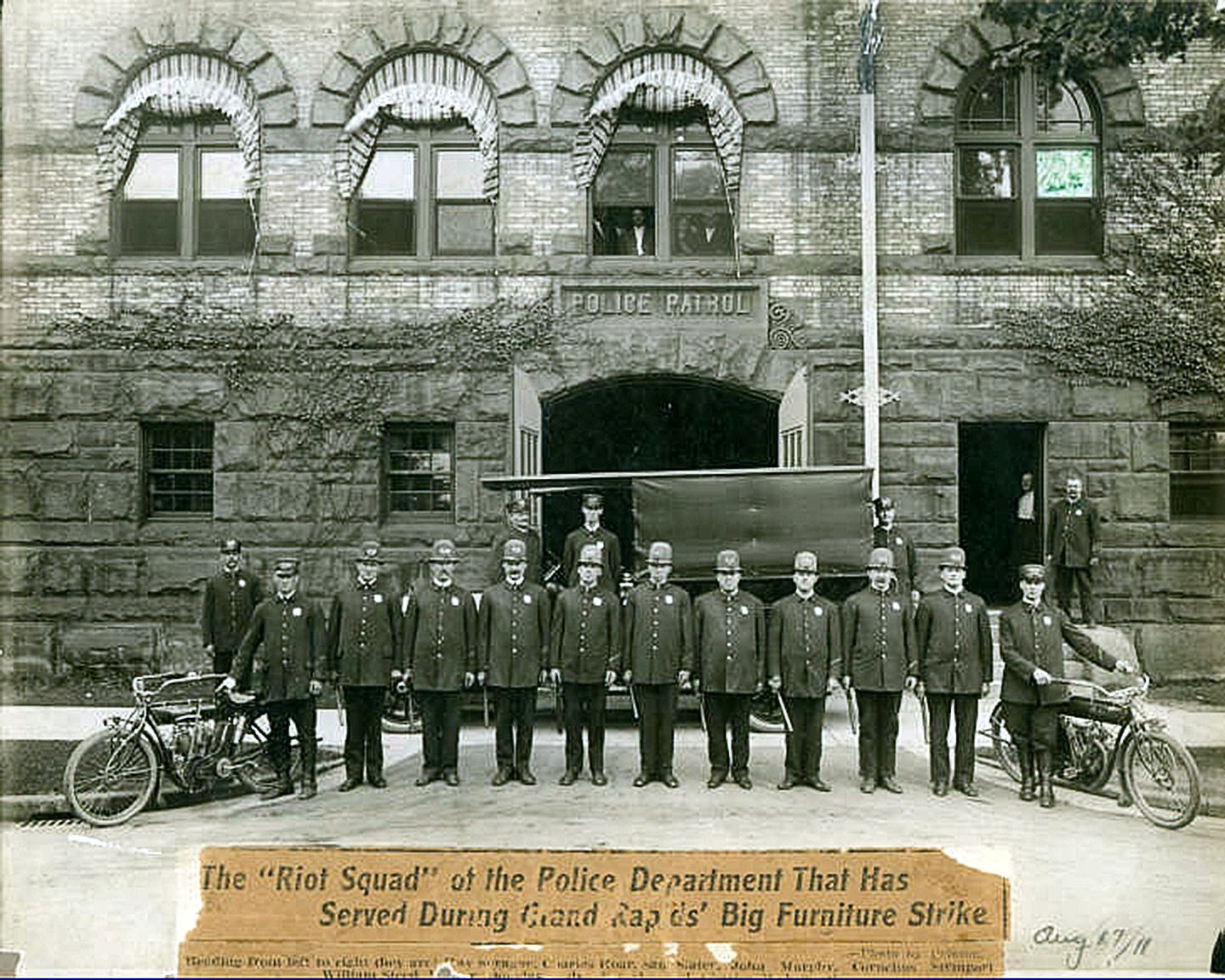
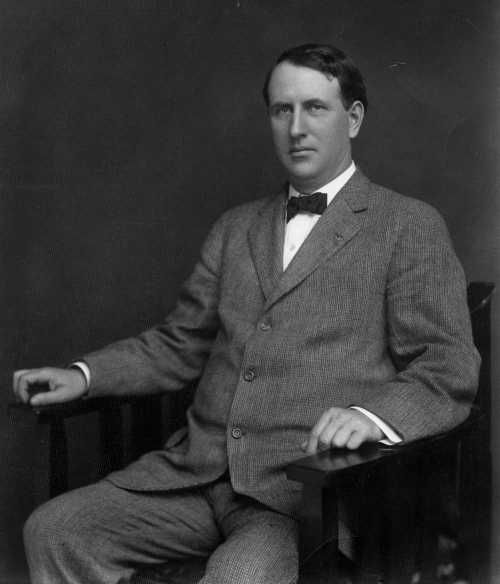
Politics, as well as religion, keeps the workers muddled and divided. The capitalist politicians outside of Mayor Geo. E. Ellis, have paid little or no attention to the I.W.W. Ellis has vented all the venom of his narrow capitalistic, mind on the I.W.W. for two reasons. One, the I.W.W. had the audacity to endeavor to help the garbage workers in their strike a year ago. You see the garbage workers were in a department, the controlling board of which is appointed by the mayor, and it was outrageously unjust and impolitic for these workers to strike in a department controlled by that great “friend” of labor, Mayor Ellis, a guy, who, so far as I can learn, never performed a useful day’s labor in his life. Had the strike been under the board of education, or some other not controlled by the mayor, “his honor” would have made great political capital out of it. Ellis ought to be a member of the machine hands union, as he has built up a great craft union political machine by dealing out slathers of cheap bunk and appointing a few members of different unions to political jobs. Outside of the hot air he continually pours forth and the appointments referred to, I fail to see what Ellis has done for the craft unions; but George has ’em at his beck and call. Appointing a labor skate to a political job, neither raises wages, shortens the working day or gives job control to the workers. Because the labor skate sells. his union influence for a good job, why should any member of a union support and go nutty over the guy that buys the labor skate’s influence? It doesn’t benefit anyone only the fellow that gets the job. Another thing that the craft unionists laud Ellis for is that during the furniture workers’ strike he fought against having the militia sent here; the workers think that was a fine thing to do; it was–for Ellis. When the militia is called out on strike duty, it means an extra burden for the tax-payers, and the more taxable property you own the greater your tax burden will be. Geo. E. Ellis is reputed to be one of the largest tax-payers in the city, so you see when the mayor fought against the militia being called out, he was thinking more of Geo. E. Ellis’ interests than of the workers. Besides, look at the political capital he made out of it. The calling of the militia would have made no difference to the workers, but it would have made a hell of a difference to the taxpayers of Kent county, as at that time the county had to bear all the expense. Ellis does not stop at appointing craft unionists to office, but goes into the Socialist Party, for at the present time the state secretary of the S.P. is secretary of the Public Welfare Commission by virtue of the appointment of the mayor. But the chief thing Ellis has against the I.W.W. is that it teaches direct action and does not give a fig for the politicians and their ballot boxes, and that is a heinous crime, in the eyes of his honor. The mayor is also opposed to the Utah Mormons and the anarchists the latter because they are no use for political action, and the former because they are not numerous enough to be a political factor; if they were, Ellis would cater to them as he does to Catholics, political socialists, etc. The mayor has not only got the craft unionists signed, sealed and delivered, but a large majority of all other workers. Three strikes have been on in this city the past summer; why doesn’t Ellis use some of his “influence” to settle them. The mayor has refused the I.W.W. permission to speak on the streets, as he has the Mormons, who carried the matter to the city council, which upheld the mayor. The I.W.W. not being in a position to put up a fight, has let the matter go confident that at some future time this privilege will be the workers’, not by grace of a political puppet, but through the organized power of the revolutionary workers to take it.
As for the socialists, some individuals favor the I.W.W., some are “two wings,” some think we ought to be in the party, while others (and judging by party acts, the majority) are opposed to the I.W.W. To your face some of these politicians are very fair and friendly, but on other occasions they do not conceal their antagonism, and the Socialist Party here. is just as bourgeois as it is in most places; it can’t help it. No matter how “red” it may have been, it sooner or later changes. Many S.P. members never lost an opportunity to misrepresent and ridicule the I.W.W., especially so since their vote grew as it did a year ago and they have become so “eminently respectable.” They work unceasingly among the craft unions and one of their leaders is prominent in the resolution mill known as the Trades and Labor Council, recently having served on committees presenting resolutions concerning the copper strike and the Pere Marquette strike. These resolutions were nothing but a jumble of wishy washy words that many conservative unionists were ashamed of; and a socialist, who styles himself a “red,” had his name attached to the meaningless bunk, and I never heard of his having presented a minority report. At the present time the political dope goes among the workers. The socialists are praying for the time when Ellis will decide that he has had enough of the mayoralty, when they expect to reap a harvest of craft union and other votes that now go to the mayor. Let craft unionists stop and consider that whatever benefits they enjoy are the result of the direct action of their union; that the friendship of Ellis and the appointment of labor skates to political office is due to their supposed. economic power. If the craft unionists, through a small, exclusive organization, by direct action can gain benefits for their members, then by an all-inclusive revolutionary class union, using DIRECT ACTION alone, they can gain more and more, until the workers achieve freedom from slavery and security in the means of life for all.
Kick out the politicians of all kinds.
Craft Unionism
Among the craft unions some of the “leaders” go out of their way to misrepresent and abuse the I.W.W. They claim the credit for the A.F. of L. whenever the I.W.W. gains benefits for workers, and blame all A.F. of L. defeats and setbacks to the I.W.W.; some of them have even represented their unions as the one big union. This is particularly true of the leaders in the furniture workers’ unions. Some “leaders” look upon the I.W.W. as a joke, while others don’t give a damn about it one way or the other. Fact is, most of the leaders are so busy trying to keep their unions together they haven’t time to worry about the I.W.W. Outside of a few unions like the Bricklayers, the Typographical, Brewery Workers and one or two others, craft unions do not amount to much, being merely a small bunch of dues-payers from whom some smart gents draw salaries, and who give a social now and then. At the time of the furniture workers’ strike, 4,000 workers were organized, while now, I am informed, that about 600 are left. Notwithstanding the published statements as to their being 12,000 union members here, it is a safe bet that 3,500 will amply cover the number. As to the general membership, some of them (many in the unions that are still able to get benefits for the membership) think the I.W.W. is O.K. and say, go to it, but do not join for the reason that they see no necessity for doing so; they get comparatively good wages, work eight or nine hours, have a little shop control and fairly good working conditions; also, some craft unions will not permit their membership to join the I.W.W. Other members, due to misrepresentation, are of the opinion that the I.W.W. is something fierce; while others don’t think or want to think about it.
It is hard enough in this burg to interest a worker in a conservative craft union, but when you mention “revolution,” all bets are off. It is my opinion the I.W.W. should not admit workers as members who of necessity are compelled to retain their membership in a craft union. His fellow workers in the craft union look upon him as a traitor (and his enemies in the union work this overtime) while the workers outside whom he advises to join the I.W.W. look upon him as a trimmer, if not worse, So the revolutionary craft unionist gets it going and coming. Let those revolutionists who must remain in the craft unions contribute money and aid in other ways to build up the I.W.W., but let them remain out for the present.
The I.W.W. Itself
Another thing that has militated against the I.W.W. local is the fact that it was chartered and always referred to as a furniture workers’ local. This kept other workers away, their idea being that only furniture workers were being organized. Furniture workers who came, seeing no such workers in the local, departed, thinking doubtless they had made a mistake, and when it was explained to them about its being a recruiting union they seemed to think it “funny.” Had the local been chartered as a mixed local, or, better still, had it been organized as an I.W.W. propaganda league, better results might have been attained.
However, the greatest reason for the non growth of the I.W.W. here lies in the fact that the right material was never in the local for its development. Had the right kind of stuff been there, this would have largely overcome or minimized all the other obstacles. What the local lacked was shop workers who know how to agitate and educate their fellow slaves and still remain on the job. In short, good job agitators is what we lacked. Street and hall meetings are good in a way, but work on the job among the slaves is the way, the only way, to build up the I.W.W.
The most widely read of I.W.W. newspapers, Solidarity was published by the Industrial Workers of the World from 1909 until 1917. First produced in New Castle, Pennsylvania, and born during the McKees Rocks strike, Solidarity later moved to Cleveland, Ohio until 1917 then spent its last months in Chicago. With a circulation of around 12,000 and a readership many times that, Solidarity was instrumental in defining the Wobbly world-view at the height of their influence in the working class. It was edited over its life by A.M. Stirton, H.A. Goff, Ben H. Williams, Ralph Chaplin who also provided much of the paper’s color, and others. Like nearly all the left press it fell victim to federal repression in 1917.
PDF of full issue: https://www.marxists.org/history/usa/pubs/solidarity-iww/1913/v04n39-w195-oct-04-1913-solidarity.pdf
 Revolution's Newsstand