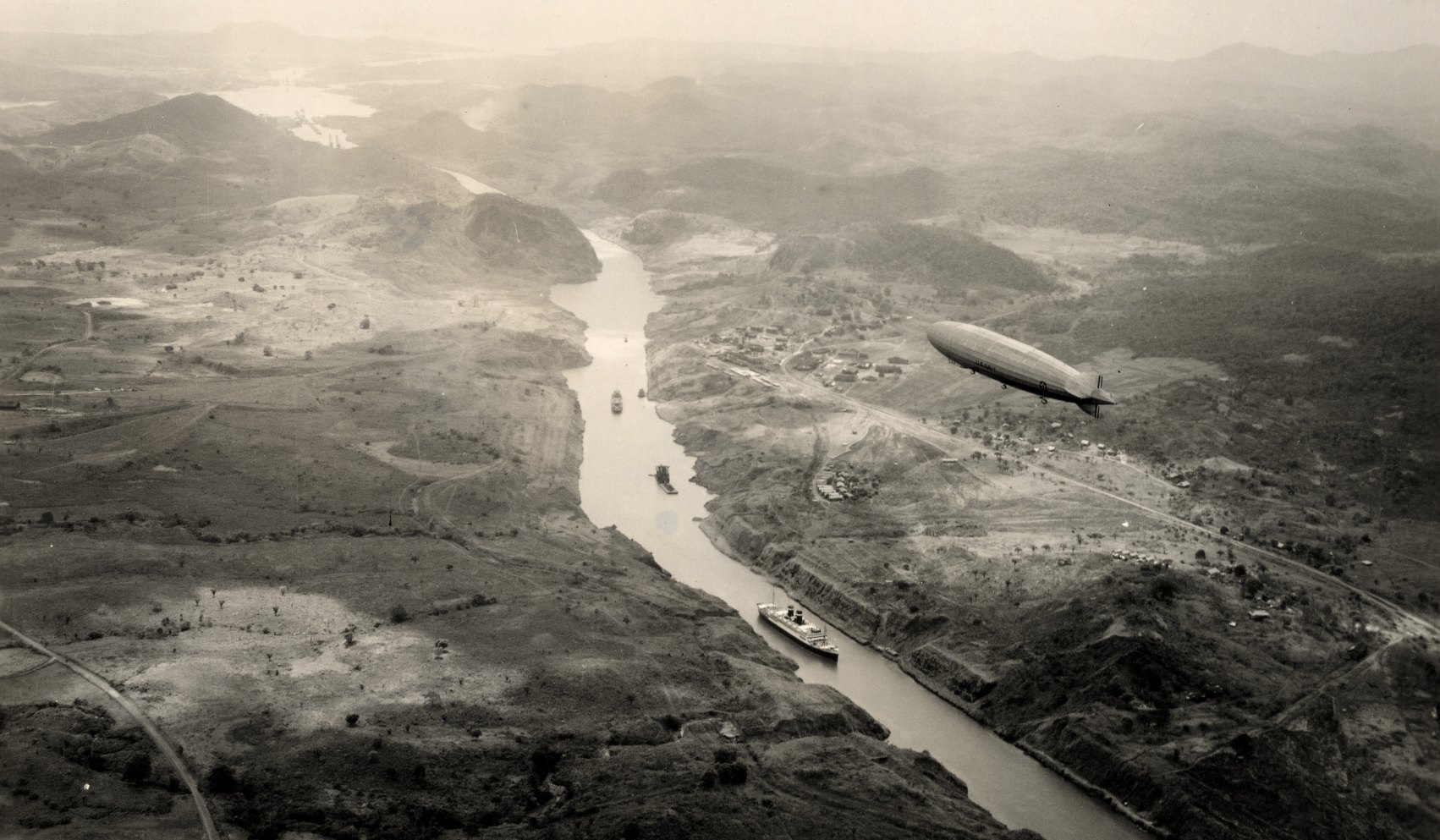
1928 elections in Panama under a marine boot; U.S. imperialism can not lose.
‘U.S. Imperialism Flips a Coin in Panama’ by Harry Gannes from The Daily Worker. Vol. 5 No. 179. July 30, 1928.
NICARAGUA is not the only central American country that is to have an election in which the United States is vitally interested. On August 5 Panama will vote for president and members of Congress Since Panama is a military outpost of U. S. imperialism any official selected must be a puppet of the White House and Wall Street. Little Panama means big guns to American militarists. Panama, at the same time, politically, is connected with the present conflict in Nicaragua.
Pre-election excitement is becoming rife in Panama. Four “opposition” leaders are in jail charged with threatening the “liberal” candidate. That the insurgents are receiving the sympathy of the United States is proved by their insistence on marine intervention. Though the candidate they oppose is a former employe of the United Fruit Company and a tried vassal of imperialism, their slogan is: “Intervention or revolution!” That is to say intervention of marines.
U.S. Controls All Panama Area.
It is the common belief that U.S. control is limited to the Canal Zone. In reality it includes a protectorate over the entire so-called republic of Panama definitely established by the written constitution of the republic. Panama is a part of the American Empire. Everything that happens there Is by the instigation of imperialist agents.
One of the candidates for the presidency, representing the Porrista Party, is a descendant of an American family, Jorge E. Boyd, now in the United States undoubtedly getting the approval of his U.S. masters. It is the representatives of the Porrista Party who are asking for marine supervision of the Panama elections.
The Porissta Party derives its name from Belisario Forras, a former president. The present government of Panama is all that Kellogg could wish in the way of a rubberstamp; yet in trying to win power the Porristas outdo Chiari, the present president of Panama, in the lickspittle act.
Wall St. Officials Rule.
Panama is comfortably in the palm of Wall Street. Besides controlling the bootlicking officials there is always present a financial “adviser” to guard Wall Street’s investors. There is a customs inspector; a railroad commission; a police inspector—every type of instrument for the effective administration of a colony.
Last month the National City Company purchased $12,000,000 of Panama bonds secured by the customs, liquor tax, stamp tax, and by liens on the annuity paid by the United States government for the use and occupation of the Canal Zone, and on the constitutional funds of the republic.
Panama was wrested from Columbia, to which it belonged before 1903, by President Roosevelt. Professor Pereyra, member of the Hague permanent court of arbitration calls the brigandage of the U.S. “the most formidable scandal of American diplomacy.”
Military Stronghold.
Now Panama is the key to the American military machine. It is not impregnable, which is one of the reasons the marines are trying to insure the right of U.S. bankers to build another canal through Nicaragua. As war looms on the horizon, the iron hands that are riveted to Panama are welded tighter, and a new bond is put on Nicaragua. The Chicago Tribune (Oct. 5, 1927), rabid organ of imperialism, urges the further militarization of Panama.
“The Panama Canal should be made as nearly impregnable as lies within the power of military and naval engineers. It should be made another Gibraltar, with guns of the longest range and heaviest caliber, amply fortified, with great naval docks at either end, with flying fields and planes numerous enough to ward off any conceivable attack from the air, and with a land force large enough to man the fortifications and to constitute a mobile body capable of repelling invasion. It is essential that the troops expected to serve in Panama should be located there in numbers…The Panama canal should be armed now.”
Kellogg Peace Liar.
It should be kept in mind that the Panama canal is heavily armed now. Plans have already been drawn up for a $4,000,000 aerodrome in the Panama district. Work will start soon.
The insistence on heavier armament in Panama, and the recent heavy contribution by Congress to the army and navy, belie louder than canon shots Kellogg’s peace-war maneuvers
War and Business Interests.
The entire Caribbean area is considered by the United States as an American lake. To the military authorities it is an important unit of defense and offense; to Wall Street, it is a rich source of exploitation. With the war danger a live issue, Panama, Nicaragua, Costa Rica, Honduras, Guatemala—in fact the entire sector in the Caribbean becomes more and more a naval and military reserve. With U.S. financial penetration of Latin-America growing by leaps and bounds, this territory is contemplated as a private door-step for American entry into the rich hinterland of South America.
The United States has no opposition to the present government in Panama, or to the candidate of the Party in power, Arosamena; who has amply proved his fitness as an employee of American investors. Whichever way the coin falls Wall Street wins. The agitation for intervention is just a vicious means of proving the necessity for United States mastership of these colonies.
The Daily Worker began in 1924 and was published in New York City by the Communist Party US and its predecessor organizations. Among the most long-lasting and important left publications in US history, it had a circulation of 35,000 at its peak. The Daily Worker came from The Ohio Socialist, published by the Left Wing-dominated Socialist Party of Ohio in Cleveland from 1917 to November 1919, when it became became The Toiler, paper of the Communist Labor Party. In December 1921 the above-ground Workers Party of America merged the Toiler with the paper Workers Council to found The Worker, which became The Daily Worker beginning January 13, 1924.
PDF of full issue: https://www.marxists.org/history/usa/pubs/dailyworker/1928/1928-ny/v05-n179-NY-jul-30-1928-DW-LOC.pdf
 Revolution's Newsstand