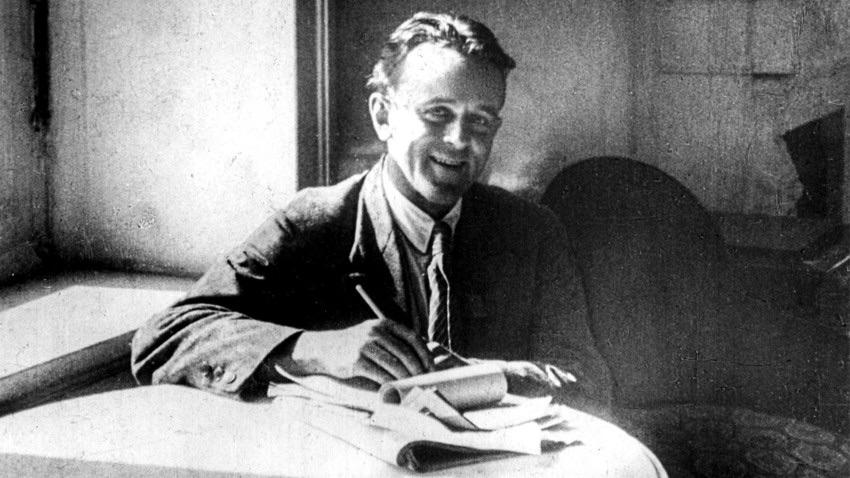
The final chapter of John Reed’s too-often dismissed history of the U.S. Socialist movement and the bourgeois dictatorship that is capitalist ‘democracy.’
‘Why Political Democracy Must Go, Part VIII’ by John Reed from The New York Communist. Vol. 1 Nos. 10. June 21, 1919.
VIII.
In a previous article I attempted to show the economic interests behind the Constitution of the United States, and the deliberate expedients employed by the Colonial ruling class to create a government which would obstruct the will of the majority of the people. Let us now briefly see how the machinery operates.
Contrary to general belief, the American political democracy is not one of the most advanced dmocratic governments of the world, but one of the most backward. To indicate a few points in which it lags behind other governments: The President is elected for four years, and cannot be removed except for serious cause, by impeachment; but the Premiers of England, France and Italy, retire when their Party loses power. The Cabinet of the United States Government is not responsible to anyone, and can only be removed by the President, who appoints it; the Cabinets of England, France and Italy are responsible to the parliaments, and fall with the Premier. Laws passed by Congress may be declared invalid by the Supreme Court; but laws passed by the British Parliament cannot be reviewed by any court, and can only be changed at the ballot-box. In the United States the form of Government is rigidly fixed by the Constitution, which moreover eternally guarantees the sacredness of property–nor can this Constitution be altered except by an overwhelming majority, which practically makes impossible any profound economic change by law; while in England no such bar exists to Revolution by law.
However, these apparent differences in degree of political democracy are not so important as they seem. In all political democratic countries today, under the capitalist system, “the State power is more and more turned into an organ of Capital’s mastery over Labor–a public force organized for social enslavement, an engine of class despotism.” In the United States, however, the methods by which the great capitalists control the State are more apparent to the observer than elsewhere; although here, too, the masses of the people are more blinded by the “democratic” ideology in which political concepts are phrased, and by what a great Frenchman called “the illusion of the ballot-box.”
It must be admitted that the Constitution has been broadened during the last century–that more and more “democracy” has been introduced into our Government; such amendments as the Income Tax and the Direct Election of Senators testify to this tendency. Also the evolution of the State constitutions, removing franchise restrictions; and the acts of Congress and the State legislatures, fixing the control and hastening the democratization of the electoral machinery–all these signify that larger and larger masses of citizens theoretically participate in the Government. But these “democratic” advances exactly correspond with the growth of the Invisible Government–the autocracy of finance– which progressively nullifies the power of the political ballot.
Political democratic ideals grew out of the theory that men were born free and equal; that their interests were ostensibly equal interests, resulting from freedom of opportunity–and that it was the conflict of these equal but diversified property rights–especially their geographical diversity–which made it possible to construct a government representing all and satisfying the great majority. Such conditions existed to a greater degree in the American Colonies, with their hinterland of undeveloped continent, and their lack of any indigenous aristocracy, than in other parts of the world, and the Declaration of Independence was the expression of these sentiments.
But even at the time of the War of Independence, the capitalist system was well developed, and the Constitution, eleven years later, embodied the clear class-consciousness of the Colonial capitalists, rendered palatable by “democratic” idealistic phraseology.
Madison had warned the Convention to take into account the new and changing forms in which property would manifest itself in the future. In the next century the industrial era brought into existence wholly new forms of property; and, moreover, changed both the relations of men to one another, and the relations of men to their Government. The ownership of the tools of production and the means of distribution by a few, reduced the mass of mankind to dependence upon these few for all the necessities of life.
Now the State is the expression of the relations of classes–property-relations in society. The American Government, particularly, was formed to protect property; and since as time went on more and more wealth was concentrated in the hands of the few great capitalists, the Government protected and fostered this capitalist property more and more. The mass of mankind became dependent upon the will of the industrial autocrats for their very existence. When they combined and demanded a larger share of the product of their labor, this constituted an attack upon private property, and the Government was called in to suppress them. Important illustrations of this are the calling in of Federal troops during the Pullman strike in 1895; the use of injunctions in industrial disputes, in some cases forbidding strikes and in one important instance, even forbidding the workers to stop working for a corporation; the manipulation of laws directed against the great corporations such as the Sherman Anti-Trust Law–so as to turn it against the working class–as in the case of labor boycotts (see the case of the Danbury Hatters); and finally, the interpretation of laws by the Courts.
After all this innovation, unique among political democracies, has turned out to be the easiest and most successful expedient for thwarting the will of the masses, and defending the political power of the capitalist class. Founded with the ostensible purpose of interpreting the Constitution, the Supreme Court has extended its powers of “interpretation” until it has become, in fact, a legislative body in itself: and being composed largely of eminent corporation lawyers, it represents the most reactionary property interests. For instance, it declared unconstitutional a law passed by the New York State Legislature forbidding bakery employees to work more than ten hours a day–on the ground that this statute infringed the rights and liberties of manufacturers as citizens under the Constitution. It declared the Income Tax Law unconstitutional, and more recently the Child Labor Law–both because they were attacks upon “property” and “liberty.” On the other hand, in spite of the Constitutional provision specifically forbidding Congress to make any law “abridging the freedom of speech.” the Supreme Court upheld the conviction of Eugene V. Debs and Kate Richards O’Hare for expressing their opinions upon political questions.
The Federal judiciary has been the supreme authority in the Government, even dominating Congress except when Congress fell into the hands of a new dominant class. For instance, in 1866, Congress passed the famous “reconstruction” acts, some of which were clearly unconstitutional. Congress had then been captured by the Northern Republicans, the new powerful great capitalists, under the leadership of Thaddeus Stevens, the iron-manufacturer of Pennsylvania. In passing these acts, Congress warned the Supreme Court not to lay its hands on them; and the Supreme Court obeyed.
In other cases the capitalists have used the President against Congress. In 1861, Lincoln, and the most far-seeing of the great industrial capitalists of the North, determined to abolish slavery–both as a military measure against the South and as a way of destroying the economic competition of slave-labor. The Thirteenth Amendment to the Constitution was about to be submitted to the States for ratification, against a very determined opposition. It was seen that one more state was necessary for the ratification, and three votes were needed in Congress to admit Nevada into the Union. Lincoln did not hesitate to bribe three Congressmen by appointing them to Federal offices.
In 1906, the revolt of the small property owners against the headlong career of great capitalist trustification and monopolization had reached a stage when the small property owners had got control of Congress and placed on the statute books the Sherman Anti-Trust Law. The Supreme Court, after its experience with popular wrath awakened by the rejection of the Income Tax Law in 1905, did not dare to declare the Sherman Law unconstitutional. Here was a clear case of political democracy at work–the will of the majority. Blocked in its plan of absorbing the Tennessee Coal and Iron Company by this law, the great financiers who were forming the United States Steel Corporation deliberately precipitated the Panic of 1907. President Roosevelt was forced to beg for mercy from the great capitalists, who consented to stop the panic on condition of being permitted to proceed with their plans. In 1907-08, then, the Tennessee Coal and Iron Company was “absorbed,” in direct violation of the law. In 1909, the Senate demanded that the Attorney-General inform it whether he had instituted proceedings against the Steel Trust and if not, why not. President Roosvelt directed the Attorney-General not to answer the Senate; and further declared that the Cabinet was responsible to himself alone.
In spite of the will of the vast majority of voters in the country, expressed in the election of Wilson, and the passage of the Sherman and the Clayton Acts, the aggregation of vast groups of capital has gone on apace, untouched by the law; or when the great combinations have been forced to dissolve–such as the Standard Oil–they have done so in appearance only, and the result has been, as everyone knows, merely to strengthen their monopolistic hold upon the resources of the country.
The war completed the abject surrender of the Government to the great financiers. The country–the voting majority of small property owners elected the Democratic administration in 1916, primarily because “it had kept us out of war.” But by the spring of 1917, the United States Government was at war. It had been clearly proven for almost two years that the forces which were pushing the country toward war were the great munitions interests, the bankers who had floated Allie loans, and the imperialist corporations anxious share in the redistribution of foreign markets. The United States was by this time, through the action of private bankers, heavily involved in the Allied cause; the Allied blockade had cut off German commerce, and a vast trade had opened up with England, France and Russia. Allied defeat would have proven disastrous to Wall Street, which, at the very moment that the Allied strength wavered, plunged America into the struggle.
Never had there appeared so clearly the almost complete control of the press and all agencies of publicity by the capitalist class; with one voice they bayed for blood-shed, repeating unanimously every rumor of German “atrocities.” German propagandists here were outlawed; British and French propagandists bought, corrupted, threatened, pleaded without hindrance. Congressmen who dared to oppose war in the interest of their constituents were lashed with a bitter fury by press and pulpit and the President. I was at that time in Washington, lobbying against the war and against conscription. Three-fourths of the Congressmen admitted to me that they did not want war, that their constituents were against it; but almost all of them were terrified of the Chambers of Commerce (the business men, bankers, etc.) of their districts, and dared not brook the wrath of the great newspapers.
And when once the country had gathered way toward the great decision, and conscription had been passed, the great capitalists delivered their ultimatum to the cowering Government in Washington. The Anti-Trust legislation must be suspended; the bankers and business men themselves must run the war. Hence we had the amazing spectacle of the Council of National Defense, made up of speculators, manufacturers and merchants, awarding Government Contracts at outrageous prices in the morning, and in the evening accepting these same contracts as private individuals. But not only this: all through the country, Chambers of Commerce and Boards of Trade formed organizations of armed detectives and police, composed of business men and bankers, who used the power delegated to them by the Department of Justice to wage the class war against the Labor Movement. And an arbitrary War Labor Board legislated in all differences between capital and labor, whose decisions were binding and backed by the power of the Federal Government. The workers were forced to obey these decisions or forced into the army; the great corporations; most of them, either refused to obey decisions they did not like, or like the manufacturers of Bridgeport, Conn., took advantage of the war-situation to destroy the defenses of organized labor.
Advocates of parliamentary action often point to the mass of labor-legislation passed by Congress and the state legislatures, such as eight-hour law, workmen’s compensation statutes, minimum wage regulations and factory laws in general. Like the increase in political “democracy,” the increase in industrial “democracy” is also in exact ratio to the growth of knowledge among the great labor-employers that the more labor is protected, the more efficient it is; and the more it can produce, and the more it can be exploited. The speeding-up of machinery consequent upon mechanical perfection and scientific management now make it possible to exploit labor more thoroughly in eight hours, than in twelve hours. Lord Leverhulme, the English employer, now advocates the Six-Hour Day, because it is productive of larger profits for the manufacturer than the Eight-Hour Day…
But when the capitalist does not feel it to his interest to obey the law, he does not obey it; and the State hacks him up in his disobedience. For example, in Colorado there has been an eight-hour law on the Statute-books for twenty years or more; and yet, in 1913, that law was deliberately broken in the coal-mines of the state, and had been for ten years. All attempts of the men themselves to organize for its enforcement were frustrated by armed force. The unions were smashed by armed thugs, who killed and deported miners at will. At election time the ballot-boxes were placed on company ground, guarded by armed hirelings of the coal companies, and no one allowed to vote who did not vote right. If anyone voted the wrong ticket, or was found by the company spies to be talking organization or any other heresy, he lost his job, was ousted from his house (company property) and run out of the town (which was also built on company property). And when at last the miners struck, the State Government sent the militia to break the strike, and this militia, the official police of the State, set fire to the strikers’ tent-colony and burned women and children to death. The strikers’ leaders were tried for murder; the gunmen and militiamen went free.
In San Francisco, the Chamber of Commerce determined to crush Organized Labor on the Pacific Coast. Someone planted a bomb which exploded in the Preparedness Parade, killing and wounding many people. Tom Mooney, his wife, Israel Weinberg and a few other men active in the labor movement were arrested, and on perjured evidence Tom Mooney was sentenced to death. Before he could be hanged it was discovered that the whole business was a frame-up, that the evidence had been manufactured by the District Attorney in collusion with the Chamber of Commerce. The President’s Investigating Commission recommended freedom or a new trial for Mooney. But the Governor of California, at the instigation of the Chamber of Commerce, simply commuted Mooney’s sentence to life imprisonment. And there he lies, a life prisoner though innocent; while such is the power of the California capitalists, that Hiram Johson, Senator from California, does not dare raise his voice to free Tom Mooney.
So with the Bisbee deportations of 1917, when the Phelps-Dodge Copper Company of Arizona, by means of armed thugs, drove out of town into the desert several hundred striking workmen, and the Government dared not punish them. And so with the persecutions and prosecutions of the I.W.W. the open, bare-faced, shameless crushing of a great labor organization by the capitalist class…. As the class-conscious workers develop political strength, the capitalist parties sink their differences and combine against them; they falsify the ballot; they use the police and the engines of the State to prevent the workers’ voting; they gerrymander political districts, so that the majority of the voters get the minority of representatives. The conditions of labor in the United States cause hundreds of thousands of workers to drift from place to place in order to find work–and these workers cannot vote, because of residential qualifications. Poll taxes bar others. The disabilities of aliens, and the difficulties of naturalization especially at present–disenfranchise thousands more. The anti-syndicalist laws for natives, and the deportation laws for aliens, still further compel silence from all who hold anti-capitalist political and economic opinions.
But after all, the most effective way in which the workers’ vote is influenced is by making use of the economic relation between the worker and the employer. The worker is dependent upon the capitalist for his very life his job. If he does not do as he is told, the worker is deprived of his job, and forced to join the floating army of the unemployed upon which capitalism rests. Now the worker, however high his wages, is squeezed by rent and the cost of living until he is upon the verge of starvation anyway. The shortest illness, the least stoppage of work, force him over the edge into abject poverty. Burdened with a family, the worker cannot afford to quit work; he cannot afford to hold opinions contrary to the boss; he cannot even afford to exercise a vote against his boss’s politics. In Lima, Ohio, a few years ago, there was a municipal election pending. The population of Lima is largely supported by two factories, and the workers were about to elect a Socialist administration. The owners of the two factories thereupon issued a statement to the effect that if the Socialists won, the factories would move away. This would have brought disaster upon the workers, many of whom owned their own homes and had families to support. The Socialist administration was not elected…
In 1916, a Preparedness Parade was held in New York City, which had a great effect upon Congress, because of its size. When the reasons for this mass-demonstration came to be analyze however, it was found that most of the workers who marched were forced to do so or lose their jobs. The same phenomenon was more clearly shown throughout the country in the subscriptions to Liberty Loans and the contribution to the Red Cross and other semi-private enterprise. The workers had to pay or be fired, and in some states these financial campaigns were accompanied by terrorization and intimidation at the point of a gun. Thus the workers were forced to support the political measures of the ruling class by their very dependence upon this ruling class. In an earlier article I have described how the political power was taken away from the elected officials of the working class Party by the State Councils of National Defense, and how the legislators elected by the Socialist [several words missing in original] the Cleveland Aldermen, etc.) were deprived of their seats in the most cynical manner by the capitalists, and thus Socialist political action was completely nullified.
But all this is nothing to the indirect influence exerted upon the people by the capitalist control of the churches, the schools and the press. During the war we have seen very clearly the relation between the great capitalists and the churches and schools. The capitalists give the money which supports the church and pays the minister; which endows the largest universities and pays the professors. In some cases, during the war, the State Councils of Defense threatened ministers who dared to preach against the war; others lost their positions. The same thing is true, in a more glaring degree, of the teachers in schools and universities. The pressure of the capitalist endowments, the Boards of Directors of Churches and the Overseers of the Universities and Schools, forced teachers and ministers to keep silence, or drove them helpless into a hostile world, where for all practical purposes a complete black-list existed. And since the War has ended, this process of driving out economic and political heretics still goes on, though with increased vigor, under cover of the cry of “Bolshevism.” In the public schools and the State Universities, also, the same action takes place, and with even more speed and brutality, wing to the capitalist control of the political machinery. This is supplemented, in cases where it is awkward or inadvisable to invoke the law, by lynchings and mob-violence provoked by Chambers of Commerce and National Security Leagues, and by deliberately falsified “investigations,” whose object is to misrepresent the Labor Movement in such way as to set the Governmental machinery in motion.
The press is a still more powerful weapon. The control of newspapers, and especially of the popular magazines, has of late years been concentrated in the hands of the great capitalistic interests, who are content even to lose money so long as they control the avenues of public expression. News is practically a monopoly of one great press association, which expresses clearly and faithfully the great capitalist point of view. Editors and reporters who do not conform to this view are discharged and boycotted; a black-list exists.
In this way news is practically denied to the labor press. The advertisers are leagued not to advertise in radical papers, so as to make it impossible for them to do more than exist. And to cap the climax, the Postmaster-General may exclude from the mails any publication which he sees fit, without giving any reason; thus entailing immense and often insupportable damage upon the publication and its backers, and preventing the discussion of political and economic questions.
There are those who say, “This is not the fault of political democracy. It is an abuse of democracy, which, if remedied, would permit the free exercise of the ballot to conquer political power.” Let it be admitted that these conditions are unusual, and that in normal times there would be more freedom of expression to the Labor Movement. But that is just the point–in abnormal times political democracy breaks down, and it is always abnormal times when the capitalist class fears that the workers may conquer political power. The open suppression of the political power of the workers is simply an indication of what goes on successfully all the time.
Property is power. Property is political power. Only the abolition of property will ensure the working of real democracy, and only the dictatorship of the proletariat can abolish property.
A majority in Congress and the Supreme Court, without the dictatorship of the proletariat, will not give the workers power. The capitalist class does not control the State because it has a majority Congress. It has a majority in Congress, because is controls the machinery of the State, under the dictatorship of the bourgeoisie.
The industrial era has brought with it a new kind of political action, the action of the masses on the economic field, strikes, demonstrations, insurrections. This form of action is well known to us, it is well-established, and even legal. When workers want a raise of wages or a decrease of hours, they do not go to the ballot-box. They go on strike. The pity is that they do not see that this too is a way to gain control of the state—a political act—and this is the only way.
The only power which the capitalist power can not oppose is the organized and unified action of the proletarian mass.
The New York Communist began in April, 1919 as John Reed’s pioneering Communist paper published weekly by the city’s Left Wing Sections of the Socialist Party as different tendencies fought for position in the attempt to create a new, unified Communist Party. The paper began in a split in the Louis Fraina published Revolutionary Age. Edited by John Reed, with Eadmomn MacAlpine, Bertram Wolfe, Maximilian Cohen, until Reed resigned and left for Russia when Ben Gitlow took over. In June, 1921 it merged with Louis Fraina’s The Revolutionary Age after the expulsion of the Left Wing from the Socialist Party to form The Communist (one of many papers of the time with that name).
PDF of full issue: https://www.marxists.org/history/usa/pubs/thecommunist/thecommunist1/v1n10-jun-21-1919-green-NY-communist.pdf
 Revolution's Newsstand