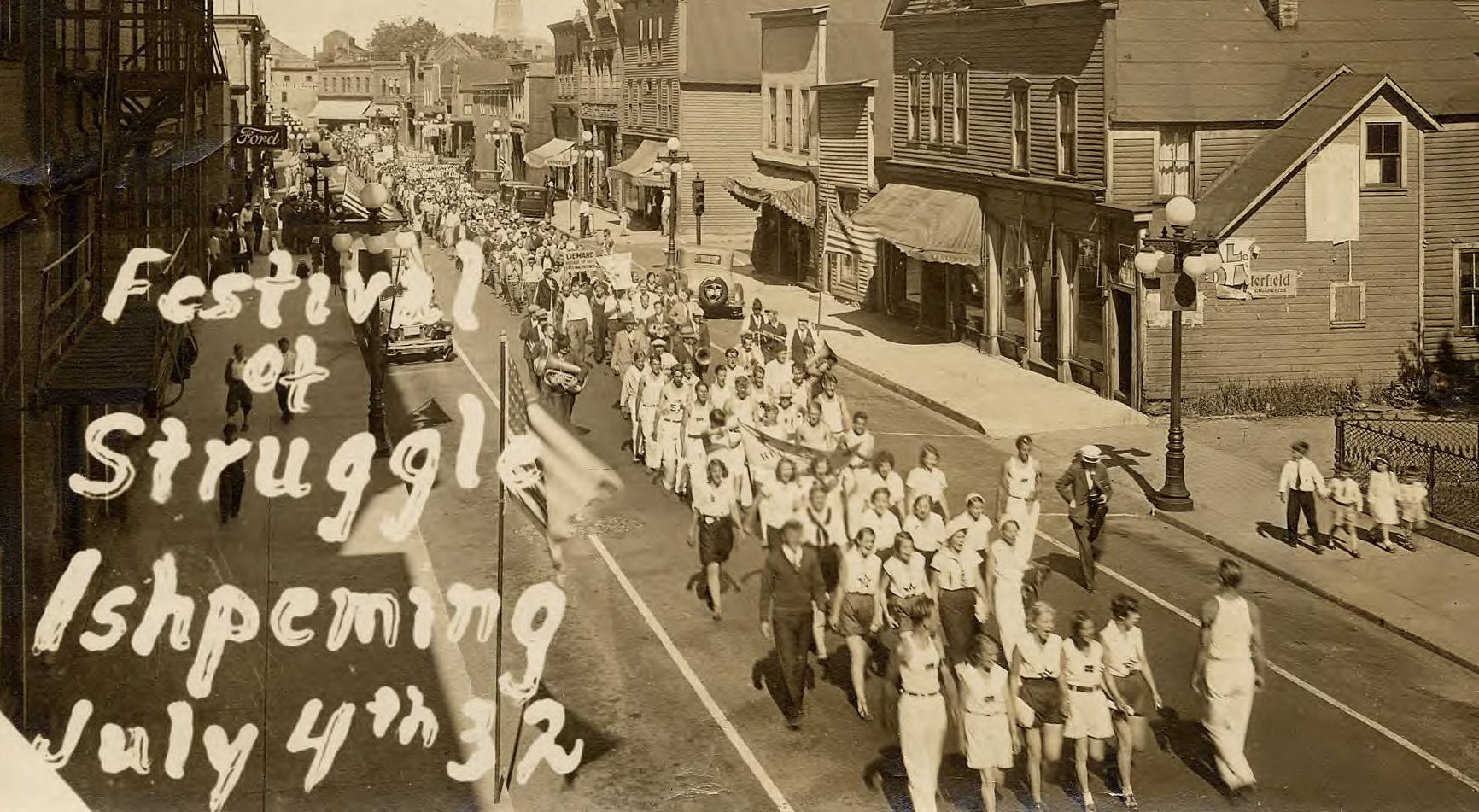
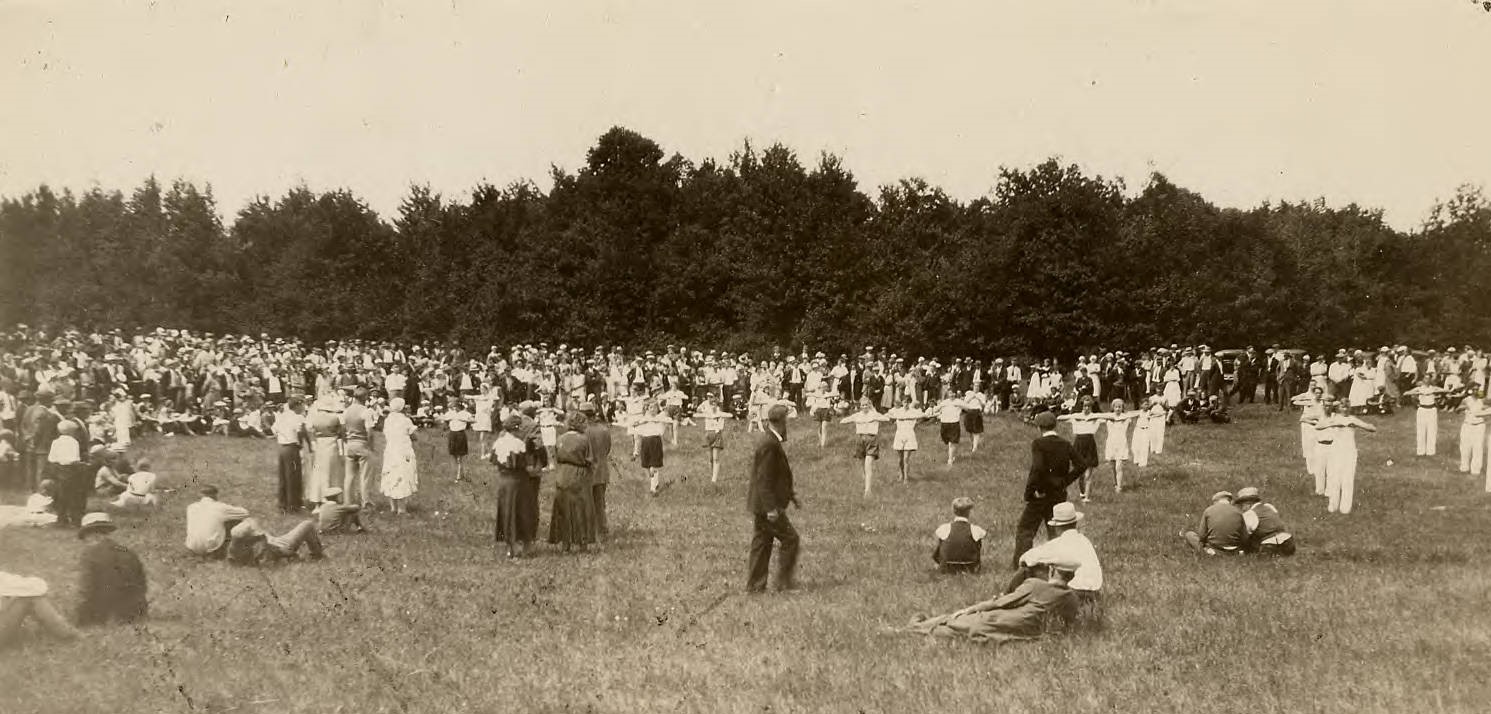
Sports, music, drama, hiking, dancing, food, and plenty of politics. Later called ‘Festivals of Struggle,’ these gatherings held around July 4th were a staple of life for rural, left-wing, Finnish communities in the United States over two generations.
‘Mass Picnic Held by the Finnish Workers and Farmers of Upper Michigan’ from the Daily Worker. 3 No. 156. July 15, 1926.
ISHPEMING, Mich., July 13.— The Finnish workers and small farmers held their mid-summer musical and gymnastic festival this year at the Workers’ Athletic Park, near Ishpeming, Michigan for three days, July third, fourth and fifth. The festival was a mass picnic of workers of the Upper Michigan. There were assembled together about five or six thousand workers in the park on Sunday. The festival was started, however, at Ishpeming and Negaunee on Saturday evening. At the Coming Nation Hall, Ishpeming, the comrades of Hancock and Ironwood presented two plays to a large audience and at the Labor Temple, Negaunee, there was a dance provided for the young people and others who enjoy dancing.

Fine Hosts.
The comrades of Ishpeming and Negaunee proved to be great hosts in handling large crowds of people. They had provided lodging for the out of town comrades and their families in the private houses. At the park they had also provided everything necessary for the physical needs, such as meals, soft drinks and other refreshments. Their hospitality made the occasion a really Communistic affair in character.
Sunday morning the workers of the Upper Michigan gathered in the Athletic Park near Ishpeming to celebrate the festival. The first thing on the program was athletic sports of various athletic groups and lasted until noon. Then the program of speeches, vocal solos, band music and 200 voices sang revolutionary songs. The program lasted until about six o’clock in the afternoon.
Turn Crowds Away.
In the evening the workers went back to Ishpeming where the local comrades had hired the largest opera house in town. The Ironwood players presented a play to the capacity house. In fact thousands of workers could not get in the opera house. There were 1,800 people in the opera house to witness the play.
Mass Singing.
Monday morning the workers returned to the park again to participate in the program provided for that day. The program began by the band which played the International, “Free Russia” and other revolutionary music. Then followed the chorus of 200 singers. This singing made a deep impression on the people present. The afternoon program composed of several speeches, gymnastics, singing, vocal solos and recitations of various groups of comrades. Everybody had a good time.

Then a collection for The DAILY WORKER was taken which netted $70.74. When one of the ‘’generals’’ arose on the platform to announce the results of the collection he said this was the first real “general rehearsal” for struggle and asked three cheers for The DAILY WORKER, which were cordially given by the audience. Protest Sacco-Vanzettl Case. A strong resolution of protest for Sacco and Vanzettl was unanimously passed by the gathering. Monday evening a good concert was rendered at the Labor Temple, Negaunee, Michigan. The concert was enjoyed by all who could get into the hall. This concluded the festival. Next year the festival will be held at Ironwood, Michigan for three days.
The Daily Worker began in 1924 and was published in New York City by the Communist Party US and its predecessor organizations. Among the most long-lasting and important left publications in US history, it had a circulation of 35,000 at its peak. The Daily Worker came from The Ohio Socialist, published by the Left Wing-dominated Socialist Party of Ohio in Cleveland from 1917 to November 1919, when it became became The Toiler, paper of the Communist Labor Party. In December 1921 the above-ground Workers Party of America merged the Toiler with the paper Workers Council to found The Worker, which became The Daily Worker beginning January 13, 1924. National and City (New York and environs) editions exist
PDF of full issue: https://www.marxists.org/history/usa/pubs/dailyworker/1926/1926-ny/v03-n156-NY-jul-15-1926-DW-LOC.pdf
 Revolution's Newsstand