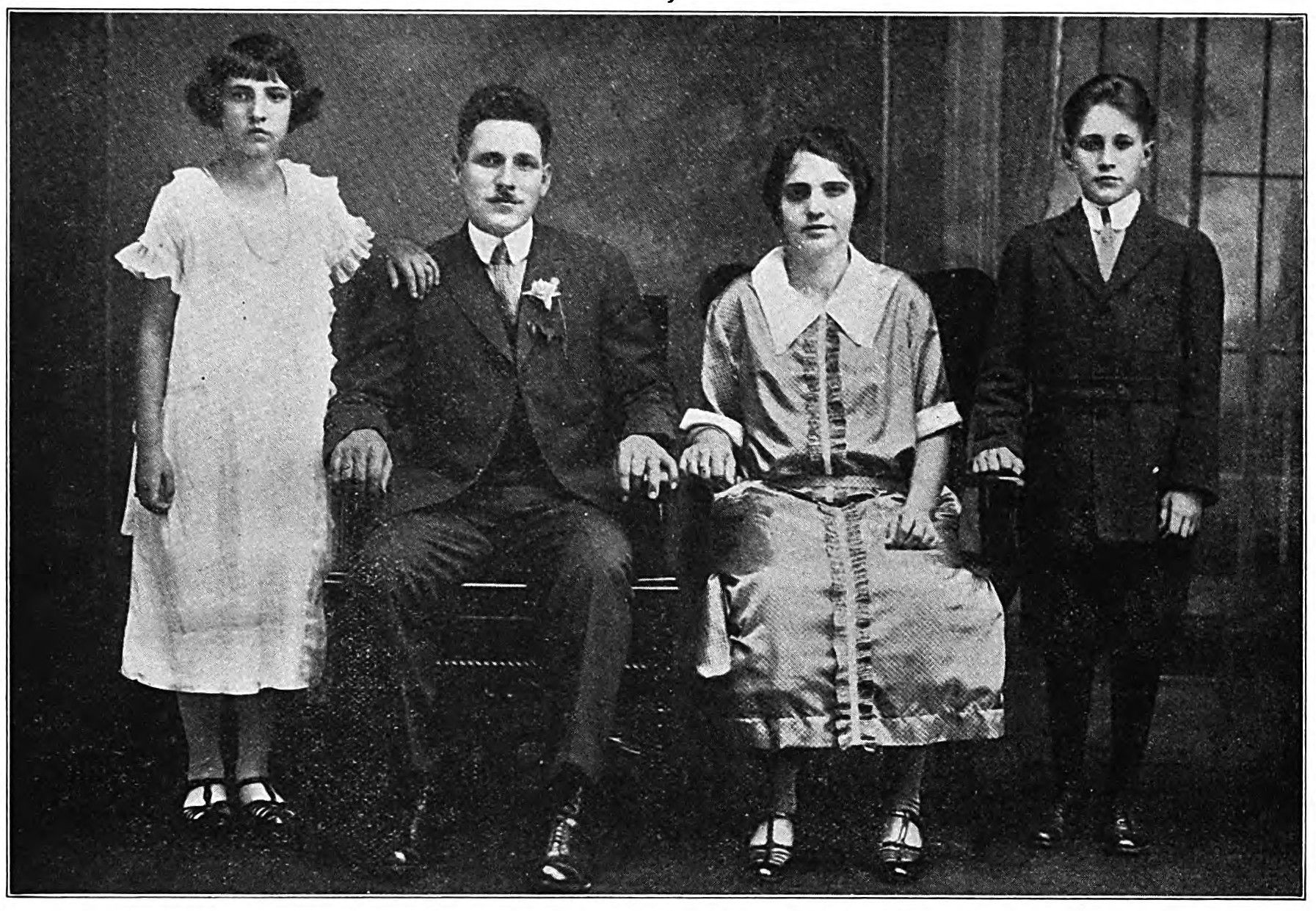
The story of class war prisoner Jacob Dolla who languished in jail without support for years until this article raised the call. Hungarian-born Dolla was a Pennsylvania steel-worker framed for a bombing during the great 1919 Steel Strike because of his union militancy and organizing of foreign-born workers. Dolla would be released in July, 1924 later to join the National Committee of International Labor Defense.
‘The Case of Jacob Dolla’ by Mortiz Loeb from Labor Herald. Vol. 1 No. 11. January, 1923.
IN the Eastern Penitentiary of Pennsylvania a young man named Jacob Dolla is serving a sentence of 12 to 17 years. His case is one of the most atrocious examples of the American frame-up system, as well as one of the least known. Dolla was sent to prison on account of his unremitting service to the workers during the steel strike of 1919, and he is the only one of the thousands incarcerated in that great struggle who is still behind prison bars. He has been particularly singled out by the steel trust hatred for the battlers who menaced profits in that rebellion of the mill-slaves.
For some time hardly anyone even knew that Dolla was in prison. It was but some months ago that his local friends finally succeeded in getting in touch with active workers in the labor movement who would take up his case. Since that time a mass of evidence has been gathered which shows glaringly the complete prostitution of the Governmental machinery of Pennsylvania to the forces of Garyism. The story as revealed by the affidavits in the hands of the investigators, discloses a dastardly frame-up which will rank beside that of the Mooney, and Sacco-Vanzetti cases.
Dolla a Steel Striker.
A member of the Amalgamated Iron and Steel Workers, Jacob Dolla worked in the mills of Lebanon, Pa. There was a large body of foreign workers there who were not members of the union. Dolla was well known by them all, belonging to most of the lodges and societies, speaking five languages, and being a most energetic, likeable fellow. He is a foreigner himself, born in Apatin, Hungary, on July 4, 1889. A skilled worker, he was living comfortably and owned an automobile, and a home where he lived with his wife and two children.
On April 7, 1919, the Bethlehem Steel Co., and the Lebanon Iron Co., announced a cut in wages of 25%. This was, especially for the lower paid workers, a blow at their very lives. It came right in the midst of the great organizing campaign throughout the steel industry. The companies, counting upon the mass of foreign non-union workers, decided it could run the mills without the union men. The union called a strike in the two big mills. At this time Dolla was not an official of the union, but he was immediately called into strike service on account of his high standing and influence among the workers generally, and especially to pull the foreigners out. He was made captain of the picket forces, and working day and night in his automobile, he kept the pickets on the job at all hours. In less than a week he had the Lebanon steel workers entirely under the leadership of the union, the mills closed tight, and a solid picket line drawn tight around the Lebanon steel mills.
Stool Pigeons Begin Their Work.
The Steel Company officials were furious. They soon learned who it was who had accomplished this thing which they had thought impossible. A man who was posted inside the mills by the union, reported that the superintendents and foremen were meeting in there and that Dolla’s name was being frequently mentioned. His friends then noticed that he was being followed night and day by detectives, and that his house was being watched. Warnings were sent to him through friends, to drop out of the union work. He was told that in spite of his high standing with the American unionists, as he was a Hungarian of German descent, all the Steel Trust needed to do was to call him an alien, wave the flag, and they would all desert him. If he did not heed the warnings, he was given to understand, “the machinery” would be set in motion. Disregarding all threats, Dolla continued his work.
One day as Dolla and a group of friends were on the picket line, a man from the mills walked right into the group. They stopped him and asked him if he did not know there was a strike on. He said he did not, that he had been brought from Baltimore in ignorance of the strike, and put up a hard-luck story. He won the sympathy of Dolla and his co-workers, and when he readily agreed to quit work, they took him into the union. His name was John Aldrige. He worked his way into the confidence of the union men, attended every meeting, and was elected a trustee of the union.
Soon after establishing himself as a member of the union, and a trustee, Aldrige began to agitate in a wily manner for action against the steel companies which would involve the strikers with the law. Rushing into union headquarters, he would excitedly report how many scabs had just been brought in by train. Persistently he urged that something be done to “scare the scabs out of town.” He was full of suggestions for methods of preventing the state Cossacks from riding down the pike to the mills each morning.
On September 28, 1919, the efforts of the agent provocateur of the Steel Trust finally resulted in a crime being committed. Some dynamite was exploded by the house of Steve Fistrovitch, damaging the porch to the extent of about $100 to $150. No one was injured, and this was the extent of the crime. Four men, Miller, Mumford, Sohn and Dissinger by name, were soon arrested charged with the explosion, and on October 5th, Jacob Dolla was taken into custody.
Steel Trust Frame-up Sprung.
Upon his arrest Dolla was taken to the State Cossack headquarters and put through the third degree in an attempt to force a confession out of him. When this failed, he was put in a cell where he was left until deep into the night, when he was awakened and again put through the tortures. Then he was told that a mob was waiting outside to lynch him, and unless he confessed he would be handed over to them. But Dolla withstood all their pressure.
Mumford, Sohn and Dissinger were brought to court first. They confessed that they had done the dynamiting, but laid the whole thing onto Dolla, who had forced them, they said, to do the job. Mumford took the stand first, and the others followed his story as close as they could. He claimed that Dolla had helped steal the dynamite, and pointed out, three days before, the houses at which to place the bombs. In addition to the house of Fistrovich, another, Karl Witzman’s, was claimed to have been dynamited. Dolla, he said, had been with them up to 30 minutes before the explosion. Dissinger testified to the same thing, and admitted that the dynamite found in his place was part of what been stolen. Dissinger and Sohn claimed not to know anything about the dynamite plans up until the very night of the crime, when it had been forced upon them by Dolla. All of them said, at the same time, that the bombs had been made by the four of them in Dolla’s garage. In spite of all the glaring and manifest evidences, upon the face of their own stories, that the whole tale had been manufactured by the Steel Trust stool pigeons and forced upon these weak-minded dupes under threats of long prison terms, yet the case against Dolla was pushed relentlessly. The Steel Trust hired a large battery of special lawyers to assist the prosecution, consisting of Walter Greaff, Eugene D. Segrist, Warren Light, and Sayler Zimmerman. When Dolla’s wife tried to hire a lawyer for him, most of the local attorneys refused to handle the case, evidently overawed by the Steel Trust array, or dependent upon the corporation favor for their livelihood. She finally got Becker and Ehrgood, law partners, to visit Dolla.
Whether these lawyers were under the influence of the Steel Trust, or whether they were afraid of losing against the forces of the frame-up machinery, cannot be stated, but whatever their motive their actions fitted closely to the desires of the prosecution. After they had been retained for a fee of $1000, all that Dolla had, they soon discovered that the case against him was “hopeless” and urged him to plead guilty.
Helpless in Steel Trust Grasp
Hundreds of affidavits now available show that Dolla had witnesses to shatter every point made against him by the Steel Trust lawyers. On the night he is charged with being with the dynamiters he spent the whole evening with a large group of friends in the Mannerchor Hall, and later went with some of them to a Tea Room, where he was when the explosion occurred. When he was supposed to be pointing out the houses to blow up, the records of the Philadelphia and Reading Railroad show that he was several miles out of town on a work train. In his garage, where the bombs were said to be made, there is not room for one man to turn around, let alone four to work. Some of the men with whom he was supposed to have plotted, were proved to be absolutely unacquainted with him. Testimony of the others was contradicted by dozens of witnesses available at that time. On every point the material was at hand to shatter the entire frame-up. But this was not done. Dolla was told by the lawyers supposed to represent him, his case was hopeless, and that the only way to avoid a 30 year sentence was to plead guilty.
To complete the dastardly conspiracy, the prosecution charged Dolla not only with the. explosion that occurred at the house of Fistrovich, but with an explosion that never occurred at all. Karl Witzman testified that his house was blown up, but it is well known that nothing of the kind ever happened. Plenty of witnesses were available to prove this. Yet the explosion that did not occur was a principal count in the indictment upon which sentence was later passed. For when Dolla was given a hearing all of his witnesses were chased away by the State Cossacks, and even his wife, children, and mother, were not allowed to be present, or even to see him in jail except with the lawyers.
Dolla’s lawyers made no effort to get his witnesses, or the other evidence which they had been told about. They put pressure upon him to plead guilty. Dolla steadfastly refused to do this. Then they began to work upon his wife, and persuaded her to go to the jail and plead with him to plead guilty. Completely isolated, cut off from communication with all his friends, and pressed by every person who came near him to plead guilty, under threat of 30 years sentence if he did not and promise of a light one if he did, Dolla finally gave way. His attorneys obtained his consent, finally, by promising that he would not have to say anything in court. They promised to “fix that all up.”
They did. They gave him papers, which he signed without reading. These proved to be pleas of guilty to all of the charges, including that of the explosion that never occurred. Then the “light sentence” that had been promised was given 12 to 17 years in the penitentiary. The others were given, Mumford 5 to 11 years, Sohn and Dissinger 2 to 6 years, and Miller 3 to 5 years.
Exposing the Frame-up.
After three years of imprisonment for a crime with which he had not the slightest connection, and for another which was not committed at all, Dolla has finally found some friends who are taking the trouble to investigate the case. That it has taken so long to expose this terrible injustice is not Dolla’s fault. His union, the Amalgamated Iron and Steel Workers, were advised about the case but did nothing. Mike Tighe, the president, was fully informed, but did not raise a hand. The officials even quit answering letters about Dolla.
After Dolla had been in a year, without obtaining action from his union, the facts were written in a letter to Samuel Gompers. No answer was ever received. Then the matter was taken up with Frank Morrison, secretary of the A.F. of L., who replied that he could not touch the case unless it was brought to the A.F. of L. by the Amalgamated Iron and Steel Workers Union, which had already failed miserably to do anything.
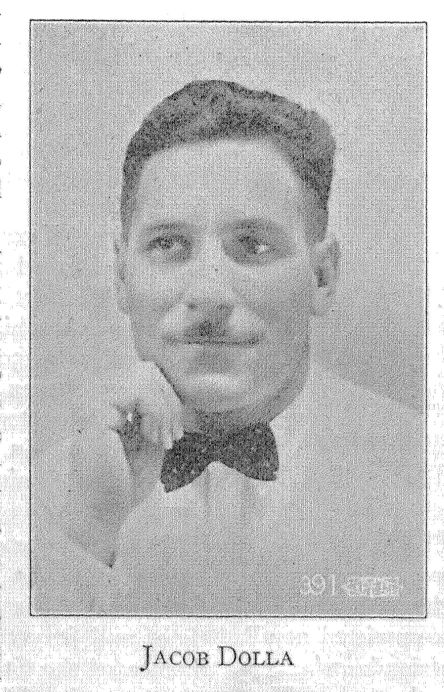
Finally some of Dolla’s local friends got in touch with James H. Maurer, president of the Pennsylvania Federation of Labor, Clinton Golden of the Machinists, and Wm. Z. Foster. They immediately got busy investigating. Other influential labor men became interested, including John Fitzpatrick and E.N. Nockels of the Chicago Federation of Labor. The result has been that the whole disgustingly familiar case of frame-up, the great American game of the capitalist class in dealing with their rebelling workers has been found which double-clinches the proofers, has been brought to light. New evidence which was available before.
Dolla Must be Freed.
In addition to the overwhelming evidence that Dolla had no connection with the explosion which damaged a porch to the extent of $150., the only crime in the whole case, it is now clear that the entire affair was a plant by the State Cossacks. Members of that tool of capitalist oppression have boasted that they knew all about the affair before it was ever pulled off. The Steel Trust attorney has admitted that Aldrige was a Steel Trust spy, and his engineering hand has been traced through the affair, although he was spirited out and never arrested. Miller has confessed that his testimony was perjured under threat of 20 to 30 years imprisonment. Witzman has been proven to have perjured his evidence. The whole rotten case has been left without a leg to stand on, except for the plea of guilty which was obtained by fraud, duress, and coercion.
There is only one legal recourse to obtain belated justice for Jacob Dolla. That is executive clemency. This is already being delayed over time, and it yet remains to be seen if the influence of the Steel Trust can reach far enough to prevent it. There is only one thing which can make sure that Dolla is not kept in prison for another 9 to 14 years, and that is for the entire labor movement to be made acquainted with the terrible persecution to which this labor militant has been subjected for his devotion to the cause of Labor. For that is Jacob Dolla’s only crime that in the struggle with the Steel Trust he stood with the workers and would not flinch.
It would be a terrible blot upon the record of the American labor movement if it should continue to ignore the case of Jacob Dolla. Every militant should get busy to bring this to the attention of the unions everywhere. Labor must be made acquainted with the case, and prepare to bring pressure in the proper place if Dolla is not quickly released. The frame-up game must be put out of business. Dolla must be freed.
The Labor Herald was the monthly publication of the Trade Union Educational League (TUEL), in immensely important link between the IWW of the 1910s and the CIO of the 1930s. It was begun by veteran labor organizer and Communist leader William Z. Foster in 1920 as an attempt to unite militants within various unions while continuing the industrial unionism tradition of the IWW, though it was opposed to “dual unionism” and favored the formation of a Labor Party. Although it would become financially supported by the Communist International and Communist Party of America, it remained autonomous, was a network and not a membership organization, and included many radicals outside the Communist Party. In 1924 Labor Herald was folded into Workers Monthly, an explicitly Party organ and in 1927 ‘Labor Unity’ became the organ of a now CP dominated TUEL. In 1929 and the turn towards Red Unions in the Third Period, TUEL was wound up and replaced by the Trade Union Unity League, a section of the Red International of Labor Unions (Profitern) and continued to publish Labor Unity until 1935. Labor Herald remains an important labor-orientated journal by revolutionaries in US left history and would be referenced by activists, along with TUEL, along after it’s heyday.
PDF of full issue: https://www.marxists.org/history/usa/pubs/laborherald/v1n11-jan-1923.pdf
 Revolution's Newsstand