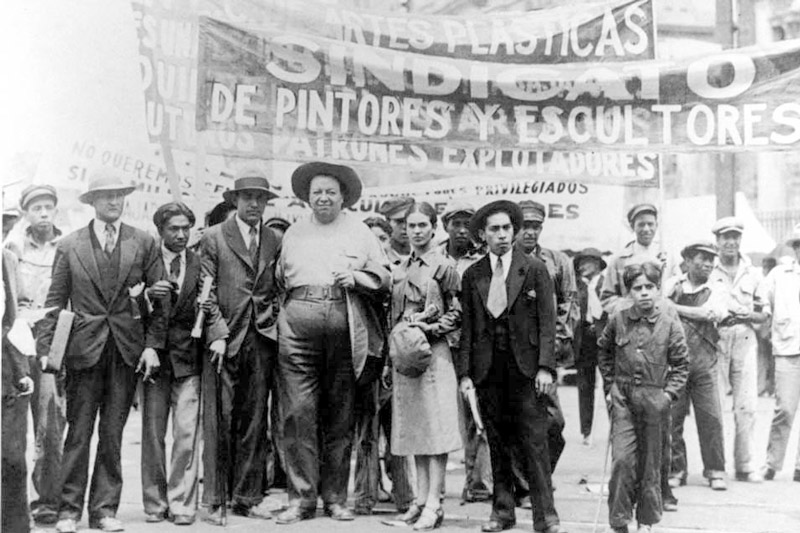
Contributions of Latin American delegates on imperialism from the Sixth Comintern Congress. By the late 1920s, the process by which U.S. imperialism became the dominate power in the Americas had proletarianized and radicalized millions. In June, 1928 the Communist International (re)established a ‘South American Bureau’ headquartered in Buenos Aires in June, with Swiss militant Jules Humbert-Droz as Comintern emissary. Humbert-Droz would report on the region at the Sixth Comintern Congress held in August, 1928 as part of a larger discussion on the colonial world. In discussion of the report Latin American delegates below spoke. Full text of the interventions by Paulo de Lacerda (Brazil), Ricardo Parades (Ecuador), Ricardo A. Martinez (Venezuela), Lucas Ibarrola (Paraguay), Vittorio Vidali (Speaking for Mexico), Leopoldo E. Sala (Uruguay), Jorge Cardenas (Colombia), Carlo Ravetto (Argentina), and Manuel Díaz Ramirez (Mexico).
‘Questions of the Revolutionary Movements in Latin America’ from International Press Correspondence. Vol. 8 Nos. 74, 76, & 78. October 25, 30, & November 2, 1928.
Comrade LACERDA (Brazil)
Comrades, the delegates from Brazil are in agreement with the theses and report made by Comrade Humbert-Droz, with the exception of a few points on which amendments are moved by the Latin-American Delegation.
Thus, several points concerning Brazil call for some explanations on our part.
First of all, the question of the support given by North American imperialism to the revolutionary movement in San-Paolo. This movement was started by a section of the army, being the expression of a strong discontent among the urban petty-bourgeoisie; it was directed against the agrarian reaction which is raging in Brazil, and was at first supported also by the industrial bourgeoisie. This revolutionary movement started in San-Paolo and spread to the different States of Northern Brazil, going on until the end of 1925, in the shape of revolts and attempted revolts. It ended in the mutiny of two warships and with the retreat of the remnants of the revolutionary troops into the interior of Brazil. This movement, having even gained a temporary triumph in the Amazon State, exercised a tremendous effect in Brazil and threw the whole country into great turmoil. This caused the government to resort to reactionary and brutal measures, not only against the insurgent petty-bourgeoisie, but also against the proletariat and its vanguard.
It is wrong to assert that material support was extended to the revolutionaries by North-American imperialism. Had this movement been supported by imperialism, it would have gained tremendous advantages over the reactionary power of the agrarians. As a matter of fact, the imperialists of North America accorded only vague sympathy to the movement which was confined to the United Press telegrams about exaggerated successes of the revolutionary forces. The only intervention in the petty-bourgeois revolution in Brazil came from England, who sent warships to Rio de Janeiro to support the agrarian government of Arthur Bernardes, the then President of the Republic.
I must also make a few remarks concerning the semi-colonial character of Brazil. It was stated by Comrade Humbert-Droz that objections were raised by comrades from Latin-America to describing these countries as semi-colonies. I must say that we in Brazil, as well as the majority of the Latin-American Delegation, are convinced that Brazil and all the other Latin-American countries are semi-colonies. The formal independence which we enjoy in Brazil can deceive only the nationalist petty-bourgeoisie. Ever since we won our “independence” with the aid of Admiral Cochrane, the servant of His British Majesty, we have been transferred from the colonial domination of Portugal to the economic and political domination of England. Since that time the Rothschild Banks invested money in Brazil and the economic and political dependence of Brazil became ever-more pronounced. Some time ago the Brazilian Government invited English financial experts to take charge of the finances of the country.
After examining all the books of the State finances, these experts 1ecommended a series of measures for the adjustment of the country’s finances.
After the Arcos Raid in London a series of “terrible” documents were sent by Scotland Yard to the Brazilian Government through the British Embassy, dealing with alleged Communist propaganda in Brazil, supposedly carried on by the III. International, and urging the Government to take strict measures against this propaganda which is so dangerous to the tranquility of the British bankers. As the result of this intervention, a series of measures against the revolutionary vanguard of the proletariat was carried by the Brazilian Parliament. Our newspaper “La Nacion” was compelled to suspend publication to avoid victimisation by the reactionary government, whilst our Party was finally driven to strict illegality.
On the other hand, American imperialism continues its penetration by means of capital investments, the purchase of railways, the purchase of large estates in the Amazon State by the Ford Co., and so on. It may even be said that the whole of the national industry is controlled by American capitalism. Thus, the American “Light and Power” Company has a monopoly of the supply of electricity. The headquarters of the Company are in Canada, but the major half of its stock comes from the United States.
American imperialism intervenes also through its military missions. Thus, it sent a naval mission to enforce the imperialist principles upon the Brazilian navy.
Therefore, in spite of our wealth and of the silly belief of our bourgeoisie as regards political independence, we cannot consider ourselves independent, and in fact, as properly pointed out by Comrade Humbert-Droz and by the theses, we have every token of being a semi-colonial country.
Now a few words about the Kuomintang idea which was properly criticised by Comrade Humbert-Droz. Our chief mistake was committed at the moment when the Kuomintang in China was in the period of fighting against the imperialist forces. Since at that time we had not yet gone through the subsequent painful experiences, it was but natural that we should try to form a similar organisation. But this mistake was limited to a mere organisational attempt, and “our Kuomintang” was not carried out in reality. But as Communists we must confess to this mistake before the Communist International, and we accept Comrade Humbert Droz’ criticism as right and proper.
It is hardly necessary to say that we are fully in agreement with the course he has outlined, and that we shall do everything in our power to develop our Communist Party into a real mass Party in spite of the bitter persecution and all the difficulties of our daily activity in the most backward country of the American Continent.
We must succeed in overcoming these difficulties by being led by the experiences of the comrades in the Communist International, and by the teachings of Lenin whose spirit is alive in the mighty work of the revolutionary international proletariat which is so powerfully represented at this Congress.
Comrade PAREDES (Ecuador)
Comrades, on the whole the colonial theses are quite acceptable. Nevertheless I should like to pass some critical remarks on a few points.
The classification of the different countries in these theses is better than in the Draft Programme. Nevertheless I believe that there should be a different sub-division as regards the economic and political situation of the colonial and semi-colonial countries. In the discussion on the Programme I pointed out the necessity of introducing a new group of countries to be described as “dependent countries”. This question is of importance in working out the proper tactics for these countries. I am not going to dwell upon this question, nor upon a number of other points which I have raised in the discussion on the Programme. Nevertheless, I should like to urge the need of a thorough study of the colonial, semi-colonial and dependent countries.
On the question of the bourgeois, democratic and agrarian revolution, stress ought to be laid upon four chief points: 1. the economy of the country; 2. the degree of economic penetration by imperialism; 3. the political strength of the country, and 4. the political sway of imperialism. In connection with the first point it is essential to make an attentive study of the correlation of the classes. Yet this question has not so far been sufficiently cleared up, hence our Parties and the proletariat at large receive wrong tactical directives.
Must the proletariat accomplish the bourgeois-democratic revolution? Must it accomplish a revolution from which the advantages will be reaped by the bourgeoisie? I believe this question ought to be answered in the negative.
From the point of view of economic development the situation in the individual dependent colonial and semi-colonial countries varies, particularly as regards the degree of their industrialisation. In this respect the following four groups of countries should be distinguished:
1. The first group is made up of those countries which are also classed in the theses among the first group (although this does not relate to some countries). These countries have a growing industry and also important sources of raw material which industry requires (for instance, the countries of Latin America which are rich in various minerals and fuels, chiefly in petroleum, as well as in agricultural raw material). They have the possibility for Socialist construction in the not far distant future. The group of countries with possibilities for Socialist construction is larger than is indicated in the programme. It ought to be mentioned further that the existence of Soviet Russia constitutes an important support for the creation of new proletarian States. In some of these countries, particularly in the dependent countries, concentration has far advanced and property is concentrated in the hands of a small group. Another favourable factor to the realisation of Socialism is contained in the fact that in the domain of agriculture the soil is but little divided (tremendous estates, sometimes strongly industrialised). For political reasons it would be advisable to divide the first group of countries into two sub-groups: a) dependent countries (Argentine, Brazil, Uruguay, Mexico, Ecuador), and b) colonial and semi-colonial countries, in which the problem of national emancipation stands in the foreground.
2. To the second group belong all the countries with a low level of economic development, with small numbers of proletarians, who cannot become the driving force of the revolution notwithstanding the support of the peasantry. As regards this group of countries, the bourgeois-democratic revolution should be designated as the immediate task.
3. The third group comprises exceedingly backward countries with either very little or an entire absence of large industries. In such countries the proletariat forms quite a weak element. Owing to the exceedingly slight class differentiation, the class relations are as yet very vague. In such countries our first task is the revolution for the national emancipation of the population.
In the second and third group it is the task of the Communist Parties to develop the nascent proletariat, to promote the growth of the forces of production in the country, and to win the maximum of political freedom and economic advantages for the poor strata of the population.
The role of the national bourgeoisie in the different movements of the proletariat and the peasantry differs in the individual countries. In the dependent countries, where the national-bourgeoisie constitutes already a definite political force, it does not apply its force against the imperialists, but against the proletariat that is fighting for its class demands. Therefore in these countries our chief struggle is against the national-bourgeoisie, the ally of the imperialists. In Mexico the problem is somewhat different, in view of the profound economic penetration of imperialism and the deep-rooted historic hatred of the Mexican people against the imperialists of North-America. In all these countries the fight against imperialism will constitute one of the chief problems of the proletarian revolution. I believe the force of the national-bourgeoisie has been under-estimated in the theses. Hence comes the mistake that the problem of the struggle against imperialism takes up almost the whole attention, whilst the struggle against the national-bourgeoisie has been consigned to oblivion, so to speak.
The force of the proletariat in the dependent, colonial and semi-colonial countries of the first group is not only a numerical force, because it has already fought with the greatest courage and self-sacrifice against the bourgeoisie (China, Mexico, Brazil, Argentine, Chile, Peru, Ecuador). In the theses the role of the proletariat is under-estimated. Moreover, the attitude towards the peasantry is not properly stated. It is said in the theses that the peasants are the most numerous class; this does not correspond to the facts. In a great number of these countries the rural proletariat is far more numerous than the peasantry. Naturally, the industrial proletariat and the rural proletariat cannot be placed on the same level, nevertheless the concentration of a large number of wage-earners upon the agricultural estates constitutes an important factor. Owing to the under-estimation of the bourgeoisie and the proletariat and the over-estimation of the peasantry, the problems of these countries are tackled exclusively from the standpoint of the division of the land and the struggle against imperialism.
Having regard to all these elements, I now proceed to the question of the bourgeois-democratic revolution in these countries. Above all, what are the elements likely to take part in the bourgeois-democratic and agrarian revolution, in the revolution against imperialism? Let us first of all consider the possibility of the participation of the big bourgeoisie. Referring to my statements in the discussion on the Programme, I should like to add here only that in these countries the big bourgeoisie forms part of the Government and is allied to imperialism (the participation of the big bourgeoisie in the Government has reached a different degree in the different countries). As regards the dependent countries, the big bourgeoisie will always be against the revolution, because the latter will eventually be turned against it. Also in the colonial and semi-colonial countries, where the question of the hegemony of the proletariat and the peasantry coming clearly into view, the big bourgeoisie will be opposed to the proletariat and the peasantry. In the theses the role of the national bourgeoisie, as regards this economic power, which is tremendous in some of the colonial, semi-colonial and dependent countries, has been rather under-estimated. On the other hand I believe their role in the anti-imperialist struggle has been over-estimated. The national bourgeoisie of nearly all these countries is most intimately allied to imperialism, and not only economically, but also by a certain sharing of political power with it.
As regards the petty-bourgeoisie, we believe it will play a very big role in nearly all these countries. In some countries of Latin-America, e.g. Venezuela, Peru, Brazil, Chile, Bolivia, Colombia, etc., the petty-bourgeois revolution is already upon the order of the day. In Venezuela and in Peru, where there is no Communist Party and no trade-union movement of any importance, the petty-bourgeoisie will consequently play a predominant role in a coming revolution. Nevertheless the petty-bourgeoisie is a wavering class which will betray the revolutionary movement, if the proletariat and the peasantry will not make the proper use of it.”
In those countries where the petty-bourgeoisie already possesses political power (Mexico, Ecuador) it may happen that the petty-bourgeois governments will temporarily play a revolutionary role, that in some cases, e.g. in the case of a world war, they will turn against imperialism.
The peasantry will play a foremost role in the revolutionary struggle. Yet when I speak about the peasantry I have in mind also the agricultural labourers who in nearly all the Latin-American countries formed the most important part of the toiling section of the rural population. It is possible that the revolutionary struggle will be started by a revolt of the agricultural labourers and peasants against the big landowners and the government. Nevertheless the proletariat, which in some Latin American countries has already acquired revolutionary traditions in the courageous fight against the employers will quickly intervene and place itself at the head of the movement.
It is the tendency in the theses to consider all the problems of our countries from the agricultural standpoint, chiefly as peasant problems. It is quite right that in some of the greatly backward colonial and semi-colonial countries where there is almost no proletariat or where it exists only in its embryonic stage (some of the nomadic peoples, some African colonies), the problem is essentially a peasant problem, a problem of the national independence and the establishment of a democratic government in which the largest number of workers and peasants shall participate.
The question of sub-dividing the countries of imperialist economic penetration into two groups semi-colonial and dependent countries is important from the standpoint of the beginning of the struggle which is going to be different in the two categories of countries, whereas the ultimate problem will be identical and will be determined by the respective degree of economic development.
In the theses the fact is overlooked that in some of the dependent countries there has been already in existence for some time a bourgeois-democratic regime (Argentina, Uruguay), as well as a petty-bourgeois order, against which the proletariat will have to fight in order to overthrow imperialism and establish the hegemony of the proletariat and the peasantry.
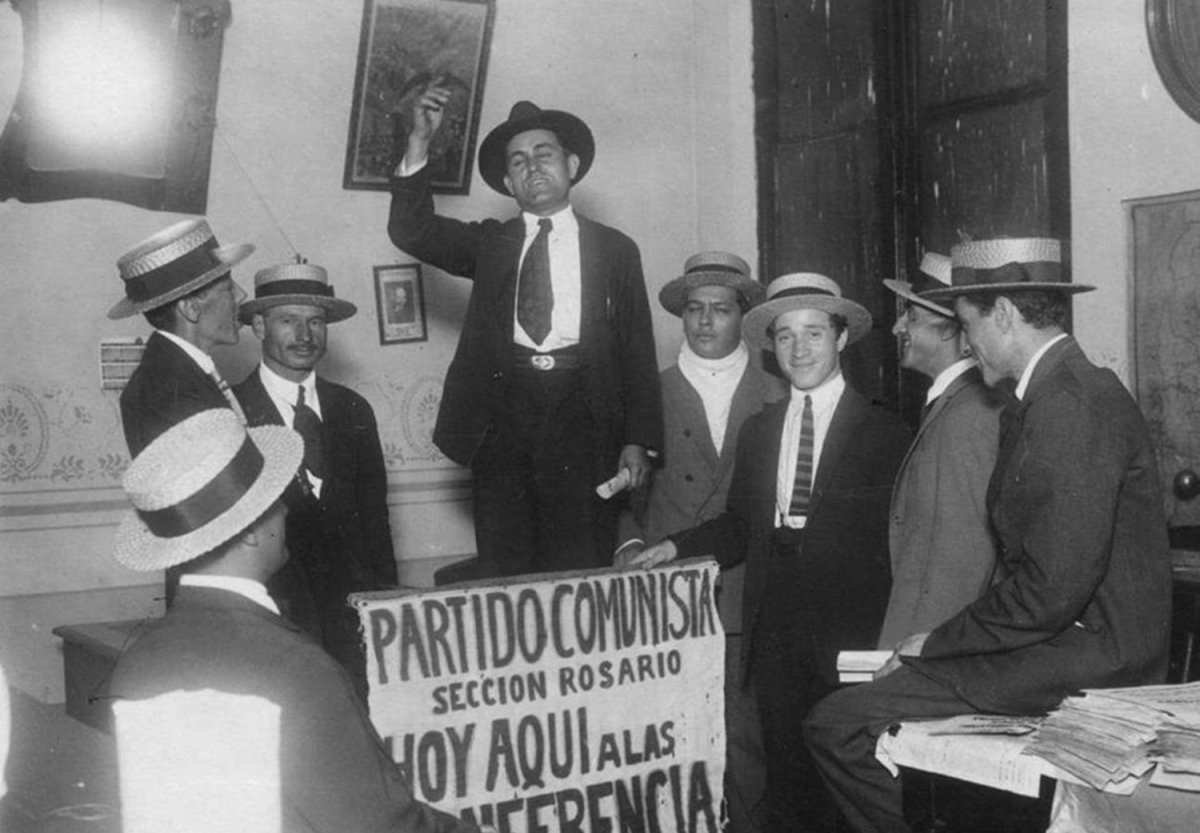
The proper estimation of the role of the petty-bourgeois revolution, which is going to be accomplished in some of the Latin-American countries, is necessary for us for the establishment of the hegemony of the proletariat and the peasantry. The outcome of this revolutionary movement will be extremely varied, depending on whether a Communist Party exists or does not exist in a given country. The proletariat will be able to win the hegemony with the aid of the peasantry only if it has a Communist Party.
The petty-bourgeois revolutions, which have lately occurred in the Latin-American countries, should be studied by us with attention. Comrade Lacerda has already spoken about the petty-bourgeois Revolution in Brazil. The Mexican comrades will have to tell the same story about their own country, and I should like to say here a few words about Chile and Ecuador. The second coup d’état in Chile in 1925 was a petty-bourgeois movement in which the peasantry and the organised working class took an active part. This movement had some progressive features. However, the third coup d’état of Ibanez was out and out reactionary and was distinctly of a Fascist character. The Mexican revolution of 1910-17 was directed against the power of the big landowners, the national big bourgeoisie, the church, and imperialism. The movement of the toiling rural population had an aspect of its own and constituted a big driving force in the revolution. Nevertheless this revolution, in spite of the participation and the big role played by the organised workers, is of a typical petty-bourgeois character.
In Ecuador there was since 1895 a bourgeois-democratic revolution which was accomplished by the nascent national-bourgeoisie and was directed against the power of the landlords and the church. On the other hand, the 1925 revolution was directed against the power of the national big bourgeoisie, the big landlords, and partly also against imperialism, chiefly against banking capital which had held political sway over the country for a period of 15 years. Politically the leadership of the revolution was in the hands of the petty-bourgeoisie which was fighting against the monopoly of the big bourgeoisie (some of its monopoly rights were actually abolished). A considerable role in this revolution was played by the organised working class. A peasant movement developed independently of the revolution, being the consequence of the revolutionary ferment among the rural population which was the after-effect of the revolution of 1925. Thus, the 1925 revolution was not caused by the movement of the agricultural labourers and peasants, as was stated by Comrade Humbert-Droz in his excellent report. The Governments of Mexico and Ecuador are losing day by day their revolutionary force, surrendering more and more to imperialism. Into these Governments, there have gradually crept big bourgeois elements, the new estate owners, and even some of the old estate owners (this however does not mean that the Mexican government is a government of liberal landowners, as was opined by Comrade Travin). Some Mexican comrades believe that the Mexican Revolution is continuing to develop. I do not believe this is the case. It is true, the situation in Mexico is a revolutionary one, but it is not the revolution itself. The proletariat and the peasantry are driving forward, the Government is pulling backward, and a new revolution is imminent. Nevertheless, we should not exaggerate to the extent of saying that the Governments of Mexico and Ecuador are already reactionary. For the time being they are still progressive forces.
As regards the perspective of the bourgeois-democratic revolution, it ought to be said that in some countries, e.g. in Argentina, the revolution may be of a proletarian character from the start. Furthermore, a series of revolutions will ensue in which the leadership will be in the hands of the petty-bourgeoisie, but the proletariat and the peasantry will take a more or less active part. These revolutions will in the different countries pass through a number of various stages, depending upon the correlation of the class forces in the movement and upon the respective strength of imperialism. Nevertheless, the moment that we shall achieve the hegemony in the bourgeois-democratic revolution, the moment the proletariat and the peasantry will be able to establish their dictatorship, the big bourgeoisie in each of those countries will deliberately turn against us. The big bourgeoisie will play a counter-revolutionary role, and in some countries we shall have to fight it from the very first. In all countries it will be counter-revolutionary towards the dictatorship of the proletariat and the peasantry. In this respect the tasks of our Parties are stated quite incompletely in the theses. It would be a great danger to the Revolution if we were to leave our enemy, the big bourgeoisie, in possession of the economic power. I am firmly convinced that once we have been able to establish the proletarian-peasant dictatorship, we shall be able also to expropriate the big bourgeoisie.
As regards the division of the expropriated land, I believe this should be carried out more or less in the following manner: the land leased to the peasants must be left to them upon the terms of collective tillage, while the rest of the soil ought to be used for the purpose of establishing big estates owned by the State. If we should directly divide the land among the peasants, it would mean the rise of a large number of small-holders, of a rural petty-bourgeoisie, which would considerably jeopardize the power of the proletariat, because the rural workers would be turned into small-holders. This, in its turn, would constitute a great hindrance to socialist construction. On the other hand, the existence of large estates, largely run on more or less industrialised lines, will afford the opportunity of concentrating a considerable portion of the land in the hands of the State.
On these grounds I am opposed to the formulae contained in the theses concerning the tasks of the agrarian revolution in those cases where a proletarian-peasant dictatorship is established. If we let these formulae stand as they are, we shall inevitably arrive at a wrong conclusion. We shall then consider those governments which have already accomplished some of the tasks of the bourgeois-democratic agrarian revolution (the Mexican Government, and partly also the Ecuador Government) capable of carrying out the agrarian revolution to the end. On all these grounds I believe that the theses must be altered in the sense indicated above.
Comrade MARTINEZ (Venezuela)
Stated figures indicating how American imperialism has been penetrating the Latin American countries; and events during recent years have shown the effect of these investments in the economic and political life of these countries. The process of industrialisation is creating a working class that is beginning to play its revolutionary role. Venezuela has been ruled during the past 25 years by the bloodiest dictators ever known in the history of Latin America. All previous revolutionary attempts were made by members of the landed class with sections of the petty bourgeoisie, but without any revolutionary programme. The recent uprising clearly shows a great difference; it was led by the students with the participation of a large section of the workers who went on strike, not for any immediate economic demands, but in solidarity with the imprisoned leaders of the insurrection. A country where there were practically no workers, now employs in the oil industry alone more than 25,000 workers. Out of a population of 3,000,000 it has an industrial population of 262,000 according to the last census.
This economic penetration is producing the same effect in all Latin American countries, but at a more rapid tempo in those countries in the northern part of South America whose economy is of a more backward type. This in its turn will force the United States to extend the policies which have been applied to the Caribbean, Central America and Mexico, to a wider field.
During the past 30 years Latin America has been invaded 36 times, these interventions were made at different intervals, but as a result of the increasing revolutionary activities they are becoming more frequent. Let us take the case of Nicaragua. The first intervention took place in 1899, then in 1907, 1910, 1912 and then 1925-26-27 and 28. During the last four years the United States have been at war with Nicaragua, culminating in the present struggle of Sandino against the mightiest imperialist power, a struggle which is arousing the whole of Latin America.
The rest of the Caribbean is actually a protectorate. American intervention assumes any function according to the peculiar conditions of the country: General Receiver of Customs, High Commissioners, Financial Advisors, etc., but as a matter of fact it is developing more and more into actual military interventions.
Up to now imperialist intervention was limited to Mexico, Central America and the Caribbean Islands, but the American investments in Colombia and Venezuela have increased, since 1913, 615% and 5,300% respectively, mainly in the oil industry. This is very important, because England having been earlier in the field controls in certain places more oil than the U.S. The refineries of the Royal Dutch have a capacity, at the present time, of 70,000 barrels per day. Now comrades picture yourself American imperialism with as many naval bases as England has in the Caribbean, with these tremendous supplies of oil and other important raw materials in the neighbourhood of the Suez Canal, and it will give you an idea of the tremendous importance of the coming struggles in Latin America.
In Mexico the struggles between England and the U.S. took the form of supporting different factions and individuals. But this was in an earlier period, when an actual occupation would have been very costly. In 1902 when England, Germany and Italy tried to test the Monroe Doctrine with the bombardment of Venezuela, they retreated after a very serious situation which almost led to war. Today the situation is different, the antagonism between England and America is much more serious.
We must be very clear in our estimation of the situation in order to prevent that the workers and peasants should fight the wars of the imperialists. In this direction we must do more than we have done up to the present, particularly in relation to all the forms of penetration used by American imperialism. I do not think that sufficient attention has been paid to the question of the Pan-American Union which is the Colonial Department of American imperialism. There is not one field of social activities in which the Pan American Union does not have an active committee functioning. They have Press Conferences, Road Conferences, Railway Conferences, Airway Conferences, etc. etc. These small conferences are the real link that chains Latin America to American imperialism.
Of course, it would not be a complete colonial Department without its labour section, and again we see, the U. S. built and organised the Pan American Federation of Labour at the right moment, in 1917, in order to prevent the labour movement in the Caribbean Region, to get some inspiration from the Mexican Revolution.
In a recent article Comrade Humbert-Droz writes:
“With the exception of the Mexican C.R.O.M., no Labour Movement adheres to it (the Pan-American Federation of Labour) because of its imperialist character”.
I do not agree with this formulation. At the last Congress of the P.A.F. of L. there were representatives of Cuba, who represented workers, of Nicaragua, Guatemala, Panama, and Dominican Republic, Salvador, Peru, Porto Rico, Venezuela and Colombia. Some of them were appointed by their own governments (Peru, Cuba, Panama, the Dominican Rep., Guatemala). The Colombian representative did not represent anybody, Venezuela represented a group of exiled workers. But this only shows that in Latin America all forms of reformism, of class collaboration, of working with the existing dictator (the case of Cuba, Machado, with Gomez in Venezuela) is taking place.
I maintain that American Imperialism will start a campaign of corruption amongst the newly rising working class through the Pan American Federation of Labour, and that it will extend parallel with American imperialism. There were no representatives from the Southern countries at the last Congress because British imperialism is much stronger in the South, they go with Amsterdam. This is the reason why at the last Pan American Congress at Havana the only semblance of opposition came from Argentine, and it was the opposition of British imperialism.
I believe that the last two Congresses: of the Pan American. Federation of Labour at Washington, and of the Pan American Union, at Havana, give us weapons that we must use to unmask the real functions of Pan Americanism, the role of the Latin American bourgeoisie and the Labour Fakirs of Latin America. Both Congresses took place at a time when hundreds of Nicaraguans were being slaughtered. A resolution protesting against the crimes of American imperialism was voted down by the Congress at Washington. At the Havana Congress we saw for the first time the whole of Latin America represented. This clearly shows that the increasing revolutionary temper of the Latin American workers and peasants illustrated in those days by the great Sacco and Vanzetti demonstrations is bringing the Latin American bourgeoisie closer to American imperialism.
We expect from the revolutionary workers and their vanguard just as much attention. The Profintern has already initiated work that will organise opposition to the lackeys of American and British imperialism in the labour movement, the P.A.F. of L. and Amsterdam. We have no doubt that the Comintern will also send to Latin America its most capable advisors to help us in the organisation of our parties, that are the only force that will lead the struggle against American imperialism, to its final conclusion: the creation of the Workers’ and Peasants’ Soviet Republics of Latin America.
Comrade IBAROLA (Paraguay)
Comrades, as a political entity Paraguay has lost its national stability. There is a struggle going on there between British and Yankee imperialism for supremacy. The British economic sphere extends through the Eastern Section where the plantations are and covers part of the railroads of Alto Parano and 40 stock-raising farms with 200,000 animals. These farms are favourable for stock-raising because they include large pasture-lands of 600 to 800 “leguas” (one legua is equivalent to 3 square kilometres). The British are also in possession of large forest property from which they export lumber to Argentina. They rent out part of their farms to the peasants at a rate reaching 30 and 35% of their harvest. Their refrigerating stations in Zaballos-Cueque handle 1,000 animals a day. They also own two navigation lines. In addition to that, British imperialism has a representative who collects each month the taxes on the export duty which serves as amortisation for a debt of 3,280,000 pesos contracted with England. Recently the British also bought tramway and electrical concerns.
Yankee imperialism dominates the Western section, that is to say, the “Chaco” (swamps) as well as the exploitation of forests to the extent of 500 to 700 “leguas”. It also owns industrial enterprises (refrigerating stations, etc.) in the towns of Pinasco, Sastre and Guarani. The harbour of the capital of the country has been turned over to it by a 14-year concession. It is the chief harbour of the country and practically all the trading is carried on there.
Recently negotiations have been in progress with a view to granting a concession of the iron mine at Ibicui to Americans who, through secret purchase, have also acquired the oil fields in the district of Chaoco on the Bolivian border. These secret sales are still concealed from the military government; attempts are being made to gain its sympathy first by corruption of officials and Parliament. To facilitate this sale of the oil lands, the American Government has offered a loan of five million dollars, which, according to official indications, should serve to guarantee the metal reserve of Paraguayan money which has greatly depreciated: 1,000 gold pesos are worth 4,125 Paraguayan pesos. On this question of the economic intervention of Yankee imperialism, the national bourgeoisie is divided into two fractions, one upholding Yankee imperialism and the other backing British imperialism. The Communist Party is successfully combatting the intervention of both imperialisms, denouncing the activity of Yankee imperialism, which through a war between Bolivia and Paraguay, is attempting to get control of the oil region of Chaoco as well as this secret sale of the oil wealth of the country which was carried out by the leaders of the liberal-radical party.
I said in the beginning that Paraguay has lost its political stability, that its bourgeoisie is divided into two opposing camps. In the course of this struggle, the Communist Party has successfully held a number of meetings.
Consequently we are on the eve of great events in which the Communist Party will play an important role in the political arena and will facilitate the political conquest of power by the proletariat.
Comrade CONTRERAS (Mexico)
Comrades, when the II. Congress of the Communist International endorsed the theses on the colonies and semi-colonies, the Communist movement in Latin-America was only in its initial stage and the problems of this vast continent were hardly known at all. At present we have almost in the whole of Latin America Communist Parties or groups of comrades who work energetically for the construction of such Parties.
Latin America has already embarked on the emancipation movement which is linked up with the capitalist crisis throughout the world. In the next revolutionary wave it is bound to play a very important role.
The Communist International must pay more attention to this vast continent, it must help these young Communist Parties in their struggles and must contribute to their formation where such parties do not yet exist.
The Second International, which did not trouble in the past to study the problems of this vast continent where the British and American imperialisms are contending with each other and are using criminal methods to bleed a population of 100 million was induced to mention them in its colonial theses which were endorsed by the Brussels Congress:
“The Second International opposes the policy of economic subjection and military intervention on the part of the United States in the Republics of Central and South America.”
What is the meaning of these four lines? The Second International is against the economic subjection and military intervention of the United States, but it has nothing to say in regard to what the people of Latin American shall do to emancipate itself from this economic subjection, and to resist effectively the military interventions. It has not a word to say against the policy of economic subjection applied by Great Britain in Latin America.
Why this omission? Being familiar with the policy of the leaders of the Second International, we come to the conclusion that the Second International is against the subjection policy of the United States in Latin America not because this policy exterminates the peoples but because it interferences with the interests of British imperialism whose instrument the Second International is indirectly.
Latin America is enormously important because it is the main base of the exploitation of the United States. The insurrections of the last years and the fact that the United States must continually maintain a state of war against these countries, show how insecure this base is. As control over commerce and industry depends on control over oil, the Standard Oil Co. (U.S.A.) and the Dutch Shell Co. (Great Britain) are struggling over the Latin American territories.
The scientific commission of the oil department of the United States has declared that if the exploitation of the oil wells in the United States continues as before, the oil sources of the United States will be exhausted in seven years. Hence, the increasingly brutal policy of Wall Street imperialism.44.04% of all the loans placed by the United States abroad are in Latin America. The penetration has been vast and rapid. In this rivalry British imperialism has been obliged to cede gradually its positions to Yankee imperialism. In the countries where it still keeps some of its positions it is compelled to allow the penetration of Yankee capital into its own companies. We have concrete examples of these facts in Brazil and Peru.
In the biggest part of Latin America national problems are at present intimately connected with the political and economic domination of Yankee imperialism. The latter accelerates or retards industrial development according to its interests: it bribes the parties, it provokes racial conflicts as well as religious and frontier conflicts, it subsidises and directs coups d’etat, etc.
In the course of 30 years 23 military interventions took place which cost hundreds of thousands of victims and were carried on at the expense of the oppressed peoples.
While in a general way British imperialism based its policy on the landowning class and while it has impeded the industrial development of the countries of Latin America, American imperialism rests on the big landowners in the countries where British imperialism was weak and it has helped the petty bourgeoisie in the countries where British imperialism dominated.
But immediately after the conquest of power by the petty bourgeoisie, either by a revolution or a military coup d’etat, as soon as it came into power, the petty bourgeoisie was compelled sooner or later to submit to Yankee imperialism, to collaborate with the latifundists. Consequently it cannot keep the promises made to the proletariat during the revolutionary period and it crushes all the rebellious movements of the proletariat and the peasantry.
We regret that in the theses on the colonial and semi-colonial question introduced by Comrade Kuusinen, the most powerful imperialism in the world is not mentioned at all.
In many countries of Latin America the internal situation, the economic and social structure have changed considerably owing to the industrial development, the creation of a proletariat and the accentuation of the agrarian crisis.
In all semi-colonies Yankee imperialism, standing in need of a social base, has become the ally of the reaction against the majority of the population. Illiteracy, religious fanaticism, epidemics, unemployment and the systematic pauperisation of the proletariat and the peasantry, such are the tragic consequences of imperialist domination.
The development of productive forces is allowed only within the limits established by imperialism which wants to maintain its colonial monopoly. It puts obstacles in the way of industrial development, especially in regard to means of production required for the creation of a national economy. It wants to keep Latin America as a “hinterland”, as an agrarian and raw material reservoir.
Throughout Latin America Yankee imperialism bases its colonial policy not only on the establishment of its monopoly through economic penetration but also on its control of the political life of the country.
If it does not succeed in bribing the central government it subsidises a coup d’etat or intervenes by force of arms.
Imperialism assumes a brutal colonialist form. This attitude helps to mature revolutionary crises, it intensifies them and gives to all revolutionary outbursts a mass character.
Agrarian revolution is the order of the day throughout Latin America; the revolutionary peasant movement is directed not only towards the destruction of semifeudal relations, but also against imperialism. The sale of goods manufactured in the mother country has ruined the small national industry. Exploitation of the soil by modern methods does not give a chance to small landowners. The national agricultural credit banks which are subsidised by foreign capital expropriate systematically small landowners who cannot pay the interest on loans.
The agrarian problem is especially in Latin America of vital importance to the revolution. The Communist Parties must do their utmost to win over the exploited masses of the peasantry and to bring them on to the path which alone will lead them to the fulfillment of their aspirations.
The national question is intimately connected with the colonial question. There is a national revolutionary movement especially in Central America and in the Bolivian countries. The proletarian movement of economically developed countries and the national movement of the colonies and semi-colonies are two aspects of the same great revolutionary movement. Communist Parties must pay more attention to this movement, they must struggle against the indecision and vacillations of their leaders and against the putchist ideology which is typical of the bourgeoisie of Latin America. The Communist International must keep watch over the young Communist Parties and must guide them in regard to their tactical and political lines towards these movements and in all other circumstances. It is very easy to commit ultra-Left errors which reduce the Parties to a sect and dissociate them from the masses. It is also very easy to commit ultra-Right errors which identify the Party with the national movement.
The colonial and semi-colonial thesis paid very little or hardly any attention to the native problem. In Latin America 25 millions of Indians constitute a mass of exploited and enslaved people who are not even entitled to a plot of land. It should be said in our programme that under a regime of workers and peasants democratic dictatorship they will have the right of self-administration and of developing their own culture, etc. But also under the present regime we must struggle for the recognition of these rights. Only thus will we be able to rally under our banner this mass of slaves who have always been the principal driving force in all colonial revolutions. Indians constitute that section of the population which was always most exploited and served as cannon fodder in all uprisings led by the bourgeoisie.
Side by side with this problem we have that of the black race. We have in America about 12,000,000 Negroes. We hope that the Commission for Work Among Negroes elected by this Congress will provide the Communist Parties of Latin America with a programme of action for winning this army of unfortunates.
The pressure of Yankee imperialism which is becoming more and more brutal has established solidarity among the oppressed peoples. There are many movements of various forms in Latin America: “Spanish-American”, “Latin-American”, “Indo-American”, “Iberian-American”. All these movements are under the leadership of bourgeois and petty bourgeois elements. They have a sentimental, mystical or philanthropic character. None of them has a sound basis.
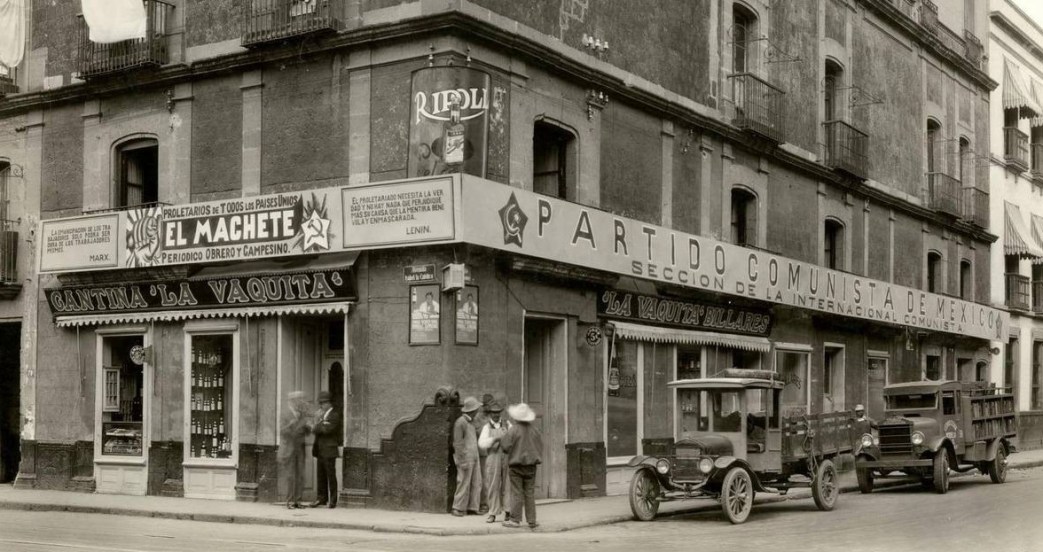
About 18 months ago Sandino, at the head of a number of peasants and miners declared an anti-imperialist war in Nicaragua against American capital and its national agents. The Anti-Imperialist League of America took up immediately the cause of Nicaragua and initiated an international solidarity campaign; it collected money to help Sandino and his soldiers and also to provide medicines and medical appliances. In this movement the Anti-Imperialist League acts on a continental basis, it has been in the forefront of all the anti-imperialist movements of the continent. The Comintern together with the Anti-Imperialist League must pay more attention to these movements and must induce the Communist Parties to organise under the slogan of “United Anti-Imperialist Front”, movements in the countries where the anti-imperialist League has no organisation of its own.
Only under the leadership of the Communist Parties can the Anti-imperialist movements assume a correct policy against imperialism.
By weakening imperialism in Latin America it is weakened on a world scale. In an imperialist war against Soviet Russia Latin America will be the economic reservoir, it will provide grain, meat, oil, etc. The North American comrades must concentrate all their energy on the establishment of a powerful anti-imperialist organisation in the United States. The anti-imperialist struggle in Latin America is an integral part of the struggle which the workers of the United States carry on against the Wall Street capitalists.
In the countries of Latin America we have a labour bureaucracy corrupted by imperialism, and this labour bureaucracy is more dangerous than the bureaucracy in the mother country.
Santiago Iglesias, Secretary of the Latin American section of the Pan-American Federation of Labour, said in a confidential circular addressed to the organisations of Latin America:
“It is clear that the American Federation of Labour is an instrument which will allow the countries of Spanish America to assimilate the realist spirit and the humanitarian ideal of our nation.”
“Our nation”, on the lips of Mr. Iglesias, means Yankee imperialism.
At its last Congress the Red International of Labour Unions made important decisions for combating this bureaucracy and setting against the Pan-American Federation of Labour which is an instrument of Yankee imperialism a revolutionary trade union federation of Latin America which, in close union with the minority trade union movement in the United States, will be a genuine instrument for the political and economic emancipation of the workers of Latin America.
The theses introduced by Comrades Kuusinen and Ercoli show very clearly what must be the main tasks and the tactic of the Communist Parties in colonial and semi-colonial countries. But for Latin America the Comintern must draw up on the basis of the general lines of the already introduced theses, special theses for the Communist movement in Latin America where new problems arise unknown in other colonial and semi-colonial countries.
A member of the Young Communist League of the United States declared at this Congress that the charge made against the Communist Party of America that it has not done its duty in regard to anti-imperialist work, is a false charge.
But this is not true to facts. The groups existing in the American Communist Parties accuse each other of not having supported and developed the anti-imperialist movements in the United States. On behalf of the Communist fraction of the continental committee of the Anti-Imperialist League of all the Americas, I declare that both sides are right when they assert that the American Communist Party has not carried out its anti-imperialist tasks, and I assert that the responsibility for this deplorable error rests entirely with the Central Committee of the Communist Party.
Comrade Kuusinen, in his colonial and semi-colonial theses laid before this Congress, divides the colonial and semi-colonial countries into four groups. We think that the classification of any one country in one of these groups is closely connected with our tactical and political lines, with the development and the perspectives of the Communist movement of these groups, as well as with the interpretation of the character of the development and the driving forces of the bourgeois-democratic revolution. The Latin-American Delegation is convinced that the division of the countries is of vital importance for the Communist movement and it thinks that instead of establishing an artificial division made so as not to form too many groups, one should take a logical viewpoint and extend this division in order to facilitate the study of the colonial and semi-colonial question and in order to separate more clearly the development of the Communist movements from the development of the bourgeois-democratic revolution. For instance, the delegation gives the case of Comrade Kuusinen who places into the first group all the countries of Latin America, that is to say, the Southern countries which are remarkably developed economically, the Bolivian countries which are in the initial stage of their development and the countries of Central America where, with the exception of Mexico and Cuba, hardly any industries exist and where semi-feudal relations still predominate.
Comrade Humbert Droz, in his theses on Latin America, laid before this Congress, says that the slogans of the Communist Parties of the South-American Continent must be those of “Latin-Americanism”. Although the Latin-American Delegation is, in general, in agreement with Comrade Humbert Droz’ theses, it cannot accept this slogan.
Latin Americanism is the ideology of a clearly petty-bourgeois anti-imperialist movement which struggles against the Communist movement and asserts that Marxism, as well Leninism, are exotic plants for Latin America. These theorists accuse the Anti-Imperialist League of being an agency of Moscow. They sabotage our entire agitation and they give to understand that when they get into power they will not allow the existence of a legal Communist Party. The slogan “Latin Americanism” can be easily misinterpreted by the workers and peasants, among whom our influence is continually growing. In Latin-America we must struggle against the conception, which will be strengthened by the slogan “Latin Americanism”, that the proletariat of the United States and the Wall Street capitalists constitute one reactionary entity. Latin Americanism asserts that Senator Borah is a thousand times more the friend of the peoples of Latin America than the workers of the United States.
We have already succeeded in capturing a good position from which we can free the workers, of Latin America of this dangerous conception. It is incumbent on us to issue slogans capable of strengthening the anti-imperialist struggle and uniting more and more all proletarians. There are already slogans in regard to this question which fully express the nature of the struggle and which are known by all, for instance, “Out with the Yankees from Latin America”, “Struggle for the unification of the oppressed peoples of Latin America against imperialism”, etc. Therefore, we think that the slogan proposed by Comrade Humbert-Droz is not only useless, but dangerous.
Comrade SALA (Uruguay)
Comrades, the British and American imperialism have appropriated the main wealth of Latin-America. We see that the oil of Mexico, Venezuela and Colombia, the slaughter-houses of Uruguay and Argentine, the copper, nitrates and coal of Chile and Peru, the sugar of Cuba, the fruits of the countries of Central America, are in the hands of British or American companies. The strategical posts of the national economy of Latin America are dominated by the imperialism of the invaders. It should also be pointed out that the United States are ousting Great Britain in these countries.
At times, the trade and industrial bourgeoisie and even the capitalist landowners show certain anti-imperialist tendencies. Thus, when America wanted to impose taxes on Nicaragua, the press of agrarian capitalism in Uruguay raised a hue and cry against such an attack. When Great Britain committed an analogous crime in India, Egypt, etc., the press of the industrial and trade capitalists made even more fuss.
Workers, peasants, and the petty-bourgeoisie are anti-imperialist classes in the true sense of this word, and can constitute a genuine united front in the struggle for national emancipation.
Naturally, this struggle is linked up with the agrarian revolution in Latin America and with the struggle of the working class against the bourgeoisie. When the time will have come for the question of the agrarian revolution being raised seriously, the petty-bourgeoisie will be frightened and most of its strata will betray the revolution and will go over to the enemy camp.
The bourgeois-democratic revolution against feudalism and imperialism can only be accomplished under the hegemony of the proletariat. This must be clearly explained to the masses of Latin America and illustrated by examples taken from the revolutions in Mexico and Ecuador. The petty-bourgeoisie certainly promises land to the peasants and proclaims a struggle to the death against American imperialism, but this has never prevented it from capitulating.
Objective conditions for the bourgeois-democratic revolution exist in a considerable number of countries, but the subjective factors are lacking. In Colombia, for instance, there is not even a Communist Party, only a revolutionary workers’ and peasants’ movement organised into a Socialist-revolutionary party. In Ecuador a small Communist Party was formed recently. In Central America, in Venezuela and Nicaragua, the Communist International has no organisational base. In Brazil the Communist Party is still very weak and far from embracing the whole country. An enormous disproportion exists between the development of objective conditions and that of the subjective factors of the revolution in these countries. This disproportion must disappear.
I would like to say a few words about the workers’ and peasants’ bloc. We must organise peasant unions and not peasant parties. The peasant party runs the risk of becoming a danger to the Communist Party in the revolutionary epoch. The same applies to the workers’ and peasants’ party. We think that the workers’ and peasants’ bloc slogan is a good slogan.
A few words on the character of the revolution in Latin America. Comrade Travin says that this revolution will not be a bourgeois-democratic revolution, but a Social-Revolution. In my opinion, this is an error. It is quite possible that in the beginning of the Revolution a considerable number of countries in Latin America will find themselves under the hegemony of the petty-bourgeoisie and that the revolution will issue the slogan of struggle against the reactionary governments, the big landowners and the imperialists. In the course of the struggle, the proletariat and its Party will naturally assume hegemony. Then the slogans of the proletariat and Socialism will be issued and the revolution will enter upon a new stage. It will be pursued in a non-capitalist direction and will lead to the democratic dictatorship of the workers and peasants.
The development of the revolution in Latin America towards Socialism is favoured by the general tendency of the peasants to cultivate their land in common. This revolution is certain to need from the beginning the help of the world proletariat and of the Communist International. With your permission, comrades, I will deal now with an important and decisive problem, a problem which Comrade Travin has placed before us. This comrade says that the revolutionary movement in Latin America cannot triumph “unless revolutionary movements take place simultaneously in various countries”. Those are his very words.
What does this mean? That revolution in our country is impossible. Let us reason it out. The revolutionary process is not the same in all countries, and the maturity of this movement does not manifest itself everywhere at the same time. One cannot expect a simultaneous outbreak of Revolution in the various countries of Latin America, and consequently there can be no possible victory for the revolution if we are to believe Comrade Travin. One must say that this conception of Comrade Travin is absolutely defeatist and has nothing to do with the revolutionary policy of the C.I. Of course, the difficulties of a bourgeois-democratic revolution only in one country of Latin America will be enormous. We must not make ourselves any illusions on this subject. Imperialism will endeavour to crush it. But, it will find an echo among the masses of the adjoining countries and can depend on the support of the proletariat of U.S.S.R. and of the imperialist countries. This will interfere with the imperialist intervention. Moreover if the revolution adopts a correct political line it will be able to offer energetic resistance to the invaders. Even if the bourgeois democratic revolution be crushed, it will do a great service by giving an enormous impetus to the national liberation movement and also to the workers and peasants movement.
We must do our utmost to ensure in Latin America the development of subjective revolutionary factors. We must be very energetic in the trade union movement, must organise the masses, develop the industrial trade unions, direct the movement towards revolutionary strikes and must create a real federation of labour of Latin America. The peasant problem must also receive our attention. Peasant leagues must be created everywhere and must be grouped on a national and continental scale. Finally, the anti-imperialist movement must be systematically developed by creating everywhere Anti-Imperialist leagues und by transforming them into mass organisations embracing workers, peasants and the petty bourgeoisie for the purpose of supporting now the liberation movement in Nicaragua and rousing the peoples of Latin America against imperialism.
Comrade CARDENAS (Colombia)
Comrades, in a general way, I express the agreement of the Colombian delegation on the report presented here, except where it deals with the classification of the semi-colonial countries. This could be made more in agreement with the situation. For instance, Argentina, which is a semi-colonial country, is more free to dispose of herself than certain Balkan countries that are classified in the theses as independents.
The Colombian Delegation is also in agreement in general with what was expressed before the Congress by Comrade Humbert Droz with regard to Latin America. What Comrade Humbert-Droz said about Latin-America is only one step forward in the direction of the study of these Latin-American questions. Comrade Humbert Droz has certain ideas about Pan-Latin Americanism with which we do not agree, at least, not altogether.
I have the impression that the character of the coming revolution in the Latin American countries has not been clearly expressed here. It appears to me that there has been an overestimation of the role of the petty-bourgeoisie in the revolution. Owing to the extent of imperialist penetration on the part of the United States in some of the Latin American countries, the petty-bourgeoisie has become weaker, and the proletariat has arisen which, although it has no tradition as a proletariat, no clear Marxist understanding, has a very developed class-consciousness. There has been formed in Colombia a Revolutionary Socialist Party, which has shown considerable class- consciousness, and which has been able to deal a formidable blow to imperialism.
I therefore hope that the Latin American revolution will become a revolution somewhat between a proletarian and a petty-bourgeois revolution.
I also wish to express here the satisfaction with which I listened to the speech of Comrade Wolfe. This speech indicates that the North American Party now realises the enormous revolutionary force that Latin America represents at the present time, and that the Party will now pay more attention to the tasks in connection with the Latin American movement. think that no other Party in the Comintern should pay as much attention to our Latin American problems as the American Party.
Speaking of the characteristics of the coming revolution in Latin America, I refer to the statements of Comrade Travin, who asserts that it is not possible for a single country in Latin America to achieve a bourgeois-democratic revolution because of the dependence of these countries upon the U.S. We have a good example that repudiates this point of view. We have already seen that Sandino, in a little insignificant country like Nicaragua, has been able to fight against American imperialism for more than a year and a half.
If Comrade Travin would say that the possibilities of a victorious petty-bourgeois revolution in Latin America greater if it will take place in several countries, I would be in full agreement with him. Precisely the cohesion and organisation of the different movements of Latin America is the task of the Comintern.
A bourgeois-democratic revolution in Colombia, for example, would only be seriously menaced by Yankee imperialist intervention in the coastal districts, but in the interior of the country the United States would not be able to make great headway.
Until a short time ago Colombia was the country in Latin America which was able to stand outside the imperialist movement in Latin America. In fact, with the exception of the banana region, which is on the Atlantic Coast; and the platinum region on the Pacific Coast, the interior of Colombia has resisted imperialist penetration. But previously Colombia was subjected to the holy “imperialism” of the Roman Pontiff carried on through the priests and other kinds of the religious hierarchy who turned Colombia into a feudal territory of the Pope.
In a short time Yankee imperialism has rooted itself in Colombia. Its economic positions there are very solid. Its bankers have loaned, without any specific guarantee, than 2 million dollars. At the present moment negotiations are being conducted to put through a loan of 100 million more dollars.
To the U.S. we export 80% of our products and import 58% of our own total import trade. In 1913 the imports from the U.S. amounted to $7,647,164 and in 1924, to $25,671,858.
The banana exploitation and the extraction of the platinum yield a profit to Yankee imperialism of more than ten million dollars.
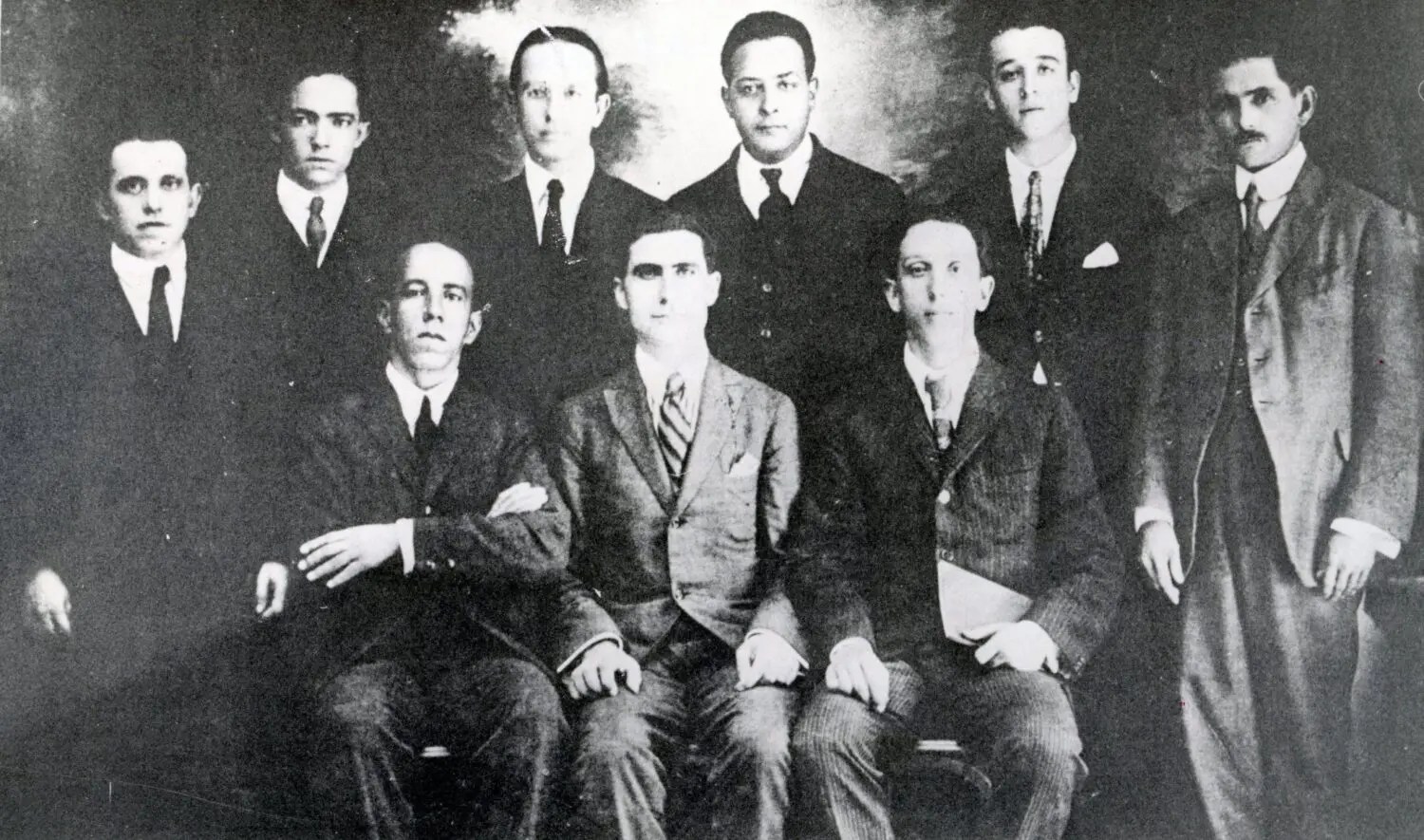
The oil zone, has a territorial extension of 88,000 sq. kilometres.
The best located section of this zone is already in the hands of American oil companies.
The only company, the Tropical Oil Company, has in Colombia 400,000 hectares of rich oil land, and it carries its oil to the sea through 800 kilometres of pipeline which cost $ 40,000,000. At the present moment negotiations are being carried on by the British oil companies, as a result of which the antagonism between these rivals is developing. In the course of a few years Colombia fell definitely under the influence of American capital and of American imperialism.
The bourgeoisie of Colombia has surrendered deliberately, it has joined hands with imperialism and has become a definite agent of it.
The Colombian proletariat has formed a party, a working class party, called “The Socialist Revolutionary Party”, which, if it has not a solid Marxist ideology, nevertheless has a class-consciousness quite sufficient to play an important role in the coming bourgeois democratic revolution in Colombia.
Imperialist penetration has not only called forth a vigorous opposition of the proletariat, but has aroused large sections of the petty-bourgeoisie. The intellectual and commercial bourgeoisie and even the petty-peasant proprietors find themselves in a certain dilemma whether they should go to the revolution with us or whether they should support imperialism. They do not like the idea to follow us, but imperialism is also repugnant to them. The definite ruin of agriculture which is its basis of living and the competition of industry from the United States undoubtedly tends to drive it into our camp.
This petty-bourgeoisie will not be able to keep away from, or to stand aside from carrying through its historical role which in Colombia is very great indeed, i.e. the struggle against feudalism. The petty-bourgeoisie will not play the same role that it did in Mexico because we have a Labour Party in Colombia. Naturally, the petty-bourgeoisie will have at the start the hegemony in the campaign, but it will have to reckon with us also.
In the centres of oil production, in railroad construction, in transport in general, which in Colombia has become great now, there are proletarian zones and this proletariat has formed the Socialist Revolutionary Party. And we are just at the beginning, in fact, of imperialist penetration. This developing proletariat will become more and more strong every day. The Communists will have to take advantage of the revolutionary situation which exists in Latin America and the Communist International will have to co-ordinate these movements, so that when they are in a united front against international imperialism, real results will be achieved. If a united front of the countries facing imperialist penetration in Brazil, Venezuela, Colombia, Peru, Ecuador, etc., is made, a great number of markets will be withdrawn from American imperialist domination and this will greatly affect American industry, and above all, will weaken the moral prestige of American Imperialism at home.
Comrade RAVETTO (Argentina)
Comrades, the Argentine Delegation feels that it must join in the discussion of the colonial theses in order to point out certain characteristics of imperialist penetration in Argentine and steps taken by the Communist Party.
It is well known that a ferocious struggle is going on between British and North American imperialism for the economic and political domination of Argentine. The consequences of this struggle have taken the form of a growing dependence of our country upon financial powers. These powers determine the development of its economic life and, through exploitation and pillaging the wealth of the country, are making the conditions of the proletariat and workers worse from day to day. They are accelerating the process of proletarianisation of vast sections of the peasants and urban petty bourgeoisie and are binding more closely the bourgeois classes who are struggling for power to the interests and policies of the two imperialisms.
British imperialism, which gets its support from the big landed proprietors, looks upon Argentine as a source for war materials. The railroads, the monopoly of which is held by the big landholders, enables them to pillage the wealth of the country at a faster pace. Economic progress is checked and the ancient inefficient forms of labour are maintained. The big agrarian bourgeoisie, influenced by British imperialism, has issued the slogan: “Buy from those why buy from us”.
North American imperialism on the other hand, which during the past years has penetrated all spheres of the economic life of the country and which is carrying on a ferocious struggle against British imperialism for absolute domination, gets its support from the industrial and commercial bourgeoisie and is developing chiefly the industry of extraction and transformation of the wealth of the country (monopoly of refrigerating concerns, etc…). The industrial bourgeoisie is becoming more and more identified with the interests of Yankee finance capital which favours primarily the industries which are not opposed to the expansion and export of their own products and which enable it to control the economic life of the country. It is in the course of this penetration and of the struggle between these two imperialisms that the process takes place of the differentiation of classes in Argentine and the struggle for power.
The traditional agrarian class which ruled the country continuously during the war is gradually losing the dominant positions which it occupied. The victory of the radical Irigoyenist party in the last elections marked the downfall of the industrial bourgeoisie and the beginning of more and more effective and open domination of Yankee imperialism, which has got control of all the vital resources of the country. Our delegation is in agreement with the characterisation of the Latin American countries as semi-colonial, this characterisation is absolutely correct for Argentina, in spite of the formal independence which it enjoys. The power and domination of imperialism in Argentina are extending further and further, corrupting ever-greater sections of the classes in power and imposing upon the Communist Party the struggle against imperialism as an essential task.
The Argentine delegation considers it necessary to carry on a bitter struggle against the Apra, which is a sort of Kuomintang of Latin America, as well as against all attempts which under various forms, seek to prevent the hegemony of the proletariat in the struggle against imperialism, and to transform this struggle by means of the predominating influence of the petty bourgeoisie objectively into a counterrevolutionary struggle. The struggle against imperialism is only possible to the extent that a struggle is carried on against the native bourgeoisie which has sold itself and become an accomplice of imperialism and against the petty bourgeois opportunist deviations–a struggle which must have for its aim a true mass movement which will carry on the fight until the establishment of a workers’ and peasants’ government. Our task is to gather together the working and peasant masses, and to influence and bring with us the petty bourgeois masses which are becoming more and more proletarianised. The slogans of a workers’ and peasants’ bloc, organisation and consolidation of the anti-imperialist league and trade union movement and, most important of all, unity, according to the instruction of the Red International of Labour Unions, are slogans which are perfectly adapted to our country. It is the task of the Communist Party to coordinate and direct all these movements. For this purpose, it is indispensable to reinforce it and give it a good organisation, to transform it into a mass party.
Originating as a small group in the capital city and having passed through a crisis, the Party has spread into the interior of the country and has firmly established itself in the provinces of Cordova and Santa Fe. Our Party has maintained and increased this influence by spreading among the working masses the slogan of the workers’ and peasants’ bloc in order to rally around it the exploited workers and peasants and lead them to the struggle for the defence of their immediate interests.

In the struggle against imperialism and the bourgeoisie, we must not lose sight of the important role played by their agents, the defenders of Pan-Americanism, the American Federation of Labour, which, by opportunist phraseology and in the name of democracy supports objectively and deliberately the penetration of Yankee imperialism–and lastly, the socialists who have split the trade union movement and who are now following the instructions of the Amsterdam Trade Union International; since the establishment of its office in Buenos Ayres, this international has been attempting to influence the trade union movement of Latin America. It has been opposing the American Federation of Labour and placing itself at the service of English imperialism. Social Democracy and the Amsterdam Trade Union International constitute an effective force in Argentina which they utilise as a starting point for penetration throughout Latin America. It is the duty of our Party to struggle most vigorously against the corruption of a section of the working class, against the con- quest of the labour movement by the imperialists, through the intermediary of their agents, whether these be from the American Federation of Labour or from the Amsterdam International; our fundamental task is to get on a true class basis to struggle against all imperialists, against the bourgeoisie as allies of imperialism, and against their agents, the socialists, petty bourgeoisie and intellectuals who ignore the role of the proletariat and against all forms of labour demagogy.
The struggle of the workers and peasants of our country must be joined and bound up with the struggle of all the countries of South America, which are also the prey of imperialism, which is oppressing us cynically and openly, which is utilising all methods for its penetration, which is splitting the nations and inciting them against each other, in order to weaken them and take control of them more easily. The revolutionary and anti-imperialist movements in South America have common aims, they must therefore form a united front which in alliance with the proletariat of the ruling countries, can break down the oppressive power of imperialism. The Communist Party of Argentina is faced with formidable and multiple tasks. In the course of the past years we have had favourable conditions but we have not known how to become a real Party which could lead the masses in the fight. We have yielded on many points of our position. We have been torn by internal crises. Nevertheless, the Party has acquired broad experience and, at the present time, it is busy with the work of uniting its forces, analysing its mistakes and take advantage of the experiences of these past years. It is changing its methods of work and organisation. It is raising the level of its members, and with the support and direction of the Communist International it will transform itself into a great mass Party and will be in a position to accomplish its task of leading the proletariat to victory against imperialism.
Comrade RAMIREZ (Mexico)
Comrade Kuusinen, although his thesis does not speak of or refer directly to our Latin American countries, advances observations and instructions that are of the greatest value. For example, in referring to the characteristics of the bourgeois democratic revolution in the colonial and semi-colonial countries, Comrade Kuusinen has reflected very faithfully the situation of the major part of our Latin American countries. Notwithstanding this, it seems to me that the differentiation made between the countries of Latin America in relation to the degree of political and economic development and their dependence on the imperialism of England and the United States are incomplete.. On this matter there should be a more detailed study in order to establish the logical and correct sub-division in each one of these countries. In this way, the correct tactics can be best. applied.
The penetration of Yankee imperialism, always more and more aggressive, helps us and makes it necessary for us to revise our conclusions in regard to the present situation. The judgement of Comrade Codovilla, written less than two years ago, must be totally changed for the more correct one which is now expressed in the thesis without direct reference to Mexico by Comrade Kuusinen.
As follows: “Since the petty bourgeois national reformists are incapable of opposing the advance of imperialism, but are obliged to give way, trying to satisfy the masses with nationalist phrases which are wholly lacking in principle”, on the one hand, while on the other they try to convince themselves again of the possibility of arriving at a peaceful agreement.
On another plane, the same mystification, the same deceit of the II. International, when in another form it says to the colonial peoples:
“Socialism repudiates in principle political domination of the colonial peoples and desires to abolish the colonial relation as a premise for the international community of colonial peoples.”
That is to say, the Social Democracy, just as the petty bourgeoisie in power in our Latin American countries, repudiate in principle colonialism, but at the same time desire “a relation or a peaceful agreement between the two historically antagonistic forces: colonising imperialism and the colonial slaves”.
This is the present tragedy of the petty bourgeoisie in Mexico. Certainly in the period of two years it resisted tenaciously Yankee imperialism, exerting all possible forces to keep alive and create in fact a national movement of its own. But imperialism was stronger than it; it was ravaged by hunger, blockaded economically, and the government had to give in on the petroleum question and it is already beginning to talk of reforming the agrarian laws, something which should not surprise us if we understand the teachings of Marx and Lenin; we know that it is its role to betray the masses. But this treason has its consequences, the masses begin to understand always more and more clearly the deception and this leads them finally to abandon their illusions in the promises of the petty bourgeoisie and to trust only their Own forces for their emancipation.
Much has been said and written on the character of Mexican revolution. Here, from this platform, this question has already been analysed. Comrade Codovilla said in an article in the organ of the Communist International some two years ago, after making a classification of four groups of Latin America, in which he places Mexico in the fourth category i.e. “Countries where democratic revolutionary governments exist, that have tended to construct a national economy”, he said the following:
“the petty bourgeois government strives toward the economic and political independence of the country on a basis which contains certain Socialist elements…In a certain sense we can compare the present situation in Mexico with the Russian situation under the regime of Kerensky.” Another comrade wrote recently
“The Mexican Revolution of 1910-17 can be characterised as a democratic bourgeois revolution which at the same time has the character of peasant insurrection and presents tendencies of its own as a colony to pursue the path of national liberation.”
Comrade Travin says “that the revolutionary movement of Mexico and Latin America is of a revolutionary type”. Comrade Humbert-Droz on the other hand maintains:
“the revolution of Latin America as well as the Mexican revolution are bourgeois democratic of the colonial type which have as a consequence a well pronounced anti- imperialist character.”
I believe none of these definitions has described with exactitude the Mexican revolution.
The revolution in Mexico of 1910, led by Madero, was a typical bourgeois-democratic revolution. In order to justify certain statements, we have been presented with all sorts of explanations, but I will show here what Madero said in his speech of 1911:”It is necessary to help the proletariat to progress but this progress must be slow, for in this manner capitalism will also progress.”
This was the programme of the petty bourgeoisie against the feudal agrarian bourgeoisie. But this declaration found its acute repercussion amongst the masses of workers and peasants, who had to take up arms in order to better their conditions, without giving the least attention to the progress of capitalism.
Madero was killed by a coup d’etat of the reaction and of the great agrarian bourgeoisie supported by English imperialism and personified in the assassin of Madero, General Huerta. Carranza entered into an uprising supported by Yankee imperialism and with the collaboration of the labour movement on the basis of a contract signed by anarchist and reformist leaders which was the beginning of the collaboration of the reformist labour movement with the petty bourgeois governments of Mexico; overthrew the government of Huerta and continued the struggle against Billa and Zapata who represent in the first case, nationalism against the alliance of Carranza with American capitalism and in the second, the rebellion of the peasants to obtain land.
The working class pressure compelled Carranza to issue the decree on the right to strike, recognition of the trade unions, 8-hour day of labour, etc. etc. The pressure of the peasant masses who had risen in arms under Zapata and who partially expropriated the land compelled Carranza to issue his decree of the 6th January 1915 in which Article 27 deals with the division of the land among the poor peasants.
Under the most intense pressure of the masses of workers and peasants, the Congress of Queretaro met and established the Constitution of 1917, which favours in Articles 123 and 27 the workers and peasants. The whole revolutionary period of 1910-17 is very acute. But the revolution did not end then. Strikes of a social character were so intense that it was sufficient to know this fact to see clearly what was the situation up till 1921. The number of strikes in 1911 were only 6 and included 19,000 strikers. In 1921 the number of strikes reached 89 and included 106,000 workers; almost one-fifth of the industrial proletariat of Mexico.
The coup d’etat of Obregon swept away Carranza in 1920; but it was a military struggle; the proletarian masses did not participate in it at all. Undoubtedly, the conditions were not the same as in 1910. The class-consciousness of the workers and peasants began to develop and a clarification was brought about in spite of the attempts of the reformist leaders of the C.R.O.M. with Morones at the head, who signed an agreement with Obregon offering him support that no one had authorised him to give and which Obregon did not need, and which he would not have been able to obtain very easily from the organised working class.
It is true that our Party did not exist organisationally yet, but is did exercise some influence already by means of various groups, in the organisations. The revolution of 1923, which was nothing more than the last organised effort of the remnants of feudalism allied with the church and British imperialism, which wanted to take the power from the petty-bourgeoisie, was met with a stubborn resistance on the part of the peasant and working class masses to which our Party had helped by its political and education work.
The rebellion of Gomez and Serrano in October of 1927, is well known to us. The opinion of the working and peasant masses was so clear, that without their intervention, only with the strength of their full conviction that it was just another reactionary uprising, it took the government only three days to smash this uprising.
It has been said that our tactics have been defective and erroneous, and as a consequence, our perspectives have had to be so. We do not say that no errors have been made. But the political line of the Party has been, in general, correct.
What has the revolution given to the workers? A few small reforms and a good-looking constitution and nothing else. The revolution has given the power to the bourgeoisie and with it the power to exploit the workers and poor peasants. In 1922 our Party said in its pamphlet:
“The Communist Party of Mexico recommends to the workers that they do not take part in the riots that are being prepared by various politicians because the participation of the workers in these riots will only weaken the forces of the Mexican proletariat and these must be safeguarded for the social revolution. The Communist Party of Mexico will tell the workers when the moment is opportune to take advantage of the political riots and transform it into the social revolution.”
In 1923 we had the directives which came to us in a letter from the E.C.C.I. to the Mexican proletariat. In one of the paragraphs it reads as follows:
“Calles will be obliged to yield to imperialism. It is evident he represents for the masses of workers and peasants the struggle against the bourgeoisie and the clericals, and consequently will be supported by them. It is the task of the Communist Party to destroy the illusions of the masses in the government of Calles. The policy of the Calles government will open the eyes of the Mexican proletariat and the workers and peasants of Mexico will understand that there are only two policies: either the dictatorship of the proletariat under the slogan of all power to the workers and peasants, or the dictatorship of the bourgeoisie.”
Finally, in August 1927, our Party submitted to the workers of Mexico its attitude with respect to the situation by means of its August resolution in which it said, among other things, the following: We can affirm that the alliance between the bourgeoisie and the petty-bourgeoisie and the proletariat constitutes a predominant force in the country sufficient to smother any attempt at reactionary dictatorship. However, this does not mean that the interests of the national bourgeoisie and the working class are the same. On the contrary, the proletariat has interests essentially opposite to those of the bourgeoisie, and its temporary alliance can only be justified by the fact that the power is still in the hands of reaction. The working class of Mexico, divided and decentralised like the territory of Mexico itself, has not been able to create a strong organisation and a national proletarian direction. Having neither the necessary cohesion, nor direction, the worker and peasant masses cannot initiate an independent struggle for the conquest of power. But confronted with the efforts of the clergy and reaction for the overthrow of the government of the petty-bourgeoisie, it is the duty of the proletariat to support the candidate of the petty-bourgeoisie. It was not a secret for anybody that against the candidacy of General Obregon, the Generals Gomez and Serrano represent the interests of reaction, and of the conservative classes. In view of the above, the Communist Party does not expect from General Obregon the solution of the fundamental problems of the proletariat. The Communist Party supports the candidacy of Obregon without any agreements or compromises, but only as a defensive measure against the common enemy, against the clerical reaction. General Obregon belongs to the Right wing of the national bourgeoisie, that is to say, he is the representative of those elements who aspire to the national reconstruction and industrialisation of the country on the basis of the creation of a national capitalism, of a strong national bourgeoisie showing an independence from the foreign influence.
The policy of Obregon, openly capitalist, even though it aspires to reconstruct the country on a higher level of living conditions, undoubtedly will diminish the public influence and the prestige of such “Labour leaders” whose activity must lead to the exposure in the eyes of the masses of the real role of the opportunist leaders of the C.R.O.M. We believe that it is clear enough what has been the policy of our Party in this connection. How then can we admit the charge that our Party has not showed its face enough and has not spoken enough about the hegemony of the proletariat? I believe that the comrades who say that have not read enough our Party organ, manifestoes, declarations, etc., etc., on this matter. If you judge our Party activities through, for example, the “Daily Worker”, of the American Party, the Mexican delegation declares that at the present moment this paper does not correctly interpret the situation in Mexico, nor the attitude of our Party. Why? Simply because it treats these problems superficially, being problems which require a much better understanding of the situation to reach the right conclusions. Our Party has not said a word in defence of Morones and his reformist group. Nevertheless, anyone who has read the opinions expressed in the “Daily Worker” with respect to Mexico recently, will get the impression that our Party believes that Morones is a victim of the clergy and the agrarian reaction. The truth is that the only thing our Party has done in this connection is to place before the workers the following demands:
“For the complete distribution of all the land and for the disarming of the white guards, for the effective nationalisation of the mineral wealth, and workers control over production and consumption, for the extermination of the clerical reaction, and the arming of the workers and peasants; for the effective introduction of working class insurance, and the application of the few proletarian conquests of the constitution in the interests of the workers which up to now have been a dead letter, and for the international workers and peasants bloc in the countries of the three Americas against imperialist oppression!”
Comrade Humbert Droz stated in his thesis that comrades of the Mexican Party have declared that the Calles Government is socialist. I must say that if any comrades have expressed such an opinion, this does not mean that this is the opinion of the Party. Furthermore, I do not know any Mexican comrade who has such an opinion.
The Mexican bourgeois democratic agrarian revolution has assumed a form which is not like that of revolutions in other countries of Latin America, which in many cases are mere military riots. The Mexican revolution cannot be placed in the same line of development. It has followed a zig-zag line, sometimes high, sometimes low. It has followed the natural course of all revolutionary processes. This process has not been completed, and after 18 years of struggle it has to its credit a number of achievements, that cannot be called socialist, but from which you cannot detract its proletarian character. What shall we call it? How shall we define the exact nature of the Mexican revolution? The organising of peasant unions in Mexico, the arming of thousands of peasants and so forth, are conquests which the proletariat of Mexico will not give up. On the contrary, it is trying to enlarge them.
The Mexican bourgeois-democratic revolution in its second stage undoubtedly contains certain elements in the course of its growth that in other countries will appear and become real in the initiation of the Dictatorship of the Proletariat: peculiar transitional forms of the semi-colonial countries, to which Lenin already refers in his book on Imperialism.
Some comrades have overestimated the character of the Mexican revolution, others have underestimated it. Calles, not even to a certain extent, will be the last Kerensky of the Mexican revolution. Neither does the Mexican revolution decrease, because the petty-bourgeoisie in power abdicates, because the workers and peasant masses gain in proletarian consciousness.
Therefore we believe that the estimation of those comrades who have tried to analyse the question have not taken into account a number of indispensable factors.
As for the carrying through of the tasks of our Party, I believe that, in spite of our inexperience and organisational and ideological weaknesses, we have, in general, a correct political line. Notwithstanding the errors which have been committed, and the errors which have not been committed and which have been ascribed to us, there is one eloquent fact which stands out–that our membership has been more than doubled during the last year, and our influence among the working and peasant masses, organised and unorganised, has increased considerably. If the results have been good, then it must be admitted that the policy and tactics of our Party have been more or less correct,
The Communist literature in the Spanish language is still very poor. This must be remedied; the more than 100 million of human beings who speak Spanish demand it. The period before us is of fundamental importance to the world proletariat, and our Parties will not carry through their mission in the proper way if they do not play the role corresponding to the struggle against imperialism. If they are sufficiently prepared, so much the better will they be able to carry through the struggle united under the banner of the Communist International.
International Press Correspondence, widely known as”Inprecorr” was published by the Executive Committee of the Communist International (ECCI) regularly in German and English, occasionally in many other languages, beginning in 1921 and lasting in English until 1938. Inprecorr’s role was to supply translated articles to the English-speaking press of the International from the Comintern’s different sections, as well as news and statements from the ECCI. Many ‘Daily Worker’ and ‘Communist’ articles originated in Inprecorr, and it also published articles by American comrades for use in other countries. It was published at least weekly, and often thrice weekly.
PDF of full issue: https://www.marxists.org/history/international/comintern/inprecor/1928/v08n74-oct-25-1928-inprecor-op.pdf
PDF of issue 2: https://www.marxists.org/history/international/comintern/inprecor/1928/v08n76-oct-30-1928-inprecor-op.pdf
PDF of issue 3: https://www.marxists.org/history/international/comintern/inprecor/1928/v08n78-nov-08-1928-inprecor-op.pdf
 Revolution's Newsstand