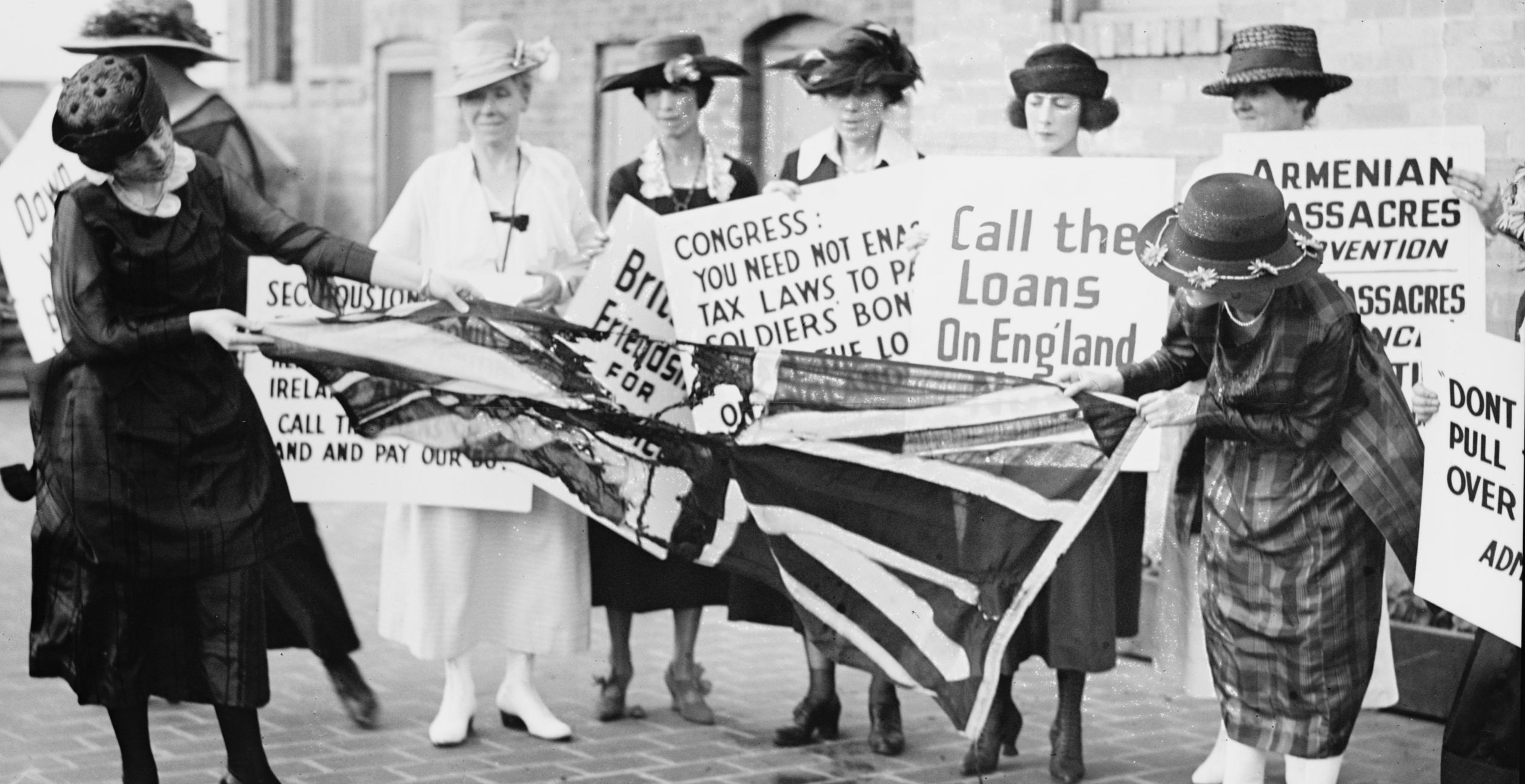
A discussion piece for the newly formed Unified Communist Party on problems in relating to conservative Irish workers in the U.S. at a time of revolution in Ireland. ‘J.P. Collins’ is the party-name of early Boston C.P. leader Joseph Zack Kornfeder. I am unsure of ‘Ganly’
‘Communism and the Irish Workers’ by Robert Ganly and J.P. Collins from The Communist (Unified Communist Party). Vol. 1 No. 4. October, 1921.
Clearing the Ground
ONE of the most difficult problems confronting our party is the question of getting a firmer foothold amongst the native and English speaking elements. The Irish workers are a considerable and aggressive portion of this section of the working class. They are active in politics and in the labor movement. They have been, and to a great extent still are, the very backbone of reaction, the support of the church, the chief instruments of the misleaders of labor and the shock troops of the government machine. We must win them over to our point of view. Those who cannot be brought into our ranks must be neutralized as far as possible and rendered useless to our enemies.
In planning our method of approach it is important that we understand the civilization and background of that section of the workers we have to deal with. We must understand the causes of the mental outlook of any particular section of the workers, for only then can we properly understand how to treat them. The Irish masses, especially in times gone by, have been an agricultural people. The very nature of the agrarian surroundings, removed them from modern industrial, literary and cultural centres and made them backward. Due to the savage persecutions of imperialist England which scented danger to its power unless the Gaels were eliminated, the latter emigrated to various countries and especially to the United States.
The loyalty of the Irish to the Catholic church is not only due to their peasant life but also the fact that shortly after the break between Rome and the English Church the Irish clergy remained loyal to Rome. At that time many of the clergy valiantly took the side of the people and fought with them against the English reign of terror. In fact, so great was the animosity of the English government to those clergymen who took the side of the people that at one time there was laid on the head of a priest a price equal to that given as a reward for the killing points upon which we can draw them towards us and of a wolf-dog.
Upon arrival in this country, they found comparatively good conditions and secured land without much trouble. The way was as free to almost all avenues of life. The labor movement was weak. The radial movement was hardly of any significance. These were the conditions the Irish immigrants met with in the United States. Naturally their first contact was with the church, and being extremely conservative, yet ingenious and speaking the language of the land, they soon pushed their way to the front in American life. Those who arrived fell into the hands of the corrupt clergy or the tricky politicians of their own race to be used for the support of capitalism.
New Roads
Only lately, as a result of the intensification of the class struggle, have there developed thousands of Irish radicals. Until the outbreak of the last war for liberation in Ireland the Irish masses were in a profound slumber- firmly in the grip of reaction. The struggle in Ireland stirred them up to their very depths. They had almost lost their national ideals among the English speaking elements. But at the clarion call from Ireland, they drew together again and gigantic Irish organizations like the A.A.R.I.R. sprang up. In a short time there were enrolled about three million members.
The A.A.R.I.R. grew out of a split in the ranks of the Friends of Irish Freedom–Judge Cohalan’s faction–due to disagreements over policy. The Irish masses accepted the idea of rebellion and armed insurrection to free themselves. They hate imperialism as exemplified by England and sympathize largely with Soviet Russia especially because of the policy of the latter toward struggling small nations.
The Irish labor movement developed considerably during the past decade. Rebellion is the motto of Irish labor. These factors produced among Irish workers a frame of mind favorable to new ideas and interpretations. The time is now ripe for drawing the Irish workers closer to us; for imbuing them with our interpretation of the struggle. Now is the opportunity for the class-conscious Irish workers to fight for influence over and leadership of their kindred in this country. The latter must be brought closer and closer to communism. This cannot be done, however, by our old Utopian tactics, the application of the same yardstick to all problems. We must give proper consideration to the ideology of the masses; find out the refrain from pressing issues which, at this time, would drive them away from us into the hands of the reactionaries.
The Irish Republic
There are activities in the struggle against England which we can perfectly endorse. One amongst these is the struggle against British Imperialism. All forces that struggle against imperialism are allies of the revolution, for the struggle is one by sections of the oppressed against capitalist tyranny. We should heartily endorse and aid in every way possible the proposition of Irish independence and the Irish Republic. We may put forward our idea of the Republic–a Workers’ Republic of Industrial and community councils, a Republic where the evils of capitalism are eliminated and all the fruit of labor goes to the people who produce. This is the Republic that Irish labor wants. Therefore we should introduce the question as to whether a capitalist republic or a Workers’ Republic would be the better for Ireland. In the labor unions we can forcefully point out that Irish Labor is genuinely anti-capitalist and organized on industrial lines. They have many real working class leaders.
As to Religion
We may make a serious mistake in the question of religion. This mistake can be especially fatal if commit- ted in dealing with the Irish section of the working class in the United States. It is not our mission under capitalism to wage an aggressive campaign for eradicating religious superstitions. It may take us many years after we are in power to accomplish this. Our entire strength at the present time must be concentrated in drawing the workers into the class struggle. While we, in our own ranks, should not tolerate any one who is not clear on the matter of religion, it would be bad tactics to concentrate upon the solution of a problem which arises out of the general ignorance that capitalism imposes on the masses. This can only be solved when the social machinery is in our hands. What we are mainly concerned with, at present, is not the doctrine of religion itself but rather the prestige and influence of the church organization and clergy. We should, in dealing with the more ignorant, keep, as far as we possibly can, out of the mire of religion. We should expose the character of the personnel of the church organization, the political intrigues and wars conducted by the Vatican, its complete failure during the world war, its subservience to capital and the aristocracy. The tacit support given to England by the Pope must be brought home to the Irish workers. Such slogans as: “We will take our religion from Rome but not our politics” can be utilized to great advantage. These should be encouraged as they breed a spirit of independence of thought on political questions regardless of the point of view as to the clergy.
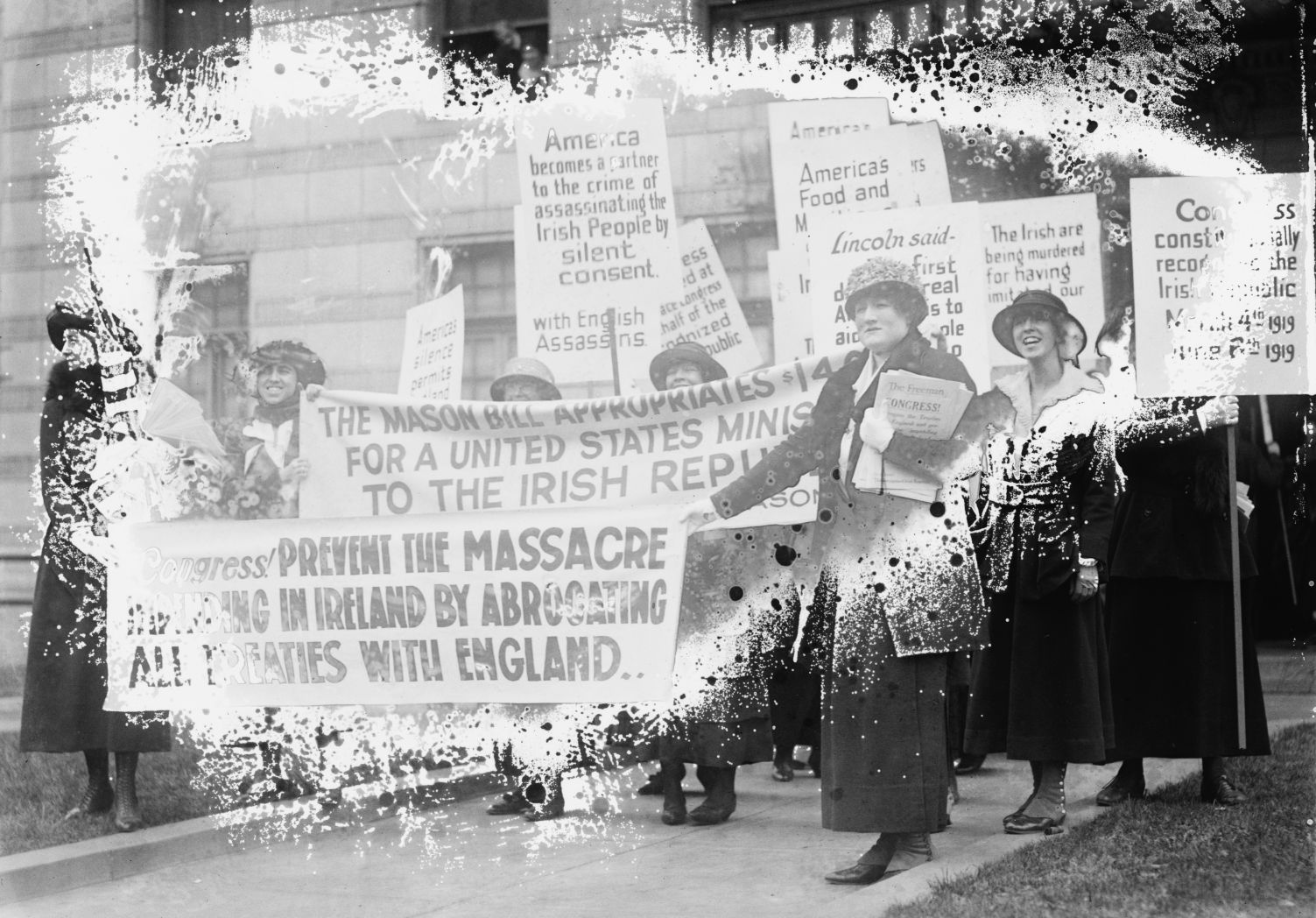
To expose the priests who take the part of Capital is another valuable tactic in undermining church influence. Criticism of individual clergymen goes a long way towards destroying the faith of the people in what they stand for. Another valuable tactic in fighting the influence of the clergy is to question their interpretation of the Bible, for the Bible could more easily be interpreted in favor of Communism than in favor of capitalism. In order to get in touch with the masses the Communists must seriously weigh the habits of the people surrounding them. No Communist worthy of his salt will, for the sake of his personal feelings, disassociate himself from contact with the mass of his fellow-men in the class struggle. In many sections of this country, particularly the rural in the South, the church offers the best point of contact. Churches are used for discussions and lectures. Communists should go where the masses are for the sake of Communism. It is our duty to do everything to extricate our class from the influence of our enemies, or at least to neutralize the mass and make it unreceptive to sermons in behalf of capitalism.
By drawing the workers more and more into the class struggle, the clergy’s character and opposition to the interests of labor will be made evident. Not by attacking religion directly but by pointing out the wrong use to which it is put by those who speak in its name will we stir up thought among the masses and bring them nearer to us. In winning over the peasants in Russia the Bolsheviks went amongst them–where they could be found. They did not tell the peasants they were atheists. Neither did they tell them that they are against the monarchy. They told them they are against the landlords and for the land going to the peasants. It is such tactics that won the day. Even today the Soviet Government, very wisely so, has no crushing policy against religion. The Soviet Government subtly undermines and circumscribes it. Priests who display a counter-revolutionary character are eliminated. Ideas and ideals can’t be wiped off the earth. They must be replaced by better ones through experience and education. To be with the masses means to speak about things that interest them in the way they’ understand, giving our interpretation and gradually raising the workers’ understanding to our view. To do our work more effectively we need a special organization for this purpose an organization composed of Irish workers. We must produce a live Communist Irish literature. Only such an organization can fight for leadership of and recognition amongst the Irish workers. Our members, as well as the Irish radicals, must be gotten together into such an organization. No matter what happens in Ireland, whether peace be concluded or no, the tactics proposed above are the practical method of approaching this element, of drawing it into the class struggle.
Emulating the Bolsheviks who changed the name of their party in 1918 to the Communist Party, there were up to a dozen papers in the US named ‘The Communist’ in the splintered landscape of the US Left as it responded to World War One and the Russian Revolution. This ‘The Communist’ began in July 1921 after the “Unity Convention” in Woodstock, New York which created the Communist Party of America, Section of the Communist International uniting the old CPA with the CLP-CPA party. With Ruthenberg mostly as editor the paper acted as the Party’s underground voice, reporting official party business and discussion. The Toiler served as the mass English-language paper. This ‘The Communist’ was laid to rest in December, 1922 with the creation of the above-ground Workers Party. An invaluable resource for students of the formation of the Communist Party in the US.
PDF of full issue: https://www.marxists.org/history/usa/pubs/thecommunist/thecommunist6/v1n04-oct-1921-com-CPA.pdf
 Revolution's Newsstand